Talent Development Program: Building Professional Skills, Career Paths, and Retention
 Here's the reality in professional services: you lose a mid-level consultant who took three years to train, and it costs you $150K to replace them. Add lost client knowledge, project disruption, and the time your senior people spend recruiting and onboarding, and that number doubles.
Turn this article into takeaways for your work.


Each assistant summarizes the article only for you and suggests best practices for your work.
Most firms treat development as a nice-to-have. They send people to conferences, maybe cover certifications, and hope that's enough. Then they're surprised when their best people leave because they don't see a future at the firm.
The firms that win aren't always the ones with the highest salaries. They're the ones where talented people can see a career path, get real development opportunities, and work with people who actually invest in their growth. This guide shows you how to build that kind of program.
Why Development Programs Actually Matter
Let's start with the economics. The fully-loaded cost of turnover for a professional services employee runs between 1.5x and 2.5x their annual salary. For a consultant making $80K, you're looking at $120K-$200K in total impact when you account for:
- Recruiting costs (job postings, recruiter fees, interview time)
- Lost productivity during vacancy
- Onboarding and training time
- Knowledge loss and client relationship disruption
- Reduced morale among remaining team members
Now compare that to the cost of a solid development program: $5K-$10K per person annually for training, certifications, and development activities. Even if your program only improves retention by 10-15%, the ROI is massive.
The benefits go way beyond retention. Development programs improve utilization because people gain skills faster and can handle more complex work. Client satisfaction goes up when teams are competent and growing. Succession planning becomes possible when you're actually building the next generation of leaders. Recruitment gets easier because word gets out that you invest in people.
The firms that treat development as a core part of their professional services growth model consistently outperform those that don't.
What Makes a Development Program Work
A real development program isn't just a training budget. It's a system with several components working together: Skills taxonomy defines what capabilities people need at each level, the backbone of any serious capability development effort. Junior consultants need different skills than senior partners. Make this explicit so people know what they're working toward.
Individual development plans give each person a roadmap for their growth. Not generic templates, but actual plans tied to their goals and the firm's needs.
Career pathing shows people where they can go. What does the next level look like? What about two levels up? If people can't see the path, they'll leave to find one elsewhere.
Mentorship structures connect less experienced people with those who've been there before. This is how you transfer knowledge that doesn't live in manuals or training courses.
Learning culture means the firm actually values development and makes time for it. If everyone's at 95% utilization with no capacity for learning, your program is just paperwork.
The firms that get this right weave development into everything. Your professional services metrics should track development activities alongside billable hours and revenue.
Building Your Skills Taxonomy
You can't develop people if you don't know what skills they need. A skills taxonomy maps out technical capabilities, soft skills, and leadership competencies across different role levels. Start with technical skills by practice area. What does a junior tax consultant need to know? What about a senior one? These are usually the easiest to define because they're concrete: specific software, methodologies, regulations, industry knowledge.
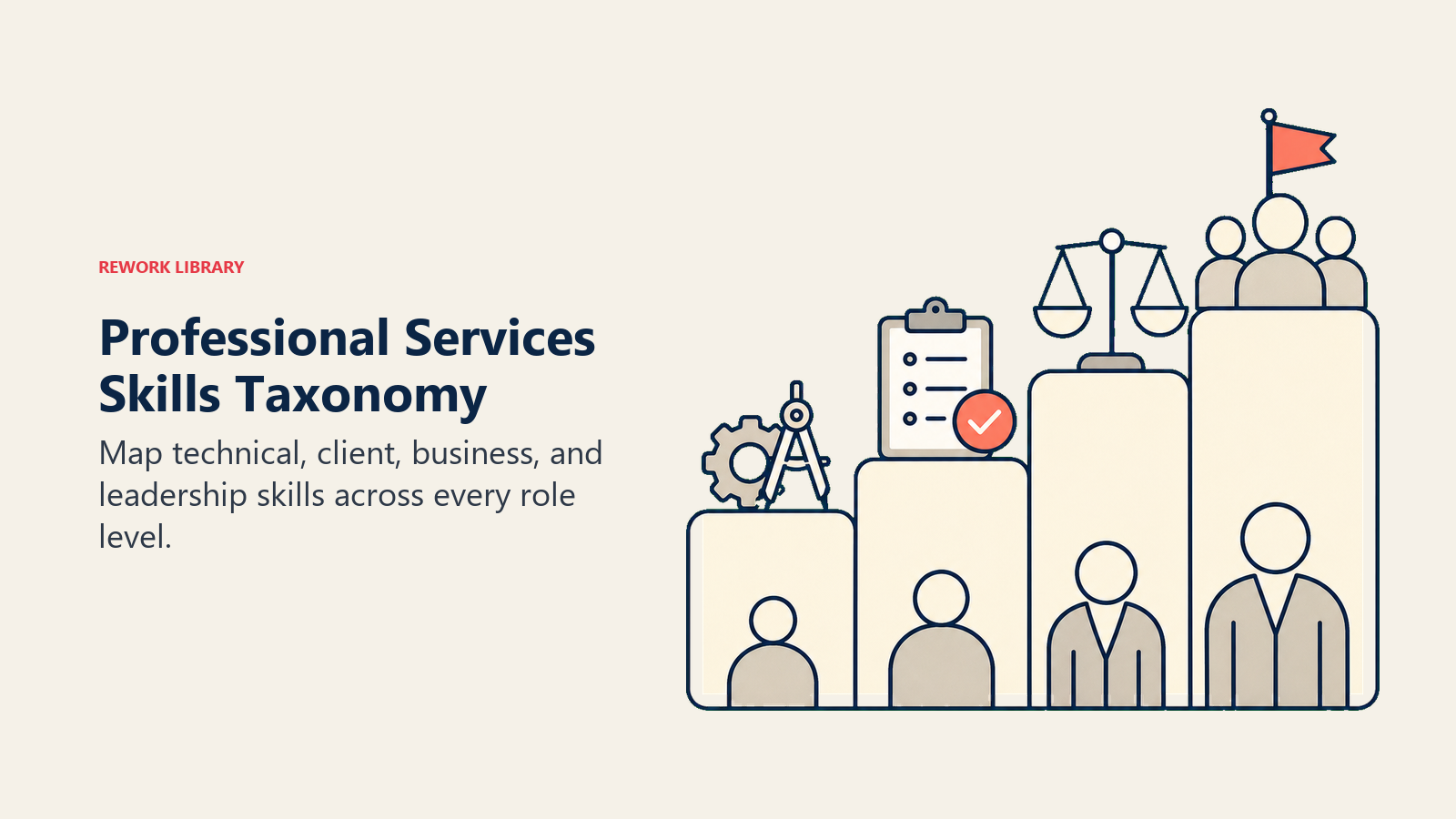
Example for a junior consultant:
- Core methodology fundamentals
- Specific technical tools and platforms
- Basic client communication
- Project documentation standards
- Industry knowledge in 1-2 verticals
Example for senior consultant:
- Advanced methodology application
- Multiple tool platforms and integrations
- Client relationship management
- Project leadership and delegation
- Deep expertise in 3-4 verticals
Soft skills are harder to define but just as important. Junior people need basic professional skills like email communication and time management. Mid-level people need to manage client expectations and run meetings effectively. Senior people need to influence without authority and build long-term relationships.
Then there are the emerging skills your firm will need in the future. If AI is changing your industry, who's learning those tools? If you're expanding into new service areas, who's building that expertise? Your taxonomy should include both current-state and future-state skills.
Once you've mapped this out, you can assess where people are today versus where they need to be. That gap analysis drives individual development plans.
Creating Individual Development Plans That Actually Work
Most development plans fail because they're too vague. "Improve communication skills" isn't a plan. "Complete executive communication training and lead two client presentations this quarter" is a plan. Every development plan should have these components:
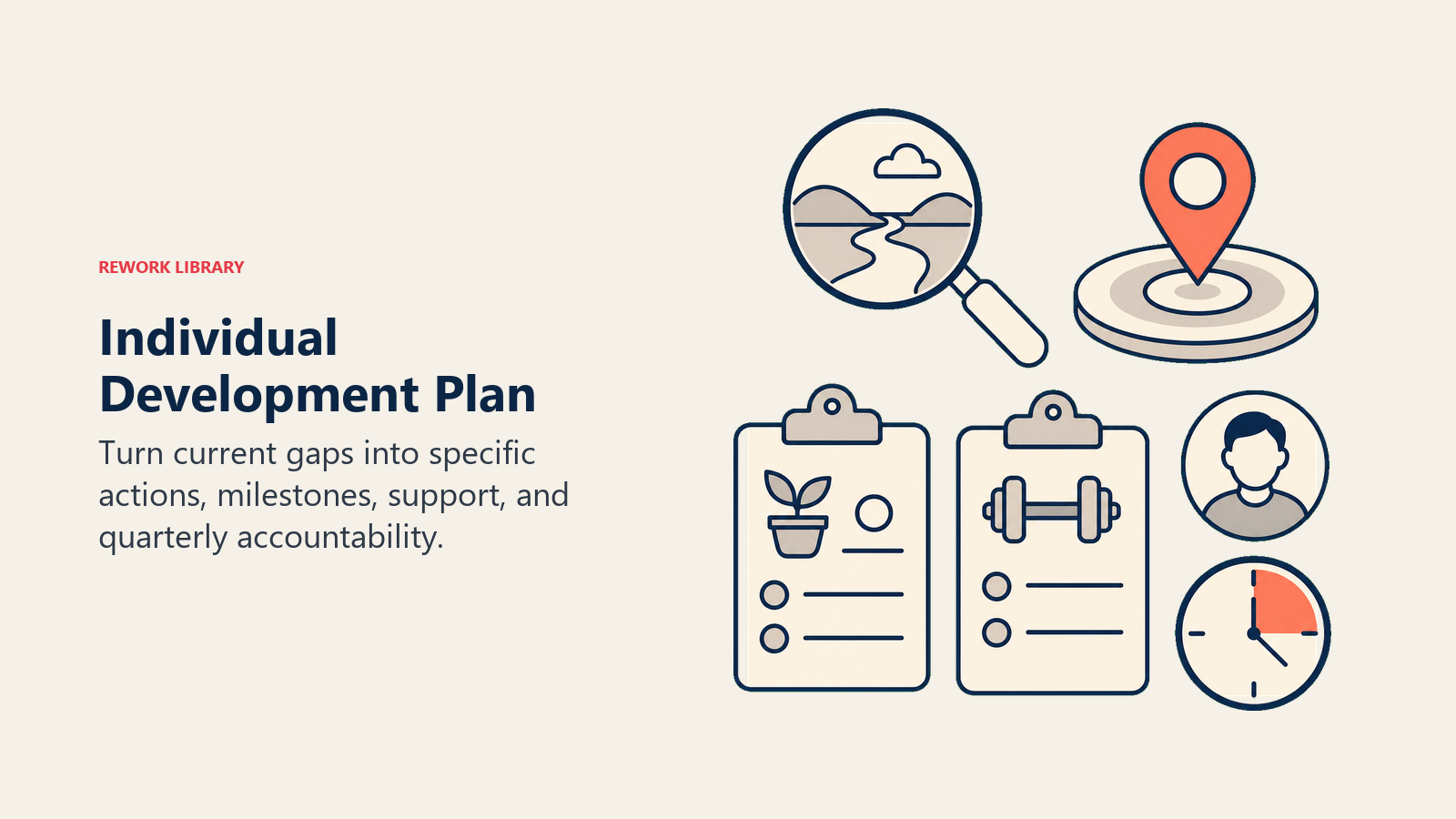
Current state assessment of where the person is today. What skills do they have? What are they good at? Where do they struggle? Be honest here, because sugarcoating helps no one.
Goals for the next 6-12 months tied to both their career aspirations and firm needs. If they want to move into client relationship management, that's a goal. If the firm needs more people who can do financial modeling, and they have aptitude for it, that's another goal.
Specific development activities with timelines:
- Training courses or certifications to complete
- Shadowing opportunities with senior people
- Stretch assignments on client projects
- Books or resources to study
- Presentations or knowledge-sharing to deliver
Success criteria so you know when they've achieved the goal. Not "get better at presentations" but "deliver three client presentations rated 4/5 or higher by partners."
Investment allocation because development costs money and time. Be explicit about what the firm will fund versus what the person needs to do on their own time.
Here's what this looks like in practice. You've got a mid-level consultant who wants to move into advisory work but has mostly done implementation projects. Their development plan might include:
- Shadow two advisory engagements to understand the approach (Q1)
- Complete strategy consulting methodology training (Q2)
- Lead the advisory portion of a hybrid implementation project (Q3)
- Develop and pitch one advisory offering to an existing client (Q4)
Notice these are concrete activities with clear outcomes, not vague aspirations.
The plan gets reviewed quarterly and adjusted as needed. Development isn't linear. Sometimes opportunities come up that weren't in the plan. Sometimes planned activities don't work out. That's fine. The plan is a roadmap, not a contract.
Career Paths and Progression Frameworks
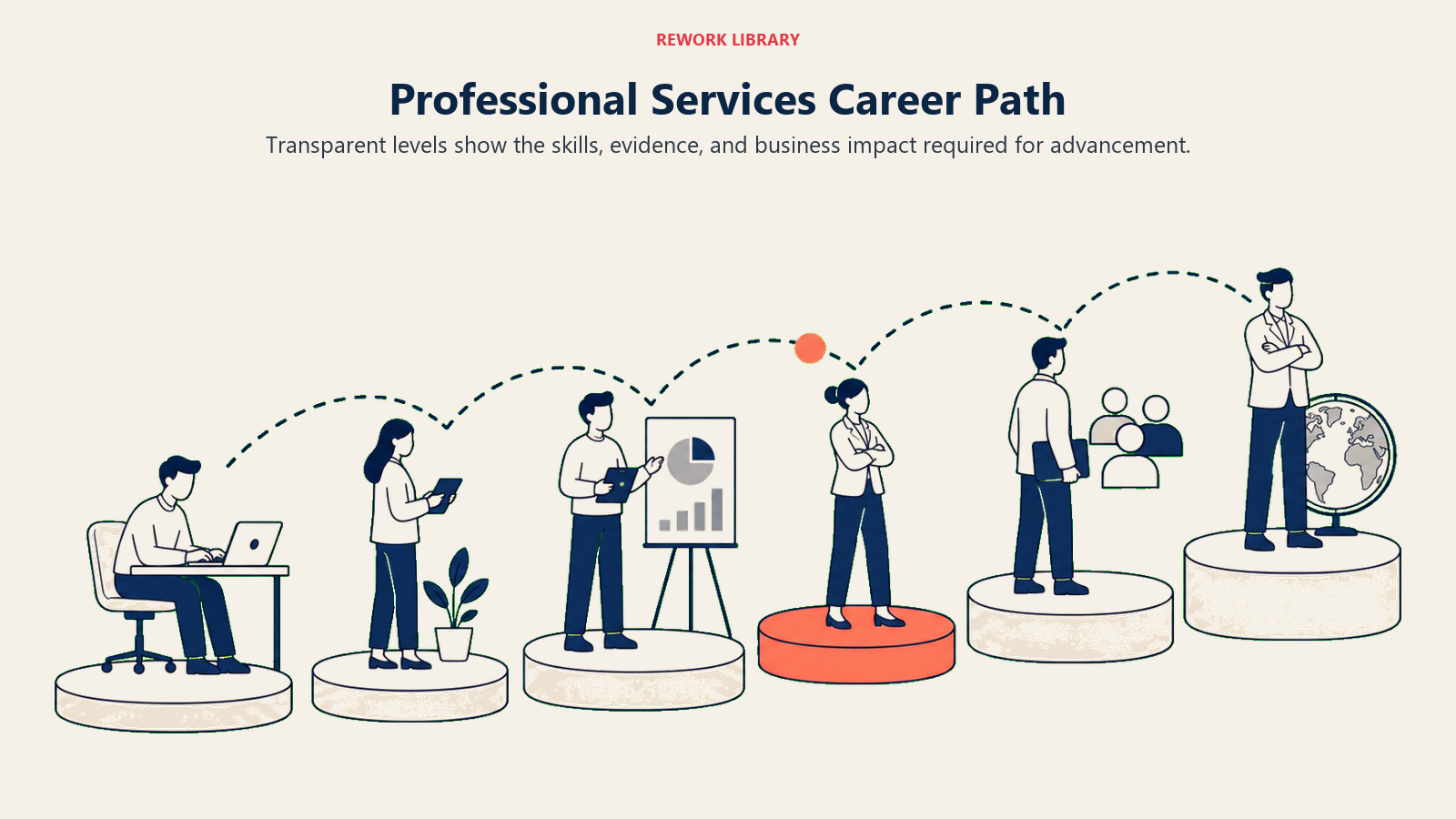
People leave professional services firms when they can't see where they're going. Career pathing solves this by making progression transparent. For most firms, there's a general progression that looks something like:
- Analyst/Associate (Years 0-2)
- Consultant (Years 2-4)
- Senior Consultant (Years 4-7)
- Manager (Years 7-10)
- Senior Manager/Director (Years 10-14)
- Partner (Years 14+)
But timelines vary based on performance, firm needs, and the business model. Some people move faster, some slower, some plateau at a level that suits them. That's all fine as long as it's clear.
Here's what people need to know at each level:
What the role entails in terms of responsibilities, autonomy, and expectations. A senior consultant leads workstreams but doesn't own full client relationships. A manager owns projects and manages teams. A partner owns client relationships and brings in work.
What it takes to advance with specific criteria. Is it billable hours? Client development? Team leadership? Thought leadership? Don't make people guess.
What they'll earn in terms of compensation structure. You don't need to publish exact salaries, but people should understand the range and how comp changes with advancement.
How long it typically takes with the caveat that individual timelines vary. If senior consultant to manager usually takes 3-4 years, tell people that.
One critical decision: dual career tracks. Not everyone wants to manage people or sell work. Some of your best technical people should be able to advance as individual contributors without being forced into management roles. Create a technical specialist track alongside the leadership track, with comparable prestige and compensation.
The partner vs employee model you choose affects career pathing significantly. Partnership tracks look different than pure employment models.
Building Mentorship Programs That Transfer Knowledge
Good mentorship programs don't happen by accident. They require structure, but not so much that they feel bureaucratic. Formal pairings work better than "find your own mentor." Assign mentors based on development needs, practice areas, and personality fit. Junior tax consultants should be paired with senior tax people who remember what it's like to be early in your career.
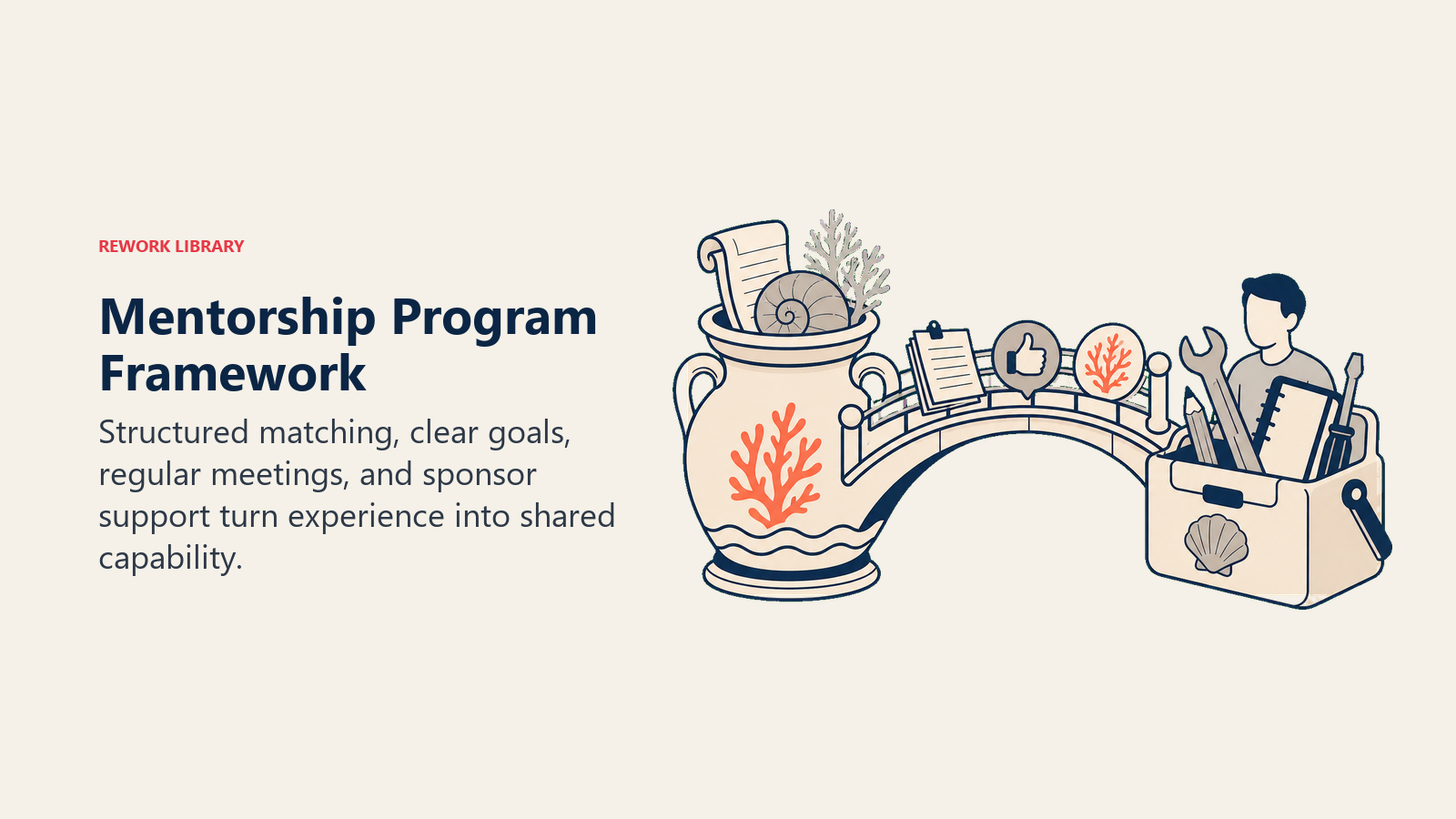
Clear focus areas prevent mentorship from becoming vague coffee chats. Is this mentorship focused on technical skills? Client relationship building? Career navigation? Political savvy? Define the scope.
Regular cadence with scheduled check-ins. Monthly is usually right. More frequent feels like micromanagement, less frequent loses momentum. These don't have to be long; even 30 minutes makes a difference.
Mentorship models can vary:
- One-on-one traditional mentoring for career development
- Group mentoring where one senior person works with 3-4 junior people
- Rotating mentors so people get exposure to different perspectives
- Peer mentoring among people at similar levels facing similar challenges
Training for mentors because being good at your job doesn't automatically make you good at mentoring. Give mentors guidance on how to have development conversations, provide constructive feedback, and help mentees navigate firm dynamics.
Some firms bring in executive coaches for their high-potential people and senior leaders. This is expensive ($3K-$10K per person annually) but worthwhile for key talent. External coaches can address personal development areas and leadership challenges that internal mentors can't.
Measure mentorship impact through retention rates, advancement rates, and satisfaction scores. If people with mentors aren't advancing faster or staying longer than those without, your program isn't working.
Skills Training and Certification Programs
Development needs both structured learning and on-the-job experience. The structured part comes from training programs, certifications, and formal education.
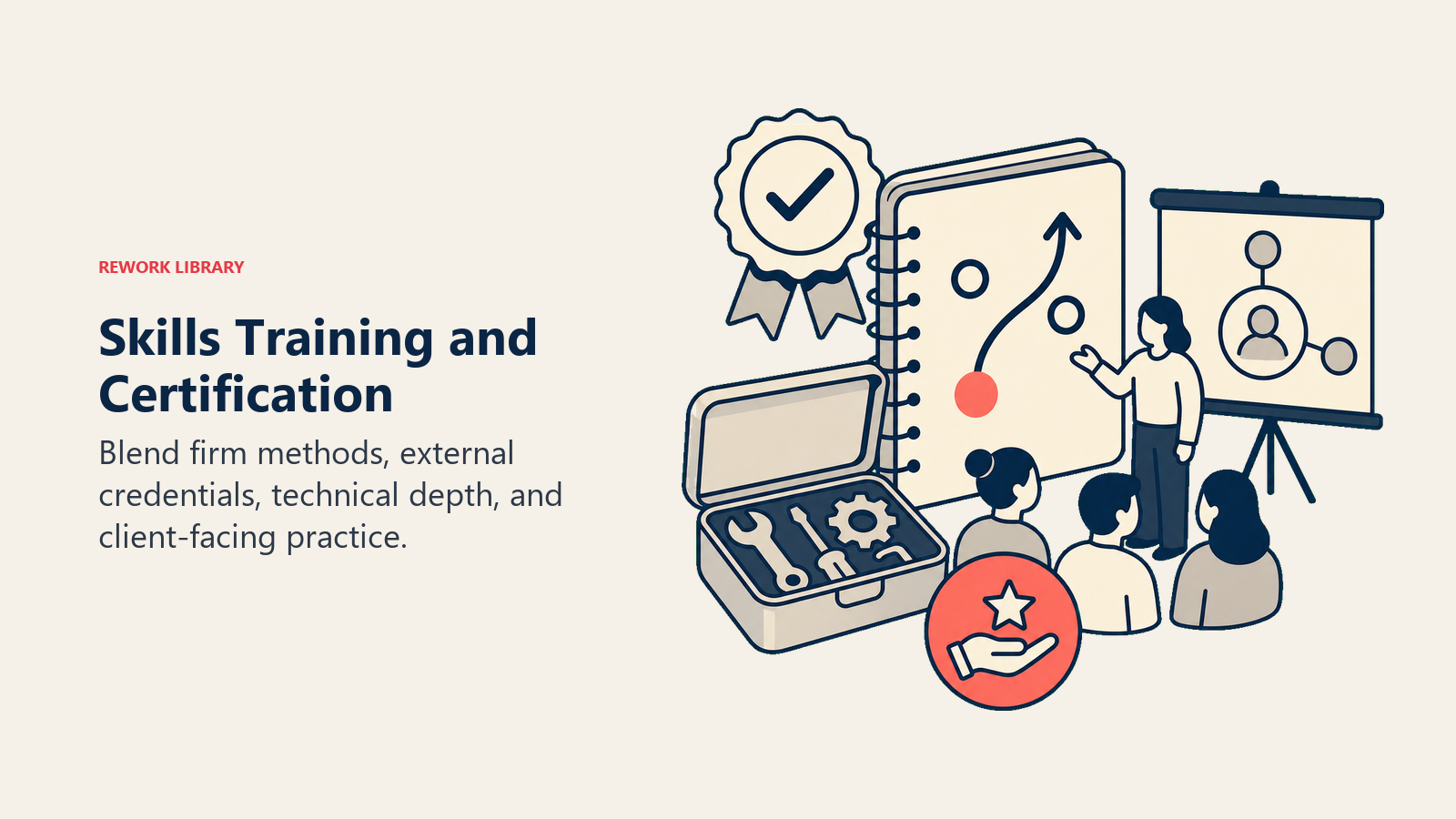
Internal training should cover firm-specific knowledge: your methodology, tools, templates, client management approach. Don't assume people will just pick this up. Build formal onboarding programs and ongoing training on your core capabilities.
External training and certifications bring in outside expertise and credentials that clients value. CPA, PMP, CFA, industry-specific certifications - these cost money but they're worth it. Figure out which certifications align with your service offerings and create a firm standard.
Be smart about funding. Some firms pay for certifications upfront, others reimburse upon completion. Many require a commitment period: "We'll pay for your CPA, but you need to stay for two years after completion or repay the cost." That's fair.
Online learning platforms like LinkedIn Learning, Coursera, or industry-specific platforms give people access to thousands of courses. A corporate subscription runs $300-$500 per person annually, which is nothing compared to the value. Let people self-direct some of their learning.
Conference and event attendance serves dual purposes: learning and networking. Send people to 1-2 major industry events per year. Junior people get exposure to trends and make connections. Senior people build the firm's visibility and bring back insights.
Specialization development builds deep expertise in specific areas. If you want to be known for healthcare consulting or financial services advisory, you need people who are genuinely expert in those domains. Fund deep-dive training, certifications, and client projects that build that expertise.
The key is making development part of the job, not something people do on nights and weekends. If your team is at 90%+ utilization year-round, there's no time for development. Build in capacity.
Creating a Learning Culture (Not Just a Training Budget)
You can have the best development programs on paper and still fail if the culture doesn't support learning. Here's how to build a real learning culture:
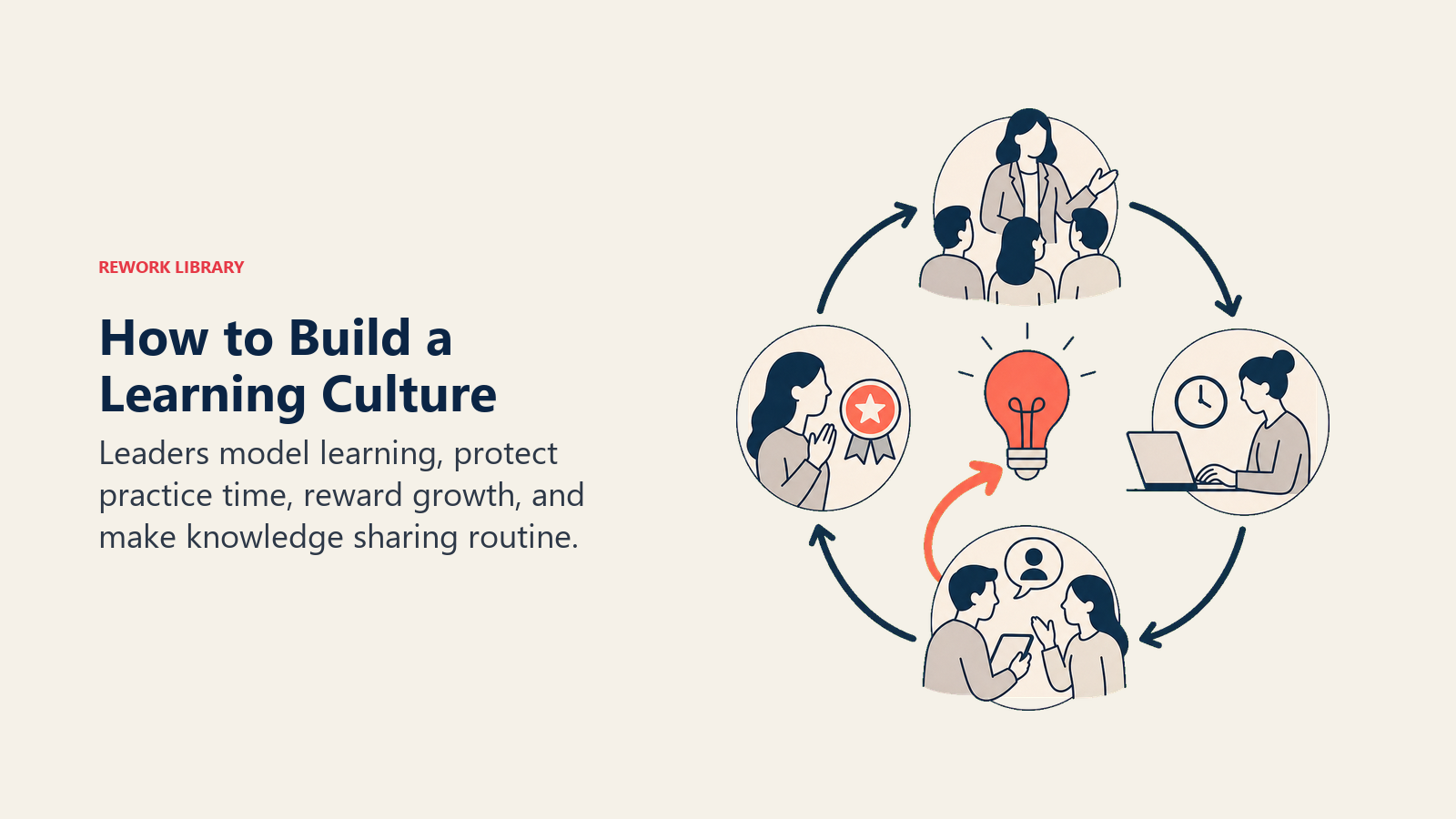
Leadership has to model it. Partners and senior leaders should talk about what they're learning, attend training, and show that development doesn't stop when you make partner. If leadership says development matters but never invests their own time in it, nobody believes them.
Knowledge management and sharing means capturing what your best people know and spreading it. After-action reviews following major projects. Lunch-and-learns where people present what they've learned. Internal wikis or knowledge bases with templates and case studies. Make it easy to learn from each other.
Celebrate growth and advancement publicly. When someone completes a certification or gets promoted, recognize it. When someone delivers a great training session or mentors others effectively, acknowledge it. What gets recognized gets repeated.
Peer learning communities bring together people working on similar challenges. Junior consultants learning the same methodology. Mid-level people all working on business development for the first time. These groups provide support and shared learning.
Reduce barriers to learning. If people need approval for every $50 book or have to fight for time to attend a training, they'll stop trying. Give people development budgets they control and protected time for learning activities.
The culture piece is harder than the program piece, but it's what makes everything else work. Your client relationship strategy should account for development time, not treat it as non-billable waste.
Development as a Retention Strategy
Here's the paradox of professional services: you invest heavily in developing people, which makes them more valuable, which means other firms want to poach them. But if you don't develop them, they'll leave anyway because they're not growing.
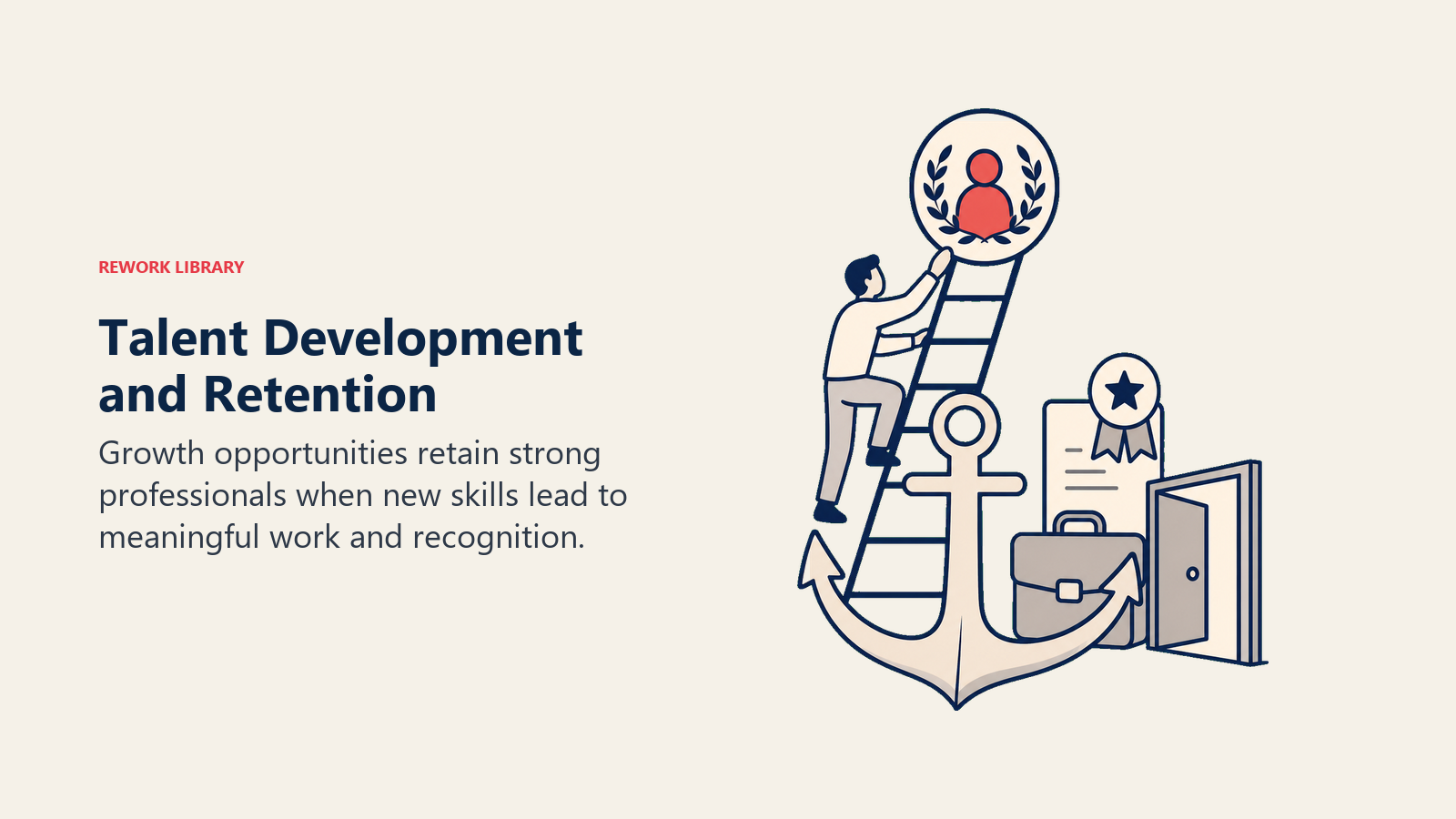
The solution isn't to stop developing people. It's to make your firm the best place for them to apply those new skills.
The development-retention link is strong. Research consistently shows that learning and development opportunities are top factors in employee retention, often ranking higher than compensation up to a point. People want to feel like they're growing and moving forward in their careers.
Staying interviews are the counterpart to exit interviews. Don't wait until someone quits to ask what they need. Have regular conversations about career satisfaction, development goals, and what it would take for them to stay long-term. These conversations often surface issues before they become resignation triggers.
Retention offers and counteroffers are expensive and often don't work. If someone's already accepted another job, throwing money at them usually just delays their departure by 6-12 months. The time to retain people is before they start looking, through ongoing development and career conversations.
Exit interviews still matter, though. When people do leave, find out why. If you keep hearing "no clear career path" or "not learning anything new," that's data you need to act on.
Track retention rates by cohort and development participation. If people who complete your development programs stay 20% longer than those who don't, that's proof your program works.
Succession Planning and Leadership Development
Succession planning answers the question: what happens when key people leave or retire? In professional services, where so much knowledge lives in people's heads, this is critical. Identify high-potential people early. Who has the skills, drive, and judgment to move into leadership roles? This isn't just about performance on current work. It's about capacity for greater responsibility and strategic thinking.
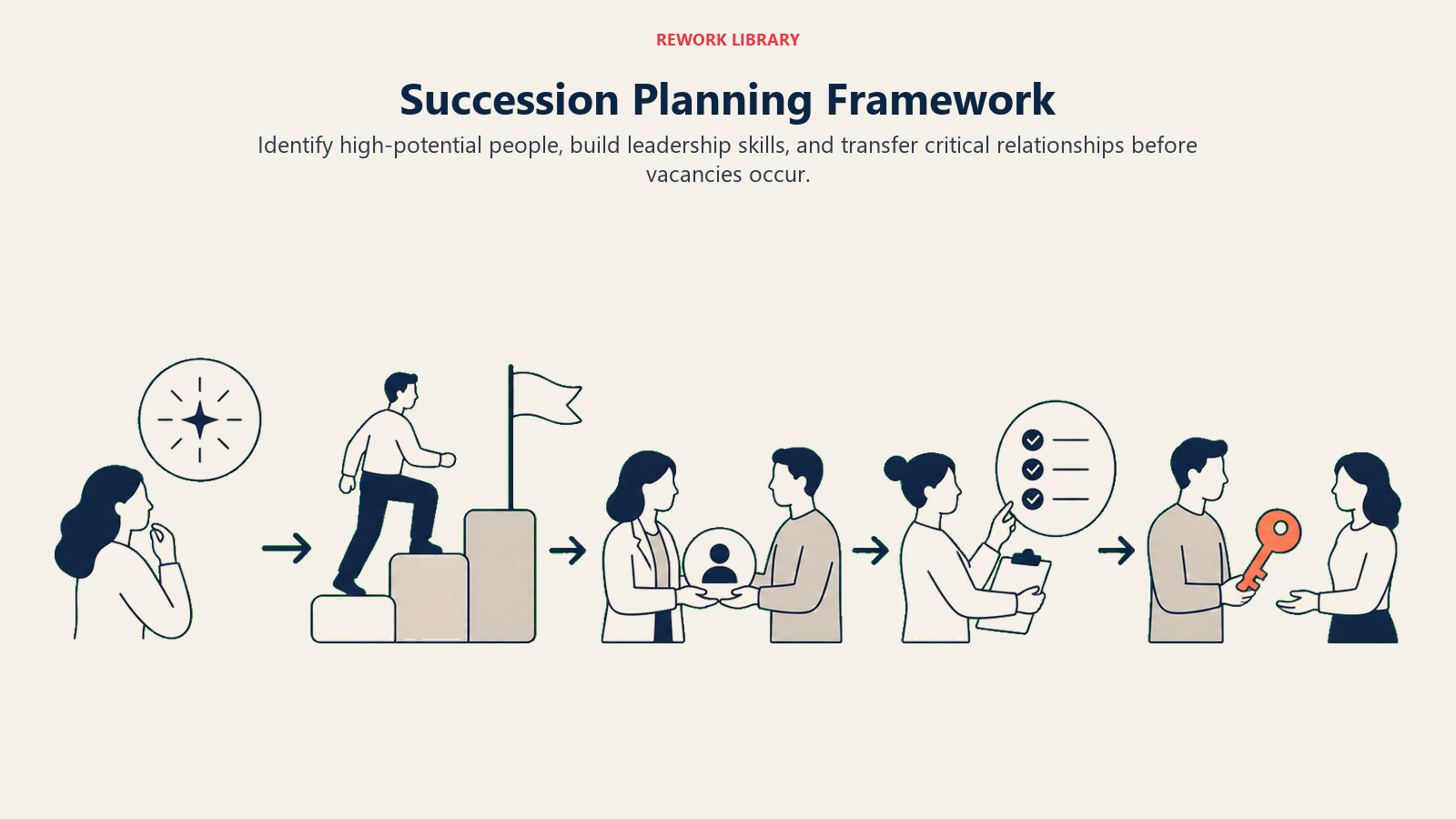
Leadership development programs prepare people for the transition from doer to manager to leader. This often includes:
- Management training (how to delegate, give feedback, develop others)
- Business development skills (how to identify opportunities and close work)
- Strategic thinking (understanding the business beyond your projects)
- Executive presence (how to show up as a leader with clients and internal teams)
Don't wait until someone becomes a partner to teach them how to run a business. Start developing those skills at the senior manager level or earlier.
Succession planning by critical role maps out who could step into key positions if needed. Who could take over the healthcare practice if the practice lead leaves? Who could manage the firm's largest client relationship? Have at least one backup for every critical role, and ideally two.
Cross-training for resilience reduces single points of failure. If only one person knows how to do something important, that's a risk. Build redundancy by having people shadow key roles and learn adjacent skills.
Succession planning isn't just for the top of the house. You need pipelines at every level. Who's ready to step into senior consultant roles? Who's being groomed for manager? This connects back to career pathing - people need to see the path and be prepared to walk it.
Development for Different Career Stages
What people need changes as they advance. Good development programs recognize this and adjust accordingly.
Early career (Years 0-3): Foundation building
Focus on technical fundamentals, professional skills, and firm culture. These people are learning how to be consultants or professionals, not just learning your specific practice area.
Key development activities:
- Structured onboarding and methodology training
- Close mentorship with regular check-ins
- Supervised client work with clear learning objectives
- Professional skills (communication, time management, business writing)
- Exposure to different service lines and industries
Success looks like: can deliver quality work with minimal supervision, builds strong client relationships, demonstrates firm values, shows potential for growth.
Mid-career (Years 4-8): Specialization and leadership
Now they're building expertise in specific areas and starting to lead others. Development shifts toward depth and leadership skills.
Key development activities:
- Advanced technical training and certifications
- Project leadership and team management experience
- Client relationship management with senior oversight
- Beginning business development and thought leadership
- Cross-functional exposure to other parts of the business
Success looks like: recognized expert in specific domains, effectively leads teams, manages client relationships independently, contributes to firm development.
Late career (Years 9-15): Authority and leverage
Senior people are running significant parts of the business and developing others. Their development focuses on strategic leadership, business development, and scaling their impact.
Key development activities:
- Executive leadership programs
- Major client relationship ownership
- Practice or service line leadership
- Thought leadership and industry visibility
- Mentoring and developing next generation
Success looks like: brings in significant work, leads major initiatives, develops high-performing teams, shapes firm strategy, recognized externally as an expert.
The transition points between these stages are when people are most likely to leave. Pay extra attention to development during promotions and role changes.
Measuring Development Program Effectiveness
If you're investing in development, you need to know if it's working. Track these metrics: Outcome metrics measure the business impact:
- Retention rates overall and by cohort
- Time to promotion and advancement rates
- Utilization rates and productivity measures
- Client satisfaction scores
- Revenue per professional
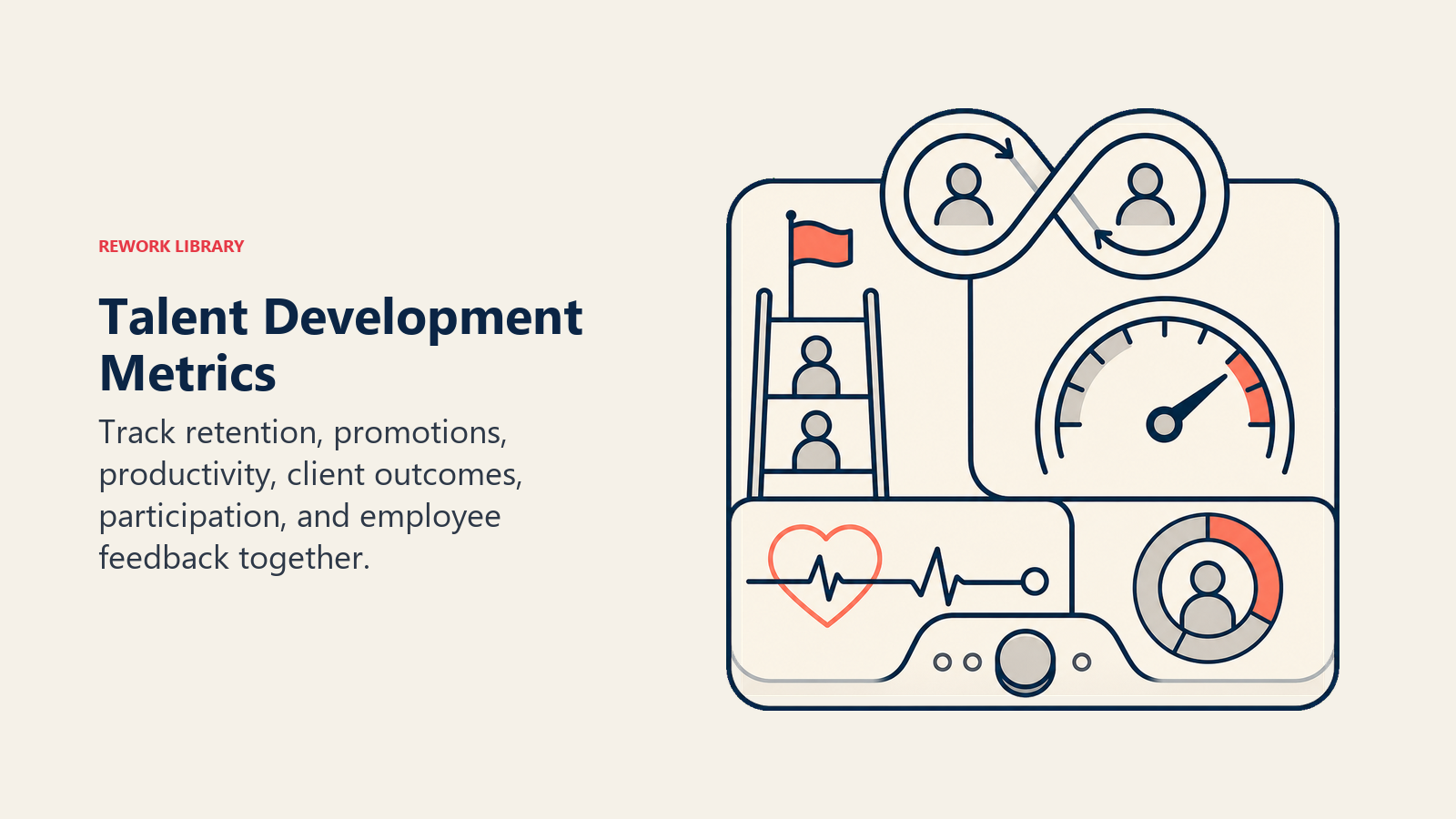
Program metrics track participation and activity:
- Training hours per person annually
- Certification completion rates
- Mentorship participation rates
- Development plan completion rates
- Internal mobility and promotions from within
Engagement and satisfaction show how people feel:
- Employee satisfaction survey scores (specifically development questions)
- Staying interview feedback
- Exit interview patterns
- Development program satisfaction ratings
Financial impact quantifies the ROI:
- Cost of turnover avoided
- Revenue from newly developed capabilities
- Client retention linked to team continuity
- Recruitment cost savings from internal development
Survey your team annually on development questions: "Do you have a clear career path? Are you getting the development you need? Do you see a future here?" Track those scores over time.
Compare metrics before and after implementing programs. If retention was 75% before you launched formal development programs and it's 85% after, you've got proof of impact.
Common Development Challenges and How to Solve Them
Every firm runs into similar challenges when building development programs. Here are the big ones and what to do about them:
Limited promotion bandwidth: You can't promote everyone every year. Be transparent about timing and criteria. Create lateral development opportunities when upward movement isn't available.
Bench capacity constraints: People are too busy to develop. This is a utilization problem. Build slack into the system. If your target utilization is 85%, 15% of time should be available for development, business development, and admin.
Mentoring burden on senior staff: Your best people are being asked to mentor everyone while also delivering client work. Distribute mentoring load more evenly. Not everyone needs to be mentored by a partner; senior consultants and managers can mentor too.
Unequal development opportunities: Some people get great assignments and development, others don't. Usually this happens unconsciously. Make development discussions and assignment allocation more transparent and structured to ensure equity.
Training not applied: People attend training but never use what they learned. Fix this by tying training to actual projects. Send someone to advanced Excel training because they're about to lead a financial modeling project, not just because it's a nice skill to have.
Retention after investment: You train someone, and then they leave for a competitor. This hurts, but it's not a reason to stop developing people. The bigger risk is becoming known as a firm that doesn't invest in growth. Focus on making your firm the place where people want to apply their new skills.
Development Program Design by Firm Size
How you structure development programs depends partly on firm size and resources.
Solo and small firms (1-20 people)
You don't need elaborate programs, but you do need intention. Focus on:
- Clear career conversations and individual development plans
- Training budget ($3K-$5K per person annually)
- Informal mentoring and knowledge sharing
- External training and certifications
- Client work as primary development vehicle
Mid-size firms (20-100 people)
You can build more formal structure:
- Documented skills taxonomy and career paths
- Formal mentorship program with assigned pairings
- Internal training on firm methodology and tools
- Learning management system for tracking development
- Annual development planning cycle
- Role-specific development tracks
Larger firms (100+ people)
Full development infrastructure becomes possible:
- Dedicated learning and development function
- Comprehensive curriculum by role and level
- Formal leadership development programs
- Succession planning for all critical roles
- Technology platforms for managing development
- Rotation programs and cross-practice exposure
- In-house training capabilities
Regardless of size, the principles are the same: clarity about expectations, investment in growth, and making development part of how the firm operates.
Technology for Development Management
As your program grows, you'll need technology to manage it. Here are the categories:
Learning Management Systems (LMS) like Docebo, TalentLMS, or Absorb deliver and track training. These range from $5-$15 per user per month. They're worth it when you have significant internal training content or want to track completion and compliance.
Performance management systems like Lattice, 15Five, or Culture Amp include development planning modules. They help managers and employees document goals, track progress, and connect development to performance reviews. Cost is typically $8-$15 per employee monthly.
Skills management platforms like Degreed or EdCast track individual capabilities and suggest learning paths. These are more sophisticated and expensive ($15-$25 per user monthly) but powerful for larger firms.
Mentoring platforms like MentorcliQ or Together formalize mentorship programs with matching, scheduling, and tracking tools. Pricing varies but expect $3K-$10K annually for small programs.
For smaller firms, you can manage a lot of this in spreadsheets or project management tools. Don't over-invest in technology before you've proven your program works.
Implementation Roadmap
Here's how to build a development program from scratch:
Phase 1: Assessment (Month 1-2)
- Survey your team on current development satisfaction and needs
- Analyze retention data and exit interview patterns
- Review current development spending and activities
- Benchmark against peer firms
- Identify critical gaps and priorities
Phase 2: Design (Month 2-4)
- Build skills taxonomy for your key roles
- Define career paths and advancement criteria
- Create development plan templates
- Design mentorship program structure
- Determine training budget and policies
- Document the program and get leadership buy-in
Phase 3: Pilot (Month 4-6)
- Launch with one practice area or office
- Train managers on development planning
- Assign mentors and start pairings
- Roll out initial training offerings
- Gather feedback and refine
Phase 4: Rollout (Month 6-8)
- Expand to entire firm
- Communicate the program broadly
- Complete development plans for all employees
- Launch full mentorship program
- Implement tracking and metrics
Phase 5: Optimization (Month 8+)
- Review metrics and gather feedback
- Adjust based on what's working
- Add new training and development offerings
- Deepen culture change and leadership modeling
- Plan for year 2 improvements
Don't try to build everything at once. Start with the basics: clear expectations, individual development plans, and mentorship. Add sophistication over time.
The Bottom Line on Development Programs
Talent development isn't optional in professional services. Your people are your product. If they're not growing, your firm isn't growing. If they're not learning, your clients aren't getting better outcomes.
The firms that build real development programs - not just training budgets, but actual systems for building skills, creating career paths, and retaining talent - consistently outperform those that don't. They have higher retention, better client satisfaction, and stronger growth.
This isn't about being nice or creating a great place to work (though it does that too). It's about building a sustainable business that can scale, serve clients well, and compete for the best talent in the market. Your staffing and resource allocation becomes easier when you're developing people internally instead of constantly hiring externally.
Start simple. Pick one or two things from this guide and implement them well. Get development plans working. Launch a basic mentorship program. Make career paths clear. Then build from there.
The best time to start was three years ago. The second best time is now, before your next top performer walks out the door.

Sales Director
On this page
- Why Development Programs Actually Matter
- What Makes a Development Program Work
- Building Your Skills Taxonomy
- Creating Individual Development Plans That Actually Work
- Career Paths and Progression Frameworks
- Building Mentorship Programs That Transfer Knowledge
- Skills Training and Certification Programs
- Creating a Learning Culture (Not Just a Training Budget)
- Development as a Retention Strategy
- Succession Planning and Leadership Development
- Development for Different Career Stages
- Measuring Development Program Effectiveness
- Common Development Challenges and How to Solve Them
- Development Program Design by Firm Size
- Technology for Development Management
- Implementation Roadmap
- The Bottom Line on Development Programs