Strategic Partner Network: Building Complementary Service Partnerships for Growth

Turn this article into takeaways for your work.


Each assistant summarizes the article only for you and suggests best practices for your work.
Most professional services firms treat partnerships as an afterthought. They collect business cards, make vague promises to "send each other business," and then nothing happens. Six months later, everyone's forgotten who was supposed to refer whom.
But the firms that treat partnerships strategically see a different reality. They have networks that generate 20-40% of their new business. They get introduced to qualified prospects who already trust them because a respected partner made the introduction. They expand their service capabilities without hiring a single person.
The difference is structure. Strategic partnerships work when you're deliberate about who you partner with, what value you create together, and how you manage the relationship. This guide shows you how to build a partner network that actually generates revenue.
Why strategic partnerships multiply your growth
Here's what makes partnerships powerful: you can access clients, capabilities, and credibility that would take years to build on your own. A management consulting firm partners with an executive recruiting firm. When the consulting engagement reveals a leadership gap, they bring in their recruiting partner. When the recruiter places a new executive who needs organizational support, they refer the consulting firm. Both firms win, and the client gets seamless service.
That's the multiplier effect. Each partner extends your market reach, fills capability gaps, and creates trust transfer. A warm referral from a trusted partner converts at 3-5x the rate of a cold outreach. The client already believes you're credible because someone they trust vouched for you. This is why strategic partnerships are a key component of your referral generation system.
The economics work in your favor. You pay commissions or revenue shares only when business closes. No marketing spend upfront, no sales overhead, no hiring costs. A 20% referral fee on business you wouldn't have gotten otherwise is a bargain compared to your customer acquisition cost.
But here's the catch: partnerships only work when there's genuine mutual value. If one partner does all the referring and the other does all the receiving, the relationship dies. You need balance, and that starts with choosing the right partners.
Partnership model types that make sense
Not all partnerships look the same. Understanding the different models helps you structure the right relationships for your goals. Referral partnerships are the simplest form. You and your partner agree to refer clients to each other when you encounter opportunities outside your scope. A CPA refers tax clients who need estate planning to an attorney. The attorney refers clients who need financial statement audits back to the CPA. Both charge their own clients directly, and the referrer might get a finder's fee or just relationship reciprocity. This works when services are truly complementary but not overlapping. The key is clear boundaries. You need to know exactly when to refer and when you're stepping on each other's toes.
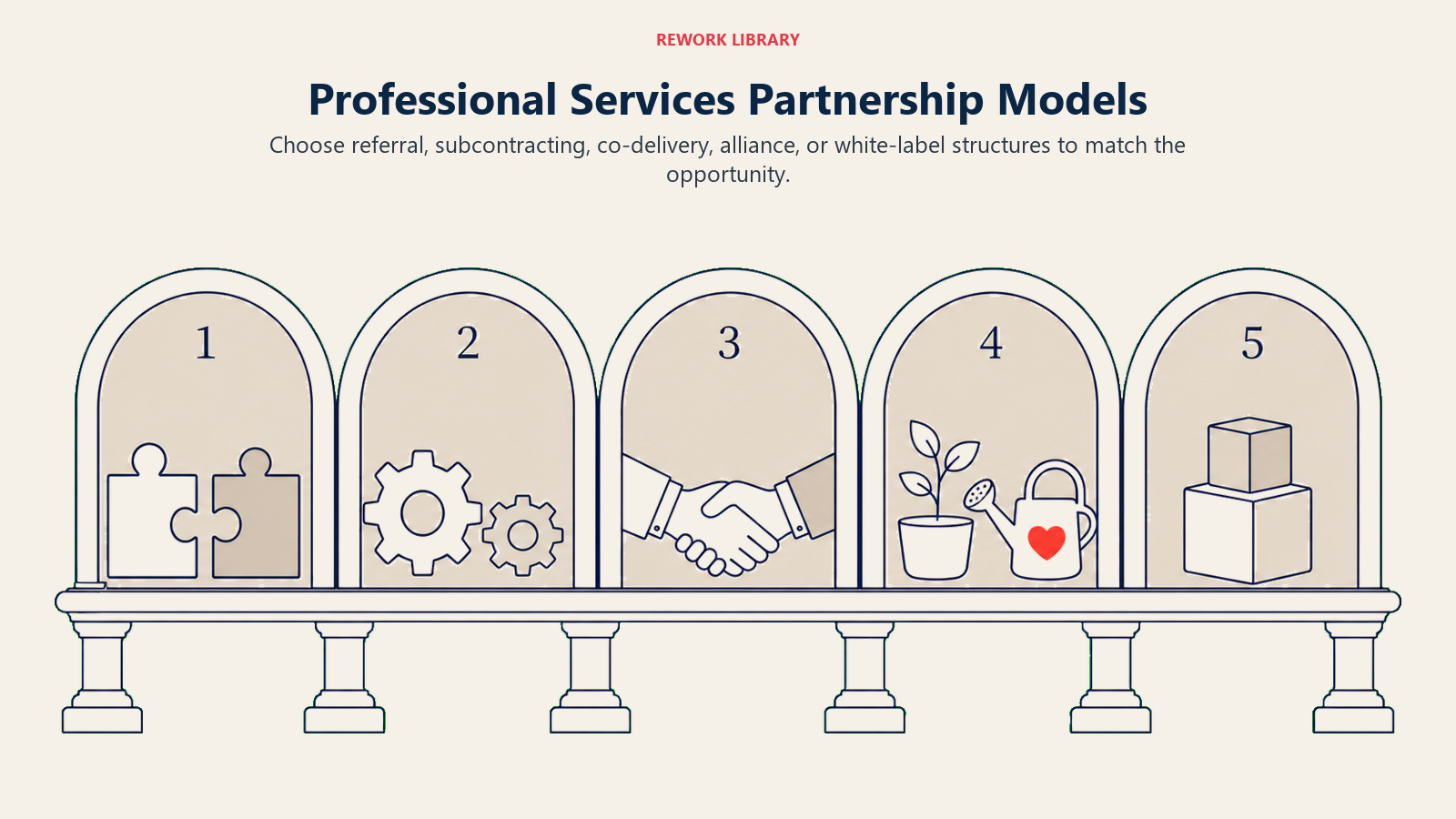
Subcontracting and delivery partnerships involve one firm hiring another to deliver part of a project. A branding agency wins a rebrand project but doesn't do web development, so they subcontract that portion to a development shop. The client pays the agency, the agency pays the subcontractor. The client often doesn't know the subcontractor exists.
This works when you want to expand your deliverable portfolio without building internal capabilities. The risk is quality control. If your subcontractor drops the ball, your client blames you.
Strategic alliances and joint ventures are deeper relationships where you actively collaborate on business development and delivery. You might co-host webinars, create joint marketing content, or pitch large projects together as a unified team. Revenue gets split based on contribution.
These partnerships work for complex, multi-disciplinary opportunities where clients need integrated solutions. Think strategy consultant plus change management firm plus technology implementer. But they're also the hardest to manage because coordination and alignment demands are high.
Technology and platform partnerships pair you with software or technology providers. You become a certified implementation partner, reseller, or integration specialist. SaaS companies often have formal partner programs with training, co-marketing support, and revenue sharing.
This works if your clients need a technology solution and you can provide implementation and support services. You get access to the vendor's client base and co-marketing resources. They get services wrapped around their product.
Channel and reseller relationships let you sell another firm's services under your brand or vice versa. You might white-label someone else's capability or allow them to resell yours. Revenue sharing or wholesale pricing applies.
This works when brand matters more than execution or when you want geographic expansion without opening offices.
The model you choose depends on your goals. Want more leads? Focus on referral partnerships. Want to expand service capabilities? Look at subcontracting or technology partnerships. Want to compete for larger deals? Build strategic alliances.
How to identify high-potential partners
Most firms partner with whoever shows up. That's a mistake. The best partnerships are intentional, based on strategic fit and mutual opportunity. Start with complementary service mapping. List the services your clients need before, during, and after they work with you. If you're a digital marketing agency, clients might need brand strategy before they work with you, web development during, and PR or investor relations after. Those are your natural partnership categories. Now ask: which of these services do you encounter most often? Where do you most frequently say "sorry, we don't do that"? That's where a partnership would create immediate client value.
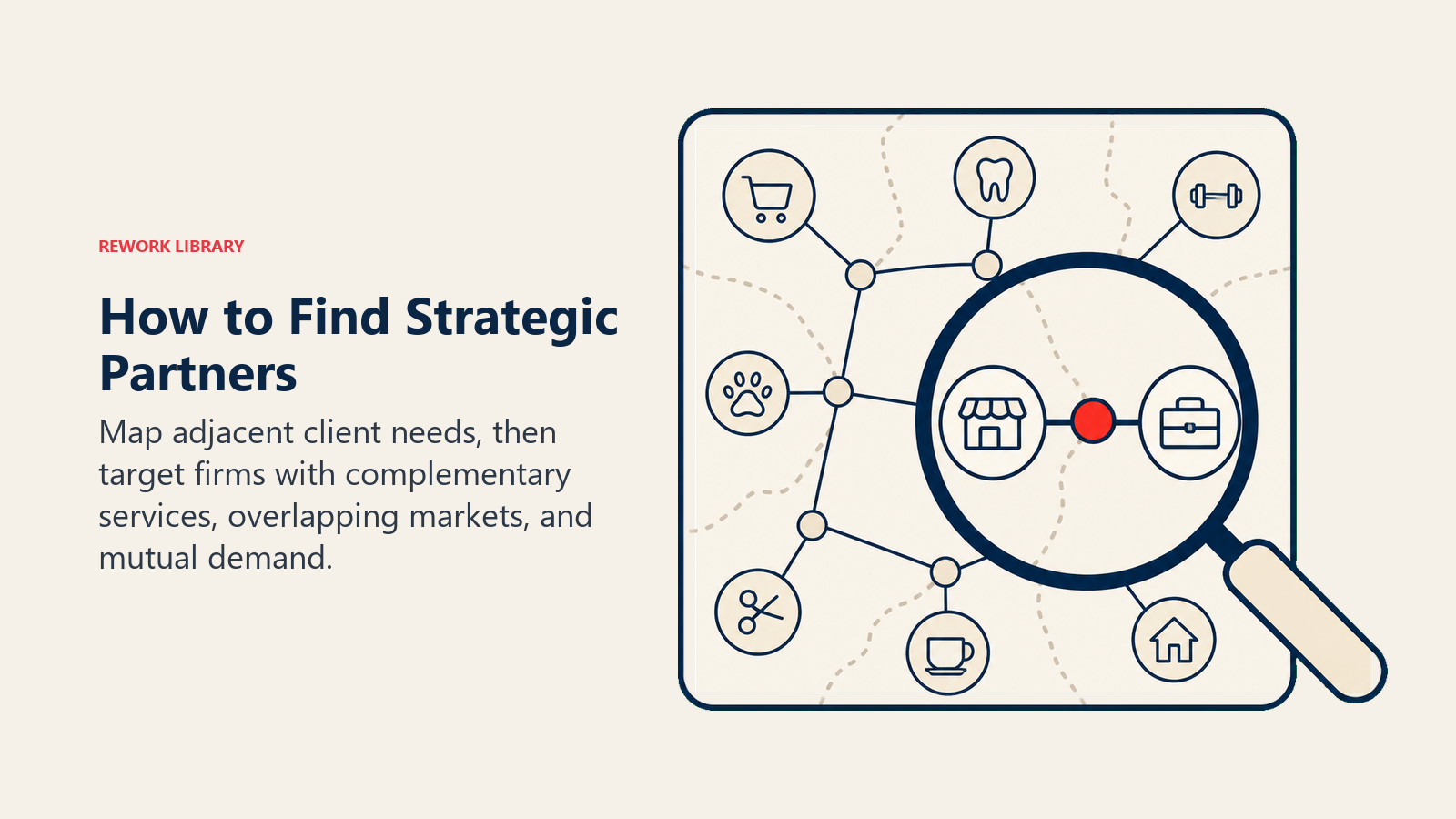
Target client overlap analysis is next. You want partners who serve the same client profile but with different services. A law firm specializing in M&A transactions wants partners who also serve mid-market companies going through transactions: investment bankers, management consultants, accounting firms, HR consultants.
If your ideal client is a Series B SaaS company, you want partners who also serve Series B SaaS companies with non-competing services. Don't partner with someone who serves enterprise manufacturing companies unless you're trying to expand into that market.
Cultural and values alignment matters more than people think. If your firm prides itself on responsiveness and the partner is notoriously slow to return calls, your clients will have a bad experience. If you're relationship-focused and they're transactional, expectations will clash.
Look for partners who share your approach to client service, transparency, and communication style. You're putting your reputation in their hands. Make sure they'll protect it.
Market positioning compatibility is the test people skip. Are you both premium providers? Both value-focused? Both specialists? A boutique, high-touch consulting firm shouldn't partner with a discount, scale-focused provider. The mismatch creates confusion and erodes both brands.
You want partners who reinforce your positioning. If you're known for deep industry expertise, partner with other specialists, not generalists.
Finally, run a partnership potential assessment: How often would you actually refer to each other? Is there real opportunity volume, or is this theoretical? How many clients could benefit from the combined offering? If the answer is "maybe two or three a year," the partnership isn't worth the management effort.
Partner qualification criteria
Just because someone wants to partner with you doesn't mean you should say yes. Qualify partners like you qualify clients. Evaluating partner fit starts with alignment on target market, service positioning, and engagement style. Ask about their ideal client profile, their typical project size, their delivery methodology. If their answers sound like your firm, that's a green light. If they're all over the map, proceed with caution. Quality and reputation assessment requires due diligence. Talk to their clients if possible. Check online reviews and references. Look at their work samples and case studies. Ask other firms in the market about their reputation. You're betting your brand on their performance. Make sure they're worthy.
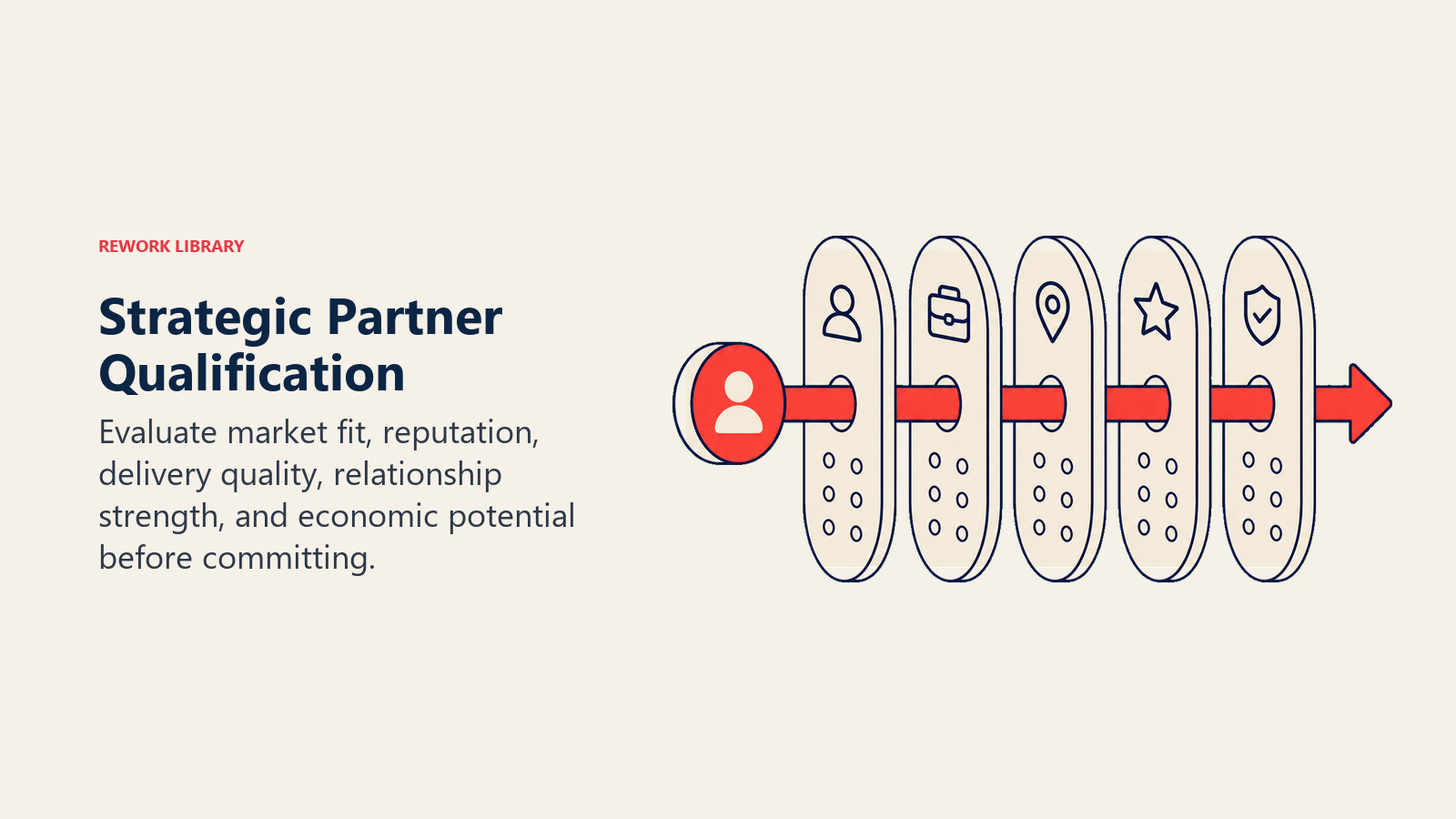
Financial stability and capability matter for delivery partnerships. If you're subcontracting to them or co-delivering a project, can they actually fulfill their obligations? Do they have the bandwidth, resources, and financial stability to execute?
A partner who overpromises and underdelivers because they're stretched too thin will damage your client relationships. Better to know their capacity upfront.
Alignment and commitment indicators tell you if the partnership will be reciprocal. Are they as interested in referring to you as receiving referrals? Do they have other partners they work with regularly? How do those relationships work? If they have a track record of successful partnerships, they probably understand how to make yours work too.
Red flags include: one-sided interest, vague commitments, inability to articulate what they'll refer to you, or unrealistic expectations about deal flow.
Reference checking and due diligence should be standard. Ask for references from other partners or clients. Talk to them about responsiveness, quality, collaboration, and follow-through. You're looking for patterns. One bad story might be an outlier. Three bad stories is a trend.
Don't skip this step because you're excited about the opportunity. Do the work upfront.
Designing the partnership structure
Once you've identified the right partner, you need to define how the relationship actually works. Ambiguity kills partnerships faster than conflict does. Defining partnership scope means getting specific about what you will and won't do together. Which services will you refer? Which clients are in scope? What does each partner contribute? What's off limits because it creates competition? For example: "We will refer clients who need fractional CFO services. You will refer clients who need tax planning and compliance. We won't compete for audit or full-time CFO placement work."
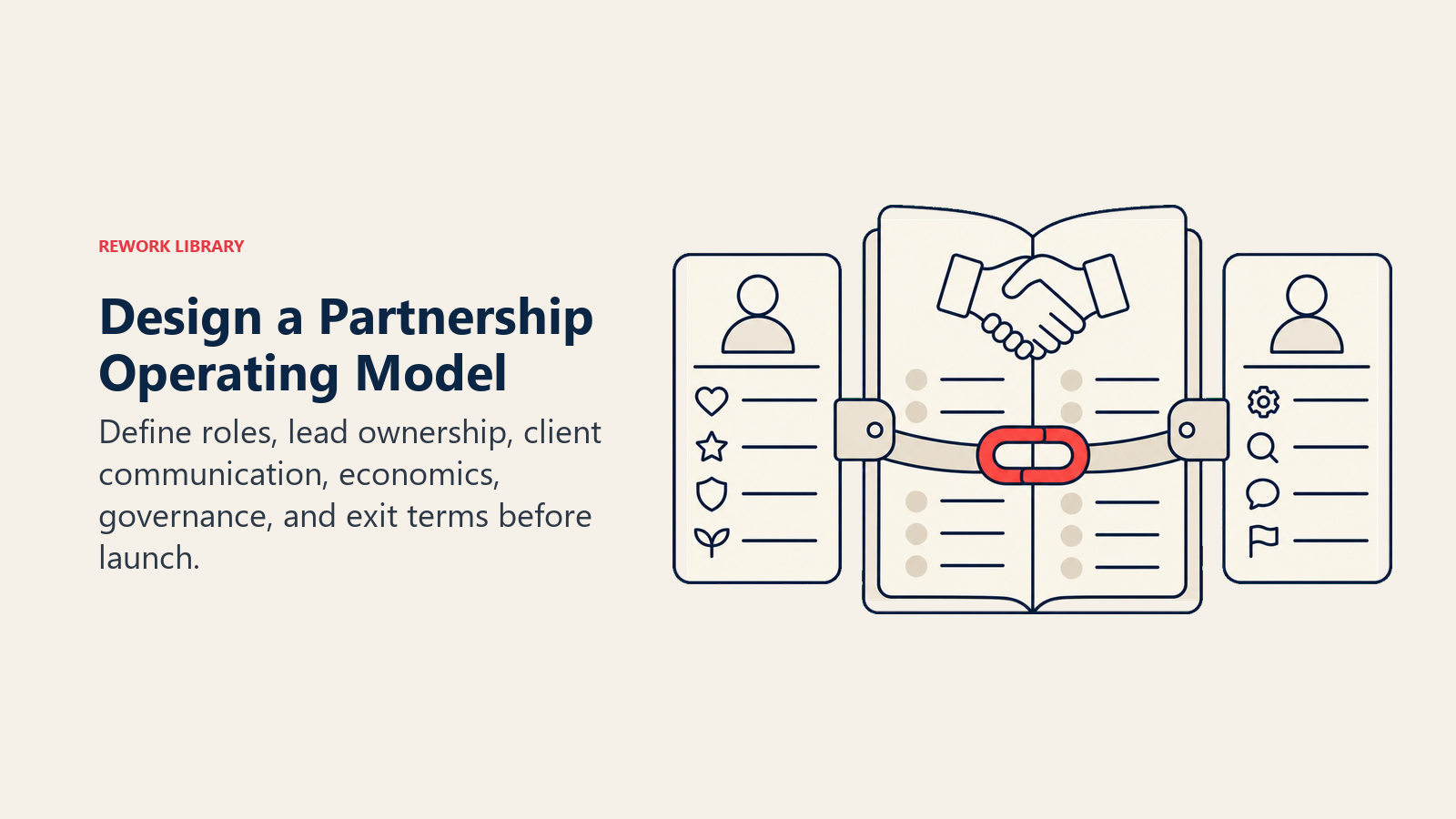
Clear scope prevents awkward situations where you're both chasing the same opportunity.
Referral and revenue sharing terms need to be explicit. What does the referring partner get? A flat fee per referral? A percentage of the first year's revenue? A percentage of all revenue from that client? Nothing except reciprocity?
Common models include:
- 10-20% referral fee on the first project
- 10% ongoing commission for as long as the client remains active
- Tiered commissions based on project size or client lifetime value
- No cash, just reciprocal referrals (informal)
Whatever you choose, document it. Handshake deals fall apart when actual money is involved.
Exclusivity and non-compete considerations define boundaries. Will you both agree not to partner with competitors? Is this an exclusive partnership in a specific geography or industry? Or can you both work with multiple partners?
Non-exclusive partnerships are common and often work better because they create healthy pressure to perform. If a partner knows you have other options, they're incentivized to deliver value.
Geographic and market boundaries matter if you're both regional or specialized. Maybe you handle the Northeast and they handle the West Coast. Or you focus on healthcare clients and they focus on financial services. Clear territories prevent conflict.
Governance and decision-making becomes important for deep partnerships. How will you handle disputes? Who makes the call on client acceptance or project scope changes? How do you communicate about opportunities in progress? Set up regular check-ins and escalation protocols before you need them.
Recruiting and onboarding your first partners
Identifying good potential partners is one thing. Actually getting them to commit is another. Outreach and initial conversations should be direct but not transactional. Don't lead with "want to refer business to each other?" Lead with understanding their business and exploring alignment. "We work with a lot of Series A companies who need help with X. I noticed you specialize in Y for similar companies. I'd love to understand your approach and see if there's a fit to work together."
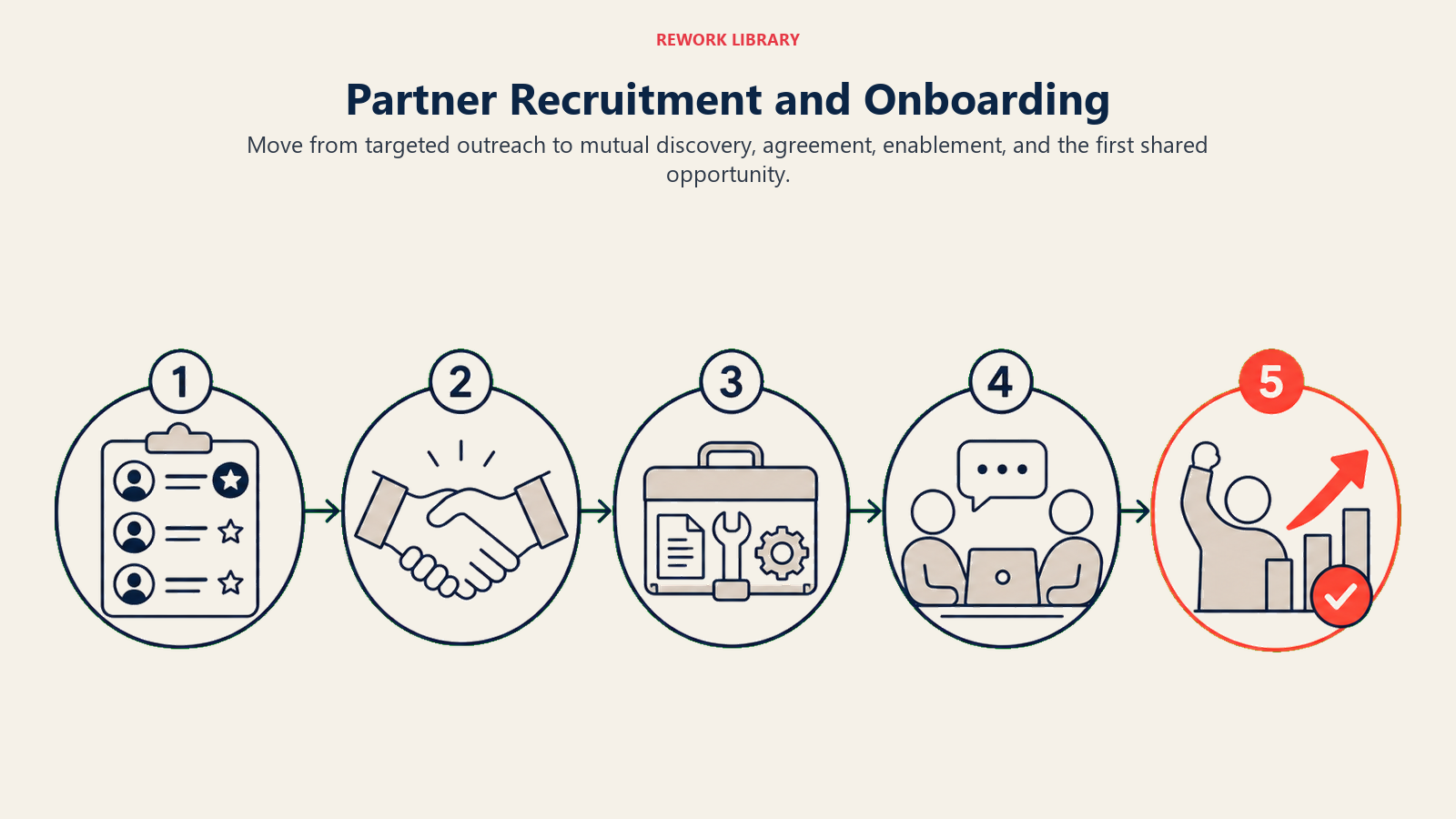
You're testing for interest, capability, and chemistry. Can you have a real conversation? Do they ask good questions? Are they curious about collaboration or just looking for easy leads?
Value proposition communication is where you make the partnership concrete. "Here's what I see: We get asked about X every month by clients who match your target profile. We don't offer that, but we want to help clients solve it. If we refer those opportunities to you, the value to us is seamless client service and potential reciprocal referrals when you encounter clients who need our services. Sound interesting?"
Make it specific. "I've had three conversations this quarter alone where this would have been relevant" is better than "we could probably send you some business."
Agreement negotiation and documentation should be straightforward if you've aligned on the basics. Use a simple partnership agreement that covers scope, referral terms, revenue sharing, exclusivity, and termination. Don't overcomplicate it with legal jargon unless large dollar amounts or IP are involved.
Key sections:
- Services each party will refer
- Compensation or revenue sharing structure
- Payment terms and invoicing process
- Confidentiality and data protection
- Term and termination provisions
- Dispute resolution
Get it in writing, but don't let perfect be the enemy of good. A one-page MOU that both parties understand beats a 15-page contract nobody reads.
Onboarding and enablement process sets the partnership up for success. Educate your partner about your services, ideal client profile, and engagement process. Share your standard pitch, case studies, and pricing framework so they can speak intelligently when they refer.
Likewise, learn everything you need to know about their services, so you can identify referral opportunities and set proper client expectations.
Launch and activation means making the partnership real. Introduce the partner to your team. Create a referral submission process. Make the first referral if you can. Nothing cements a partnership faster than one partner delivering value immediately.
Tell your clients about the new partnership. "We've partnered with [Firm] to help clients who need [Service]. If that ever comes up for you, we've got you covered." That plants the seed and creates awareness.
Enablement strategies that accelerate results
A partnership agreement doesn't magically generate referrals. You need to actively enable partners to recognize opportunities and refer confidently.
Training and education programs should teach partners exactly what to look for. Run a session that covers: your ideal client profile, the problems you solve, the situations that trigger a need for your services, and how to position your value.
For example, if you're a change management consultant, teach your HR software implementation partner to recognize when a client is struggling with adoption or resistance. That's their cue to introduce you.
Make it easy to remember. Give them a simple mental checklist: "If the client says X or Y or Z, that's a referral opportunity for us."
Sales collateral and tools should be partner-friendly. Create a one-page overview of your services that partners can share. Include your positioning, typical engagement types, example clients, and how the referral process works.
Give them a referral email template they can use: "I was talking to [Your Firm] and thought they might be able to help with [Specific Problem]. Would it make sense for me to introduce you?" Pre-written makes it frictionless.
Co-marketing materials development shows clients the partnership is real. Create joint case studies, co-authored content, or webinar series. When prospects see you working together publicly, it reinforces the partnership credibility.
This also keeps your partnership top of mind for your partner. If they're promoting content you created together, they're thinking about your collaboration regularly.
Case studies and references from joint projects are gold. Once you successfully work together on a client engagement, document it. Show how the partnership created client value that neither firm could have delivered alone. Use that story to pitch future joint opportunities.
Regular communication and updates prevent the partnership from going dormant. Send a monthly or quarterly email with your latest news: services you've added, client wins that might be relevant, market trends you're seeing. Keep yourself on their radar without being annoying.
Share a "hot opportunity profile of the month" – describe an ideal referral you'd love to receive right now. Make it concrete so partners know exactly what to look for.
Managing referrals systematically
The moment a partner refers an opportunity, your partnership reputation is on the line. How you handle referrals determines whether the partnership thrives or dies. Referral submission process should be dead simple. Create a form, email template, or portal where partners can submit referral details: client name, contact info, challenge, context, and any promises made. You need enough information to reach out intelligently without putting the partner through bureaucracy. Qualification and response protocols define your SLA. How quickly will you respond to a referral? 24 hours? 48 hours? What's your process for qualifying the opportunity? Will you always take a meeting, or do you screen first?
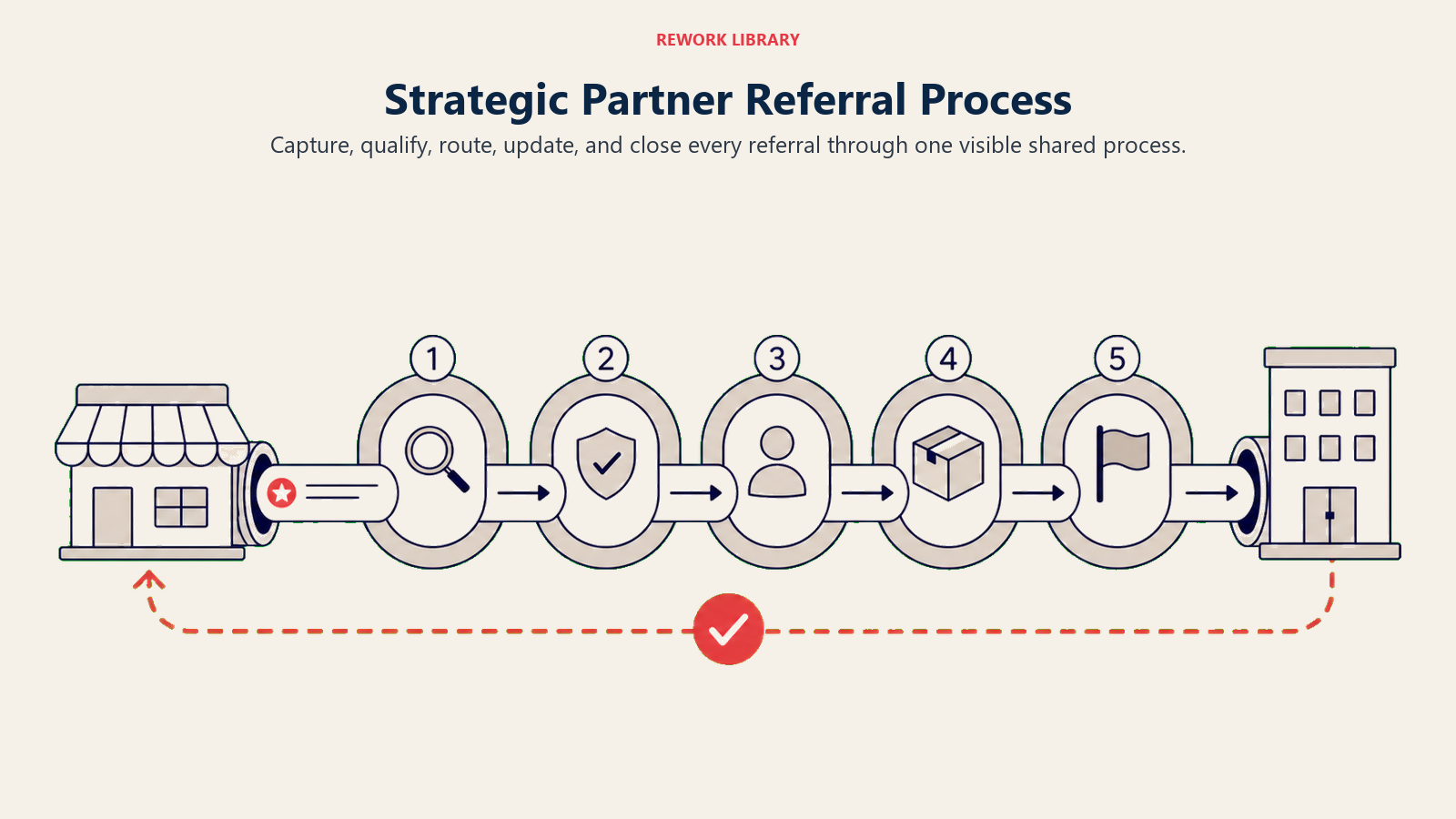
Set partner expectations upfront. If you can't help every referral, say so. "We'll respond within 24 hours. If it's a fit, we'll schedule a call within a week. If it's not a fit, we'll let you know why and try to suggest an alternative."
Communication and tracking keeps everyone informed. When a partner refers someone, confirm receipt immediately. Let them know when you've reached out to the prospect. Update them when the meeting happens, when a proposal goes out, and when the deal closes (or doesn't).
Partners need to know their referral was taken seriously. Silent black holes destroy trust faster than rejected opportunities.
Use a CRM or simple tracking sheet to log every referral: source, date, status, outcome, revenue if closed. This becomes your partnership scorecard.
Closing the loop with partners is the step most firms skip. When a referral converts, tell the partner. Thank them. Explain the project scope (if client confidentiality allows) and remind them of the revenue share or reciprocal value.
When a referral doesn't convert, tell them that too. Explain why in a learning-focused way: "The timing wasn't right for them" or "They didn't have budget allocated." Don't ghost partners on deals that go nowhere.
Attribution and credit assignment matters when multiple partners might claim the same referral. Establish a rule: first partner to make the formal introduction gets credit. Or the partner who had the most meaningful influence on the client's decision. Define it upfront to avoid arguments later.
Revenue sharing models that align incentives
Money makes things complicated. Structure it right and everyone wins. Structure it poorly and partnerships implode over $500 commissions. Commission structures and rates vary by industry and engagement type. Common benchmarks:
- 10-15% for straightforward service referrals
- 20-25% for high-involvement referrals where the partner actively sells on your behalf
- 5-10% for passive referrals (they mentioned you, but you did all the selling)
- Flat fees for lower-ticket services Match the commission to the value the partner creates. If they handed you a hot lead who was ready to buy, that's worth more than a cold introduction.
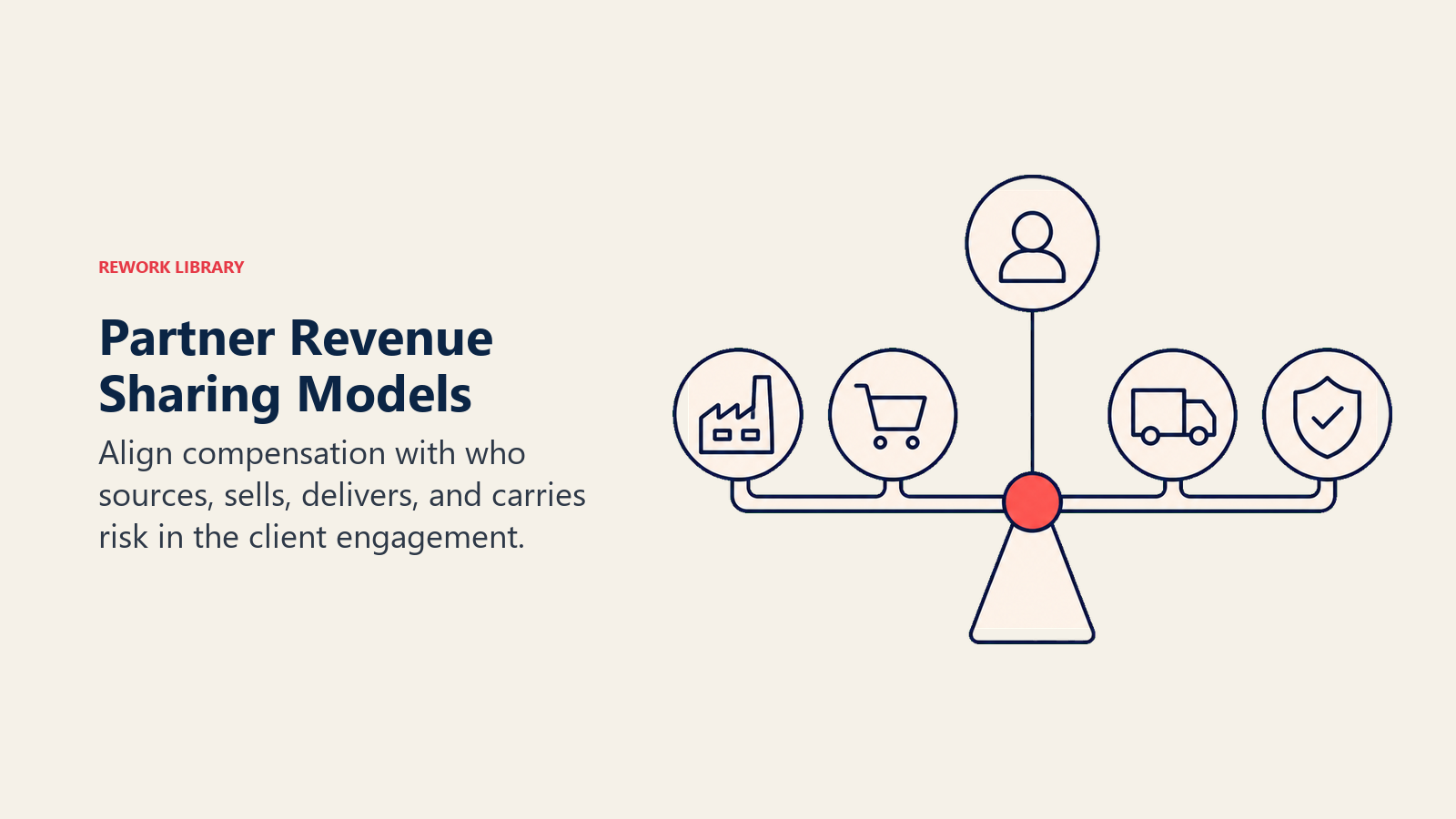
Tiered incentive programs reward partners who refer more volume or higher quality. For example:
- 1-3 referrals per year: 10% commission
- 4-10 referrals per year: 15% commission
- 11+ referrals per year: 20% commission
Or tier by conversion rate: if their referrals close at 50%+, they get a higher commission rate because they're sending you better-qualified opportunities.
Revenue split arrangements work for true co-delivery partnerships. You might split project revenue 60/40 or 50/50 based on workload contribution. Define this per project based on who's doing what.
Be transparent about margins. If you're marking up their work to the client, they should know. Hidden margins breed resentment.
Payment timing and terms should be clear: Do you pay commission when the client pays you? When the project starts? At completion? Monthly for retainer clients?
Net-30 from client payment is common. Don't make partners chase you for money. Set up automatic commission payments if possible.
Accounting and reporting needs to be clean. Provide partners with a quarterly statement showing referrals, revenue, commissions earned, and commissions paid. Transparency builds trust. Mystery creates suspicion.
If you're paying significant commissions, issue proper tax forms (1099s in the US). Keep it professional and compliant.
Co-marketing and business development together
The best partnerships don't just trade referrals. They actively create opportunities together. Joint marketing campaigns put both brands in front of each other's audiences. You co-host a webinar on a topic that intersects both services. You collaborate on a research report. You create a joint email campaign to both contact lists.
The math works beautifully: if you each have 5,000 contacts, a joint campaign reaches 10,000 people (minus overlap). Both firms benefit from the exposure.
Co-hosted events and webinars are the most common co-marketing tactic. Pick a topic that matters to both your audiences. Split the workload: one partner handles logistics, the other handles promotion. Both present content.
Post-event, you each get the attendee list and can follow up with warm leads. A single webinar can generate 5-10 qualified conversations for each partner, supporting your thought leadership strategy.
Shared content development means writing together. Co-author a blog post, white paper, or guide that showcases your complementary expertise. One firm publishes it, but both promote it and both get SEO and thought leadership value.
Example: A growth consultant and a fractional CFO partner write "The Financial Metrics That Actually Drive Growth Decisions." Both perspectives in one piece make it more valuable.
Cross-promotion strategies leverage existing channels. Feature your partner in your newsletter. They feature you in theirs. Interview each other for your respective blogs or podcasts. Guest post on each other's LinkedIn.
This is low-effort, high-impact. You're borrowing each other's credibility and reach.
Lead generation collaboration can include joint outreach campaigns, shared booth space at conferences, or co-sponsored research studies. You're pooling resources to create lead flow that benefits both partners.
The key is ensuring both partners get equal access to leads and equal brand visibility. Avoid situations where one partner feels like they're just supporting the other's marketing.
Performance management and accountability
Partnerships drift without regular review and accountability. Treat them like any other business initiative: set goals, measure results, and course-correct.
Setting expectations and goals starts on day one. What does success look like for each partner? How many referrals do you hope to exchange in year one? What revenue target are you aiming for?
Be realistic. A new partnership might generate 2-5 referrals in the first year. A mature partnership might generate 20-50. Set a baseline expectation so you both know if you're on track.
Performance metrics and KPIs should track both volume and quality:
- Number of referrals sent and received
- Referral conversion rate
- Revenue generated from referrals
- Time to follow up on referrals
- Client satisfaction with referred services
- Reciprocity balance (are referrals flowing both ways?)
Track these monthly. If one partner is referring consistently and the other isn't, you have a problem.
Regular review and feedback means scheduled check-ins. Quarterly is typical. Review the metrics, discuss what's working and what's not, and identify opportunities to increase referral flow.
Ask: "What could we do to make it easier for you to refer?" or "What opportunities are you seeing that we should know about?" Active problem-solving keeps the partnership healthy.
Issue resolution and improvement happens when you catch problems early. If referral quality is low, address it immediately. If follow-up is slow, fix the process. If revenue sharing is unclear, clarify it.
Small issues ignored become big resentments. Have the hard conversations quickly.
Renewal and expansion considerations come into play after year one. Is the partnership delivering value? Should you double down with more co-marketing or exclusive terms? Or should you scale back because it's not working?
Not every partnership succeeds. That's okay. It's better to end underperforming partnerships gracefully than to let them limp along consuming time and energy.
Building sustainable partner relationships
The operational mechanics matter, but partnerships are ultimately about relationships. You're investing in people, not just processes.
Regular communication cadence keeps the relationship alive. Monthly check-ins, even if brief, signal that the partnership matters. Share wins, market insights, or just check in on how business is going.
Personal connection matters. Partnerships between people who like and respect each other outlast partnerships that are purely transactional.
Strategic planning sessions annually align on where both businesses are headed. Are you entering new markets? Launching new services? Shifting your ICP? These changes affect partnership strategy.
Plan together. If your partner is expanding into a new geography where you have clients, that's an opportunity to accelerate their launch and create more referral volume.
Executive sponsor engagement matters for larger partnerships. If you're the primary contact, introduce your partner to your firm's leadership. Having executive-level relationships creates stability and commitment that survive personnel changes.
When partners know they matter at the leadership level, they invest more in the relationship.
Recognition and appreciation goes a long way. When a partner sends you a great referral, thank them publicly (if appropriate). Feature them in your newsletter, give them a shoutout on LinkedIn, or send a handwritten note.
When a partnership hits a revenue milestone, celebrate it together. Acknowledge the mutual value creation.
Long-term relationship cultivation means thinking beyond immediate referrals. Introduce your partner to other contacts who could help them, even if there's no immediate business angle. Provide advice or feedback when asked. Be a genuine supporter of their success.
Partnerships that feel like friendships last longer and create more value than partnerships that feel like vendor relationships.
Scaling from individual partnerships to a program
Once you've proven the partnership model works, you can scale it into a systematic program. From individual to program approach means standardizing your partnership processes. You create templates for agreements, onboarding, training, and reporting that work for any partner. Instead of custom-negotiating every partnership, you have defined partnership tiers with set terms. New partners choose a tier and get the corresponding support and commission structure.
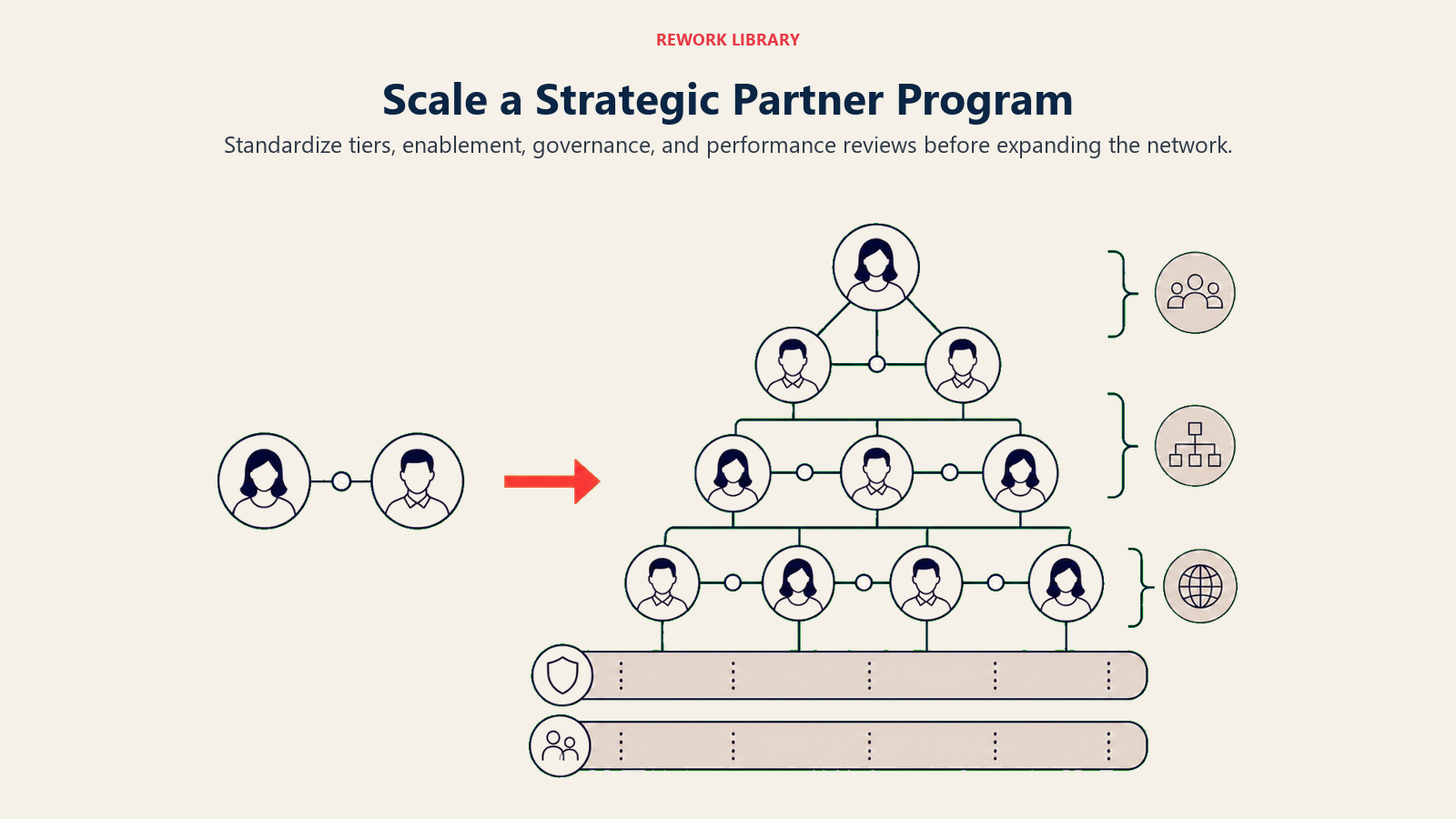
Partner tiering and segmentation creates different levels of partnership based on strategic importance or referral volume:
Tier 1 - Strategic Partners: 3-5 key partners who refer frequently, co-market actively, and deserve the most attention. They get the highest commission rates, dedicated account management, and priority access to your team.
Tier 2 - Active Partners: 10-20 partners who refer occasionally and participate in some co-marketing. Standard commission rates and quarterly check-ins.
Tier 3 - Referral Network: Broader network of partners who refer infrequently but provide coverage in specific niches or geographies. Lower commission rates, annual check-ins, mostly self-service enablement.
Tiering lets you focus energy where it matters most while maintaining a wider network.
Systems and technology enablement becomes necessary at scale. You can't manage 30 partnerships with spreadsheets and email. Invest in:
- Partner portal for referral submission and tracking
- CRM integration to track referral source and revenue attribution
- Automated commission calculation and reporting
- Content library where partners can access marketing materials
- Training resources and recorded enablement sessions
Technology reduces manual work and ensures consistent partner experience.
Program management organization means someone owns partnership success. In smaller firms, this might be a part-time responsibility. In larger firms, you hire a dedicated partner manager or director of alliances.
This person recruits new partners, manages existing relationships, handles enablement, tracks performance, and continuously optimizes the program.
Growth and expansion strategies look like:
- Recruiting 5-10 new partners per year in strategic categories
- Expanding geographically by adding partners in new regions
- Deepening relationships with top performers through co-investment or exclusivity
- Creating partner advisory boards to get feedback on program improvement
- Launching partner-only benefits like training, certification, or shared tools
A mature partner program can drive 30-50% of new revenue with lower customer acquisition costs than any other channel.
Common partnership challenges and solutions
Even well-designed partnerships hit obstacles. Here's how to navigate the most common ones.
Uneven referral flow is the most frequent complaint. One partner refers consistently, the other barely ever reciprocates. This creates resentment and usually kills the partnership within 18 months.
Solution: Address it directly in quarterly reviews. "We've referred 12 opportunities to you this year and received 2 referrals back. Help me understand what we could do differently to make it easier for you to refer." Sometimes the imbalance is because they truly don't encounter your buyer. Other times they're not thinking about you. Understanding why helps you fix it or exit gracefully.
Quality and fit issues happen when partners refer anything with a pulse just to hit referral quotas. You waste time on bad leads, the client has a poor experience, and trust erodes.
Solution: Create a qualification checklist partners must complete before submitting a referral. If they can't answer basic qualifying questions, they shouldn't refer. Provide feedback on every referral: "This was a great fit because..." or "This wasn't a fit because..." Train partners on what good looks like.
Competitive conflicts emerge when a partnership strays into overlapping services. You're both competing for the same piece of a client's budget, and the partnership turns awkward.
Solution: Redraw boundaries in the partnership agreement. Get specific about who does what. If overlap is unavoidable, define a fair process: first partner to engage gets the work, or you jointly pitch and let the client choose, or you split the work by component.
Execution and follow-through problems arise when partners don't respond quickly, drop balls, or deliver subpar work. Their failures reflect on you because you made the introduction.
Solution: Set service level agreements. If a partner repeatedly fails to meet standards, pause new referrals until they demonstrate improvement. Your client relationships are too valuable to risk on unreliable partners. Sometimes the answer is ending the partnership.
Relationship sustainability challenges come from personnel changes. Your main contact leaves, and the new person doesn't care about the partnership. Or priorities shift and the partnership no longer makes strategic sense for them.
Solution: Build relationships at multiple levels (executive sponsors, delivery team, account managers) so the partnership survives people moving around. Stay flexible. If a partnership becomes one-sided or stops delivering value, don't cling to it out of loyalty. Gracefully transition to inactive status and make room for better partnerships.
Metrics that indicate partnership health
You can't improve what you don't measure. Track these KPIs to understand partnership performance: Partner count and types is the foundational metric. How many active partnerships do you have? How many in each tier? What's the mix of referral vs. co-delivery vs. strategic alliance partnerships?
Track partner additions and losses. If you're adding 10 partners a year but losing 8, you have a retention problem.
Referral volume and quality measures both quantity and conversion. Total referrals sent and received, referral conversion rate, and revenue per referral.
Quality metrics matter more than volume. Ten high-quality referrals that close at 50% are better than 50 low-quality referrals that close at 2%.
Conversion rates and revenue track the business impact. What percentage of partner referrals convert to clients? What's the average deal size? What's the total revenue attributed to partnerships this quarter?
Break this down by partner to see who's driving the most value. Your top 3 partners probably generate 70% of your partnership revenue. Reward and invest in them accordingly.
ROI and program economics compares total partnership revenue to the cost of running the program (commissions paid, program management time, marketing costs, systems).
A healthy partner program should deliver 5:1 ROI or better. For every dollar spent on partnerships, you should generate at least five dollars in revenue.
Relationship health indicators are qualitative but important. How often do partners engage with you outside of referrals? Do they respond quickly? Do they participate in co-marketing? Do they attend quarterly reviews?
Survey partners annually on satisfaction and perceived value. If satisfaction scores drop, investigate before referrals dry up.
Where to go from here
Strategic partnerships extend your reach, capabilities, and credibility in ways that pure internal growth cannot. But they only work with intention.
Start with 2-3 high-potential partners. Get the model working with a small number before you scale. Prove that you can create mutual value, manage referrals professionally, and sustain relationships over time.
Once you have your first successful partnership generating consistent referrals, replicate the model with additional partners in complementary service areas.
Partnerships work best when integrated into your broader growth strategy:
- Professional Networking helps you identify partnership candidates through trusted connections
- Consultative Business Development teaches the relationship skills that make partnerships thrive
- Service Line Strategy clarifies where partnerships can fill capability gaps
- Client Testimonials & Case Studies provides the proof points partners need to refer confidently
The best partnerships feel less like vendor relationships and more like extended team members working toward shared goals. When you find partners who operate at your level, serve your target clients, and commit to mutual success, you've built a growth channel that compounds over time.
That's how strategic partnerships multiply your impact without multiplying your overhead.

Sales Director
On this page
- Why strategic partnerships multiply your growth
- Partnership model types that make sense
- How to identify high-potential partners
- Partner qualification criteria
- Designing the partnership structure
- Recruiting and onboarding your first partners
- Enablement strategies that accelerate results
- Managing referrals systematically
- Revenue sharing models that align incentives
- Co-marketing and business development together
- Performance management and accountability
- Building sustainable partner relationships
- Scaling from individual partnerships to a program
- Common partnership challenges and solutions
- Metrics that indicate partnership health
- Where to go from here