Referral Generation System: Building Systematic Client Referral Programs

Turn this article into takeaways for your work.


Each assistant summarizes the article only for you and suggests best practices for your work.
You've probably heard the stats. Referred clients close faster, spend more, and stick around longer. They have the lowest acquisition cost and highest lifetime value. Every marketing playbook calls referrals "the goldmine."
So why do most professional services firms generate so few of them?
Because waiting for referrals to happen naturally is like waiting for revenue to appear in your bank account. It's a critical component of client retention strategy that requires deliberate action. It doesn't work that way. Happy clients don't automatically become advocates who send business your way. They need a system, a process, and yes, sometimes a nudge.
This guide shows you how to build a referral generation system that turns satisfied clients into a predictable source of qualified leads. Not by being pushy or transactional, but by making referrals easy, natural, and mutually beneficial.
The economics of referrals
Before we get into tactics, let's talk about why referrals matter so much.
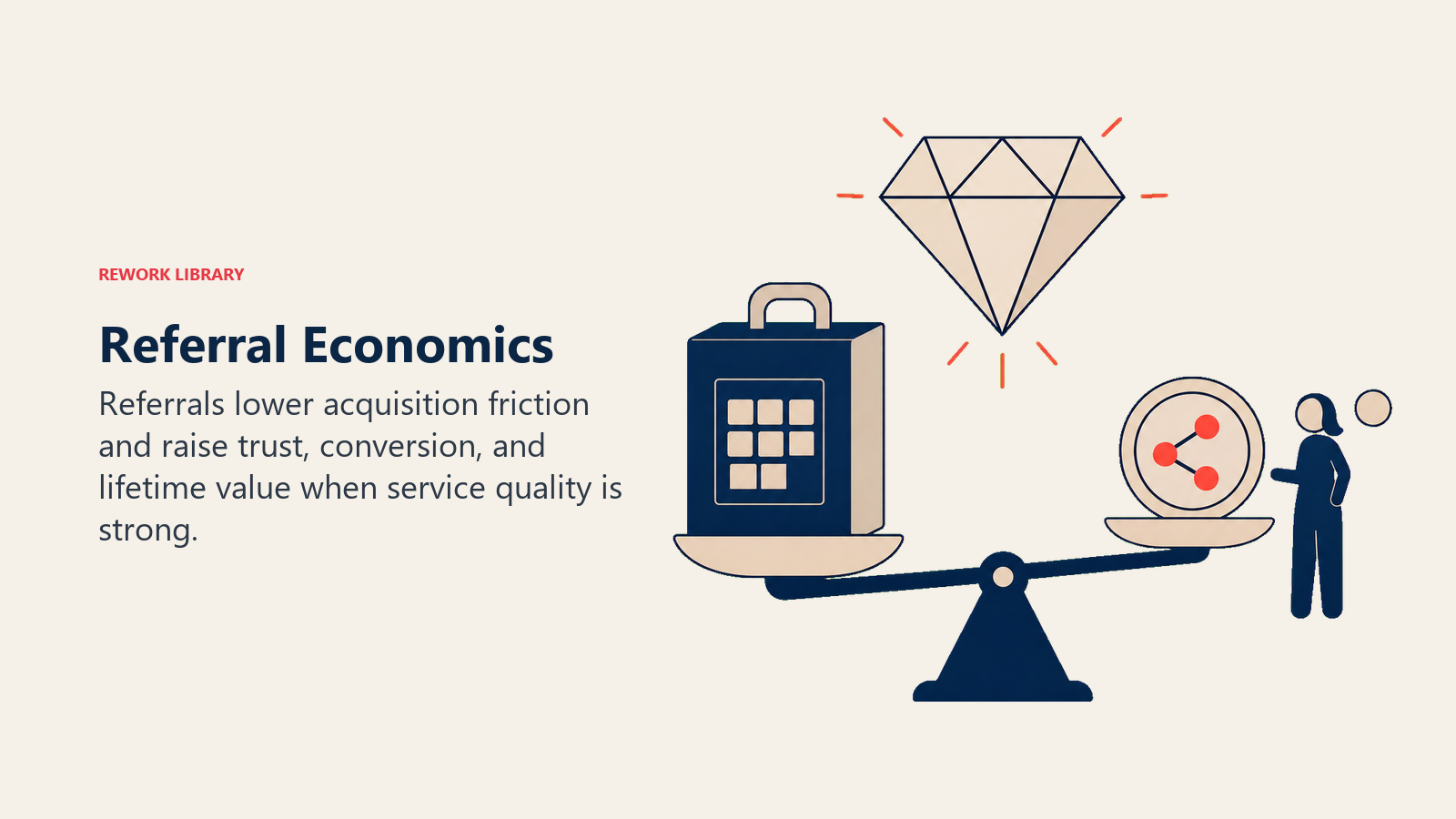
When you compare referral leads to other sources, the numbers are striking. Your typical cold outbound lead might cost $500-1,500 to acquire and convert at 1-3%. A marketing-generated lead runs $300-800 with a 5-10% conversion rate. But a referred lead? Often zero direct acquisition cost with conversion rates of 25-50% or higher.
That's not even the full picture. Referred clients also:
Close faster: They come in with pre-established trust. You're not starting from zero credibility - you're borrowing it from whoever referred them. This can cut sales cycles by 30-60%.
Spend more: They trust your recommendations because they trust the person who sent them. Less price resistance, more willingness to buy the right solution instead of the cheapest one.
Stay longer: The retention data is clear. Clients who come through referrals have 2-4x higher lifetime value than those acquired through paid channels.
Refer others: This is the multiplier effect nobody talks about. Referred clients are more likely to become referrers themselves because they entered through that channel. It's a self-perpetuating cycle if you set it up right.
The ROI math is simple. If you invest $10,000 in building a referral program that generates 5 new clients worth $50,000 each, you've created $250,000 in revenue. But you've also created 5 potential future referrers who might each bring in 2-3 more clients over time. The compounding is real.
That's why treating referrals as a "nice to have" is a mistake. They should be a core growth channel with dedicated resources and attention.
Identifying referral-ready clients
Here's the thing most firms get wrong: they ask everyone for referrals, or they ask randomly when they happen to think about it. Both approaches fail.
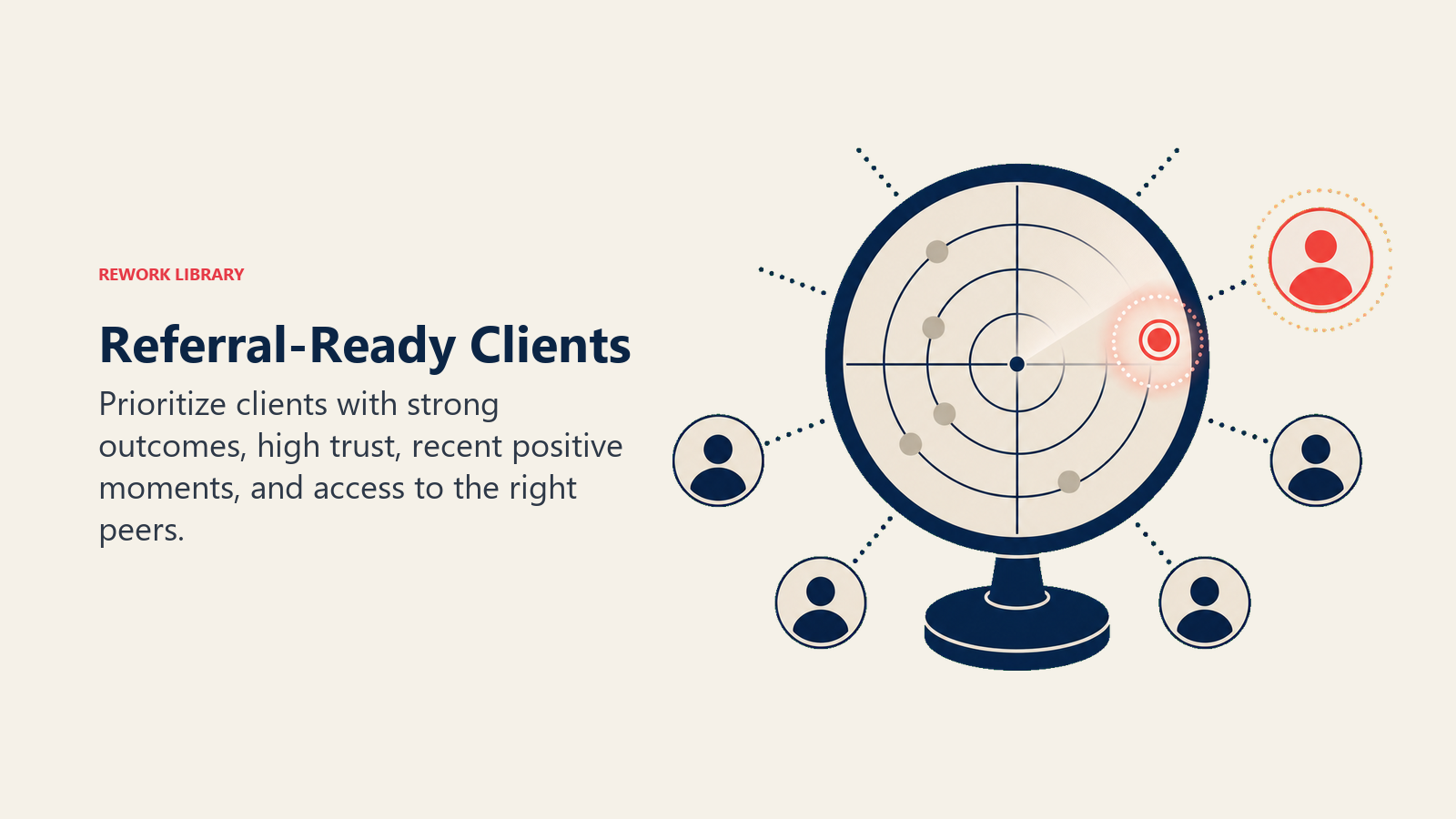
Not all clients are referral-ready. Some love you but don't know anyone to send your way. Some are satisfied but not enthusiastic enough to put their reputation on the line. Some are in the wrong networks entirely.
You need a way to identify who's actually ready and able to refer. Here's what to look for:
Satisfaction indicators: This is table stakes. If they're not genuinely happy with your work, don't ask. Look at:
- NPS scores above 8 (promoter territory)
- Positive feedback in recent check-ins
- Repeat engagements or expanded scope
- Willingness to serve as a reference
Relationship strength: How well do they actually know you? A client you've worked with once for three weeks isn't going to be your biggest advocate. But someone you've supported for three years across multiple projects? They'll go to bat for you. Track:
- Length of relationship
- Number of touchpoints
- Whether they've met multiple people on your team
- Personal rapport beyond the business transaction
Network characteristics: Can they actually help you? Ask yourself:
- Are they well-connected in your target market?
- Do they participate in industry associations or events?
- Are they active on LinkedIn or other professional networks?
- Do they move in circles with decision-makers you want to reach?
A CFO at a PE-backed portfolio company who loves your work is incredibly valuable because they know 20 other CFOs in similar situations. An individual contributor at a stable company might be thrilled with you but have limited referral potential.
Recent wins: Timing matters. The best moment to ask for referrals is right after you've delivered exceptional value. Did you just:
- Complete a high-impact project successfully?
- Help them solve a critical problem?
- Receive unsolicited praise or thanks?
- Get renewed for another engagement?
Strike while the iron is hot. Satisfaction fades over time.
Create a simple scoring system: 1-5 on satisfaction, 1-5 on relationship strength, 1-5 on network potential. Anyone scoring 12+ is a priority referral source. Focus there first.
Designing your referral program
A referral program doesn't have to be complicated, but it does need structure. Here's how to design one that works.
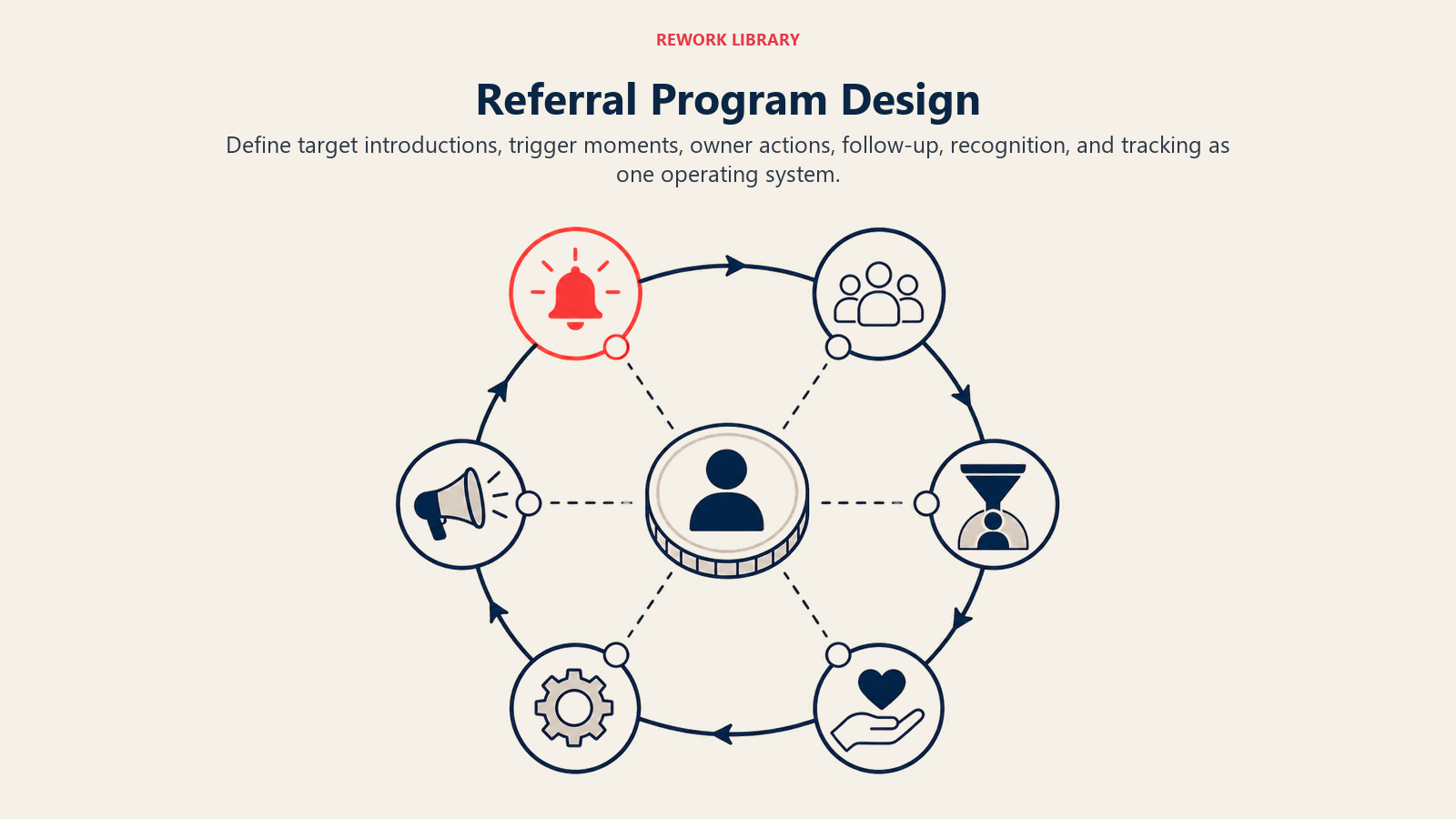
Set clear objectives: What are you trying to achieve? Be specific:
- Generate X qualified referral leads per quarter
- Convert Y% of those leads to clients
- Achieve Z% of new revenue from referrals within 12 months
Without targets, you can't measure success or allocate resources appropriately.
Identify your target referral sources: Who are you asking? The answer usually includes:
- Current clients (obviously)
- Past clients who left on good terms
- Professional network connections
- Strategic partners and complementary service providers
- Industry colleagues who serve different markets
Each source needs a slightly different approach, but the core principle is the same: make it easy and valuable for them to refer you. Building a strategic partner network can formalize these relationships for consistent referral flow.
Design your incentive structure: This is tricky in professional services because many fields have ethics restrictions on financial incentives for client referrals. Know your rules:
For legal and accounting firms: Direct financial incentives to clients for referrals are usually prohibited. Focus on non-financial recognition: public thank-yous, priority scheduling, exclusive insights, charitable donations in their name.
For consulting, technology, and marketing services: You usually have more flexibility. Common approaches include:
- Percentage of first-year fees (typically 5-15%)
- Flat referral bonuses ($500-5,000 depending on deal size)
- Account credits or service upgrades
- Tiered rewards (more referrals = bigger rewards)
But here's what most programs miss: the best referrers often don't care about the financial incentive. They refer because they genuinely want to help someone they know solve a problem. Recognition and gratitude matter more than money.
Create your communication plan: How will you actually activate referrers? You need:
- Initial program introduction (email or conversation explaining how it works)
- Periodic reminders and updates (monthly or quarterly touchpoints)
- Success stories (share when referrals turn into clients)
- Specific asks at key moments (after project completion, at year-end reviews)
Don't blast everyone constantly. Be strategic and personal.
Set up tracking and management: You need systems to:
- Track who referred whom
- Follow up on referrals quickly (24-48 hour response time)
- Close the loop with referrers on outcomes
- Measure conversion rates and program ROI
If you can't attribute referrals properly, you can't thank people appropriately or improve the program.
The art of asking for referrals
This is where most people get uncomfortable. Asking for referrals feels pushy or needy, especially in relationship-driven professional services.

Get over it. If you've done great work for someone, asking them to recommend you isn't inappropriate - it's giving them a chance to help their network solve similar problems. Reframe it from "I need your help" to "I can help people you know."
Timing your request: The best times to ask are:
- Right after delivering a major win
- During a project retrospective or debrief
- At regular business review meetings
- When they give you unsolicited praise
- At the end of successful engagements
The worst time is out of the blue with no context. "Hey, know anyone who needs my services?" is lazy and ineffective.
How to script the ask: Be direct but natural. Here are three approaches that work:
The specific ask: "We're looking to work with more CFOs in PE-backed companies, similar to you. Do you know anyone in your network facing the same challenges we helped you solve?"
This is specific, relevant, and easy to respond to. They can mentally scan their network for people who fit.
The open-ended ask: "You've been great to work with, and I'm curious - who else in your network do you think could benefit from the kind of work we did together?"
This is softer and gives them freedom to think broadly.
The reciprocal ask: "I'm always looking to connect great people. Are there any introductions I can make for you? And if you know anyone who might benefit from what we do, I'd love an introduction as well."
This positions referrals as a two-way street of mutual value creation.
Making it easy: The biggest barrier to referrals isn't willingness - it's friction. Reduce it by:
- Providing a simple one-liner they can copy: "You should talk to Sarah at X firm. They helped us solve Y problem and saved us $Z."
- Offering to send them an email they can forward
- Giving them a clear description of who you're looking for
- Making the introduction warm, not cold (they introduce you, you take it from there)
If someone has to think hard about how to refer you, they won't do it.
Overcoming your own discomfort: If asking still feels awkward, remember:
- You're not begging for business. You're offering value to their network.
- The worst they can say is "not right now" or "I can't think of anyone."
- Successful people are asked for referrals all the time. It's normal.
- If you don't ask, you definitely won't get referrals. Asking gives you a chance.
Practice the ask until it feels natural. Role-play with colleagues. The first few times will be uncomfortable, but it gets easier.
Beyond clients: expanding your referral sources
Client referrals are great, but they're not the only game. Here are other high-value sources:
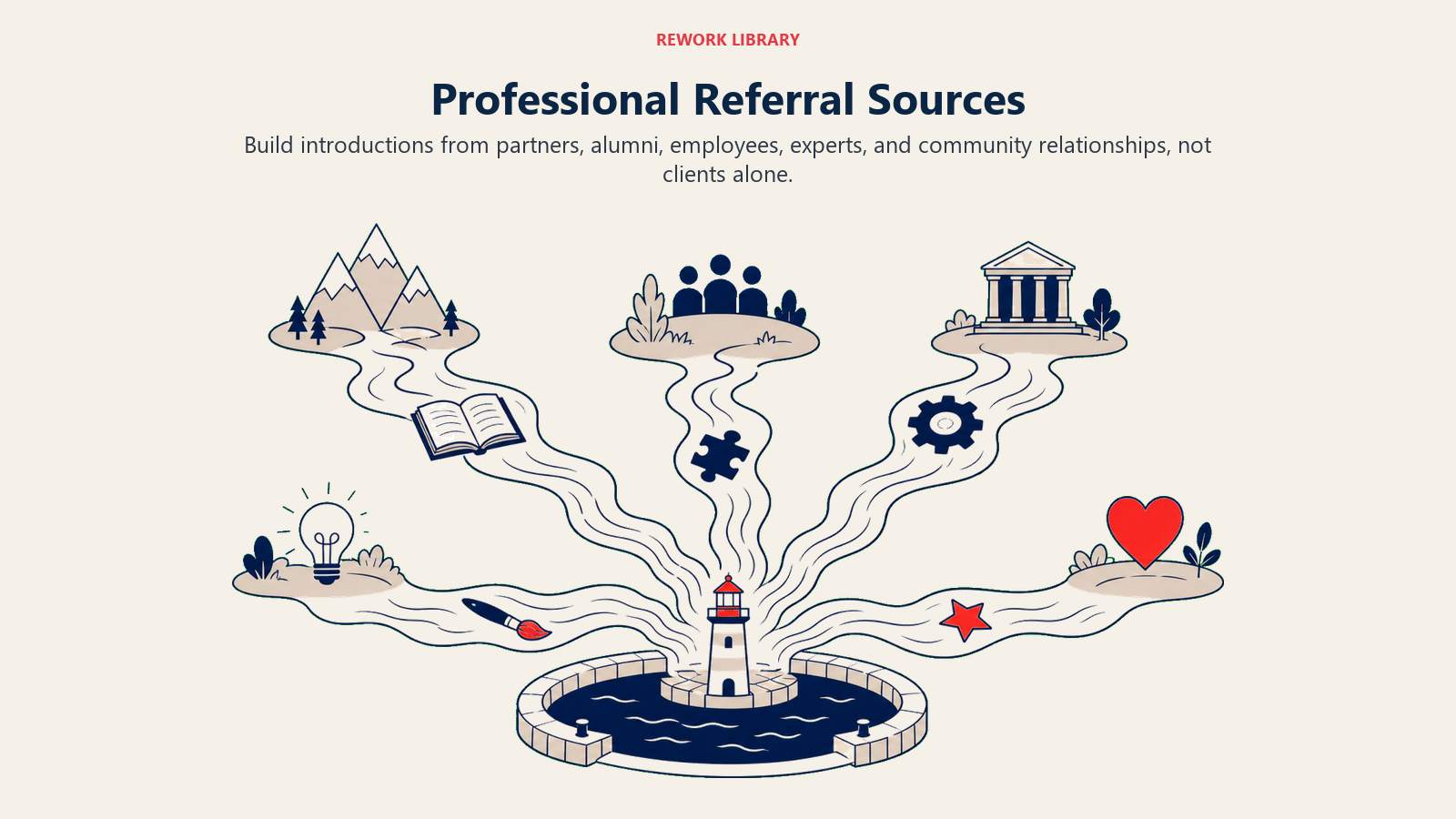
Professional network referrals: People in your industry who serve different markets or specialties. If you focus on manufacturing and they focus on healthcare, you're not competitors - you're potential referral partners. Build these relationships through:
- Industry associations and events
- LinkedIn engagement and direct outreach
- Collaborative content or co-hosted events
- Regular coffee meetings or check-ins
Make it explicit: "If you ever come across a client in manufacturing who needs help with X, I'd love an introduction. And I'll do the same for you in healthcare."
Strategic partners: Companies that serve the same clients with complementary services. If you're a management consultant, partner with:
- Technology implementers
- Executive recruiters
- Change management specialists
- Training and development firms
You can refer each other because you're solving different pieces of the same puzzle for clients.
Alumni and former employees: People who used to work at your firm are some of your best advocates. They know your capabilities intimately and have moved on to new companies and networks. Stay connected through:
- Alumni newsletters or groups
- Annual reunions or events
- LinkedIn engagement
- Periodic check-ins
When they encounter problems you can solve in their new roles, they'll think of you first.
Industry associations: Get involved in the associations where your ideal clients participate. Serve on committees, speak at events, contribute to publications. When members have needs, the association leadership will point them to active participants they know and trust.
Complementary service providers: If you're an accountant, get to know business attorneys, financial advisors, and commercial bankers who serve the same client base. You can create formal referral partnerships with revenue-sharing agreements (where ethics allow) or informal relationships built on mutual reciprocity.
The key to all these sources is reciprocity. Refer business to them first. Become known as a connector who adds value to others' networks. What goes around comes around.
Building a referral management process
Generating referrals is only half the battle. How you handle them determines whether they convert into clients and whether referrers send more.
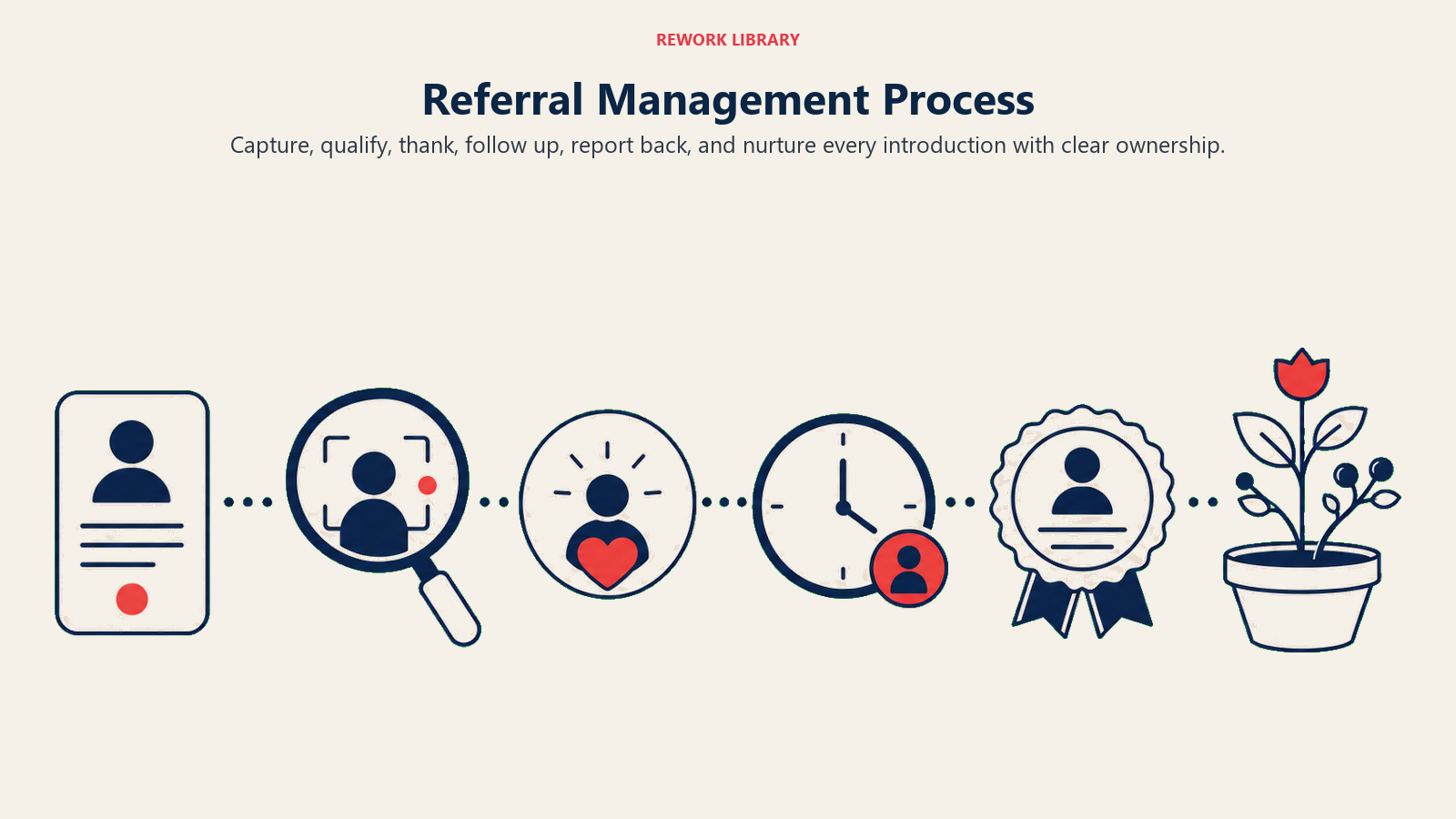
Intake and qualification: When a referral comes in:
- Acknowledge it immediately (within 24 hours)
- Thank the referrer right away
- Qualify the lead using your normal criteria
- Set expectations on response time
Don't let referrals sit in a queue. They deserve priority treatment.
Response time: This is critical. When someone refers a lead, they're putting their reputation on the line. If you take two weeks to respond, you've made them look bad. Best practices:
- Acknowledge referral within 24 hours
- Reach out to the lead within 48 hours
- Provide initial meeting within a week
Speed matters more for referrals than any other source because someone's credibility is at stake.
Closing the loop: Always, always, always update the referrer on what happens. Scenarios:
If the lead becomes a client: Thank them profusely. Share the win. Deliver any promised incentive promptly. Ask permission to use them as a referral case study.
If the lead doesn't fit: Still thank them. Explain briefly why it wasn't a match. Encourage future referrals. "This one wasn't quite right, but I really appreciate you thinking of me. If you encounter anyone facing X or Y situation, I'd love to chat with them."
If the lead goes dark: Let them know. "I reached out to Jane a few times but haven't heard back. Sometimes the timing isn't right. I'll try again in a few months, but wanted you to know I followed up."
Radio silence is the worst thing you can do. The referrer wonders what happened and feels ignored.
Tracking and attribution: Build this into your CRM:
- Source field: Who referred this lead?
- Referral date: When did it come in?
- Referral type: Client, partner, network, etc.
- Status: Contacted, qualified, proposal, won, lost
- Referrer notification dates: When did you update them?
This lets you run reports on referral volume, conversion rates, and which sources are most valuable.
Performance measurement: Monthly, review:
- Number of referrals received by source
- Conversion rate of referrals to opportunities
- Conversion rate of opportunities to clients
- Revenue generated from referrals
- Time from referral to close
This tells you which parts of your program are working and which need attention.
Creating a referral culture
The best referral programs don't feel like programs. They're just how the organization operates. Here's how to build that culture:
Leadership modeling: If the managing partners and senior leaders don't actively work their networks for referrals, no one else will. They need to:
- Ask for referrals in their client conversations
- Share referral wins in team meetings
- Thank referrers publicly
- Allocate time to referral cultivation
When people see it matters to leadership, they'll prioritize it too.
Team training and enablement: Don't assume everyone knows how to ask for or handle referrals. Provide:
- Scripts and templates
- Role-playing practice
- Guidance on compliance and ethics
- CRM training for tracking
- Regular skill refreshers
Make it easy for anyone to participate successfully.
Recognition and celebration: When referrals come in and convert, make noise about it:
- Recognize the referrer in team meetings
- Share success stories in newsletters
- Track individual referral generation as a performance metric
- Consider contests or incentives for internal referral generation
What gets measured and celebrated gets repeated.
Continuous improvement: Quarterly, gather your team and ask:
- What's working in our referral efforts?
- What's not working?
- What barriers are preventing more referrals?
- How can we make it easier for clients to refer us?
- What should we start, stop, or continue?
Treat the referral program like any other key business process: measure, analyze, adjust, repeat.
Industry-specific considerations
Different professional services sectors have different norms and rules around referrals:
Legal and accounting: Ethics rules often prohibit or limit financial incentives for client referrals, which is why referrals sit at the center of law firm business development. Focus on:
- Non-financial recognition programs
- Building strong relationships that naturally lead to referrals
- Professional network development
- Thought leadership that attracts inbound referrals
The referrals are often more passive - people recommend you because of reputation, not active programs.
Consulting services: Generally more flexibility on incentive structures. Common to see:
- Formal referral fees or commissions
- Structured partner programs
- Aggressive referral campaigns
- Integration with business development metrics
Referrals are treated as a primary growth channel with dedicated resources.
Technology services: Often hybrid approaches:
- Referral programs for clients and partners
- Affiliate programs for influencers
- Reseller partnerships
- Technology marketplace listings
Referrals blend into broader channel strategies.
Marketing and creative agencies: Tend to rely heavily on organic referrals driven by:
- Portfolio and case study sharing
- Personal networks and reputation
- Client satisfaction and results
- Word-of-mouth in specific industries
Less formal program structure, more relationship-driven.
Advisory services: Similar to consulting with emphasis on:
- Long-term client relationships
- Deep expertise in niche areas
- Professional networks and associations
- Thought leadership and speaking
Referrals often come from being known as "the expert" in a domain.
Know the norms in your space and work within them while pushing for systematic approaches.
Solving common referral challenges
"We don't get enough referrals"
Diagnosis: You're probably not asking enough or making it easy enough. Solution:
- Set a goal for number of referral requests per month
- Create a simple process for asking
- Train your team on how to ask comfortably
- Track who's asking and who's not
"The referrals we get are low quality"
Diagnosis: Your referral sources don't understand who you're looking for. Solution:
- Be more specific in your asks ("CFOs at $50M+ companies" not "anyone who needs accounting help")
- Educate referrers on your ideal client profile
- Provide examples of great past referrals
- Politely decline mismatched referrals and explain why
"People say yes but never actually refer anyone"
Diagnosis: Too much friction in the referral process. Solution:
- Provide copy-paste intro emails
- Offer to send them content they can forward
- Make the first move easier (they just make an introduction, you do the rest)
- Follow up periodically with specific needs
"We can't track who referred whom"
Diagnosis: No system or discipline around attribution. Solution:
- Add required "referral source" field in CRM
- Train team to always ask "How did you hear about us?"
- Create unique tracking links or codes for different referrers
- Review attribution weekly in pipeline meetings
"We're worried about ethics or compliance issues"
Diagnosis: Legitimate concern in some industries. Solution:
- Consult with your ethics counsel or bar association
- Design non-financial recognition programs
- Focus on reciprocal business relationships vs. transactional payments
- Document your program and get it approved
Measuring program ROI
How do you know if your referral program is working? Track these metrics:
Volume metrics:
- Number of referrals per month/quarter
- Referrals by source type (clients, partners, network, etc.)
- Referrals by referrer (who's sending the most?)
Quality metrics:
- Referral-to-qualified-opportunity conversion rate
- Opportunity-to-closed-won conversion rate
- Average deal size of referral-sourced clients
- Client lifetime value by source
Economic metrics:
- Revenue from referral-sourced clients
- Cost per referral acquisition (program costs / number of referrals)
- ROI: (Referral revenue - Program costs) / Program costs
- Payback period (how long to recover program investment)
Program health metrics:
- Active referrers (people who've sent at least one referral in past 12 months)
- Repeat referrers (people who've sent multiple referrals)
- Time from referral to contact
- Time from referral to close
- Referrer satisfaction (do they feel appreciated?)
A healthy referral program should show:
- Growing volume over time
- Conversion rates 2-3x higher than other sources
- ROI of 5-10x or more
- Increasing number of repeat referrers
- Fast response times (<48 hours to contact)
If any of these are lagging, you know where to focus improvement efforts.
Getting started: your first 90 days
Ready to build this? Here's a practical roadmap:
Days 1-30: Foundation
- Analyze your current referral data (how many do you get? from whom? what converts?)
- Identify your top 20 referral-ready clients using satisfaction, relationship, and network criteria
- Draft your referral program design (objectives, sources, incentives, processes)
- Get leadership buy-in and resource allocation
- Set up CRM tracking fields and workflows
Days 31-60: Launch
- Create your referral request scripts and templates
- Train your team on asking for referrals
- Have initial conversations with your top 20 referral sources
- Launch partner outreach to complementary service providers
- Send monthly referral program communication to client base
- Implement fast-response process for handling incoming referrals
Days 61-90: Optimize
- Review first results: how many referrals came in? from whom? what converted?
- Thank and recognize successful referrers
- Adjust your approach based on what's working
- Expand to next tier of potential referrers
- Build the habit into regular client and partner touchpoints
- Set quarterly targets for referral volume and revenue
Don't try to build the perfect program on day one. Start simple, get momentum, and improve as you go.
Where referrals fit in your growth strategy
Referrals shouldn't be your only business development channel, but they should be intentional and systematic. Here's how they connect to other parts of your growth engine:
- Professional Networking creates the relationships that become referral sources
- Thought Leadership Strategy builds the reputation that makes people want to refer you
- Content Marketing gives referrers tools to share with their networks
- Consultative Business Development ensures you convert referrals into clients effectively
- Professional Services Metrics helps you track referral conversion rates and revenue attribution
The best professional services firms generate 30-50% of new revenue from referrals. Not by accident, but by design.
Build the system. Make it easy. Ask consistently. Thank generously. And watch the compound effect transform your pipeline.
Because the referrals you generate this quarter might refer 2-3 more clients next year. That's not just growth. That's momentum.

Sales Director
On this page
- The economics of referrals
- Identifying referral-ready clients
- Designing your referral program
- The art of asking for referrals
- Beyond clients: expanding your referral sources
- Building a referral management process
- Creating a referral culture
- Industry-specific considerations
- Solving common referral challenges
- Measuring program ROI
- Getting started: your first 90 days
- Where referrals fit in your growth strategy