Content Marketing for Services: Building Authority Through Strategic Content
Turn this article into takeaways for your work.


Each assistant summarizes the article only for you and suggests best practices for your work.
Here's what drives most professional services growth: referrals, networking events, and cold outreach. These work. But they don't scale. You're trading your time directly for potential opportunities, and when you stop, the pipeline dries up.
Content marketing is different. You create an asset once, and it works for you repeatedly. A well-written article attracts prospects for years. A case study closes deals months after publication. A diagnostic tool generates leads while you sleep.
The data backs this up. Professional services firms with systematic content marketing programs generate 3x more leads than those relying on traditional business development alone. They close deals faster because prospects arrive pre-educated. They command premium pricing because content demonstrates expertise before the first conversation. This forms a core pillar of the professional services growth model.
But most firms do content marketing badly. They publish inconsistently. They write sales collateral disguised as insights. They measure vanity metrics like page views instead of influenced pipeline. Then they conclude "content doesn't work for us" and abandon it.
If you're a partner or marketing leader at a consulting firm, agency, law practice, or accounting firm trying to build predictable lead generation, you need to understand this: content marketing for professional services isn't the same as content marketing for products. The goals, formats, distribution, and measurement all work differently.
The Authority Economy: Why Content Matters for Services
Professional services buyers face a unique problem: they can't evaluate quality until after they've hired you. A software buyer can test the product, request a demo, see screenshots. Someone hiring a consultant or agency has to trust that you'll deliver value based on signals alone. Content is your primary signal.
How Buyers Research Services Differently
When someone needs to hire a consultant, they follow a research pattern:
- They recognize a problem or opportunity
- They search for information ("How to improve sales conversion")
- They evaluate potential solutions
- They identify credible experts
- They reach out when ready
Notice what's missing? There's no product page, no pricing list, no feature comparison. They're looking for expertise, not specifications.
Your content meets them at steps 2-4. When they're researching solutions, your article on conversion optimization shows up. When they're evaluating approaches, your framework demonstrates a clear methodology. When they're identifying experts, your case studies prove you've done this before.
By the time they contact you, they've consumed 5-7 pieces of your content. They already trust you. The sales conversation isn't about proving competence. It's about fit and scope.
Content as Your New Sales Team
Here's the professional services paradox: your best salespeople are your senior experts, but they're too expensive to spend time on unqualified prospects. You need them closing deals and delivering work, not explaining your services to every inquiry.
Content solves this by pre-qualifying and pre-educating. Your article on pricing strategy answers "How do you price projects?" Your case study addresses "Have you worked in our industry?" Your framework demonstrates "What's your methodology?"
The prospects who schedule calls have already answered these questions themselves. Your expensive partner time goes to high-value conversations, not information sharing.
Think of content as a force multiplier. One partner can have 50 sales conversations per quarter. Or they can write one substantive article that generates 200 qualified conversations over two years. Same effort up front, 10x the output over time.
Building Trust Before the First Conversation
Professional services buying is relationship-driven, but relationships start before you meet. Content creates familiarity, which feels like trust.
When someone reads three of your articles, watches your video presentation, and downloads your assessment tool, they feel like they know you. You're not a stranger. You're the expert whose insights they've been following.
This shortens sales cycles dramatically. Instead of 6-8 conversations to build credibility, you might close after 2-3. The relationship work happened asynchronously through content.
Content Strategy Fundamentals: Alignment Before Creation
Most firms start with "Let's write blog posts" without defining what success looks like. That's backwards. Strategy comes first.
Aligning Content with Buyer Journey Stages
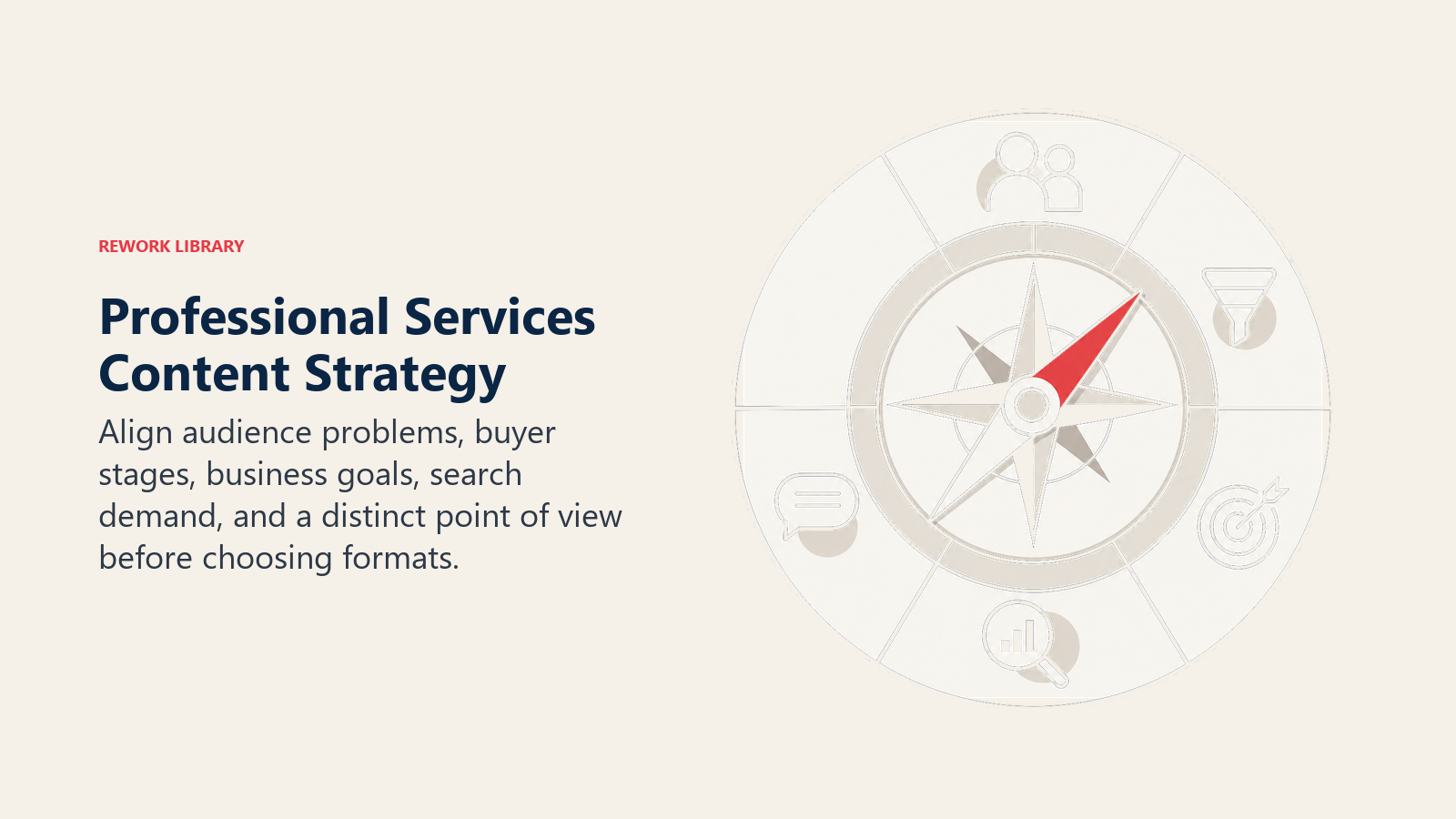
Your prospects move through stages: problem awareness, solution exploration, provider evaluation, decision. Each stage needs different content.
Problem Awareness Stage Prospects know something's wrong but can't articulate it clearly. They search for symptoms, not solutions.
Content for this stage:
- "7 Signs Your Sales Process Is Broken"
- "Why Most Marketing Attribution Models Fail"
- "The Hidden Cost of Manual Reconciliation"
These articles attract early-stage prospects and shape how they think about the problem. If you define the problem well, you influence how they evaluate solutions.
Solution Exploration Stage They understand the problem. Now they're researching approaches, methodologies, and options.
Content for this stage:
- "Three Approaches to Sales Process Optimization: Which Fits Your Business?"
- "Marketing Attribution Models Compared: Last-Touch vs Multi-Touch vs Data-Driven"
- "Automation vs Outsourcing: Choosing the Right Financial Operations Model"
These pieces educate without selling. They position your preferred approach as the smart choice without explicitly saying "hire us."
Provider Evaluation Stage They've decided on an approach. Now they're identifying who can help them execute.
Content for this stage:
- Case studies showing results
- Client testimonials with specifics
- Your methodology explained in detail
- Team credentials and experience
- Pricing frameworks and engagement models
This content proves you can deliver what they need. Your client testimonials and case studies become essential assets at this stage.
Topic Selection Based on Client Questions
The best content topics come from questions your prospects actually ask. Not what you think they should care about. What they actually want to know.
Run this exercise: Sit down with your last 10 won clients and ask, "What questions did you have before hiring us?" You'll hear patterns.
- "How long does this take?"
- "What if we've tried this before and failed?"
- "Do you have experience in our industry?"
- "What happens if results don't materialize?"
- "How do we know your approach works?"
Each question is a content topic. Write comprehensive answers. When prospects ask during sales conversations, send the article. You've answered the question and demonstrated expertise simultaneously.
Pillar Content vs Supporting Content
Think of your content strategy like a hub-and-spoke model.
Pillar Content (3-5 comprehensive pieces) Deep, authoritative guides on your core topics. 2,500-4,000 words. These rank well for competitive keywords and serve as reference resources.
Example pillars for a sales consulting firm:
- "The Complete Guide to B2B Sales Process Optimization"
- "Sales Team Performance Management: Metrics, Coaching, and Systems"
- "Enterprise Sales Methodology: How to Close Complex Deals"
These are destination pieces. People bookmark them. They get linked from other sites. They drive consistent organic traffic.
Supporting Content (15-20 focused pieces per pillar) Shorter articles (1,000-1,500 words) that explore specific aspects of the pillar topics. These target long-tail keywords and specific questions.
Supporting content for the sales process pillar:
- "How to Qualify Enterprise Sales Opportunities"
- "Discovery Call Framework for Complex Sales"
- "Proposal Win Rate Analysis: Tracking What Matters"
- "Sales Forecasting Models That Actually Work"
Each supporting article links back to the pillar. This creates topical authority and helps both rank better.
Editorial Calendar Development
Consistency beats volume. Publishing two articles monthly for two years outperforms publishing eight articles one month then going dark.
Here's how to build a realistic calendar:
- Define a publishing frequency you can sustain (weekly, biweekly, monthly)
- Assign topics three months in advance
- Designate who creates each piece (partner, marketing, or hybrid)
- Include production deadlines (draft, review, final, publish)
- Track status and performance
Use a simple framework: 50% problem/solution content, 30% methodology/approach content, 20% case studies and results.
This ensures you're meeting prospects at all journey stages without overthinking individual topics.
Content Types for Professional Services: Choosing the Right Formats
Written content is essential, but you can't stop there. Different audiences consume information differently.
Written Content: The Foundation
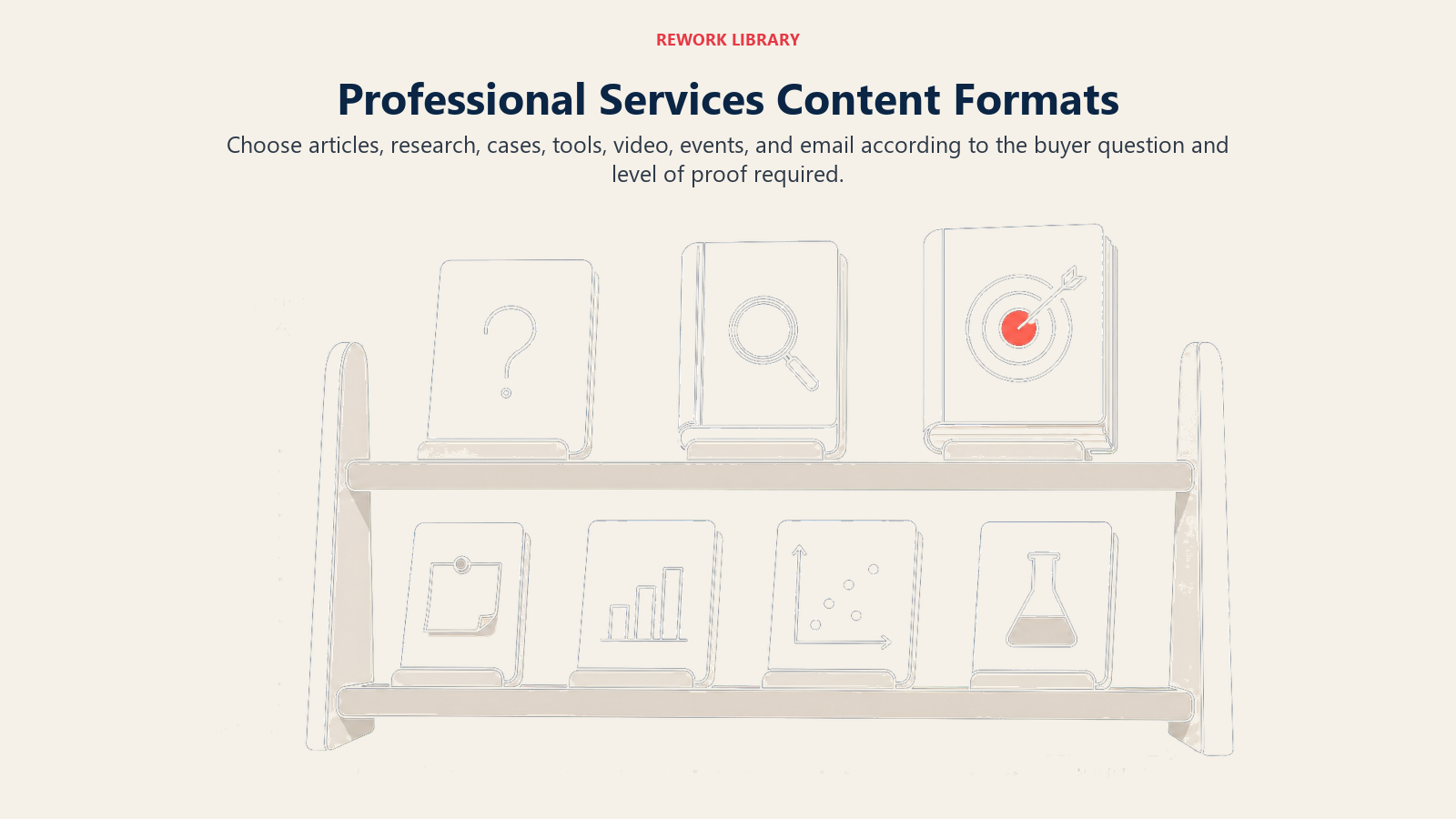
Blog Posts (800-1,500 words) Regular publishing builds momentum. These drive organic traffic, support SEO, and create touchpoints for email nurture.
Best for: addressing specific questions, sharing insights, establishing regular presence.
Whitepapers (2,500-5,000 words) In-depth explorations of complex topics. Often gated to capture leads, though ungated works for authority building.
Best for: demonstrating deep expertise, supporting enterprise sales, creating lead magnets. These assets often support your proposal development process by providing proof points.
Case Studies (1,000-2,000 words) Proof that your approach works. Structure: client situation, challenge, your approach, results, client quote.
Best for: late-stage buyers who need proof, industry-specific validation, proposal support.
Research Reports (varies) Original research or industry surveys. These generate PR opportunities, inbound links, and differentiation.
Best for: thought leadership positioning, media mentions, conference speaking opportunities.
Visual Content: Making Complexity Clear
Infographics Complex processes or data visualized simply. Warning: don't create infographics just to create them. Only use when visualization genuinely helps understanding.
Best for: explaining multi-step processes, showing data trends, social media sharing.
Slide Decks Presentations shared on SlideShare or your site. Repurpose speaking presentations or create standalone thought leadership decks.
Best for: reaching visual learners, LinkedIn sharing, conference follow-up.
Diagrams and Frameworks Visual representations of your methodology or approach. These become assets clients reference during implementation.
Best for: explaining proprietary frameworks, showing how systems connect, differentiating your approach.
Video Content: Building Personal Connection
Expert Interviews Short conversations (5-10 minutes) with your partners or clients on specific topics. These feel personal and build relationship before direct contact.
Best for: LinkedIn distribution, website feature content, email campaigns.
Process Explanations Screen recordings or whiteboard sessions walking through how something works. Keep them short (3-7 minutes).
Best for: explaining complex concepts, onboarding education, FAQ responses.
Client Testimonials Short video quotes from happy clients. More credible than written testimonials and useful in proposals and sales conversations.
Best for: provider evaluation stage, proposal support, website trust building.
Interactive Content: Creating Engagement
Assessments and Quizzes Diagnostic tools that provide personalized results. These generate leads while delivering value.
Example: "Sales Process Maturity Assessment" or "Marketing Attribution Readiness Score"
Best for: lead capture, qualification, providing immediate value.
Calculators Tools that help prospects quantify problems or potential ROI. Simple spreadsheet logic presented in a clean interface.
Example: "Professional Services Utilization Calculator" or "Customer Acquisition Cost Estimator"
Best for: early-stage value demonstration, lead capture, sales conversation support.
Interactive Frameworks Clickable diagrams or decision trees that help prospects navigate choices.
Example: "Service Engagement Model Selector" or "Technology Stack Decision Tree"
Best for: solution exploration stage, demonstrating methodology, differentiation.
Content Creation Approaches: Making Production Sustainable
The biggest content marketing failure mode: starting strong then fizzling because production isn't sustainable. You need systems, not heroic effort.
Subject Matter Expert (SME) Interviews
Your partners have the expertise but not the time or inclination to write. Interview them instead.
Here's the process:
- Marketing schedules a 45-minute interview on a specific topic
- Marketing prepares 8-10 questions based on target content
- Partner talks through their perspective (recorded)
- Marketing or writer converts the recording to an article
- Partner reviews and approves (15 minutes)
This produces 2,000-word articles from 1 hour of partner time. It's scalable and preserves partner expertise without requiring writing skills.
Turn Client Work into Case Studies
You're already delivering projects. Extract content from that work.
After every successful engagement:
- Document the situation, challenge, approach, and results
- Request client permission to share (anonymized if needed)
- Write the case study while details are fresh
- Get client quote or testimonial
- Publish within 30 days of project completion
This creates a continuous stream of proof content without additional client work.
Repurposing Across Formats
Create once, distribute many times.
Start with a comprehensive written piece (pillar content). Then extract:
- 5-7 LinkedIn posts highlighting key points
- Short video summarizing main insights (3 minutes)
- Infographic showing the framework or process
- Email series delivering content in digestible chunks
- Slide deck for speaking opportunities
- Podcast episode discussing the topic
One 3,000-word article becomes 15+ content pieces across channels. Same research and thinking, multiplied distribution.
Distribution Channel Strategy: Getting Content Seen
Creating good content doesn't matter if nobody sees it. Distribution is as important as creation.
Owned Channels: Full Control
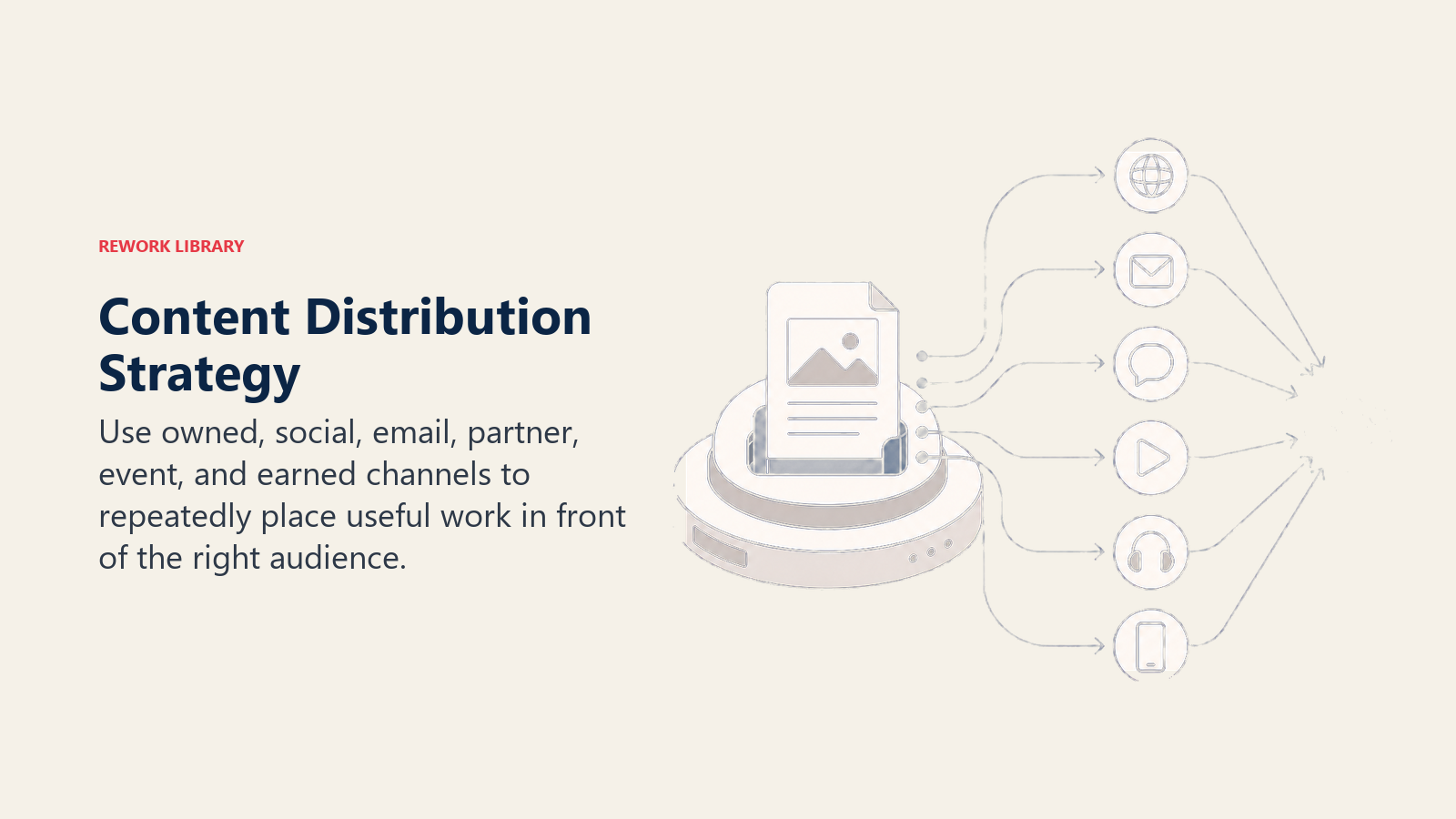
Website/Blog This is your content hub. Make sure all your content lives here permanently. You'll want to optimize it for SEO, user experience, and lead capture.
Email Newsletter Your most valuable channel. Build a subscriber list and deliver value consistently. Mix your content with curated insights.
Target: one substantive email per week or every other week. Higher engagement than social media.
Resource Library Organized collection of your best content by topic or buyer stage. Makes it easy for prospects to find relevant material.
Social Channels: Reaching New Audiences
LinkedIn (Primary for B2B Services) Where your buyers spend professional time. Share content 3-5x per week. Comment on others' posts. Engage genuinely. For a complete approach, see our guide on LinkedIn for professional services.
Mix:
- Your articles (30%)
- Insights and observations (40%)
- Industry news and others' content (20%)
- Client results and team highlights (10%)
Partners should be active personally. Company page posts get 1/10 the engagement of personal posts.
Twitter/X Good for real-time industry discussion and reaching media/influencers. Less direct lead generation but valuable for thought leadership.
Industry Forums and Communities Wherever your buyers congregate online. Share genuinely helpful content without spamming. Build reputation over time.
Earned Channels: Leveraging Others' Audiences
Guest Posting Write for industry publications, respected blogs, and media sites. This builds authority and backlinks.
Target 2-4 guest posts per quarter on high-authority sites relevant to your audience.
Media Mentions Pitch your insights to journalists covering your industry. HARO (Help A Reporter Out) is one source for media requests.
When your research or perspective appears in media, that's earned authority you can't buy.
Speaking Opportunities Conference presentations, webinars, podcast interviews. These distribute your expertise to engaged audiences.
Repurpose speaking content into written articles afterward. Maximize these opportunities through a systematic speaking and publishing strategy.
Paid Channels: Accelerating Reach
LinkedIn Ads Sponsored content and sponsored InMail targeting your ideal client profiles. Expensive but precise targeting.
Best for: promoting high-value content (research, tools, webinars) to specific decision-makers.
Sponsored Content Pay to feature your content on industry publications. Works when you have genuinely valuable content worth promoting.
Retargeting Show content to people who've visited your site. Keeps you top-of-mind and moves prospects through the journey.
Content ROI Measurement: Tracking What Matters
Vanity metrics (page views, social shares) feel good but don't pay bills. Measure content's impact on pipeline and revenue.
Attribution Models for Services
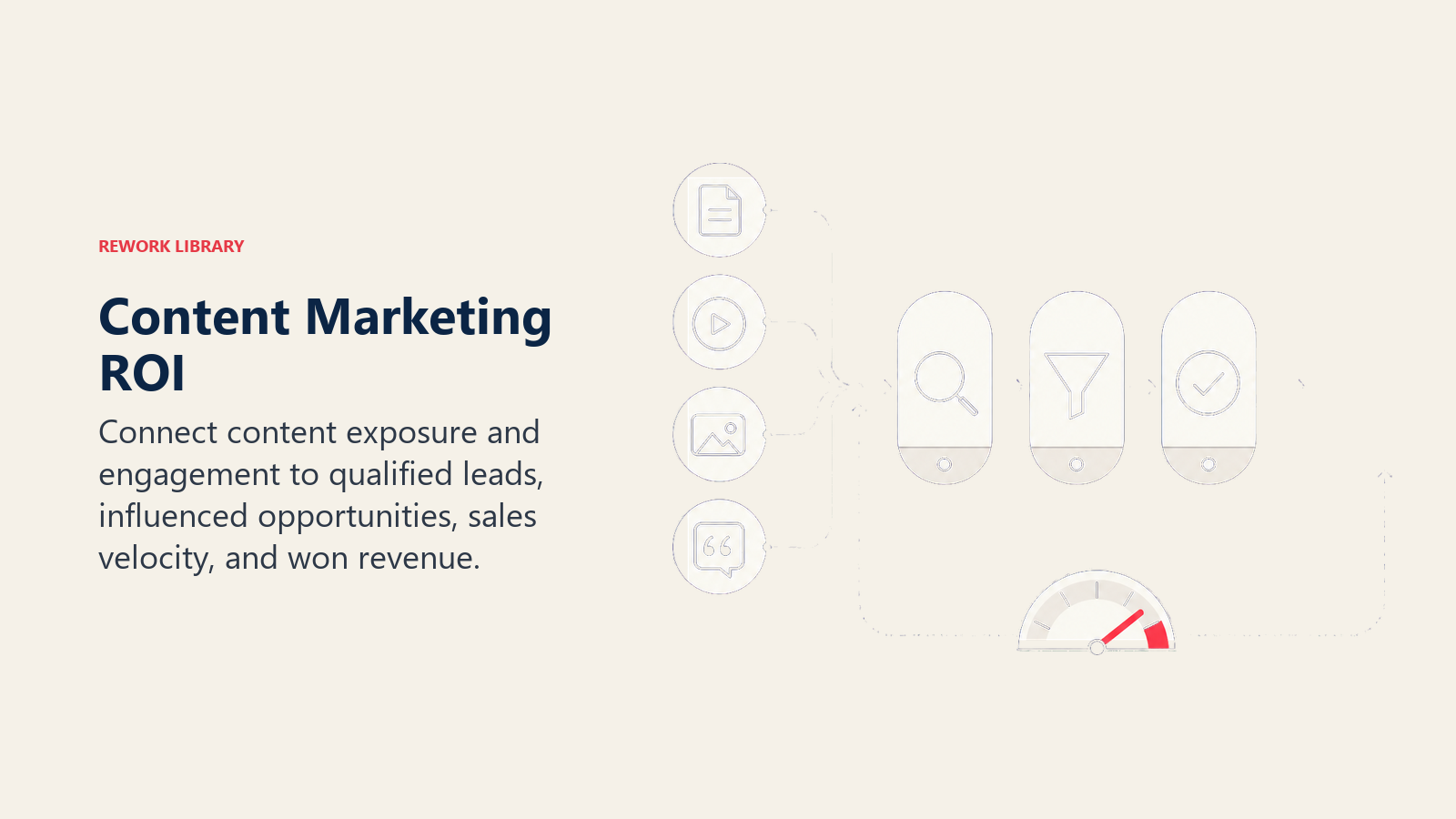
First-Touch Attribution Credits the first content piece someone engaged with. Useful for understanding what attracts new prospects.
Example: Someone reads your article, subscribes, downloads a whitepaper, books a call. First-touch credits the article.
Multi-Touch Attribution Distributes credit across all content touchpoints. More accurate picture of content's role in the journey.
Example: Article (25%), webinar (25%), case study (25%), pricing guide (25%).
Influenced Pipeline Tracks any deal where the prospect engaged with content before closing. Less precise but captures content's true impact.
Most professional services firms should use influenced pipeline. It's easier to track and more realistic than complex attribution. Track these against your broader professional services metrics to understand overall performance.
Engagement Metrics That Predict Quality
Beyond traffic, track engagement signals:
- Time on page: 3+ minutes indicates genuine reading
- Return visitors: people coming back show real interest
- Content downloads: gated assets capture contact info
- Email subscriptions: highest-intent action besides contact
- CTA clicks: "schedule a call" or "request proposal"
A piece with 500 visitors and 20 email subscribers outperforms one with 5,000 visitors and 5 subscribers.
Pipeline Influence Tracking
Here's a simple system: Ask every prospect during initial conversations, "How did you find us?" and "What content have you seen?"
Track in your CRM:
- Referral source
- Content pieces consumed before contact
- Content shared during sales process
Monthly, analyze: What content appears most in closed deals? Double down on that.
Building the Content Engine: Team, Tech, and Workflow
Sustainable content marketing requires operational systems, not just good intentions.
Team Structure Options
Small Firm (under 20 people)
- 1 partner leads content strategy (2-3 hours/week)
- 1 marketing coordinator manages production (10-15 hours/week)
- Freelance writer converts SME interviews to articles
- Freelance designer for visuals as needed
Mid-Size Firm (20-100 people)
- Content strategist (full-time or fractional)
- 1-2 content creators (writers, video producers)
- 1 distribution/SEO specialist
- Partners contribute expertise via interviews
Large Firm (100+ people)
- Full marketing team with dedicated content function
- Content strategists per practice area
- Production team (writers, designers, video)
- Distribution and analytics specialists
Technology Stack
Content Management: WordPress, HubSpot, or similar CMS SEO Tools: SEMrush, Ahrefs, or Moz for keyword research and tracking Design Tools: Canva for simple graphics, professional designer for complex Video: Simple recording software (Loom, Riverside) for interviews Email Platform: Mailchimp, ConvertKit, or HubSpot for newsletters Analytics: Google Analytics plus CRM integration for attribution
Start simple. Add tools as you scale.
Publishing Cadence and Workflow
Recommended Cadence by Firm Size
- Small firms: 2 articles per month minimum
- Mid-size: 1 article per week plus monthly long-form
- Large firms: Multiple articles per week across practice areas
Standard Workflow (4-week cycle)
- Week 1: Topic selection and SME interview
- Week 2: Draft creation and first review
- Week 3: Revision and design/formatting
- Week 4: Final approval, SEO optimization, publish, distribute
This creates a sustainable pipeline where you're always working on next month's content while publishing this month's. This disciplined approach mirrors how successful firms approach utilization and capacity planning across all activities.
Common Content Marketing Mistakes
Even firms with good intentions sabotage their content programs in predictable ways.
Mistake 1: Sales Collateral Disguised as Content
Writing "articles" that are thinly veiled service pitches. Readers spot this immediately and bounce.
Bad: "10 Reasons to Hire Our Consulting Firm" Good: "How to Evaluate Consulting Firms: What to Ask and What to Watch For"
The good version helps prospects (even if they hire a competitor) and builds trust. The bad version just sells.
Mistake 2: Inconsistency
Publishing enthusiastically for two months then going silent for six. This kills momentum. Google deprioritizes inactive sites. Subscribers forget you exist.
Better to publish monthly consistently than weekly for a quarter then nothing.
Mistake 3: Ignoring Audience Feedback
You're writing about advanced strategy topics when your prospects need basic implementation help. Or vice versa.
Check your analytics. What content gets engagement? What generates inquiries? Do more of that.
Ask prospects: "What topics would be helpful?" Write about those.
Mistake 4: No Lead Capture
Great content that generates traffic but no way to stay connected. People read and leave forever.
Every piece of content needs a next step: subscribe to newsletter, download related resource, book a consultation, access a tool.
Mistake 5: Creating Without Distributing
Publishing content to your blog and hoping people find it. They won't.
Distribution requires as much effort as creation. Email it. Share on LinkedIn. Send to past clients. Pitch to media. Run ads.
If you spend 10 hours creating an article, spend 5 hours distributing it.
Making Content Work For You (Not the Other Way Around)
Content marketing for professional services isn't a side project. It's your most scalable business development channel.
The firms that grow consistently have systematic content programs: clear strategy, sustainable production, active distribution, and measured results. They treat content as infrastructure, not inspiration.
Start small. Pick two content types you can produce consistently. Write about questions your prospects actually ask. Distribute actively. Measure influenced pipeline.
Six months from now, you'll have built an asset library that generates qualified leads while you sleep. Twelve months from now, prospects will contact you already educated and ready to buy.
That's the difference between hoping for referrals and engineering demand.
Ready to build your content engine? Start with the foundations: Thought Leadership Strategy for positioning your expertise and Consultative Business Development for converting content-generated leads into clients.
Related resources:

Sales Director
On this page
- The Authority Economy: Why Content Matters for Services
- How Buyers Research Services Differently
- Content as Your New Sales Team
- Building Trust Before the First Conversation
- Content Strategy Fundamentals: Alignment Before Creation
- Aligning Content with Buyer Journey Stages
- Topic Selection Based on Client Questions
- Pillar Content vs Supporting Content
- Editorial Calendar Development
- Content Types for Professional Services: Choosing the Right Formats
- Written Content: The Foundation
- Visual Content: Making Complexity Clear
- Video Content: Building Personal Connection
- Interactive Content: Creating Engagement
- Content Creation Approaches: Making Production Sustainable
- Subject Matter Expert (SME) Interviews
- Turn Client Work into Case Studies
- Repurposing Across Formats
- Distribution Channel Strategy: Getting Content Seen
- Owned Channels: Full Control
- Social Channels: Reaching New Audiences
- Earned Channels: Leveraging Others' Audiences
- Paid Channels: Accelerating Reach
- Content ROI Measurement: Tracking What Matters
- Attribution Models for Services
- Engagement Metrics That Predict Quality
- Pipeline Influence Tracking
- Building the Content Engine: Team, Tech, and Workflow
- Team Structure Options
- Technology Stack
- Publishing Cadence and Workflow
- Common Content Marketing Mistakes
- Mistake 1: Sales Collateral Disguised as Content
- Mistake 2: Inconsistency
- Mistake 3: Ignoring Audience Feedback
- Mistake 4: No Lead Capture
- Mistake 5: Creating Without Distributing
- Making Content Work For You (Not the Other Way Around)