Billable Hour vs Value-Based Pricing: Choosing the Right Revenue Model for Professional Services
Turn this article into takeaways for your work.


Each assistant summarizes the article only for you and suggests best practices for your work.
Here's a brutal truth about billable hours: they punish you for getting good at what you do.
Think about it. You land a new client. The first time you handle their website redesign, it takes 100 hours. You bill $15,000. Six months later, another client needs the same work. But now you've done it before. You've got templates, processes, lessons learned. You finish in 60 hours. You bill $9,000 for the exact same value.
You got better at your job and made less money. That's the billable hour trap.
Most professional service firms (consulting, legal, accounting, marketing agencies) default to billable hours because it feels safe. Clear cost recovery. Easy to explain. Simple time tracking. But "safe" often means "limited." Limited revenue. Limited margins. Limited ability to scale.
Value-based pricing flips the model. Instead of charging for time spent, you charge for the value created. That website redesign? If it drives $500K in new revenue for the client, maybe the price is $30,000 whether it takes you 40 hours or 100.
The catch? Value pricing is harder to implement. It takes skill to quantify value, confidence to price accordingly, and discipline to scope effectively through proper scope definition and SOW development. But the upside (better margins, aligned incentives, scalable growth) makes it worth the effort.
Let's break down both models, when each makes sense, and how to make the transition without tanking your business.
The Billable Hour Model: Simple but Self-Limiting
The billable hour model is straightforward math: Time × Rate = Revenue
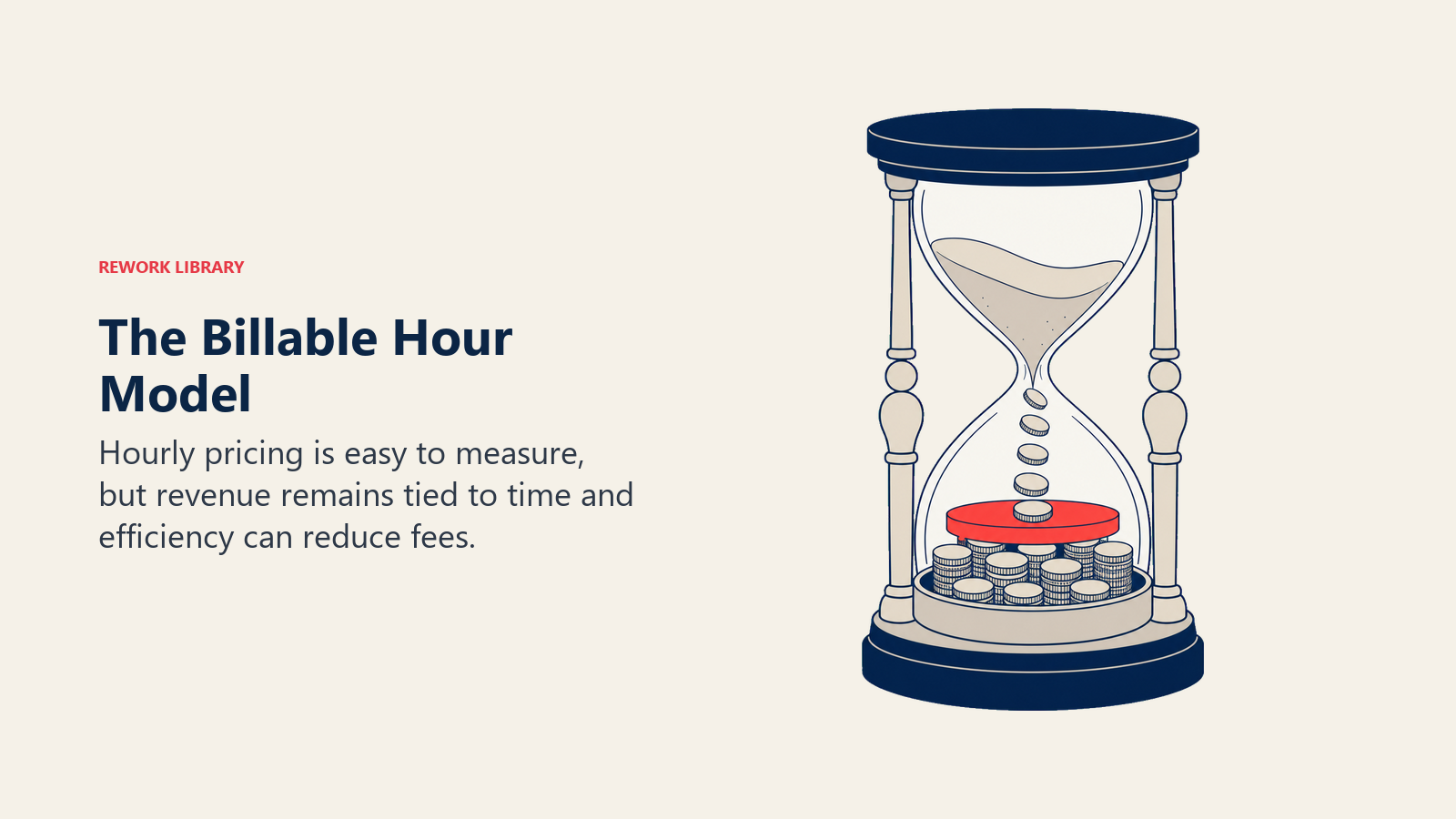
You track hours worked. You multiply by your hourly rate. You send an invoice. Done.
How It Actually Works
A mid-sized consulting firm might price like this:
- Junior consultant: $150/hour
- Senior consultant: $250/hour
- Partner: $400/hour
Client needs a process optimization project. Estimated 200 hours of work (120 junior, 60 senior, 20 partner). Total project value: $43,000.
The firm tracks time, bills monthly, and everyone knows where they stand. Clean. Transparent. Predictable.
Why Firms Choose Billable Hours
Why do so many firms still use billable hours? A few good reasons:
1. Clear Cost Recovery You know your fully loaded cost per employee (salary + benefits + overhead). Set rates high enough to cover costs plus margin. As long as people bill enough hours, you make money.
2. Easy Client Communication "We charge $200/hour for this work" is simple to explain. Clients understand it. When scope expands, adding hours is straightforward. No complex repricing negotiations.
3. Low Risk on Variable Scope When you don't know exactly what a project involves, hourly billing protects you. Scope creep? More hours. Unexpected complexity? More hours. You get paid for what you actually do.
4. Industry Standard Law firms, accounting firms, and many consulting practices have used hourly billing for decades. Clients expect it. Your competitors use it. Switching feels risky.
The Hidden Costs That Kill Growth
Here's where the billable hour model falls apart:
Efficiency Penalty You make more money by working slower. A junior who takes 10 hours generates more revenue than a senior who does the same work in 3 hours. The model incentivizes inefficiency.
I've watched firms drag out projects because finishing early meant lower billings. Not maliciously, just unconsciously. Why rush when your revenue depends on hours logged?
Revenue Ceiling There are only so many billable hours in a day. Even at 80% utilization (which is high), a $250/hour consultant maxes out around $400K annually in billable revenue. To grow revenue, you need more people. Linear growth. No leverage. Understanding utilization and capacity planning helps you work within these constraints.
Commoditization Trap When clients compare you to competitors on hourly rates, you're a commodity. "Why pay you $300/hour when this other firm charges $225?" Value gets reduced to cost per hour. Differentiation disappears.
Misaligned Incentives Clients want projects done quickly and efficiently. You make more when projects take longer. This creates tension. Clients second-guess invoices. You defend every hour. The relationship becomes adversarial.
Where Billable Hours Still Make Sense
Despite the downsides, hourly billing fits certain situations:
Staff Augmentation When you're providing bodies to fill roles (temporary paralegals, interim developers, contract designers), hourly makes sense. The client controls the work. You're billing for availability, not outcomes.
Truly Variable Scope Litigation is unpredictable. Depositions, motions, hearings: you can't know what's coming. Hourly billing protects both sides when scope is genuinely unknowable.
Compliance and Audit Work Tax preparation, financial audits, regulatory compliance: these are time-intensive processes with established benchmarks. Clients expect hourly billing. The work is standardized enough that rates reflect market value.
Strategic work, advisory services, repeatable deliverables? That's where billable hours really hurt you.
The Value-Based Pricing Model: Harder to Implement, Better Returns
Value-based pricing shifts the equation: Client Value × Pricing Percentage = Fee
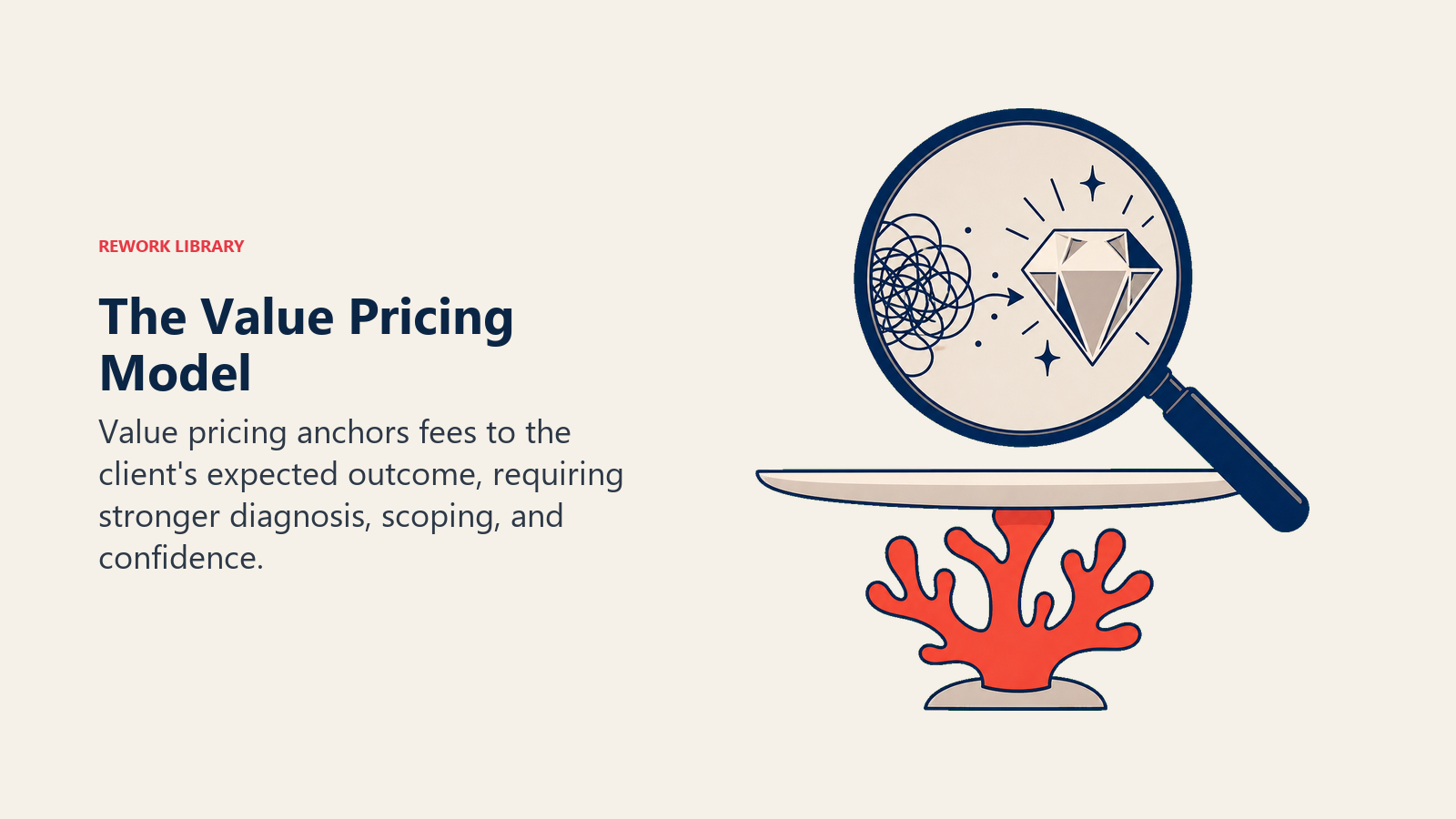
Instead of asking "How long will this take?" you ask "How much is this worth to the client?"
How Value Pricing Actually Works
Same consulting firm. Same process optimization project. But different conversation:
"Your current fulfillment process has a 23% error rate. That's costing you $800K annually in rework, refunds, and lost customers. We'll cut that error rate to under 5%, saving you $600K per year. Our fee is $90,000."
Same work. Same 200 hours. But instead of $43,000 based on time, you charge $90,000 based on value created, and your effective rate just jumped from $215/hour to $450/hour.
That's the power of value pricing.
Why Value Pricing Works Better
Incentive Alignment Clients want results fast. You want to deliver efficiently. Both parties win when the project finishes quickly with strong outcomes. No more defending invoices. No more time padding. Just focus on impact.
Higher Margins You're no longer selling hours. You're selling outcomes. A project that takes 50 hours can command the same fee as one that took 150 hours previously, if the value is the same. Your margins improve as you get better.
Scalability Revenue isn't tied to headcount. You can systematize, templatize, and automate parts of delivery. Each efficiency gain increases profit, not decreases revenue. This creates actual leverage that supports service productization.
Differentiation Competitors charging hourly compete on rates. You compete on outcomes. "We'll save you $600K" beats "We charge $200/hour" every time. Value pricing positions you as a partner, not a vendor.
The Real Challenges
Value pricing isn't magic. It's harder than hourly billing:
Value Quantification Skills You need to get good at asking the right questions: What's broken? What's it costing you? What's the impact of fixing it? Many firms struggle with this discovery process.
If you can't tie your work to measurable business impact, value pricing falls apart. You end up making up numbers or falling back on effort-based pricing.
Pricing Confidence Saying "This project costs $90,000" when you used to charge $43,000 takes guts. Especially when the client asks "Why so expensive?" and you have to defend value, not hours.
I've seen firms quote value-based prices, panic when clients push back, and immediately offer discounts. Confidence matters.
Complex Scoping You need to nail the scope upfront. No "we'll figure it out as we go." Value pricing requires clear deliverables, success criteria, and change order processes. Loose scoping kills value pricing deals. Effective scope creep management becomes essential.
Client Education Most clients expect hourly billing. Shifting them to value pricing takes explanation. You're selling a different way of thinking about professional services. Some clients won't go for it.
Side-by-Side Comparison: The Numbers Don't Lie
Let's compare the same project under both models:
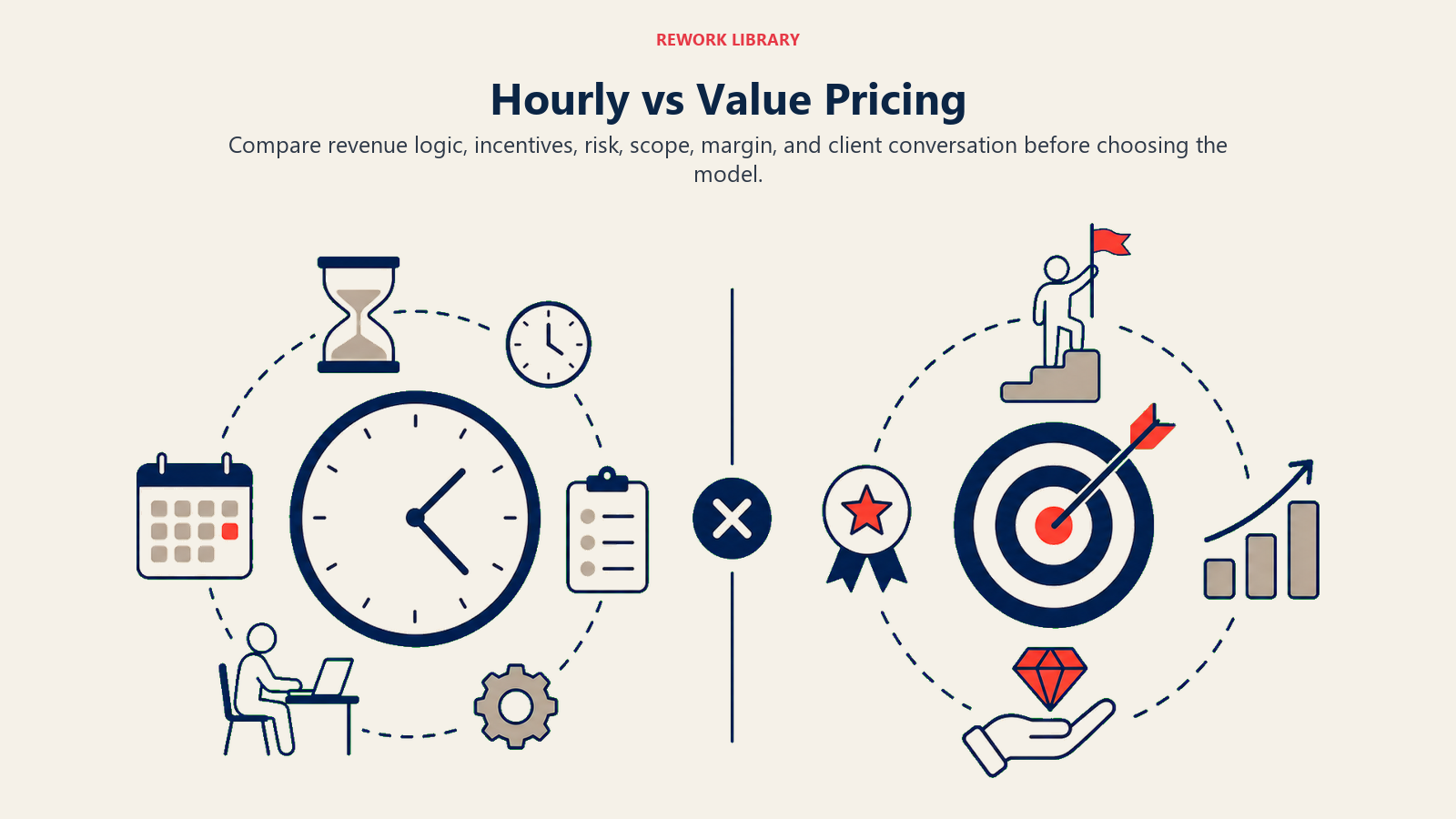
Scenario: Marketing strategy and implementation for a SaaS company
| Factor | Billable Hour Model | Value-Based Model |
|---|---|---|
| Client Impact | Expected to generate 200 new customers, $2M ARR increase | Same: 200 new customers, $2M ARR increase |
| Hours Required | 250 hours across team | 180 hours (more efficient due to experience) |
| Pricing Logic | 250 hrs × $280 avg rate = $70,000 | 10% of first-year value: $200,000 |
| Your Revenue | $70,000 | $200,000 |
| Effective Rate | $280/hour | $1,111/hour |
| Margin | ~35% ($24,500 profit) | ~65% ($130,000 profit) |
| Scalability | Need more people to grow | Can systematize and improve margins |
| Client Perception | Vendor providing service | Strategic partner driving growth |
The difference? Same work. Same value delivered. But value pricing captures more of the value you create instead of just covering your costs plus margin.
When to Use Each Model: A Decision Framework
So which one should you use? Depends on the situation.
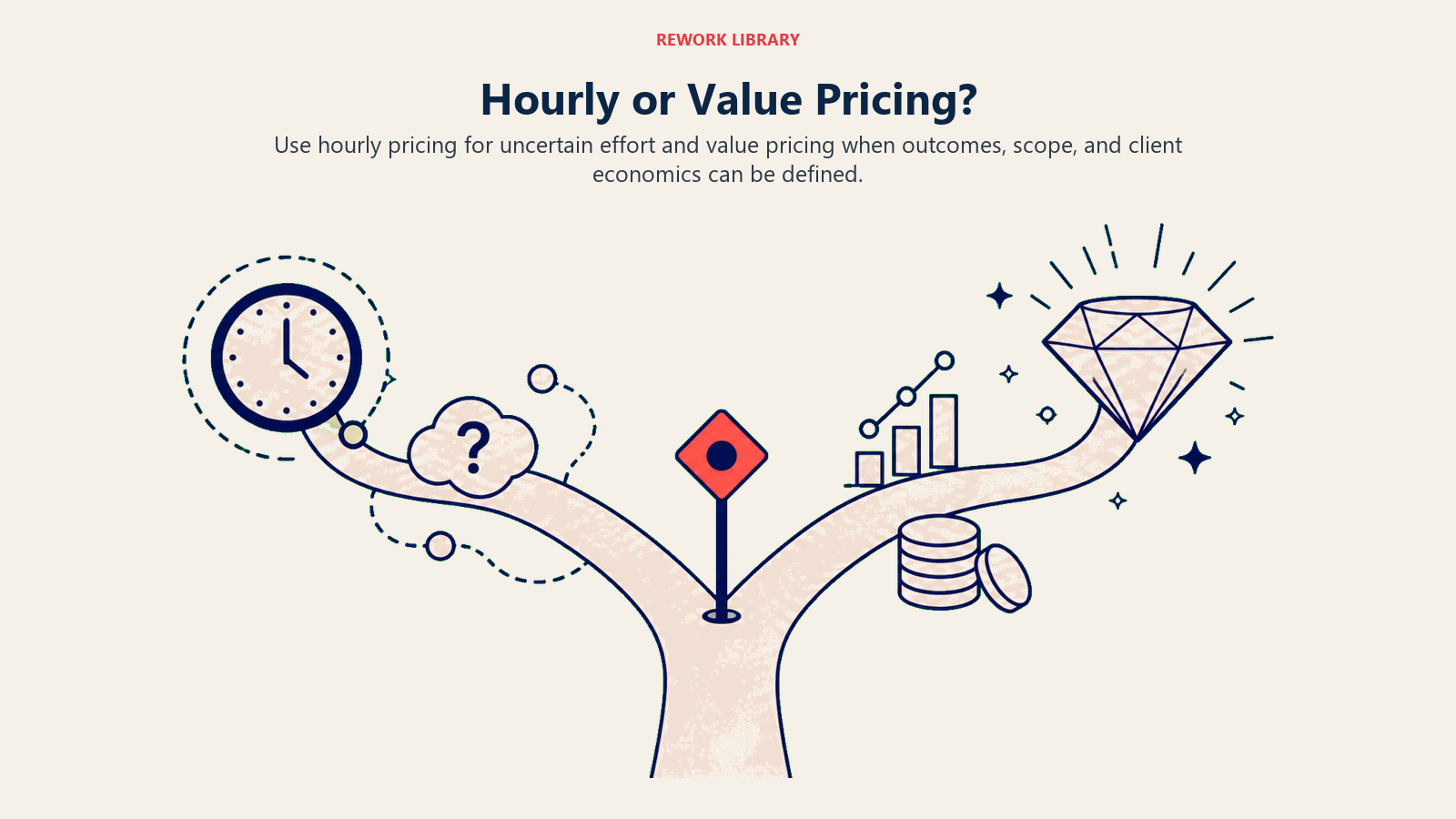
Use Billable Hours When:
The scope is genuinely unpredictable Litigation, crisis management, investigative work: when you can't reasonably estimate what's involved, hourly protects you.
You're providing staff augmentation Filling a temporary role, providing ongoing support, handling overflow work: hourly billing fits the body-rental model.
Clients demand it (and won't budge) Some industries and client types are stuck on hourly billing. If you want the business and they won't consider alternatives, hourly may be your only option.
The work is commoditized If competitors offer identical services at hourly rates and clients see no differentiation, matching market rates may be the play.
Use Value-Based Pricing When:
You can quantify business impact Strategic consulting, revenue-driving work, cost-saving initiatives: when you can measure ROI, value pricing fits.
The solution is repeatable You've done this before. You have frameworks, templates, proven processes. Your efficiency creates margin opportunity.
Client cares more about outcomes than hours Executive-level buyers focused on results, not costs. They want problems solved, not timesheets.
You want to differentiate on value Competing on hourly rates is a race to the bottom. Competing on outcomes positions you as premium. This aligns with firm specialization strategy for market positioning.
Hybrid Approaches: Combining the Best of Both
You don't have to pick just one model. Mix and match:
Retainer + Performance Bonuses
Monthly retainer covers baseline work (priced to cover costs + base margin). Performance bonuses tied to outcomes (value capture for exceeding goals).
Example: $15,000/month retainer for ongoing marketing support + 10% bonus tied to lead generation targets.
This gives clients cost predictability with upside aligned to value.
Phased Pricing
Phase 1 (Discovery) priced hourly. Phase 2 (Implementation) priced on value. This lets you gather information during discovery to price implementation effectively.
Example: $10,000 for 40-hour discovery phase. Then propose implementation at $85,000 based on value uncovered.
Subscription Models for Recurring Services
Monthly subscription for ongoing deliverables. Priced based on value of having the capability, not hours consumed.
Example: $5,000/month for ongoing CFO advisory services. Client gets strategic financial guidance whenever needed, billed flat rate.
Subscriptions work when clients need continuous access to expertise, not discrete projects.
The Transition Strategy: Moving from Hourly to Value Pricing
Making the shift from billable hours to value pricing can't happen overnight. Here's a realistic 12-24 month roadmap:
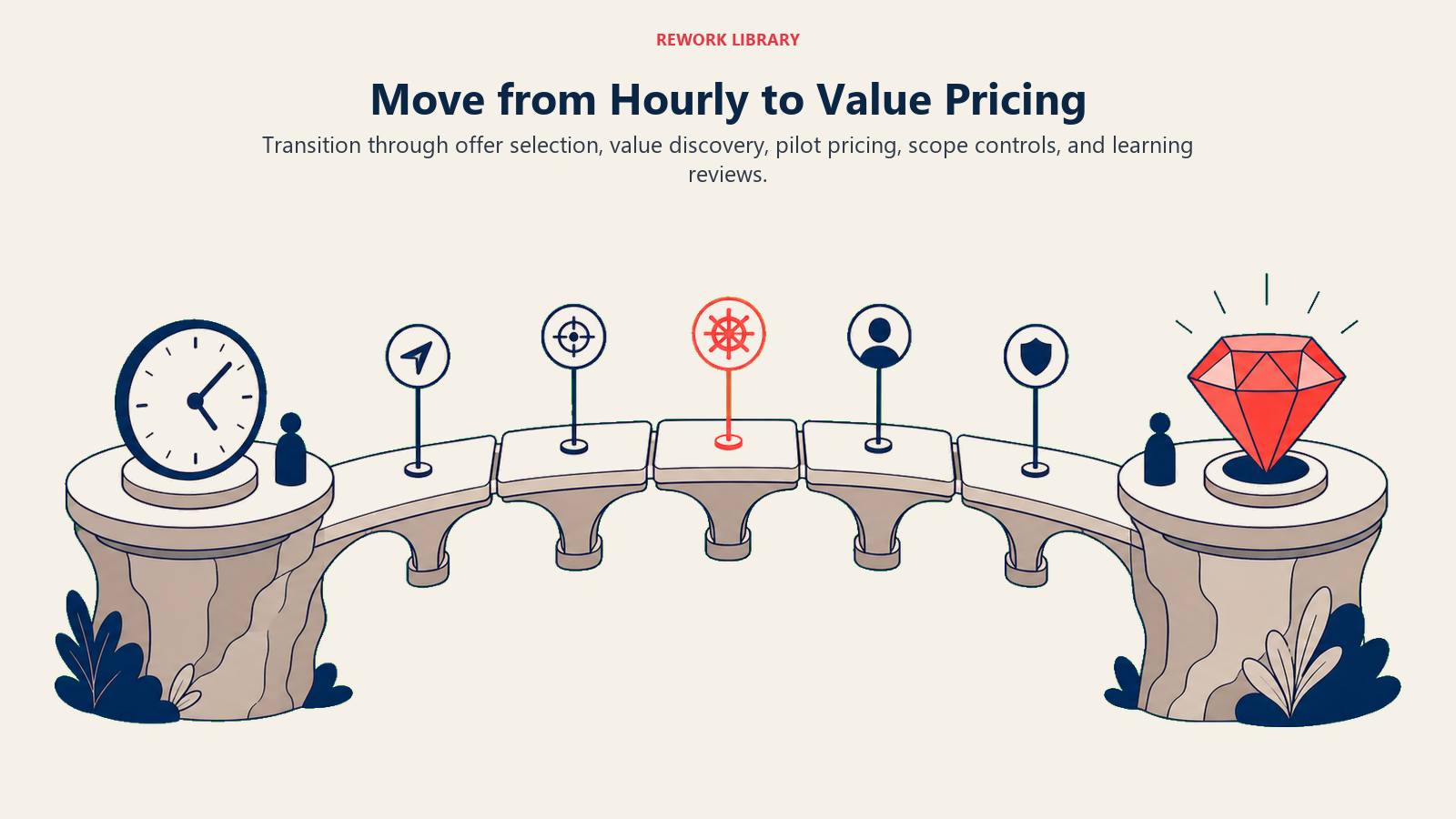
Phase 1: Foundation (Months 1-6)
Build Value Quantification Skills Train your team on discovery techniques. How to uncover pain points. How to calculate cost of inaction. How to tie solutions to financial impact.
Run practice sessions. Role-play client conversations. Get comfortable with value-based language. This is a core element of consultative business development.
Run Pilot Projects Pick 3-5 new clients or projects to test value pricing. Start with situations where value is obvious and quantifiable. Use these to learn without betting the whole business.
Track results. What worked? What flopped? Refine your approach.
Develop Pricing Psychology Get comfortable with higher price points. Practice defending value without flinching. Work through objections until they become second nature.
Your confidence shows. Clients sense hesitation.
Phase 2: Implementation (Months 7-12)
Transition Existing Clients Gradually Don't flip all clients overnight. As projects renew or new work comes up, propose value-based pricing for new engagements.
Frame it as a better alignment: "Instead of billing hours, let's focus on the outcome you actually care about."
Train the Whole Team Everyone needs to understand the shift. Salespeople need to sell value. Project managers need to manage to outcomes. Juniors need to understand why efficiency is good.
Value pricing is a mindset change, not just a pricing change.
Create Pricing Frameworks Develop standard approaches for common services. What value drivers do you measure? What pricing percentages make sense? What does good scoping look like?
Documentation makes the next value-priced deal easier.
Phase 3: Optimization (Months 13-24)
Refine Based on Experience You've run 10-20 value-priced projects. Analyze what worked. Where did you leave money on the table? Where did you overprice and struggle to close?
Adjust your frameworks.
Reposition Your Market Messaging Update your website, proposals, and pitch decks. Stop leading with credentials and hourly rates. Start leading with outcomes and client success stories.
Your positioning should scream "partner" not "vendor."
Build a Portfolio of Success Stories Document results. "We helped Company X achieve Y outcome for $Z investment with ABC return." These case studies sell your value pricing model better than explanations.
Clients buy when they see proof.
Value Quantification Framework: Making the Business Case
Value pricing lives or dies on your ability to quantify impact. The framework:
Step 1: Identify the Pain Point
What specific problem are you solving? Vague problems get vague pricing. Specific problems get specific value.
- Revenue lost due to churn
- Costs from manual processes
- Time wasted on inefficient workflows
- Risk from compliance gaps
Step 2: Calculate Current Cost
Put a number on the pain. What's it costing them now?
Example questions:
- "How many customers are you losing per month to this issue?"
- "What's your average customer lifetime value?"
- "How many hours per week does your team spend on this manual process?"
- "What's the loaded cost per hour for those people?"
Do the math in front of them. "So that's 30 hours per week at $75/hour fully loaded, times 50 weeks. That's $112,500 annually just in labor costs, not counting errors or delays."
Step 3: Project the Gain
What changes when you solve it?
- Revenue increase from higher conversion, lower churn, new customers
- Cost reduction from efficiency, automation, fewer errors
- Risk mitigation from compliance, security, process improvement
- Time savings that free up capacity for higher-value work
Be conservative. Overpromising kills trust. Under-promise and over-deliver builds long-term relationships.
Step 4: Price Based on Value Created
Common approaches:
- 10-30% of first-year value for strategic/revenue work
- 1-2x annual cost of the problem for cost-reduction work
- Risk-adjusted value for risk mitigation (harder to quantify but still real)
Example: Client has $400K annual problem. Your solution eliminates 80% of it, saving $320K per year. Your price: $50,000-$100,000 depending on complexity and competitive factors.
They get $320K in value. You get $50K-$100K. Both sides win.
Common Pitfalls: What Kills Value Pricing Deals
I've watched firms botch value pricing in predictable ways. What to avoid:
Pitfall 1: Underpricing Due to Lack of Confidence
You calculate $500K in value. Then quote $30,000 because it "feels high." You just left $70K on the table (if you had priced at $100K and still closed).
Price based on value, not your comfort level. If the value is real, defend it.
Pitfall 2: Poor Value Communication
You know the value. But you didn't communicate it effectively. The client sees your price as expensive because they don't understand the return.
Spell it out: "You're investing $75K to capture $600K in annual savings. That's an 8x return in year one alone."
Pitfall 3: Vague Scope Boundaries
Value pricing requires clear deliverables and change order processes. Without them, scope creep destroys your margins.
Every value-priced engagement needs:
- Defined deliverables
- Clear success criteria
- Explicit exclusions ("This does not include...")
- Change order process for additions
Pitfall 4: Team Resistance
Your team is used to tracking hours. Now you're telling them efficiency is good, not bad. Without buy-in, they'll sabotage value pricing by reverting to hourly thinking.
Train them. Show them how value pricing benefits everyone (better margins fund higher compensation, more interesting work, less time tracking).
Pitfall 5: Applying Value Pricing to Everything
Not every project fits value pricing. Forcing it where hourly makes more sense frustrates clients and creates weird pricing gymnastics.
Be strategic. Use the right model for each situation.
Implementation Roadmap: From Assessment to Execution
How to actually make this happen:
Months 1-3: Assessment and Preparation
- Audit current pricing and margins by service line
- Identify which services have clear value drivers
- Train team on value discovery techniques
- Develop initial pricing frameworks
- Select pilot clients/projects
Months 4-6: Pilot Phase
- Run 3-5 value-priced engagements
- Document lessons learned
- Refine pricing and scoping approaches
- Start case study development
- Assess team capability gaps
Months 7-9: Expansion
- Roll out value pricing to 25-50% of new business
- Create standard proposal templates
- Develop objection handling playbook
- Train sales and delivery teams
- Build value pricing into CRM workflows
Months 10-12: Optimization
- Analyze win rates and margin performance
- Transition select existing clients
- Update marketing materials and positioning
- Establish pricing governance (who approves what)
- Plan for year two expansion
Months 13-24: Scale and Refine
- Expand to 75%+ of appropriate engagements
- Build strong case study library
- Systematize delivery to improve margins
- Consider service productization for highest-value offerings
- Measure impact on revenue and profitability using professional services metrics
The Bottom Line: Pricing Strategy as Growth Strategy
Your pricing model isn't just about how you charge. It's about how you grow.
Billable hours create a linear growth model. More revenue requires more people. Margins stay flat or compress. You're building a job, not a business.
Value pricing creates compounding returns. Better processes increase margins. Efficiency becomes an asset, not a penalty. You can scale revenue faster than headcount.
The shift isn't easy. It takes skill development, confidence building, and disciplined execution. But firms that master value pricing grow faster, earn better margins, and build stronger client relationships.
Start small. Pick one service line. Run pilots. Learn. Iterate. Build confidence. Expand.
A year from now, you'll look back and wonder why you ever charged by the hour.
Ready to rethink your pricing strategy? Learn how to build a complete professional services growth model that aligns pricing with business development and delivery operations.
Keep reading:

Sales Director
On this page
- The Billable Hour Model: Simple but Self-Limiting
- How It Actually Works
- Why Firms Choose Billable Hours
- The Hidden Costs That Kill Growth
- Where Billable Hours Still Make Sense
- The Value-Based Pricing Model: Harder to Implement, Better Returns
- How Value Pricing Actually Works
- Why Value Pricing Works Better
- The Real Challenges
- Side-by-Side Comparison: The Numbers Don't Lie
- When to Use Each Model: A Decision Framework
- Use Billable Hours When:
- Use Value-Based Pricing When:
- Hybrid Approaches: Combining the Best of Both
- Retainer + Performance Bonuses
- Phased Pricing
- Subscription Models for Recurring Services
- The Transition Strategy: Moving from Hourly to Value Pricing
- Phase 1: Foundation (Months 1-6)
- Phase 2: Implementation (Months 7-12)
- Phase 3: Optimization (Months 13-24)
- Value Quantification Framework: Making the Business Case
- Step 1: Identify the Pain Point
- Step 2: Calculate Current Cost
- Step 3: Project the Gain
- Step 4: Price Based on Value Created
- Common Pitfalls: What Kills Value Pricing Deals
- Pitfall 1: Underpricing Due to Lack of Confidence
- Pitfall 2: Poor Value Communication
- Pitfall 3: Vague Scope Boundaries
- Pitfall 4: Team Resistance
- Pitfall 5: Applying Value Pricing to Everything
- Implementation Roadmap: From Assessment to Execution
- The Bottom Line: Pricing Strategy as Growth Strategy