Speaking & Publishing Strategy: Building Credibility Through Thought Leadership
 Your expertise is invisible until someone experiences it. That's the professional services paradox: clients need to trust your capabilities before hiring you, but they can't evaluate those capabilities until after they've hired you. So they look for proxies: signals that suggest you know what you're doing.
Turn this article into takeaways for your work.


Each assistant summarizes the article only for you and suggests best practices for your work.
Speaking engagements and published content are the strongest signals available. When you speak at industry conferences, publish articles in respected outlets, or write books that people actually read, you create what behavioral economists call "social proof." You shift from someone claiming expertise to someone whose expertise others recognize publicly.
Most professional services firms know this. They encourage partners to speak and write. They budget for content marketing. But they treat these activities as optional extras, things you do when you have spare time. That's backwards. For firms serious about growth, speaking and publishing should be systematic programs with dedicated resources, clear success metrics, and operational discipline.
Here's how to build public visibility that generates qualified opportunities, not just ego gratification.
The Business Case for Public Visibility
Before we get tactical, you need to understand why this matters economically. Professional services buying cycles are long: six to eighteen months from initial awareness to signed engagement. Prospects evaluate multiple firms, check references, review credentials, and build decision committees. The firm that's top-of-mind when the buying process starts has a massive advantage. Speaking and publishing create that top-of-mind awareness months or years before prospects need your services. When they attend your session at a conference, read your article, or reference your framework, they're pre-qualifying your expertise. When they eventually need help, you're already on the shortlist.
The data backs this up. Firms with systematic thought leadership programs (defined as at least one substantive piece of content per partner per quarter) generate 2-3x more inbound inquiries than firms without programs. More important, those inquiries convert at higher rates because prospects arrive partially sold on your expertise. This directly supports your inbound lead generation strategy.
But there's a second benefit that's harder to measure: pricing power. When you're known for specific expertise, when you literally wrote the book on it, you can charge premium rates. Commoditized firms compete on price. Recognized experts compete on results.
The challenge is making it systematic instead of sporadic. Most firms produce thought leadership in bursts driven by partner enthusiasm, then go dark for months when everyone gets busy with client work. That inconsistency undermines the compounding effect. Regular visibility builds momentum. Sporadic visibility builds nothing.
Understanding the Speaking Landscape
Speaking opportunities fall into three categories, each serving different strategic purposes with different investment requirements.
Conference Speaking
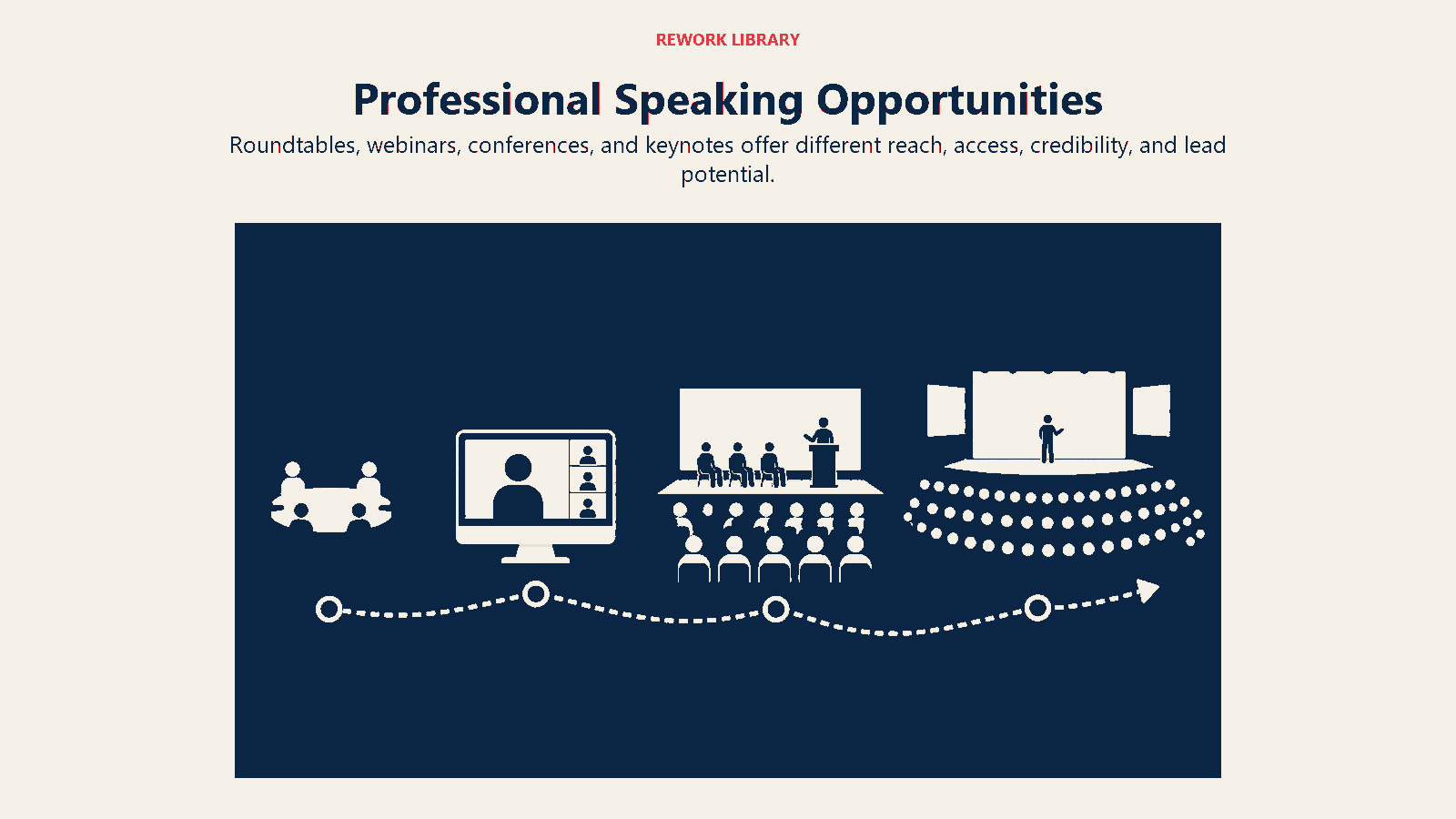
Industry conferences offer the largest audiences and strongest credibility signals. Speaking at a major conference (particularly in a keynote or featured session) positions you as a recognized authority. Attendees assume conferences vet speakers carefully, so your presence suggests peer recognition.
Conference speaking divides into keynotes, breakout sessions, and panel discussions. Keynotes reach the full audience but are typically reserved for well-known experts or executives from major firms. Breakout sessions attract smaller, more targeted audiences based on topic. Panels gather multiple perspectives but give you less time to establish your viewpoint.
For most professional services firms, breakout sessions offer the best ROI. You get 30-45 minutes with people who actually care about your topic, enough time to prove you know what you're doing while giving them something useful they'll remember.
The application process requires preparation. Most conferences use calls for proposals (CFPs) where you submit session abstracts months in advance. Selection committees review hundreds of proposals, looking for unique perspectives, practical value, and speaker credentials that justify the slot.
Your proposal needs three elements: a compelling title that clearly communicates value, an abstract explaining what attendees will learn and why it matters, and a brief speaker bio establishing your credibility. Generic proposals ("Digital Transformation Best Practices") get rejected. Specific ones ("How We Reduced Cloud Migration Risk by 60% Through Phased Deployment") get selected.
Track conferences in your industry and related fields. Most announce CFPs 6-8 months before the event. Create a calendar tracking submission deadlines so you're not scrambling at the last minute.
Corporate and Private Events
Client-hosted events, industry association meetings, and executive briefings offer different value than conferences. Audiences are smaller but often more qualified. You're speaking to people with immediate decision authority rather than mixed audiences including students, job seekers, and tire-kickers.
These opportunities typically come through existing relationships rather than open applications. A client invites you to present at their leadership retreat. An industry association asks you to lead a discussion at their quarterly meeting. A partner organization wants you to contribute to their customer event.
The expectations differ from conference speaking. Less performance, more conversation. Corporate audiences want practical insights they can apply immediately, not broad frameworks or academic research. Keep presentations short, 20-30 minutes, leaving plenty of time for discussion and questions.
These events rarely generate immediate leads because attendees often work for the hosting organization. But they create valuable second-order effects: executives in attendance remember your insights when they move to new companies, participants share your ideas with their networks, and hosting organizations view you as a strategic resource worth engaging for future needs.
Community Speaking
Local business groups, industry meetups, university programs, and community organizations offer the most accessible speaking opportunities. Selection criteria are less stringent, audiences are smaller, and prestige is lower. But dismissing these opportunities misses their strategic value.
Community speaking serves three purposes. First, it builds your speaking skills in lower-stakes environments. Conference keynotes are terrible places to test new material or work on delivery. Community talks let you refine content and presentation before taking it to larger stages.
Second, local events create relationship density in your geographic market. Professional services still operates largely through relationship networks. Being the person who speaks regularly at the local CFO roundtable or marketing executive forum keeps you visible to potential buyers in your region.
Third, community speaking can be highly targeted. A specialized meetup might have only 30 attendees, but if they're all senior IT leaders at mid-market healthcare companies (your ideal client profile), that's more valuable than speaking to 300 random conference attendees.
Identify 3-5 community groups where your target clients gather. Reach out to organizers offering to speak on topics aligned with group interests. Most are desperate for quality speakers and will book you quickly.
Building Your Speaking Program
Systematic speaking programs don't rely on waiting for invitations. They proactively identify opportunities, develop signature content, and create processes that make speaking scalable across your firm.
Developing Signature Topics
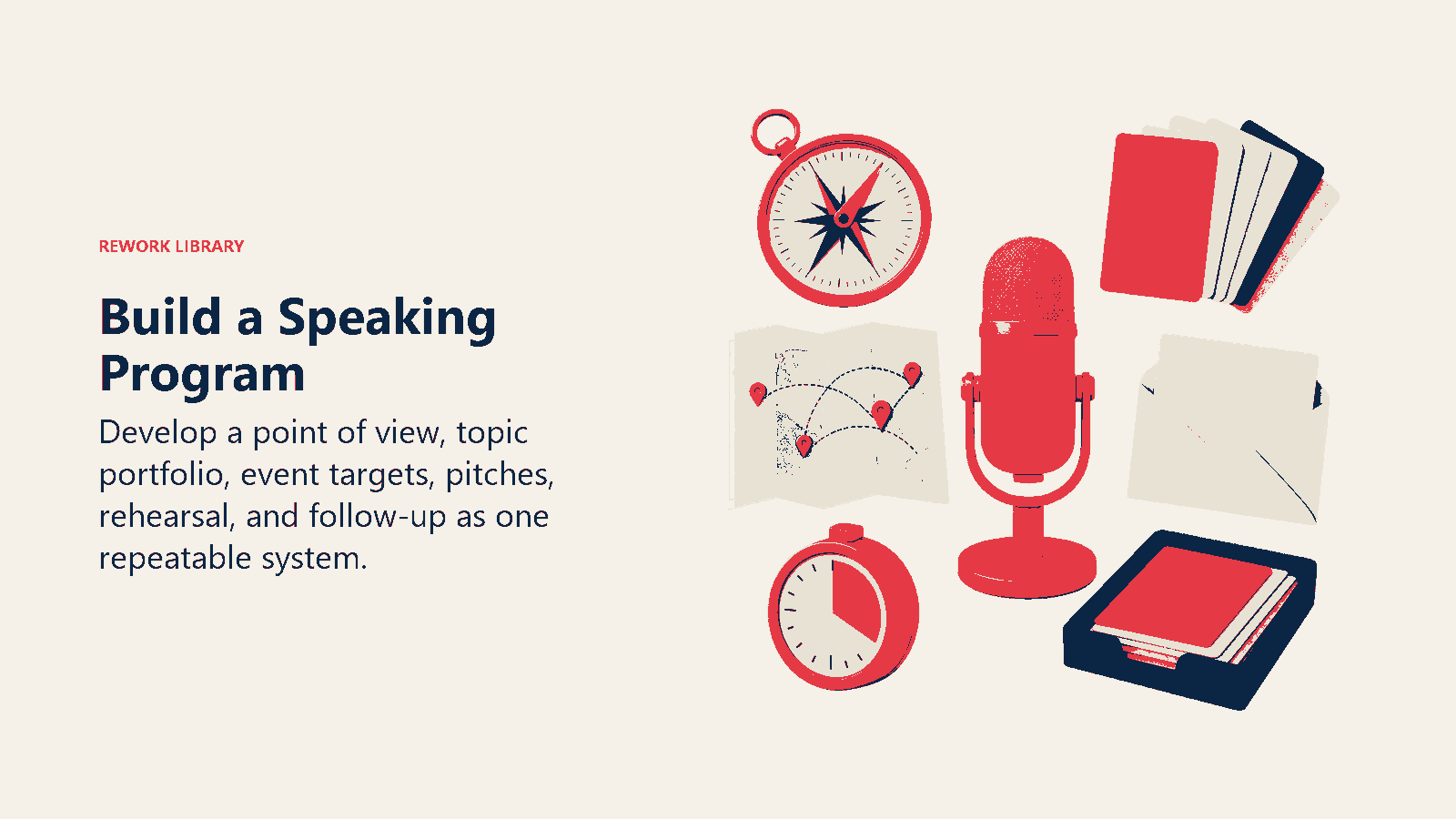
Your speaking topics should reflect your firm's positioning and expertise while addressing problems prospects care about. The sweet spot is where your unique capabilities intersect with urgent client needs.
Start with your most successful client engagements. What problems did you solve? What results did you generate? What unique approaches or methodologies did you use? Those successes become case-based presentations: "How We Helped a Manufacturing Company Reduce Supply Chain Costs by 35%."
Then broaden from specific cases to frameworks. Extract the methodology you used into a repeatable approach others can apply: "The Four-Stage Supply Chain Optimization Framework." Frameworks give you intellectual property to reference and create structure that audiences can remember and apply. These become the foundation for building service productization opportunities.
Avoid generic topics that 50 other speakers could deliver. "Change Management Best Practices" is generic. "Why 70% of Digital Transformations Fail (And How to Beat Those Odds)" is specific. Generic topics get lost in crowded conference programs. Specific topics stand out.
Develop 2-3 signature topics per partner or practice leader. Signature means polished, refined through multiple deliveries, supported by strong visual presentations and handout materials. These become your go-to talks you can deliver with minimal preparation when opportunities arise.
Test topics through community speaking before submitting to major conferences. You'll discover what resonates with audiences, which examples work, where people lose interest, and what questions come up. Use that feedback to refine content before the high-stakes presentations.
Finding and Pursuing Opportunities
Most speaking opportunities are out there if you look systematically. Conference websites list upcoming events and CFP schedules. Industry associations publish event calendars. Your existing clients host events where external speakers add value.
Create a speaking opportunity pipeline just like you maintain a sales pipeline. Track conferences you want to speak at, submission deadlines, decision timelines, and selection results. This prevents the common pattern of noticing CFPs after they've closed.
Build a speaker portfolio you can share when opportunities arise. Include a professional headshot, one-paragraph bio, brief description of your signature topics, links to previous speaking videos if available, and testimonials from past event organizers. Package this as a one-page PDF you can email immediately when someone asks if you're available to speak.
When submitting conference proposals, study the event's past agendas. What topics did they feature? What session formats worked? Who spoke previously? Tailor your proposal to fit the event's style while offering fresh perspective they haven't covered recently.
Rejection is normal. Major conferences might accept 20% of proposals. Don't take it personally. If a proposal gets rejected, revise it and submit to different conferences. Good content usually finds a home, just not always on the first try.
Proposal Writing That Gets Accepted
Conference selection committees review proposals quickly, sometimes 30 seconds per submission. Your proposal needs to communicate value immediately.
Start with a specific, outcome-focused title. "Increasing Customer Retention" is vague. "The 90-Day Customer Success Playbook That Increased Our Retention by 23%" is specific. Titles should promise concrete takeaways, not abstract concepts.
Your abstract should answer three questions: What problem does this solve? What will attendees learn? Why should they care? Use the first sentence to establish relevance, "Most companies lose 30% of new customers in the first 90 days, destroying customer acquisition ROI." Then explain your solution and the value it creates.
Include 3-5 bullet points listing specific takeaways. Not vague learning objectives, but actual things people will know or be able to do after attending. "You'll learn how to..." is weak. "You'll walk away with a 90-day onboarding checklist you can implement immediately" is strong.
Your speaker bio needs credibility markers relevant to the topic. If you're speaking about supply chain optimization, mention your 15 years in operations, the companies you've helped, and any relevant credentials. If you're speaking about B2B sales, credentials from your finance background don't help.
Some conferences ask for session outlines or detailed agendas. Create these showing clear structure: opening hook, main content sections with time allocations, audience interaction elements, and strong closing. This demonstrates you've thought through the session, not just the topic.
Delivering Presentations That Generate Leads
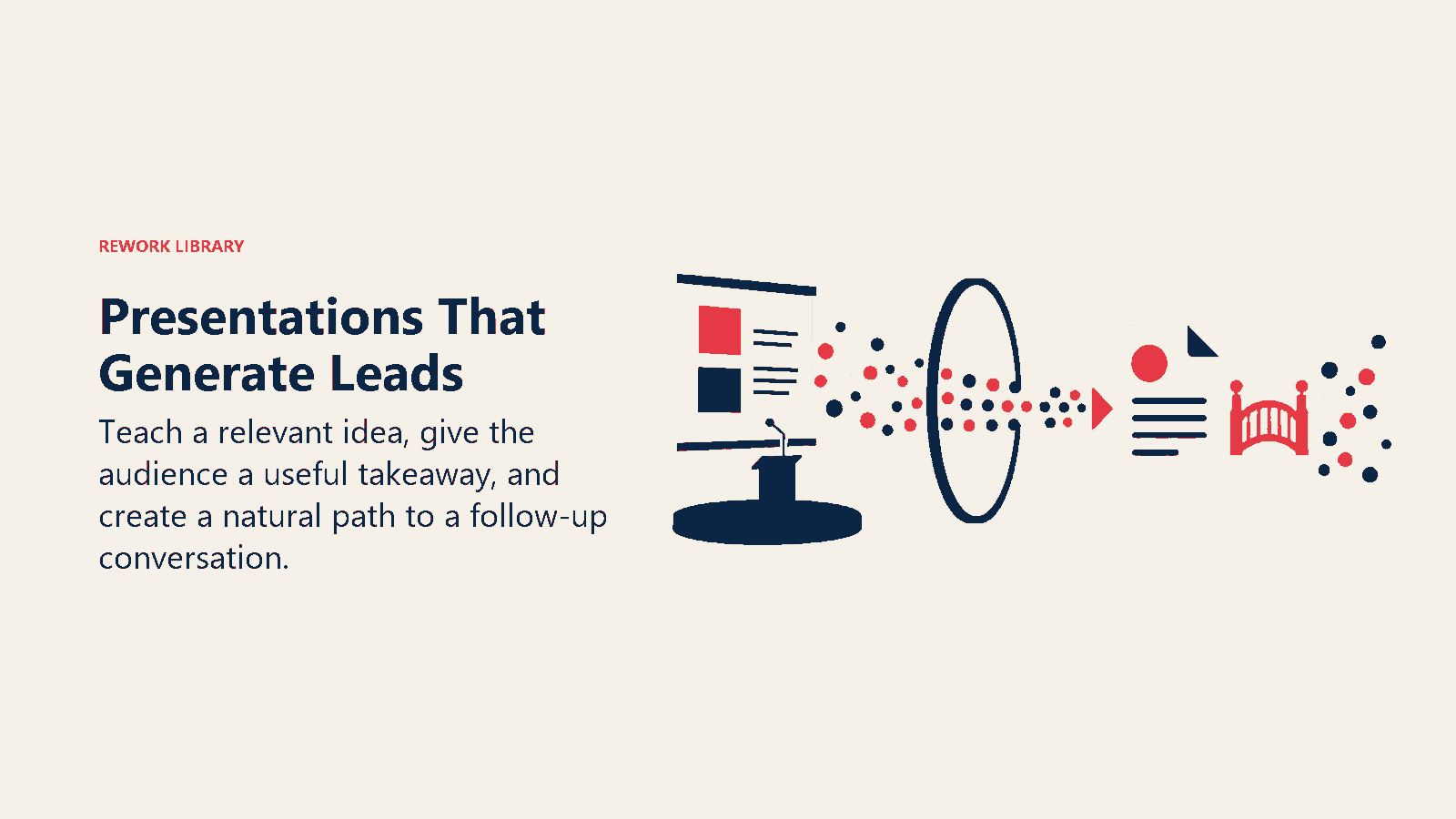
Great content poorly delivered wastes the opportunity. Audiences forget presentations the moment they leave the room unless you create memorable experiences that stick.
Presentation Design Principles
Start with story, not slides. Most presenters build PowerPoint decks, then figure out what to say. That's backwards. Develop your narrative first, what story are you telling? Stories have structure: setup, conflict, resolution. Your presentation should follow that arc.
The setup establishes context and stakes. Why does this topic matter? What problem exists? Who experiences it? Spend 10% of your time here, enough to establish relevance, not so much that people get bored.
The conflict explores the problem in detail. Why is it hard? What have people tried that hasn't worked? What makes this challenging? This is where you demonstrate deep understanding that establishes your expertise. Spend 30% of your time here.
The resolution presents your approach, framework, or solution. What did you do differently? What results did you achieve? How can others apply this? This is the 60% where you deliver value. Focus on actionable insights people can use, not self-promotional case studies.
Visual design matters more than most people think. Dense text slides kill engagement. Use high-quality images, simple diagrams, and minimal text, one idea per slide. If people are reading your slides, they're not listening to you.
Create handouts separately from presentation slides. Slides support your verbal presentation with visuals and key points. Handouts provide reference material people take away. Don't try to make slides serve both purposes, you'll create mediocre versions of each.
Delivery Excellence
Stage presence comes from preparation, not natural charisma. Rehearse your presentation multiple times, full run-throughs, not just reviewing slides. Practice your transitions between sections, your opening hook, your closing call-to-action.
Use your first 60 seconds to earn attention. Don't thank organizers or explain your agenda. Start with a provocative question, a surprising statistic, or a brief story that illustrates the problem you're solving. Give people a reason to listen before you ask them to.
Vocal variety prevents monotony. Vary your pace, slow down for important points, speed up for background context. Change your volume, louder for emphasis, quieter to draw people in. Pause for effect, silence is powerful when used intentionally.
Make eye contact with individuals, not the back wall. Scan the room naturally, holding eye contact with one person for a complete thought before moving to another. This creates connection and helps you read audience engagement.
Handle Q&A confidently. Repeat questions so everyone hears them. Give concise answers focused on the question asked, not everything you know about the topic. If you don't know, say so, credibility comes from honesty, not pretending omniscience.
Manage time ruthlessly. Running over suggests poor preparation and disrespects attendees' schedules. If you're behind, cut content from the middle, never rush the ending. Your closing is where you make your call-to-action and create the lasting impression.
Lead Capture Strategy
Speaking without lead capture wastes business development potential. You need systems for converting audience members into qualified opportunities.
Promote your session before the event through LinkedIn posts, email to your network attending the conference, and mentions in your firm's newsletter. Pre-event promotion fills seats and surfaces interested prospects before you even present.
Create a resource offer tied to your presentation. A downloadable template, detailed checklist, assessment tool, or expanded guide related to your topic. Mention this during your presentation and provide a simple way to access it, QR code on a slide, short URL, or contact information.
Collect contact information by offering value, not asking for business cards. "Text SUPPLY to 555-0123 to download our full supply chain optimization toolkit" works better than "please share your business card if you want to connect."
Follow up within 48 hours while the presentation is still fresh. Send the promised resources immediately. Include a brief personal note referencing something specific from your session or the Q&A. Offer to continue the conversation if they want to discuss application to their specific situation. This follow-up process feeds directly into your initial consultation process.
Track which presentations generate the most qualified follow-up. Some topics attract large audiences but low-quality leads. Others draw smaller crowds of highly qualified prospects. Over time, optimize for quality over quantity.
Building Your Publishing Program
Publishing creates permanent assets that work for you 24/7. A conference presentation reaches people in the room. A published article reaches thousands over months or years. Both matter, but published content scales better.
Article and Blog Publishing
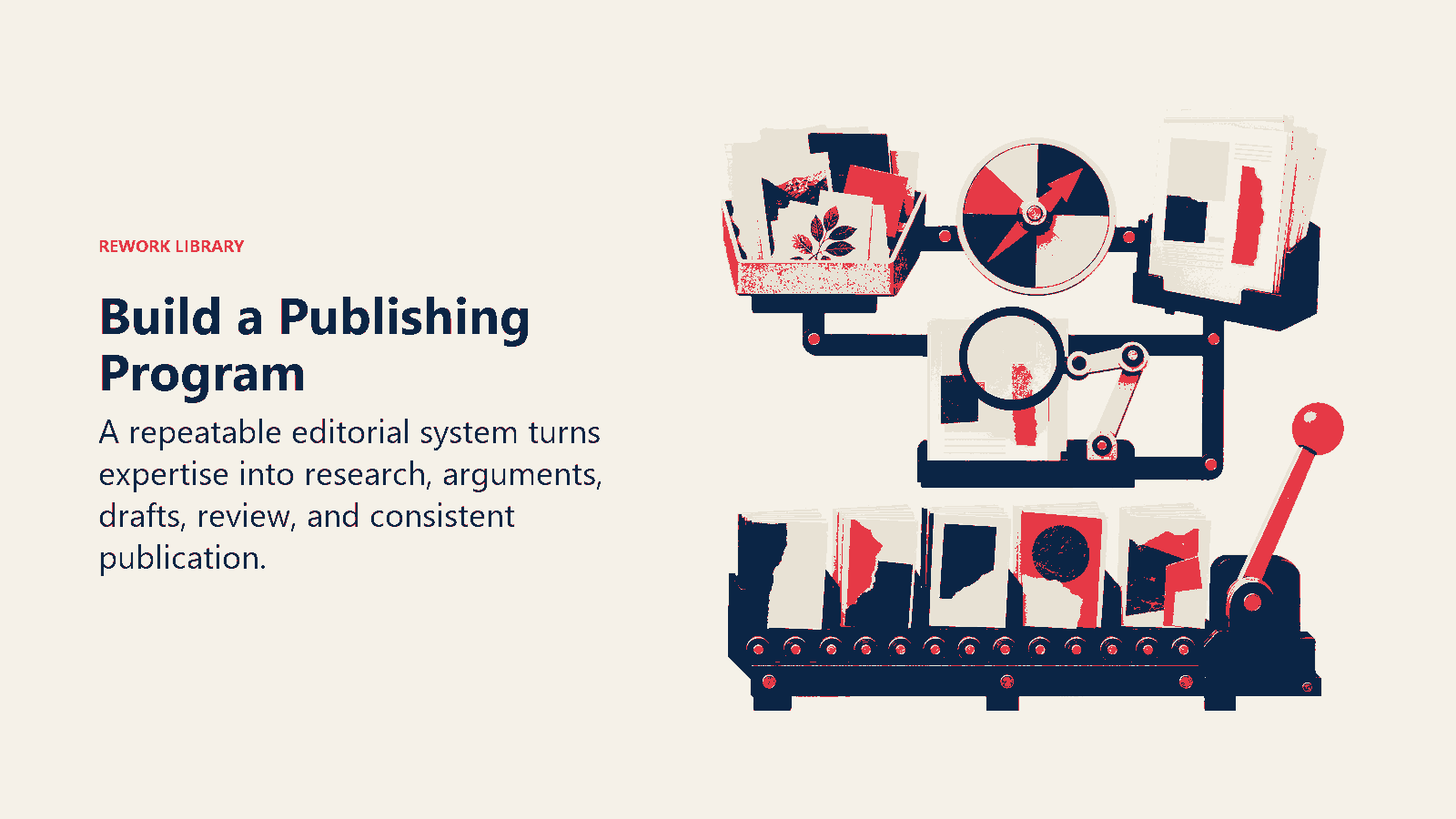
Regular article publishing keeps you visible between major initiatives like book launches or conference keynotes. Articles let you address timely topics, respond to industry trends, or explore ideas not substantial enough for longer formats.
Trade journals in your industry represent the highest-value publishing outlets. These reach your exact target audience, potential clients actively engaged in the field. Acceptance standards are higher than general business publications, so bylines carry more credibility.
Guest posting on respected industry blogs or platforms provides another channel. Many platforms actively seek expert contributors. The key is choosing outlets your target clients actually read, not just sites with high traffic.
Your own firm blog matters, but differently. Prospects visit your website during the buying process to evaluate your expertise. A blog with substantive articles (not promotional fluff) reinforces your positioning. But self-published content carries less credibility than third-party publications, so balance both.
Article length varies by outlet, but 1,000-1,500 words works for most business publications. Long enough to provide real value, short enough that busy professionals will finish reading. Focus on one actionable insight per article rather than comprehensive overviews.
Publication frequency matters more than individual article quality. Publishing one article per month for a year builds more momentum than publishing one amazing piece then going dark for six months. Consistency compounds through search visibility, social sharing, and audience expectation.
Long-Form Content Development
Whitepapers, research reports, and e-books serve different purposes than articles. They position you as a serious expert who's done deep work on complex topics. Buyers download them during the research phase of purchase processes, often before they engage potential vendors.
Whitepapers typically explore specific problems and solution approaches in 8-15 pages. They combine research, frameworks, case examples, and practical guidance. Unlike articles, they can use data, charts, and detailed methodologies that demonstrate analytical rigor.
Research reports present original findings from studies, surveys, or data analysis. If you have unique access to industry data or can survey your client base to generate insights, research reports create intellectual property no competitor can copy.
E-books package related content into longer guides (30-60 pages) that serve as comprehensive resources. These work well for evergreen topics where you can provide definitive guidance. Think "The Complete Guide to..." rather than timely analysis.
Long-form content requires more investment than articles, research time, writing, design, and production. Plan for 40-60 hours from concept to published asset for a quality whitepaper. That investment pays off through extended shelf life and lead generation value over 12-24 months. These assets become valuable additions to client testimonials and case studies you develop from successful engagements.
Use long-form content as gated assets requiring email registration to download. This builds your prospect database with people who've demonstrated interest by downloading your content. Not every piece needs to be gated, but your highest-value assets should be.
Book Publishing Strategy
Books create the strongest credibility signal in professional services. "I read your book" opens more doors than "I read your blog." Books suggest sustained expertise, institutional recognition, and significant intellectual investment.
The traditional versus self-publishing choice involves clear tradeoffs. Traditional publishing (working with an established publisher) provides: credibility from publisher vetting, professional editing and design, distribution through bookstores and online retailers, and potential advance payment.
But traditional publishing also means: long timelines (12-18 months from signing to publication), loss of content control through publisher input, lower royalties (typically 10-15%), and challenges getting accepted unless you already have a platform.
Self-publishing offers: complete creative control, faster timeline (3-6 months from draft to market), higher royalties (70%+ on digital sales), and no gatekeepers to navigate. However, you lose the credibility signal of publisher vetting and need to handle editing, design, and marketing yourself.
For professional services firms, book publishing is primarily a business development tool, not a revenue source. Few business books generate significant royalty income. The value comes from client acquisition, speaking opportunities, and market positioning. From that lens, self-publishing often makes more sense, you get the credential ("I wrote the book on X") faster and cheaper. Books also strengthen your firm's overall firm specialization strategy by demonstrating deep expertise in specific domains.
Launch strategy determines a book's business impact. Publishing quietly generates minimal results. Launching with coordinated promotion, LinkedIn campaign, email to your full network, speaking tour, media outreach, creates momentum that leads to opportunities.
Plan your launch 90 days before publication. Line up advance readers who'll post reviews on Amazon. Schedule podcast interviews and guest articles timed to publication. Create a launch event (virtual or in-person) where you discuss key themes. Front-load promotion in the first 30 days while the book has "new release" status.
Content Development Process
Producing consistent content requires operational discipline, not creative inspiration. Treat content development like any project with clear processes, assigned responsibilities, and quality standards.
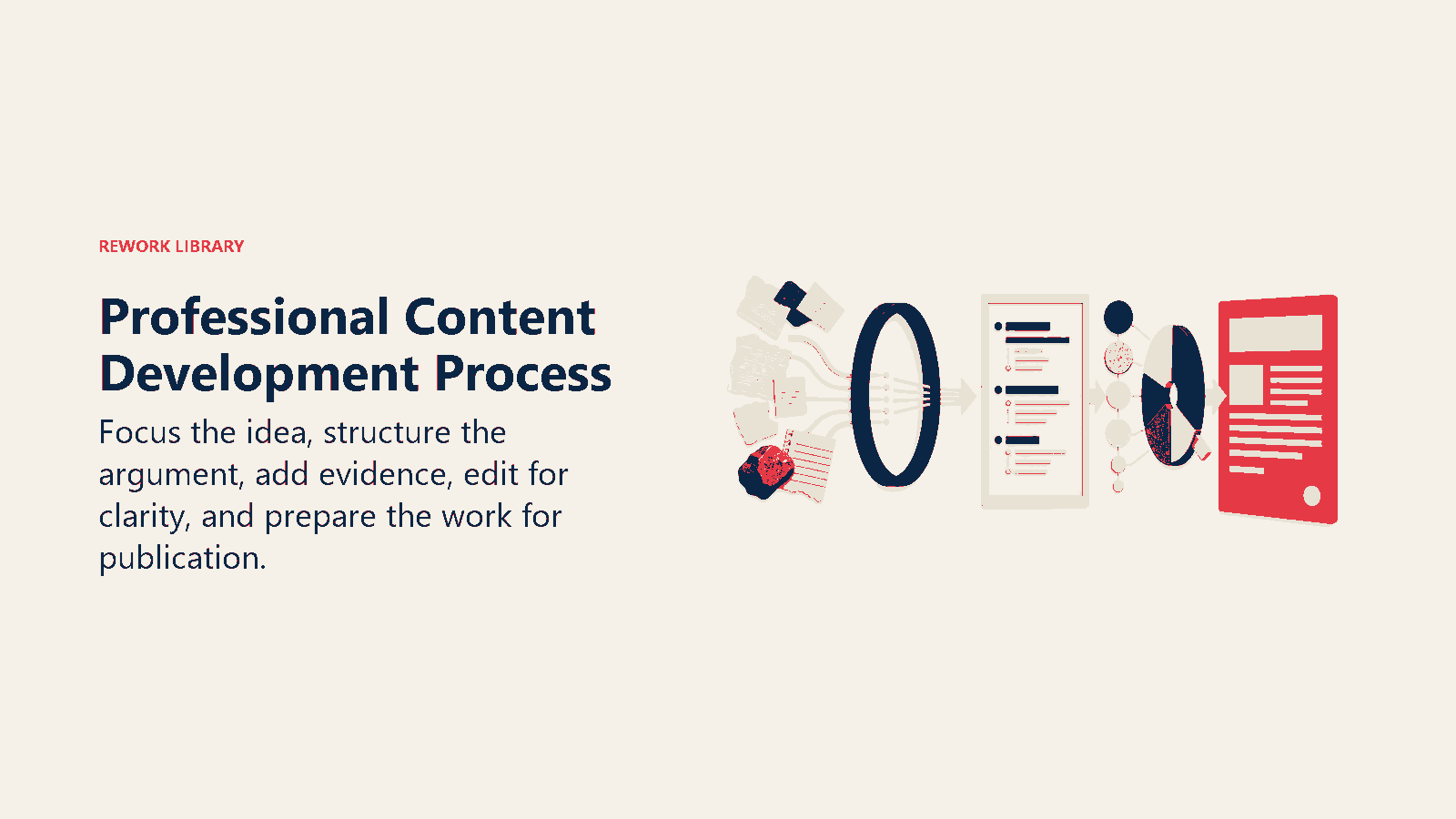
Research and Ideation
Content ideas should come from your daily work. Client questions that come up repeatedly suggest widespread confusion needing explanation. Win-loss analysis revealing common objections suggests topics to address. Industry news creating client concerns suggests timely commentary opportunities.
Maintain an idea backlog where anyone in the firm can contribute topics. Not every idea becomes content, but this crowd-sourced approach generates more relevant topics than brainstorming sessions.
Mine your existing content for expansion opportunities. A well-performing blog post becomes a longer article. Related articles become a whitepaper. A series of whitepapers becomes a book. This repurposing maximizes value from research and thinking you've already done.
Research depth depends on content type. Blog posts might require only reviewing recent news and drawing on your experience. Whitepapers need data, case studies, and frameworks. Books require comprehensive research spanning multiple sources and perspectives.
Build research into your workflow rather than treating it as separate work. When you complete a successful client engagement, document the approach and results immediately. Those notes become case studies or examples in future content with minimal additional effort.
Writing and Production
Most professionals struggle to find writing time. Client work takes priority, writing gets pushed to evenings and weekends, quality suffers, and consistency disappears. Systematic programs schedule dedicated writing time and stick to it.
Block recurring writing time on your calendar, two hours weekly or half-day monthly depending on your target production schedule. Protect this time like you protect client meetings. Treat missed writing sessions as seriously as missed client calls.
Write first drafts quickly without editing. Get ideas down, worry about polish later. Most people try to write and edit simultaneously, which destroys momentum and produces worse results than drafting fast then revising.
Use editing help. Professional editors improve clarity, catch errors, and tighten arguments. Even experienced writers benefit from editing. Budget for professional editing on high-value content like whitepapers and books. For regular articles, peer review within your firm provides quality checking.
Design matters more than most people think. Amateur design undermines expert content. Invest in professional templates for different content types. Use consistent branding, high-quality visuals, and clean layouts that reflect the quality of your services.
Create content calendars planning 90 days ahead. This prevents last-minute scrambles while allowing flexibility for timely topics. Calendar should specify: publication date, topic, author, target outlet, and production milestones.
Repurposing Strategy
Smart content strategies extract maximum value from every piece through systematic repurposing. One substantial piece of research or thinking should generate multiple content assets in different formats.
A 60-minute conference presentation can become: a blog post summarizing key points, a SlideShare deck shared on LinkedIn, a video recording posted on YouTube, a podcast episode discussing the topic, an article expanding on the core framework, and a checklist or template from the methodology.
This isn't duplicating content, it's reformatting for different audiences and contexts. Some people read articles, others watch videos, others listen to podcasts. Different formats reach different people.
Create a repurposing checklist for each major content piece. When you write a whitepaper, immediately plan: a launch article announcing it, social posts highlighting key findings, a webinar exploring the research, and a blog series unpacking different sections.
This approach dramatically improves content ROI. Instead of 60 hours producing one whitepaper that generates leads for 12 months, you invest 80 hours total producing the whitepaper plus six derivative pieces that collectively generate leads for 24 months across multiple channels.
Distribution and Promotion
Publishing content without promotion wastes most of its value. Distribution is as important as creation. Your content needs to reach the people who'll find it valuable.
Email Distribution
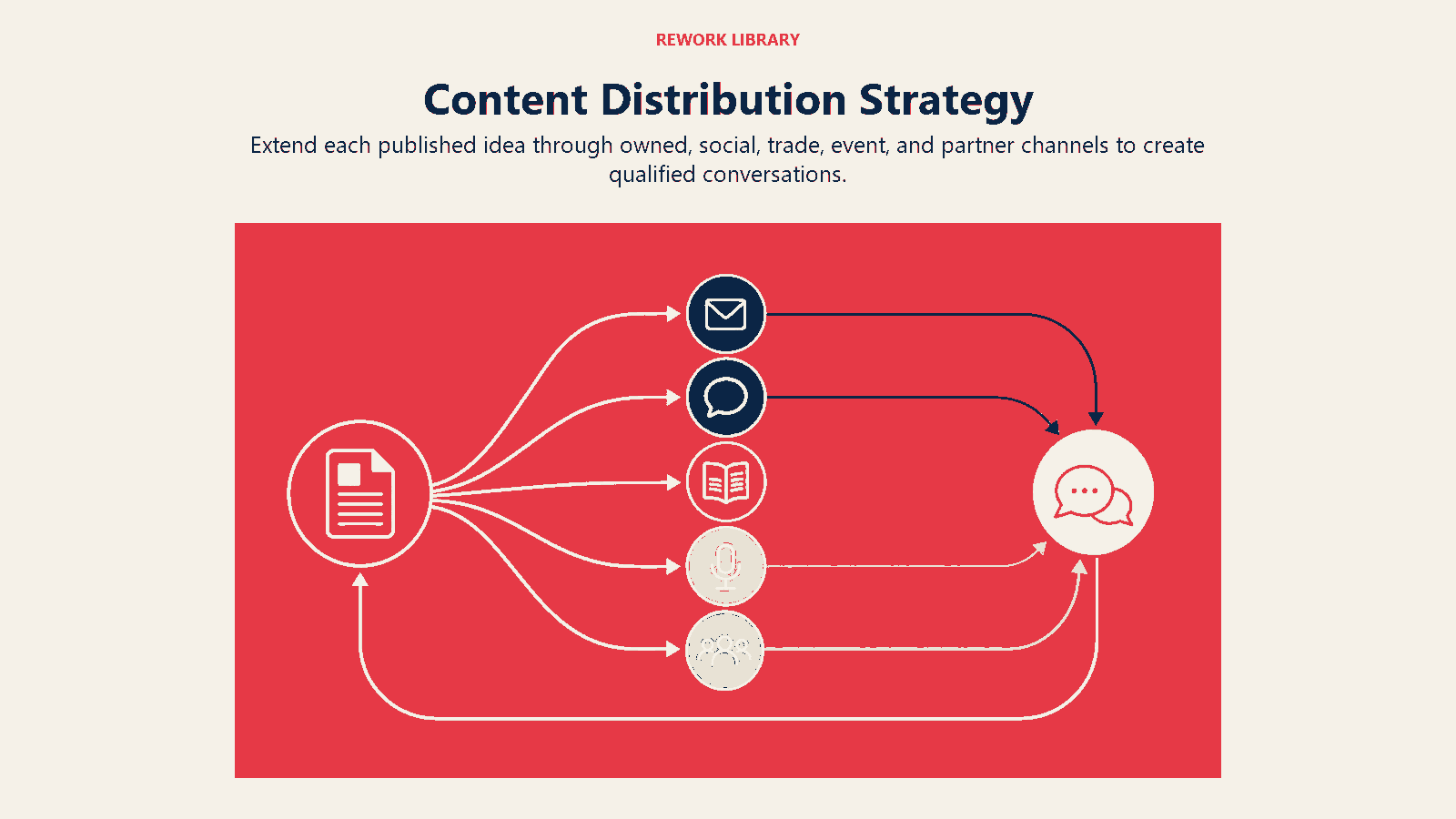
Your email list, prospects, clients, referral sources, and industry contacts, represents your owned audience. You can reach them anytime without depending on algorithms or paying for access.
Create a regular email newsletter (monthly or quarterly) sharing your latest content along with curated insights from other sources. The key is consistency. Monthly newsletters train your audience to expect and open your emails. Sporadic newsletters get ignored.
Don't make newsletters purely self-promotional. Include useful content from others, industry news, practical tips, and resources. Show you're a valuable source of insight, not just someone hawking your services. Your content can be the main feature, but surrounding it with other value improves engagement.
Segment your list when relevant. Not everyone cares about every topic. If you serve multiple industries or practice areas, let people indicate their interests and send targeted content to relevant segments.
Track email metrics, open rates, click rates, and conversions to content downloads or consultation requests. Use this data to refine subject lines, content selection, and calls-to-action. Most firms send newsletters without analyzing what works.
Social Media Strategy
LinkedIn is the primary social channel for professional services B2B marketing. That's where your prospects spend time professionally. Twitter, Facebook, and Instagram matter less unless your specific market uses them actively.
Post regularly, 3-5 times weekly minimum. Mix content types: your original articles and research, curated industry news with your commentary, client success stories (with permission), and insights from your daily work.
When you publish new content, create multiple social posts over several weeks, not just one announcement. Different headlines and angles attract different people. A single whitepaper might generate 6-8 LinkedIn posts over a month, each exploring different aspects.
Use video when possible. Short videos (60-90 seconds) discussing key points from your articles get more engagement than text posts. You don't need production quality, authentic expertise beats polished emptiness.
Engage with others' content, not just posting your own. Comment thoughtfully on posts from prospects, clients, and industry voices. This visibility and relationship building often matters more than your own posts.
Track which content performs best. LinkedIn analytics show views, engagement, and follower growth. Double down on topics and formats that resonate. Stop investing in approaches that generate minimal engagement.
Media Relations and Outreach
Getting featured in industry publications, podcasts, or news outlets expands reach beyond your own channels. But media relations requires understanding what journalists and producers need.
Most pitches fail because they're self-serving. "We have a new service" isn't news unless you're a major firm. What is newsworthy: original research with surprising findings, contrarian perspectives on industry trends, reactions to breaking news from genuine experts, or case studies with compelling results.
Build relationships with journalists covering your industry before you need them. Follow them on social media, share their articles, offer to be a resource for future stories. When they need expert commentary on deadline, they'll remember you.
Podcast appearances offer another media channel. Thousands of industry and business podcasts need expert guests. Research shows that work in your market, reach out offering to discuss relevant topics, and most will book you quickly.
Prepare a media kit making it easy to feature you: professional photos, bio in various lengths, your areas of expertise, recent speaking or publishing credentials, and topic ideas you can discuss. Send this when reaching out to media contacts.
Don't expect immediate results from media coverage. A single article or podcast appearance rarely generates leads directly. But consistent media presence over time builds recognition that influences buying decisions months later. This long-term approach aligns with building your referral generation system through increased visibility and credibility.
SEO and Long-Term Visibility
Published content should be optimized for search so prospects find it months or years later. Most professional services content ignores SEO, limiting its long-term value.
Target specific search phrases your prospects use. Not generic keywords ("consulting") but specific problems ("how to reduce customer churn in SaaS"). Use tools like Google Keyword Planner to find phrases people actually search.
Structure content for search: clear headlines using target phrases, subheadings breaking up sections, links to related content, and meta descriptions summarizing the article. These technical elements improve search ranking.
Publish content on domains you control (your website, company blog) rather than exclusively on third-party platforms. Guest articles on other sites are valuable for reach, but you want owned content building long-term search authority for your domain.
Update older content periodically. Search engines favor fresh content. A 2020 article updated in 2026 with new examples and data outranks the same article left unchanged. Revisit your top-performing content annually to keep it current.
Link to your published content from multiple places, your website resource section, relevant service pages, team member bios, LinkedIn profiles. These internal and external links signal content importance to search engines.
Building Personal and Firm Brands
Speaking and publishing raises the question: whose brand are you building? Individual practitioners' or the firm's? The answer affects content strategy and business outcomes.
Individual Thought Leadership
In professional services, buyers hire people as much as firms. Partners with strong personal brands generate opportunities that transfer to their firms. Think of consultants who become known for specific frameworks, lawyers recognized as experts in particular legal areas, or agency leaders famous for creative approaches.
Individual thought leadership benefits from: authentic voice and perspective that engages audiences, flexibility to explore ideas without firm approval processes, direct relationship building with followers and readers, and portability if the person changes firms.
But personal brands create challenges. Partners with strong individual brands can leave and take clients with them. Firms investing in building individual partner brands risk losing that investment when people depart.
The mitigation is contractual and cultural. Agreements should specify content ownership and usage rights. Culture should emphasize that firm resources support individual brand building in exchange for client relationship sharing and succession planning.
Encourage individual thought leadership while requiring firm attribution. Partners publish under their own names but always identify firm affiliation. This builds both personal and firm brands simultaneously.
Firm-Level Visibility
Some content works better as firm-branded rather than individually authored. Research reports, methodology frameworks, and service offerings should represent firm capabilities, not individual expertise.
Firm-level thought leadership provides: institutional credibility from organization rather than individual, team selling opportunities with multiple experts, continuity when people leave or retire, and consistent messaging across client interactions.
The risk is bland, committee-approved content lacking distinctive voice. When everything requires multiple approvals and legal review, content becomes safe and forgettable. Firm content succeeds when it has clear editorial vision and leadership empowered to make decisions.
Balance individual and firm content based on your business model. If you operate as a collection of individual practices, emphasize personal brands. If you sell integrated capabilities, emphasize firm brand. Most firms need both.
Create firm platforms that elevate individual voices. A firm research practice publishes studies under the firm brand but features individual experts as authors and spokespeople. This builds both brands while maintaining institutional ownership.
Measurement and ROI
Speaking and publishing programs need clear success metrics to justify continued investment. Track both leading indicators (activities that should generate results) and lagging indicators (actual business outcomes).
Visibility Metrics
Basic visibility measures include: speaking engagements completed, articles published, downloads of content assets, social media reach and engagement, and website traffic to content pages.
These metrics show whether you're executing the program consistently. But they don't prove business value. You can speak at dozens of events and publish constantly while generating zero qualified opportunities if you're targeting wrong audiences or delivering poor content.
Track visibility trends over time. Growing speaking invitations suggest increasing recognition. Growing content downloads suggest improving content quality and relevance. Flat or declining metrics indicate positioning problems or content quality issues needing attention.
Segment visibility by audience quality, not just quantity. Speaking to 500 random conference attendees matters less than speaking to 50 qualified prospects. Measure how well your visibility reaches your ideal client profile.
Business Impact Metrics
Real ROI comes from business outcomes: new client inquiries attributed to speaking or content, proposal requests from prospects who engaged with your content, client conversions where thought leadership influenced the decision, and speaking or publishing opportunities that lead to consulting projects.
Attribution is imperfect in professional services. Prospects engage with content over months, attend multiple sessions, read several articles, then eventually reach out. They can't always identify what specifically prompted contact.
Track first-touch attribution (what initially brought them to you) and last-touch attribution (what prompted them to reach out). Ask new prospects how they heard about you and what content they've engaged with. Many will mention specific articles or presentations that influenced them.
Measure time-to-close for leads generated through thought leadership versus other sources. Thought leadership leads often close faster because they're pre-sold on your expertise and arrive later in their buying journey. Track these metrics as part of your overall professional services metrics framework.
Calculate cost-per-lead by dividing program costs by qualified leads generated. Professional services should expect $2,000-5,000 per qualified lead for thought leadership programs. Compare this to other lead sources like conferences, referrals, or paid advertising.
Long-Term Brand Value
Some benefits resist short-term measurement but drive long-term success. Thought leadership builds brand awareness that influences purchases years later. It creates industry recognition opening doors to partnerships, media opportunities, and speaking invitations.
Track brand metrics through: mentions in industry publications, inbound media requests, speaking invitations (versus applications), referrals from people who know your content but haven't worked with you, and price premiums you can command versus competitors.
These qualitative indicators matter. The firm regularly mentioned in industry news, quoted as expert sources, and invited to speak at major events occupies different market position than equally skilled competitors lacking that visibility.
Survey clients about how they selected you. When significant percentages mention your published content, speaking, or industry reputation, thought leadership is working. When they only mention referrals or prior relationships, your content isn't reaching the right audiences.
Program Management and Governance
Systematic programs need operational infrastructure ensuring consistent execution and quality control.
Resource Allocation
Speaking and publishing programs require dedicated resources: time from partners and subject matter experts, support from writers or content producers, budget for design and production, and technology platforms for distribution.
Most firms underestimate total resource requirements. Partners volunteering to "write some articles" without writing time protected on calendars produces nothing. Assign specific hours per month per contributor and track utilization.
Consider hiring content professionals, editors, writers, or content managers, who work with subject matter experts to produce content. Partners provide ideas and technical expertise, content professionals handle research and writing. This leverage model produces more and better content than expecting partners to write everything themselves.
Budget 3-5% of marketing spend for content production and distribution. Smaller firms might allocate $50,000-100,000 annually. Larger firms should invest $250,000-500,000 or more. This covers: writing and editing, design and production, promotion and distribution, and technology platforms.
Quality Standards and Editorial Process
Not all content deserves publication. Poor quality content damages your brand more than no content. Establish quality standards and editorial processes ensuring published content reflects well on your firm.
Create content guidelines covering: topics aligned with firm positioning, quality standards for research and argumentation, voice and tone expectations, and required disclosures and legal compliance.
Implement editorial review where someone besides the author evaluates content before publication. This catches errors, improves clarity, and ensures consistency. The reviewer needs authority to send content back for revision or reject it entirely.
Build approval workflows appropriate to content type and risk. Blog posts might need single-editor approval. Whitepapers taking positions on controversial topics might require practice leader and legal review. Don't over-bureaucratize (that kills output), but don't skip review entirely.
Track content performance to identify what resonates. Review metrics quarterly asking: Which topics generate most engagement? Which authors produce best results? Which formats work best? Use this learning to guide future content decisions.
Continuous Improvement
Programs should improve over time as you learn what works. Conduct quarterly program reviews examining: execution against plan (did we publish the content we planned?), performance against benchmarks (engagement, leads, conversions), and lessons learned from successes and failures.
Test new approaches systematically. Try different content formats, publication outlets, or promotion strategies. Give experiments enough time (3-6 months) to generate meaningful results, then evaluate objectively.
Benchmark against competitors and industry leaders. Who's publishing the most thought-provoking content in your space? What are they doing differently? You don't want to copy them, but understanding what works for others provides ideas to test.
Invest in training and skill development. Speaking and writing skills improve with practice and coaching. Send partners to presentation skills workshops. Bring in writing coaches. Record presentations and review them to identify improvement opportunities.
Common Pitfalls to Avoid
Even well-intentioned programs fail through predictable mistakes.
Over-promotional content that reads like marketing materials rather than genuine insights destroys credibility. Nobody wants to read thinly-disguised sales pitches. Provide real value, frameworks, data, case studies with honest lessons learned, and trust that demonstrating expertise will generate opportunities.
Inconsistency undermines all benefits. Publishing three articles then going silent for six months trains your audience to ignore you. Commit to sustainable production levels and maintain them. Better to publish monthly consistently than weekly for two months then disappear.
Poor presentation skills waste great content. If you can't deliver presentations engagingly, invest in coaching or send different people to speak. Boring presentations where speakers read text-heavy slides damage your brand regardless of content quality.
Wrong audiences mean wasted effort. Speaking at events your prospects don't attend or publishing in outlets they don't read generates zero business value. Be ruthlessly selective about opportunities, focusing on venues where your ideal clients actually engage.
No follow-up system loses leads. Someone attends your presentation or downloads your whitepaper, then you never contact them. Build systematic follow-up processes capturing inquiries and nurturing them toward qualified opportunities.
Measuring only vanity metrics like social media followers or website traffic misses actual business impact. Track leads, proposals, client conversions, and revenue influenced by thought leadership programs. Visibility that doesn't generate business outcomes is an expensive hobby, not strategy.
Advanced Strategies for Scaling Impact
Once you've built foundational programs, several approaches accelerate results.
Building a Speaker Brand
Some professionals become known as conference speakers, which generates continuous invitations without applications. Getting there requires: developing signature talks people want to hear, delivering consistently excellent sessions that get recommended, promoting sessions actively on social media, collecting testimonials from event organizers, and showcasing speaking credentials through video clips and articles.
A strong speaker brand creates virtuous cycles where speaking invitations generate visibility, leading to content opportunities, creating more speaking invitations. Invest deliberately in building this cycle rather than treating each speaking opportunity as isolated event.
Publishing Velocity Through Team Approaches
Solo authors struggle to maintain publishing frequency while serving clients. Team-based approaches where multiple people contribute to content programs generate more output. Assign content topics to different subject matter experts, use professional writers to interview experts and draft content, create collaborative writing approaches where multiple people contribute sections, and establish content teams with defined roles (researcher, writer, reviewer, promoter).
This industrialized approach produces more content without burning out individual contributors. The challenge is maintaining consistent quality and authentic voice across multiple authors.
Strategic Partnerships for Amplification
Partner with complementary firms or platforms to extend reach. Co-author research studies sharing survey costs and combining audiences, collaborate on webinars or events with related firms, contribute to industry platforms or publications as regular columnist, or participate in podcast networks or speaking circuits where expertise reaches aligned audiences.
Strategic partnerships leverage others' audiences and credibility while providing reciprocal value through your expertise and content. Choose partners whose audiences overlap with yours but who aren't direct competitors.
These advanced strategies make sense once foundational programs work reliably. Don't try to build a speaker brand or launch partnerships before you can consistently produce quality content and deliver strong presentations. Master basics first, then accelerate.
Conclusion: From Invisible to Influential
Your expertise creates client value. But invisible expertise creates no opportunities. Professional services growth requires making your capabilities visible to people who don't yet know you exist.
Speaking and publishing transform that dynamic. Instead of cold outreach hoping prospects take meetings, you create value publicly that draws prospects to you. Instead of claiming expertise in proposals, you demonstrate it through content prospects engage with before the sales process begins.
This isn't magic, it's systematic effort applied consistently over time. Develop signature topics worth sharing. Pursue speaking opportunities strategically. Publish valuable content regularly. Promote your insights across relevant channels. Measure results and improve continuously.
The firms building systematic thought leadership programs create competitive advantages that compound. Visibility generates opportunities, opportunities become case studies, case studies strengthen credibility, credibility generates more visibility. This flywheel effect separates market leaders from commodity providers.
The alternative is remaining dependent on referral networks, responding to RFPs, and competing primarily on price. That's a viable path for some firms, but it limits growth, restricts pricing power, and leaves you vulnerable to competitors who invest in building public visibility.
Your choice is simple: stay invisible and hope for referrals, or build systematic programs that make your expertise visible to people actively looking for help you can provide.
The mechanics aren't complicated. The discipline to execute consistently, that's what separates firms that talk about thought leadership from firms that build market-leading positions through it.
Ready to build systematic visibility programs? Start with Thought Leadership Strategy for broader context and Content Marketing for Services for additional distribution strategies.
Related business development approaches:

Sales Director
On this page
- The Business Case for Public Visibility
- Understanding the Speaking Landscape
- Conference Speaking
- Corporate and Private Events
- Community Speaking
- Building Your Speaking Program
- Developing Signature Topics
- Finding and Pursuing Opportunities
- Proposal Writing That Gets Accepted
- Delivering Presentations That Generate Leads
- Presentation Design Principles
- Delivery Excellence
- Lead Capture Strategy
- Building Your Publishing Program
- Article and Blog Publishing
- Long-Form Content Development
- Book Publishing Strategy
- Content Development Process
- Research and Ideation
- Writing and Production
- Repurposing Strategy
- Distribution and Promotion
- Email Distribution
- Social Media Strategy
- Media Relations and Outreach
- SEO and Long-Term Visibility
- Building Personal and Firm Brands
- Individual Thought Leadership
- Firm-Level Visibility
- Measurement and ROI
- Visibility Metrics
- Business Impact Metrics
- Long-Term Brand Value
- Program Management and Governance
- Resource Allocation
- Quality Standards and Editorial Process
- Continuous Improvement
- Common Pitfalls to Avoid
- Advanced Strategies for Scaling Impact
- Building a Speaker Brand
- Publishing Velocity Through Team Approaches
- Strategic Partnerships for Amplification
- Conclusion: From Invisible to Influential