Professional Networking: Building Strategic Relationships That Drive Growth
 Here's the networking paradox: everyone knows networking generates business, yet most efforts produce nothing. Partners attend industry events, collect business cards, connect on LinkedIn, and wonder why referrals never materialize. They invest hours in conferences and association meetings without seeing returns. They confuse activity with results, treating networking like a social obligation instead of systematic business development.
Turn this article into takeaways for your work.


Each assistant summarizes the article only for you and suggests best practices for your work.
The firms that generate 40-60% of new business through referrals don't network harder. They network differently. They treat relationship building as strategic architecture, not casual socializing. They invest systematically in tiered networks, cultivate partnerships deliberately, and create value exchanges that make referrals natural outcomes rather than awkward requests.
If you're struggling to make networking produce consistent business results, the problem isn't your industry connections or social skills. It's that you're treating strategic relationship development like hobby networking when it needs the same rigor you apply to service delivery or financial management.
What Professional Networking Actually Means
Professional networking for business development is the systematic cultivation of relationships with people who can create opportunities, make referrals, provide strategic intelligence, or become clients themselves. This definition excludes the casual relationship building that happens naturally and focuses on deliberate investment in relationships with business development potential. The distinction matters because most professionals confuse general networking with strategic networking. General networking builds broad visibility and maintains social connections across wide circles. Strategic networking concentrates resources on relationships most likely to generate business impact, recognizing that not all relationships are equally valuable for growth.
Why Most Networking Fails
Three mistakes explain why networking generates minimal returns for most firms.
The transactional approach kills referrals before they start. When networking interactions feel like sales pitches disguised as conversations, people recoil. Nobody wants to be someone's target. People refer business to professionals they trust and respect, not to people clearly using them for leads. Transactional networking broadcasts "I'm here for what I can get from you" even when your words say otherwise.
The spray-and-pray event strategy wastes time and energy. Attending every networking event, collecting dozens of cards, and following up with generic LinkedIn messages creates activity without building relationships. Meaningful relationships need repeated interactions, real conversations, and value exchange over time. Surface-level contact at crowded events rarely produces business relationships.
Inconsistent follow-up ensures potential relationships die. The most common pattern: initial meeting creates interest, good intentions to stay in touch, three months of silence, awkward reconnection attempt, relationship fades. Professional relationships need systematic nurturing. Without structured engagement systems, even promising initial connections become dormant.
Understanding how networking fits within broader business development strategy prevents treating it as isolated activity disconnected from overall growth systems.
The Three Pillars of Strategic Networking
Effective business development networking rests on three foundations that distinguish systematic relationship building from casual socializing.
Pillar 1: Relationship Quality Over Quantity
The most common networking mistake is valuing connection count over relationship depth. LinkedIn profiles bragging about 5,000+ connections rarely translate to business unless those connections represent genuine relationships. Ten strong relationships with people who truly understand your value and refer enthusiastically generate more business than 1,000 weak connections who barely remember meeting you. For maximizing your LinkedIn presence strategically, see our guide on LinkedIn for professional services.
Quality relationships share several characteristics. The other person understands specifically what you do and who you serve, not vague awareness that you're "in consulting." They trust your capabilities based on demonstrated expertise or credible validation. They think of you proactively when relevant opportunities arise rather than needing reminders. And they're willing to risk their reputation by making referrals because they're confident in your delivery.
Building this depth requires concentrated effort on limited relationships rather than spreading yourself thin across maximum contacts. The math is simple: you can meaningfully cultivate perhaps 50-75 professional relationships while maintaining 150-200 looser connections. Beyond those numbers, relationships become purely transactional because you lack bandwidth for genuine engagement.
Most professionals err toward quantity, believing more connections create more opportunities. The opposite is true. Fewer, deeper relationships with the right people generate more business than hundreds of superficial connections.
Pillar 2: Systematic Engagement Framework
Random acts of networking produce random results. Sustainable networking needs systems that ensure consistent engagement without depending on memory or motivation.
A systematic engagement framework answers three questions: Who are you investing in? How frequently do you engage? What value do you provide in each interaction?
The first question requires segmentation. Not all relationships deserve equal investment. Your framework should identify tiers with different engagement cadences. The second question demands rhythms and prompts. Monthly check-ins with Tier 1 relationships, quarterly touchpoints with Tier 2, annual reconnections with Tier 3. Calendar reminders, CRM tasks, or structured routines prevent relationships from drifting.
The third question is most important. Each engagement should provide value to the other person, not just remind them you exist. Sharing relevant articles, making useful introductions, offering expertise on their challenges, or simply asking thoughtful questions about their business all create value. Engagement without value is spam.
Pillar 3: Value-First Philosophy
The most powerful networking principle: give value before asking for anything. This isn't altruism - it's strategic relationship building based on how reciprocity works.
When you consistently provide value without immediate expectation of return, three things happen. First, you build trust and goodwill that makes people want to help you. Second, you demonstrate expertise and thoughtfulness that makes referrals natural. Third, you activate reciprocity instincts that make people look for ways to return value.
Value provision takes many forms depending on your network tier and relationship stage. For strategic partners, this might mean referrals you send them, strategic introductions to people they want to meet, or expertise you share about their business challenges. For industry peers, valuable contributions include sharing insights from your work, introducing them to potential clients, or collaborating on thought leadership.
The key discipline: providing value without scorekeeping or immediate reciprocity expectations. The best networkers invest in relationships for 6-12 months before those relationships generate business returns. They trust that consistent value provision creates relationship equity that compounds over time.
Network Architecture Strategy
Strategic networking requires deliberately architecting your network across three tiers, with investment levels matching potential business impact.
Tier 1: Strategic Partners & Referral Sources (5-10 Key Relationships)
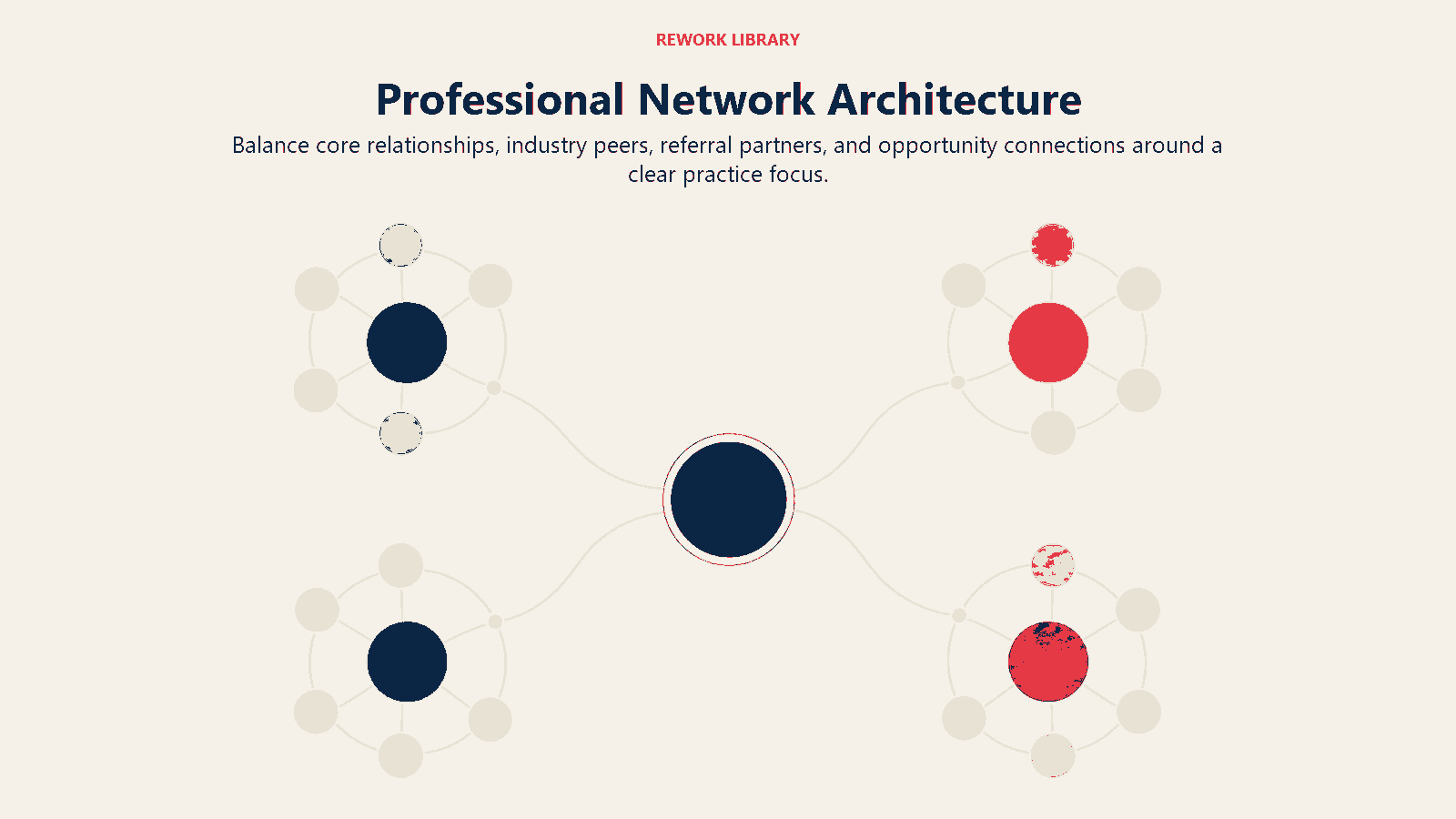
Your Tier 1 network consists of people who can and do generate significant business for you. These might include complementary service providers serving the same clients, former colleagues now at potential client organizations, industry influencers who recommend solutions, or past clients who became advocates.
These relationships deserve your highest investment because they generate the most return. You should engage monthly at minimum, often weekly. Engagement goes beyond coffee meetings to real collaboration: making significant referrals to them, co-developing thought leadership, strategizing together on opportunities, or partnering on client work.
The defining characteristic of Tier 1 relationships: mutual value exchange that benefits both parties roughly equally over time. These aren't one-way referral sources - they're strategic partnerships where both sides actively invest because both sides receive significant value. Learn more about building these relationships through a formal strategic partner network.
For most professional services providers, 5-10 truly strategic relationships generate more referral revenue than hundreds of casual contacts. The challenge is identifying who deserves Tier 1 investment and protecting time for depth over breadth.
Tier 2: Industry Peers & Complementary Services (15-25 Relationships)
Your Tier 2 network includes professionals in adjacent spaces who occasionally refer business, industry peers who can introduce you to opportunities, and potential clients you're cultivating. These relationships have business development potential but haven't proven consistent value or they serve specific purposes (geographic market access, industry expertise, capability gaps).
Tier 2 investment looks different than Tier 1. Quarterly meaningful interactions work better than monthly obligations. These might be lunches when you're in their city, sharing particularly relevant insights, inviting them to events, or making introductions when opportunities arise naturally.
The mistake with Tier 2 is treating everyone equally. Within this tier, some relationships will prove more valuable and migrate toward Tier 1 investment. Others will clarify they belong in Tier 3 or exit your active network entirely. Regular evaluation of Tier 2 relationships based on actual value exchange prevents wasted effort.
Tier 3: Broader Professional Community (50-100 Connections)
Tier 3 represents your broader professional community - people you've worked with, met at conferences, or share common professional interests with. These relationships stay warm through light-touch engagement: LinkedIn interactions, annual holiday messages, relevant article shares, or seeing them at industry events.
Most won't directly generate business, but they serve important functions. They're potential introducers to Tier 1 or Tier 2 relationships. They provide industry intelligence and market insights. They can become clients or referral sources when circumstances change. And they amplify your thought leadership by sharing content or commenting on your expertise.
The management principle for Tier 3: efficient systems that maintain awareness without consuming time. LinkedIn content strategy, email newsletters, event attendance, and light social engagement keep you visible without individual relationship management.
Resource Allocation Across Tiers
The tier framework only works if you actually allocate time accordingly. A rough guideline: 60-70% of relationship investment time should go to Tier 1, 25-30% to Tier 2, and 5-10% to Tier 3. Track this for a month and most professionals discover they're doing the opposite - spreading time equally or investing way too much in Tier 3 activities like conference attendance while neglecting Tier 1 cultivation.
Deliberate reallocation toward higher-tier relationships improves networking ROI dramatically. This doesn't mean ignoring broader community building, but it does mean protecting time for depth with strategic relationships rather than breadth with hundreds of weak connections.
The Relationship Building Framework
Strategic relationships evolve through predictable stages that need different approaches and investment levels.
Initial Connection: Creating Memorable First Impressions

First impressions in professional contexts come from how you're introduced or how you introduce yourself. Warm introductions from mutual connections create instant credibility that cold approaches lack. When someone you both trust makes the connection, the relationship starts with borrowed trust.
In initial conversations, resist the urge to pitch services. Instead, show genuine curiosity about their business, ask thoughtful questions, and share relevant perspectives that showcase expertise without selling. The goal is demonstrating you're worth knowing, not convincing them to hire you.
Make the interaction memorable by providing immediate value. This might be introducing them to someone useful, sharing a particularly relevant article or insight, or offering perspective on a challenge they mentioned. The best first impressions combine expertise with generosity that makes people want to continue the relationship.
Cultivation Phase: Building Trust (3-6 Months)
After initial connection, relationships need consistent engagement to develop trust. The 3-6 month cultivation phase determines whether relationships deepen or drift into dormancy.
Systematic follow-up makes the difference. Within a week of the initial meeting, send something of value that references your conversation and delivers on what you promised (introduction, article, insight). Schedule a second interaction within 4-6 weeks - coffee, virtual meeting, or event invitation. Continue monthly touchpoints that each provide value.
During cultivation, learn deeply about their business challenges, goals, and needs. The more you understand their world, the more valuable you become through relevant insights, introductions, or eventually, service offerings. Trust builds through demonstrated understanding and consistent helpfulness, not sales pitches.
The cultivation phase also reveals fit. Some relationships feel naturally compatible with easy chemistry and mutual value. Others feel forced or one-sided. Let relationships that lack natural fit drift to Tier 3 rather than forcing artificial engagement.
Partnership Development: Mutual Value Exchange
When relationships pass cultivation and prove mutually valuable, they enter partnership development. Here, value exchange becomes explicitly reciprocal. You make referrals to them, they refer to you. You collaborate on thought leadership or speaking. You strategize together on market opportunities.
Partnership development requires transparency about what you're both trying to accomplish and how you can help each other. Many professionals resist this directness, feeling it's too transactional. The opposite is true - explicit collaboration agreements create clarity that makes helping each other natural rather than awkward.
Strategic partnership conversations address: who you each serve, what types of opportunities you're pursuing, how you can best help each other, what makes a good referral, and how you'll communicate about opportunities. This clarity prevents mismatched expectations and ensures both sides invest appropriately. It also strengthens your overall client relationship strategy by creating multiple touchpoints.
Maintenance & Growth: Sustaining Relationships
Even strong partnerships need ongoing maintenance to remain productive. Regular check-ins ensure alignment as businesses evolve. Continued value exchange prevents relationships from becoming one-sided. Strategic reviews assess whether partnerships still serve both parties effectively.
The maintenance challenge is preventing complacency with established relationships. Just because someone referred business last year doesn't guarantee they'll do so this year. Client needs change, competitive landscapes shift, and relationships drift without nurturing.
Systematic engagement calendars ensure Tier 1 relationships get monthly attention while Tier 2 receives quarterly investment. Without systems, even your best relationships risk erosion through simple neglect when you're busy with delivery work.
Building Referrability Into Your Practice
Strategic networking creates referral opportunities, but referrals only happen when you're referable. Three factors determine whether people actually refer business to you.
Clarity About What You Do
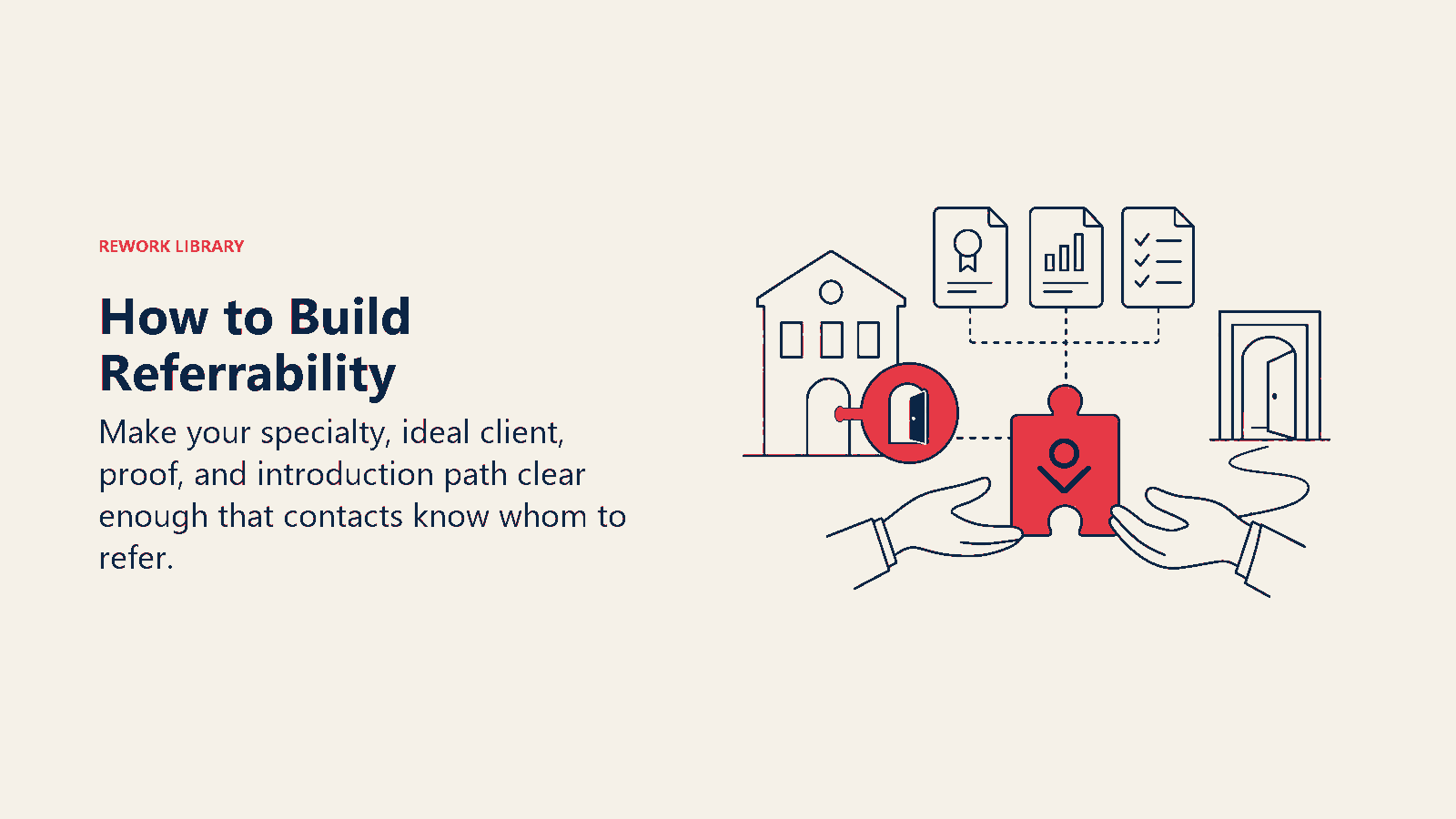
People can't refer business to you if they don't clearly understand what you do and who you serve. "We help companies improve performance" is too vague to prompt referrals. "We help manufacturing companies reduce operational costs through process improvement" creates specificity that makes referrals possible.
Test your referrability by asking contacts: "When you think about referring business to me, who would you send my way and for what type of project?" If they struggle to answer specifically, your positioning lacks clarity. Developing this clarity often requires a clear service line strategy that defines your offerings precisely.
Improve clarity by repeatedly articulating your specific value proposition in various contexts. Share case studies that illustrate typical clients and projects. Talk about your ideal client profile and types of problems you solve. Over time, your network internalizes this positioning and thinks of you when relevant situations arise.
Demonstrated Expertise Worth Recommending
Referrals put the referrer's reputation on the line. People only make referrals when they're confident you'll deliver exceptional value. Demonstrated expertise creates this confidence.
Expertise shows up through multiple channels. Publishing insights on industry platforms, speaking at relevant events, sharing thoughtful perspectives in conversations, and showcasing results from past work all build credibility. When someone has experienced your expertise directly or seen credible evidence, they feel comfortable putting their reputation behind referrals.
The expertise must be specific and demonstrable, not generic claims. "We're experts in digital transformation" means nothing without proof. "We've helped 15 mid-market manufacturers implement cloud ERP systems with 95% on-time, on-budget delivery" provides specificity that builds confidence.
Making Referrals Easy
Even when people want to refer you, friction prevents many referrals from happening. Reduce friction by making the referral process simple.
Provide clear language they can use when making introductions. "You should talk to Sarah about your inventory management challenges - her firm has helped several companies like yours reduce carrying costs by 30-40%" gives referrers specific value propositions to share.
Offer to write introduction emails they can forward. Many potential referrers hesitate because crafting the introduction feels like work. Remove that barrier by providing ready-to-send text.
Follow up promptly and effectively when referrals occur. Nothing kills future referrals faster than making someone look bad because you dropped their introduction or provided mediocre service. Exceptional follow-through on referrals generates more referrals through demonstrated appreciation and results.
Strategic Networking Activities That Generate Results
Effective networking combines multiple activities, each serving different purposes in your relationship architecture.
Industry Association Leadership
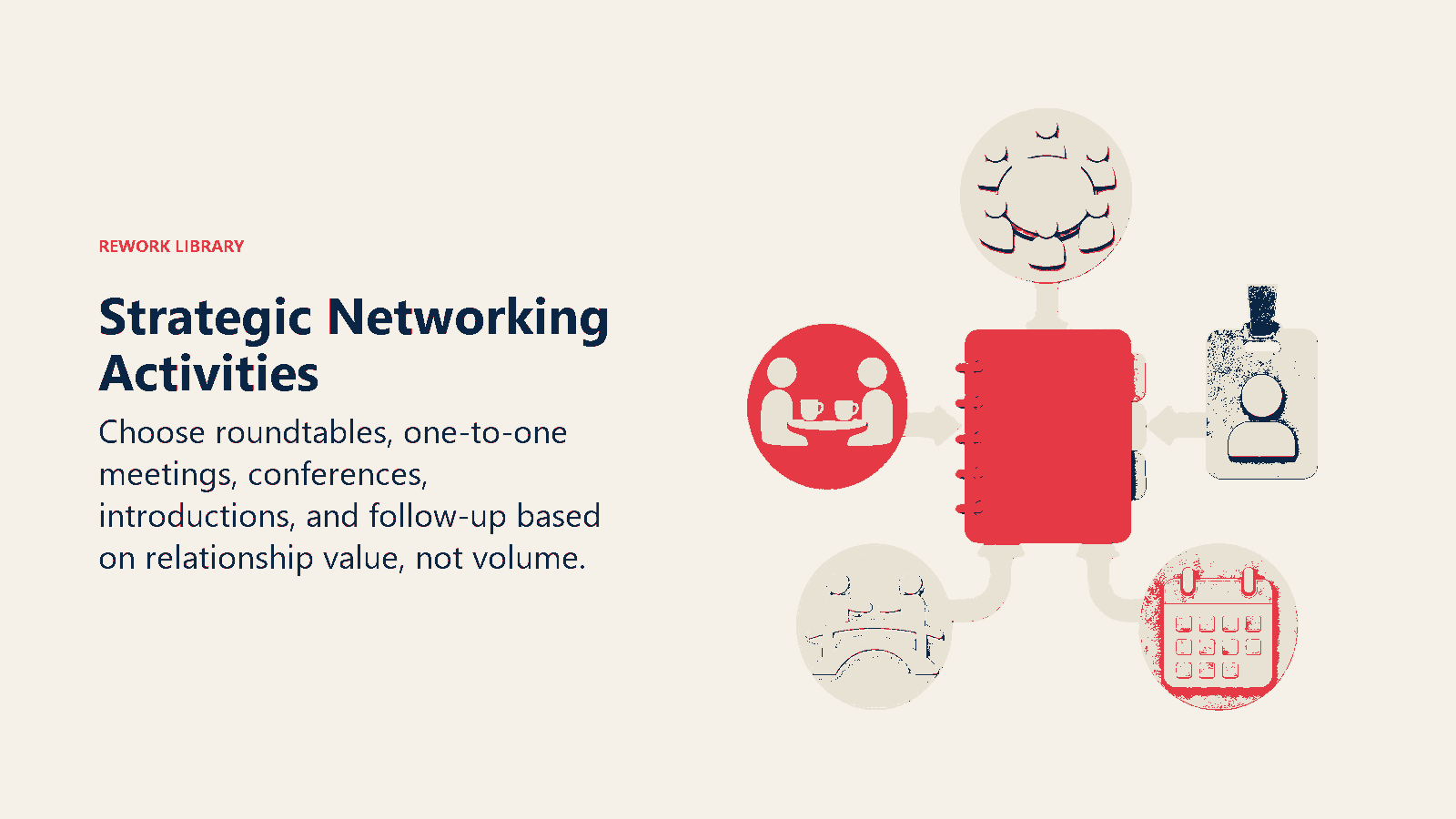
Active participation - especially leadership roles - in industry associations creates visibility, demonstrates expertise, and builds relationships with key players. Committee chairs, board members, and program organizers develop deeper relationships than people who simply show up to events.
Association involvement works best when you choose organizations where your ideal clients and referral partners participate. Leading a committee in an association your competitors dominate might build relationships with peers but won't generate client opportunities.
The time investment is significant, so selectivity matters. Leading in 1-2 strategic associations generates more value than passive membership in ten organizations.
Speaking and Thought Leadership
Speaking at industry conferences or association events positions you as an expert while providing natural networking opportunities. Speakers gain credibility, visibility, and access to attendees interested in their expertise.
Connect speaking with networking by arriving early to meet organizers, staying late for conversations, and following up with attendees who asked questions or requested additional information. The presentation creates the credibility; the surrounding conversations build relationships.
Connecting speaking strategy to broader thought leadership approaches ensures consistent expertise positioning across channels.
Client Events and Educational Workshops
Hosting events for clients and prospects creates valuable networking in controlled environments. Educational workshops, roundtables, or industry briefings bring together people you want to know while providing clear value that makes attendance appealing. For comprehensive guidance on event execution, see conference and event strategy.
The networking advantage of events you host: you control the guest list, set the agenda, and create an environment where you naturally demonstrate expertise while building relationships. Well-executed events generate far more business than passive event attendance.
Strategic One-on-One Conversations
The highest-ROI networking activity is scheduled one-on-one conversations with Tier 1 and Tier 2 relationships. Coffee meetings, lunches, virtual calls, or office visits create depth that group settings can't match.
Protect time for these conversations even when delivery work is busy. Most professionals let relationship cultivation slide when utilization is high, which guarantees pipeline problems when current projects end. Systematic one-on-one engagement prevents feast-or-famine cycles.
LinkedIn Strategy and Digital Networking
Digital networking extends relationship building beyond in-person constraints. Strategic LinkedIn presence keeps you visible to your network between direct interactions, amplifies thought leadership, and creates engagement with broader communities.
Effective LinkedIn networking combines: sharing valuable content regularly, engaging authentically with others' posts, using direct messaging for real conversations (not sales pitches), and positioning yourself through profile optimization and recommendations.
Digital networking complements but can't replace in-person relationship building. Use it for efficiency and scale while reserving high-touch personal interactions for Tier 1 relationships.
Connecting digital presence to comprehensive LinkedIn strategy ensures platform use aligns with overall business development approach.
Integration With CRM and Business Development Systems
Strategic networking requires operational systems that prevent relationships from falling through cracks when you're busy. Customer Relationship Management (CRM) integration ensures networking isn't separate from overall business development. Track all meaningful professional relationships in your CRM with clear tiering, last contact dates, next scheduled engagement, and relationship history. This creates visibility into relationship health and prevents neglect.
Set systematic reminders for relationship engagement based on tier. Tier 1 monthly, Tier 2 quarterly, Tier 3 annually. When reminders go off, review recent interactions and plan meaningful engagement rather than generic check-ins.
Document value exchanged - referrals made and received, introductions provided, collaborations completed. This tracking reveals which relationships generate returns and which consume resources without reciprocity. These metrics become part of your overall professional services metrics for measuring firm performance.
Link networking activities to opportunity tracking. When referrals generate opportunities, connect those opportunities to the referring relationship in your CRM. This attributes value accurately and identifies your most productive referral sources.
Measuring Networking ROI
What gets measured gets managed. Track networking effectiveness through several key metrics. Referral conversion rates measure how effectively relationship-generated opportunities convert to clients. Well-qualified referrals from trusted sources typically convert 40-60%, far higher than cold outbound (5-15%) or even warm inbound (20-30%). If referral conversion rates are low, either referral quality is poor or your sales process needs work. Strengthen conversion through improved initial consultation process execution.
Referral source productivity identifies which relationships generate the most valuable opportunities. Track opportunities and revenue by referring person or organization. This reveals your most productive networking investments and informs tier allocation decisions.
Network tier migration shows relationship development over time. Are Tier 2 relationships advancing to Tier 1 value? Are new connections successfully moving from initial contact to cultivation? Healthy networks show consistent tier advancement alongside strategic tier exit for relationships that prove unproductive.
Time allocation across activities ensures you're investing in highest-return networking. Track hours spent on events, one-on-ones, association work, and content creation. Compare time investment to business generated by each channel. Most professionals discover massive misalignment between time spent and results produced.
Avoiding Common Networking Mistakes
Strategic networking requires avoiding several predictable traps. Networking only when you need business creates desperate energy that repels referrals. Relationships need consistent cultivation, not sporadic activation when pipeline is thin. Maintain systematic networking regardless of current pipeline health.
Confusing activity with results leads to busy calendars without business impact. Attending three events weekly feels productive but generates minimal return compared to focused Tier 1 relationship cultivation. Focus on outcomes (referrals, opportunities, partnerships) not activities (events attended, cards collected).
One-sided value extraction where you only engage when you want something kills referral willingness. Every relationship should include more giving than asking. When you only contact people to request introductions or referrals, they disengage.
Lack of follow-through damages reputation and relationship capital. When someone makes a referral, exceptional responsiveness and service delivery is non-negotiable. Poor follow-through ensures no future referrals while potentially damaging the referrer's reputation.
Failure to close the loop on referrals irritates referrers and reduces future referrals. Always update people who made referrals about outcomes. Won or lost, hired or passed, keep referrers informed. They invested their reputation - respect that by maintaining communication.
The 30-Day Network Audit to 12-Month Self-Sustaining System
Building strategic networking infrastructure follows a structured implementation path. Days 1-7: Network Assessment Inventory all professional relationships with business development potential. Categorize by tier based on potential value and current engagement level. Identify gaps in coverage (industries, geographies, service types) where you lack strategic relationships.
Days 8-14: Tier 1 Activation Schedule engagement with each Tier 1 relationship within next 30 days. Plan specific value you'll provide in each interaction. Identify opportunities to deepen these critical partnerships through collaboration, referrals, or strategic discussion.
Days 15-21: Tier 2 Mapping Create quarterly engagement calendar for Tier 2 relationships. Plan next touchpoint for each within 60-90 days. Identify which Tier 2 relationships have Tier 1 potential and prioritize accordingly.
Days 22-30: System Implementation Set up CRM tracking for relationship tiers, engagement dates, and value exchange. Create calendar blocks for relationship cultivation that protect networking time from delivery work. Establish measurement baseline for referral metrics.
Months 2-3: Systematic Engagement Launch Execute planned Tier 1 and Tier 2 engagement systematically. Maintain weekly discipline around relationship activities regardless of delivery workload. Track early results and relationship migration.
Months 4-6: Optimization Evaluate which relationships are generating value and which are consuming effort without return. Adjust tier allocations based on actual performance. Refine engagement approaches based on what's working.
Months 7-12: Sustainable Operation Networking systems become routine business development rhythm rather than projects requiring motivation. Referral flow becomes consistent and predictable. Network health metrics show tier advancement and relationship productivity. The system becomes self-sustaining through clear value exchange and systematic engagement.
Conclusion: From Transactional Networking to Strategic Relationship Architecture
Professional networking generates sustainable business development results when treated as systematic relationship architecture rather than casual socializing. The firms receiving 40-60% of revenue from referrals don't have better social skills or larger networks. They have disciplined systems for identifying strategic relationships, investing in them deliberately, providing value consistently, and converting relationship equity into business opportunities.
This requires a cultural shift for most professional services providers. Moving from "networking when convenient" to "systematic relationship investment" feels like overhead when you're busy with billable work. But the data is clear: firms with disciplined networking systems generate higher-quality opportunities at lower acquisition costs with better conversion rates than firms relying on cold outbound or even digital marketing.
The choice is whether to continue treating networking as art - personality-driven, inconsistent, unmeasurable - or build it as discipline with clear tier strategies, systematic engagement, value-first philosophy, and performance tracking.
Expertise and delivery excellence create client satisfaction. Strategic networking converts satisfied clients into referral sources while building partnership networks that generate qualified opportunities consistently. Together, they create growth engines far more powerful and sustainable than any amount of cold prospecting or marketing spend.
That's the difference between hoping referrals happen and engineering a relationship architecture that makes them inevitable.
Ready to build systematic business development capabilities? Explore Consultative Business Development and Thought Leadership Strategy to complement relationship-based growth.
Deepen relationship-driven growth:

Sales Director
On this page
- What Professional Networking Actually Means
- Why Most Networking Fails
- The Three Pillars of Strategic Networking
- Pillar 1: Relationship Quality Over Quantity
- Pillar 2: Systematic Engagement Framework
- Pillar 3: Value-First Philosophy
- Network Architecture Strategy
- Tier 1: Strategic Partners & Referral Sources (5-10 Key Relationships)
- Tier 2: Industry Peers & Complementary Services (15-25 Relationships)
- Tier 3: Broader Professional Community (50-100 Connections)
- Resource Allocation Across Tiers
- The Relationship Building Framework
- Initial Connection: Creating Memorable First Impressions
- Cultivation Phase: Building Trust (3-6 Months)
- Partnership Development: Mutual Value Exchange
- Maintenance & Growth: Sustaining Relationships
- Building Referrability Into Your Practice
- Clarity About What You Do
- Demonstrated Expertise Worth Recommending
- Making Referrals Easy
- Strategic Networking Activities That Generate Results
- Industry Association Leadership
- Speaking and Thought Leadership
- Client Events and Educational Workshops
- Strategic One-on-One Conversations
- LinkedIn Strategy and Digital Networking
- Integration With CRM and Business Development Systems
- Measuring Networking ROI
- Avoiding Common Networking Mistakes
- The 30-Day Network Audit to 12-Month Self-Sustaining System
- Conclusion: From Transactional Networking to Strategic Relationship Architecture