Yield Management in Travel - Revenue Optimization Guide 2025

Turn this article into takeaways for your work.


Each assistant summarizes the article only for you and suggests best practices for your work.
A tour operator I worked with had a 32-seat coach and consistent 70% load factors. They were proud of their reliability - same price, same schedule, year-round. Then their CFO ran the numbers. Those eight empty seats on every departure represented $840,000 in lost annual revenue. Not potential revenue they could chase by adding capacity, but money they were leaving on the table with existing operations.
Yield management solves this problem by treating inventory as a perishable asset. An empty seat on today's departure has zero value tomorrow. The question isn't whether to fill it, but at what price and to whom you should sell it to maximize total revenue within your travel business economics framework.
Fundamentals of Travel Yield Management
Yield management emerged in the airline industry decades ago and has since transformed how travel businesses approach pricing and inventory allocation.
At its core, yield management maximizes revenue from fixed inventory. You have 30 seats on a tour bus, 20 rooms in a boutique hotel, or 15 spots on an adventure expedition. That inventory doesn't expand or contract based on demand. It's fixed. Once the departure date passes, unsold inventory generates zero revenue. Forever.
Revenue per available seat day (RevPAS) measures your yield management effectiveness. Calculate it by dividing total revenue by the number of available seat days. A 30-seat tour operating for 10 days with $75,000 revenue delivers $250 RevPAS. The same tour at 90% capacity with $85,000 revenue delivers $283 RevPAS. Higher RevPAS indicates more effective yield management, regardless of absolute capacity utilization.
Yield management differs from basic revenue management for tours. Revenue management encompasses all strategies to maximize revenue: marketing, product development, distribution. Yield management specifically focuses on extracting maximum value from fixed inventory through price optimization and inventory allocation decisions. It's a subset of revenue management, but a critical one for businesses with perishable inventory.
Tour operators, hotels, transportation providers, and attraction venues all benefit from yield management. Any business with fixed capacity, variable demand, and perishable inventory can apply these principles. A hot air balloon company with three balloons and fixed flight schedules faces the same fundamental challenge as a luxury resort with 50 rooms.
Demand Forecasting for Travel
Accurate demand forecasting forms the foundation of effective yield management. Without understanding when and how demand materializes, you're just guessing at pricing decisions.
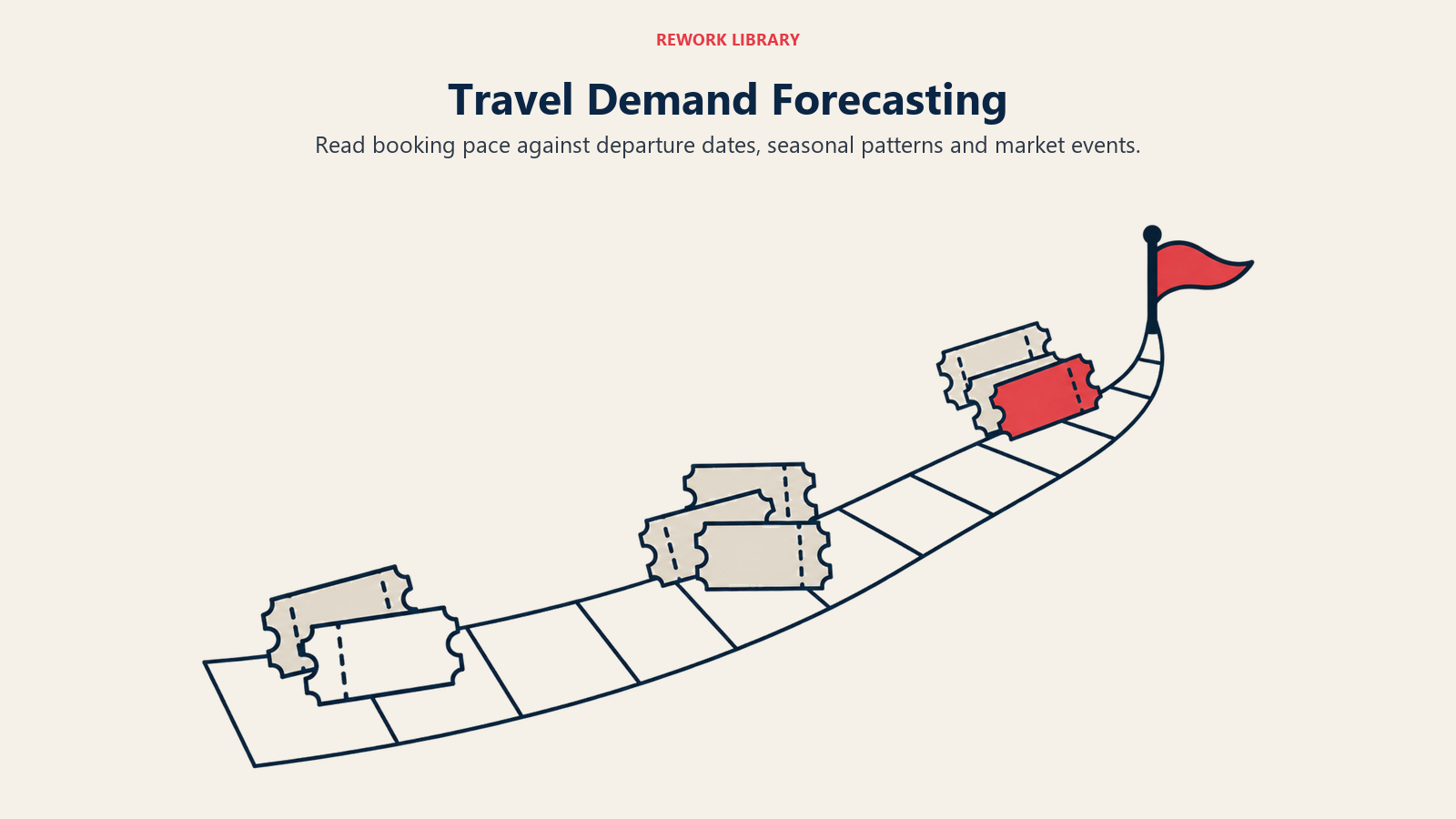
Historical booking patterns reveal critical insights. Analyze bookings by month of departure and month of booking. Most leisure travel bookings occur 45-60 days before departure, with booking curves that look like reverse hockey sticks: slow build for months, then rapid acceleration in the final 30-45 days. Business travel concentrates in the 7-14 day window. Understanding your specific patterns prevents panic pricing when bookings look slow three months out but are actually on pace.
Seasonality affects both when people travel and when they book. Summer vacation bookings peak in January-March as families plan ahead. Winter holiday bookings surge in September-October. But booking windows also compress during peak seasons - people book further in advance to secure preferred dates and avoid sellouts. Off-season bookings often happen last-minute as travelers take advantage of flexibility and deals.
Predictive analytics takes historical data and adds external factors: economic conditions, competitive pricing, major events, weather forecasts. Machine learning models can identify patterns humans miss, like how competitor price changes three months ago affected your booking pace, or how exchange rate movements correlate with international bookings. But you don't need AI to start. Simple regression analysis of historical data provides actionable forecasts.
Market conditions and events create demand volatility that historical patterns won't capture. A major sporting event, concert series, or conference can triple normal demand overnight. Economic downturns suppress leisure travel regardless of seasonal patterns. Tracking leading indicators - hotel booking data, airline capacity, event calendars - provides early warning signals for demand changes.
Dynamic Pricing Strategies
Fixed pricing treats all customers the same regardless of when they book or how price-sensitive they are. Dynamic pricing recognizes that different customers have different valuations and booking behaviors through dynamic pricing in travel strategies.

Time-based pricing creates clear incentive structures. Early bird rates 90+ days before departure might offer 15-20% discounts to customers willing to commit early, providing you with valuable cash flow and booking certainty. Standard rates apply in the 30-89 day window when most bookings occur. Last-minute rates can go either direction: premium pricing for urgent travelers who need immediate availability, or discount pricing to fill remaining inventory, following early bird & last minute pricing best practices.
Inventory-based pricing adjusts rates based on remaining capacity. When you're 80% sold three months before departure, raise prices - demand is strong and remaining seats have increased value to late bookers. When you're 40% sold with six weeks to go, lower prices to accelerate bookings before the last-minute window collapses. This approach responds to actual booking pace rather than calendar dates.
Surge pricing for high-demand periods captures additional value from scarce inventory. Holiday weekends, major events, and peak summer weeks can support 25-50% premium pricing over shoulder season rates. The risk is overpricing and leaving inventory unsold. The opportunity is earning more from customers who have limited date flexibility and will pay premium rates for preferred dates.
Balancing price increases with conversion rates requires testing and analysis. A 10% price increase that reduces conversion by 5% improves total revenue. A 20% increase that cuts conversion by 25% decreases revenue. Track conversion rates by price point, segment, and booking window. Identify the price sensitivity curve for your market.
Inventory Segmentation
Not all customers have equal value, and not all should have equal access to your inventory at the same price.
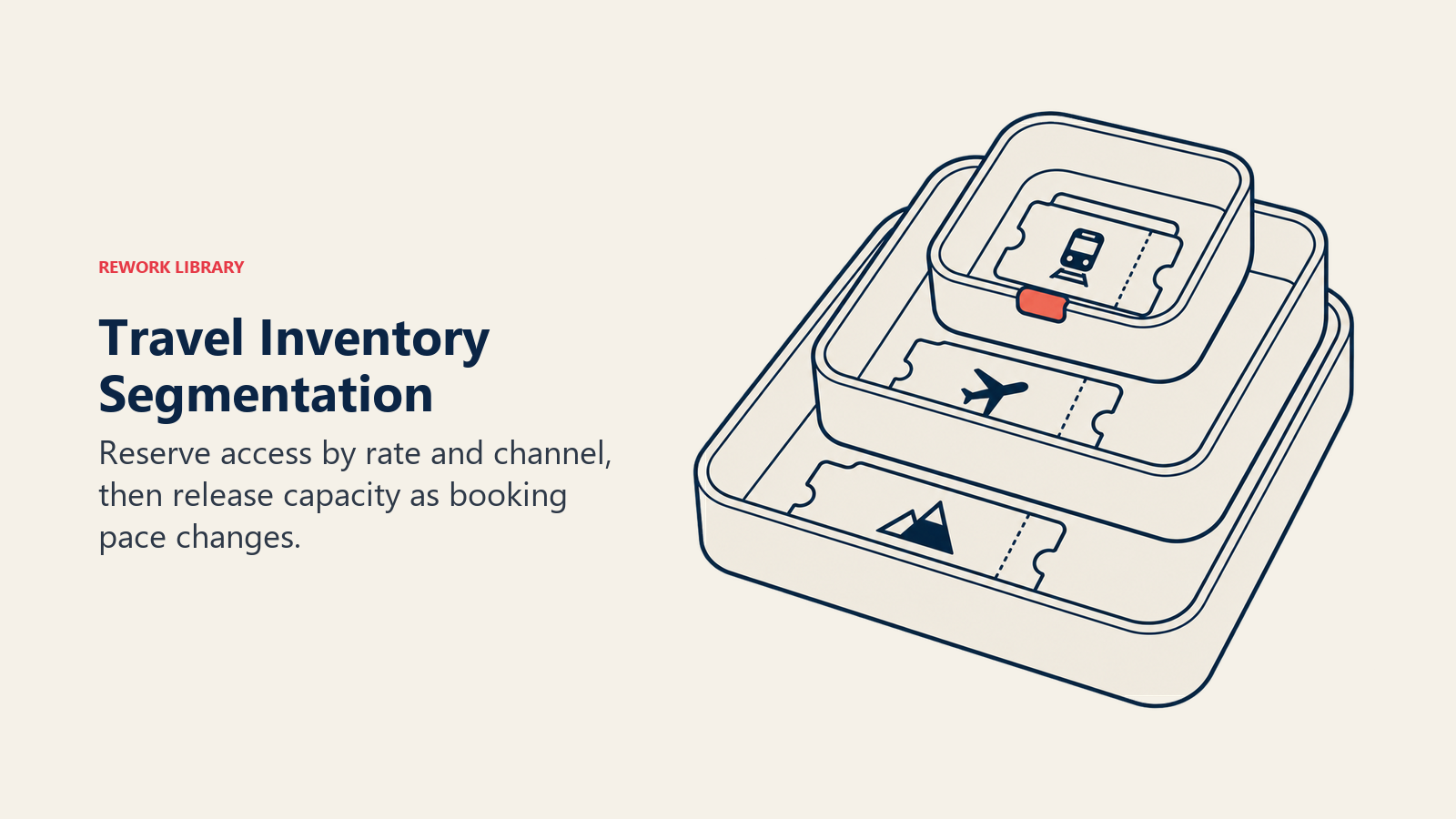
Inventory allocation across channels prevents selling all your seats to low-margin channels early, leaving nothing for high-margin direct bookings later. Allocate 40% to direct booking strategy, 35% to agents, 25% to OTA partnership strategy as a starting framework. Adjust these allocations based on actual booking pace. If direct bookings lag but OTA demand is strong, release more inventory to OTAs rather than sitting on empty seats.
Protected inventory for high-value segments ensures you don't sell out to budget travelers and miss revenue from premium customers. Hold 10-15% of inventory off the lowest price points until 30 days before departure. This protected inventory becomes available for last-minute bookings at higher rates or urgent travelers willing to pay premium prices. Airlines have done this for decades with business class.
Group allotments versus individual bookings create allocation challenges. Group bookings deliver volume but typically demand discounted rates and hold inventory for extended periods before confirming final numbers. Individual bookings book faster but require more marketing investment. Many operators limit group allotments to 40% of total capacity to ensure sufficient inventory for individual retail bookings.
Nested inventory controls mean higher price points can access all inventory, while lower price points have restricted access. Your premium rate can sell all 30 seats. Your standard rate can sell 25 seats. Your discount rate can sell only 15 seats. As lower-priced inventory sells out, customers must pay higher rates for remaining availability. This structure protects against selling all inventory at low prices early.
Overbooking Strategies
Empty seats generate zero revenue, but so do customers you deny due to overselling. Overbooking walks the line between these two losses.
Historical no-show rates inform overbooking decisions. If 5% of bookings typically don't show up, overbooking by 5% maintains full capacity without regular oversells. But no-show rates vary by booking source, price point, and lead time. Last-minute bookings have lower no-show rates than bookings made six months out. Direct bookings show up more reliably than deep-discount OTA bookings.
Calculating optimal overbooking levels requires balancing the cost of denied boardings against the cost of empty seats. If your average booking is $2,000 and your compensation for denied boarding is $500, you can afford occasional oversells to prevent empty seats. If compensation costs exceed the revenue from marginal seats, conservative overbooking is wise.
Managing overbooking risk means having clear policies and backup plans. When oversells occur, upgrade affected customers to better accommodations or premium departures, provide generous compensation that turns frustrated customers into brand advocates, and track which booking patterns create highest oversell risk. Some operators maintain waiting lists that can quickly fill seats from cancellations without formal overbooking.
Waitlist systems provide overbooking benefits with lower risk. When a departure sells out, put additional interested customers on a waitlist. If cancellations occur, convert waitlist bookings immediately. If no cancellations materialize, you haven't oversold. Waitlists also provide valuable demand signals: strong waitlists indicate you should increase prices on similar future departures.
Channel-Based Yield Management
Different distribution channels have different economics, behaviors, and customer segments. Optimizing yield requires channel-specific strategies.
Inventory allocation by channel prevents low-margin channels from consuming all inventory early. Give OTAs access to 20-30% of inventory, agents 30-40%, and reserve 30-50% for direct bookings. These allocations aren't permanent. Shift inventory to channels that are converting while restricting channels that are sitting on uncommitted allotments.
Commission structures affect channel profitability through effective commission & margin management. Direct bookings eliminate 15-20% commission costs but require marketing investment. OTA bookings carry high commission costs but low marginal marketing expense. Agent bookings fall in between. Calculate true customer acquisition cost in travel by channel to understand where you're earning better margins.
Controlling inventory release timing by channel creates strategic advantages. Release inventory to OTAs 90 days before departure but hold direct and agent inventory open from initial booking window. This approach captures early OTA volume while preserving higher-margin channel inventory for later. Some operators reverse this strategy, using direct channels for early bookings and OTAs for last-minute fill.
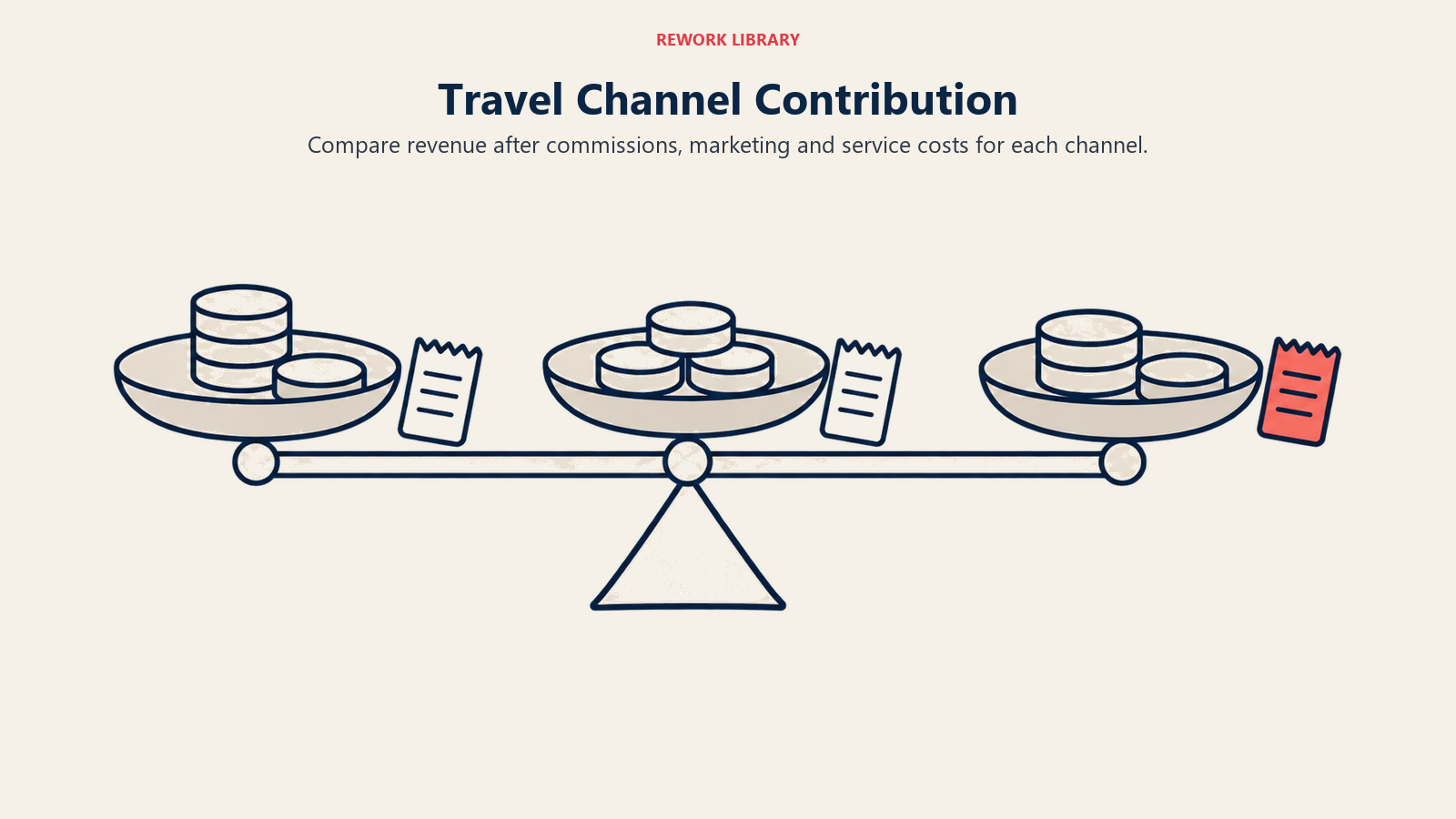
Balancing channel mix for maximum profitability means monitoring the contribution margin by channel, not just revenue. A channel delivering 40% of bookings but only 25% of profit margin needs scrutiny. Compare marketing and servicing costs across channels. Include both direct costs (commissions) and indirect costs (customer service time, booking errors, payment failures).
Seasonal Yield Optimization
Demand fluctuates dramatically by season, and yield management strategies must adapt to these patterns through effective seasonality management.
Peak season pricing captures maximum value from constrained supply. When demand exceeds capacity, raise prices until they balance. This isn't gouging - it's allocating limited inventory to customers who value it most. Peak season often supports 30-50% premium pricing over shoulder season rates. But watch for the tipping point where high prices drive customers to competitors or alternate travel times.
Minimum length of stay (MLOS) requirements during high demand prevent low-value bookings from consuming peak inventory. A resort requiring 5-night minimum stays over Christmas isn't being difficult - they're preventing two-night bookings from taking up space that week-long guests would fill at higher total revenue. MLOS works best when demand substantially exceeds supply.
Shoulder season strategies balance occupancy and margin. Slightly lower prices that fill capacity deliver better total revenue than maintaining peak prices with 60% occupancy. Value-add promotions work better than straight discounts: include meals, upgrades, or bonus activities that cost you less than their perceived customer value. This protects rate integrity while creating compelling offers.
Off-season challenges demand different approaches. Many operators accept near-cost pricing just to cover fixed expenses and maintain operations. Others shut down entirely, recognizing that operating at a loss makes no sense. Package creation shifts demand to slow periods: photography tours in winter, wellness retreats in shoulder seasons, local resident programs during traditional off-peak.
Competitive Pricing Intelligence
Your pricing doesn't exist in a vacuum. Competitor pricing shapes customer expectations and decisions.
Real-time competitor monitoring tracks how similar products are priced across the market. Manual checking works at small scale but becomes unsustainable with many competitors and products. Automated monitoring tools track competitor websites, extract pricing data, and alert you to significant changes. Even simple weekly manual checks of your top five competitors provide valuable intelligence.
Benchmarking price positioning helps you understand where you fit in the competitive landscape. Are you the premium option, mid-market choice, or value alternative? Track your price relative to competitors over time. If you're typically 10% above market average and suddenly you're 25% above, either you've raised prices too aggressively or competitors have undercut the market.
Responding to competitive price changes requires strategic thinking, not reflexive matching. When a competitor drops prices, ask why. Are they struggling with low bookings? Testing new pricing? Responding to external pressures? If they're simply trying to steal share through unsustainable low pricing, matching their prices might not make sense. If they've identified a market reality you've missed, adapting might be necessary.
Avoiding destructive price wars preserves industry profitability. When one operator drops prices, others often follow, creating a race to the bottom where everyone suffers. Better responses include differentiating on value rather than price, targeting different customer segments less sensitive to competitor pricing, or adding value through enhanced inclusions rather than price cuts. Sometimes the right response is no response.
Technology and Tools
Effective yield management at scale requires technology. Manual processes can't handle the data volume and decision speed needed.
Revenue management systems (RMS) automate pricing decisions based on predefined rules and real-time data. Set parameters for minimum and maximum prices, inventory protection levels, and pricing rules for different booking windows. The RMS monitors booking pace, compares to forecasts, and adjusts prices automatically through travel automation tools. These systems typically pay for themselves within 6-12 months through improved yield.
Business intelligence dashboards visualize key metrics for daily monitoring through travel data analytics and travel KPI dashboard systems. Track current booking pace versus historical pace, revenue per available seat, average booking value, load factors by departure date, and channel mix. Visual dashboards highlight anomalies and trends that spreadsheets obscure. Mobile dashboards let managers monitor performance anywhere.
Integration with booking system integration and travel CRM implementation ensures yield management decisions use accurate, real-time data. When pricing changes, all channels reflect updates immediately. When bookings occur, inventory and forecasts adjust automatically. This integration eliminates the manual data synchronization that creates errors and delays in decision-making.
AI and machine learning enhance demand prediction by identifying patterns humans miss. These systems analyze hundreds of variables simultaneously: day of week, competitor pricing, weather forecasts, economic indicators, social media sentiment, search volume trends. They improve over time as they learn which factors predict booking behavior most accurately.
Performance Metrics and Optimization
What gets measured gets managed. Yield management requires clear metrics and disciplined analysis.
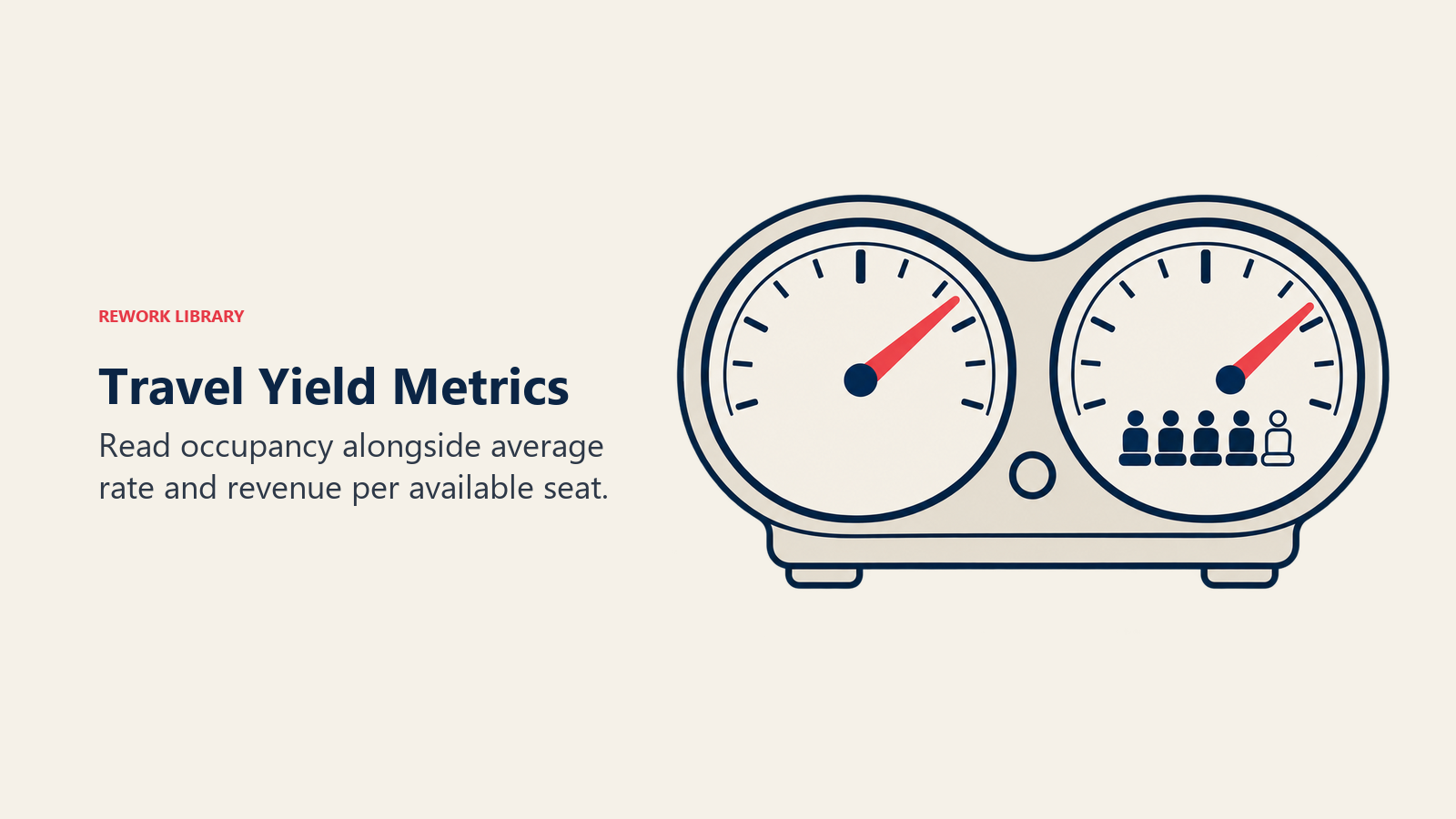
Revenue per available seat (RevPAS) or revenue per available room (RevPAR) measures how effectively you're monetizing inventory. Calculate these daily, weekly, and by departure. Compare to historical performance and competitive benchmarks. A 10% improvement in RevPAS often translates to 25-50% improvement in profit margin given fixed costs.
Load factor tracks the percentage of inventory sold. A 75% load factor means you sold 75% of available capacity. High load factors don't always indicate good yield management. You might achieve 95% load factors by pricing too low. The optimal load factor balances occupancy with average rate - usually 80-90% depending on your cost structure.
Booking curves show how reservations accumulate over time relative to departure date. Plot bookings by days before departure for similar historical departures. Compare current booking curves to historical patterns. If you're tracking behind historical pace 60 days out but bookings typically accelerate 30 days before departure, you might not need panic pricing yet.
Yield percentage compares actual revenue to theoretical maximum revenue if all inventory sold at highest rate. If maximum revenue is $100,000 and actual revenue is $75,000, yield percentage is 75%. This metric captures both price optimization and capacity utilization. Improving yield percentage requires both selling more inventory and selling it at better rates.
Post-season analysis reviews what worked and what didn't. Compare forecasted demand to actual booking patterns. Identify where pricing was too high (inventory unsold) or too low (sold out too early). Analyze which strategies improved yield and which didn't. Document learnings for next season's planning.
Yield management isn't a one-time implementation. It's an ongoing process of forecasting, pricing, monitoring, and adjusting. Markets change, competitive dynamics shift, and customer behavior evolves. The operators who consistently optimize yield are those who treat it as a core competency requiring continuous attention and refinement.
Related Articles:

Business Consultant