Travel Referral Programs: Turn Happy Guests into Your Best Sales Team
Turn this article into takeaways for your work.


Each assistant summarizes the article only for you and suggests best practices for your work.
Referred customers book 4x faster than cold leads, spend 15-25% more per booking, and stay loyal 37% longer. They're pre-sold on your value before the first conversation because someone they trust already endorsed you. Yet most travel companies treat referrals as happy accidents rather than systematic revenue channels.
The math is compelling. If your average customer acquisition cost in travel through paid advertising is $280, referred customers typically cost $80-120 when you account for referral incentives and program overhead. That's 50-70% savings on acquisition while delivering higher-quality customers.
But lazy referral programs fail. Slapping "Refer a friend and get $50" in your email footer generates token results. Successful programs require intentional design around incentive structures, timing triggers, and customer psychology. You need to make referring easy, rewarding, and emotionally satisfying.
Referral Economics in Travel
Understanding the full economic impact guides program investment.
Acquisition cost comparison shows immediate savings. Paid search might deliver leads at $45 each, but only 3-5% convert to bookings, making true customer acquisition cost $900-1,500. OTA commissions effectively charge 15-25% of booking value as CAC. A referral program that offers $100 to the referrer and $100 credit to the new customer costs $200 per conversion. That's dramatically cheaper than either alternative, especially for high-value bookings.
Conversion rate lift is where referred leads really shine. Cold leads from advertising convert at 2-4%. Warm leads from content marketing convert at 5-8%. Referred leads convert at 15-25% because they arrive with trust already established. They're not comparison shopping. They're seeking confirmation that what their friend told them is accurate.
Average booking value differential occurs because referrals tend to come from similar demographic and psychographic profiles. If your luxury safari customer refers their friends, those friends are probably also interested in luxury safaris. This natural segmentation means referred customers book similar (or higher) value trips compared to the referrer, not bargain-basement offerings.
Lifetime value premium compounds over years. Referred customers have 30-40% higher retention rates because they were introduced to your brand through a trusted relationship rather than transactional advertising. Maximizing customer lifetime value in travel through referrals creates sustainable growth. That relationship foundation makes them more forgiving of minor service hiccups and more likely to give you another chance if something goes wrong.
Program Design Framework
Structure determines program performance more than incentive size.
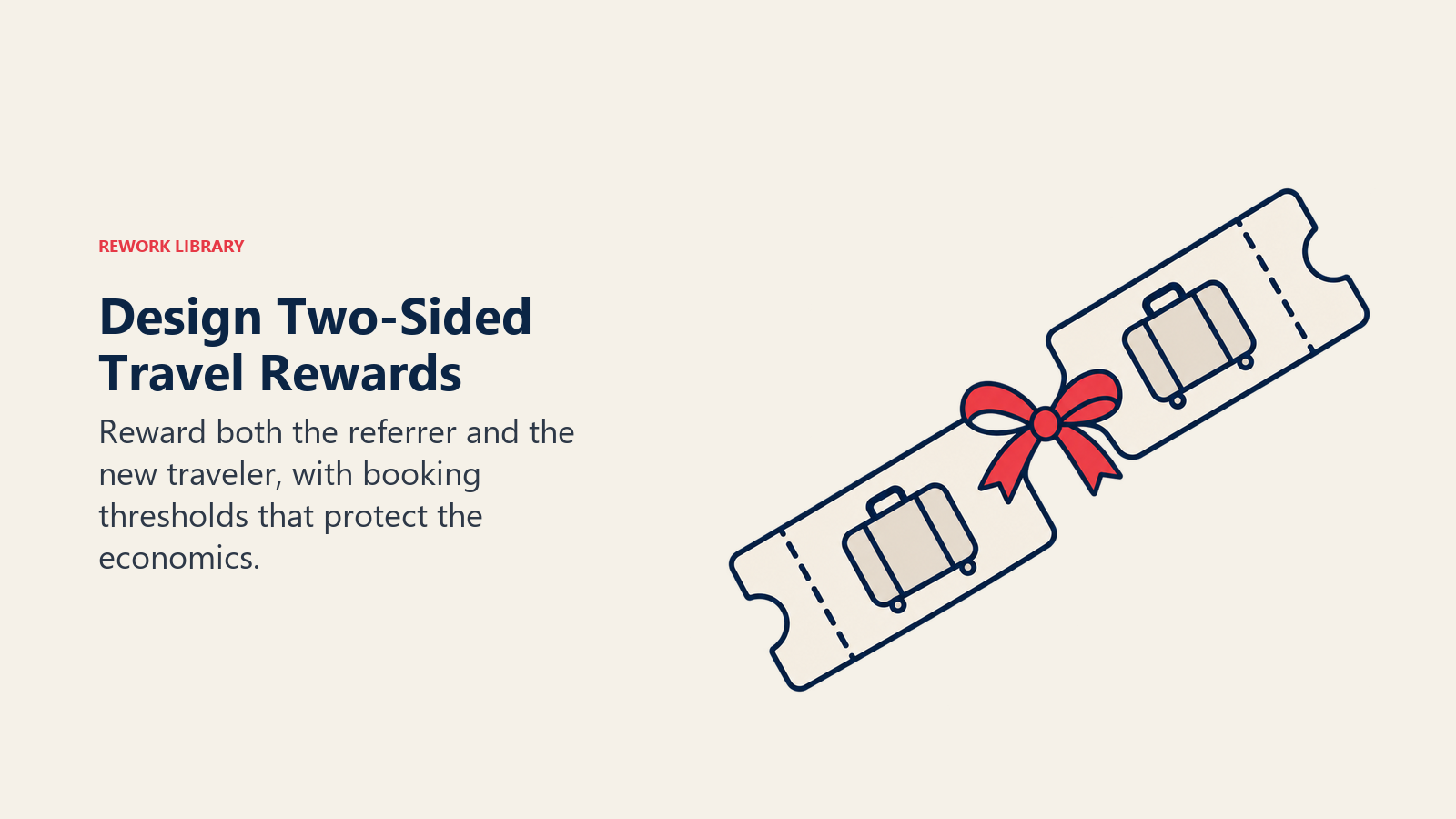
Incentive structure should reward both the referrer and the referred friend. One-sided programs (only the referrer gets rewarded) feel selfish and reduce sharing motivation. Two-sided programs ("You get $100, they get $100") create mutual benefit that feels generous. The new customer appreciates starting their relationship with a discount, and the referrer feels good about providing value to their friend, not just capturing a payout for themselves.
Timing and trigger points determine when referral asks happen. The worst time to ask for referrals is immediately after booking. The customer hasn't experienced your service yet. The best time is 3-7 days post-trip when satisfaction is peak and memories are fresh. Secondary trigger points include anniversaries of past trips ("It's been a year since your Iceland adventure, know anyone ready for theirs?") and seasonal campaigns ("Thinking about summer travel? Your friends might be too").
Reward types should match your brand positioning and customer preferences. Cash rewards feel transactional but offer maximum flexibility. Travel credits toward future bookings encourage repeat purchases and work especially well for customers who travel regularly. Experiential rewards (free excursion upgrade, private dinner, room category bump) create memories and stories that reinforce brand loyalty. Test multiple reward types and let customers choose what motivates them most.
Minimum booking thresholds prevent gaming and preserve margins. If you offer $100 for each referral without minimums, you might get referred $200 bookings that don't justify the incentive cost. Set thresholds: "$100 credit for referrals that book $1,000+ trips, $250 credit for referrals booking $3,000+." This focuses referral effort on valuable customers while still being generous.
Incentive Options Analysis
Different incentive structures create different behaviors.
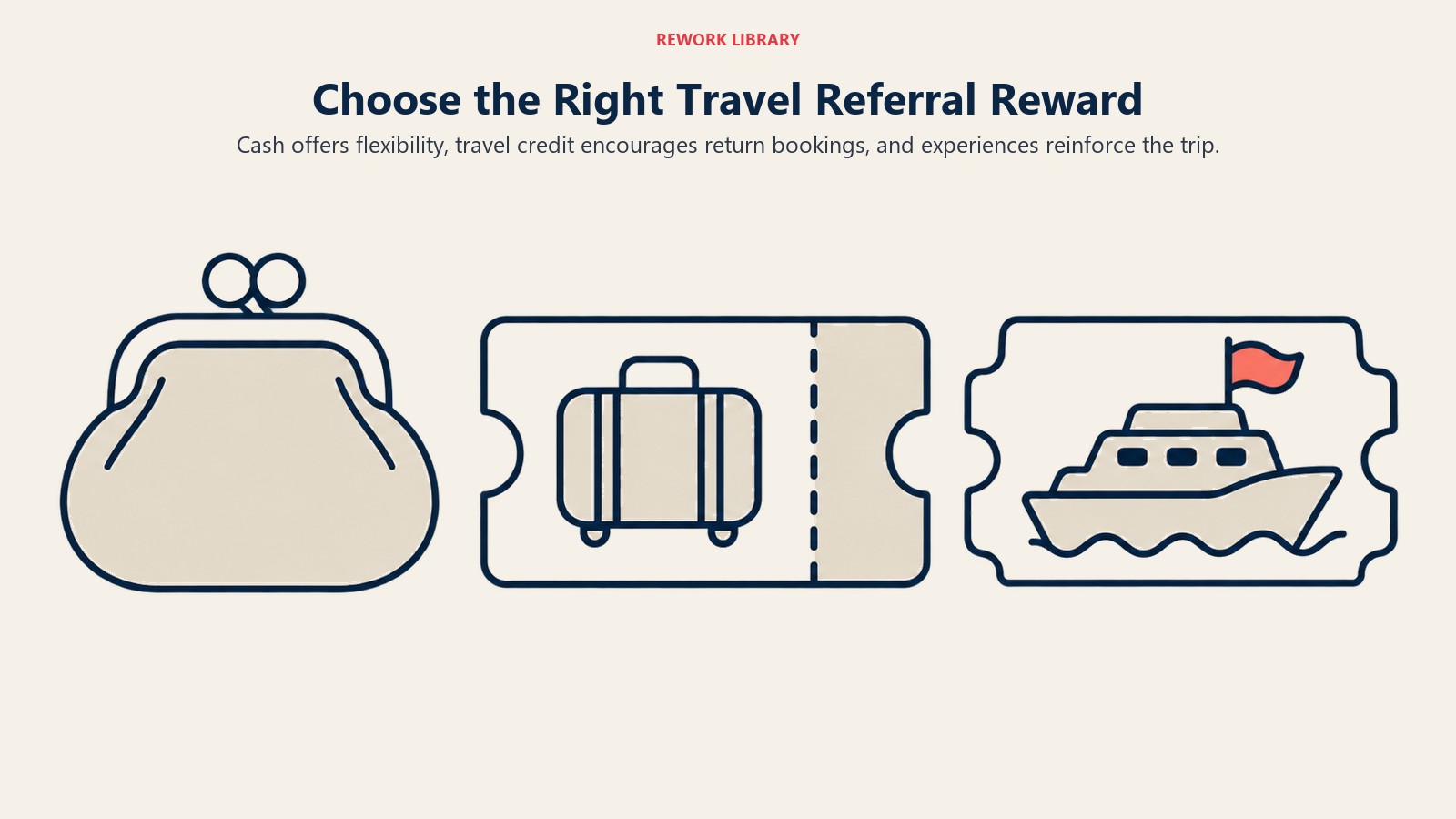
Cash rewards of $50-200 depending on booking value work for most segments. They're simple to understand, easy to fulfill, and universally appreciated. The downside: they don't drive repeat engagement with your brand. Someone who receives $150 cash might spend it anywhere. But they're effective for one-time referrers who won't engage with complex programs.
Travel credits toward future bookings create a retention mechanism. Someone with $200 in account credit is highly likely to book again to use it. This turns referral programs into repeat booking strategy drivers. Optimal credit amounts are 20-40% of average booking value. Enough to feel substantial, not so high that margins evaporate. Consider expiration dates (12-24 months) to create urgency without feeling punitive.
Experiential rewards build stronger emotional connections. Instead of "$150 credit," offer "Complimentary sunset champagne cruise on your next booking" or "Free photography session during your trip." These create memories and storytelling moments. Customers talk about the amazing photographer who captured their family on safari. They don't talk about the $150 credit.
Tiered programs for repeat referrers gamify participation. First referral: $100 credit. Third referral: $150 credit. Fifth referral: $250 credit plus VIP concierge service. After ten referrals: lifetime Gold status with permanent perks. This aligns with travel loyalty program design principles, recognizing your best advocates and creating escalating rewards that motivate continued participation.
Trigger Point Strategy
When you ask matters as much as what you offer.
Post-trip satisfaction peak is your highest-leverage moment. Within 72 hours of returning home, travelers experience a combination of gratitude (the trip was amazing), nostalgia (missing the experience), and social excitement (sharing photos and stories). This is when they're most likely to recommend you enthusiastically through post-trip engagement channels. Send a personalized email: "We're so glad you loved Vietnam! If you know anyone dreaming of their own adventure, we'd love to help them too. Share your referral link and you'll both get $150 toward your next journey."
Anniversary and milestone reminders keep past customers engaged. One year after their trip: "Remember your amazing Patagonia trek last March? Your friends might be ready for their own adventure. Share your story and your referral link." Birthdays, anniversaries, and holidays are natural conversation moments when people discuss upcoming plans with friends and family.
Seasonal campaign activation aligns referral asks with booking intent. In January, people discuss summer vacation plans. In September, they're thinking about winter escapes and spring breaks. Launch targeted referral campaigns that match planning cycles: "Summer trip planning season is here. Who in your circle is dreaming about Europe this year?"
Referrer lifecycle management segments by engagement. Someone who's referred three friends in 18 months gets different messaging than someone who's never referred anyone. Thank and reward active advocates with surprise bonuses. Re-engage dormant advocates with special promotions. Don't treat all past customers identically.
Program Mechanics
Smooth operational execution prevents frustration and gaming.
Referral link and code system should be simple. Each customer gets a unique referral URL (yourtravelcompany.com/ref/johnsmith) and a shareable code (JOHNSMITH25). When someone books using either, attribution is automatic. Make links easy to copy and codes easy to remember. Long, complex referral codes don't get shared.
Tracking and attribution technology needs to handle multiple touchpoints. If someone clicks a referral link but doesn't book for 45 days, you still need to credit the referrer. Use cookies with 90-day windows and prompt new customers during booking: "Were you referred by a friend? Enter their name or code to give you both $100 credit." This captures referrals even when the technical tracking fails.
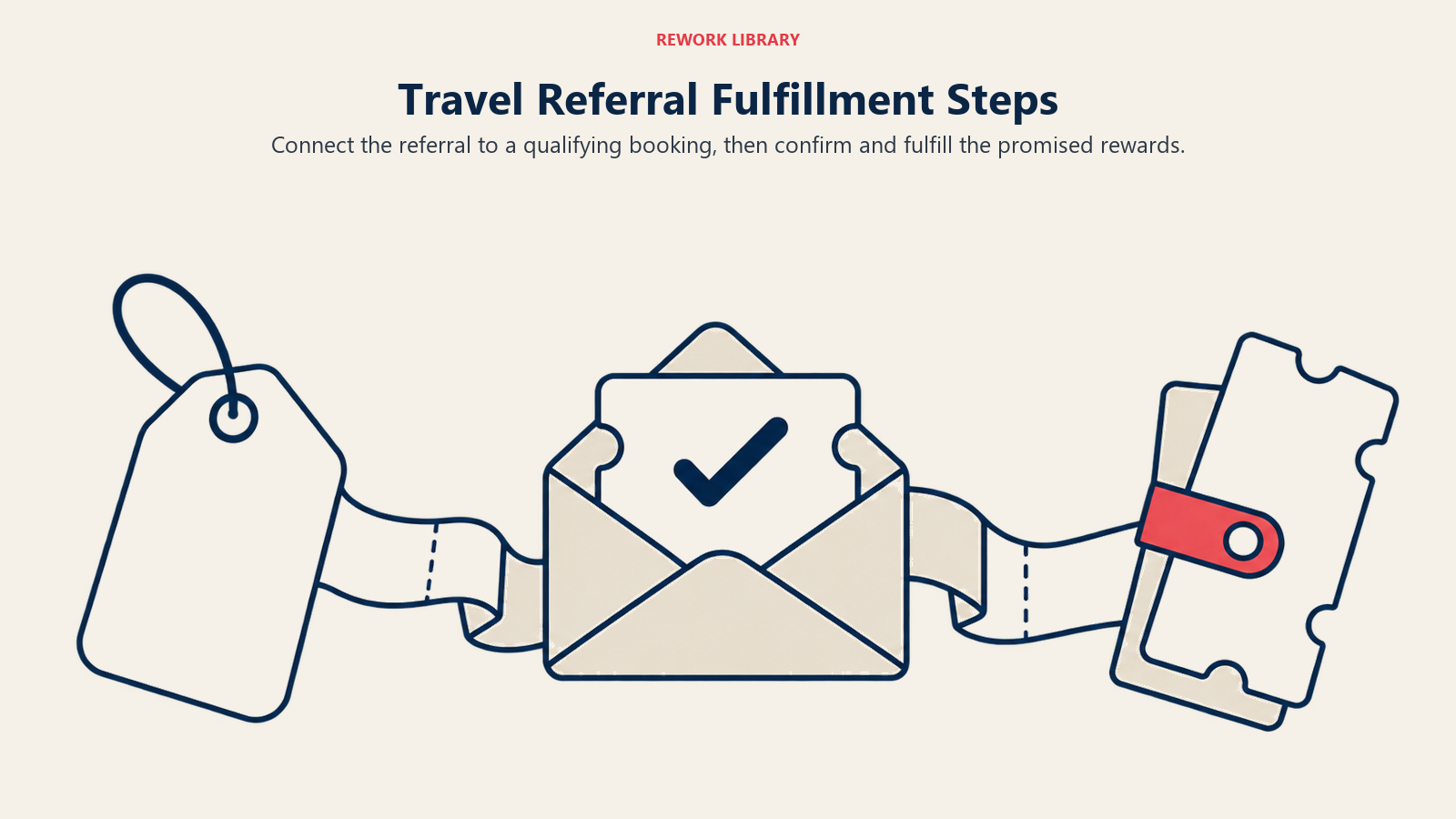
Reward fulfillment process should be fast and transparent. When a referred booking completes, both parties should receive confirmation within 48 hours: "Great news! Your referral booked their Costa Rica adventure. Your $150 credit will appear in your account within 5 business days." Delayed or opaque fulfillment creates doubt and reduces future participation.
Fraud prevention measures protect margins without creating friction. Common fraud vectors: people creating fake email accounts to refer themselves, agencies creating shell customers, and employees gaming the system. Require bookings to complete (not just deposit) before rewards issue. Flag patterns like multiple referrals from the same IP address or payment method. But don't make legitimate customers jump through hoops to prove they're real.
Promotion and Activation
Programs only work if customers know they exist.
Email campaign strategy should integrate referral messaging into your regular communication flow. Post-trip thank you email: include referral CTA. Newsletter: feature referral program prominently. Booking confirmation: mention referral benefits. Don't relegate referrals to occasional standalone campaigns. Weave them throughout your customer journey.
Post-trip communication integration is critical. The post-trip survey is a perfect place to ask: "Would you recommend us to a friend?" If they say yes, immediately follow with: "Amazing! Here's your personal referral link to share." Effective email marketing for travel captures enthusiasm at peak moment and channels it into action.
Social sharing enablement makes referring frictionless. Pre-written social media posts customers can share with one click: "Just got back from the most incredible Japan tour with [Your Company]. If you're dreaming about cherry blossoms and sushi, check them out. Use my link and we both save $150: [link]." Provide beautiful images they can attach. Make sharing easier than not sharing.
Agent and staff participation extends reach. If you work with travel agents or have on-the-ground guides, empower them to participate in referral programs too. Guides who create exceptional experiences can share their own referral codes with guests. Agents who send you customers can receive enhanced rewards for additional referrals. Expand your referral network beyond just past customers.
Guest Experience Integration
The trip itself creates referral motivation.
On-trip referral moments happen when customers experience something remarkable. The guide who went above and beyond, the surprise upgrade, the sunset that took their breath away. These peak experiences naturally prompt "I have to tell my friends about this." Train your staff to recognize these moments and gently prompt: "We'd love to host your friends someday too. When you get home, check your email for a referral link to share."
Digital touchpoint optimization means making referral easy during the trip. Mobile-friendly referral page, simple sharing to WhatsApp or social media, and beautiful images/videos guests can share. Don't wait until they're home. Capture enthusiasm while they're living the experience.
Storytelling and testimonial collection creates referral content. Ask customers to share their favorite trip moment in a brief video testimonial. Feature these on your website and social media for travel brands channels. Tag the original customer when you share. They'll proudly reshare, which exposes their network to your brand. This organic sharing through user-generated content strategy supplements formal referral links.
Measurement and Optimization
Track performance to guide continuous improvement.
Participation rate targets should be 8-15% of past customers making at least one referral within 12 months. Below 5% suggests poor program awareness or unappealing incentives. Above 20% is exceptional and might indicate your incentives are overly generous relative to margins.
Referral to booking conversion should run 15-25%, substantially higher than cold traffic but not 100%. If conversion is below 10%, referred leads might not be as qualified as expected, or your follow-up process is dropping warm leads. Above 30% is unusual and suggests you might be attracting customers who are already interested and the referral is just capturing credit.
Program ROI calculation is straightforward. Total cost of referral rewards and program overhead divided by total bookings from referrals, compared to CAC from other channels. If referral CAC is $140 and paid search CAC is $320, your referral program is dramatically more efficient. Factor in the higher LTV of referred customers for true economic comparison.
Segmentation and personalization improve results. Not all customers refer equally. Segment by: customers who've referred before (more likely to refer again), customers who gave 5-star reviews (high satisfaction), customers who booked premium trips (networks likely have similar budgets). Send these segments more frequent referral campaigns with personalized messaging.
Conclusion
The travelers who just returned from your tour are thinking about their experience, sharing photos, and answering friends' questions about their trip. This is the moment when referrals happen naturally. Your job is to systematize and incentivize what's already occurring informally.
A well-designed referral program doesn't feel like marketing. It feels like thanking loyal customers while helping their friends discover something wonderful. The economics are overwhelmingly positive: lower acquisition costs, higher conversion rates, better customer quality, and longer retention.
The operators who win aren't those with the biggest referral bonuses. They're the ones who create exceptional experiences worth talking about, then make it easy and rewarding for happy customers to share.
Related Articles: