Travel Review Management - Online Reputation Strategy 2025
Turn this article into takeaways for your work.


Each assistant summarizes the article only for you and suggests best practices for your work.
A small tour operator had 4.8-star ratings on TripAdvisor for three years. They'd earned Certificate of Excellence badges and consistently ranked in the top 10 for their category. Then a single incident - a bus breakdown that delayed an airport transfer, causing guests to miss flights - triggered five 1-star reviews in one week. Their average dropped to 4.2 stars. Bookings fell 40% the next month.
Not because one bus broke down. But because they responded poorly to the reviews. Defensive language, excuses, and arguing with reviewers in public responses made the situation worse. What could have been a recovery story - acknowledging the problem, explaining improvements, demonstrating accountability - became evidence of a company that doesn't handle issues professionally.
Online reviews are your digital reputation. They influence 93% of travel purchase decisions. They affect your search rankings through travel SEO strategy. They appear in every booking platform and social media search. Managing them well doesn't mean manipulating what guests say. It means delivering experiences worth praising through excellent on-trip support service and responding thoughtfully when problems occur.
Online Review Landscape
Understanding where and how reviews affect your business shapes your management strategy.
The importance of reviews in travel purchasing decisions is staggering. Research consistently shows 93% of travelers read reviews before booking. The first five reviews a potential guest reads disproportionately influence their decision. Negative reviews don't necessarily prevent bookings, but how you respond to them significantly affects whether prospects trust you can handle problems professionally.
Key review platforms include TripAdvisor (dominant in travel), Google (critical for local SEO), Facebook (important for social proof), Instagram (visual impact through travel social media marketing), and platform-specific reviews (Viator, GetYourGuide, Airbnb). Each platform has different audiences, features, and algorithms. Excelling on all requires platform-specific strategies informed by travel customer segmentation, not generic review management.
Review volume and rating benchmarks by business type provide context. Tour operators typically average 4.3-4.7 stars if they're performing well. Below 4.0 indicates systematic issues. Above 4.8 indicates excellence. Volume matters too - 50 reviews at 4.8 stars carry less weight than 500 reviews at 4.5 stars. Consistent positive volume builds trust better than perfect ratings with thin evidence.
Reviews as conversion drivers can't be overstated. A half-star rating increase can translate to 15-30% increase in bookings. Reviews appearing in search results drive more clicks than paid ads. Video reviews and photos create emotional connections that text alone doesn't achieve. The businesses that treat review management as critical growth driver outperform those who see it as reputation defense.
TripAdvisor Excellence
TripAdvisor remains the dominant platform for travel reviews and merits dedicated attention.
Optimizing TripAdvisor business profile and listings starts with complete, accurate information. High-quality photos that showcase experiences rather than just locations, detailed descriptions that set accurate expectations, accurate pricing and booking information, and regular profile updates showing you're actively managing your presence all improve rankings and conversion.
Achieving and maintaining high TripAdvisor ratings (4.5+ stars) requires systematic excellence in delivery plus proactive review generation. The algorithms favor recent reviews, so consistent quality matters more than historical excellence. Properties with declining review patterns get penalized in rankings. Maintaining quality over time requires commitment to continuous improvement and listening to guest feedback.
Pursuing TripAdvisor awards and recognition provides credibility and visibility. Certificate of Excellence requires 4.0+ rating with minimum review volume. Travelers' Choice awards require top 10% ratings in your category. These badges appear on your profile, in search results, and in email signatures. They're worth pursuing not for the badge itself but for the business impact they create.
Understanding TripAdvisor's ranking algorithm and popularity factors helps you optimize performance. Ranking factors include overall rating and recent reviews, review volume and consistency, traveler response rate and timeliness, profile completeness and update frequency, and booking integration (TripAdvisor promotes businesses that enable direct booking). The algorithm favors businesses demonstrating active management and consistent excellence.
Google Reviews Strategy
Google reviews affect local search rankings and appear prominently in search results, making them critical for visibility.
Managing Google Business Profile for local SEO benefit starts with claiming and verifying your business. Complete profiles rank better than sparse ones. Google prioritizes: consistent business information, regular photo updates, prompt review responses, and booking integrations. Local search optimization drives visibility when travelers search for tours in your destinations.
Encouraging Google reviews for visibility in search results increases your chances of appearing in the local pack (top three results with map) and generates star ratings that appear in search results. These visual elements drive significantly higher click-through rates than text-only results. Even one extra Google review per month compounds over time to significant visibility advantages.
Responding to all Google reviews promptly signals activity to Google's algorithms and demonstrates professionalism to potential customers reading reviews. Google specifically highlights business responsiveness in profiles. Properties that respond to 90%+ of reviews get visibility benefits. Response timing matters - within 24-48 hours shows active management.
Leveraging Google reviews for local market dominance requires consistent volume generation in specific geographic markets. If you operate tours in multiple cities, generating reviews mentioning specific locations helps you rank for local searches. "Rome food tour" searchers see results with strong Rome-specific reviews and activity.
Review Generation Strategies
Most satisfied guests don't think to leave reviews unless prompted. Systematic generation strategies capture reviews from satisfied guests while remaining authentic.
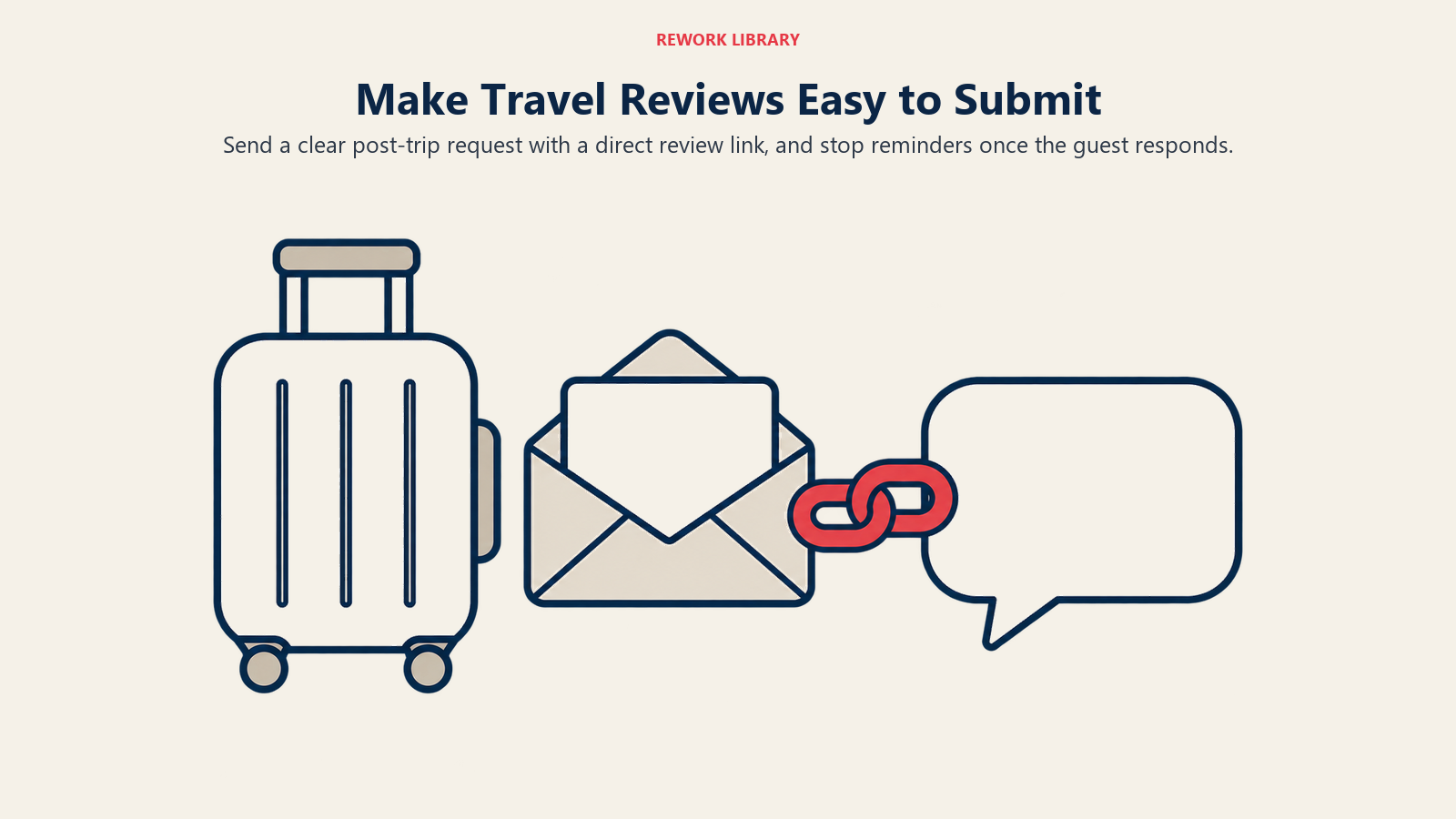
Requesting reviews at optimal moments (immediately post-trip) through post-trip engagement balances timing with authenticity. Guests arriving home exhausted may not complete reviews same day. But waiting a week means memories fade and enthusiasm diminishes. The 24-48 hour window after trip conclusion creates best response rates while maintaining experience freshness through automated travel email marketing.
Making review submission easy with direct links eliminates friction. Generic "leave us a review" requires guests to find your business among similar names. Direct URLs to your TripAdvisor, Google, and Facebook listings take guests exactly where you want them with one click. Personalized review request emails including guest name, specific trip name, and direct links increase completion rates 3-4x versus generic requests.
Following up with satisfied guests who haven't reviewed involves gentle reminders without being pestering. One initial request 24-48 hours post-trip, one reminder at 5-7 days for non-responders, and final reminder at 14 days caps appropriate follow-up. Beyond this, you're annoying people. Track response patterns - some segments respond better to email, others to text.
Creating systematic review request workflows through automation ensures consistency. Booking system integration triggers post-trip review requests automatically, CRM systems track who has/hasn't reviewed to avoid duplicate requests, and templates maintain consistent messaging while allowing personalization. Automation handles the repetitive work while humans manage personalized follow-up.
Responding to Positive Reviews
Even positive reviews deserve thoughtful, personal responses that build relationships and encourage future engagement.
Crafting personalized thank-you responses shows guests you've actually read their review, not generated robot responses. Reference specific experiences they mentioned, acknowledge details that made their trip special, express genuine appreciation for their time in writing review, and avoid copy-paste thank-you templates that feel impersonal. Five minutes per response builds more value than two-sentence generic thanks.
Highlighting specific experiences mentioned by guests validates their perspective and provides social proof for future readers. When guests mention your guide's knowledge, call that out in response. When they praise specific activities, reference those. These highlighted elements give future readers concrete examples of what makes experiences special.
Encouraging future visits and referrals in positive review responses creates natural path to repeat business. "We'd love to show you our Japan tours next - I'll send you information about our spring departures" converts positive sentiment into future sales opportunity. Just don't be pushy. One sentence mentioning related trips or asking for referrals is sufficient.
Maintaining consistent response timelines (within 24-48 hours) for positive reviews demonstrates attentiveness and creates algorithmic benefits. Platforms favor businesses that engage consistently with reviews. Responding to positive reviews also shows potential guests reading reviews that you value all feedback and maintain active engagement.
Handling Negative Reviews
Negative reviews are inevitable. How you respond determines whether they damage or ultimately strengthen your reputation.
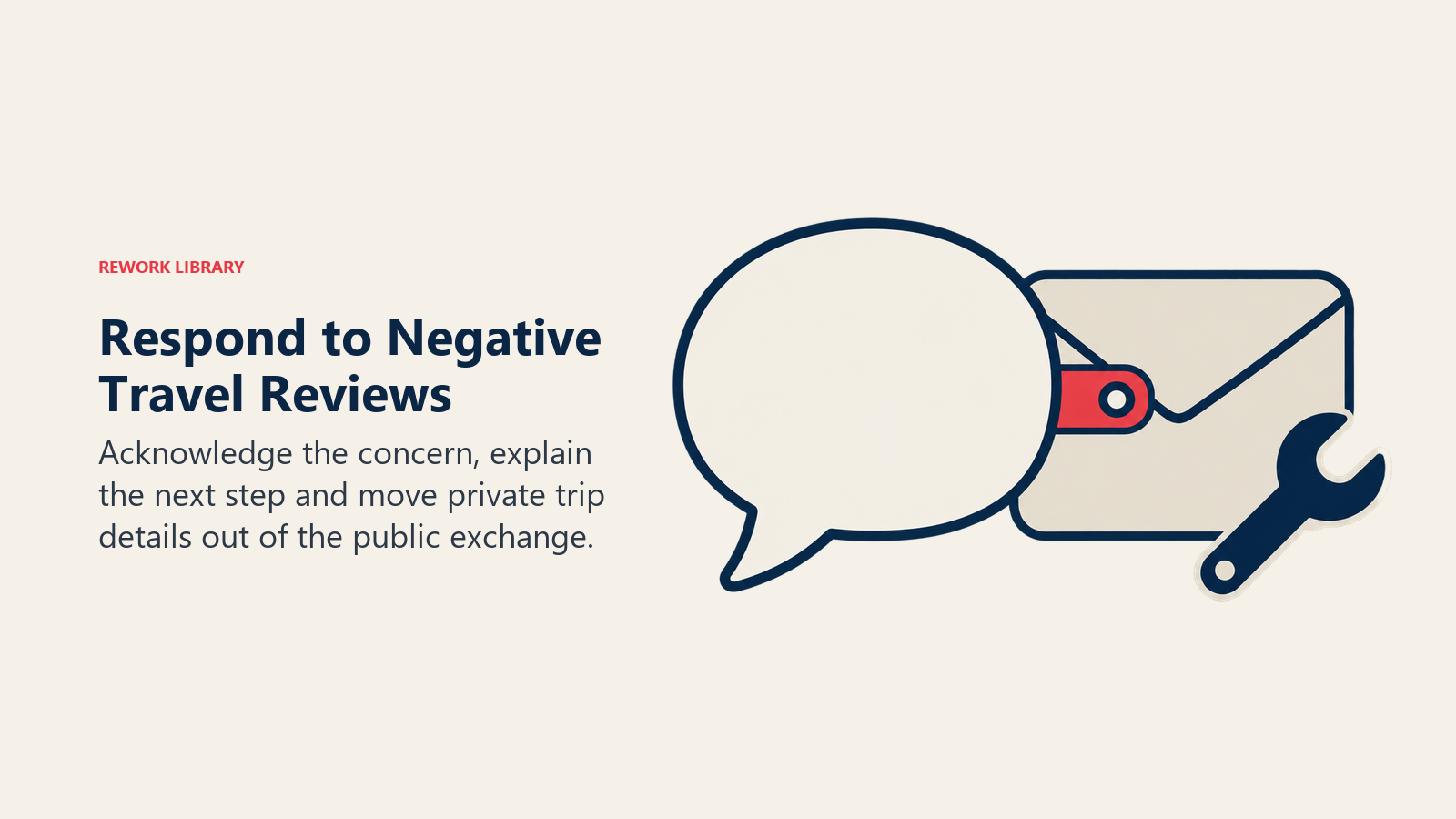
Responding professionally and empathetically to criticism avoids defensiveness and demonstrates accountability. Acknowledge the guest's disappointment genuinely, thank them for feedback despite the negative content, avoid making excuses or blaming external factors, and demonstrate commitment to improvement. Public responses perform for both the reviewer and future readers judging your professionalism.
Apologizing sincerely and taking ownership of issues doesn't admit legal liability but shows you care about guest experiences. "I'm sorry this didn't meet your expectations" acknowledges disappointment without accepting fault for things beyond your control. "We should have handled this better" accepts responsibility where appropriate. Sincere apologies defuse anger better than defensive justifications.
Outlining resolution steps and improvements made shows action, not just words. "Based on this feedback, we've retrained our guides on emergency protocols" demonstrates learning. "We've changed suppliers for that accommodation after hearing similar concerns" shows responsiveness. Future readers see that negative feedback drove improvements, which paradoxically builds trust.
Moving detailed discussions offline when appropriate protects privacy and prevents escalating public disputes. "I'd like to discuss this in detail - please contact me at email@company.com" shows willingness to engage while moving potentially contentious discussion private. Never argue publicly with reviewers. You can't win those arguments even when you're right.
Review Response Best Practices
Consistent, thoughtful response strategies create better outcomes than ad hoc reactions.
Personalizing every response with guest name and trip details demonstrates attention and care. "Thank you Sarah for joining our Barcelona food tour on January 15th" shows you know who they are and what they did. Generic "Thank you for your review" could apply to anyone. Personalization takes slightly more time but generates significantly more value.
Avoiding defensive or argumentative language maintains professionalism even when reviews are unfair. Guests reading exchanges between businesses and reviewers judge the business harshly when they detect defensiveness. Even if a review contains inaccuracies, factual corrections should be polite: "I appreciate your feedback, though I'd note that transportation was included as stated in the trip description" versus "You're wrong - transportation was clearly included."
Keeping responses concise and professional respects reader attention. Review responses aren't opportunities for lengthy explanations or selling. Two to four sentences usually suffice for positive reviews. Three to five sentences for negative reviews acknowledging concern, taking responsibility, noting improvements. Lengthy responses suggest overreaction or desperation.
Demonstrating commitment to continuous improvement appears in how you respond to feedback. Reference improvements made based on feedback, mention lessons learned that benefit future guests, thank reviewers for insights that help you improve, and position reviews as partnership in creating better experiences. This framing transforms criticism into collaboration.
Fake Review Management
Unfortunately, fake reviews exist. Identifying and addressing them protects your authentic reputation.
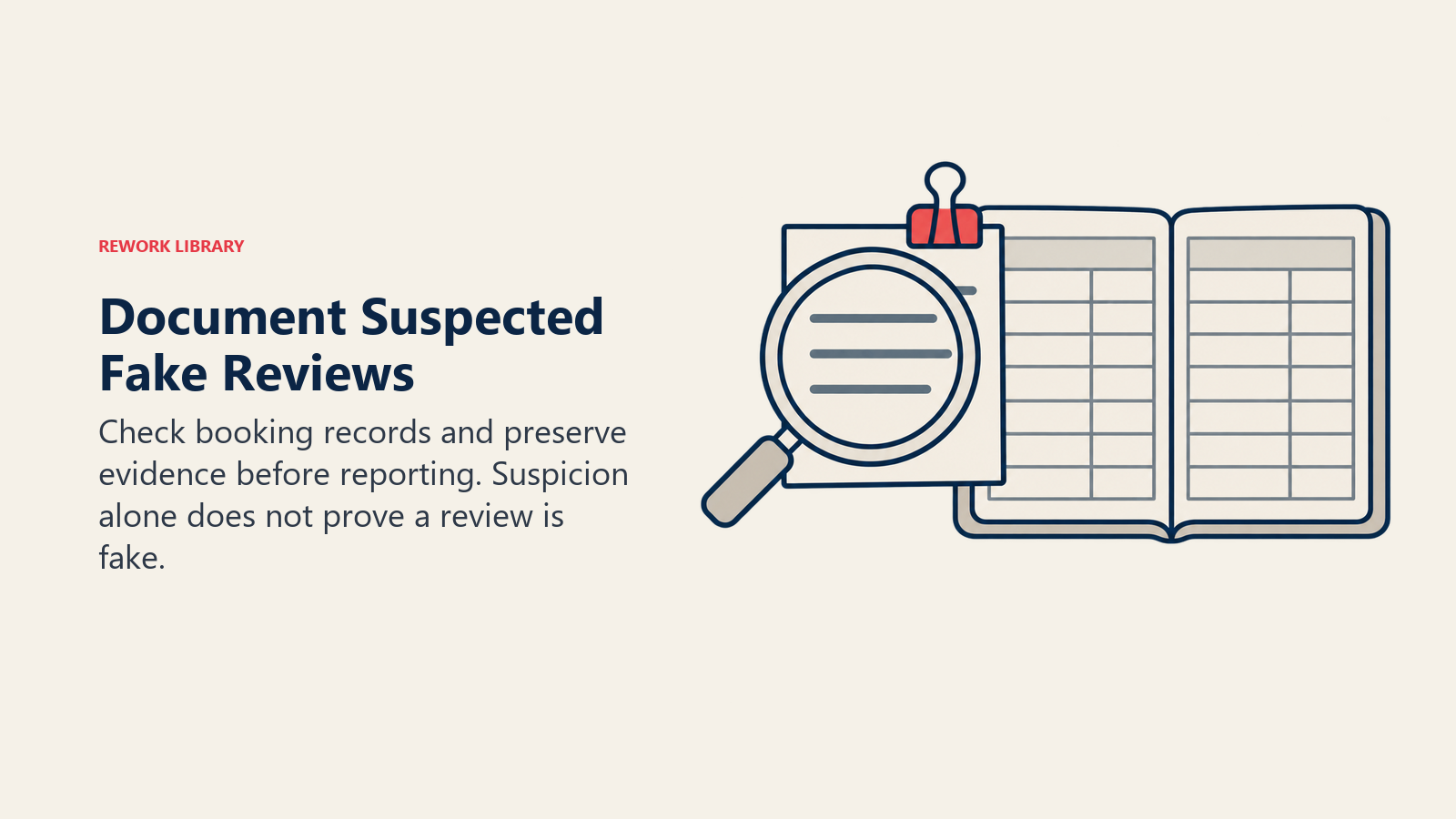
Identifying potentially fraudulent or fake reviews requires pattern recognition. Red flags include reviews from accounts with no history, reviews posted same day from multiple accounts with similar language, reviews mentioning experiences that didn't occur or dates you didn't operate, and reviews containing competitor names or links. These patterns suggest fake reviews rather than authentic guest feedback.
Reporting fake reviews to platforms with evidence provides best chance of removal. Platforms have verification processes but need compelling evidence. Provide booking records showing reviewer wasn't a guest, documentation of dates you didn't operate, screenshots of similar fake reviews against competitors, and any evidence of coordinated attack patterns. Platforms take fake reviews seriously but need proof.
Protecting reputation from competitor sabotage requires monitoring for patterns. Sudden influx of negative reviews, reviews mentioning competitor names or suggesting alternatives, or coordinated attacks at specific times (before peak booking season) may indicate sabotage. Document patterns and report to platforms with evidence. Consider legal action for egregious, provable cases.
Maintaining authentic review ecosystem means never purchasing fake positive reviews. It's tempting when competitors might be doing it, but fake reviews violate platform terms of service and damage trust if discovered. Focus energy on generating authentic reviews from actual satisfied guests. That foundation can't be undermined by exposure of fake reviews because they're all real.
Review Monitoring and Alerts
Proactive monitoring enables fast response and trend identification before small problems become big ones.
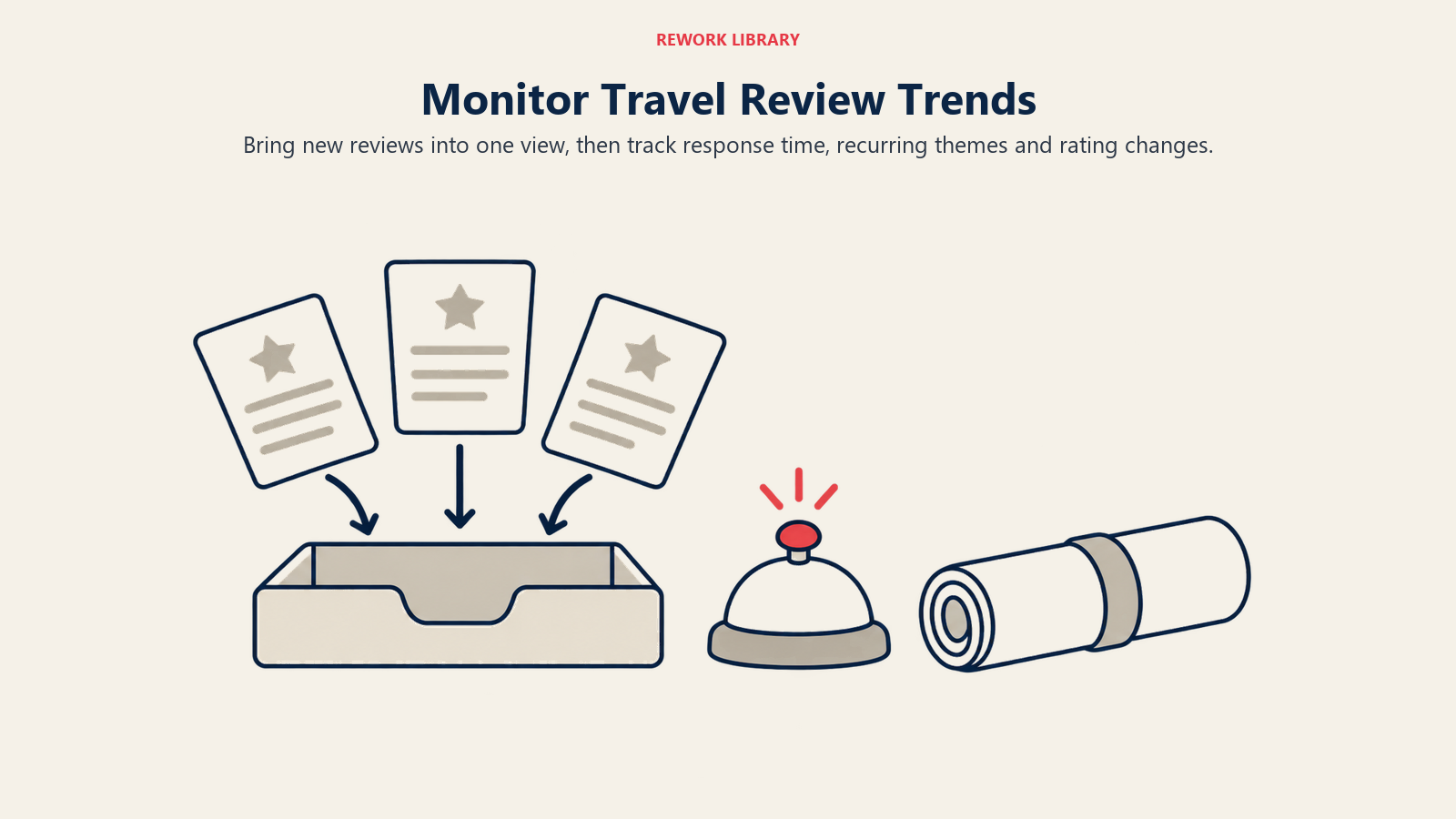
Implementing review monitoring tools and alerts provides real-time notification of new reviews. Platform-specific alerts (TripAdvisor email notifications, Google Business notifications), reputation management tools that aggregate reviews across platforms, and social media monitoring tools that catch mentions even without formal reviews all create early warning systems enabling fast response.
Tracking review volume, rating trends, and sentiment identifies patterns requiring attention. Monthly review volume trending down suggests declining engagement or satisfaction. Rating averages declining month-over-month indicate quality issues. Sentiment analysis of review text reveals emerging themes - positive or negative - that manual review might miss. These analytics inform strategic decisions.
Analyzing competitor reviews for market intelligence reveals opportunities and threats. What are guests praising about competitors? What are common complaints? What gaps exist that you could fill? What are competitive differentiators being mentioned? Competitor reviews provide free market research about what guests value and where opportunities exist.
Creating dashboards for review performance tracking centralizes monitoring. Dashboards should display review volume and average rating trends, response rate and time metrics, most common positive and negative themes, competitive comparison benchmarks, and conversion impact of review improvements. Visual dashboards make performance transparent and track improvement over time.
Converting Reviews into Marketing Assets
Positive reviews aren't just reputation protection - they're powerful marketing content.

Showcasing positive reviews on website through conversion rate optimization and marketing materials provides social proof that drives conversion. Homepage testimonials from actual reviews, dedicated reviews page featuring best feedback, specific trip pages highlighting relevant reviews, and booking pages showing recent ratings all leverage reviews to drive sales. Link to full review profiles so skeptics can verify authenticity through your travel content marketing strategy.
Creating testimonial content from review highlights distills best quotes and stories. Video testimonials featuring guests willing to appear on camera, quote graphics for social media with reviewer attribution, case studies expanding on particularly compelling review stories, and email campaign features highlighting recent praise all repurpose reviews into varied marketing content.
Using reviews in social media and email campaigns extends their reach. Share new 5-star reviews on social channels, create dedicated email campaigns featuring recent guest praise, respond to reviews publicly on social media to demonstrate engagement, and encourage guests to share their reviews on their own social channels (with gentle prompting, not requirements).
Building case studies from detailed positive feedback creates deeper content. When guests write lengthy, specific reviews detailing transformative experiences, reach out requesting permission to expand into full case study. Interview them about their experience, gather photos, and create compelling story that prospects can relate to. These detailed narratives sell more effectively than brief reviews.
Online reviews are your digital reputation made visible. Every review represents an experience you delivered and how that guest chose to represent it publicly. Excellence in review management isn't about manipulating perception - it's about delivering experiences worth praising and responding with grace and professionalism when you fall short. The operators who excel at this create self-reinforcing cycles where great experiences generate great reviews that attract more guests expecting great experiences.
Related Articles:

Business Consultant