GDS & Channel Management - 2026 Complete Guide
Turn this article into takeaways for your work.


Each assistant summarizes the article only for you and suggests best practices for your work.
You have 50 hotel rooms or tour seats to sell tonight. Your website shows them. Booking.com shows them. Expedia shows them. Travel agents on Amadeus can see them. Then two bookings happen simultaneously on different platforms for your last available unit through booking system integration. Now you're dealing with angry customers and channel penalties. Distribution across multiple platforms creates revenue opportunities and operational nightmares in equal measure.
The travel businesses that master channel management sell more inventory at better rates with less chaos. They understand exactly how GDS platforms work, when to use channel managers versus direct connections, and how to maintain rate parity while optimizing travel pricing strategy.
Understanding GDS in Modern Travel
Global Distribution Systems are the wholesale backbone of travel distribution. Amadeus, Sabre, and Travelport connect your inventory to over 100,000 travel agents worldwide. When an agent searches for hotels in Bali or tours in Ireland, GDS databases provide the results.
For travelers, GDS is invisible. They don't know their travel agent is searching Amadeus. They just know their agent can book hotels, flights, tours, and transfers globally. For travel suppliers, GDS represents massive distribution reach you can't achieve through direct marketing alone.
The economics of GDS work differently than OTAs. Instead of percentage commissions, GDS charges transaction fees typically ranging from $8-12 per booking. Travel agents earn commissions from suppliers directly, usually 10-15% of the booking value. You're paying for access to professional travel sellers, not consumer-facing marketing.
But GDS isn't plug-and-play. The technology dates back decades. Data formats are complex. Updates can be slow. You can't just flip a switch and appear on Amadeus like you can with Booking.com. Most suppliers use aggregators or technology providers to connect.
The strategic question isn't whether to use GDS. It's when GDS makes sense for your business model. Hotels, tour operators, and car rental companies benefit from GDS. Vacation rentals and peer-to-peer services typically don't. The wholesale distribution model fits packaged products better than unique experiences.
The Big Three GDS Platforms
Amadeus dominates globally with roughly 40% market share. It's strongest in Europe but has massive reach in Asia-Pacific and Latin America. If you're connecting to only one GDS, Amadeus delivers the most agent access. The platform handles over 2 billion transactions annually.
Amadeus excels at hotel distribution. Their Amadeus Hospitality Sales platform connects properties of all sizes. The interface travel agents use is relatively modern. Search results are comprehensive. Booking confirmation is reliable.
Sabre is the North American powerhouse. It originated from American Airlines' reservation system and maintains strong presence with US travel agencies. If your primary market is the United States or you're focused on flight distribution, Sabre connectivity is essential.
Sabre's technology is robust but more complex for suppliers. The integration process takes longer. The agent interface is powerful but has a steeper learning curve. High-volume corporate travel agencies love Sabre for its advanced features and reporting capabilities.
Travelport owns Galileo, Worldspan, and Apollo brands. Combined, they represent about 25% of GDS market share. Travelport is strong in specific regions and with certain agency segments. Many online booking tools use Travelport for their backend inventory.
Travelport positions itself as the most innovative of the three. They've invested heavily in modernizing their technology and creating APIs that smaller suppliers can integrate more easily. Their developer documentation is generally better than legacy competitors.
GDS Connection Options
Direct connects give you maximum control but require significant technical investment. You build and maintain an XML interface to each GDS. Updates, rate changes, and availability sync in real-time. You control exactly how your property or tours appear in search results.
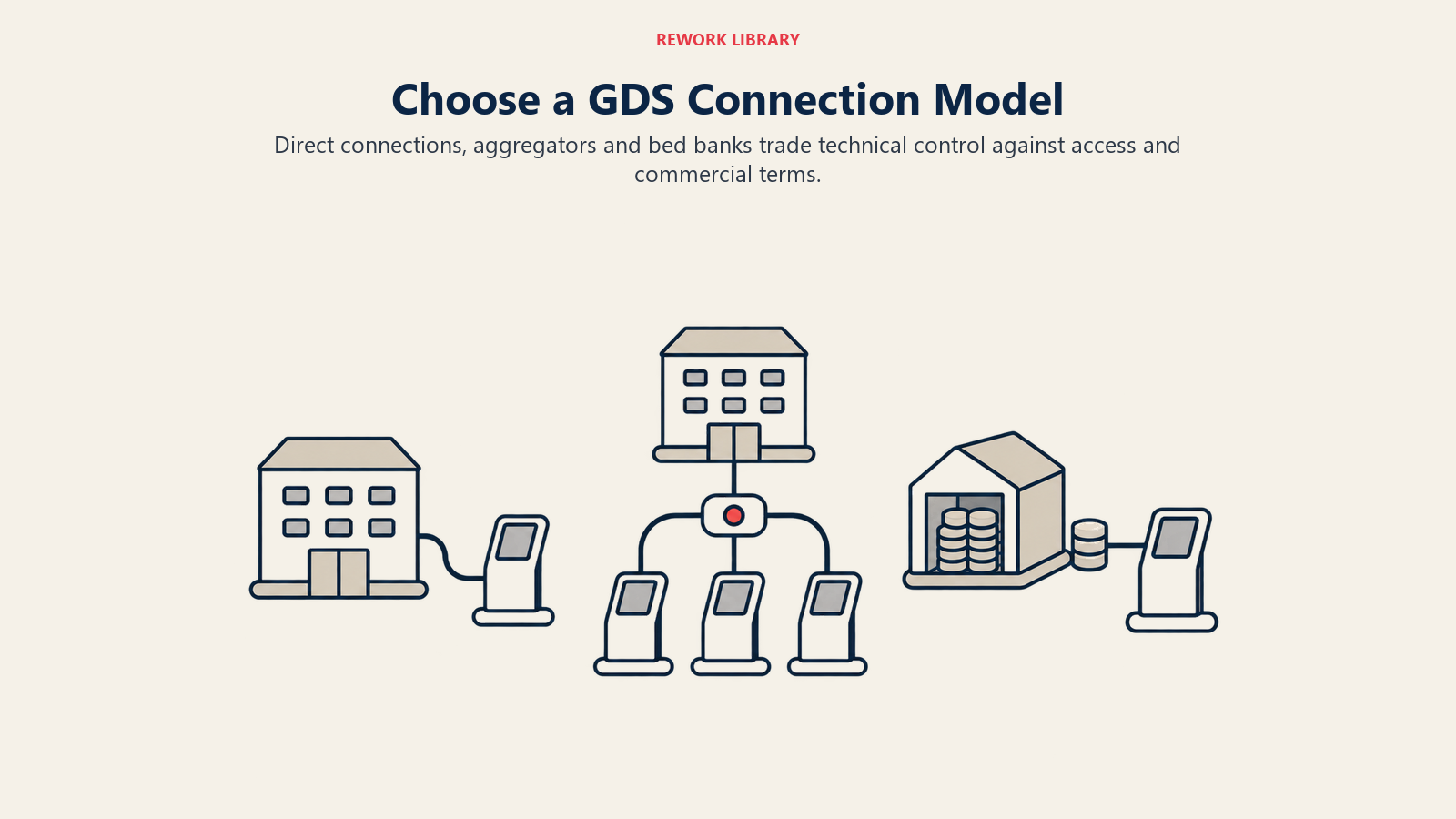
Large hotel chains and major tour operators use direct connects. They have IT teams to manage the complexity. The benefits are superior content presentation, faster updates, and no middleman taking a cut. But expect 6-12 months for implementation and ongoing technical resources for maintenance.
Third-party aggregators like Hotelbeds, Tourico, and WebBeds provide simpler GDS access. You connect once to the aggregator. They distribute your inventory across multiple GDS platforms. Setup takes weeks instead of months. You're paying the aggregator a commission (typically 10-20% on top of what you pay to GDS), but avoiding technical complexity.
Aggregators work well for mid-sized hotels and tour operators who need GDS reach without technical teams. You lose some control over how your products appear. Rate loading and content updates go through the aggregator's systems. But the trade-off often makes sense.
Bed banks operate similarly to aggregators but focus on wholesale rates. They purchase inventory from you at net rates, mark it up, and distribute through GDS and other channels. You're guaranteed sales but at deeper discounts. This model works for filling distressed inventory or entering markets where you have no presence.
Channel Manager Fundamentals
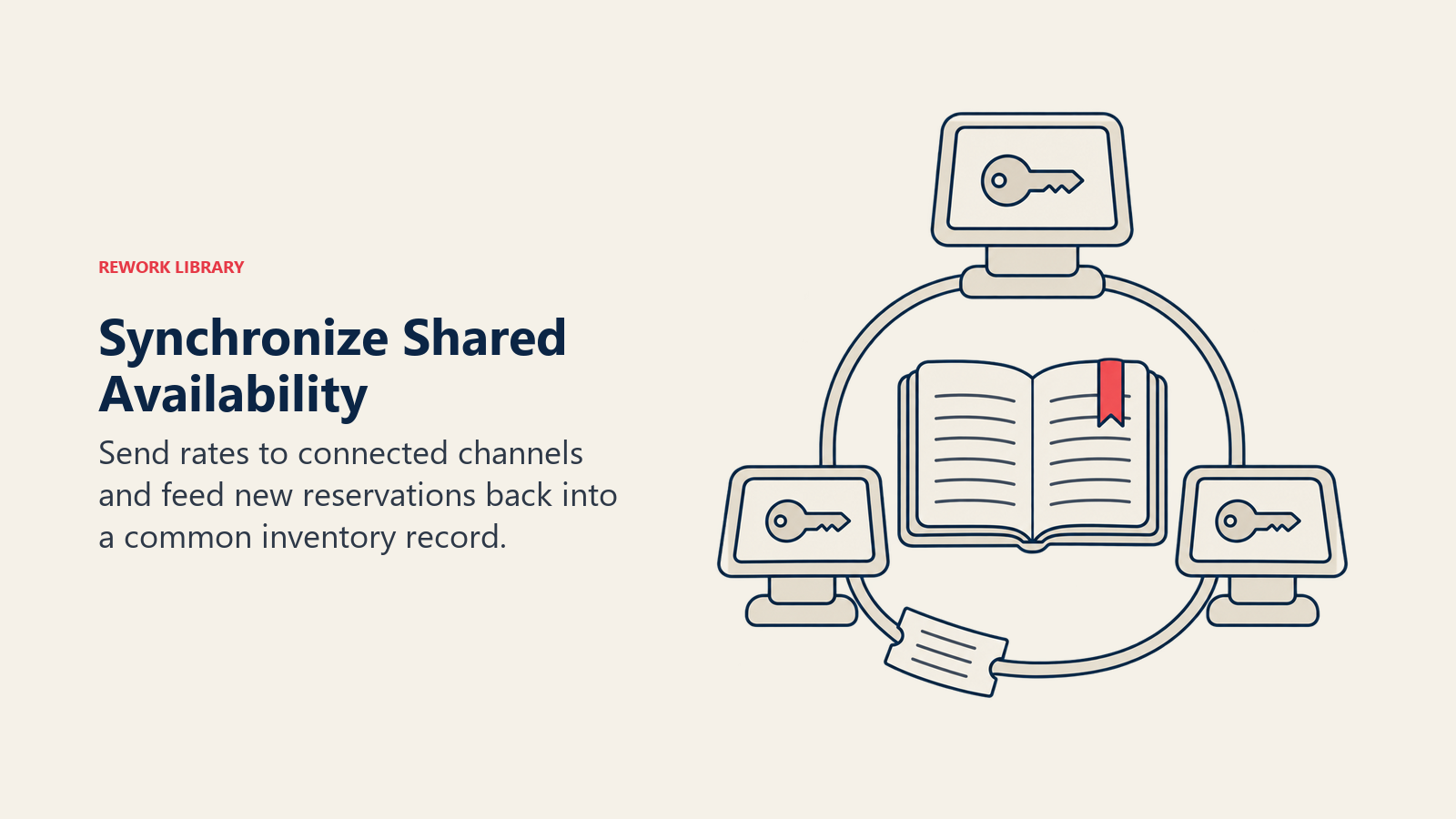
Channel managers solve the synchronization nightmare. You load rates and availability once. The channel manager pushes updates to all connected channels: GDS, OTAs, your website, and metasearch engines. When bookings come in from any source, the system updates all other channels automatically.
SiteMinder dominates hotel channel management with connections to 400+ channels globally. Their interface is user-friendly. Setup is relatively quick. Support is solid. Pricing scales with property size. For hotels managing 10-100 rooms, SiteMinder is the default choice.
RateGain and D-EDGE serve larger hotel groups and chains. They offer more sophisticated rate shopping, business intelligence, and revenue management tools integrated with channel management. The complexity and cost are higher, but enterprise features justify it for properties doing millions in annual revenue.
For tour operators, systems like Bokun, Rezdy, and Zaui include channel management as part of broader tour management platforms. They connect to OTAs like Viator, GetYourGuide, and Expedia Activities. GDS connectivity is more limited in tour-specific systems.
The two-way synchronization process works like this: You update a rate in your channel manager. Within seconds, it pushes to all channels. A booking comes through Booking.com. The channel manager receives it via XML, creates a reservation in your PMS, and reduces availability across all other channels by that amount for those dates.
Distribution Strategy by Channel
Decide which channels deserve your inventory based on ROI from travel data analytics. Not every distribution option generates positive returns. OTA partnership strategy might drive high volume but eat 15-25% commissions. GDS reaches valuable corporate travelers but requires minimum rates. Your direct booking strategy website converts best but needs marketing investment to drive traffic.
Evaluate channels on total acquisition cost, not just commission. An OTA charging 18% commission but delivering ready-to-book customers might be more profitable than a channel charging 12% commission where half the leads never convert.
Segment your inventory by channel if products support it. Allocate premium room categories or tour dates primarily to direct channels and GDS (higher-value bookings). Use OTAs for standard inventory where volume matters. This maximizes revenue per unit.
But avoid blatant channel discrimination. OTAs have sophisticated monitoring. If they discover you're systematically withholding your best inventory, they'll penalize your search ranking or terminate the partnership. Subtle allocation differences work. Obvious ones backfire.
Test channel performance rigorously. New OTAs promise amazing reach. Metasearch platforms claim incredible ROI. GDS aggregators pitch exclusive agent networks. Demand proof. Start with limited inventory on new channels. Measure booking volume, average rates, cancellation rates, and guest quality before committing fully.
Rate Parity Management
BAR (Best Available Rate) parity means showing the same rates across all public channels for the same room type, dates, and booking conditions. Most OTA contracts require this. Violations trigger penalties including search ranking drops or contract termination.
The strategy isn't to show identical rates everywhere. It's to show identical public rates while offering members through travel loyalty program design exclusive discounts. Your website can offer 10% off to email subscribers. That doesn't violate parity because it's not publicly bookable without membership.
Package rates through package pricing optimization also bypass parity requirements. A hotel room alone must respect parity. But a package including room + breakfast + spa credit can be priced differently because it's a distinct product. Smart operators create packages exclusively for direct channels to drive bookings without violating OTA agreements.
Rate loading automation through channel managers prevents parity violations from manual errors. You set base rates once. The system applies channel-specific rules consistently. Amadeus gets rack rate minus 10% for agent commission. Booking.com gets BAR. Your website gets BAR with member discounts available. All automated.
Monitor parity constantly. Tools like RateGain, OTA Insight, and Rate Shopper crawl your channels daily, alerting you to discrepancies. When found, investigate immediately. Sometimes the issue is a cached rate on an OTA that hasn't updated. Sometimes it's a configuration error in your channel manager.
Commission & Cost Structure
GDS transaction fees range from $8-12 per booking regardless of value. This makes GDS attractive for high-value bookings. A $500 hotel booking paying $10 GDS fee is 2% cost. But a $75 day tour paying $10 is 13% cost. Know your economics by product.
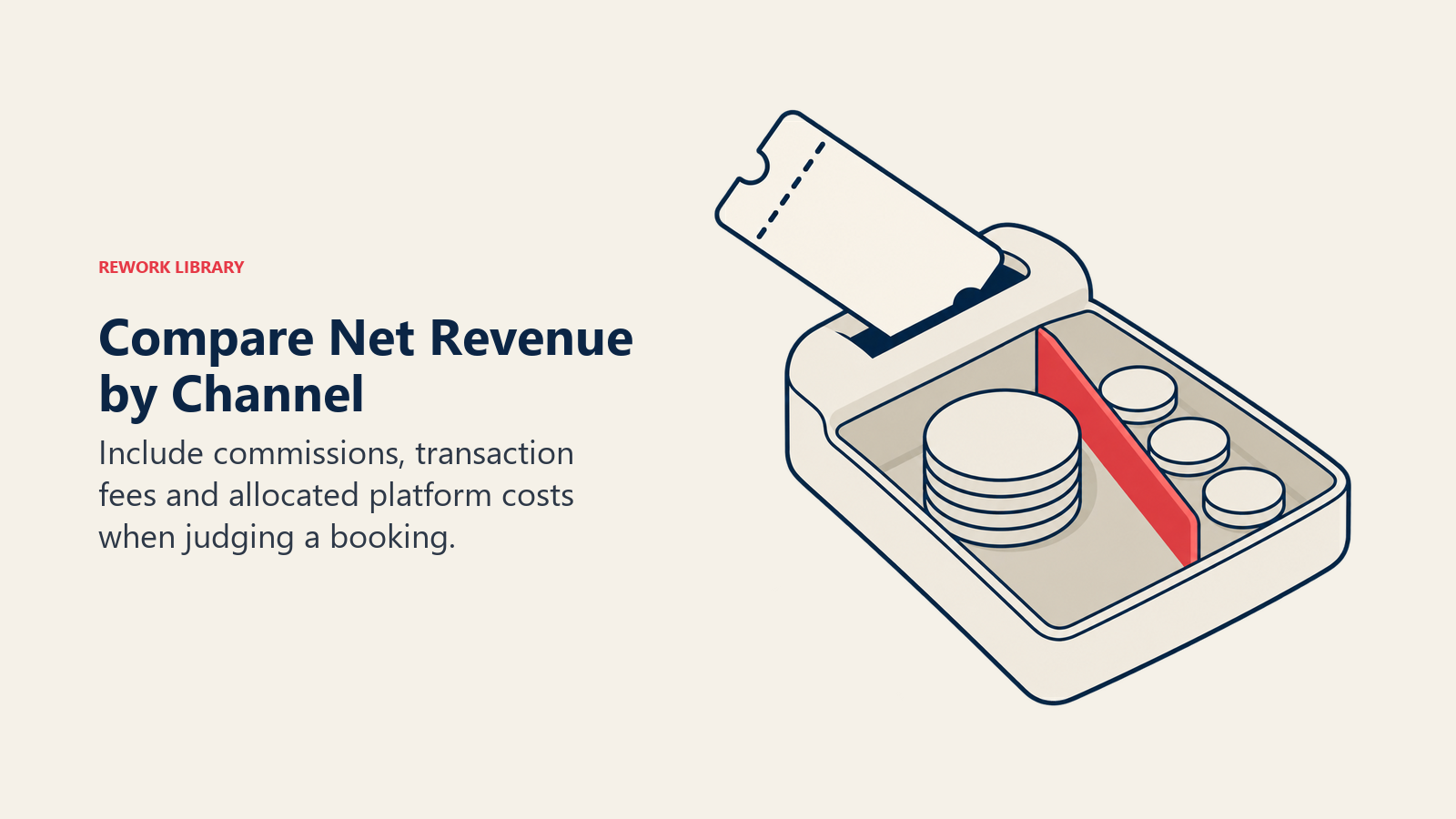
Travel agent commissions typically run 10-15% on top of GDS fees. You build this into your net rates. If your actual rate is $200, you load $230 into GDS ($200 base + $30 agent commission). The travel agent receives their $30 commission. You get your $200. GDS takes their transaction fee.
Channel manager costs add $50-500 monthly depending on property size and feature set. For a 30-room hotel, expect $150-250 monthly. This covers connections to unlimited channels, customer support, and system maintenance. Calculate this into your per-booking distribution costs.
OTA commissions range from 15-25% depending on property type, location, and negotiated agreements. Booking.com typically charges 15-18% for hotels with good ratings and conversion. Expedia often runs 18-22%. Airbnb takes 14-16% total split between hosts and guests.
Total distribution cost per booking combines all these elements tracked in travel KPI dashboard. A booking from Expedia at 20% commission plus 3% payment processing is 23% total. A GDS booking through Amadeus at $10 fee + 12% agent commission on a $400 booking is $58 or 14.5%. Your direct website at 3% payment processing is cheapest.
Track these costs religiously using customer acquisition cost in travel metrics. Calculate actual distribution costs by channel monthly through revenue management for tours. Compare against average booking value. Your goal is maximizing net revenue after all distribution costs, not maximizing gross bookings.
Availability Management
Overbooking strategies require risk tolerance. Airlines routinely overbook because they know some passengers won't show. Hotels in high-demand markets might overbook by 5-10% knowing cancellations will occur. Tour operators rarely overbook because relocating guests is harder than with hotels.
If you overbook, you need solid protocols. Identify which bookings can be relocated most easily. Have partner properties or tours ready. Compensate generously. One botched relocation creates review damage that takes months to repair.
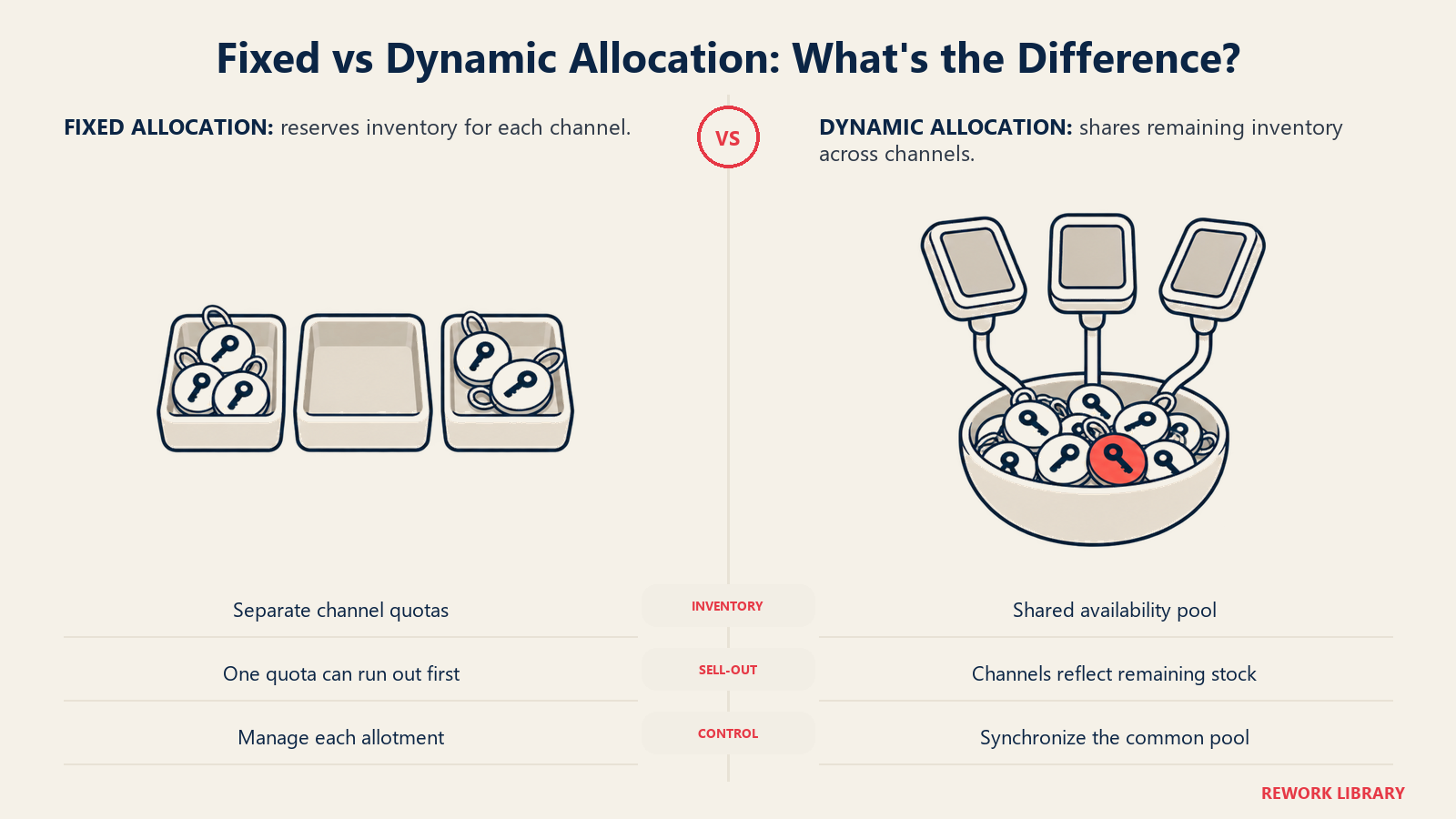
Allocation methods let you control how much inventory each channel sees. Fixed allocation gives each channel a set amount: Booking.com sees 10 rooms, Expedia sees 8 rooms, website sees 15 rooms. When one channel sells out, others still show availability.
Dynamic allocation is smarter. All channels see total available inventory, but you can weight distribution. Priority channels get first access. Lower-performing channels see availability only when you're not at risk of selling out. This maximizes revenue while maintaining presence everywhere.
Stop-sell protocols close booking channels when you're nearly sold out or during operational issues. If you're down to your last few units, close lower-value channels and sell remaining inventory through direct or GDS channels at premium rates. During system maintenance or emergencies, stop-sell prevents bookings you can't fulfill.
Content & Connectivity
Rich product descriptions drive conversion across all channels. Your hotel or tour appears alongside competitors. Travelers compare. The property with compelling descriptions, professional photos, detailed amenities lists, and authentic reviews wins bookings.
Invest in content quality. Professional photography isn't optional. Write descriptions that highlight unique value, not generic features. "Panoramic ocean views from private balconies" beats "nice rooms with views." Be specific. Be visual. Give travelers reasons to choose you.
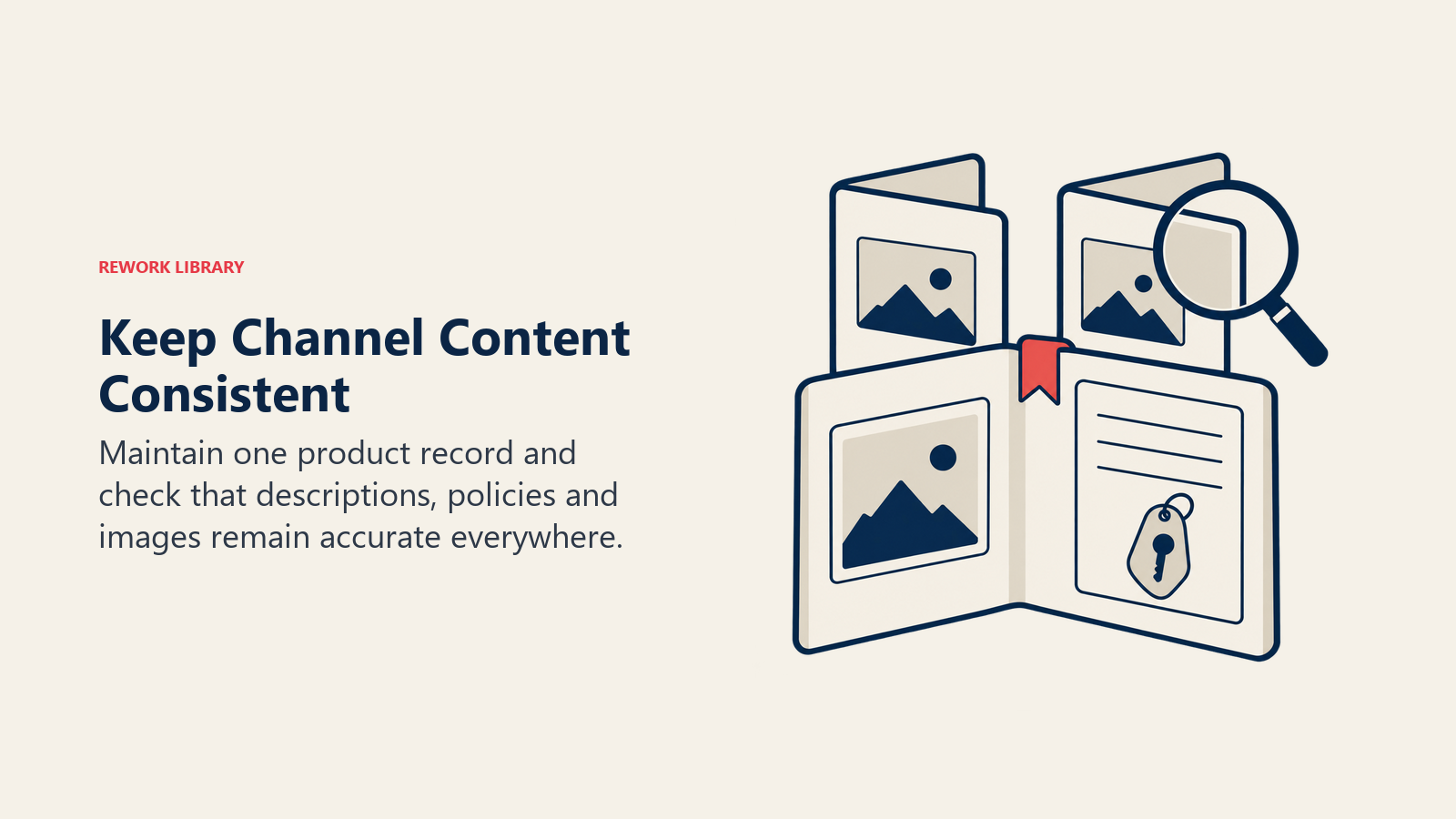
Policy consistency across channels prevents guest confusion and dispute. Your cancellation policy on Booking.com should match your website and GDS. Check-in times should be identical. Amenities listed must be accurate everywhere. Inconsistency creates problems when guests arrive expecting something different than what they booked.
Content management through channel managers ensures consistency. Update descriptions, photos, and policies once. The system distributes to all channels. This prevents the chaos of manually updating 15 different extranet systems.
But verify content periodically. Systems have sync errors. Some channels modify your content. OTAs translate descriptions sometimes poorly. Log into each major channel quarterly and verify your property appears correctly.
Performance Monitoring
Channel contribution analysis shows which channels deliver volume and value. Track monthly: bookings by channel, revenue by channel, average booking value by channel, cancellation rate by channel, and guest quality indicators (review scores, damage incidents).
Don't just count bookings. A channel delivering 100 bookings at $150 average is generating $15,000 revenue. A channel delivering 30 bookings at $600 average is generating $18,000 revenue. Focus on revenue and profitability, not booking count.
Booking pace by source reveals which channels fill inventory fastest. If direct bookings happen 45 days before arrival on average but OTA bookings happen 12 days out, you know OTAs are filling last-minute inventory. This shapes dynamic pricing strategy.
Commission cost tracking should be granular. Calculate cost per booking by channel after all fees. Include the channel manager subscription allocated by booking volume. Add payment processing fees. Compare net revenue by source.
Channel ROI analysis guides future investment. If you're spending $500 monthly on GDS connectivity and it delivers $15,000 in monthly bookings at 14% net cost, your ROI is strong. If you're spending $200 monthly on a niche OTA that delivers $1,200 in bookings at 22% commission, reconsider.
Conclusion
Distribution strategy is about reach and control. GDS platforms and channel managers multiply your sales channels, putting inventory in front of millions of potential bookers. But more channels mean more complexity, cost, and operational risk.
Master channel management by choosing distribution partners strategically, maintaining rate parity through automation, tracking costs precisely, and optimizing based on net revenue. The travel businesses that win aren't on the most channels. They're on the right channels, managed efficiently, delivering maximum profitability.
Related Articles:

Business Consultant