Travel Video Marketing: From Destination Showcases to Conversion Tools
Turn this article into takeaways for your work.


Each assistant summarizes the article only for you and suggests best practices for your work.
Tom's tour company invested $18,000 in a professionally produced destination video. Beautiful cinematography, drone shots, perfect music. It got 12,000 views on YouTube and 3,000 on Instagram. They tracked four inquiries and one booking worth $4,200. ROI: -76%.
Meanwhile, competitor Lisa creates iPhone videos during regular trip operations. Her team has produced 40 videos over 18 months spending $4,500 total. Combined views exceed 280,000. She's tracked 127 inquiries and 31 bookings worth $186,000. ROI: +4,000%.
The lesson isn't "don't invest in video." It's that video strategy, volume, and systematic production matter more than production quality. Travel buyers don't need cinema-quality films, they need authentic previews that help them imagine their experience and make confident decisions.
Video's Role in Travel Marketing
Understanding strategic purpose:
Bringing Destinations to Life:
No medium captures the feeling of place like video. Movement, sound, atmosphere, these convey what photos and text can't. Seeing a marketplace bustle, hearing waves crash, watching sunrise over mountains, this is emotional connection that drives bookings.
Reducing Perceived Risk Through Preview:
Travel is expensive, complex, and can't be returned. Video lets prospects "test drive" experiences mentally. Seeing actual activities, accommodations, and daily flow reduces anxiety and objections.
"Is the hiking too difficult?" Show actual guests navigating trails. "Are accommodations comfortable?" Walk through rooms. "Will I be bored?" Show diverse daily activities.
Emotional Connection and Inspiration:
Video uniquely triggers emotional response. Music, visuals, pacing, these create feelings words can't match. And travel is emotional purchase. Logic might narrow options, but emotion drives booking decision.
Demonstration of Experiences:
Some experiences are hard to describe. Whitewater rafting. Safari game drives. Local market navigation. Cooking class participation. Video shows rather than tells.
Trust Building Through Transparency:
Behind-the-scenes video showing your team, operations, and processes builds trust. Transparency about what's included and how trips work reduces skepticism and buyer resistance.
Video Content Types for Travel
Different formats serve different journey stages:
Destination Showcases and Highlights:
3-5 minute videos capturing destination essence:
- Best of Peru: Machu Picchu to Amazon
- Iceland's natural wonders
- Cultural highlights of Japan
Use: YouTube, website hero videos, social media, sales presentations, trade shows.
Purpose: Inspire and create destination desire in early journey stage.
Experience Previews and Activity Footage:
1-3 minute videos showing specific activities:
- Inca Trail trekking experience
- Amazon wildlife watching
- Cooking class in Cusco
- Whitewater rafting adventure
Use: Product pages, itinerary descriptions, email marketing, inquiry follow-up.
Purpose: Show what customers actually do, building confidence in experience quality.
Guest Testimonials and Reviews:
30-90 second videos of customers sharing experiences:
- "Why I chose this Peru tour"
- "My favorite experience was..."
- "I was nervous about fitness level, but..."
- Couples, families, solo travelers sharing authentic reactions
Use: Landing pages, sales follow-up, social proof compilation videos, ads.
Purpose: Build trust through peer validation. Most powerful conversion content.
Behind-the-Scenes and Operator Story:
2-5 minute videos showing company culture and operations:
- Meet your Peru guides
- How we plan sustainable tourism
- Our local partnerships
- A day in our operations
- Why we started this company
Use: About page, company story, sales differentiation, recruitment.
Purpose: Build connection with brand and differentiate from competitors.
Educational Content (Packing, Planning, Tips):
1-3 minute helpful how-to videos:
- What to pack for Peru
- Peru travel tips from our guides
- How to prepare for altitude
- Best time to visit Peru
- Peru budget planning guide
Use: YouTube for SEO, blog content, email nurture sequences, customer service.
Purpose: Provide utility, build authority, support customers through planning phase.
Itinerary Walkthroughs:
5-10 minute detailed trip previews:
- Day-by-day itinerary explanation
- What's included and excluded
- Accommodation details
- Activity difficulty levels
- Optional add-ons available
Use: Product pages, sales presentations, inquiry follow-up, pre-trip communication.
Purpose: Answer questions, set expectations, facilitate booking decisions.
Virtual Tours and 360° Content:
Interactive video allowing viewer control:
- 360° video of Amazon lodge
- Virtual tour of hotel rooms
- Interactive experience previews
- Destination exploration tools
Use: Website immersive experiences, sales tools, differentiation.
Purpose: Unique format providing deeper engagement and exploration.
Video Strategy Framework
Align video with customer journey:
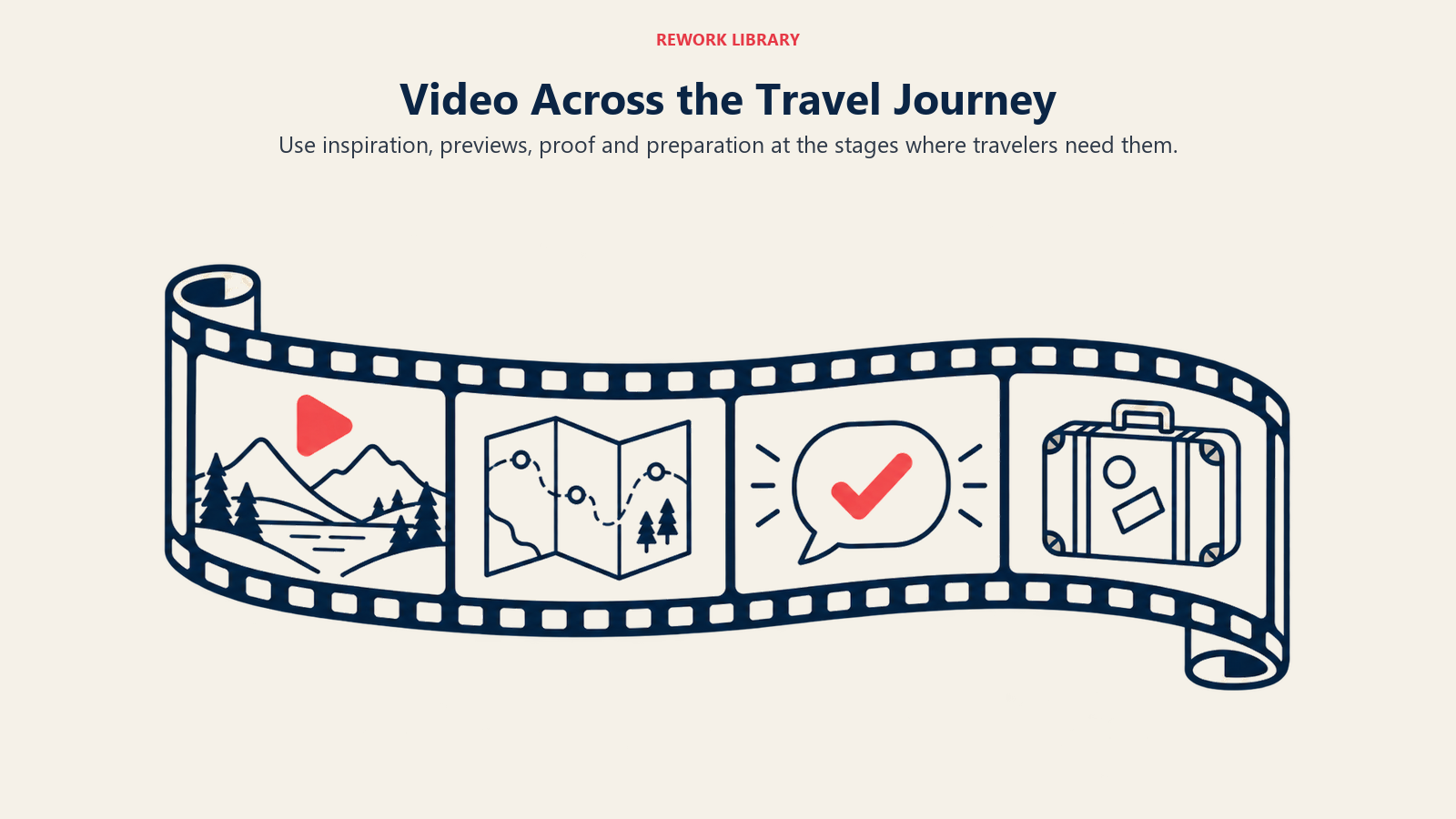
Awareness Stage: Inspiration and Discovery Videos:
Goal: Create emotional connection and desire.
Content focus:
- Beautiful cinematography showcasing destinations
- Aspirational experiences and moments
- Lifestyle and emotional benefits
- Short, shareable, highly visual
Distribution: Social media (Instagram, TikTok, YouTube Shorts), YouTube main channel, website homepage.
Consideration Stage: Detailed Itinerary and Experience Videos:
Goal: Inform and build confidence.
Content focus:
- Specific trip details and previews
- Activity demonstrations
- Accommodation walkthroughs
- Educational content answering questions
Distribution: Product pages, email nurture, YouTube how-to content, blog embeds.
Decision Stage: Testimonials and Social Proof:
Goal: Overcome objections and drive booking.
Content focus:
- Customer testimonials addressing concerns
- Trust signals and credentials
- Comparison content (why choose us)
- Urgency and availability updates
Distribution: Landing pages, sales follow-up, retargeting ads, consultation presentations.
Post-Booking: Pre-Trip Information and Excitement Building:
Goal: Prepare customers and maintain excitement.
Content focus:
- Trip preparation guidance
- What to expect details
- Excitement-building countdowns
- Meet fellow travelers
Distribution: Email sequences, customer portal, private Facebook groups.
Production Approaches
Balance cost, quality, and volume:
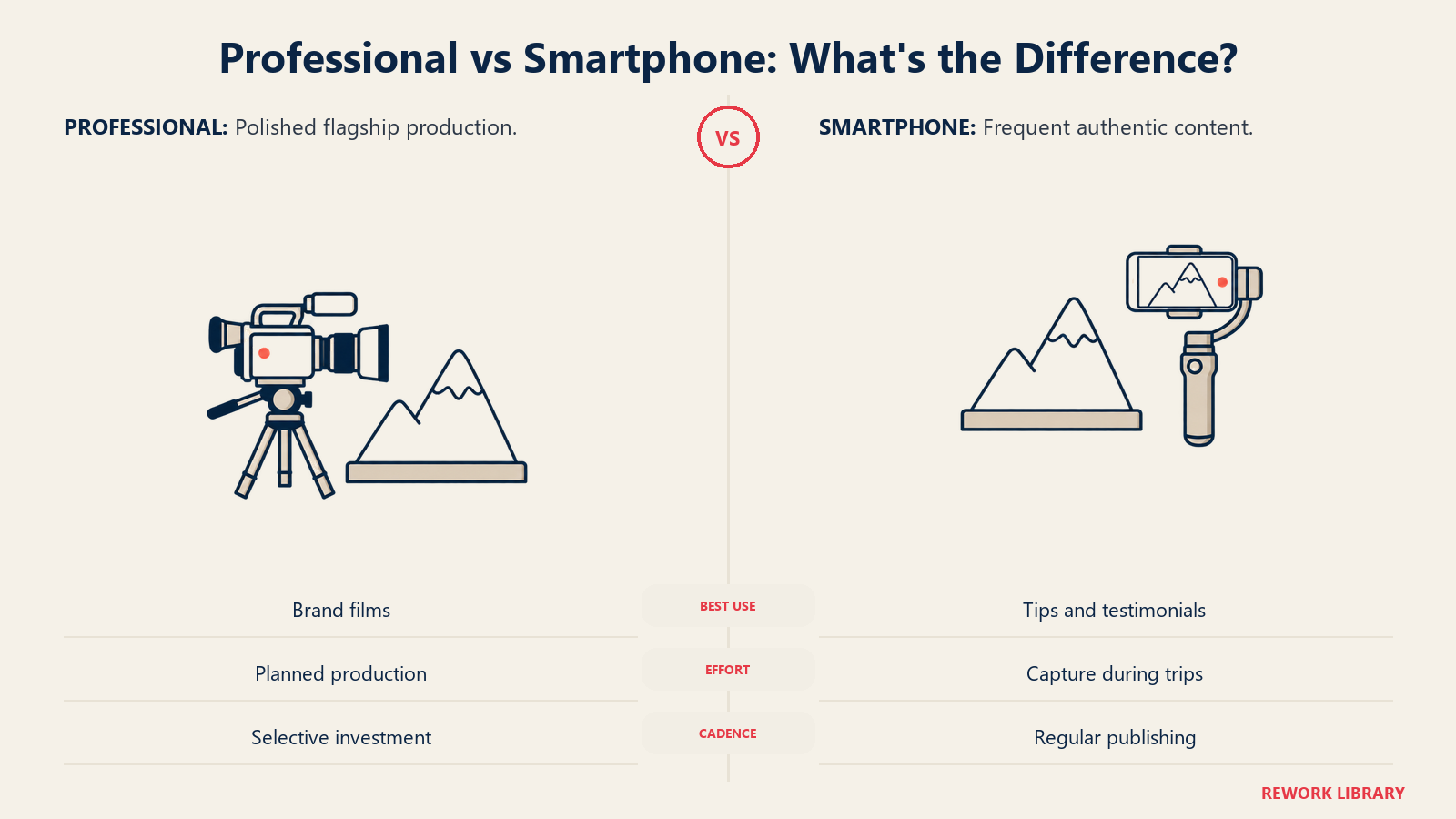
Professional Production vs Smartphone Content:
Professional Production:
- Cost: $3,000-$10,000 per video
- Best for: Flagship destination showcases, brand films, major campaigns
- Quality: Cinema-level cinematography, editing, sound
- Timeline: Weeks to months for planning, shooting, editing
Smartphone Content:
- Cost: $0-$500 per video (primarily time)
- Best for: Regular content volume, authentic moments, testimonials, tips
- Quality: Good enough for social media and web
- Timeline: Days for shoot and basic editing
Most operators need both: Professional content for major brand videos (2-3 annually), smartphone content for volume (20-50+ annually).
Cost-Benefit Analysis by Video Type:
Destination Showcase: Professional production worth it. These are evergreen, high-impact, used everywhere.
Customer Testimonials: Smartphone or simple production. Authenticity matters more than polish.
Educational Tips: Smartphone is fine. Content and utility matter more than cinematography.
Activity Previews: Mix, smartphone during trips, professional for flagship experiences.
Working with Videographers and Content Creators:
Options:
- Hire Freelance: $1,500-$5,000 per day plus travel and production costs
- Partner with Travel Videographers: Often willing to comp travel in exchange for content rights
- Commission Past Guests: Some skilled travelers will create content for discounts or comps
- Hire Content Creator: Full-time role for companies $5M+ revenue producing volume regularly
Building In-House Video Capabilities:
Investment needed:
- Equipment: $5,000-$15,000 (camera, lenses, stabilizer, mic, drone, editing computer)
- Training: Online courses ($500-$2,000) or hire experienced person
- Software: Adobe Premiere ($20/month) or Final Cut Pro ($300 one-time)
Makes sense when producing 20+ videos annually. Below that, outsource.
User-Generated Video Integration:
Customer-created video is gold:
- Request videos in post-trip follow-up
- Run video testimonial contests
- Provide video submission guidelines
- Curate and edit customer clips into compilations
UGC video is most authentic and cost-effective.
Platform-Specific Video Strategy
Optimize for each channel:
YouTube: Long-Form Destination Guides, SEO Optimization:
- Length: 5-15 minutes
- Format: Informative, comprehensive, SEO-optimized titles and descriptions
- Thumbnails: Clickable, clear text, contrasting colors
- SEO: Keyword research, descriptions, tags, transcriptions
- Frequency: 2-4 videos monthly for growing channel
Instagram/TikTok: Short-Form, Vertical, Attention-Grabbing:
- Length: 15-60 seconds
- Format: Vertical 9:16, hook in first 2 seconds
- Style: Fast-paced, text overlays, trending audio
- Frequency: 3-7 videos weekly
- Purpose: Inspiration, quick tips, virality potential
Facebook: Mid-Form, Native Hosting:
- Length: 1-5 minutes
- Format: Square or landscape, auto play friendly (captions for sound-off)
- Style: Storytelling, emotional, shareable
- Frequency: 2-3 videos weekly
- Purpose: Community engagement, detailed content
Website: Hero Videos, Itinerary Previews, Testimonials:
- Hero Videos: 30-90 seconds, auto-play (muted), emotional hook
- Product Videos: 2-5 minutes, embedded on tour pages
- Testimonials: 30-60 seconds, multiple per page
- Technical: Fast loading, mobile-optimized, accessible
Video SEO and Distribution
Maximize discoverability:
YouTube Optimization for Discovery:
- Titles: Include keywords, compelling, under 60 characters
- Descriptions: First 100 characters critical, include keywords, timestamps, links
- Tags: Relevant keywords and phrases
- Thumbnails: Custom, text overlay, faces, high contrast
- Captions: Accurate transcriptions improve SEO
- Cards and End Screens: Drive viewers to related videos and website
Video Schema Markup:
Add VideoObject schema to pages:
- Title, description, thumbnail URL
- Upload date, duration
- Content URL
- Helps Google show video rich snippets in search
Embedding and Hosting Strategies:
YouTube Embed: Good for SEO, free hosting, but less control.
Native Hosting (Wistia, Vimeo): Better analytics, no branding, but costs $100-$500/month.
Hybrid: YouTube for discoverability, native for conversion pages.
Transcription and Accessibility:
Add accurate captions:
- Improves SEO (transcript is indexable)
- Required for accessibility compliance
- Better user experience (many watch muted)
- Use YouTube auto-captions then edit, or services like Rev.com ($1.25/min)
Video in Sales Process
Use video beyond marketing:
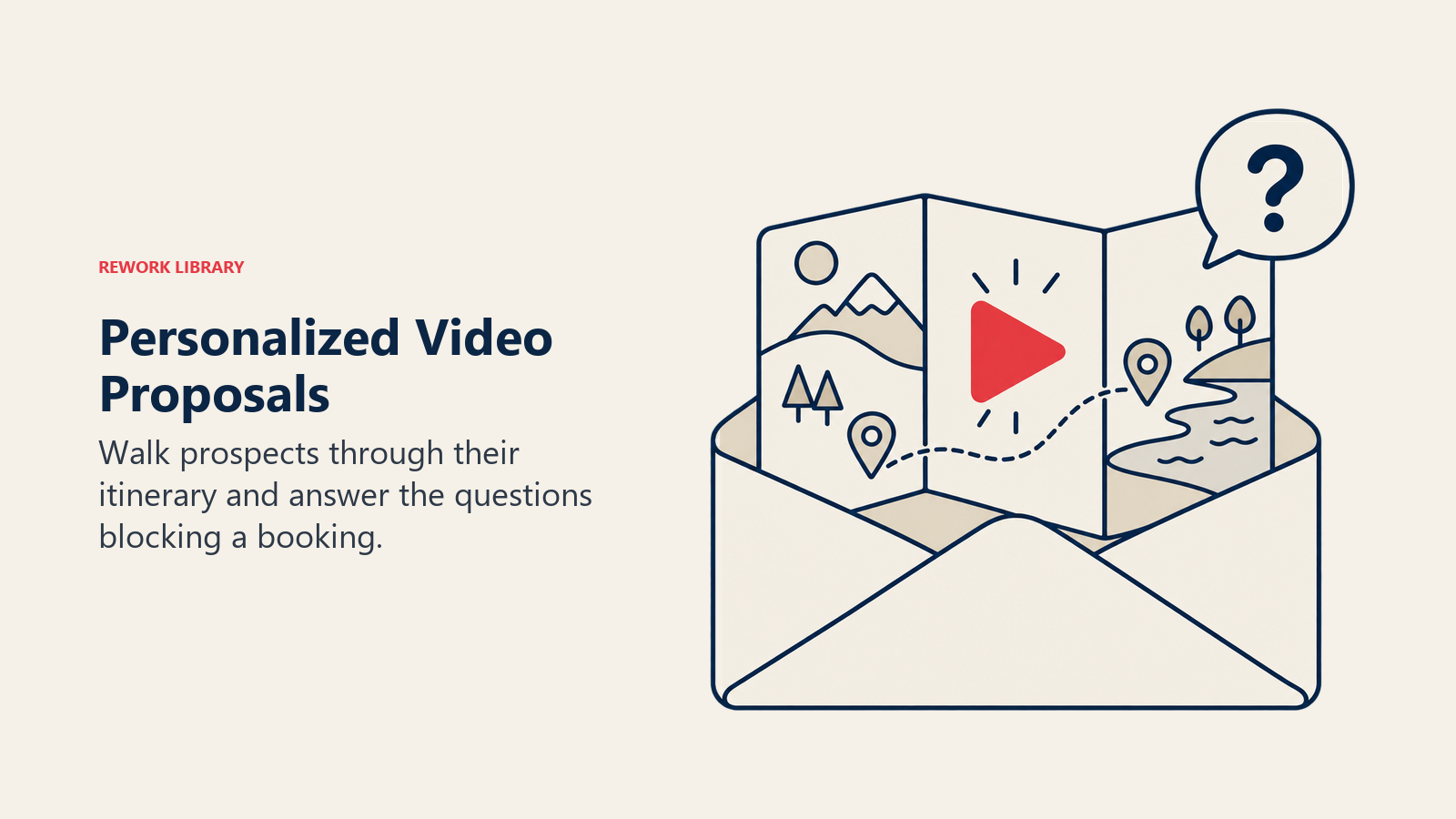
Personalized Video Proposals:
Record custom videos for high-value prospects:
- Personal greeting and introduction
- Addressing their specific questions
- Customized itinerary walkthrough
- Why this trip is perfect for them
Tools: Loom (free-$15/month), Vidyard ($19+/month), Bonjoro ($20+/month)
Response rates increase 30-50% with personalized video.
Itinerary Preview Videos:
Create videos for each itinerary:
- Day-by-day visual walkthrough
- Accommodation previews
- Activity demonstrations
- What's included/excluded clarity
Reduce sales team time explaining details; video does it.
Video Messaging in Follow-Up:
Instead of text email follow-up, send quick video:
- "Thanks for your inquiry! Here's what makes this trip special..."
- "Answering your questions about..."
- "Following up on our call..."
More personal, higher response, differentiates you.
Virtual Consultation Recordings:
Record (with permission) video calls:
- Send recording to customer for reference
- Share with travel companions who couldn't join
- Review before final decision
Increases confidence and reduces repeat questions.
Measurement and Optimization
Track what matters:
Engagement Metrics:
- View Count: Reach indicator
- Watch Time: Total minutes watched (YouTube values this highly)
- Completion Rate: Percentage watching to end (quality signal)
- Engagement Rate: Likes, comments, shares per view
Target: >50% average view duration, >5% engagement rate.
Inquiry and Booking Attribution:
Track business impact:
- UTM parameters on video links
- "How did you find us?" mentions video
- Video engagement in CRM tracking
- A/B test pages with vs without video
A/B Testing Video Approaches:
Test systematically:
- Professional vs smartphone content
- Length variations
- Different hooks and styles
- Testimonial vs showcase content
- Video thumbnail variations
Track which drives more inquiries and bookings.
ROI Calculation for Video Investments:
ROI = (Revenue Attributed - Total Video Investment) / Total Video Investment × 100
Total Investment:
- Production costs
- Team time
- Distribution/promotion costs
- Hosting and software costs
Revenue Attributed:
- Direct inquiry conversions mentioning video
- Landing page lift from video vs without
- Sales cycle reduction value
Target: 3:1 ROI minimum. Great video programs achieve 10:1+.
Scaling Video Production
Build sustainable content pipeline:
Phase 1: Founder/marketer creates smartphone videos occasionally (1-2 monthly)
Phase 2: Systematic smartphone production during trips (5-10 monthly) with basic editing
Phase 3: Dedicate marketing team member to video (15-20 monthly) with improved equipment
Phase 4: Hire video specialist or small production team (30-50+ monthly) mixing professional and volume content
Most operators plateau at Phase 1-2. Moving to Phase 3 requires budget and commitment, but that's where video ROI really compounds.
Related Articles