Guest Feedback Collection - Voice of Customer Programs 2025
Turn this article into takeaways for your work.


Each assistant summarizes the article only for you and suggests best practices for your work.
A travel operator wondered why 40% of guests never booked again despite giving 4-star reviews. The feedback seemed positive. The trips ran smoothly. But something wasn't working. When they finally interviewed defecting customers, the truth emerged: guests were editing their feedback to be polite. The real issues - rushed pace, inconsistent guide quality, underwhelming accommodations - never made it into surveys.
Feedback is only valuable if it's honest. And honesty requires trust, timing, and thoughtful question design. Most operators collect feedback. Few collect actionable truth that actually improves their business through systematic travel CRM implementation.
The best feedback systems I've seen do three things exceptionally: they make feedback easy to give at the right moments, they create psychological safety for honest criticism, and most important - they close the loop by demonstrating that feedback creates real change. Without that last piece, even perfect collection becomes performative exercise that guests see through.
Feedback Collection Strategy
Strategic feedback collection begins with understanding what you need to learn and when guests are best positioned to tell you.
Identifying key feedback collection touchpoints means capturing insights at moments when guests have relevant information and motivation to share. During booking confirmation: understand expectations and priorities. During trip through on-trip support service: identify issues while they can still be resolved. Immediately post-trip: capture impressions while experience is fresh. 30 days post-trip: assess likelihood of repeat booking. Each touchpoint serves different purposes and requires different approaches.
Balancing feedback requests with guest experience recognizes that feedback requests create burden. Too many surveys and guests start ignoring them. The right balance: brief during-trip pulse checks, one comprehensive post-trip survey, and occasional follow-up for specific purposes. More than this becomes noise that guests tune out.
Designing multi-channel feedback approaches acknowledges that different guests prefer different communication methods. Email surveys reach most guests effectively, SMS or text works for brief pulse checks, phone calls provide depth for concerned guests or VIPs, and in-person feedback during trips captures real-time insights. Offer multiple channels but don't require multiple responses.
Creating closed-loop feedback systems means feedback leads to visible action and guests know their input mattered. The loop includes: collection, analysis, action planning, implementation, and communication back to guests about changes made. Without closing this loop, feedback becomes extractive exercise where guests give time and insight without seeing value returned.
During-Trip Feedback Collection
Real-time feedback during trips enables issue resolution before the trip ends and prevents post-trip surprises.
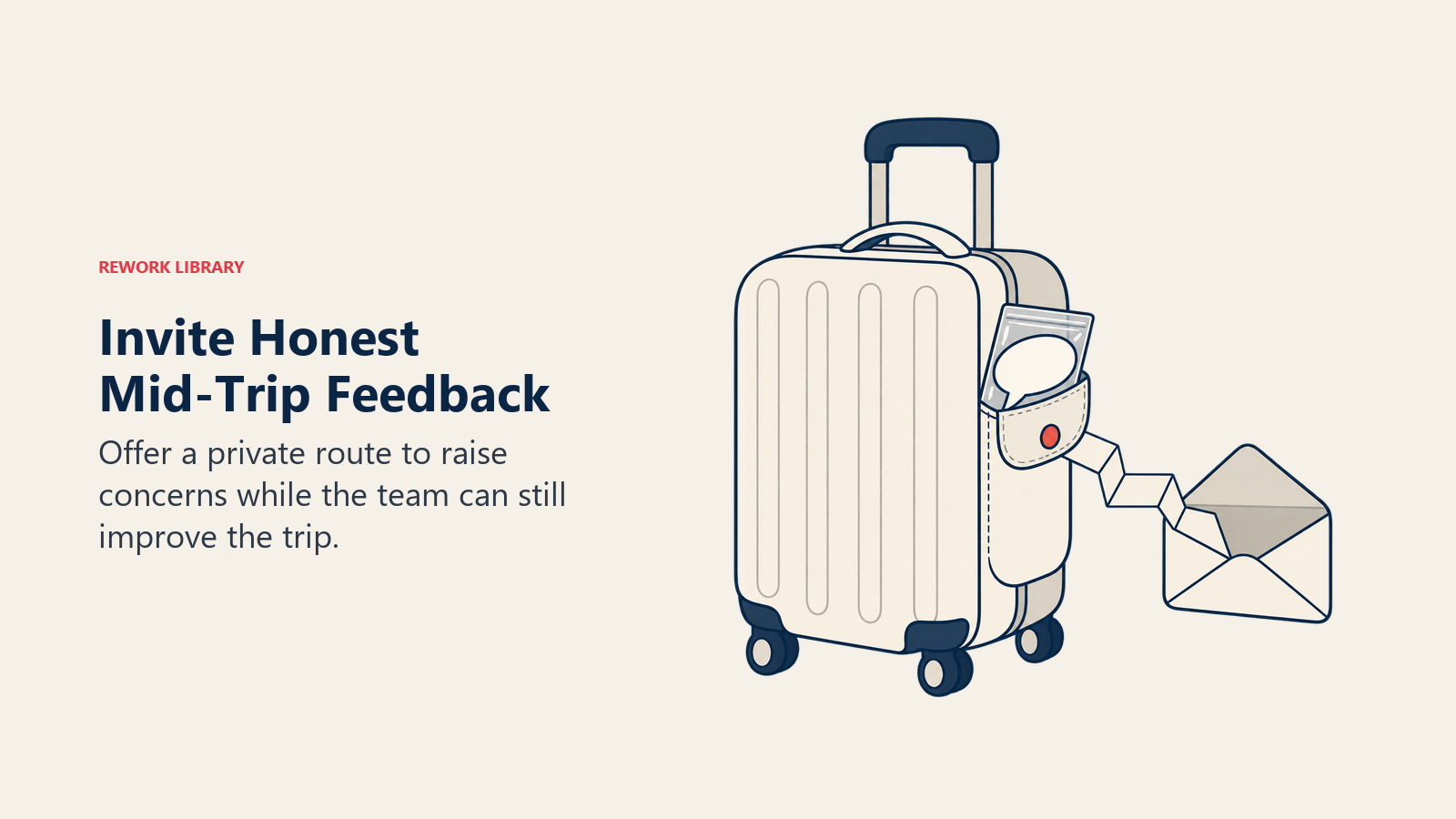
Implementing daily pulse checks with guests can be as simple as asking "How's everything going?" during bus rides or at meals. These casual check-ins create permission for guests to raise concerns in low-stakes environments. Some operators use brief group check-ins at day-end: thumbs up, down, or sideways to gauge satisfaction. Physical gesture responses are less confrontational than verbal complaints.
Encouraging informal feedback to tour guides requires creating psychological safety. Guests often hesitate to complain directly to guides, worrying about awkwardness or retaliation. Some operators provide alternative channels: text number for anonymous feedback, WhatsApp directly to operations manager, or daily paper feedback forms guests can submit confidentially. These channels enable honest feedback without face-to-face confrontation.
Using mid-trip surveys for longer programs (10+ days) catches issues while there's still time to address them. Mid-trip surveys work best when: kept to 3-5 questions, focused on specific improvable elements, delivered via text or app rather than lengthy email, and result in visible action. "We heard several of you wanted more free time, so we've adjusted tomorrow's schedule" demonstrates immediate responsiveness.
Creating safe spaces for honest feedback during experience means acknowledging that not everything is perfect and inviting suggestions. Guides who say "If anything isn't meeting your expectations, please tell me so I can try to fix it" give permission for honest communication. Guests need to believe feedback will be received non-defensively and acted upon.
Post-Trip Survey Design
Comprehensive post-trip surveys capture detailed feedback while respecting guest time and attention.
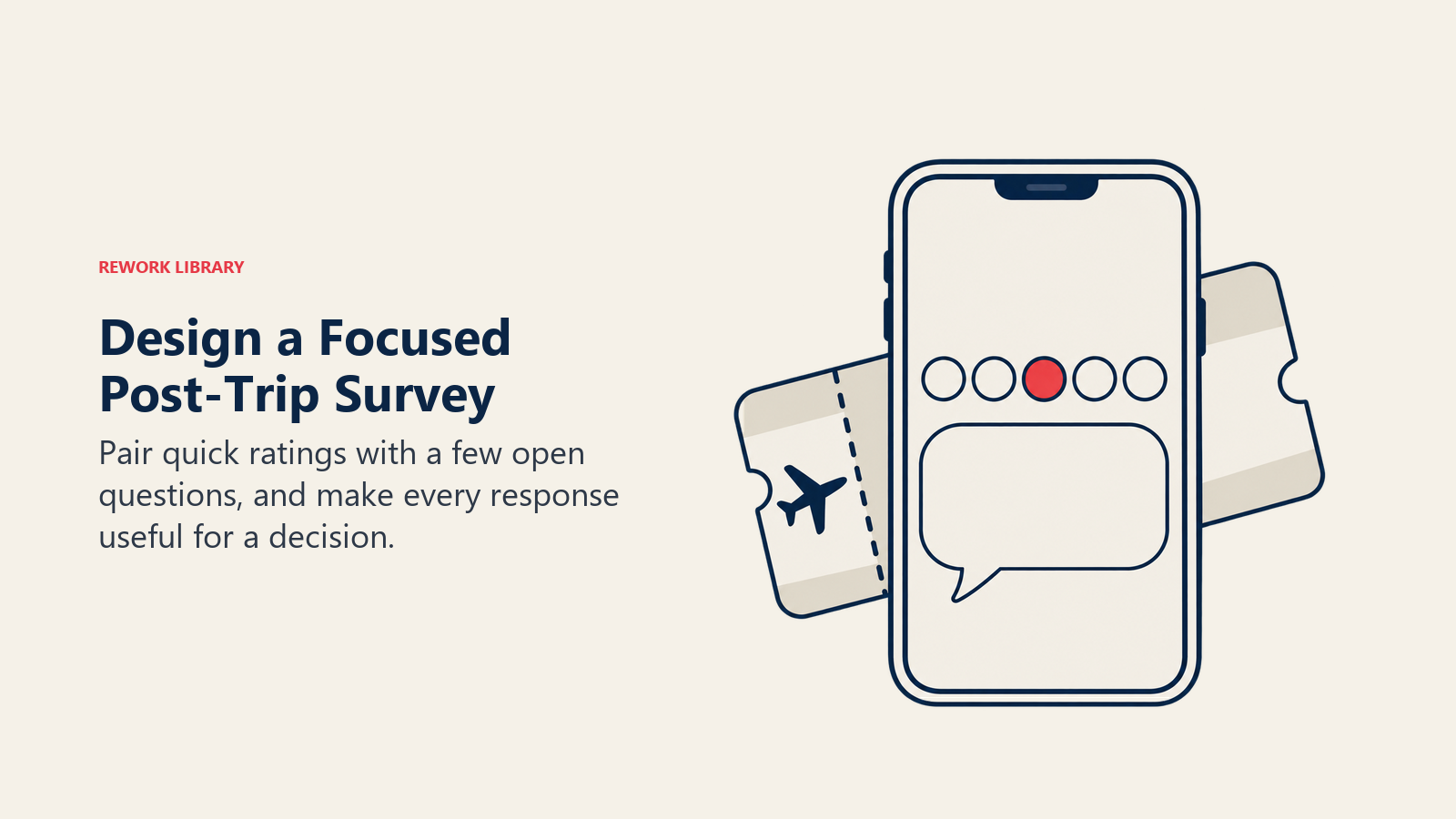
Crafting comprehensive yet concise survey instruments requires discipline. Optimal post-trip surveys run 8-12 questions total, complete in 5-7 minutes, and capture both quantitative metrics and qualitative insights. Longer surveys see significantly lower completion rates. Every question should serve clear purpose: what will you do differently based on this answer?
Using mix of quantitative and qualitative questions provides both measurable metrics and nuanced understanding. Quantitative questions (ratings scales, NPS, yes/no) enable trending and benchmarking. Qualitative questions ("What was your favorite moment?" "What could we have done better?") provide color and specific examples. Best practice: 60% quantitative, 40% qualitative open-ended questions.
Timing surveys for optimal response (24-48 hours post-trip) captures feedback while experience is fresh but after guests have recovered from travel fatigue. Surveys sent during return flights or immediately upon arrival home get poor response. Surveys sent more than a week later get declining response rates as memories fade. The 24-48 hour window balances recency with rest.
Designing mobile-friendly survey formats recognizes that most guests complete surveys on phones. This requires: large tap targets for rating scales, minimal typing required, clear progression indicators showing survey length, save-and-return functionality for interrupted responses, and testing on multiple device sizes. Desktop-optimized surveys perform poorly when guests open them on phones.
Net Promoter Score (NPS) Implementation
NPS provides simple, standardized metric for measuring guest loyalty and satisfaction across time and comparisons.
Understanding NPS methodology and scoring starts with the core question: "How likely are you to recommend us to a friend or colleague?" scored 0-10. Responses segment into Promoters (9-10), Passives (7-8), and Detractors (0-6). The segmentation reflects behavior: Promoters actively refer others, Passives are satisfied but don't advocate, Detractors may actively discourage others.
Calculating NPS (percentage of promoters minus percentage of detractors) creates a score ranging from -100 (everyone is detractor) to +100 (everyone is promoter). A NPS of 50 means 60% promoters and 10% detractors, or 75% promoters and 25% passives. The calculation weighs enthusiastic advocacy more heavily than passive satisfaction, which aligns with business impact.
Benchmarking against travel industry standards provides context for your scores. Travel industry NPS varies by segment: luxury travel operators typically score 50-70, mainstream tour operators 30-50, budget operators 20-40, and airlines average 20-30. Scores above 50 indicate excellent performance. Scores below 30 suggest significant issues. But your trend matters more than absolute score - improving NPS indicates progress.
Using NPS as primary loyalty metric works because it correlates with business outcomes. Promoters book again at 3-5x the rate of Passives, refer new customers at 4-6x the rate, and spend more on average per booking. Detractors have negative customer lifetime value - they're more expensive to serve than the revenue they generate. Improving NPS directly impacts growth and profitability.
Customer Satisfaction (CSAT) Metrics
CSAT metrics measure satisfaction across specific experience dimensions, enabling targeted improvements.
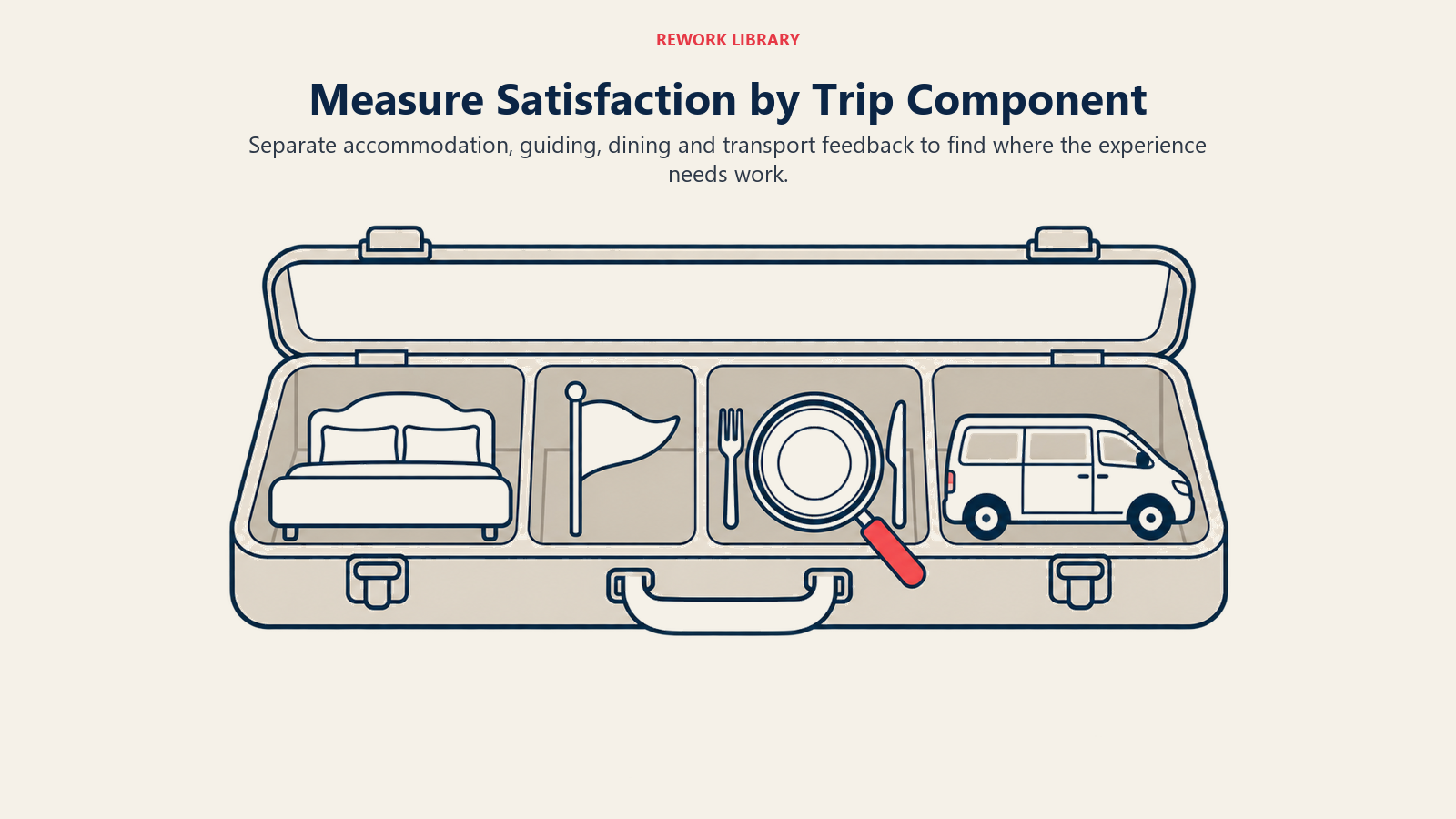
Measuring satisfaction across key experience dimensions breaks overall satisfaction into improvable components. Rate satisfaction with: accommodation quality, activity quality and variety, tour guide performance, food and dining, transportation quality, value for money, and overall experience. These dimension scores identify strength and improvement opportunities better than overall satisfaction alone.
Using 5-point or 10-point satisfaction scales involves tradeoffs. 5-point scales (Very Dissatisfied to Very Satisfied) are quick and intuitive but offer less granularity. 10-point scales provide more nuance but require more cognitive effort. Most operators find 5-point scales optimal for post-trip surveys. 10-point scales work better for NPS and other single critical questions.
Tracking CSAT trends over time reveals whether improvements are working. Monthly or quarterly CSAT averages across all trips, breakdown by trip type or destination, comparison against targets and goals, and year-over-year trend analysis all inform strategic decisions. Improvement in weak areas validates change initiatives. Decline in strong areas triggers investigation.
Correlating CSAT with rebooking behavior validates that satisfaction drives business outcomes. Analyze: rebooking rates by CSAT score segment, time to next booking by satisfaction level, referral rates by satisfaction score, and revenue per guest by satisfaction level. These analyses prove the business case for experience improvements and quantify ROI of satisfaction investments.
Review Platform Management
Online reviews on public platforms create permanent record of guest experiences and significantly influence future bookings.
Encouraging reviews on TripAdvisor, Google, and Facebook requires explicit requests with clear calls to action. Most satisfied guests don't think to leave reviews unless asked. Request reviews: in post-trip thank-you email with direct platform links, during final day of trip with business cards containing review URLs, through follow-up text message 48 hours post-trip, and in loyalty program communications reminding members their reviews help others.
Making review requests at optimal moments post-trip balances timing and tact. Too early and guests haven't processed the experience. Too late and memories fade. Sweet spot is 24-72 hours post-trip for most guests. Exception: guests who had issues may need more time to see how you resolved problems before they're willing to leave fair reviews.
Providing direct links to review platforms eliminates friction. Generic "please leave us a review" requires guests to find your listing among similar names. Direct URLs to your specific TripAdvisor, Google, and Facebook listings take guests exactly where you want them with single click. Conversion from request to review increases 3-4x with direct links versus generic requests.
Monitoring review volume and rating trends identifies changes requiring response. Declining review volume suggests waning enthusiasm or request fatigue. Declining ratings indicate experience degradation or rising expectations. Sudden rating drops may indicate operational changes, supplier issues, or systematic problems. Real-time monitoring enables faster response than quarterly reviews.
Feedback Incentive Programs
Incentives can improve feedback response rates but must be designed to maintain authenticity.
Designing appropriate incentives for feedback completion balances motivation with authenticity. Effective incentives include: discount on future bookings (5-10%), entry into prize draws for high-value items, loyalty program points, or charitable donations in respondent's name. These incentives reward participation without being valuable enough to bias responses.
Balancing incentive value with authenticity prevents the incentive from becoming more important than honest feedback. Large incentives ($100 off next trip) may encourage completing surveys just for discount, potentially biasing positive. Small incentives ($10-25 value) appreciate time without creating undue influence. Some operators use prize draws rather than universal incentives to avoid value-for-response exchange.
Creating referral programs linked to feedback turns satisfied guests into acquisition channels. Approach: complete post-trip survey, if you rate us 9-10 (Promoter), receive unique referral code worth $50 off for friends plus $50 credit for you when they book. This links advocacy behavior (the thing NPS predicts) to incentive, rewarding exactly the behavior you want.
Avoiding incentives that bias responses means not conditioning rewards on positive ratings. Never say "Leave us 5-star review and receive discount." This purchases fake positive reviews that don't reflect true experience. Instead: "Share your honest feedback and receive entry into our monthly prize draw." Reward feedback, not specific ratings.
Real-Time Feedback Response
Real-time feedback systems enable issue resolution during trips, preventing problems from becoming permanent negative memories.
Implementing alerts for critical feedback during trips requires monitoring systems that flag urgent issues immediately through email marketing for travel. Configure alerts for: any rating below 3 out of 5, any mention of safety concerns, comments indicating dissatisfaction with guide or accommodations, and any feedback suggesting guests are considering cutting trip short. These alerts trigger immediate crisis management response while issues can still be resolved.
Empowering guides to address issues immediately creates best outcomes. Guides with authority to upgrade rooms, comp meals, arrange alternative activities, or modify itineraries can resolve most issues on the spot. Waiting for home office approval adds hours or days to resolution, by which point the problem has already damaged the experience.
Creating service recovery protocols for negative feedback provides frameworks for consistent response. Recovery protocols should specify: acknowledgment and apology within 2 hours of feedback receipt, investigation of issue and root cause, resolution offering that exceeds the problem, and follow-up to confirm satisfaction with resolution. These protocols ensure every issue receives appropriate response, not ad hoc approaches that vary by who handles them.
Following up on concerns before trip ends demonstrates commitment to satisfaction. When mid-trip feedback identifies issues, guides should: address the problem immediately, check back with guest to confirm resolution, and make extra effort on remaining trip days to recover relationship. Guests who had problems but saw genuine recovery effort often become more loyal than guests who never had problems.
Feedback Analysis and Insights
Collecting feedback is only useful if you analyze it systematically and extract actionable insights.
Categorizing feedback themes and common issues requires coding qualitative feedback into standardized categories. Common categories: accommodation quality, activity quality, guide performance, food quality, pace and timing, value for money, pre-trip communication, and unexpected issues. Consistent categorization enables trending and identifies which categories drive overall satisfaction.
Identifying trends across trips, destinations, and seasons reveals patterns requiring systematic response rather than one-off fixes. If accommodation complaints concentrate in one destination, the issue is supplier-specific. If they occur across all trips in peak season, it's a capacity or quality control issue. If they spike in one season, it may be weather or seasonal staffing quality. Pattern analysis points to root causes.
Using text analysis for open-ended responses scales qualitative analysis beyond what manual review enables. Text analysis tools identify frequently mentioned words and phrases, sentiment analysis flags positive versus negative comments, and theme clustering groups similar comments automatically. This allows analysis of thousands of comments that manual review couldn't handle.
Creating actionable insights from feedback data means translating feedback into specific improvement initiatives. Rather than "guests want better food," actionable insights specify: "Lunch quality at destination X consistently scores 3.2 vs 4.5 average - need to replace current restaurant supplier" or "Guide John receives 4.8 ratings vs 4.2 average - study his approach to train other guides." Specificity enables action.
Closing the Feedback Loop
Collecting feedback without acting on it and communicating changes creates cynicism that reduces future response rates.
Communicating changes implemented based on guest feedback demonstrates that feedback matters. Regular communication through social media for travel brands and travel content marketing sharing: "Based on your feedback, we've added more free time to our Italy itinerary," or "Many of you requested earlier hotel check-in - we've negotiated this with all our properties." This communication can happen through newsletters, social media, pre-trip communications, and direct emails to guests who provided specific suggestions.
Thanking guests for their input and sharing impact personalizes the closed loop. Email guests who made specific suggestions: "You suggested we include a cooking class in our Thailand trip. We've just added this based on your recommendation and wanted to thank you for the idea. Your next trip is on us as appreciation." These personal acknowledgments create incredible loyalty.
Addressing individual concerns with personalized responses shows every guest their feedback was read and considered. Generic "thank you for your feedback" feels robotic. "Thank you for noting the rushed pace in our Rome day - we've extended that day by 2 hours in future trips" demonstrates someone actually read and acted on their specific input. Personal response takes more time but generates disproportionate value.
Demonstrating commitment to continuous improvement transforms feedback from report card to partnership. Frame feedback as "help us get better" rather than "rate our performance." Share metrics showing improvement over time. Acknowledge where you're still working on challenges. This transparency builds trust and positions guests as partners in creating better experiences rather than critics judging past performance.
Guest feedback is the gift that enables growth. The operators who excel at collecting, analyzing, and acting on feedback create virtuous cycles where satisfied guests provide insights that make experiences even better, creating more satisfied guests. The operators who treat feedback as obligation rather than opportunity miss their most valuable source of competitive intelligence and improvement direction.
Related Articles:

Business Consultant