Travel Documentation Process - Complete Documentation Management 2025
Turn this article into takeaways for your work.


Each assistant summarizes the article only for you and suggests best practices for your work.
A tour operator was 72 hours from departure when they discovered a guest's passport expired in four months. The destination required six months validity. The guest couldn't travel. The $6,800 booking couldn't be recovered. Insurance didn't cover passport validity issues. And the guest blamed the operator for not catching the problem earlier - despite the operator having communicated requirements at booking and 60 days before departure.
Documentation management sits at the intersection of guest service and business protection within the broader travel customer journey mapping process. Handle it well and guests barely notice. Handle it poorly and you're dealing with cancelled trips, lost revenue, and angry customers who leave one-star reviews explaining how you "ruined their vacation."
The challenge isn't just knowing what documents are required. It's collecting that information from guests, verifying accuracy, tracking expiration dates, sending reminders at the right time, and doing all of this across dozens or hundreds of bookings with different nationalities, destinations, and requirement timelines.
Documentation Requirements Framework
Travel documentation requirements vary dramatically based on destination, guest nationality, and trip characteristics. No single checklist covers all situations.
Destination-based requirements range from simple passport-only entry to complex multi-step visa processes. Schengen countries have different requirements than Southeast Asian destinations. Some countries require passports with blank pages for stamps. Others don't stamp at all. Your job is knowing these nuances for every destination you operate in and every nationality you serve.
Tracking changing requirements is essential because rules shift constantly. Visa-on-arrival programs appear and disappear. eVisa systems launch. COVID-related entry requirements change monthly. Following government travel advisory updates, subscribing to industry newsletters about entry requirements, and maintaining relationships with destination management companies who alert you to changes all help you stay current.
Communicating requirements clearly during pre-trip communication prevents surprises later. But clear communication means specific communication. "You may need a visa" creates confusion. "U.S. passport holders need to obtain an eVisa from the official India government website at least 4 days before departure" provides actionable guidance. Your booking system integration should ideally flag nationality and destination combinations that trigger specific requirements.
Managing liability through proper documentation advisories protects your business. You're not a visa service or immigration attorney. Your responsibility is informing guests of requirements and providing guidance, not guaranteeing outcomes. Clear terms and conditions stating that guests are responsible for ensuring they have proper documentation, that you provide information as a courtesy, and that you're not liable for denied entry or failed visa applications protects you legally while still supporting guests practically.
Passport Management Support
Passport issues create the most common documentation failures. Most are preventable with systematic verification and communication.
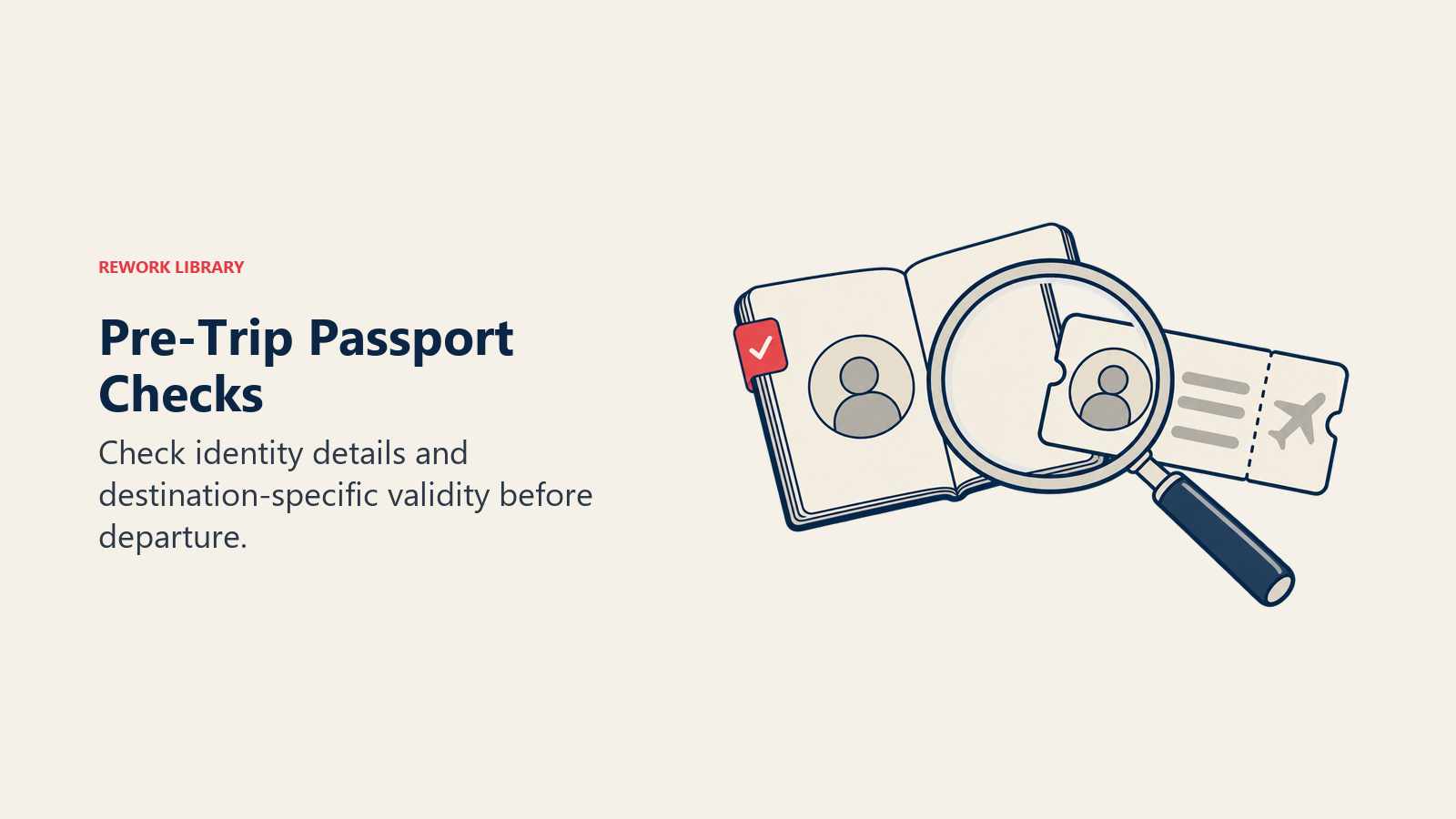
Passport validity requirements catch more travelers than you'd expect. The six-month rule (passport must be valid for at least six months beyond travel dates) applies to many popular destinations but not all. Some countries require only three months. Some require only that your passport is valid for your entire stay. Knowing which rule applies to each destination you serve and communicating it clearly prevents last-minute discoveries of invalid passports.
Passport renewal timelines vary by country. U.S. passports take 6-12 weeks for standard processing, 3-5 weeks for expedited service. Canadian passports take similar timeframes. European passports vary by country. Communicating these timelines when you discover borderline passport validity gives guests time to renew rather than discover the problem too late.
Verifying passport information accuracy at booking catches many errors before they become problems. Full legal name exactly as it appears on passport, passport number, issue and expiration dates, and issuing country. Matching this information against the name on airline tickets prevents the common issue of nicknames or alternate name spellings causing boarding denials.
Passport photocopy recommendations serve two purposes: backup identification if passports are lost or stolen, and reducing the need to carry original passports for daily activities. Recommending guests keep a photo or scan of their passport's information page in cloud storage accessible from any device creates easy backup access.
Visa Processing Support
Visa requirements create the most complex documentation scenarios. Your level of support determines whether guests succeed or struggle through the process.
Identifying visa requirements by destination and nationality requires systematic tracking. A matrix of common nationalities you serve against destinations you operate in provides quick reference. But new guests from countries you don't typically serve need individual research. Government immigration websites provide authoritative information, but they're often difficult to navigate.
Visa application guidance and documentation lists help guests navigate bureaucratic processes. Different visa types require different documentation: tourist visas need proof of accommodation and return flights; business visas need invitation letters; some countries require proof of sufficient funds or travel insurance. Providing checklists of exactly what's needed, where to submit applications, and what fees to pay transforms an overwhelming process into a manageable task list.
Visa service partnerships or referrals provide value to guests who prefer paying professionals to handle visa applications. Partnering with reputable visa services creates referral relationships where your guests receive discounted rates and prioritized processing. You're not processing visas yourself (that's usually illegal without proper licensing) but connecting guests with services that can help.
Tracking visa processing timelines prevents departure-date conflicts. If a destination requires 15-business-day visa processing and guests book 20 calendar days before departure, there's a timing problem. Your booking system should flag these situations and either prevent booking or alert staff to address the timing issue immediately with guests.
eVisa and Digital Documentation
Digital visa systems have simplified some processes while creating new challenges around technology access and digital literacy.
eVisa application processes vary by country. Some are straightforward web forms taking 15 minutes. Others require document uploads, payment processing that's finicky with foreign credit cards, and verification steps that can take days. Walking guests through these processes with annotated screenshots and step-by-step instructions dramatically improves success rates.
Managing digital visa documentation delivery means ensuring guests receive their eVisa approvals and know how to access them. Some countries email PDF visas. Others require downloading from a portal. Still others send approval codes that must be presented at entry. Confirming guests have received and can access their eVisas 7-10 days before departure catches any issues while there's still time to resolve them.
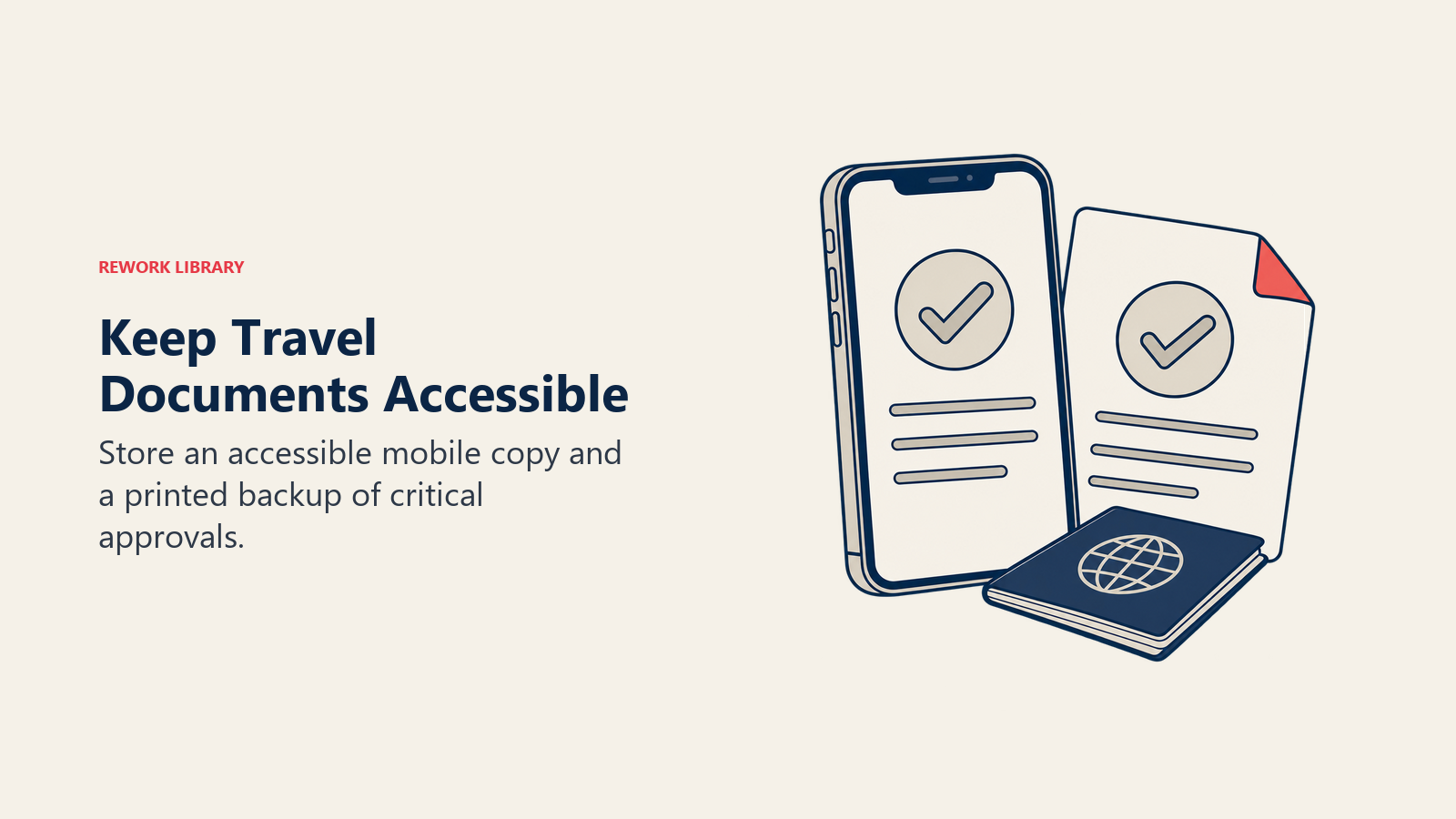
Ensuring mobile accessibility for digital documents matters when guests arrive at immigration. An eVisa stored only on a laptop won't help at the airport. Recommending guests save digital documents to their phones, email copies to themselves, and carry printed copies as backup ensures accessibility regardless of technology failures.
Backup documentation recommendations protect against the reality that technology fails at inconvenient times. Phone batteries die. Emails become inaccessible. Cloud services go down. Carrying printed copies of critical documents (eVisa approvals, travel insurance, booking confirmations) provides redundancy when digital fails.
Health Documentation
Health requirements have expanded significantly in recent years and now rival visa requirements in complexity.
Vaccination requirements vary by destination and sometimes by routing. Yellow fever vaccination certificates are required for entry to many African and South American countries. Some countries require yellow fever certificates only if arriving from yellow fever zones. COVID-19 vaccination requirements remain in flux. Your communication needs to specify exactly what's required, what's recommended but not required, and where to get official documentation.
Obtaining vaccination certificates involves navigating healthcare systems. Some vaccines are available at any pharmacy or clinic. Others (yellow fever) require certified vaccination centers. Processing times vary. Yellow fever certificates become valid 10 days after vaccination. Providing this detailed guidance prevents guests from getting vaccinated too close to departure or not receiving proper documentation.
Health declaration forms and requirements have proliferated since 2020. Some countries require pre-arrival health forms. Others do health screening at arrival. Digital health declarations, temperature checks, and testing requirements create confusion. Providing current information with official links to government health ministry websites ensures guests have accurate, authoritative guidance.
Tracking changing health requirements is essential because these change more frequently than visa rules. Weekly monitoring of destinations you operate in, immediate communication to guests with upcoming departures when requirements change, and updating website and booking information keeps everyone current. Some operators now include health requirement updates in every pre-departure communication, acknowledging the fluid situation.
Travel Insurance Documentation
Insurance documentation serves both guest protection and business liability management.
Educating travelers on insurance importance and coverage types helps them make informed decisions. Trip cancellation coverage, medical and evacuation coverage, baggage loss protection, and adventure activity coverage serve different purposes. Many travelers don't understand these distinctions or assume their health insurance covers international medical care (it usually doesn't).
Offering insurance partnerships or recommendations provides convenient options while generating potential commission revenue. Partnering with reputable travel insurance providers creates referral programs where you earn a commission while guests get competitive rates. Some operators sell insurance directly as licensed agents. Others simply recommend providers without formal partnerships.
Collecting insurance information for emergency preparedness is essential even when insurance isn't required. Insurance provider name, policy number, emergency contact numbers, and coverage limits should be collected for all guests during pre-departure information gathering. In an emergency, having this information immediately accessible enables faster, better response.
Verifying coverage adequacy for trip activities protects both guests and your business. Standard travel insurance often excludes adventure activities above certain altitudes, certain water sports, or activities deemed high-risk. If your trip includes these activities, confirming guests have appropriate coverage prevents claims denials and potential liability issues.
Documentation Collection and Verification
Systematic processes for collecting and verifying documentation prevent errors and ensure compliance through effective guest onboarding experience design.
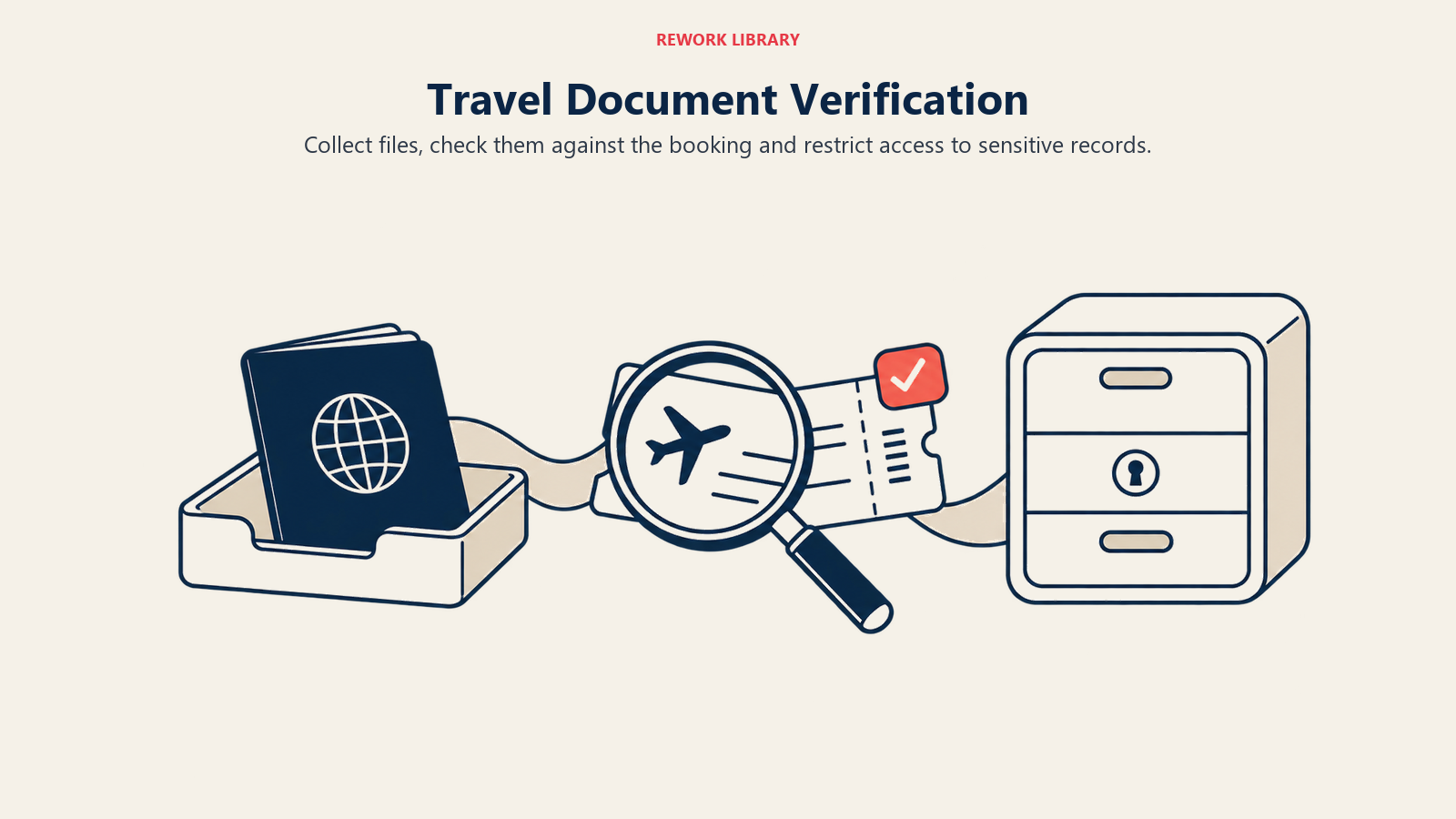
Implementing systems for collecting required documentation from travelers needs to balance thoroughness with guest convenience. Digital portals where guests upload passport copies, visa approvals, vaccination certificates, and insurance documentation centralize everything in one place. Email collection works but creates organizational challenges. Some operators still receive faxed documentation in 2025, which is wildly inefficient.
Verifying document accuracy and validity before departure catches issues while they can still be fixed. Staff reviewing uploaded passports for expiration dates, verifying names match booking information, confirming visa validity covers travel dates, and checking that insurance policies are in force prevents arrival-day surprises. This verification should happen at multiple points: initial collection (60 days out) and final verification (7-10 days before departure).
Managing secure storage of sensitive traveler information through your travel CRM implementation requires compliance with data protection regulations. Passport numbers, dates of birth, insurance information, and health records are sensitive personal data covered by GDPR, CCPA, and other privacy regulations. Encrypted storage, access controls limiting who can view documentation, data retention policies that delete information after it's no longer needed, and clear privacy policies informing guests how you use their data are all essential.
GDPR and privacy compliance is especially important for operators serving European travelers or based in Europe. Explicit consent to collect and store personal information, the right for guests to access or delete their data, secure handling preventing unauthorized disclosure, and data processing agreements with any third parties who access guest information (insurance partners, visa services) are legal requirements, not optional best practices.
Emergency Documentation Protocols
Emergency situations require immediate access to documentation and clear protocols for handling document-related crises through your travel crisis management framework.
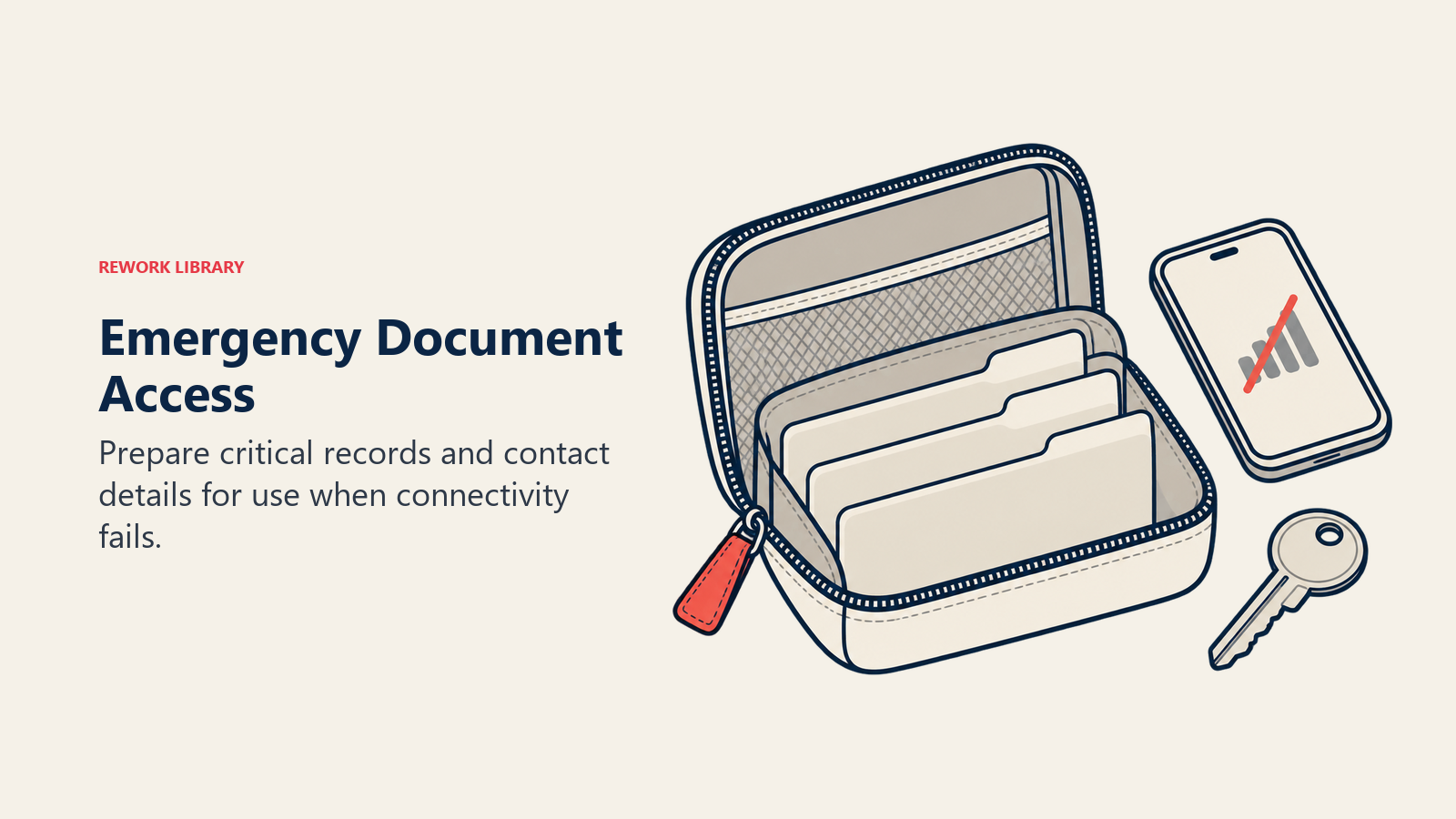
Providing travelers with emergency contact information means they know who to reach if documents are lost or stolen. Your emergency hotline, local embassy or consulate contact information, and instructions for reporting lost passports should be in every pre-departure information package and easily accessible during travel.
Collecting next-of-kin details for emergency situations enables you to contact families if serious incidents occur. Full name, relationship, phone numbers (preferably multiple), and email address for emergency contacts should be collected during booking or pre-departure information gathering. Some countries require this information for entry (particularly for activities with inherent risk).
Creating emergency document access procedures ensures critical information is accessible when needed through your on-trip support service infrastructure. Cloud-based systems with mobile access mean guides can access guest passport information, insurance details, and emergency contacts from anywhere. Offline backup copies of critical guest information should travel with guides in case internet access fails.
Preparing protocol for lost or stolen passport scenarios helps guides respond effectively. Immediate report to local police, contact nearest embassy or consulate, arrange emergency travel documents if available, coordinate with remaining itinerary logistics, assist with insurance claims process, and communicate with home office for additional support. Written protocols prevent panic and ensure consistent response.
Group Documentation Management
Group bookings multiply documentation complexity because multiple guests at different stages of preparation must all be ready for the same departure date, as covered in group travel sales operations.
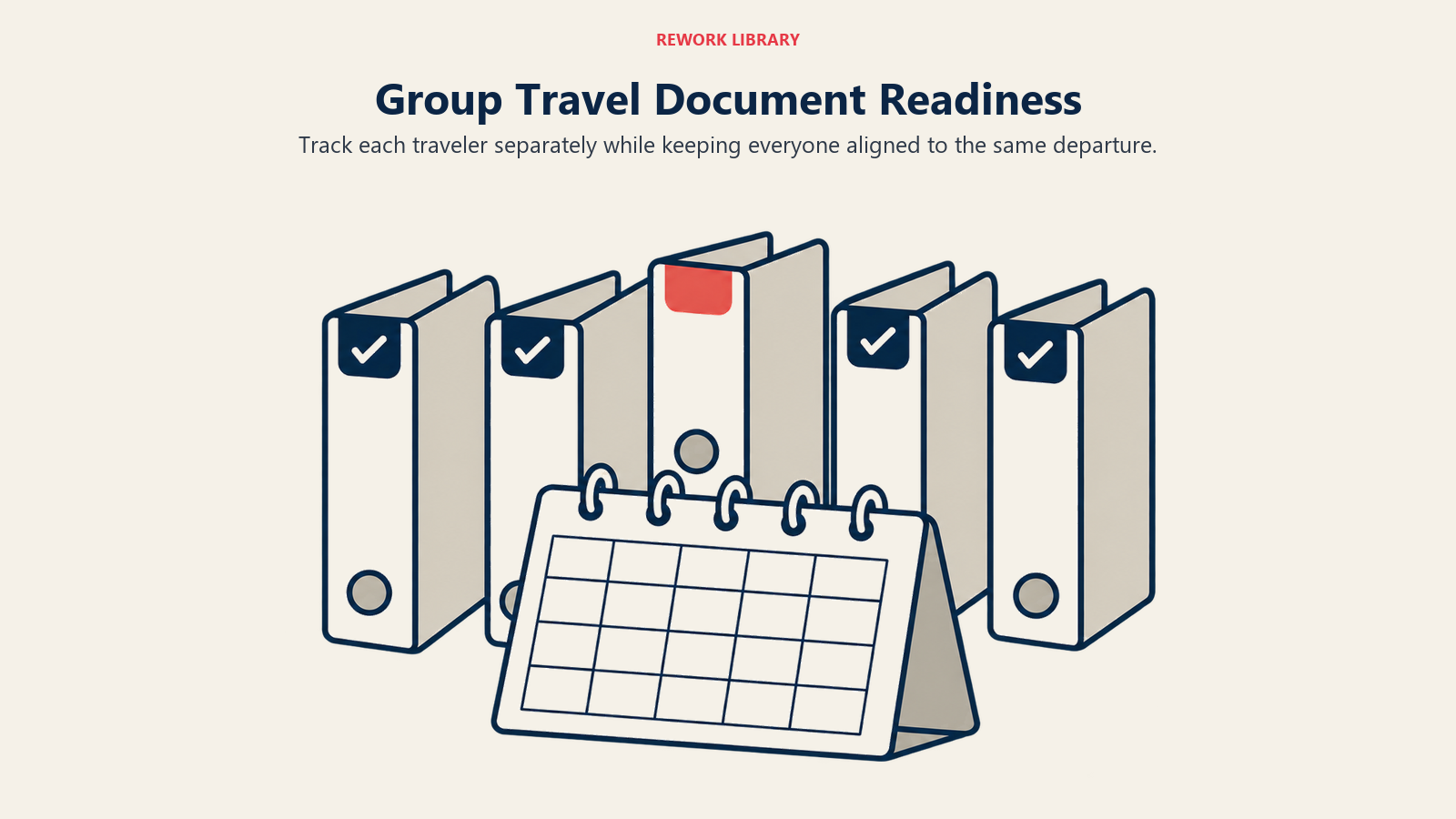
Streamlining documentation collection for group bookings requires different approaches than individual bookings. Group leaders can collect information from their members and submit in bulk, but this creates verification challenges. Direct collection from each individual provides better data quality but increases administrative burden. Hybrid approaches where groups submit master lists but individuals upload their own documentation balances efficiency with accuracy.
Managing group visa applications where applicable can provide economies of scale and better processing. Some countries allow group visa applications with reduced fees or expedited processing. Coordinating group members to submit applications simultaneously ensures processing happens together rather than stretched over weeks. But this requires tight coordination and clear deadlines.
Coordinating timing for group documentation deadlines prevents stragglers from delaying the entire group. Setting firm deadlines for passport information (90 days before departure), visa application completion (60 days before departure), and final documentation verification (14 days before departure) creates urgency and allows time to address non-compliant members before it's too late.
Ensuring no traveler is left behind due to documentation issues requires proactive outreach to group members who haven't submitted required information. Automated reminders help, but personal follow-up by phone or email to members approaching deadlines ensures problems surface while there's time to fix them. Group leaders can assist with pushing their members to comply.
Technology for Documentation Management
Managing documentation at scale requires technology solutions that automate routine tasks and provide visibility into compliance status.
Automated reminders for documentation deadlines reduce manual follow-up burden. When a booking is created, trigger a series of automated communications: immediately (welcome and initial requirements), 90 days before departure (passport and visa initiation), 60 days before departure (visa submission reminder), 30 days before departure (insurance and health documentation), 14 days before departure (final verification reminder). These automated touchpoints catch most guests without staff intervention.
Digital portals for document upload and tracking centralize information and provide real-time visibility through travel automation tools. Guests log in, see what documentation is required, upload files directly, and track their completion status. Staff see dashboard views of all upcoming departures with color-coded indicators: green for complete, yellow for partial, red for missing critical documents. This visibility enables targeted follow-up with guests who need attention.
Integrating documentation status into booking systems creates operational efficiency. Guest documentation status visible in your booking system means reservation staff, customer service, and operations all see the same information without switching systems. Departure manifests show documentation compliance status for each guest. Accounting can see when documentation is complete before processing final payments.
Creating mobile access to critical documentation ensures guides have information they need during trips. Mobile apps or mobile-optimized web portals let guides access passport information, emergency contacts, dietary restrictions, and special requirements for their guests even in locations with limited connectivity. Offline sync capabilities download this information for access without internet.
Documentation management is detail-intensive, compliance-critical work that most guests don't appreciate until something goes wrong. The operators who excel at this make it seem effortless through systematic processes, clear communication, and technology that automates routine tasks while providing visibility into compliance status. Get it right and it's invisible. Get it wrong and it's all anyone talks about.
Related Articles:

Business Consultant
On this page
- Documentation Requirements Framework
- Passport Management Support
- Visa Processing Support
- eVisa and Digital Documentation
- Health Documentation
- Travel Insurance Documentation
- Documentation Collection and Verification
- Emergency Documentation Protocols
- Group Documentation Management
- Technology for Documentation Management