Travel NPS & Satisfaction - 2026 Complete Guide
Turn this article into takeaways for your work.


Each assistant summarizes the article only for you and suggests best practices for your work.
Your competitor books fewer travelers than you but generates 3x more travel referral programs referrals and maintains 4.8-star ratings through travel review management across all platforms while you struggle at 4.3 tracked in travel KPI dashboard. The difference isn't luck. They measure customer satisfaction systematically through guest feedback collection, close the loop on every detractor, and turn promoters into advocates via post-trip engagement. You collect feedback sporadically, respond defensively to negative reviews, and wonder why word-of-mouth isn't driving growth.
In travel, satisfaction isn't soft metrics for customer service teams. It's predictive analytics for future revenue. High NPS correlates directly with referral rates, repeat bookings, and review quality. Low NPS predicts churn, negative publicity, and declining market share.
The travel businesses dominating their markets don't just measure satisfaction. They systematically engineer it.
Why NPS Matters in Travel
Word-of-mouth drives travel decisions more than most industries. Before booking a $5,000 vacation, travelers ask friends, read reviews obsessively, and seek validation. A strong referral from a trusted source carries more weight than any ad campaign.
NPS predicts this behavior. Promoters (score 9-10) actively recommend you. They're your volunteer sales force. Passives (score 7-8) are satisfied but won't evangelize. Detractors (score 0-6) actively discourage prospects - the opposite of marketing.
Research shows promoters book 2.4x more frequently and refer 4-5 friends on average. Detractors might book once but rarely return and warn others away. The economic value difference between these groups is enormous.
Reviews and ratings directly reflect NPS. Travelers who give you 9-10 NPS scores leave 5-star reviews. Those giving 0-6 NPS leave 1-3 star reviews damaging your online reputation. Your aggregate review rating essentially is your NPS made public.
Repeat bookings correlate strongly with satisfaction. Over 80% of customers rating you 9-10 book again within 24 months. Under 15% of those rating you 0-6 ever return. Satisfaction metrics predict retention with remarkable accuracy.
Calculating Travel NPS
The single question drives everything: "How likely are you to recommend [Company Name] to a friend or colleague?" Respondents rate 0-10.
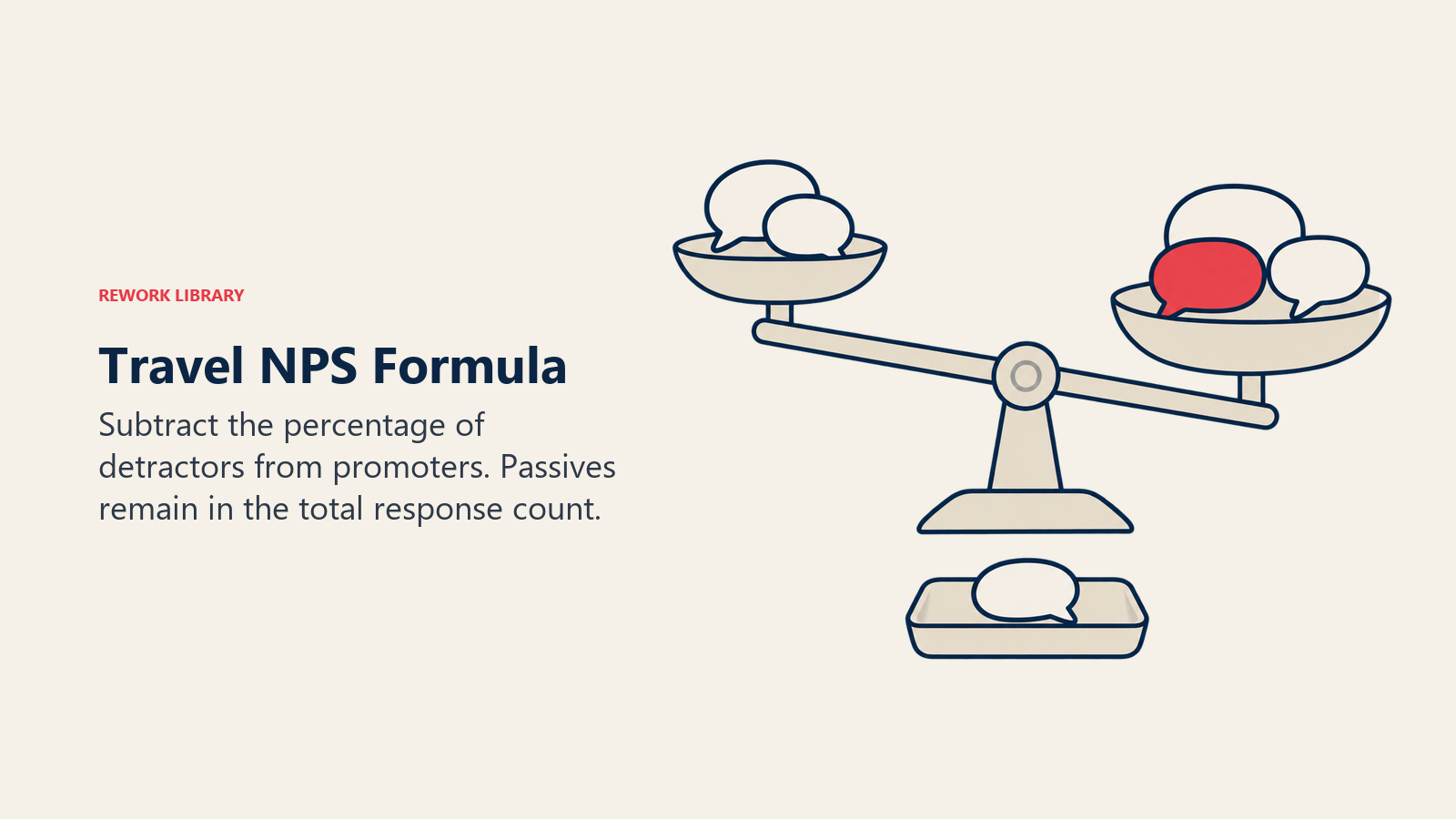
Promoters (9-10): Loyal enthusiasts who will keep buying and refer others Passives (7-8): Satisfied but unenthusiastic customers vulnerable to competitive offerings Detractors (0-6): Unhappy customers who can damage your brand through negative word-of-mouth
Calculate NPS as: % Promoters - % Detractors
Example: Survey 100 customers. 60 score 9-10. 25 score 7-8. 15 score 0-6. NPS = 60% - 15% = 45
Passives don't factor into the calculation directly but provide context. High passive percentage suggests you're not delighting customers, just satisfying them.
Interpret the score:
- 70-85: Excellent - world-class service
- 50-70: Good - strong performance
- 30-50: Acceptable - room for improvement
- 0-30: Poor - systemic issues
- Negative: Crisis - more detractors than promoters
But context matters more than absolute scores. B2C travel typically scores higher than B2B services. Luxury operators should score higher than budget. Compare to your segment, not all businesses.
When to Survey
Immediately post-trip captures authentic reactions while experiences are fresh. Send surveys 24-48 hours after travelers return. Response rates run highest in this window (25-40%). Wait longer and responses drop and become less accurate as memory fades.
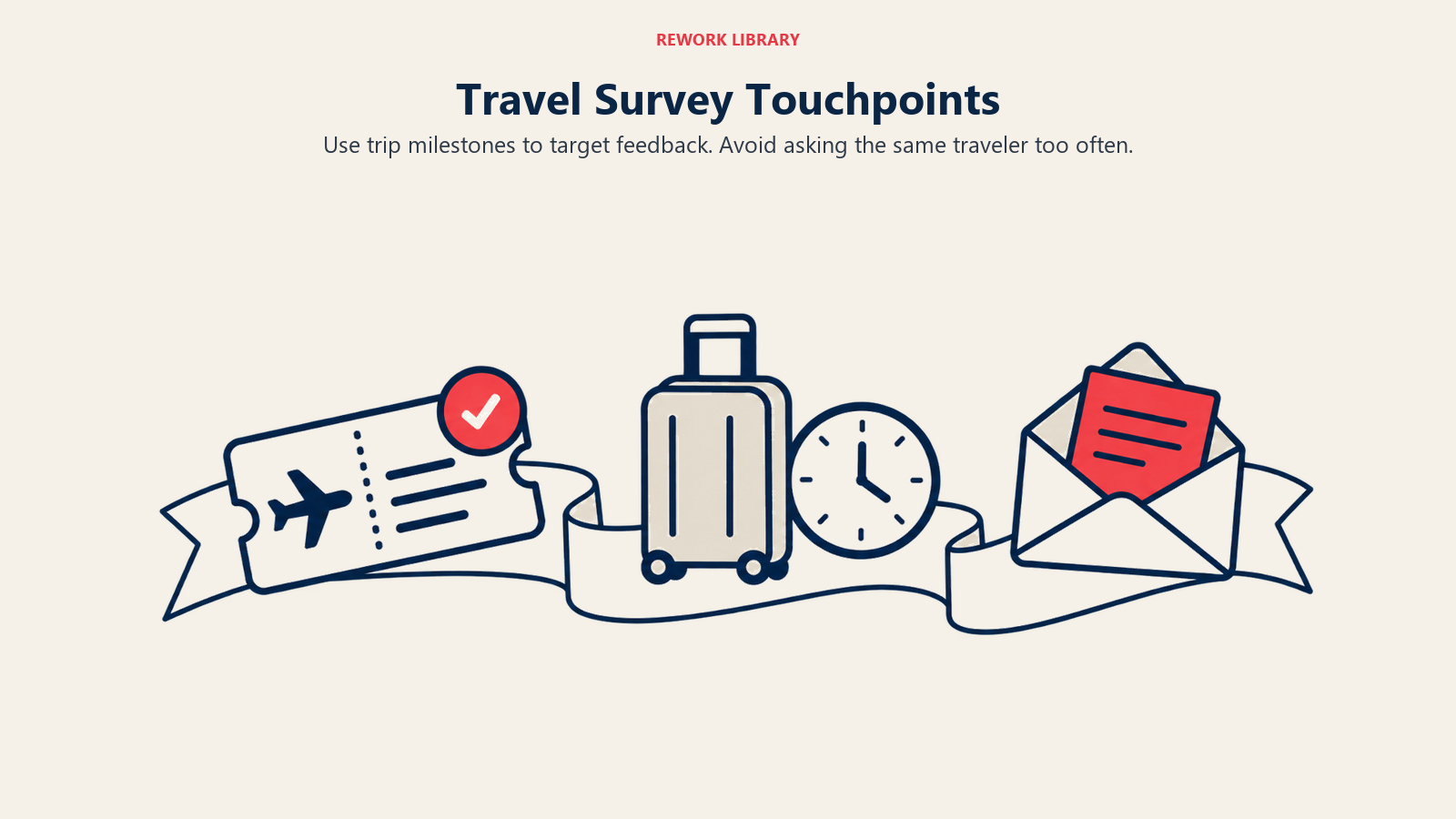
The timing affects scores. Immediate post-trip surveys catch travelers on emotional highs or lows. Waiting a week allows reflection and more balanced assessment. Test both and choose based on response rates and score stability.
After major touchpoints throughout the journey reveals specific areas needing improvement:
- Post-booking: Did the sales and booking process meet expectations?
- Pre-departure: How effective was our communication and preparation support?
- Post-trip: Overall experience satisfaction
This granular approach identifies exactly where satisfaction breaks down.
Annual relationship surveys for repeat customers measure long-term loyalty beyond single trips. How likely are they to book again? Do they feel valued? Would they recommend you to others?
Don't over-survey. One post-trip survey per booking is sufficient for most customers. Annual surveys for anyone booking 2+ times yearly. Special surveys only if something unusual occurred (crisis, service failure).
NPS Benchmarks by Travel Segment
Luxury travel operators should target 70-85 NPS. At premium prices, customers expect exceptional experiences. Falling below 65 indicates you're not delivering on promises. Top luxury operators consistently score 75-80.
Mid-market tours and agencies typically achieve 50-70 NPS. You're balancing value and quality. Scores above 60 indicate strong customer satisfaction. Below 45 suggests quality or value issues.
Budget travel falls lower, typically 40-60 NPS. Customers have realistic expectations given prices. But don't accept poor service as inevitable. Budget doesn't mean bad experience. Some budget operators score 55+ through consistent delivery and honest communication.
Adventure travel often scores high (60-75) due to transformative experiences and self-selected engaged travelers. The nature of adventure creates emotional bonds that drive higher NPS.
Corporate/group travel runs 45-65 depending on service model. B2B satisfaction is more functional than emotional. Reliability and value matter more than delight.
Beyond NPS - CSAT & CES
Customer Satisfaction Score (CSAT) measures specific elements using 1-5 scale. Post-trip surveys ask about accommodation quality, guide performance, itinerary pacing, communication effectiveness, and value for money.
Calculate: (Number of 4-5 ratings) / (Total responses) × 100
CSAT of 85%+ is excellent. 70-85% is good. Under 70% indicates problems with specific elements.
CSAT reveals what to fix while NPS predicts business outcomes. A traveler might give 4s across all CSAT categories (80% satisfaction) but score you 7 on NPS (passive, won't actively promote). This tells you service is good but not remarkable.
Customer Effort Score (CES) asks: "How easy was it to book your trip / get support / modify your reservation?" Rated 1-7 with lower scores better (less effort required).
Travel with high effort scores (booking was complicated, getting answers was difficult, changes required multiple calls) generates detractors even if the trip itself was good. CES identifies friction in processes.
Analyzing Open-Ended Feedback
Categorize comments systematically into themes:
- Accommodation quality
- Guide/staff performance
- Itinerary and activities
- Transportation and logistics
- Communication and support
- Value for money
- Food and dining
- Special requests handling

Track frequency of each category in positive vs. negative feedback. If guides appear in 40% of positive comments and only 5% of negative comments, guides are a strength. If communication appears in 30% of negative comments, it's a problem area.
Identify trends over time. If "rushed itinerary" comments increase from 8% to 22% of feedback over six months, pacing is becoming an issue. Address before it impacts more customers.
Prioritize improvement areas by impact and frequency. Issues mentioned by 5% of customers might not warrant immediate action. Issues mentioned by 35% demand attention. Weight by severity too - minor inconveniences versus major disappointments.
Use verbatim quotes to communicate issues to teams. Numbers don't motivate like real customer voices. Share specific comments in team meetings to drive improvement.
Closing the Loop
Service recovery for Detractors (0-6 scores) should be immediate and personal. When a detractor survey comes in, alert management the same day. Reach out personally within 24 hours.
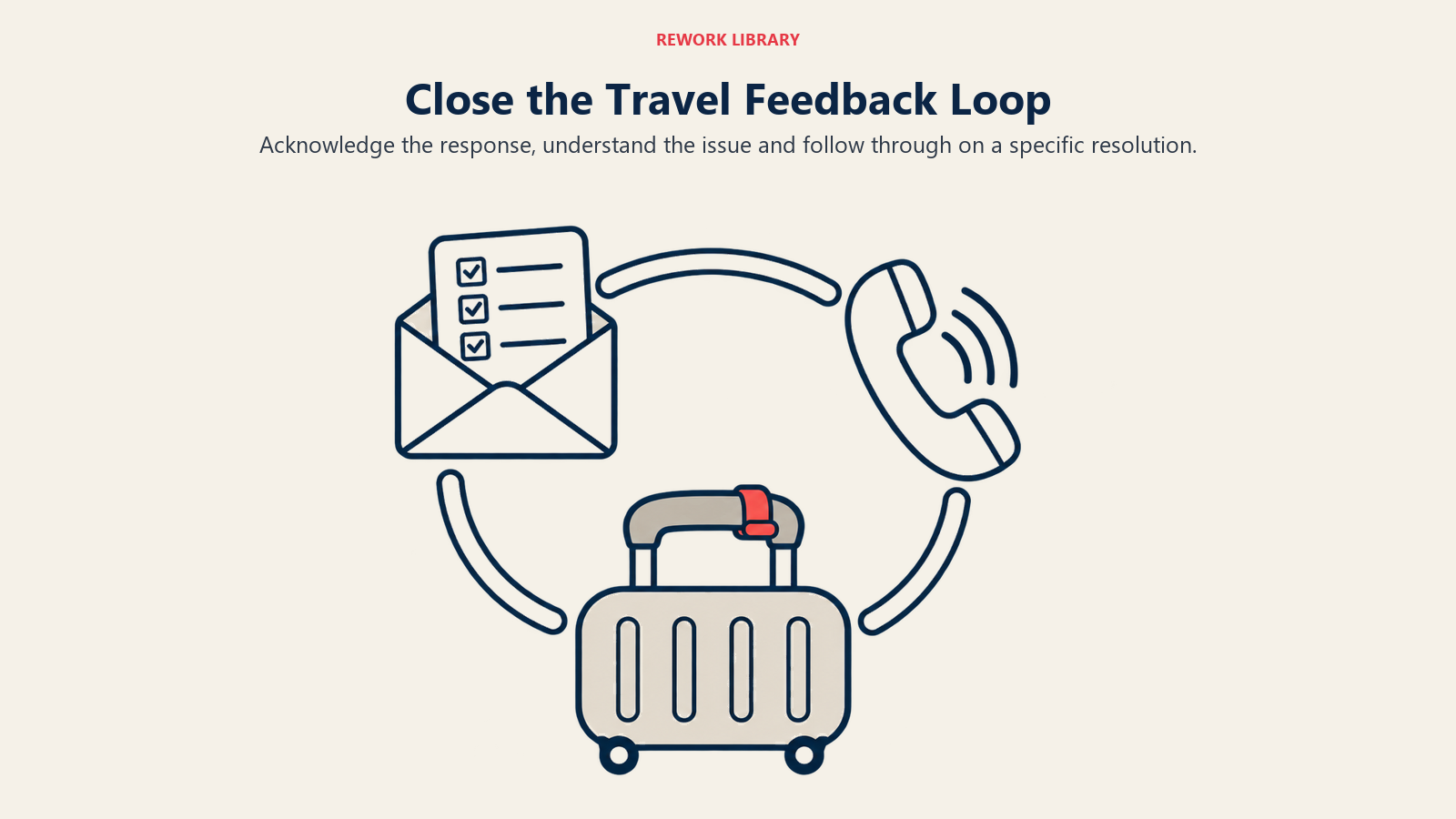
"We're sorry you had a disappointing experience. I'd like to understand what went wrong and make it right." Listen without defensiveness. Acknowledge their frustration. Offer meaningful remediation - refund, future credit, or service recovery appropriate to the issue.
Many detractors become promoters when you handle complaints well. They didn't expect you to be perfect. They expected you to care and fix problems. Do that and you can salvage the relationship.
Thank-you responses to Promoters (9-10 scores) strengthen advocacy. When someone rates you 10, acknowledge it personally. "Thank you for the amazing feedback! We're thrilled you loved your Iceland adventure. Would you mind sharing your experience on TripAdvisor?"
This is when asking for public reviews works best. Promoters are eager to share positive experiences.
Converting Passives (7-8 scores) requires understanding why they're not promoters. Follow up: "We're glad you enjoyed your trip! We noticed you rated us an 8. What would have made it a 10?" Their answers reveal how to elevate service from good to exceptional.
Passives are the opportunity segment. Small improvements convert them to promoters who drive referrals and repeat bookings.
Linking Satisfaction to Business Metrics
Correlate NPS with repeat booking rates by cohort. Track customers by their NPS score and measure how many book again within 24 months. You'll likely find:
- Promoters: 60-80% rebook
- Passives: 25-45% rebook
- Detractors: 5-15% rebook
This quantifies the economic value of satisfaction improvements.
Referral volume tracks NPS directly. Promoters generate 4-5 referrals on average. Passives might generate 0.5 referrals. Detractors generate negative word-of-mouth. Calculate referral rates by NPS category to prove the business case for satisfaction investment.
Online review ratings mirror NPS with slight variations. Your NPS of 55 likely corresponds to 4.3-4.5 average review rating. NPS of 70 corresponds to 4.6-4.8 rating. Track both metrics together to identify discrepancies.
If NPS is 65 but review rating is only 4.2, you have a reviews problem - not enough promoters are posting public reviews or detractors are disproportionately vocal online.
Revenue impact of satisfaction improvements compounds over time. Moving NPS from 45 to 60 might increase repeat booking rates from 30% to 45% and referral rates from 15% to 35%. Over three years, this dramatically increases customer lifetime value and lowers acquisition costs.
Improving NPS Systematically
Address root causes visible in data. If 30% of negative feedback mentions "communication issues," don't just tell your team to "communicate better." Implement specific changes:
- Pre-trip timeline with expected communications
- Automated reminders for critical information
- Response time SLAs with monitoring
- Communication preference capture (email vs. SMS vs. phone)
Measure communication-related complaints monthly to verify improvements.
Booking process optimization reduces friction that creates passives and detractors before trips even start. Complex forms, slow quote turnaround, unclear pricing, and difficult modifications frustrate customers from day one.
Test and simplify: fewer form fields, faster response times, transparent pricing, easy modification processes.
On-trip experience enhancement through better guide training, improved hotel selection, optimized itinerary pacing, and thoughtful touches drives promoter scores. This is where satisfaction is won or lost. Survey data should guide specific enhancements.
Post-trip support matters more than most operators realize. A small issue after return (missing trip photos, expense report needed, question about souvenirs) handled poorly converts a would-be promoter to passive. Handle it exceptionally and you cement loyalty.
Cultural shifts toward customer-centricity require leadership commitment. If executives only care about bookings and revenue without discussing satisfaction metrics, teams won't prioritize it. Make NPS a board-level KPI. Tie compensation to satisfaction scores. Celebrate improvements publicly.
Using NPS for Marketing
Leverage Promoter testimonials across all channels. With permission, feature specific quotes from 9-10 scorers on your website, in email campaigns, and in social media. Promoter testimonials are more authentic than anonymous review aggregations.
Case studies from satisfied customers tell complete stories. Interview travelers who scored you 10. Document their journey from planning through post-trip. Use these stories in sales conversations and marketing content.
Reviews from happy travelers need active requesting. Don't wait for reviews to happen organically. When a customer scores you 9-10, immediately request they share their experience on review platforms. Provide direct links to make it easy.
"We're thrilled you loved your Croatia sailing adventure! Would you share your experience on TripAdvisor? Here's a direct link: [link]. It takes 2 minutes and helps other travelers plan amazing trips."
Social proof in sales conversations works powerfully. When prospects are considering booking, share relevant NPS data: "Our Iceland tours consistently score 75+ NPS. Last year, 82% of customers rated us 9 or 10. Here are recent comments from travelers..."
This data builds confidence in your quality and differentiates you from competitors who can't make similar claims.
Conclusion
NPS and satisfaction metrics are predictive analytics for travel business success. High scores drive referrals, repeat bookings, and positive reviews that compound into sustainable growth. Low scores predict customer churn and reputational damage that undermine marketing efforts.
Measure systematically using post-trip surveys. Close the loop on every response - thank promoters, understand passives, recover detractors. Link satisfaction metrics to business outcomes proving ROI of improvements. Make NPS a leadership-level KPI driving strategic decisions.
The travel businesses that engineer customer satisfaction gain competitive advantages competitors can't copy. Technology, pricing, and products can be matched. Consistent exceptional experiences that generate promoters create lasting differentiation.
Related Articles:

Business Consultant