Email Marketing for Travel: Nurturing from Inspiration to Booking
Turn this article into takeaways for your work.


Each assistant summarizes the article only for you and suggests best practices for your work.
In February, Maria signed up for a Peru travel newsletter after reading a blog post. Over the next nine months, she received 32 emails, destination guides, travel tips, customer stories, itinerary ideas. In November, she requested a custom quote. In December, she booked a $14,500 family Peru adventure departing the following summer. Total customer acquisition cost: $47.
Meanwhile, competitor David spent $800 on Google Ads to generate the same inquiry. His cost per inquiry was 17x higher, and his conversion rate was lower because the prospect hadn't been nurtured.
Email marketing delivers the highest ROI of any travel marketing channel, 4,200% average return according to industry studies. But only if you build programs designed for travel's unique 287-day average consideration cycle.
Email Marketing's Unique Role in Travel
Why email matters so much for travel:
Long Consideration Cycle Management (3-12 Months):
Travel purchasing spans months. Your prospect discovers you in spring, researches through summer, and books in fall. How do you stay relevant and top-of-mind throughout? Email is the persistent thread connecting scattered research sessions into eventual booking decision.
Staying Top-of-Mind During Research Phase:
Prospects visit dozens of websites during travel research. But they have one email inbox. Regular valuable emails keep you present when they're ready to move forward. Disappear from inbox, disappear from consideration.
Re-Engaging Past Inquirers and Customers:
Past inquirers who didn't book aren't dead leads, timing just wasn't right. Email lets you re-engage them months later. Past customers are 5x cheaper to convert to next trip than acquiring new ones. Email is your retention vehicle.
Building Trust Through Value-Based Content:
Every helpful email increases trust. Destination guides, planning tips, insider knowledge, these position you as expert while prospects are still deciding. By booking time, trust is established.
Direct Response Capability:
Unlike social media's algorithm-dependent reach, email delivers directly to inbox. You control timing and message. When you have promotion or limited availability, email reaches your audience immediately.
Email List Building for Travel
Quality list growth is foundational:
Website Lead Magnets:
Offer valuable resources in exchange for email:
- Complete destination planning guides (PDF)
- Packing checklists for specific trips
- Budget planning worksheets
- Trip comparison guides
- Sample itineraries with pricing
- Destination photo collections
Convert 2-5% of website visitors with compelling lead magnets.
Content Upgrades and Gated Resources:
Enhance existing content with upgraded versions:
- Blog post about Peru? Offer downloadable "Ultimate Peru Planning Guide"
- Destination page? Gate detailed itinerary examples
- Tips article? Provide expanded checklist
Segment by interest through which resource they request.
Inquiry Form Optimization:
Every inquiry should join email list:
- Auto-enroll with clear disclosure
- Send immediate valuable follow-up (not just "we'll get back to you")
- Segment inquirers separately for specialized nurture
Don't waste inquiries by failing to follow up systematically.
Event and Webinar Registration:
Host educational events requiring registration:
- Destination webinars and Q&A sessions
- Trip planning workshops
- Virtual destination tours
- Group travel information sessions
These attract serious prospects and build email lists.
Partner Co-Marketing List Building:
Collaborate with complementary brands:
- Joint webinars or giveaways
- Cross-promotion to each other's lists
- Bundled offers requiring registration
- Affiliate partnerships with email collection
Expand reach through others' audiences.
Email Program Architecture
Structure for journey stages:
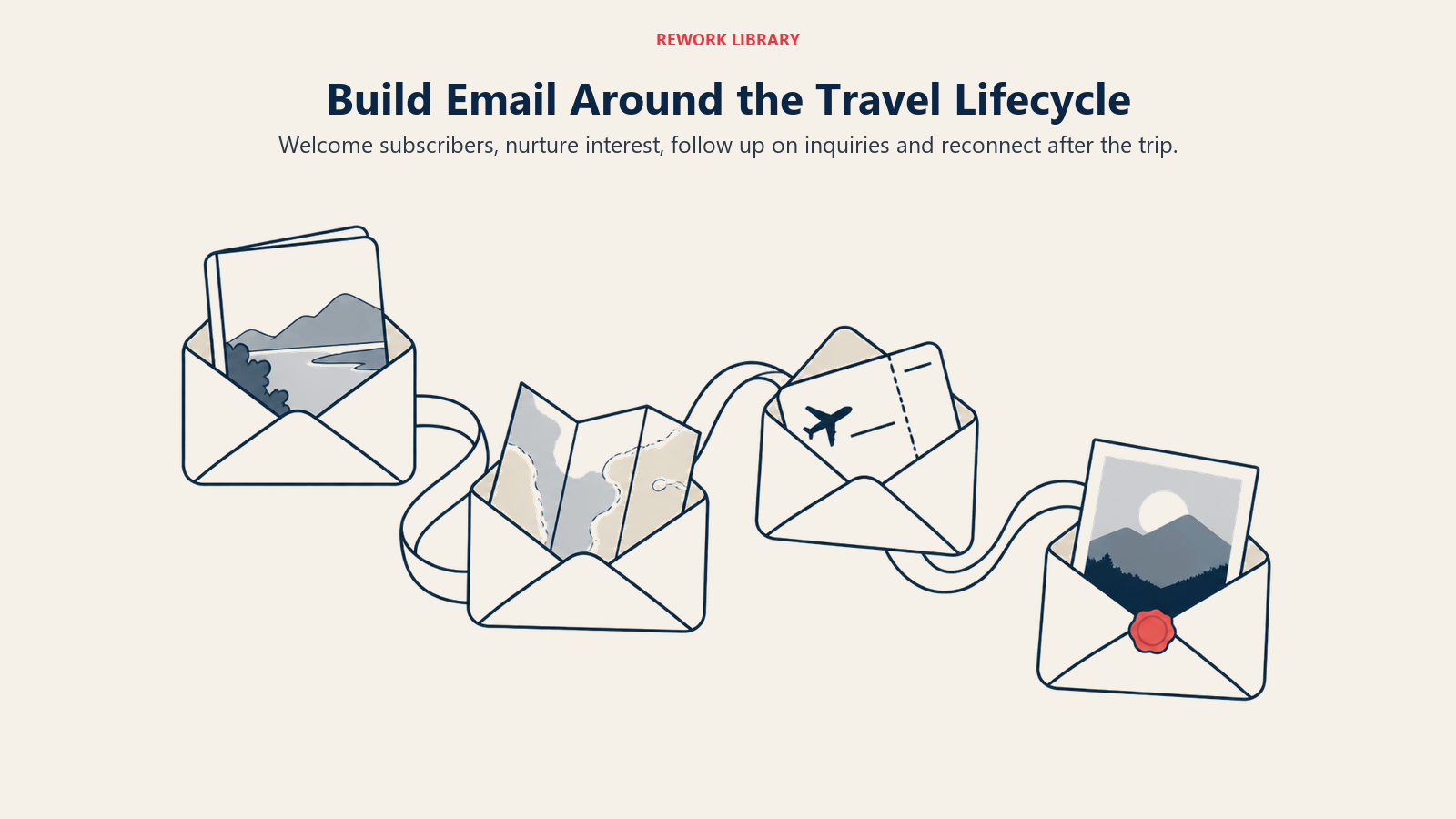
Welcome Series for New Subscribers:
5-7 emails over 2-3 weeks:
- Email 1: Welcome + immediate value (promised lead magnet)
- Email 2: Your story and what makes you different
- Email 3: Popular destinations and trip types
- Email 4: How to start planning (process education)
- Email 5: Customer success story
- Email 6: Invitation to book consultation or request quote
- Email 7: Ongoing newsletter invitation
This sequence establishes relationship and converts 5-10% to inquiries.
Nurture Tracks by Interest/Destination:
Segment based on expressed interest:
- Peru-interested subscribers get Peru content
- Family travel subscribers get family-focused content
- Luxury travelers get upscale experiences
- Adventure seekers get active trip content
Relevant content nurtures better than generic content.
Promotional and Offer Campaigns:
Time-sensitive campaigns:
- Early bird discounts with deadlines
- Last-minute availability deals
- Seasonal promotions
- New itinerary launches
- Limited-availability trips
Send to entire list or targeted segments. Include urgency and clear CTA.
Seasonal and Event-Triggered Campaigns:
Timely campaigns around:
- Booking deadlines for upcoming seasons
- Destination-specific events (festivals, seasons)
- Holiday promotions
- Anniversary of past trips
- Weather-triggered campaigns (escape winter!)
Re-Engagement for Past Inquirers:
Systematic re-activation:
- 30 days post-inquiry: Check in, new content
- 90 days: Re-engage with offer or updated itineraries
- 6 months: "Still dreaming of Peru?" re-connection
- Annual: Anniversary outreach with special offer
Most inquirers don't book immediately. Persistence pays.
Post-Trip and Loyalty Campaigns:
After trip completion:
- Thank you and feedback request
- Photo sharing invitation
- Review solicitation
- Next trip ideas with loyalty discount
- Referral program invitation
- Anniversary communications
Turn one-time customers into lifetime travelers.
Content Strategy by Journey Stage
Match content to readiness:
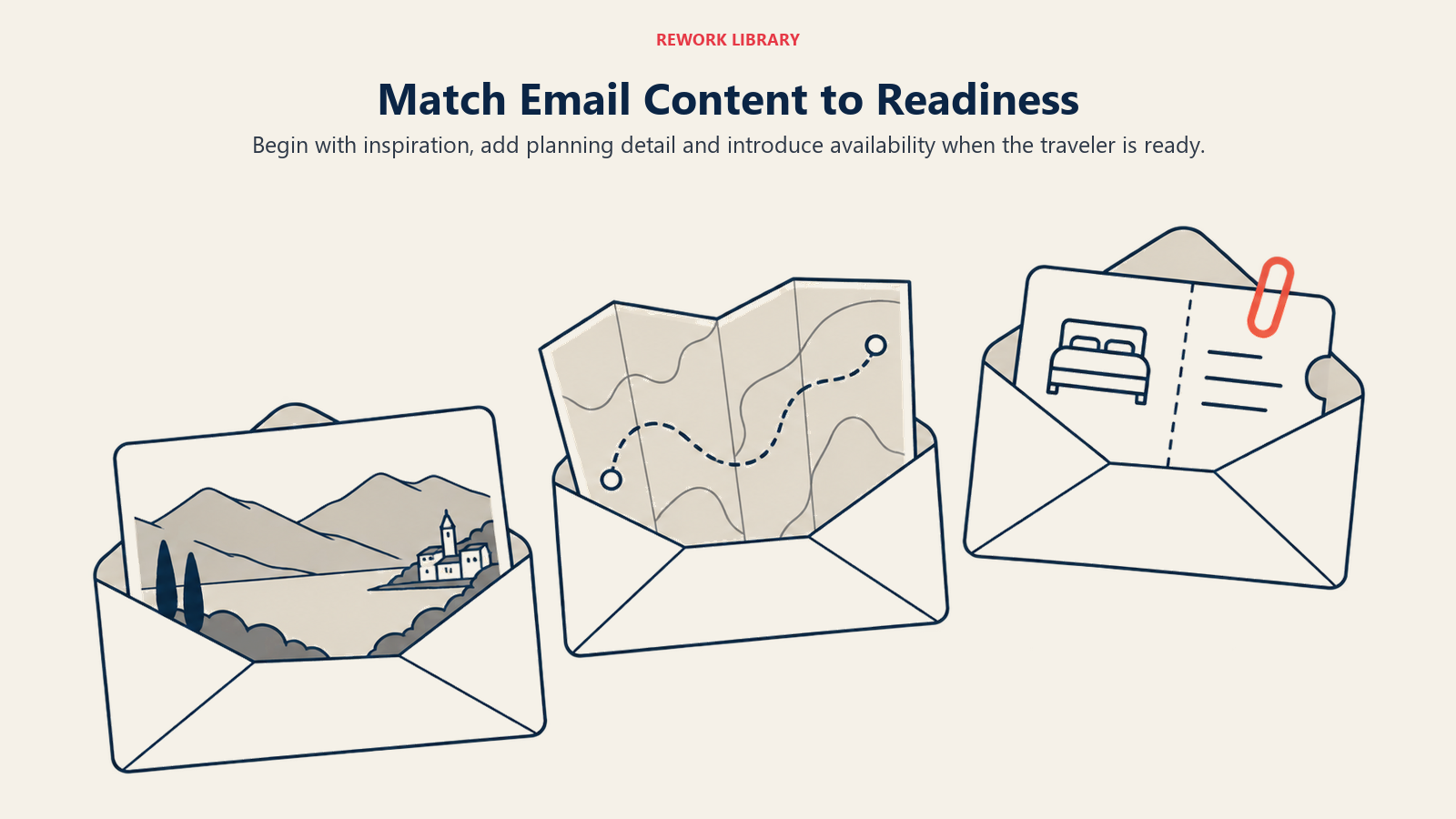
Early Stage: Educational Content, Inspiration, Destination Guides:
What to send:
- Comprehensive destination overviews
- Best time to visit information
- Cultural insights and tips
- Beautiful destination photography
- Customer adventure stories
- "What it's like" content
Goal: Build authority and maintain interest during early research.
Mid Stage: Itinerary Ideas, Planning Resources, Social Proof:
What to send:
- Sample itineraries with details
- Trip planning checklists
- Budget breakdowns and cost guidance
- Customer testimonials and reviews
- Comparison guides (group vs private, different destinations)
- FAQ addressing common questions
Goal: Help them understand what's possible and what's right for them.
Late Stage: Offers, Availability Updates, Urgency Triggers:
What to send:
- Limited availability alerts
- Promotional offers with deadlines
- Specific departure date options
- Pricing and booking information
- Final objection-addressing content
- Easy booking process explanation
Goal: Convert consideration into commitment.
Email Types That Drive Bookings
Specific formats that convert:
Newsletter with Destination Spotlights:
Bi-weekly or monthly newsletter:
- Featured destination deep-dive
- Travel tip or insider knowledge
- Customer story spotlight
- Upcoming departures
- Latest blog posts
- Special offer callout
Keep consistent schedule. Subscribers expect it.
Last-Minute and Flash Sale Emails:
Urgency-driven campaigns:
- 30-60 days before departure with empty spots
- Aggressive discounts to fill
- Clear deadline and availability
- Easy booking process
Works well for filling seasonal inventory.
Seasonal Promotion Announcements:
Major campaigns around booking windows:
- Early bird for upcoming seasons
- Holiday promotions
- Anniversary sales
- Travel Tuesday deals
Build anticipation, create urgency, drive action.
New Itinerary Launches:
Announce new offerings:
- What's new and exciting
- Why you created it
- Limited initial availability
- Exclusive launch pricing
Engaged subscribers convert well on new products.
Customer Story Features:
Deep-dive testimonials:
- Real customer's full story
- Why they chose you
- What they experienced
- Photos and quotes
- What surprised them most
Prospects connect with peer stories powerfully.
Personalized Recommendations:
Based on subscriber data:
- Destinations matching their interests
- Trip types appropriate for them
- Seasonal recommendations based on inquiry timing
- Follow-up on specific pages viewed
Personalization increases conversion 5-10x.
Segmentation and Personalization
The more targeted, the better:
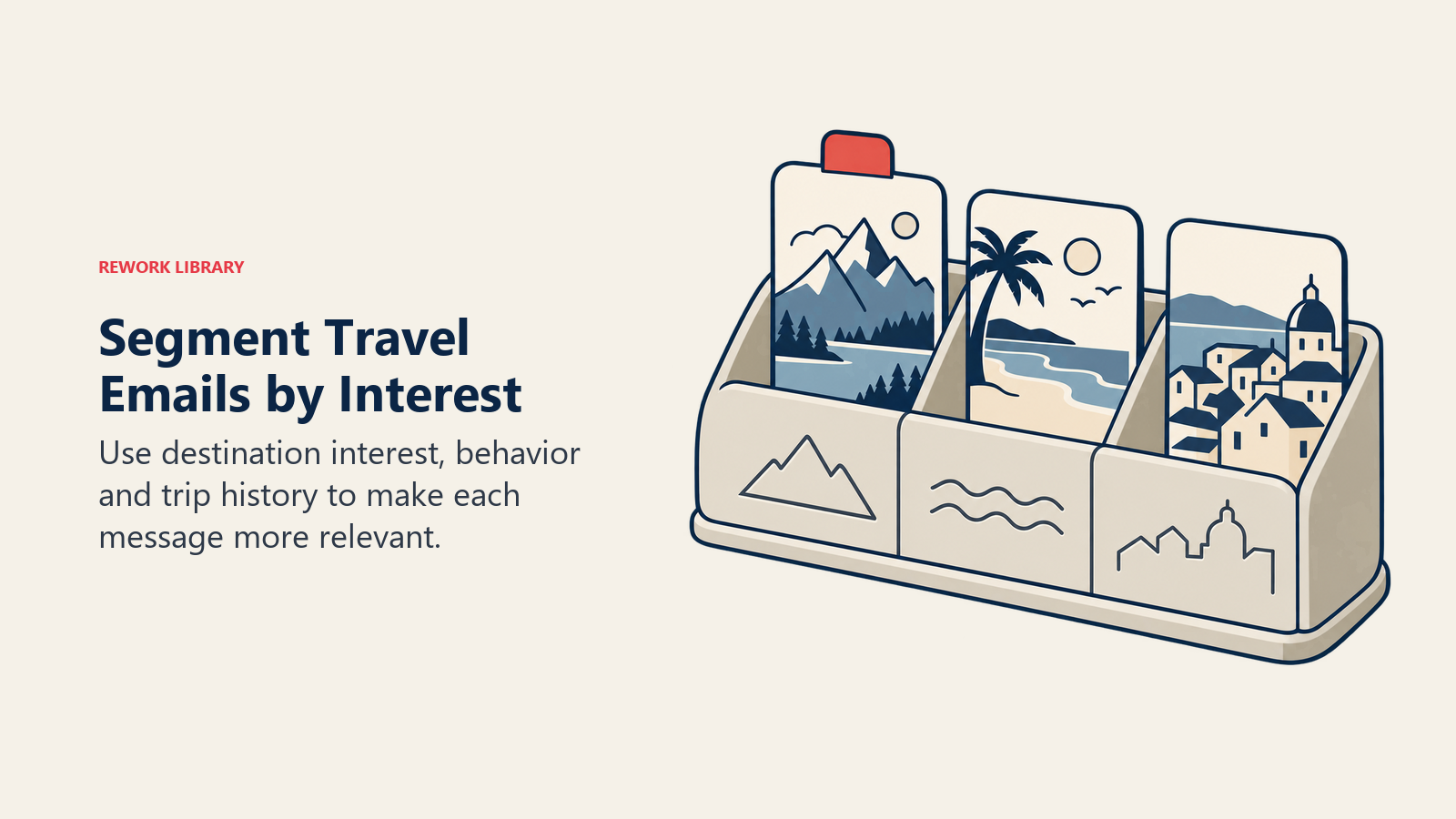
Behavioral Segmentation:
- Engagement: Active vs inactive subscribers
- Page Visits: What destinations/trips they viewed
- Email Clicks: What content they engaged with
- Download History: Which lead magnets they requested
Demographic Segmentation:
- Family vs Couples vs Solo: Different content needs
- Age Ranges: Retirement travelers vs young professionals vs families
- Budget Indicators: Luxury vs mid-range vs budget signals
- Location: Where they live (seasonality, distance considerations)
Interest and Destination Preference:
- Destinations they've indicated interest in
- Activity types (adventure, cultural, culinary, beach, etc.)
- Travel style (group, private, independent)
- Special interests (photography, wildlife, history)
Trip Type and Travel Style:
- Adventure seekers vs comfort travelers
- Solo vs group preferences
- Fast-paced vs relaxed preferences
- Authentic vs touristy preferences
Purchase History and Customer Value:
- Past bookers (VIP segment)
- High-value customers (special treatment)
- Repeat travelers (loyalty focus)
- Past inquirers who didn't book (re-engagement)
The more you segment, the more relevant your content, the higher your conversion rate.
Email Design for Travel
Optimize for the medium:
Visual-Heavy Design Approach:
Travel is visual. Email design should be too:
- Large, compelling hero images
- Multiple imagery throughout
- Photo galleries for itineraries
- Video thumbnails linking to content
- Minimal text-only sections
Balance: Images must load fast on mobile. Optimize file sizes.
Mobile Optimization (70% Open on Mobile):
Design mobile-first:
- Single column layout
- Large text (16px minimum)
- Touch-friendly buttons (44px minimum)
- Fast-loading images
- Short paragraphs
- Scannable structure
Test on multiple devices before sending.
CTA Strategy and Conversion Optimization:
Clear, compelling calls-to-action:
- One primary CTA per email
- Button format, not just text link
- Contrasting color
- Action-oriented copy ("View Itinerary", "Request Custom Quote", "Reserve Your Spot")
- Repeat 2-3 times in longer emails
Template Design System:
Build consistent template library:
- Newsletter template
- Promotional template
- Testimonial spotlight template
- Destination feature template
- Itinerary showcase template
Consistency builds recognition. Variety maintains interest.
Measurement and Optimization
Track performance and improve:
Open and Click Rate Benchmarks for Travel:
Industry benchmarks:
- Open Rate: 20-25% (good), 30%+ (excellent)
- Click Rate: 2-4% (good), 5%+ (excellent)
- Unsubscribe: <0.5% (healthy), >1% (problem)
Below benchmarks? Test subject lines, sender names, send times, content relevance.
Inquiry and Booking Attribution:
Connect emails to revenue:
- UTM parameters in all links
- Track which emails generated inquiries
- Measure time from email to inquiry to booking
- Calculate conversion rate by email type
- Attribute revenue to email campaigns
Revenue Per Email and Subscriber Value:
Calculate:
- Revenue Per Email Sent: Total revenue / emails sent
- Average Subscriber Value: Total revenue / list size
- Lifetime Value by Segment: Track segment-specific performance
Healthy travel email programs generate $5-$25 per subscriber annually.
A/B Testing Methodology:
Test systematically:
- Subject Lines: Test 2-3 variations, 10-20% sample size
- Send Times: Day of week and time of day
- Content: Different featured destinations, testimonial vs education, short vs long
- CTAs: Button text, color, placement
- From Name: Company name vs personal name vs combination
Test one variable at a time. Implement winners. Keep testing.
Deliverability and List Health
Getting to inbox:
Authentication: Set up SPF, DKIM, DMARC records to prove you're legitimate sender.
Engagement: Remove inactive subscribers (6-12 months no engagement). Poor engagement hurts deliverability.
Content: Avoid spam trigger words, excessive capitalization, too many links, all-image emails.
Complaint Rate: Keep below 0.1%. High complaints = spam box.
List Hygiene: Use double opt-in, never buy lists, regularly clean bounces.
Email Service Provider: Use reputable ESP (Mailchimp, ActiveCampaign, Constant Contact, Klaviyo). Don't send from Gmail.
Deliverability determines whether your great content gets seen.
Related Articles

Business Consultant