Travel Loyalty Program Design - Repeat Customer Retention 2025
Turn this article into takeaways for your work.


Each assistant summarizes the article only for you and suggests best practices for your work.
A mid-sized tour operator launched a points-based loyalty program with great fanfare. Guests could earn one point per dollar spent, redeem 1,000 points for $100 off future trips. It looked generous on paper. Two years later, only 8% of customers had redeemed points. The program wasn't driving repeat bookings or creating loyalty. It was just giving away margin to customers who would have booked anyway.
The problem wasn't the math. It was that the program created no emotional connection, offered no status differentiation, and provided no benefits worth pursuing beyond basic discounts customers could find elsewhere. A loyalty program isn't just a discount mechanism. It's a relationship framework built on customer segmentation that makes customers feel valued, recognized, and motivated to deepen their engagement with your brand through strategic repeat booking.
The best loyalty programs I've seen create psychological ownership - members don't just earn points, they identify with tier status. They don't just redeem rewards, they unlock experiences unavailable to non-members. They don't just receive benefits, they feel like insiders with privileged access. This emotional connection drives behavior far more effectively than economic incentives alone.
Loyalty Program Fundamentals
Building effective loyalty programs starts with understanding why they work and what objectives they should achieve.
The ROI of loyalty programs is well-documented. Repeat customers spend 67% more than new customers, cost 70% less to acquire than new customers through travel CRM implementation, refer others at 3-5x the rate, and stick with you even when competitors offer lower prices. A loyalty program that increases repeat booking rate from 25% to 40% typically pays for itself within 12 months and generates multiples of investment over customer lifetimes.
Defining program objectives clarifies what success looks like. Primary objectives include increasing repeat booking frequency (from average 1.3 trips to 2.5 trips), extending customer lifetime value (from $3,500 to $8,000+), reducing price sensitivity through status psychology, and creating brand advocates who refer others. Secondary objectives might include collecting customer data, shaping buying behavior toward higher-margin products, or building community among members.
Choosing appropriate loyalty models depends on your business and customer base. Points-based programs work well for operators with varying trip prices, creating flexible earning and redemption. Tier-based programs emphasize status and work well in luxury segments where recognition matters. Spend-based programs reward cumulative lifetime value directly. Hybrid programs combine elements, such as points for flexibility plus tiers for status recognition.
Benchmarking against travel industry programs provides guidance without requiring perfect matches. Airlines average 60-70% loyalty program participation with 35-40% active engagement. Hotel chains see 40-50% participation with strong redemption rates. Tour operators typically see 30-40% enrollment with 20-25% active redemption. These benchmarks help set realistic targets while identifying outperformance opportunities.
Points and Rewards Structure
Points systems must balance generous earning with sustainable economics and create rewards customers actually value.
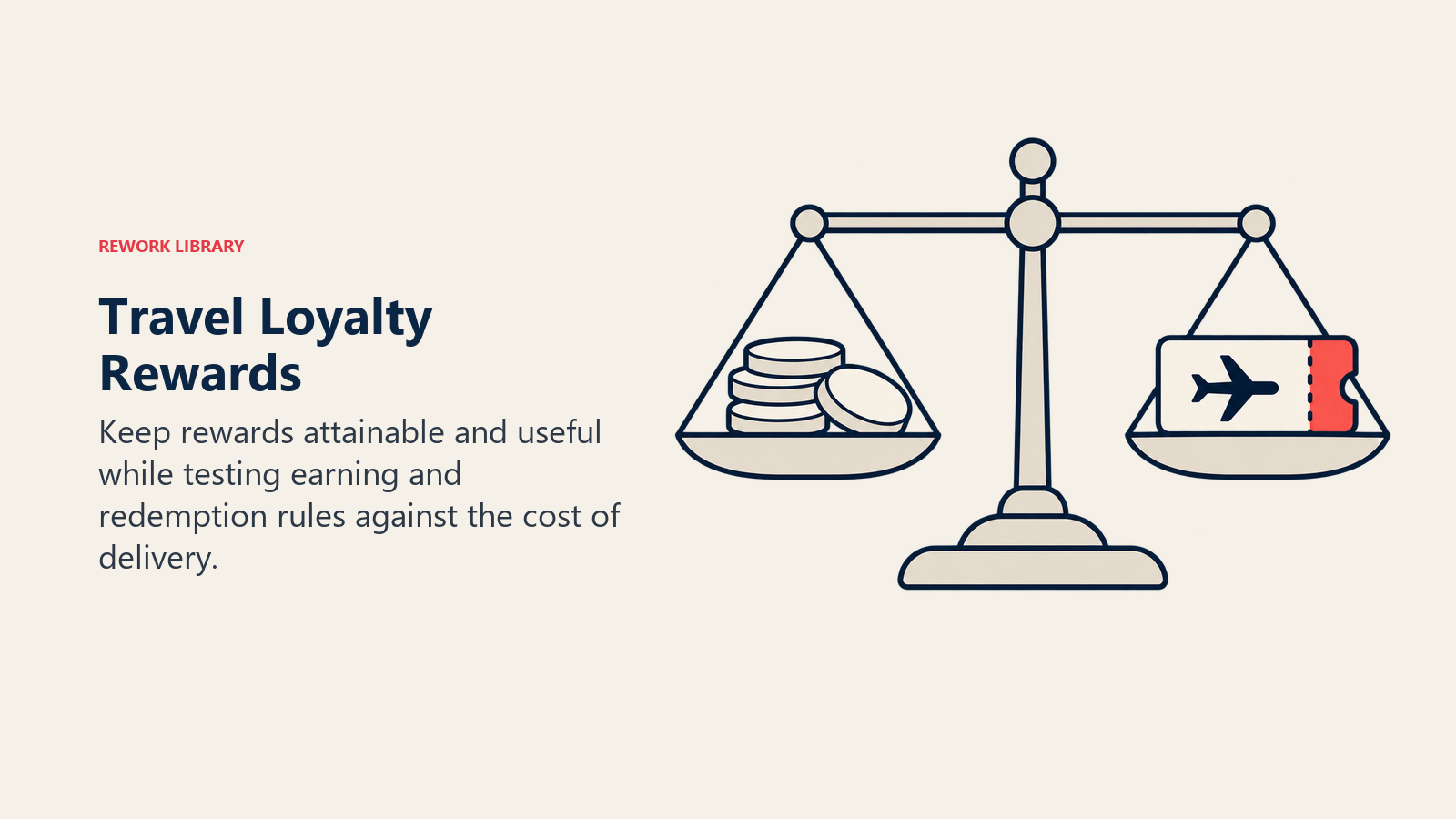
Designing point earning mechanisms requires determining base earn rate and bonus opportunities. Standard structure: 1 point per $1 spent on trips (some operators use 2-5 points per dollar for psychological appeal of larger numbers), bonus points for off-season bookings to shift demand, double points on trip birthdays or anniversaries, and bonus points for reviews, referrals, or social sharing. The earn rate should feel rewarding while maintaining program sustainability.
Setting redemption values and reward options balances perceived and actual value. Common structure: 1,000 points = $100 value (10% return on spending), tiered redemption allowing partial point payment plus cash, redemption for upgrades (room upgrades, premium experiences) with favorable point value, and trip deposits or full trip payments in points. Redemption flexibility matters - customers want options, not just discount on next full trip.
Creating attractive redemption thresholds motivates earning without making rewards seem unattainable. Break thresholds at achievable milestones: 500 points = $50 credit (achievable quickly to create first redemption success), 1,000 points = $100 credit (standard redemption for average customer after 1-2 trips), 2,500 points = $300 credit (aspirational for frequent travelers), and 5,000+ points = major rewards like free trips. Multiple thresholds give everyone something to work toward.
Balancing earn rates with program profitability requires modeling scenarios. If average trip costs $3,000 and earns 3,000 points worth $300 (10% value), customers must book twice before redeeming meaningful rewards. The delay between earning and redemption creates float that reduces effective cost. Unredeemed points are pure profit but create member frustration if too many points go unredeemed because thresholds are too high.
Tiered Loyalty Programs
Status tiers create psychological motivation beyond economic incentives, especially in travel where status signals accomplishment and taste.
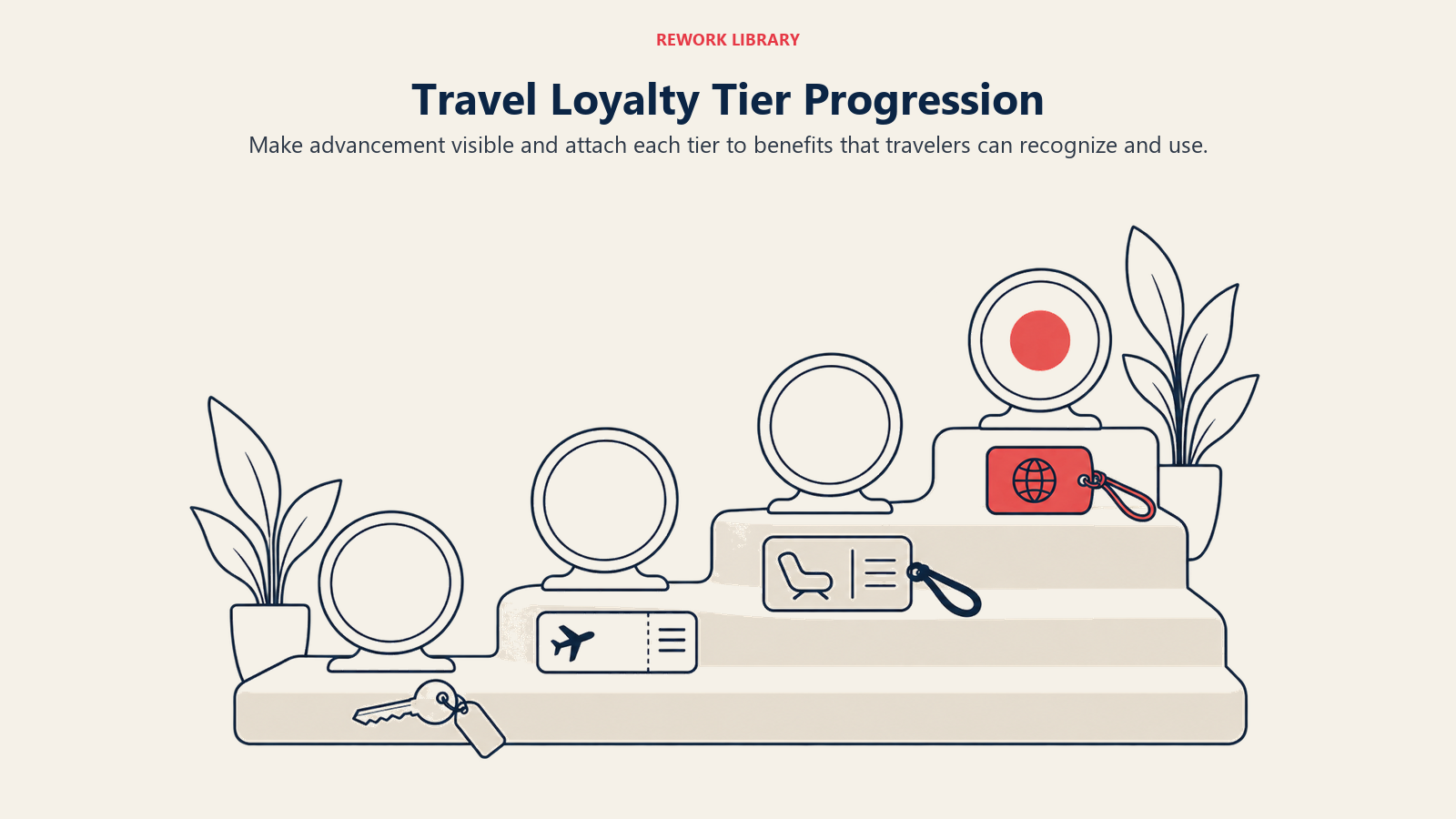
Implementing tier structures typically uses 3-4 levels. Base level (all members - automatic enrollment), Silver (1-2 trips or $3K-5K annual spend), Gold (3-4 trips or $10K-15K annual spend), Platinum/Diamond (5+ trips or $20K+ annual spend). Names matter - use aspirational language that customers want to achieve and share. "Gold Member" feels better than "Level 2."
Defining tier qualification criteria balances accessibility and exclusivity. Annual spend thresholds work for diverse trip prices, number of trips works for operators with consistent pricing, rolling 12-month qualification prevents January reset disadvantaging late-year members, and status challenges offering temporary tier elevation with achievement requirements all shape qualification. Make base tier achievable (most customers), middle tier stretch but realistic (20-30% of customers), top tier exclusive (5-10% of customers).
Creating tier-specific benefits and perks differentiates status meaningfully. Silver benefits: 5% discount on all trips, priority waitlist for sold-out departures, quarterly member newsletter. Gold benefits: 10% discount, complimentary trip insurance, room upgrade when available, early access to new trips. Platinum benefits: 15% discount, guaranteed room upgrades, VIP welcome amenities, complimentary companion trips after certain milestones. Benefits should escalate meaningfully - small differences create no motivation to advance.
Designing tier progression paths and retention strategies maintains engagement. Clear visibility of progress toward next tier, targeted campaigns when members are close to threshold (just $2K more spending reaches Gold), grace periods when members fall just short of qualification renewal, and tier extension rewards for long-term members all retain engagement and prevent churning back to lower tiers.
Loyalty Member Benefits
Benefits must deliver real value and create emotional attachment beyond purely economic discounts.
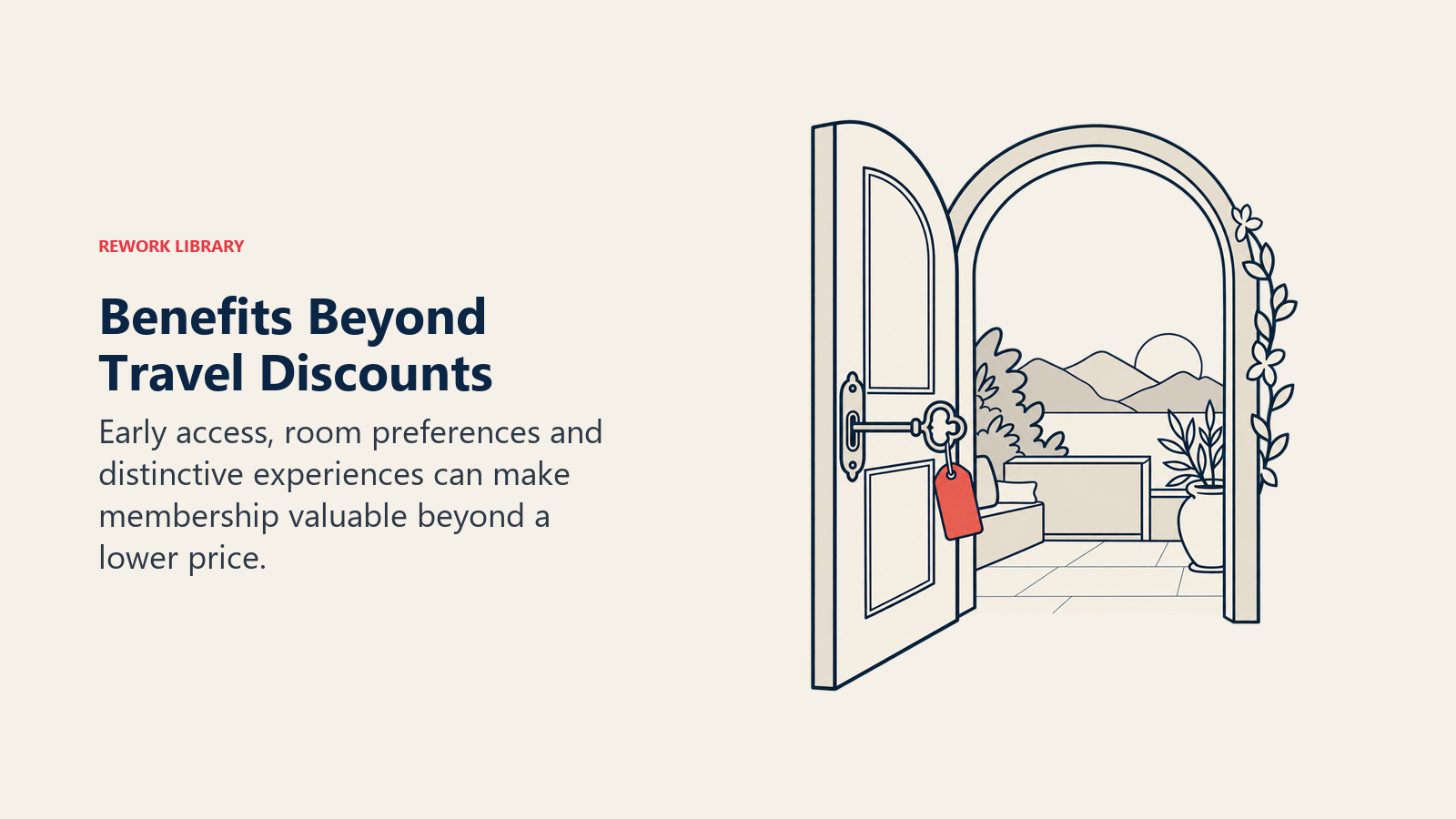
Offering exclusive trip access and early booking windows creates insider privilege. Members-only departures to popular destinations, 72-hour advance booking window before public release, guaranteed space on popular trips when non-members face waitlists, and first refusal on canceled bookings all create access advantages that money alone can't buy. This exclusivity drives participation more than discounts.
Providing member discounts and special pricing rewards loyalty with tangible economic value. Automatic tiered discounts (5-15% based on tier), exclusive flash sales only for members, last-minute inventory offers, and travel companion discounts all provide financial motivation. But discount depth matters - 5% off isn't compelling enough to drive loyalty. 10-15% off creates real savings that justify emotional investment in membership.
Implementing upgrade and room preference systems adds luxury touches. Automatic room upgrades when available, priority for preferred room locations (high floor, view, quiet areas), complimentary cabin upgrades on certain trips, and preferred activity times or group assignments all enhance experience without dramatically increasing costs. Many upgrades cost little but deliver high perceived value.
Creating VIP experiences for top-tier members recognizes their exceptional loyalty. Annual VIP trip with special touches, recognition dinner or event during trips, exclusive small-group experiences not available to general travelers, and surprise and delight moments during their trips all create emotional memories that transcend economic benefits. These experiences become stories members share, extending your marketing reach organically.
Partner Reward Integration
Expanding loyalty ecosystem through partnerships creates network effects and competitive advantages.
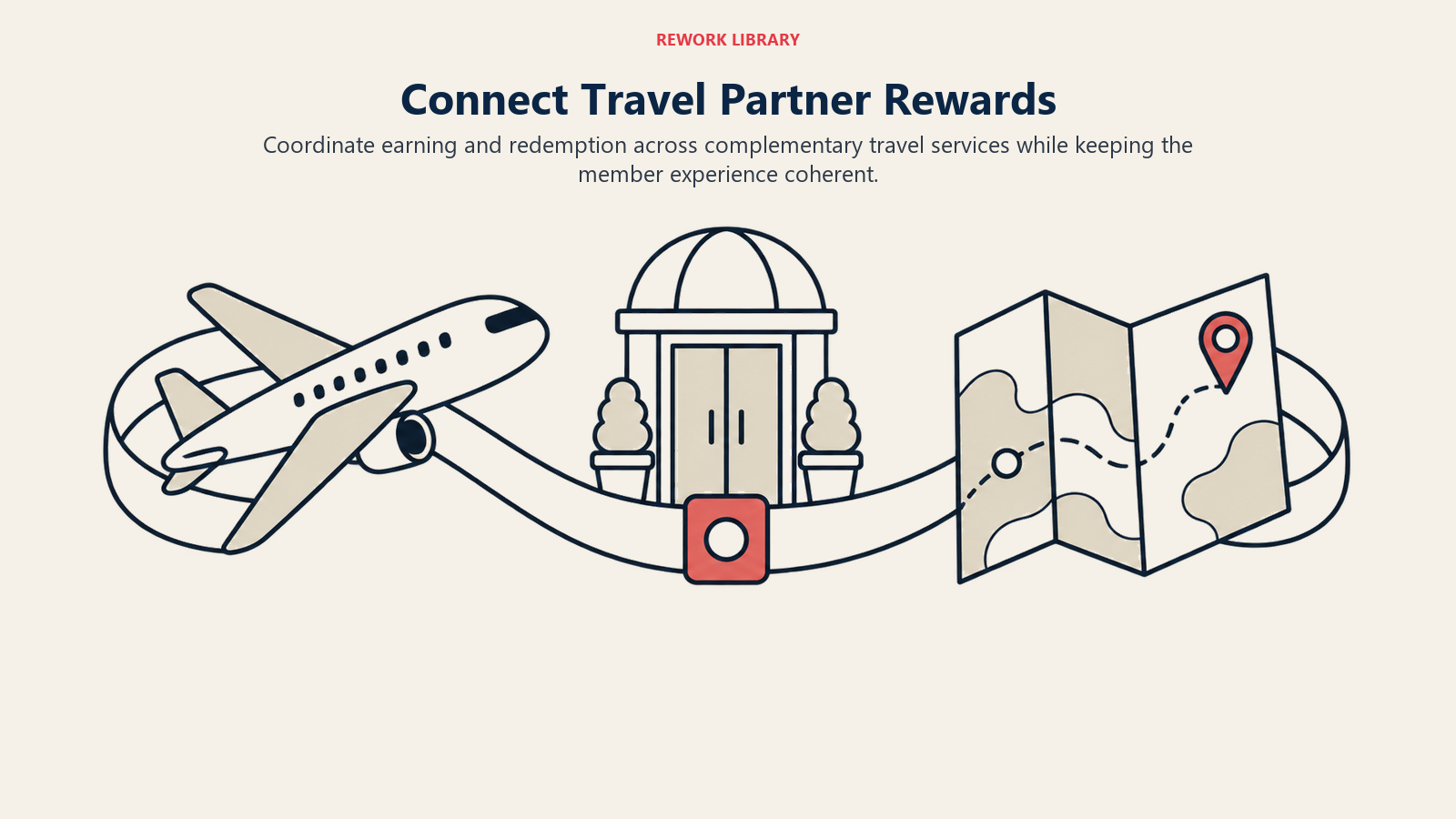
Partnering with hotels, airlines, and attractions for expanded benefits extends value beyond your services. Earn points on hotel bookings made through your recommendations, airline mile partnerships where your loyalty points transfer to frequent flyer programs, attraction discounts coordinated through your partnerships, and cross-promotion with complementary travel services all create fuller travel loyalty ecosystem.
Implementing points transfer or earning partnerships requires systems integration but expands flexibility. Transfer your points to airline miles at favorable ratios, earn points from airline bookings that can redeem with you, hotel stays generating your loyalty points, and reciprocal earning across partner network all create flexibility that members value. Integration complexity is worth it for competitive advantage created.
Offering co-branded experiences leverages partner capabilities. Hotel partnerships enabling members-only rates or amenities, airline partnerships providing priority services, attraction partnerships granting VIP access or behind-scenes experiences, and destination experiences exclusively available to loyalty members all differentiate your program from generic discount schemes.
Creating ecosystem of travel rewards positions your loyalty program as full travel solution, not just tour operator rewards. When members can earn and redeem across flights, hotels, tours, and activities all within your ecosystem, loyalty stickiness increases dramatically. This ecosystem approach requires investment but creates switching costs that protect against competition.
Birthday and Anniversary Programs
Personal milestone recognition creates emotional connection that transcends transactional relationships.
Celebrating member birthdays with special offers acknowledges them as individuals. Birthday email with genuine personal greeting, exclusive birthday discount (15-20% off next trip), invitation to celebrate next birthday on one of your trips, and small gift or gesture if they're currently traveling creates personal touch. Even simple recognition without offers generates goodwill.
Recognizing membership anniversaries with rewards celebrates relationship longevity. Anniversary email highlighting their loyalty history, bonus points on membership anniversary, exclusive anniversary offers, and recognition of trip anniversaries (one year since their amazing Italy trip) all reinforce that you remember them and value the ongoing relationship.
Creating milestone recognition programs celebrates achievement. First trip completion with special welcome-to-family message, fifth trip milestone with significant recognition and rewards, tenth trip celebration with VIP treatment, and custom milestones based on spending or engagement all create moments worth pursuing and sharing.
Personalizing celebrations based on member preferences demonstrates attention to individual preferences. Some customers prefer private recognition, others want public acknowledgment. Some respond to economic incentives, others to experiential rewards. Use CRM data and preference profiles to tailor celebrations appropriately rather than one-size-fits-all approaches.
Referral Rewards
Turning satisfied members into acquisition engines multiplies program value through network effects.
Incentivizing member referrals with points or discounts creates mutual benefit. Referrer earns 500-1,000 points for successful referral, referred friend gets discount on first trip, both parties benefit creating win-win dynamic, and referral tracking through unique codes enables attribution. Make referral easy with shareable links and simple processes.
Creating tiered referral bonuses increases motivation for multiple referrals. First referral: 500 points, third referral: 2,000 bonus points, fifth referral: free trip companion, and tenth referral: complimentary trip. Escalating rewards create game-like achievement progression that competitive members pursue.
Tracking referral sources and attribution requires systems but enables measurement. Unique referral codes per member, tracking referral-to-booking conversion rates, analyzing which members drive most valuable referrals, and recognizing top referrers with special status all use data to optimize referral program performance.
Gamifying referral achievements transforms referrals from transactional to aspirational. Leaderboards showing top referrers, badges or achievements for referral milestones, public recognition in communications, and exclusive referrer benefits create social motivation beyond economic incentives.
Technology Platform
Effective loyalty programs require technology infrastructure supporting member experience and operational efficiency.
Implementing loyalty program management software handles earning, redemption, and tracking. Purpose-built loyalty platforms or integrated CRM solutions with loyalty modules, automated point calculation and balance tracking, redemption processing and inventory allocation, and communications automation all require technology support. Build-versus-buy decision depends on scale and customization needs.
Creating member portals for point tracking and redemption provides self-service functionality. Login to view current point balance and transaction history, browse redemption catalog and booking options, manage profile and communication preferences, and track progress toward tier advancement all empower members while reducing support burden. Mobile-optimized experiences are essential.
Integrating loyalty with booking and CRM systems creates seamless experience. Automatic point earning on bookings, loyalty status visible throughout booking flow, personalized pricing reflecting tier benefits, and unified customer view across loyalty, bookings, and communications all require integration. Disconnected systems create friction that reduces program effectiveness.
Providing mobile app access to loyalty benefits meets members where they are. Mobile app showing real-time point balance, mobile redemption for easy booking, digital membership cards, and push notifications for personalized offers all enhance engagement through platform customers use constantly.
Program Communication
Even great programs fail without effective communication that drives awareness and engagement.
Onboarding new members with program education through travel email marketing sets expectations and drives early participation. Welcome series explaining how to earn and redeem, highlighting best-value redemption options, showcasing tier benefits to aspire toward, and encouraging first actions (complete profile, leave first review, make first points-earning booking) all drive engagement from start.
Sending regular point balance and status updates through post-trip engagement maintains program awareness. Monthly or quarterly statements showing point balance and earning history, progress toward tier advancement, expiration warnings if points have limited life, and personalized redemption suggestions based on balance all keep loyalty top-of-mind.
Announcing new redemption options and partnerships creates freshness and renewed interest. New destination additions to program, expanded partner benefits, limited-time bonus earning opportunities, and special redemption offers for milestone celebrations all provide reasons to engage with program repeatedly rather than set-and-forget.
Highlighting members who maximize program benefits creates social proof and education. Case studies of members who've earned free trips, testimonials about favorite program benefits, tips from power users about optimization strategies, and community spotlights celebrating engaged members all inspire others while recognizing achievement.
Measuring Loyalty Program Success
Without measurement, loyalty programs become cost centers rather than growth investments.
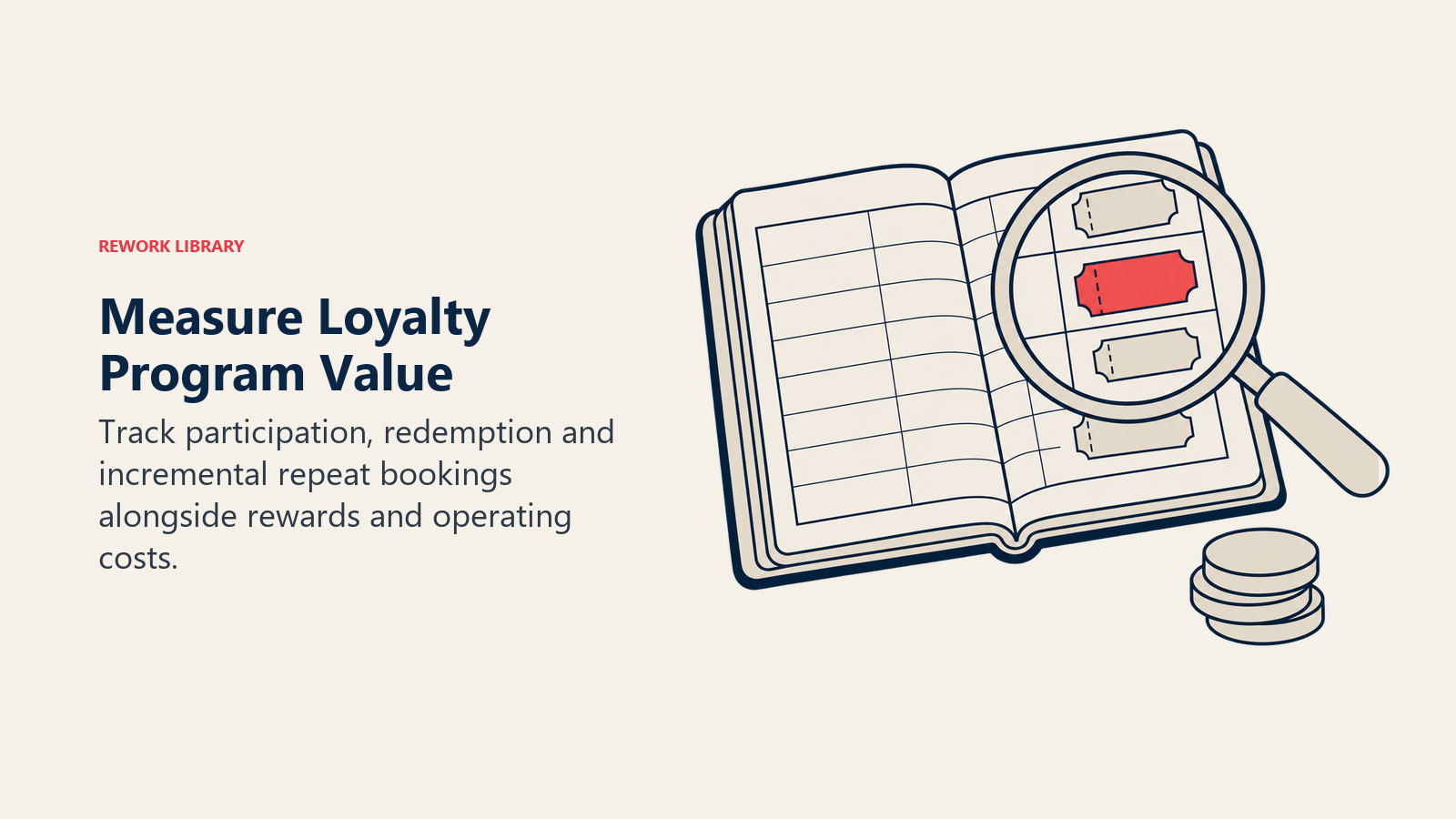
Tracking participation rates and active member percentage indicates program appeal. Enrollment rate among eligible customers, percentage of members with activity in past 12 months, redemption rate showing members actually using points, and tier distribution showing progression through levels all measure engagement. Target 40-60% enrollment, 30-40% active participation, 25-35% redemption rates.
Measuring repeat booking rates among members versus non-members proves program impact. Compare booking frequency between groups, time to next booking by segment, average booking value differences, and overall customer lifetime value. Members should book 2-3x more frequently than non-members for program to justify investment.
Calculating customer lifetime value (CLV) impact quantifies program ROI. Compare CLV of loyalty members versus non-members, CLV by tier showing higher tiers deliver higher value, incremental CLV generated by program participation, and program cost versus lifetime value creation. Programs typically generate 3-5x return on investment when executed well.
Monitoring program profitability and ROI ensures sustainability. Track program costs (discounts, rewards, technology, administration), revenue generated from incremental bookings, breakage (unredeemed points providing windfall), and net program contribution. Adjust earn rates, redemption values, or benefits based on financial performance while maintaining member value perception.
Loyalty programs aren't just retention tactics. They're relationship frameworks that transform transactional customers into committed community members. The programs that succeed create emotional connection, recognize achievement, and provide experiences worth pursuing. When designed and executed well, they become self-funding growth engines that reduce acquisition costs while increasing customer lifetime value.
Related Articles: