Travel Customer Segmentation - Targeted Marketing Strategy 2025
Turn this article into takeaways for your work.


Each assistant summarizes the article only for you and suggests best practices for your work.
Sending the same message to everyone is the fastest way to waste your marketing budget.
A 25-year-old solo backpacker and a 55-year-old couple planning their retirement trip have different motivations, different budgets, and different decision criteria. Treating them the same is lazy marketing that converts poorly.
Segmentation is how you fix that through travel CRM implementation. It's the foundation of relevant marketing automation that actually works.
Done well, segmentation increases conversion rates, improves customer satisfaction, and maximizes return on marketing spend. Done poorly, it's just more work that doesn't move the needle.
This guide shows you how to segment your travel customers in ways that matter, how to use those segments to personalize your marketing, and how to measure whether it's actually working.
Customer Segmentation Fundamentals
Segmentation divides your customer base into distinct groups with similar characteristics, behaviors, or needs. The goal is to create segments meaningful enough to warrant different marketing approaches.
The key principle: segments must be actionable. If you can't create different campaigns or offers for a segment, it's not worth defining. Academic precision doesn't matter. Business results do.
Travel businesses typically segment on four main dimensions: demographics (age, income, location), psychographics (motivations, values, lifestyle), behavior (booking patterns, trip preferences), and value (spend, frequency, lifetime value).
Balance granularity with practicality. You could create 200 micro-segments. But can you really execute 200 different marketing campaigns? Most businesses work best with 6-12 core segments that drive most of their marketing strategy.
Segmentation optimizes marketing spend by allowing you to invest more in high-value segments and reduce waste on low-probability prospects. It improves messaging relevance, which increases conversion. And it enables personalization at scale.
Start simple. You don't need perfect segmentation to see benefits. Three basic segments based on past behavior (prospects, first-timers, repeat customers) is better than no segmentation at all.
Build complexity as you prove value. Add behavioral segments. Layer in value tiers. Create lifecycle stages. But always ask: does this segment require different marketing, and can we execute on that difference?
Track segment performance separately. Measure conversion rates by segment. Calculate customer acquisition cost by segment. Analyze lifetime value by segment. This tells you where to invest and where to adjust.
The businesses that win with segmentation don't just divide their customers into groups. They use those groups to make smarter decisions about messaging, channels, offers, and resource allocation.
Demographic Segmentation
Demographics are the easiest place to start because the patterns are obvious.
Age groups have dramatically different travel preferences and constraints. Gen Z (roughly under 27) prioritizes authentic experiences, social media shareability, and budget-friendly options. Millennials (28-43) balance experience-seeking with family obligations. Gen X (44-59) has higher budgets but less time. Boomers (60+) have time and money but different physical capabilities and comfort expectations.
Family status changes everything. Solo travelers book spontaneously and seek social experiences or personal challenges. Couples without kids have flexibility and often higher budgets. Families with young children need family-friendly amenities and activities. Teenagers change the equation again. Empty nesters rediscover travel freedom.
Income levels directly affect trip selection. Budget travelers (under $50K household income) look for value, payment plans, and clear pricing. Middle income ($50K-150K) balances cost with experience quality. Affluent travelers ($150K+) prioritize convenience, exclusivity, and premium experiences.
Geographic location impacts travel patterns. Urban dwellers from major metros travel more frequently and further. Suburban families focus on school vacation timing. Regional customers may prefer shorter trips from nearby departure points.
But here's the trap: demographics alone tell you what someone can afford and when they're available. They don't tell you what motivates them or what type of experiences they want.
Use demographics as a starting point, not an ending point. A 45-year-old parent could be an adventure seeker, a luxury resort lover, or a cultural enthusiast. Age and family status narrow the possibilities but don't define the person.
Combine demographic data with behavioral and psychographic information for segments that actually predict booking behavior. "Affluent couples 50-65 who prefer cultural trips" is more useful than just "50-65 year olds."
Test your demographic assumptions. That trip you think appeals to millennials? Check whether boomers are actually booking it. Let data surprise you.
Behavioral Segmentation
How people book and what they book tells you more than demographic data ever will.
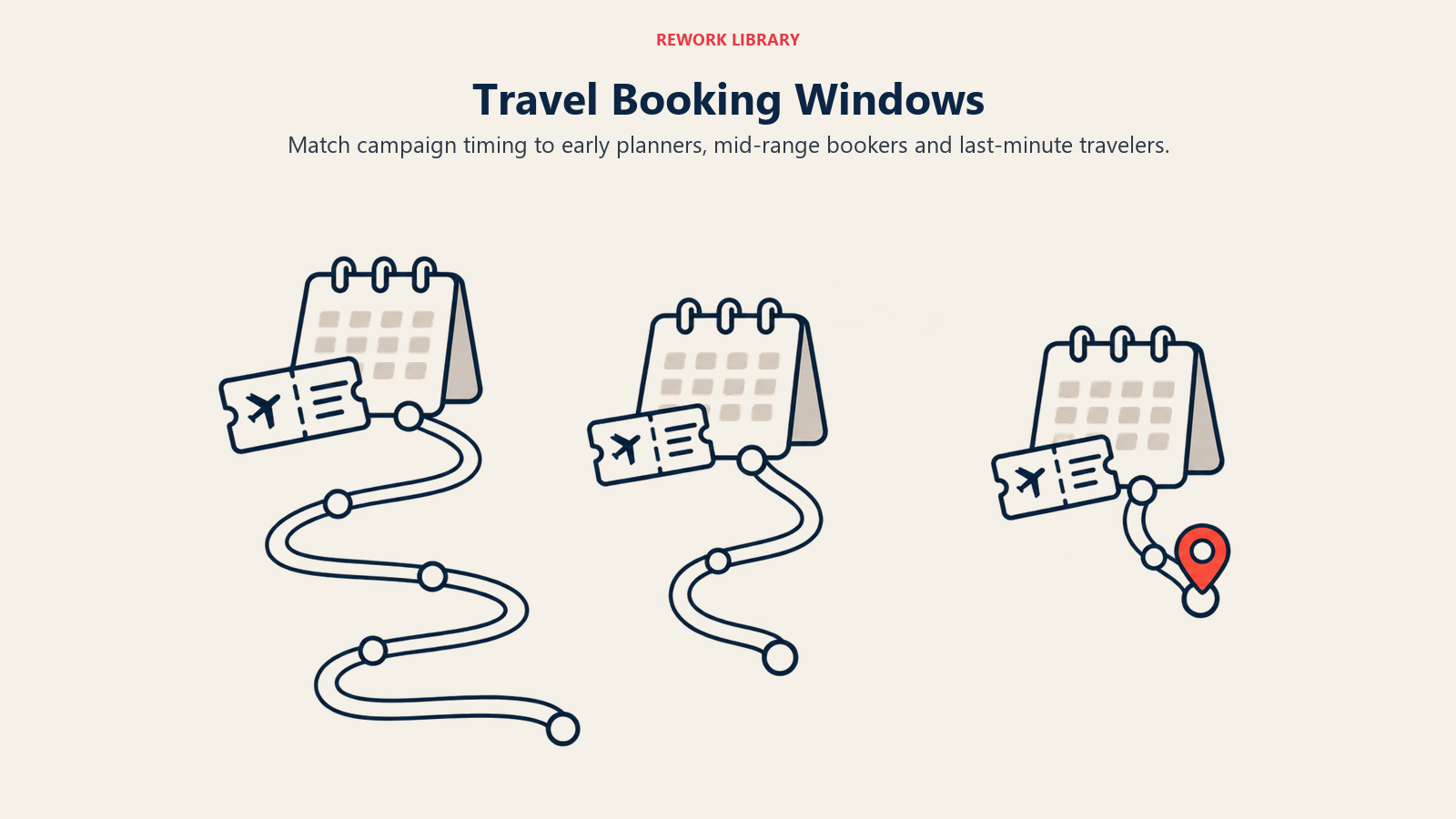
Booking timeline creates distinct segments. Early planners book 4-6 months out. They research extensively, compare options, and want certainty. Mid-range bookers commit 2-3 months ahead. They balance planning with flexibility. Last-minute bookers decide within 30 days. They're spontaneous or deal-seekers.
Each segment needs different marketing. Early planners respond to comprehensive information and early-bird discounts. Last-minute bookers want flash sales and immediate availability. Timing your campaigns to match booking windows is critical.
Travel frequency separates occasional travelers (every 2-3 years) from frequent travelers (2+ trips per year). Occasional travelers are cautious, need more hand-holding, and are price-sensitive. Frequent travelers want efficiency, variety, and often care more about unique experiences than price.
Trip type preferences reveal themselves in booking history. Some people book adventure trips exclusively. Others love cultural experiences. Beach resort lovers, food tour enthusiasts, wildlife watchers, history buffs, preferences cluster predictably.
Create segments around these affinities. "Adventure seekers" get different emails than "cultural explorers." Show people trips that match demonstrated interests, not random offerings.
Past purchase behavior predicts future actions. Someone who's booked three solo trips isn't likely to suddenly book a large group tour. Someone who consistently chooses budget options won't convert on luxury pricing. Someone who books short trips probably won't jump to a month-long expedition.
Analyze category affinity: which destination types, activity types, accommodation styles, and trip lengths do customers prefer? Use this to recommend next trips that fit their established patterns.
But also watch for evolution. Customers who start with guided group tours might progress to independent travel. Adventure seekers might age into more comfortable experiences. Track these transitions and adjust messaging accordingly.
Engagement behavior matters too. Email openers versus non-openers. Website browsers versus only-when-ready visitors. Social media followers versus those who never engage. Segment by engagement level and adjust communication frequency.
The most predictive behavioral segment is often the simplest: people who've booked similar trips before are most likely to book similar trips again. Don't overthink it.
Psychographic Segmentation
Why someone travels is often more important than how often they travel.
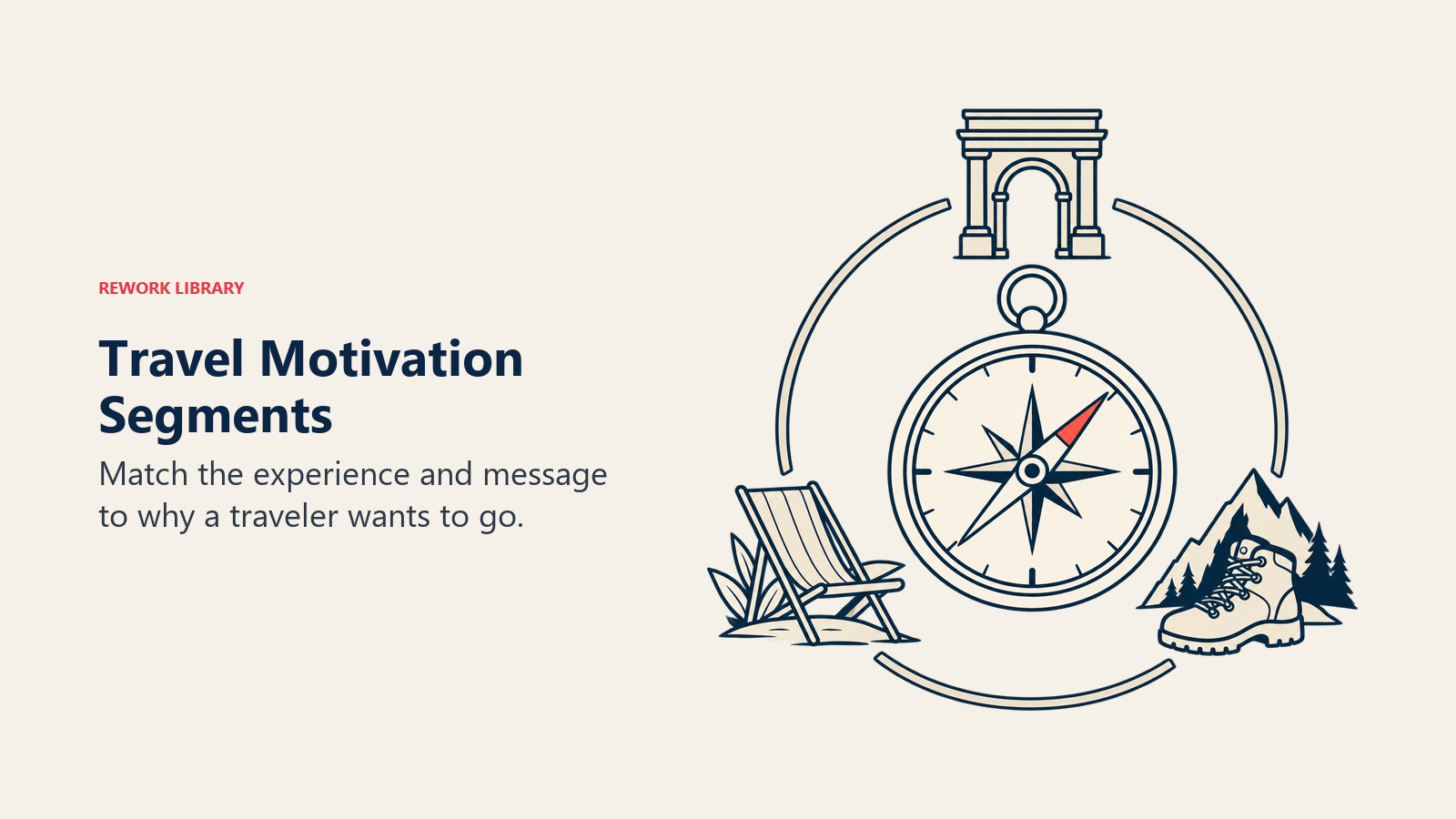
Travel motivations cluster into clear categories. Relaxation seekers want stress-free beach time and spa experiences. Adventure seekers crave challenge and adrenaline. Cultural explorers want authentic local experiences. Status travelers care about exclusivity and bragging rights.
Understanding motivations shapes everything from trip design to marketing copy. An adventure seeker doesn't care that a trip is "relaxing." They want to know it's challenging and unique. A status traveler wants to hear about exclusive access, not budget-friendly pricing.
Values and lifestyle preferences go deeper. Sustainability-minded travelers want eco-friendly options and responsible tourism. Luxury-oriented customers expect premium service regardless of trip type. Social travelers want group experiences and connection. Solitude-seekers want the opposite.
Risk tolerance varies dramatically. Some travelers want everything planned and guaranteed. Others thrive on spontaneity and uncertainty. Some need familiar comforts (Western hotels, English-speaking guides). Others seek authentic local experiences regardless of comfort level.
Create segments around these psychological profiles. "Comfort-focused cultural travelers" versus "adventurous cultural explorers" might visit the same destinations but want completely different experiences and messaging.
Aspirational versus practical travelers represent different mindsets. Aspirational travelers dream big and may need encouragement to commit. Practical travelers have budgets and constraints but commit once they're convinced it'll work.
Test your messaging assumptions. Create two versions of the same trip description: one emphasizing adventure and challenge, one emphasizing comfort and cultural depth. See which performs better with which segments.
Psychographic segmentation is harder because you often don't have this data directly. But you can infer it from trip choices, email engagement with different content types, and survey data from past travelers.
The effort is worth it. Psychographic segments often have higher predictive value than demographics for trip selection.
Value-Based Segmentation
Not all customers are equally valuable. Your marketing should reflect that reality.
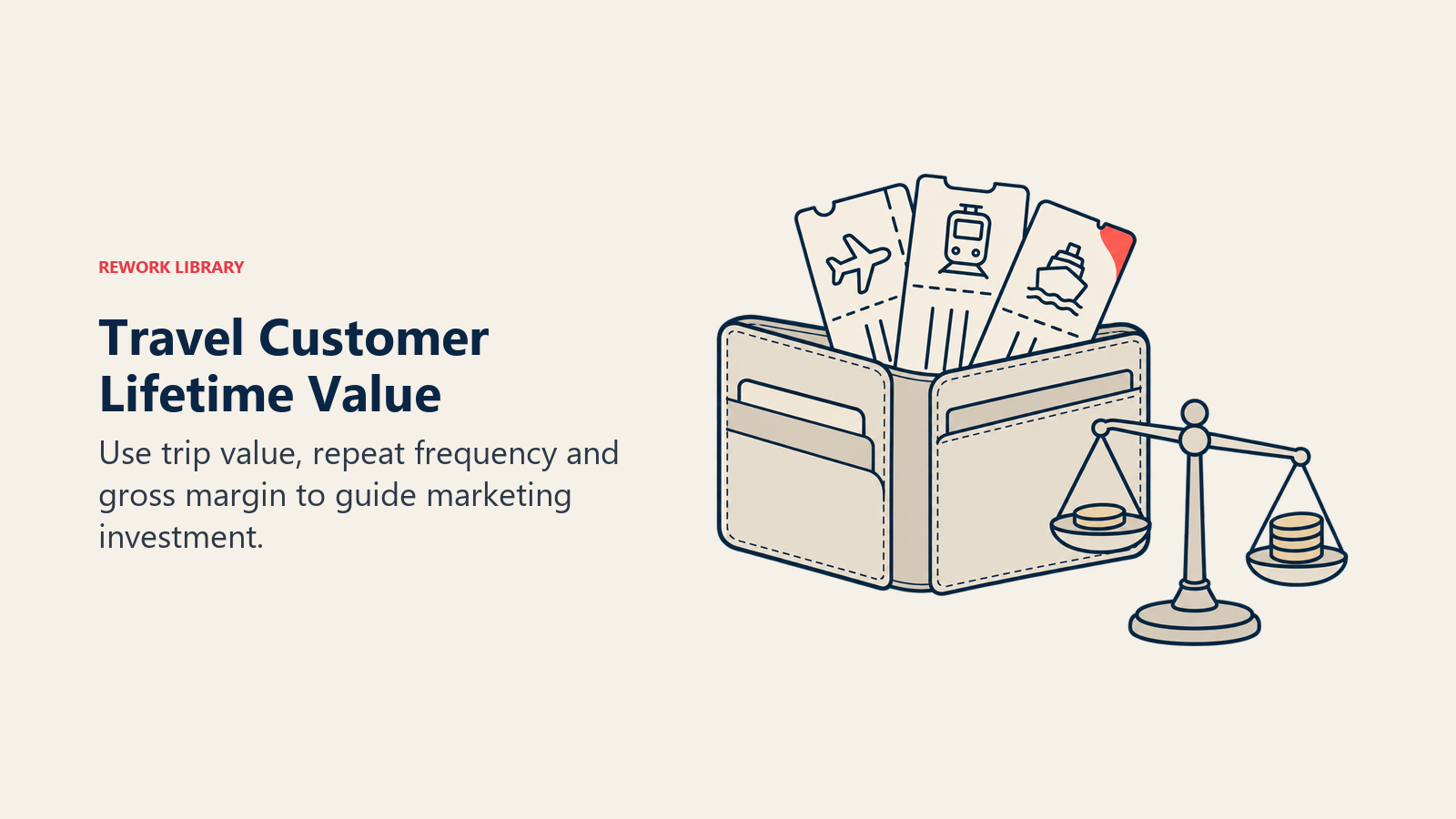
Calculate customer lifetime value by segment. CLV = average trip value × trips per lifetime × gross margin percentage. A customer who books one $2,000 trip with 30% margin is worth $600 in gross profit. A customer who books three $4,000 trips? They're worth $3,600.
Segment customers into value tiers: high (top 10-20%), medium (middle 40-60%), and low (bottom 20-40%). You might discover that 20% of customers drive 60-80% of profit. That's common in travel.
High-value customers deserve disproportionate attention. More personalized service. Priority access to new trips. VIP treatment. Better offers. You're not being unfair to other customers; you're allocating resources rationally.
Allocate marketing budget proportionally. If high-value customers represent 20% of your base but 70% of profit, they should get more than 20% of your marketing investment.
Create explicit VIP segments for your top customers through VIP guest programs. Define clear criteria: annual spend over $10,000, 3+ trips per year, or 5+ lifetime trips tracked in your travel CRM. Give this segment name, benefits, and recognition through loyalty programs.
But don't ignore lower-value segments entirely. Many started as low-value customers before becoming high-value over time. Track graduation patterns: how do customers move between value tiers?
Look for high-potential customers: newer customers with indicators suggesting future high value. Maybe they booked a premium trip first time out. Or they engaged heavily with content. Or they referred friends. These might be future VIPs.
Calculate segment-specific metrics. Customer acquisition cost versus lifetime value by segment. If you're spending $400 to acquire customers who'll only spend $1,000 total, you have a problem. But if you're acquiring customers who'll spend $10,000 over five years, that's excellent.
Value-based segmentation answers the crucial question: where should we invest our limited marketing resources to maximize return?
Lifecycle Segmentation
Where someone is in their journey with you determines what they need from you.
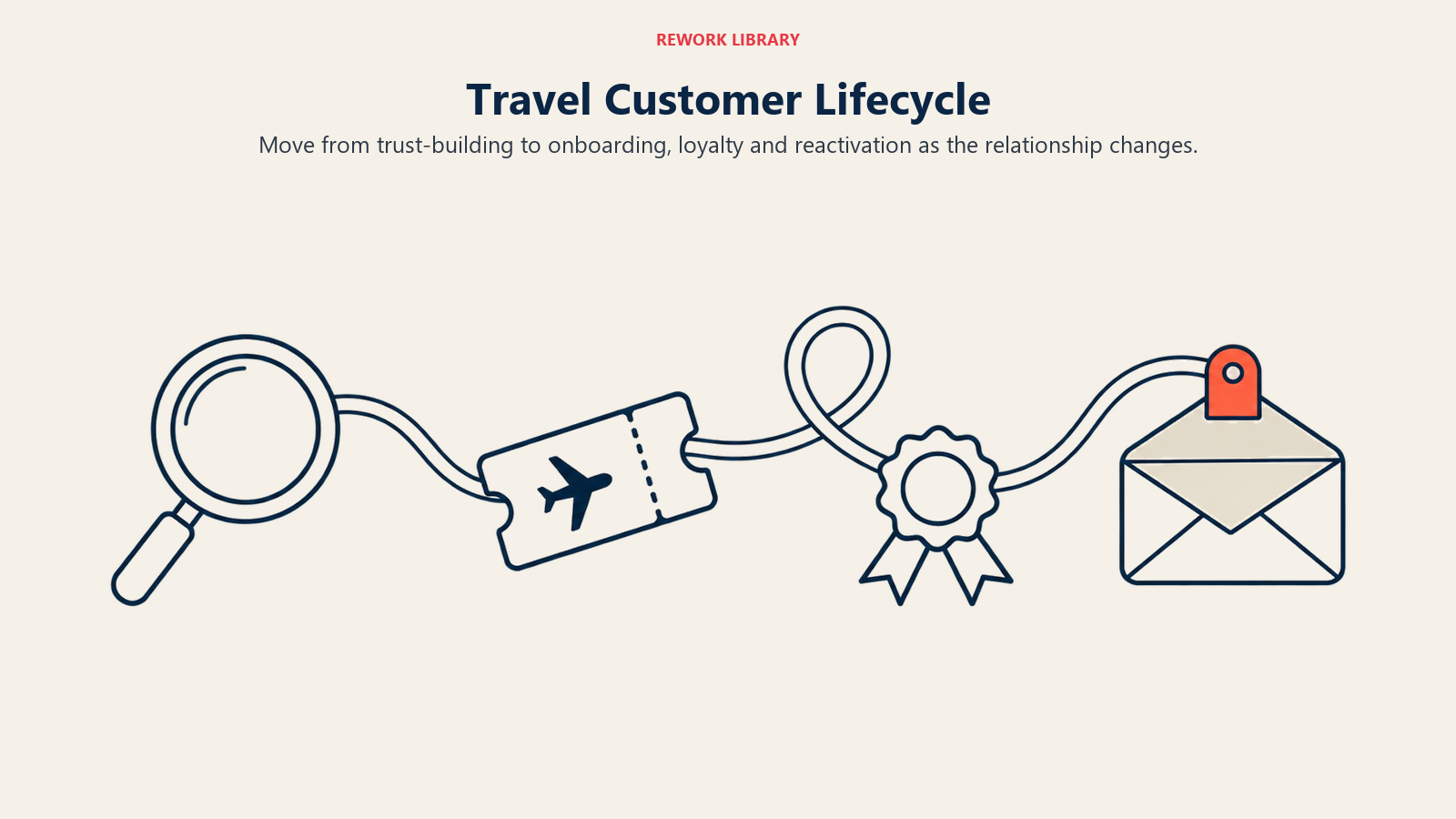
Prospects haven't booked yet. They're evaluating options, comparing alternatives, and deciding whether to trust you through review management. They need social proof, detailed information, and confidence-building content.
First-time bookers have committed but don't know what they're getting yet. They need reassurance, clear pre-trip communication, and excellent guest onboarding. Their first experience determines whether they become repeat customers.
Repeat customers are your foundation. They need recognition, exclusive benefits, and reasons to keep choosing you over competitors. Don't take them for granted.
Lapsed customers booked before but haven't lately. They need reactivation campaigns, win-back offers, and reasons to return through post-trip engagement.
Customize engagement strategies for each stage. Prospects get educational content and conversion-focused offers. First-timers get pre-trip excitement building and practical information. Repeat customers get loyalty benefits and early access. Lapsed customers get targeted reactivation.
Define graduation paths between stages. How do you convert prospects to first-timers? What turns first-timers into repeat customers? What prevents customers from lapsing?
Create stage-specific conversion goals. For prospects: book first trip. For first-timers: complete trip successfully and book again within 12 months. For repeat customers: maintain annual booking frequency. For lapsed customers: reactivate within 24 months.
Track movement between stages. How many prospects convert? What percentage of first-timers become repeat customers? How quickly do customers lapse? These metrics show where your customer journey is working and where it's broken.
Lifecycle segmentation helps you avoid common mistakes like sending acquisition-focused messaging to loyal customers or treating valuable repeat customers the same as uncertain prospects.
Map your customer journey and create distinct experiences for each stage.
Destination and Trip Type Preferences
What people book reveals what they'll book next.
Segment by preferred destinations. Beach lovers consistently choose coastal trips. Mountain enthusiasts book hiking and skiing. City explorers want urban cultural experiences. Exotic destination seekers crave unique, off-the-beaten-path locations.
Don't show beach lovers mountain treks unless you have data suggesting their preferences have evolved. Respect demonstrated preferences and recommend similar trips.
Trip type patterns are equally predictive. Adventure trip bookers want progressive challenge. Cultural trip enthusiasts want deeper immersion. Relaxation-focused travelers want stress-free experiences. Educational travelers want learning-focused content.
Accommodation preferences matter. Luxury hotel bookers rarely convert on budget hostels. Boutique property lovers want unique, characterful stays. Budget-conscious travelers prioritize value. Eco-lodge enthusiasts want sustainable, nature-immersed options.
Activity interests segment naturally. Hiking enthusiasts, food tour lovers, wildlife watchers, photography-focused travelers, water sports enthusiasts, history buffs, each group wants trips featuring their passion.
Create micro-segments around these affinities. "Cultural food tour enthusiasts in Asia" is specific enough to enable highly relevant recommendations and personalized messaging.
Use preference data to build trip recommendation engines. "Since you loved our Vietnam food tour, you'll love our Peru culinary journey." The connection is clear and relevant.
But also test adjacent categories. Someone who books cultural trips might enjoy soft adventure. Beach lovers might appreciate coastal hiking. Look for logical progressions that expand their horizons while respecting their core preferences.
Track preference evolution over time. Do customers stick with one trip type or diversify? Understanding these patterns helps you time expansion recommendations.
The most effective travel marketing feels personally curated because it's based on demonstrated preferences, not random guessing.
Personalization by Segment
Segments are useless unless you actually use them differently.
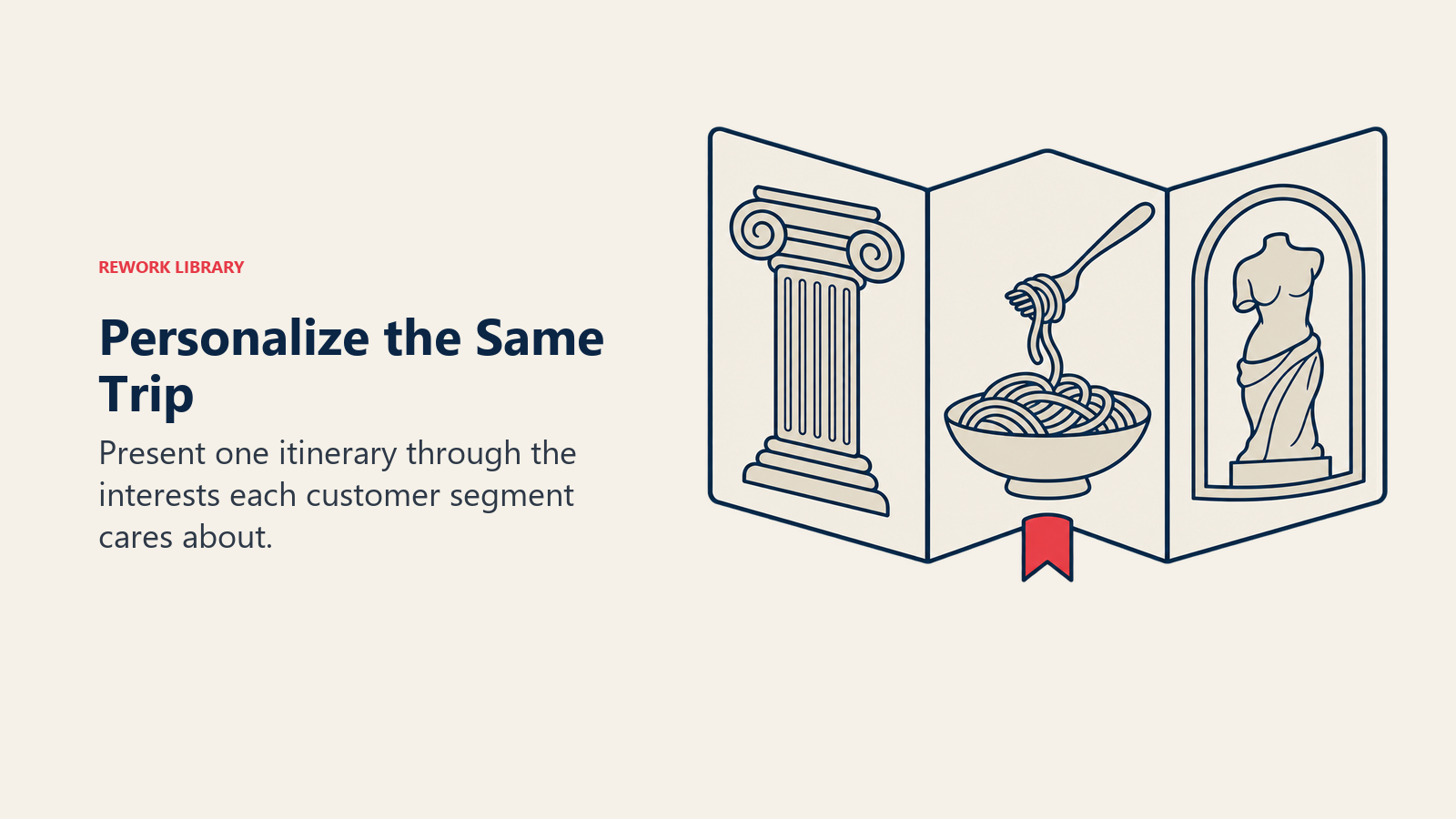
Craft segment-specific messaging. Adventure seekers get copy emphasizing challenge and uniqueness. Luxury travelers hear about exclusive access and premium service. Budget-conscious segments see value and payment options.
Same trip, different angles. A cultural tour of Italy gets positioned as "authentic local experiences" for cultural explorers, "gourmet food journey" for food enthusiasts, and "art and history immersion" for history buffs.
Personalize email content beyond just the subject line. Recommend trips based on segment. Reference previous trips relevant to the segment. Highlight benefits that matter to that segment specifically.
Customize website experience using cookies and login data. Show adventure trips to adventure seekers. Display luxury options to high-value customers. Feature family trips to parents. Hide irrelevant options.
Create targeted landing pages for key segments. A Facebook ad targeting luxury travelers should land on a luxury-focused page, not your generic homepage. Match the ad to the page to the segment.
Test different offers by segment. High-value customers might respond better to exclusive experiences than discounts. Budget-conscious segments need clear pricing and payment plans. Early planners want guarantees; last-minute bookers want deals.
Adjust communication frequency by segment engagement level. Highly engaged segments can handle weekly emails. Less engaged segments should get monthly updates to avoid annoying them.
Use segment data in retargeting. Someone browsed your Peru trips? Show them Peru trip ads. Someone downloaded your Thailand guide? Follow up with Thailand trip offers.
The goal is making every customer feel like you understand them specifically. Like you're recommending trips meant for them, not everyone.
Personalization at scale requires technology, but it drives meaningful conversion improvements when executed well.
Technology for Segmentation
Manual segmentation doesn't scale past about 100 customers. You need systems.
Implement a CRM system with robust segmentation capabilities. Most modern travel CRMs include segment builders that let you combine multiple criteria: "customers who booked cultural trips in the past two years, engaged with our last three emails, and have CLV over $5,000."
Use marketing automation platforms to execute segment-based campaigns. Create email sequences triggered by segment membership. Set up workflows that automatically adjust based on behavior.
Apply machine learning for predictive segmentation when you have sufficient data. ML can identify patterns humans miss: subtle combinations of factors that predict booking behavior.
Integrate segmentation across all marketing channels. Your email platform, website personalization, advertising platforms, and sales CRM should all share segment data. A customer shouldn't be in the "VIP" segment in email but treated like a stranger on your website.
Build customer data platforms that unify information from booking systems, website behavior, email engagement, and other sources. Segmentation requires comprehensive data.
Implement progressive profiling to gather segmentation data over time. Don't ask for everything upfront. Collect information gradually through interactions, surveys, and behavior tracking.
Create customer portals where travelers can update preferences directly. Let them tell you what trips interest them, what they loved about past experiences, and what they're planning next.
Use tag-based systems for flexibility. Tag customers with attributes (adventure-seeker, budget-conscious, family-traveler) and combine tags to create segments dynamically.
But remember: technology enables segmentation, but strategy drives it. Tools don't segment your customers; your business logic and marketing strategy do. Tools just execute at scale.
Testing and Optimization
Segmentation is a hypothesis. Testing proves whether it works.
A/B test campaigns across segments. Does your "adventure" messaging actually convert adventure seekers better than generic messaging? Test it. Does early-bird pricing work better for early planners? Test it.
Measure segment-specific conversion rates at each stage: email open rates, click rates, landing page conversion, booking completion. Identify where each segment performs well and where they drop off.
Calculate customer lifetime value by segment, not just initial booking value. Some segments might have lower initial conversion but higher repeat rates. Others might book bigger trips initially but never return.
Refine segments based on performance data. If your "luxury traveler" segment doesn't behave consistently, maybe you need to split it into "luxury adventure" and "luxury relaxation" segments. Let data inform structure.
Identify emerging segments and micro-segments. As your customer base grows, new patterns emerge. Stay alert to customers who don't fit existing segments well. They might represent new opportunities.
Track segment migration. How do customers move between segments over time? First-time bookers becoming repeat customers. Mid-value customers graduating to high-value. Understanding these progressions helps you accelerate them.
Measure segment stability. Do customers remain in their assigned segments, or do they bounce between categories? Unstable segments might be poorly defined.
Test segment size versus performance. Sometimes a smaller, more precisely defined segment performs better than a larger, looser one. Find the right balance between scale and precision.
Review and refresh segmentation quarterly or annually. Customer behavior evolves. Market conditions change. Your segmentation should adapt.
The businesses that win with segmentation aren't the ones with the most sophisticated models. They're the ones that test, measure, learn, and adjust continuously.
Making Segmentation Work
Segmentation only matters if it changes what you do.
Start by segmenting your customer base using whatever data you have. Even basic segments (prospects, new customers, repeat customers) enable better marketing than no segmentation.
Create different marketing campaigns for your top three segments. Test whether segmented campaigns outperform generic ones. They should. If they don't, your segments aren't meaningful.
Gradually add complexity. Layer in behavioral data. Add value tiers. Create psychographic segments. But only add segments when you can execute differently for them.
Train your team to think in segments. Sales should understand which segments they're talking to. Customer service should recognize VIP customers. Marketing should design campaigns segment-by-segment.
Use segmentation to inform business decisions beyond marketing. Product development: what trips do high-value segments want? Pricing strategy: what are different segments willing to pay? Resource allocation: where should we invest?
Measure the business impact. Compare metrics before and after implementing segmentation: overall conversion rates, customer lifetime value, marketing efficiency, customer satisfaction. Segmentation should improve all of these.
Remember that segments are groups, but customers are individuals. Use segmentation to scale personalization, but don't let it replace genuine understanding of individual customer needs.
The goal isn't perfect segmentation. It's actionable segmentation that enables better marketing, higher conversion, and increased lifetime value.
Build that, and you'll market more efficiently, convert more effectively, and grow more profitably than competitors who still blast the same message to everyone.
Related Resources

Business Consultant
On this page
- Customer Segmentation Fundamentals
- Demographic Segmentation
- Behavioral Segmentation
- Psychographic Segmentation
- Value-Based Segmentation
- Lifecycle Segmentation
- Destination and Trip Type Preferences
- Personalization by Segment
- Technology for Segmentation
- Testing and Optimization
- Making Segmentation Work
- Related Resources