Booking Conversion Metrics - 2026 Complete Guide
Turn this article into takeaways for your work.


Each assistant summarizes the article only for you and suggests best practices for your work.
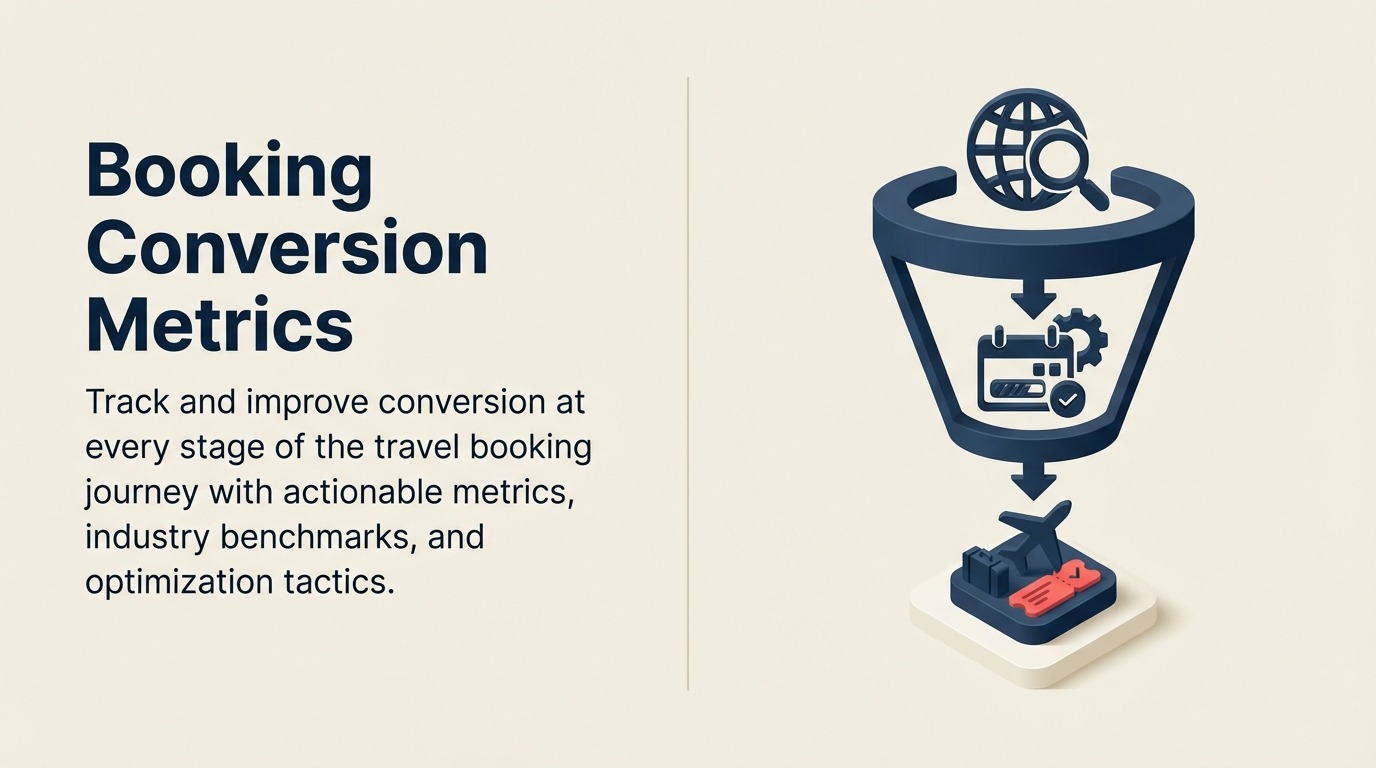
Booking conversion is the percentage of website visitors or inquiries that turn into confirmed, paid reservations. You calculate it by dividing bookings by the count at an earlier funnel stage, such as visitors or quotes. For travel businesses, visitor-to-booking rates typically run 0.6% to 1.5%, and small per-stage gains compound into large revenue increases.
Your website through website conversion for travel gets 10,000 visitors monthly. 300 submit inquiries through travel inquiry management. You send quotes using travel quote management to 240. Only 60 book via booking system integration. That's a 0.6% visitor-to-booking conversion rate tracked in travel KPI dashboard. Meanwhile, your competitor converts at 1.2% - exactly double. With the same traffic, they're booking 120 travelers monthly to your 60. Over a year, that's 720 extra bookings. At $3,500 average value, that's $2.5 million in additional revenue from the same customer acquisition cost in travel marketing spend.
Small conversion improvements create massive revenue gains. Moving from 0.6% to 0.8% overall conversion generates 33% more bookings without spending another dollar on marketing. But you can't improve what you don't measure. Most travel businesses know their overall conversion rate vaguely. Top performers track conversion at every stage, by channel, by agent, and by segment.
This level of precision reveals exactly where to focus improvement efforts for maximum impact.
Why Conversion Metrics Matter
Small improvements compound dramatically. Imagine your funnel: 10,000 visitors → 3% inquiry rate → 80% quote rate → 25% booking rate = 60 bookings. Now improve each stage by just 15%: 10,000 visitors → 3.45% inquiry → 92% quote → 28.75% booking = 91 bookings. That's 52% more bookings from three 15% improvements.
The math is brutal in reverse. If inquiry conversion drops from 3% to 2.5% and you don't notice for three months, you've lost hundreds of bookings. Conversion tracking catches declines immediately when they're fixable.
Revenue impact exceeds booking count gains. Higher conversion means you can pay more for traffic profitably. If competitors max out at $200 customer acquisition cost and you can profitably pay $300 due to better conversion, you win every auction. You can outspend competition in paid channels while maintaining better ROI.
Channel optimization requires conversion data. Your organic search traffic might convert at 4% while paid social converts at 1.2%. Without this insight, you'd treat them equally. With it, you invest differently. Maybe paid social gets cut or completely rethought. Maybe organic SEO gets 3x budget.
And competitive advantage comes from conversion excellence. Your destination knowledge, pricing, and products might be similar to competitors. But if you respond faster, guide buyers more effectively, and create smoother booking experiences, conversion becomes your moat.
The Travel Conversion Funnel
Typical stages progress logically:
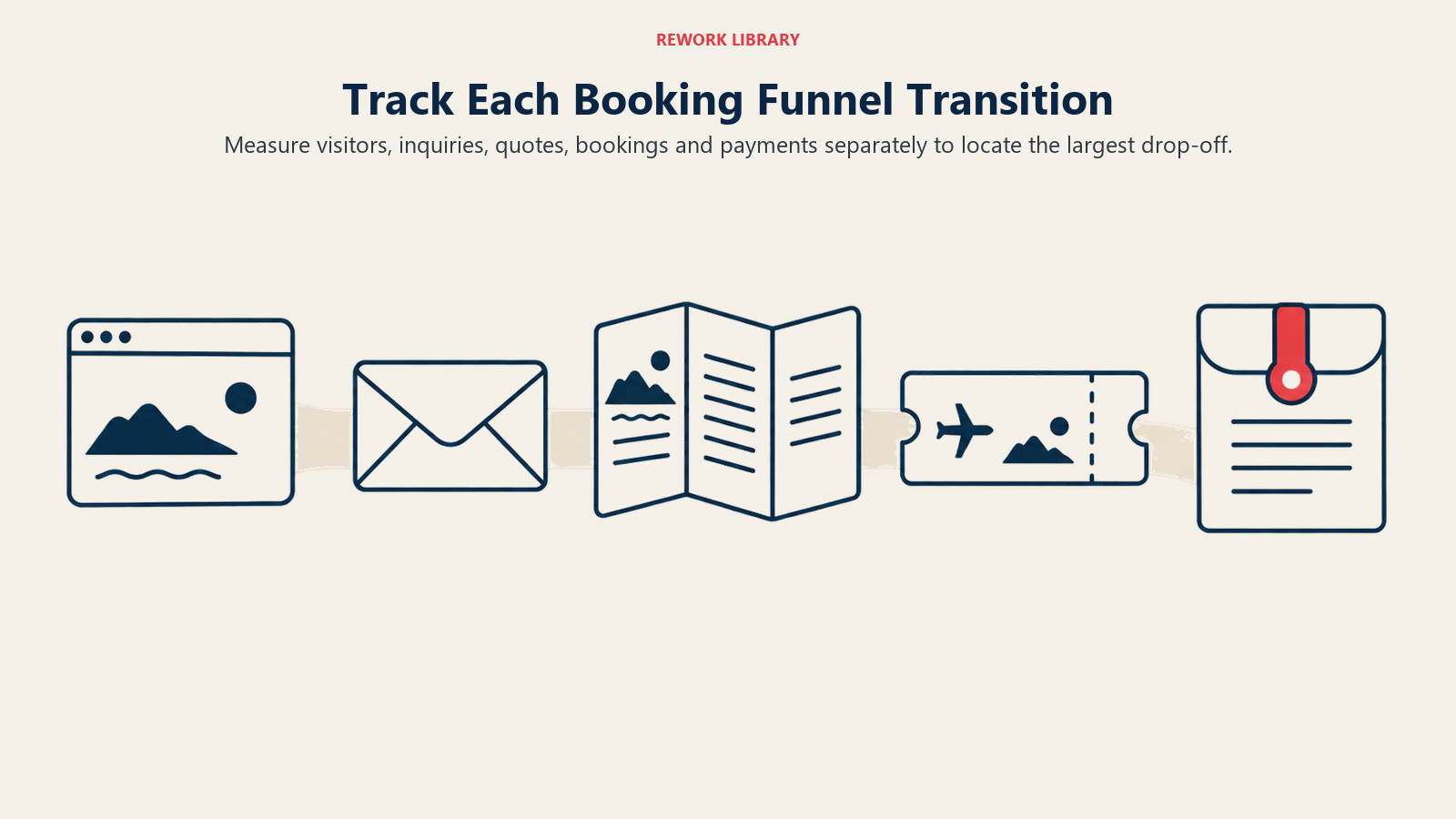
Website Visitor: Someone lands on your site through any source Inquiry: Submits contact form, starts chat, calls, or emails Quote: Receives formal proposal or itinerary Booking: Commits to reservation Payment: Completes financial transaction
Each transition has conversion rates that multiply through the funnel. If you lose 50% at each stage, only 3.1% of visitors complete the journey (50% × 50% × 50% × 50%). If you retain 60% at each stage, 13% complete the journey. These seemingly small per-stage differences create 4x total conversion differences.
Drop-off points vary by business model. FIT travel agencies might see biggest drop from quote to booking (complex decision, high value, long consideration). Package tour operators might lose most people from visitor to inquiry (harder to differentiate, comparison shopping). Identify your biggest leakage points first.
Website Conversion Rate
Visitor-to-inquiry conversion measures how effectively your site turns browsers into leads. Industry benchmarks run 1-3% for travel websites. Under 1% suggests serious UX problems or traffic quality issues. Over 3% is excellent and indicates strong product-market fit and effective design.
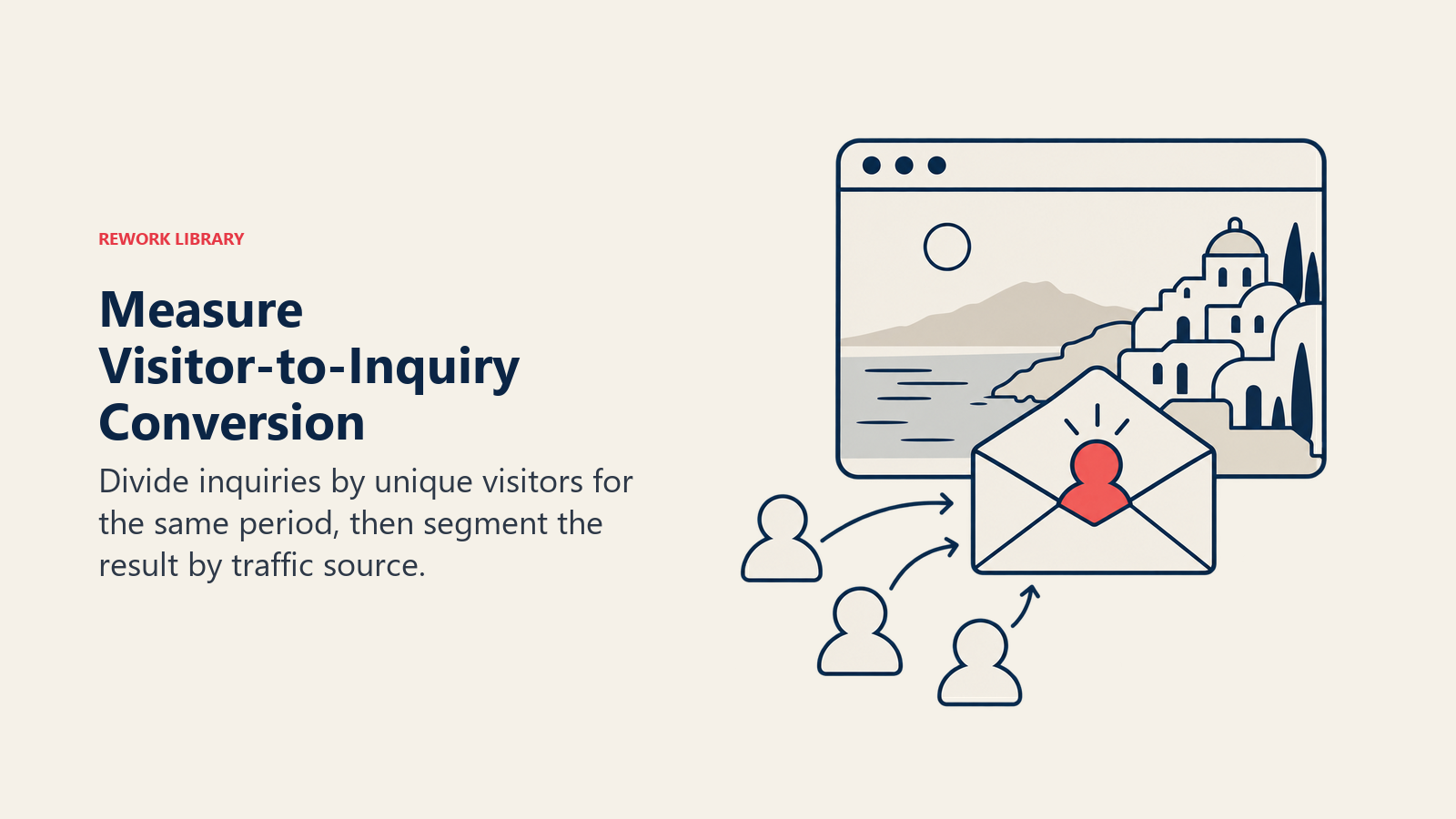
Calculate simply: Inquiries divided by unique visitors. If you received 300 inquiries from 10,000 unique visitors, website conversion is 3%.
Track this weekly and monthly. Watch for sudden drops that indicate technical problems or traffic source changes. Gradual declines suggest competitive pressure or market shifts.
Factors that impact website conversion:
Page load speed: Every second of delay drops conversion 7%. If your site takes 5 seconds to load instead of 2, you're losing 21% of potential inquiries.
Mobile optimization: 65%+ of travel searches happen on mobile. If your site isn't mobile-perfect, you're bleeding conversions.
Trust signals: Reviews, certifications, awards, affiliations, and social proof increase conversion 15-30%. Prominently display them.
Value proposition clarity: Visitors should understand what makes you different within 5 seconds. Generic "We offer amazing travel experiences" doesn't cut it.
Call-to-action prominence: Make inquiry forms, phone numbers, and chat buttons obvious. Test different placements and designs.
Content relevance: If someone searches "luxury Alaska cruises" and lands on your budget tour page, they leave. Traffic quality matters as much as volume.
Improvement tactics that work:
- Add live chat for instant engagement (lifts conversion 15-30%)
- Include video on landing pages (increases engagement 80%+)
- Display recent bookings or reviews (social proof drives action)
- Simplify forms (every field reduces completions 5-10%)
- Create destination-specific landing pages instead of generic home page dumps
Inquiry-to-Quote Conversion
Qualified inquiries should receive quotes at high rates. Best practices: 75-85%. If you're quoting under 60% of inquiries, investigate why so many inquiries don't progress.
Common causes:
Slow response time: Inquiries responded to within 1 hour convert 7x better than those waiting 24+ hours. Speed kills in travel sales. If you can't respond fast, implement chatbots or auto-responders that acknowledge instantly and set expectations.
Poor qualification: Some inquiries are unqualified - wrong destination, unrealistic budget, time-wasters. Don't count these as failures. Track separately. Focus on qualified inquiry-to-quote rate.
Inadequate information gathering: If you don't collect enough details in the inquiry, you can't create relevant quotes. Use qualification questions in forms and follow-up communications.
Complexity overwhelm: Some travelers submit inquiries, get overwhelmed by the planning process, and ghost. This is partly normal, partly solvable through better nurture.
Outside your offerings: Inquiries for destinations or trip types you don't serve shouldn't be quoted. Route them to partners if possible.
The ideal turnaround time varies:
Standard inquiries: Under 4 hours (business hours) After-hours inquiries: Acknowledged instantly, quoted by next business day morning Complex custom requests: Under 24 hours with preliminary response, detailed quote within 48 hours Urgent/last-minute: Immediate response essential
Track average and median turnaround time. Outliers skew averages. If median is 3 hours but average is 14 hours, you have consistent performance with occasional multi-day delays that need addressing.
Quote-to-Booking Conversion
This is where travel sales success or failure is decided. Industry averages: 20-40% for qualified leads. Top performers hit 45-55%. Under 15% suggests serious sales problems.
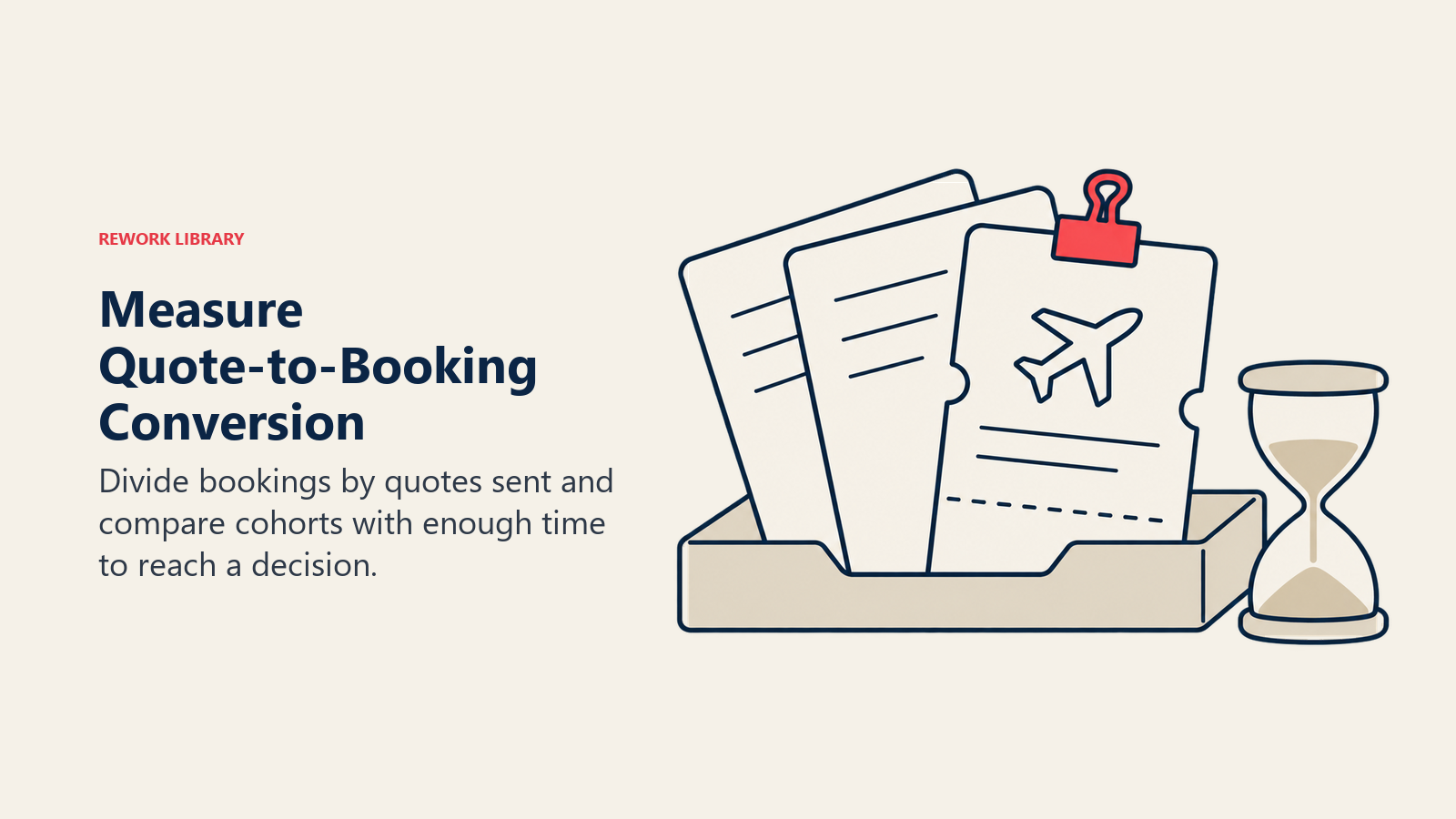
Calculate: Bookings divided by quotes sent. If you quoted 240 prospects and 60 booked, quote-to-booking conversion is 25%.
But segment this metric:
By lead source: Referrals convert at 45-60%. Cold paid search leads at 12-25%. Warm email nurture at 30-45%. These differences justify different acquisition costs and sales approaches.
By trip value: $2,000 trips convert faster (25-35%) than $15,000 trips (15-25%) due to decision complexity and financial commitment.
By agent: Your best agents likely convert 2-3x better than struggling agents. This reveals training opportunities.
By destination: Some destinations sell themselves. Others require more convincing. Track conversion by destination to identify strong performers and challenges.
Timeline expectations vary by complexity:
Weekend getaways: Quote to booking in 1-7 days Week-long vacations: 7-21 days typical Multi-week luxury: 14-45 days common Group travel: 30-90 days due to coordination
Long quote-to-booking cycles aren't bad if they ultimately convert. But track quote age. If quotes over 30 days old never convert, stop following up after 30 days and focus efforts on fresher opportunities.
Follow-up strategies that improve conversion:
Day 2 after quote: Quick check-in asking if they have questions Day 7: Share relevant content (destination guide, packing tips, client testimonials) Day 14: Create urgency (limited availability, seasonal pricing changes) Day 21: Offer modified options if budget or dates were concerns Day 30: Final check-in before moving to long-term nurture
Personalize follow-up based on stated objections or questions. If budget was a concern, follow up with more affordable alternatives. If timing was uncertain, check back on their timeline.
Booking-to-Payment Conversion
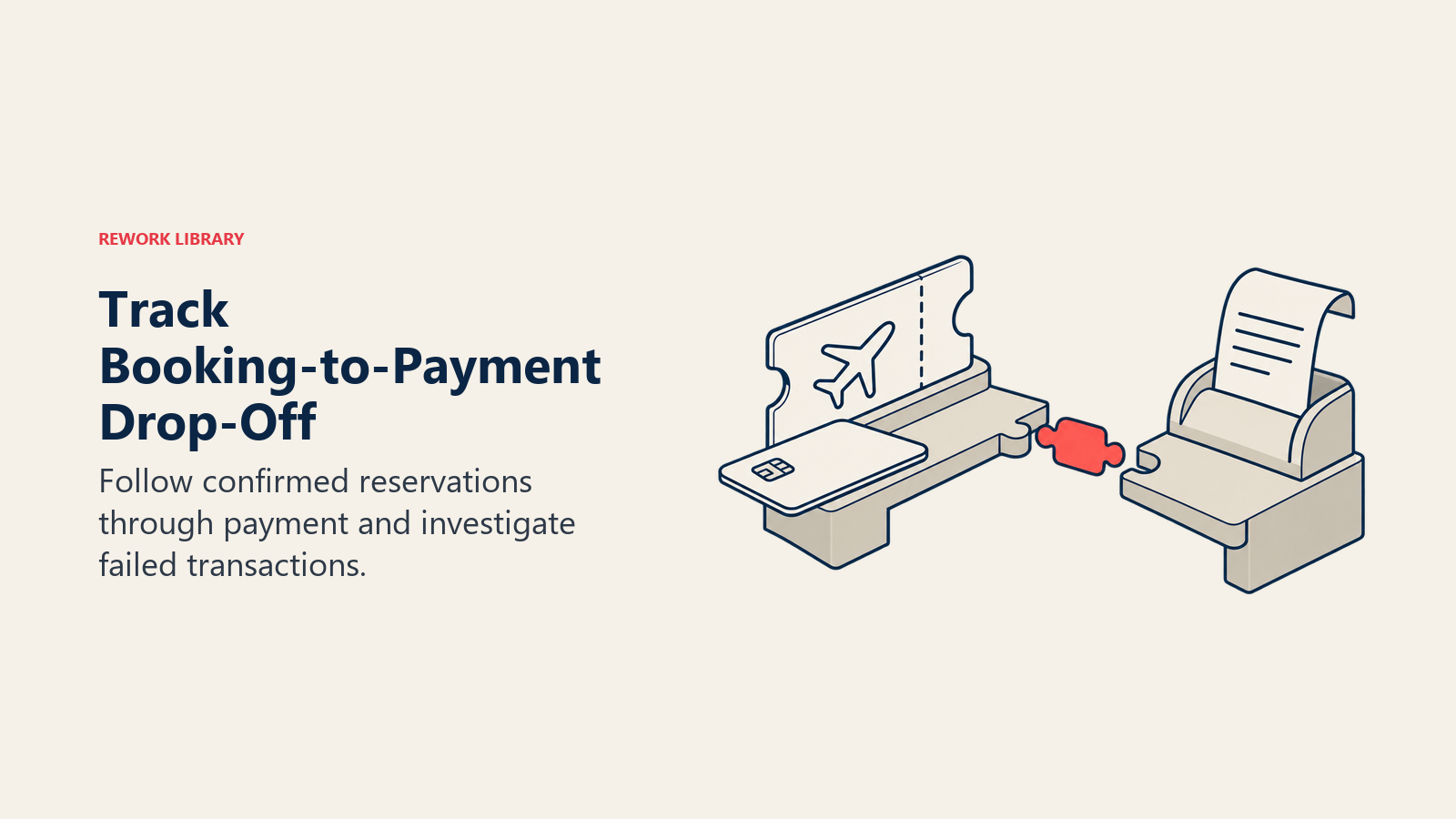
You'd think booking confirmation means the sale is done. But 3-8% of confirmed bookings fail at payment stage. Abandoned bookings after confirmation occur for several reasons:
Payment method limitations: They want to pay via bank transfer but you only accept cards. Or their card gets declined and they don't follow through with alternatives.
Buyer's remorse: The decision seemed right when booking but they reconsider. Second thoughts set in.
External factors: Something changes - work conflicts arise, travel companions back out, budget constraints appear.
Complexity overwhelm: The payment process is confusing or requires too many steps.
Minimize payment stage drop-off:
Offer multiple payment methods: Credit cards, PayPal, bank transfer, payment plans. Flexibility matters.
Instant confirmation: Immediate booking confirmation with clear next steps reduces anxiety.
Flexible payment terms: Deposit now, balance later. Payment plans for high-value bookings. Installments reduce psychological barrier.
Proactive payment reminders: Automated sequences when payments are due. Make paying easy with clickable payment links.
Grace period handling: Don't cancel bookings immediately for slightly late payments. Reach out personally offering assistance.
Track payment failure reasons. If credit card declines are common, ensure your payment processor handles international cards well. If manual bank transfers cause delays, automate payment verification.
Channel-Specific Conversion
Direct website visitors convert at 2-5% typically because they're actively researching and found you intentionally. Higher conversion justifies more SEO and content marketing investment.
OTA referrals convert poorly (0.5-2%) because you're competing against many options. But volume might justify it. 1% of 50,000 monthly OTA visitors is 500 bookings. 3% of 8,000 direct visitors is 240.
Email marketing converts existing contacts at 3-8% for targeted campaigns. Nurture sequences bringing past travelers back convert at 5-15% because relationship and trust exist.
Phone inquiries convert highest (30-50%) because they've overcome initial friction and want human interaction. Phone leads deserve premium handling.
In-person inquiries at trade shows or events convert at 15-35% when qualified. But lead volume is limited. ROI depends on acquisition cost.
Optimize based on channel economics. Calculate actual customer acquisition cost including conversion rate. A $100 CPC channel converting at 0.8% costs $12,500 per customer. A $25 CPC channel converting at 2.5% costs $1,000 per customer. Choose accordingly.
Segment-Based Conversion Analysis
Luxury travelers (10%+ of budget over $8K) convert slower but steadier. Decision cycles are longer but dropout rates are lower once engaged. Quote-to-booking conversion runs 18-30% over 30-60 days.
Budget travelers (under $3K) convert faster but abandon more. They're comparing prices aggressively. Quote-to-booking is 20-35% within 7-14 days but price-sensitive.
Family travelers (parties of 3+) convert methodically. Multiple decision-makers slow the process but commitment is strong once made. Conversion 25-40% over 14-30 days.
Individual adventure travelers convert well (30-45%) because they value expertise over price. They're buying experience and want specialists.
Corporate/group travel converts slowly (15-25%) due to committee decisions but generates large bookings that justify longer sales cycles.
Tailor sales approaches to segment patterns. Don't rush families. Don't let budget travelers ghost - create urgency quickly. Give luxury clients space but stay engaged.
Conversion Optimization Strategies
Reduce friction everywhere. Every form field, every click, every decision point is an opportunity to lose the customer. Simplify ruthlessly. Test one-page inquiry forms versus multi-step. Test click-to-call buttons versus forms.
Improve response speed through automation. Chat bots for instant engagement. Auto-responders confirming receipt. Alerts to agents when high-value inquiries arrive. The faster you respond, the better you convert.
Offer flexible payment options including deposits, installments, and multiple methods. Don't lose bookings because you only accept one payment type.
Create urgency authentically. Limited availability is real on tours. Seasonal pricing changes are real. Early booking discounts are real. Communicate these honestly to motivate decisions.
Use social proof aggressively. Recent reviews, number of travelers served, awards won, and client testimonials all increase trust and conversion. Place them strategically throughout the booking journey.
Tracking & Attribution
CRM requirements include capturing source for every inquiry. Where did they find you? What campaign brought them? Which landing page did they visit? Without source tracking, you can't calculate channel-specific conversion.
Use UTM parameters on all marketing links. Tag your email campaigns, social posts, and paid ads. This flows through to Google Analytics and your CRM showing complete journeys.
Multi-touch attribution models assign credit to all touchpoints, not just last click. A traveler might discover you via a blog post, return through Google search, join your email list, and book from a promotional email. Each touchpoint contributed.
Common calculation mistakes to avoid:
Not segmenting qualified vs. unqualified inquiries: Counting spam and out-of-scope inquiries in conversion rates makes you look worse than reality.
Ignoring time lag: Booking conversion measured too soon misses late converts. Track conversion rates at 30, 60, and 90 days.
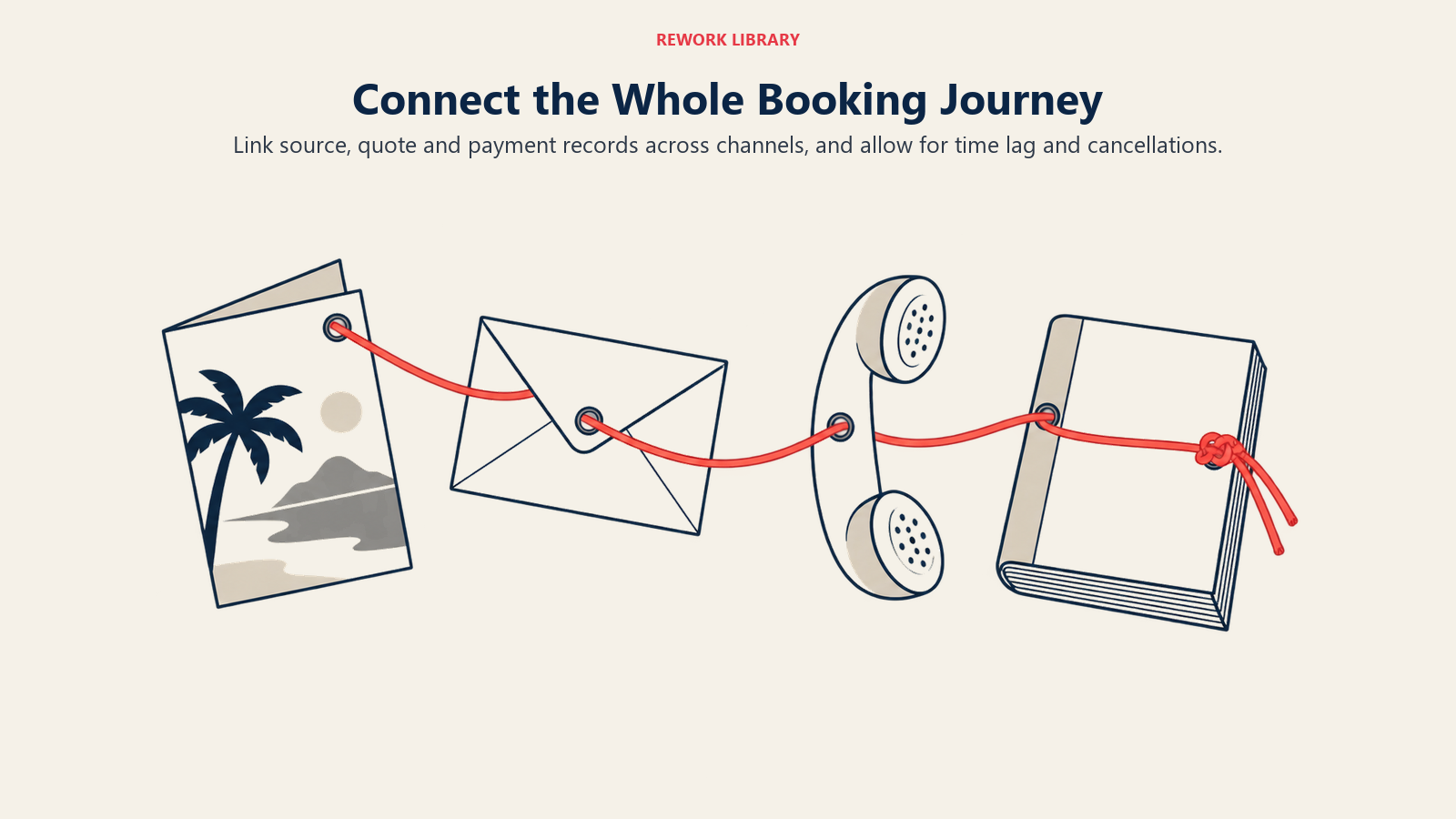
Missing multi-channel journeys: A quote sent via email but booking completed by phone might not be tracked as converted if systems don't talk.
Not accounting for cancellations: Some track bookings as conversions but ignore later cancellations. Track net bookings after cancellations for true performance.
Conclusion
Conversion metrics turn revenue growth from mystery to formula. When you track visitor-to-inquiry, inquiry-to-quote, and quote-to-booking conversion by channel and segment, you know exactly where to focus improvement efforts. A 10% improvement in conversion at any stage translates directly to 10% more bookings from the same traffic and marketing spend.
Start by establishing baselines. Measure current performance at each funnel stage. Identify the biggest drop-off points. Test improvements systematically. Measure results. Iterate. The companies that master conversion optimization grow faster than competitors spending more on marketing but converting worse.
Frequently Asked Questions
What is booking conversion? Booking conversion is the share of potential customers who complete a paid reservation. It can be measured at the full-funnel level (visitor to booking) or at a single stage (quote to booking). Tracking it stage by stage shows exactly where prospects drop off so you can fix the biggest leaks first.
How do you calculate booking conversion rate? Divide the number of bookings by the number at an earlier stage, then multiply by 100. For example, 60 bookings from 10,000 visitors is a 0.6% visitor-to-booking rate, and 60 bookings from 240 quotes is a 25% quote-to-booking rate.
What is a good booking conversion rate? For travel websites, visitor-to-inquiry conversion of 1-3% is normal, and quote-to-booking of 20-40% is healthy for qualified leads. Top performers reach 45-55% quote-to-booking. Rates below 1% visitor-to-inquiry or 15% quote-to-booking usually signal serious UX or sales problems.
Why does a small booking conversion improvement matter so much? Conversion gains multiply through the funnel and apply to traffic you already pay for. Moving from 0.6% to 0.8% overall conversion produces about 33% more bookings without spending another dollar on marketing, which is why conversion optimization often beats buying more traffic.
Which booking conversion stage should you optimize first? Find your biggest drop-off. Many tour operators lose the most people from visitor to inquiry, while custom travel agencies often lose them from quote to booking. Measure each transition, then concentrate effort where the leak is largest.
Related Articles:

Business Consultant
On this page
- Why Conversion Metrics Matter
- The Travel Conversion Funnel
- Website Conversion Rate
- Inquiry-to-Quote Conversion
- Quote-to-Booking Conversion
- Booking-to-Payment Conversion
- Channel-Specific Conversion
- Segment-Based Conversion Analysis
- Conversion Optimization Strategies
- Tracking & Attribution
- Conclusion
- Frequently Asked Questions