Itinerary Building & Presentation: Creating Irresistible Travel Proposals
Turn this article into takeaways for your work.


Each assistant summarizes the article only for you and suggests best practices for your work.
Your client wants "two weeks in Southeast Asia." You could send them a list of hotels and flights with a price tag at the bottom. They'll thank you politely, then book with someone else who sent them an experience they could imagine themselves living.
Great itineraries don't just organize logistics, they create anticipation. They transform a list of destinations into a narrative journey that makes clients think "Yes, this is exactly what we need" before they reach the price section.
Itinerary Design Principles
The foundation of exceptional itinerary building starts with understanding rhythm and flow, not just hitting major attractions.
Pacing determines whether clients return refreshed or exhausted. Three days of intense sightseeing followed by complete downtime feels jarring. Instead, vary intensity throughout: active exploration days balanced with leisurely mornings, cultural immersion alternating with nature experiences, structured activities mixed with unscheduled time.
The 70/30 rule works well for most trips. Plan 70% of each day, leave 30% flexible. This gives structure without rigidity, allows spontaneous discoveries, and prevents the dreaded feeling of being "on a tour" rather than traveling.
Activity mix matters enormously for groups with diverse interests. If you're planning for a family, don't schedule a full day at temples that will bore teenagers. Build in something for everyone: historical sites for culture enthusiasts, outdoor activities for active travelers, food experiences for culinary adventurers, shopping time for those who love local markets.
Downtime isn't wasted time, it's when travelers actually process their experiences. After arriving from a long-haul flight, don't schedule afternoon activities. Let them adjust, explore the neighborhood casually, have dinner at their own pace. Similarly, mid-trip rest days prevent burnout on longer journeys.
Cultural immersion opportunities differentiate your itineraries from what clients can book themselves online. Anyone can visit the major temples in Kyoto. Not everyone can arrange a private tea ceremony with a master who's practiced for 40 years, or a home-cooked meal with a local family, or a workshop with traditional craftspeople. These unique elements support your direct booking strategy by providing value OTAs can't match.
Understanding Client Preferences
The discovery conversation isn't just about gathering information, it's about translating what clients say they want into what will actually make their trip memorable. This is where consultative selling in travel transforms your approach from order-taking to advisory.
Listen for the gaps between stated preferences and underlying desires. Someone asking for "relaxation" might mean spa treatments and beach time, or they might mean escaping email and experiencing flow states through activities like cooking classes or gentle hiking. Ask follow-up questions until you're certain.
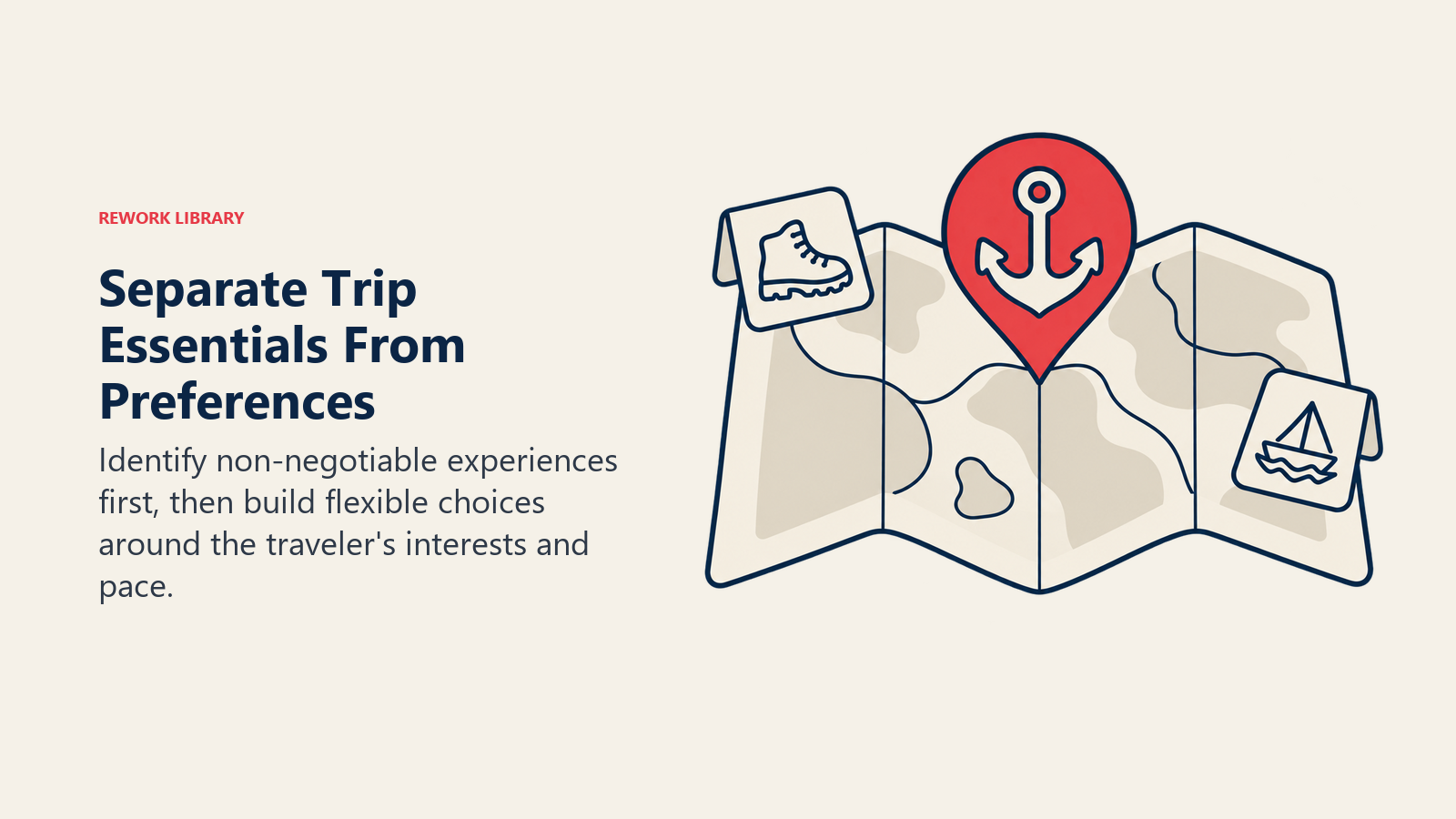
Must-haves versus nice-to-haves separate non-negotiable elements from flexible ones. "We absolutely have to see Machu Picchu" is a must-have that shapes your entire Peru itinerary. "It would be cool to try ceviche somewhere" is a nice-to-have you can easily incorporate but isn't deal-breaking if logistics don't work.
Personal interests create customization opportunities. A client mentions they're amateur photographers? Build in golden hour timing, less-crowded viewpoints, and slower pacing for composition. They love wine? Don't just schedule a winery visit, arrange a private tasting with the winemaker and vineyard tour explaining terroir.
Travel style reveals whether they want to be taken care of or discover independently. Some clients love private guides handling everything. Others feel constrained by too much structure and prefer recommendations they can explore at their own rhythm. Get this wrong and even a well-executed itinerary feels mismatched.
Destination Expertise & Research
Your destination knowledge directly impacts the quality and differentiation of your itineraries. Surface-level understanding produces generic proposals. Deep expertise creates magic.
Leverage supplier relationships to access experiences unavailable to the general public. Your DMC partner knows which restaurants will accommodate special dietary needs without making clients feel difficult. Your hotel contact can arrange room upgrades, amenity surprises, or early check-ins that elevate the entire experience.
Hidden gems separate good itineraries from exceptional ones. Sure, include the Sistine Chapel in Rome, but also arrange a sunset visit to the rooftop terrace at Castel Sant'Angelo when crowds have dispersed. Balance famous landmarks with discoveries that feel personal and unique.
Seasonal considerations affect everything from weather to crowds to available experiences. Cherry blossoms in Japan aren't just pretty, they fundamentally change what's possible, where crowds concentrate, and what hotels cost. Wine harvest season in Tuscany opens up activities unavailable other months. Understanding these patterns lets you optimize timing or set accurate expectations. Master seasonality management in travel to guide clients toward optimal timing.
Logistics planning prevents itineraries that look great on paper but fail in execution. You can't realistically do Versailles and the Louvre in one day and expect clients to enjoy either. Factor in actual travel times between destinations, security lines, check-in procedures, and meal breaks. Better to do fewer things well than overschedule and create stress.
Day-by-Day Itinerary Structure
How you structure and present each day dramatically affects how clients perceive the trip.
Hour-by-hour detail works for certain clients and trip types. Luxury travelers paying premium prices often want to know exactly what's happening when. Group tours need precise timing for logistics coordination. First-time international travelers feel more comfortable with clear structure.
Overview approach suits independent travelers and those who value flexibility. Instead of "9:00 AM: Meet guide in hotel lobby for transfer to temples," you present it as "Morning temple exploration with your private guide, visiting three of Angkor's most impressive structures before crowds arrive. Your guide will adjust timing and sequence based on your interests and energy levels."
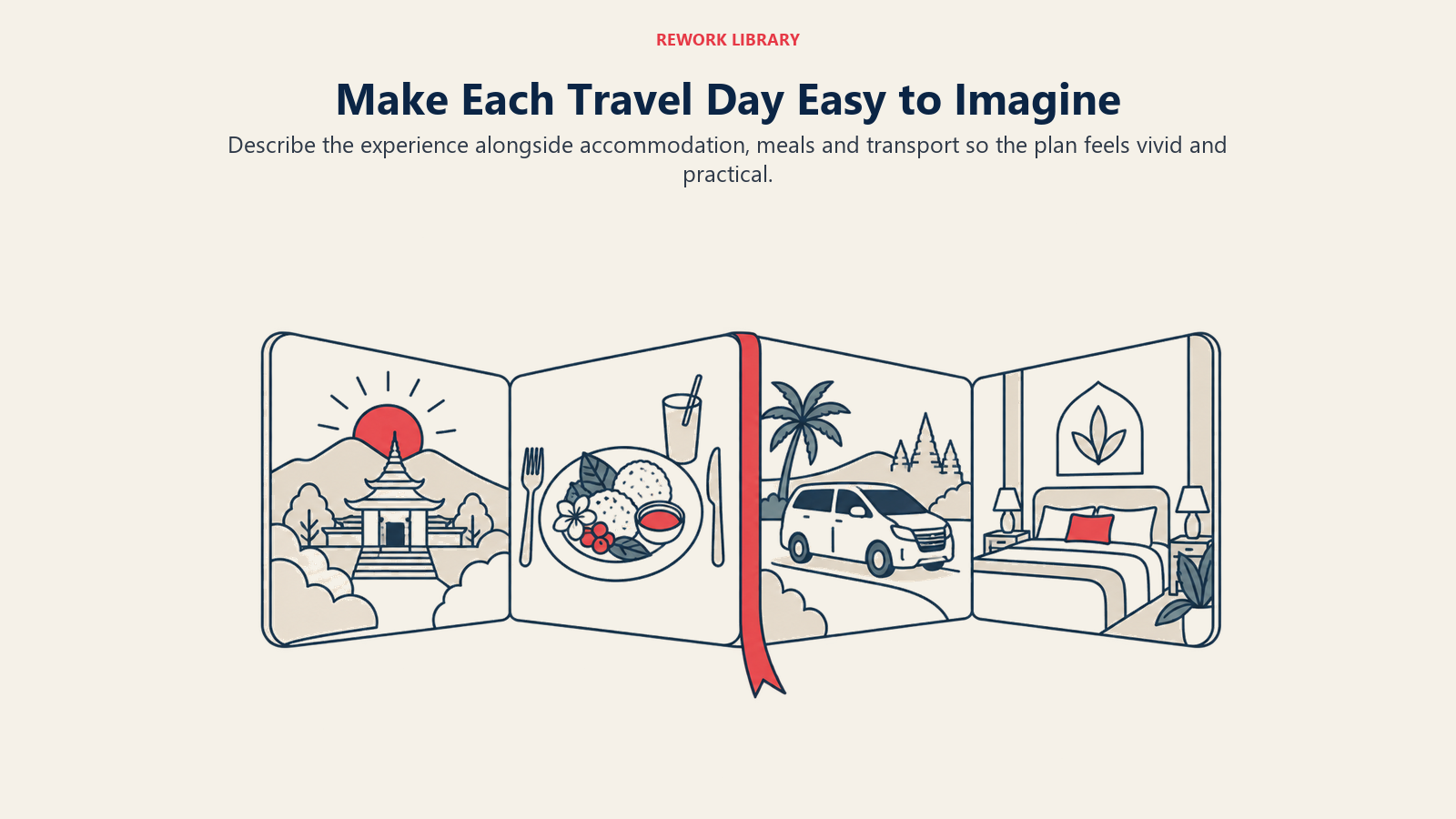
Meal planning shows thoughtfulness. Don't just note "Breakfast included." Specify: "Breakfast at your hotel overlooking the rice terraces, featuring both Western and traditional Balinese options." For other meals, provide curated recommendations with price ranges and what makes each special, rather than leaving clients to figure it out.
Transportation details build confidence. "Private air-conditioned vehicle with English-speaking driver" tells them more than "ground transportation included." For destinations where you're recommending they use public transit or taxis, provide context: "Short 10-minute taxi ride (approximately €8) to the port for your island ferry."
Accommodation descriptions sell rooms, not just beds. Don't write: "Overnight at Hotel XYZ." Instead: "Your boutique hotel in the heart of Fez's medina occupies a restored 18th-century riad, with traditional tilework, a rooftop terrace for breakfast, and soundproofed rooms ensuring peaceful sleep despite the lively surroundings."
Activity highlights create anticipation. Rather than listing what you'll see, describe what clients will experience: "Explore ancient temples by bicycle as sunrise illuminates their spires, stopping to photograph the changing light and watch monks receiving morning alms from villagers maintaining centuries-old traditions."
Creating Multiple Options
Strategic option presentation guides clients toward the best fit while giving them agency in the decision.
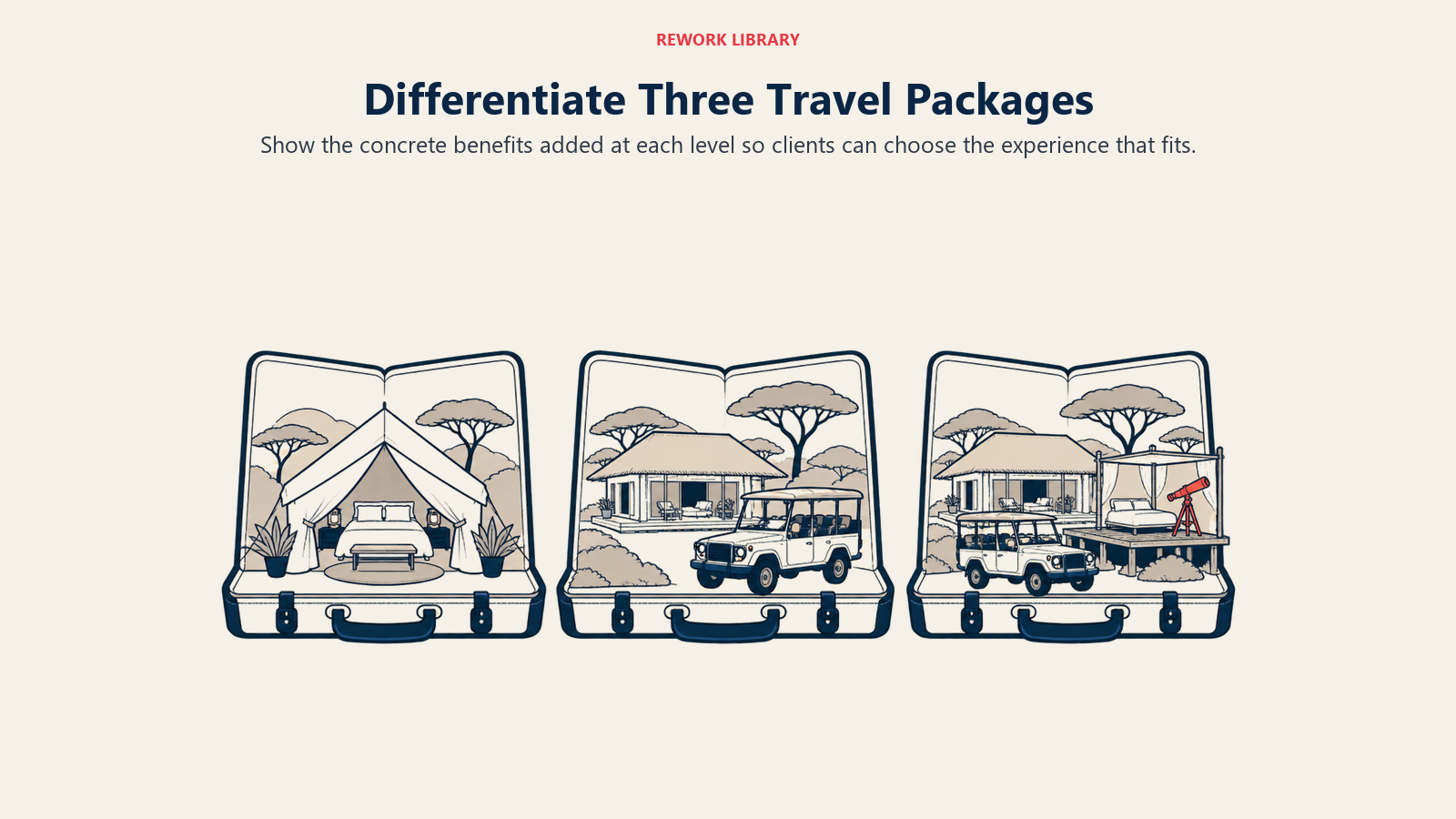
The good-better-best framework provides clear differentiation. Your base option delivers the core experience at the most accessible price point. Mid-tier adds meaningful enhancements that clearly elevate the trip. Premium includes exceptional elements that create once-in-a-lifetime moments.
For a safari example: Base includes comfortable tented camps, shared game drives, and standard park fees. Mid-tier upgrades to luxury lodges, adds private vehicle, includes special activities like bush walks. Premium adds exclusive conservancy access, photographic safari vehicle, night drives, sleep-out under stars, and conservation experience with researchers. This tiered approach supports effective package pricing optimization.
Value differentiation matters more than price differences. Clients should immediately understand why the mid-tier costs $3,000 more and what that additional investment delivers. Vague descriptions like "upgraded accommodations" don't justify spending. Specific benefits like "Your private infinity pool villa with butler service and in-room spa treatments" do.
Guide clients toward optimal choices through subtle framing. Place your recommended option in the middle position, research shows people disproportionately choose middle options. Include decision-making guidance: "Most clients find the enhanced package offers the best balance of authentic experience and comfort, though the base option is excellent for budget-conscious travelers."
Avoid overwhelming with too many choices. Three options work well. Five creates decision paralysis. Two feels limiting. If you have many possible variations, present three core packages with "customizable add-ons" clients can consider after selecting their foundation.
Visual Presentation Techniques
Travel is inherently visual. Your itinerary presentation should be too.
Maps showing journey flow help clients mentally organize the trip. A simple route map with numbered stops in sequence transforms a list of destinations into a cohesive journey. For complex itineraries spanning multiple regions, include both an overview map and detailed regional maps.
Photos of specific properties and experiences create emotional connection and set expectations. Don't use generic stock photos of "a beach in Thailand", show the actual beach at the resort you've selected, the specific room category you're proposing, the restaurant where they'll have dinner.
Day summary cards work beautifully for visual learners. A single-page overview for each day with a hero image, highlight activities, accommodation info, and key logistics. Clients can quickly scan the whole trip or dive into detailed descriptions.
Mood boards establish vibe and style, particularly for luxury or highly customized trips. Collection of images representing the aesthetic, pace, and feel of the journey. Especially effective when clients struggle to articulate what they want but can recognize it visually.
Professional formatting signals quality. Consistent fonts, proper spacing, organized sections, attractive color schemes. You don't need expensive design software, tools like Canva, Travefy, or even well-formatted Google Docs can look professional if done thoughtfully.
Pricing Transparency & Inclusions
Ambiguity about what's included creates anxiety and leads to price shopping. Crystal clarity builds trust and prevents post-booking disappointment.
Break down major cost components so clients understand where their money goes. Not just a total number, but categories: accommodations (with nightly rates if helpful), transportation, activities and entrance fees, guide services, meals included, and any unique elements.
What's included section should be specific. Instead of "Ground transportation," write: "Private air-conditioned vehicle with professional English-speaking driver throughout Peru. All fuel, tolls, parking, and driver accommodation/meals covered."
What's not included prevents surprises. Be explicit: "International airfare to/from Lima, meals not specified in itinerary (estimated $40-60 per person per day for lunch and dinner), alcoholic beverages, personal expenses, travel insurance, tips for guides and drivers (customary $8-10 per person per day)."
Optional add-ons let clients customize without requiring full itinerary revisions. "Interested in adding a hot air balloon ride over Cappadocia? $285 per person for sunrise flight including hotel transfers and champagne toast." This increases revenue while giving clients control. Learn more about travel upselling techniques to maximize booking value.
Payment terms should be completely clear: deposit amount and when due, final payment deadline, accepted payment methods, any payment plan options for large bookings, cancellation and refund policy with specific dates and percentages. Transparent pricing builds trust throughout the travel sales process.
Storytelling in Itineraries
Facts inform. Stories sell. Transform your itinerary from logistical document to narrative journey.
Narrative flow means each day naturally progresses to the next. Don't just randomly order destinations. Build a story arc: arrival and orientation, increasing immersion into local culture, peak experiences mid-trip, time to process and reflect, return with new perspectives.
Highlighting unique experiences gives clients reasons to book with you specifically. Anyone can arrange hotels and flights. Your value comes from access, expertise, and curation that clients can't replicate themselves. Emphasize these elements: "We've arranged exclusive after-hours access to the museum, meaning you'll view masterpieces without crowds, something normally impossible during public hours."
Building anticipation throughout the proposal creates excitement. Reveal elements progressively, saving exceptional moments for key positions. Your final days should include something special to look forward to, not wind down anticlimactically.
Conveying transformation journeys resonates emotionally. Great travel changes people. Subtle language shifts from "You will visit" to "You'll discover" or "experience" or "immerse yourself in" focus on personal impact rather than just activities completed.
Itinerary Delivery & Walkthrough
How you present your proposal is as important as what's in it.
Email delivery works for straightforward itineraries with clients who prefer reviewing independently. Include a brief personal message framing the proposal: "I've designed this Provence itinerary around the themes we discussed, lavender fields in peak bloom, intimate wine experiences, and plenty of unscheduled time to simply enjoy French village life."
Video calls let you walk through complex itineraries, answer questions in real-time, and read client reactions. You can emphasize certain elements, explain logistical details, and build personal connection that's harder through written communication alone. Particularly valuable for high-value bookings or nervous first-time international travelers.
In-person presentations remain powerful for local clients and high-ticket packages. Print professional copies, bring maps and visual materials, create an experience around the reveal. The investment of time signals the importance you place on their trip.
Proactive question addressing prevents common concerns from becoming objections. "You mentioned safety was a concern, let me walk you through the specific protocols we have in place and share feedback from clients who recently returned." Handle potential issues before they need to ask. Master the art of handling travel objections during the presentation phase.
Revision Process Management
Every itinerary goes through revisions. Managing this process efficiently prevents scope creep while maintaining client satisfaction.
Set clear expectations upfront. "This itinerary is fully customizable, I'm happy to make adjustments until it feels perfect. Most clients finalize their plans within 1-2 revisions." This normalizes changes while subtly encouraging decisiveness.
Efficient change management means understanding what's actually being requested. "We'd like more free time" could mean reducing scheduled activities, sleeping later, or having more meal flexibility. Clarify before rebuilding everything.
Document modifications in writing. "Based on our conversation, I'm adjusting the Rome portion to remove the Colosseum guided tour, adding a half-day at Ostia Antica instead, and changing your hotel to Trastevere for easier access to restaurants. This reduces the total by $340 per couple."
Boundaries on revisions prevent endless tweaking. Two rounds of changes included in your process is reasonable. After that, charge a revision fee or require non-refundable deposit before additional changes. Exceptions for circumstances genuinely requiring modifications, but protect your time from chronic indecision.
Scope creep happens when "small changes" accumulate into basically rebuilding the itinerary. "Would you like me to propose an alternative itinerary focused on beach relaxation? That's quite different from the cultural immersion trip we've been developing, so I'd start fresh rather than keep revising." Sometimes acknowledging the mismatch and starting over is more efficient.
Your itinerary is your most powerful sales tool. It's the tangible representation of the intangible experience you're selling. When clients can see themselves in the journey you've created, feel the rhythm of the days, and understand the value of what's included, the booking decision becomes natural rather than difficult.
Every detail matters, not because clients are impossibly demanding, but because thoughtfulness compounds into trust.
Related Articles:

Business Consultant