Website Conversion for Travel: Design and UX That Drive Bookings
Turn this article into takeaways for your work.


Each assistant summarizes the article only for you and suggests best practices for your work.
Bottleneck analysis for growth means finding the single step where the most potential customers drop off, then fixing that step before anything else. On a travel website, the booking funnel makes those bottlenecks visible: slow pages, weak trust signals, hidden pricing, or a clumsy mobile checkout. Remove the biggest one, and conversion compounds.
Your website converts at 2.3%. Industry average is 2-4%, so you assume you're fine. But operators with optimized sites convert at 6-8%, nearly triple your rate. That performance gap represents millions in lost revenue from the travel lead generation traffic you're already paying for.
The difference isn't traffic quality or brand strength. It's conversion optimization discipline applied specifically to travel buyer psychology. Generic e-commerce best practices don't account for travel's unique decision dynamics, high perceived risk, extended consideration periods, emotional decision-making, and the need to coordinate with travel companions.
Small changes compound into dramatic improvements. Improving your homepage conversion from 8% to 11% doesn't sound exciting, but it means 37% more people progress deeper into your travel booking funnel. Increase booking page conversion from 15% to 20%, and you've added 33% more bookings from the same traffic. These improvements don't require redesigns, they require systematic booking engine optimization testing focused on travel-specific friction points.
Travel Website Conversion Principles
Five foundational principles underpin all effective travel website design.
Visual storytelling priority means images and video carry more weight than text. Travel is aspirational and experiential, people buy feelings and memories, not logistics and features. Your homepage hero shouldn't be generic stock photos of beaches. It should be authentic travel content marketing customer photos showing real moments of joy, wonder, and connection. Video converts 50-80% better than static images for tour packages because it demonstrates the experience dynamically.
Trust-building for travel businesses and credibility signals reduce perceived risk. Booking a $4,000 vacation with an unfamiliar company feels risky. Your site must radiate trustworthiness through review scores, customer testimonials, industry certifications, secure payment badges, and professional presentation. Every page should reinforce "we're legitimate and thousands of happy customers have trusted us."
Information transparency addresses the research-intensive nature of travel inquiry management shopping. People want to know exactly what's included, what's not, what happens if they cancel, how travel pricing strategy payments work, and what to expect day-by-day. Hiding information until late in the funnel creates abandonment recovery. Front-load transparency, detailed itineraries, clear pricing, visible policies, to build confidence.
Mobile booking optimization acknowledges that 60%+ of travel research happens on phones. Your site must be fully functional on mobile, not just responsive. Thumb-friendly navigation, minimal text entry, tap targets at least 44x44 pixels, and simplified travel checkout optimization booking flows for small screens. If your booking process requires pinch-zooming or has tiny form fields, you're losing half your potential customers.
Speed and performance directly impact conversion. Every second of page load time reduces conversion by 7%. If your package pages take 5 seconds to load instead of 2, you're losing 21% of potential bookings before people even see your travel landing page design content. Optimize images, minimize JavaScript, and aim for under 2-second load times on mobile.
Homepage Conversion Elements
Your homepage determines whether visitors explore further or bounce.
Hero section best practices start with one clear primary message. "Discover Your Next Adventure" is vague. "Small-Group Cultural Tours to Japan, Peru, and Morocco - Led by Local Experts" is specific and targeted. Use high-quality, authentic imagery showing real customers experiencing real moments. Include a clear CTA that moves visitors toward conversion: "Explore Japan Tours" rather than generic "Learn More."
Search and filter prominence helps visitors find relevant packages immediately. If you serve multiple destinations, feature a search tool prominently: "Where do you want to go?" with autocomplete suggestions and popular destination shortcuts. Don't bury search functionality in navigation menus. People arrive with intent, let them act on it immediately.
Featured destination showcases use visual cards linking to top packages. Show your 4-6 most popular destinations with stunning photos, short description ("10-day Cultural Immersion in Japan"), and starting price. These provide entry points for browsers who don't know exactly what they want but are exploring options.
Social proof placement should be above the fold. Don't make visitors scroll to see that you have 4.9 stars from 2,000 reviews. Feature review aggregation prominently: "4.9/5 from 2,347 travelers" with TripAdvisor and Google logos. Include a rotating selection of brief testimonials with customer photos and names for authenticity.
Clear navigation architecture balances breadth with simplicity. Three-tier navigation works well: Top level (Tours, Destinations, Why Us, Reviews), second level by region or trip type, third level specific packages. Avoid dropdown menus with 40 options, that's overwhelming. Group logically and limit choices to 7-10 per level.
Destination and Package Pages
These pages decide whether browsers become buyers.
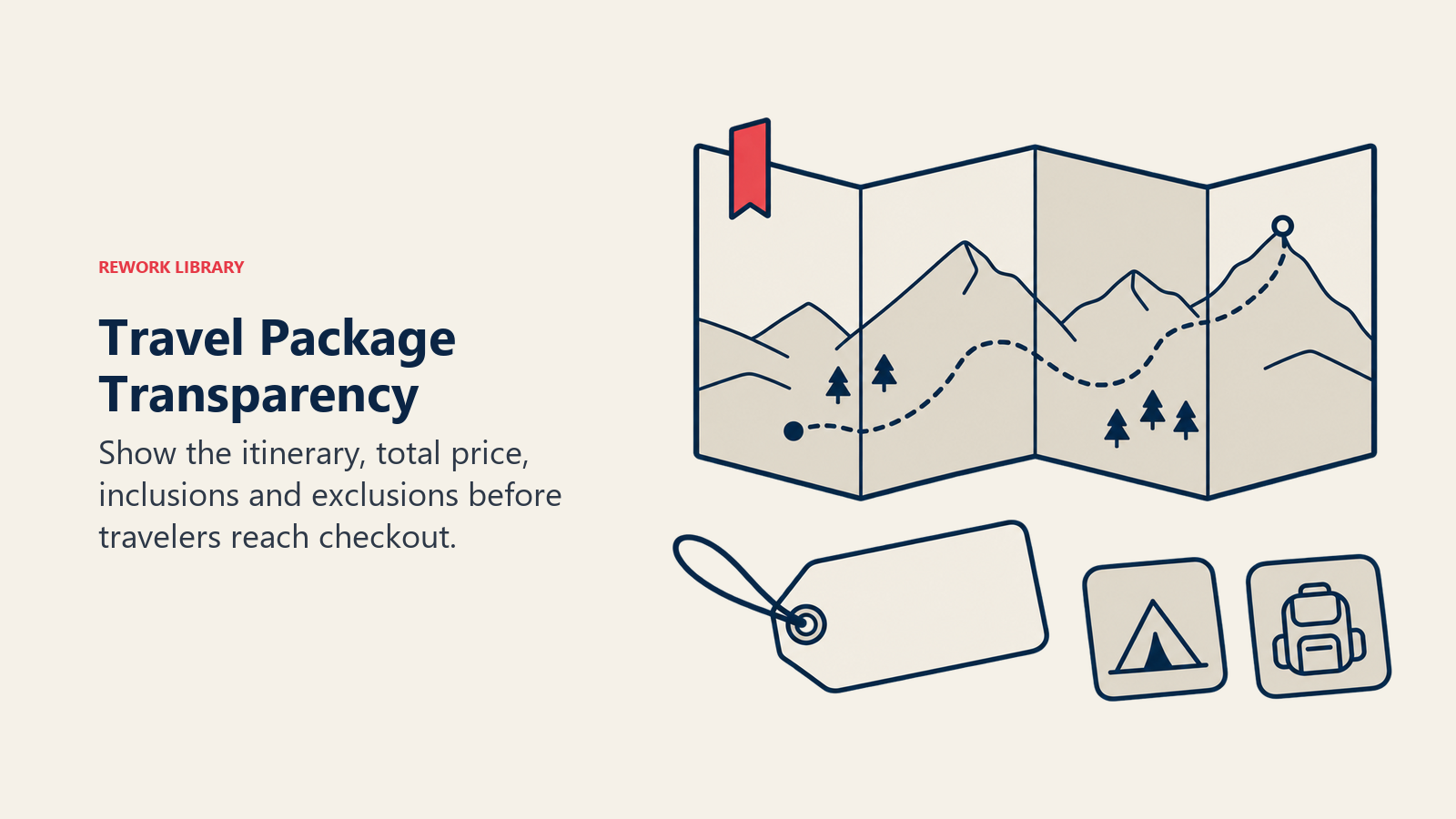
Image gallery optimization means leading with your absolute best photo, not just a good one, your stunning one. Use high-resolution images that showcase unique moments: not generic "people on a mountain" but "your actual guide pointing out wildlife in Yellowstone." Include 15-25 photos showing accommodation, activities, meals, transportation, and group dynamics. Video tours increase conversion 45-60%.
Itinerary presentation should use progressive disclosure. Display a day-by-day overview with expandable sections for detail. Don't force people to scroll through 10 days of minute-by-minute schedules if they just want an overview. But detailed-oriented planners should be able to drill into specifics. Include maps showing route and locations.
Pricing transparency means showing total price, not just "from $X." If your $3,500 price doesn't include flights, international insurance, or tips, say so explicitly. Hidden fees discovered at checkout kill conversions. Break down what's included: "All accommodations, 20 meals, ground transportation, guided activities, park fees, and local expert guides." Then list exclusions: "International flights, travel insurance, alcoholic beverages, tips."
Inclusion/exclusion clarity prevents mismatched expectations. Use icons and formatted lists that scan quickly. Under "What's Included" use green checkmarks. Under "What's Not Included" use red Xs. Visual clarity beats paragraphs of text that nobody reads.
Availability and calendar display should show real-time capacity. "Book Now" buttons that lead to "sorry, sold out" messages destroy trust. Display available departure dates with a calendar that shows open vs sold-out dates. Show capacity: "4 spaces remaining for June 15" creates urgency without manufactured scarcity.
Trust and Credibility Signals
Travel purchases require high-trust environments.
Customer reviews and ratings should aggregate multiple sources. Don't just show TripAdvisor or just Google, show both plus any other platforms you're on. Display average rating, total review count, and recent specific reviews. Video testimonials are 3x more persuasive than written reviews. Feature 2-3 short (60-90 second) customer testimonial videos on package pages.
Trust badges and certifications signal professional operation. Display memberships in Adventure Travel Trade Association, International Air Transport Association, or relevant regional tourism boards. If you're bonded or insured, say so. Payment security badges (SSL, PCI compliant, secure payment processor logos) belong on every page with booking functionality.
Media mentions and awards leverage third-party credibility. If National Geographic, Travel + Leisure, or CNN Travel featured you, show it. "As seen in" logo bars work. Industry awards ("Best Adventure Tour Operator 2025 - Adventure Travel Awards") differentiate you from competitors.
Expert testimonials from recognized figures in your niche build authority. If a well-known travel blogger, photographer, or author has toured with you, feature their endorsement. Industry expert recommendations outweigh consumer reviews for certain buyer segments.
Secure payment indicators reduce transaction anxiety. Display "Secure Checkout" messaging, SSL padlock icons, and recognizable payment processor logos (Stripe, PayPal, major credit cards). On booking pages, reinforce "Your information is encrypted and secure" near payment fields.
Calls-to-Action Optimization
Every page needs clear next steps optimized for conversion.
Primary versus secondary CTAs guide users without overwhelming them. Primary CTA (usually "Book Now" or "Check Availability") should be highly visible, contrasting color, larger size. Secondary CTA ("Get a Quote" or "Ask Questions") offers an alternative for people not ready to commit immediately. Don't create CTA clutter with five equal buttons competing for attention.
Urgency and scarcity messaging works when truthful. "Only 3 spaces left for this departure" drives action if accurate. Manufactured scarcity ("Only 2 spots left!" when you have 20 available) damages trust when discovered. Use real scarcity: limited dates, seasonal availability, early booking deadlines. "Book by March 15 and save $300" creates deadline urgency.
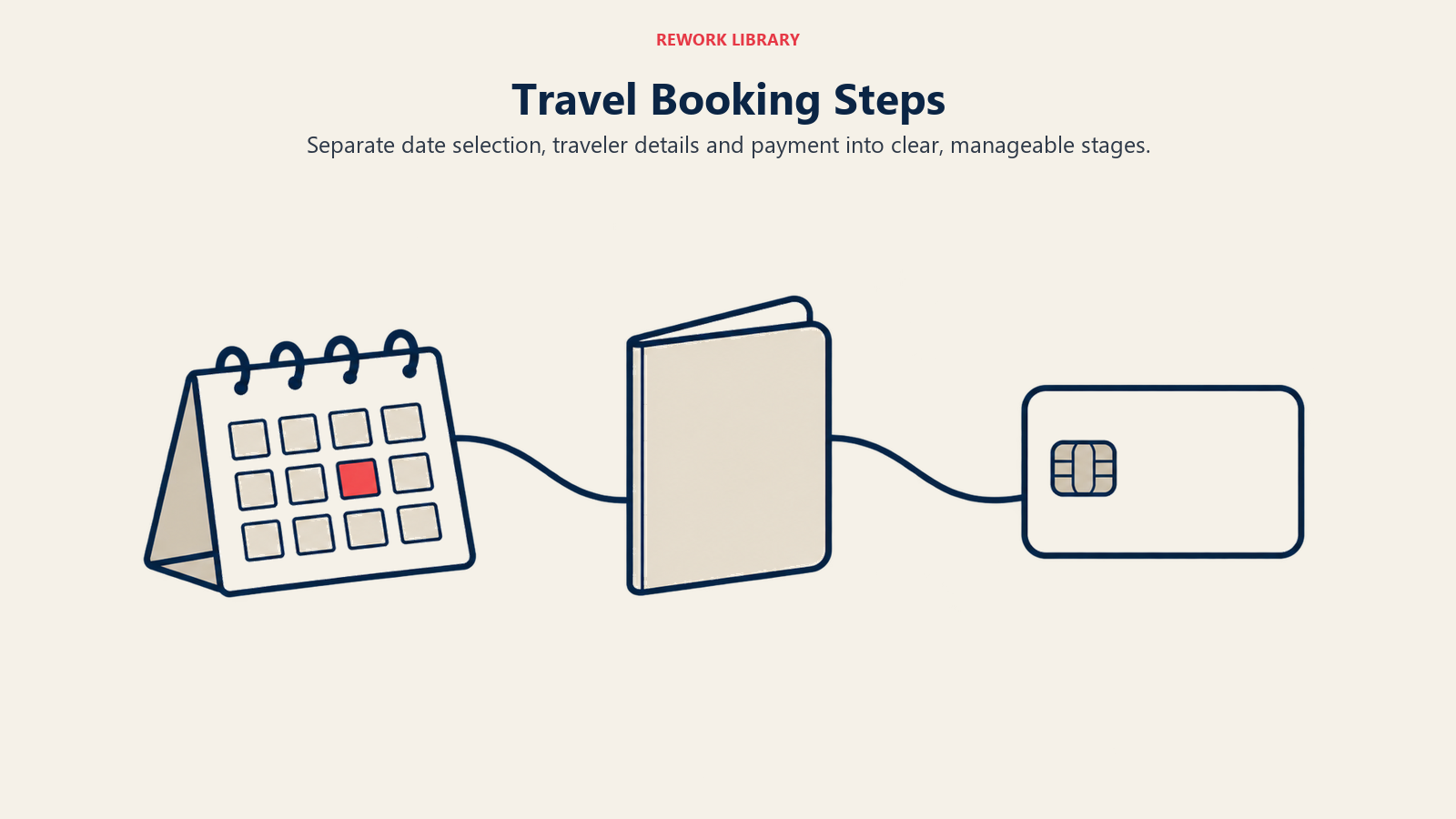
Multi-step booking flows reduce perceived commitment. Instead of one intimidating "Complete Your Booking" page with 40 fields, break it into steps: 1) Select dates and travelers, 2) Personal information, 3) Payment. Progress indicators ("Step 2 of 3") show movement and reduce abandonment. Each step should feel manageable.
Inquiry versus instant booking options accommodate different buyer comfort levels. Some people want to book instantly. Others want to ask questions first. Offer both: prominent "Book Now" for ready buyers, visible "Request Info" or "Schedule a Call" for those needing conversation. Don't force everyone through the same path.
Mobile Conversion Strategy
Mobile traffic represents 60-70% of visitors but often 35-45% of bookings. Close this gap.
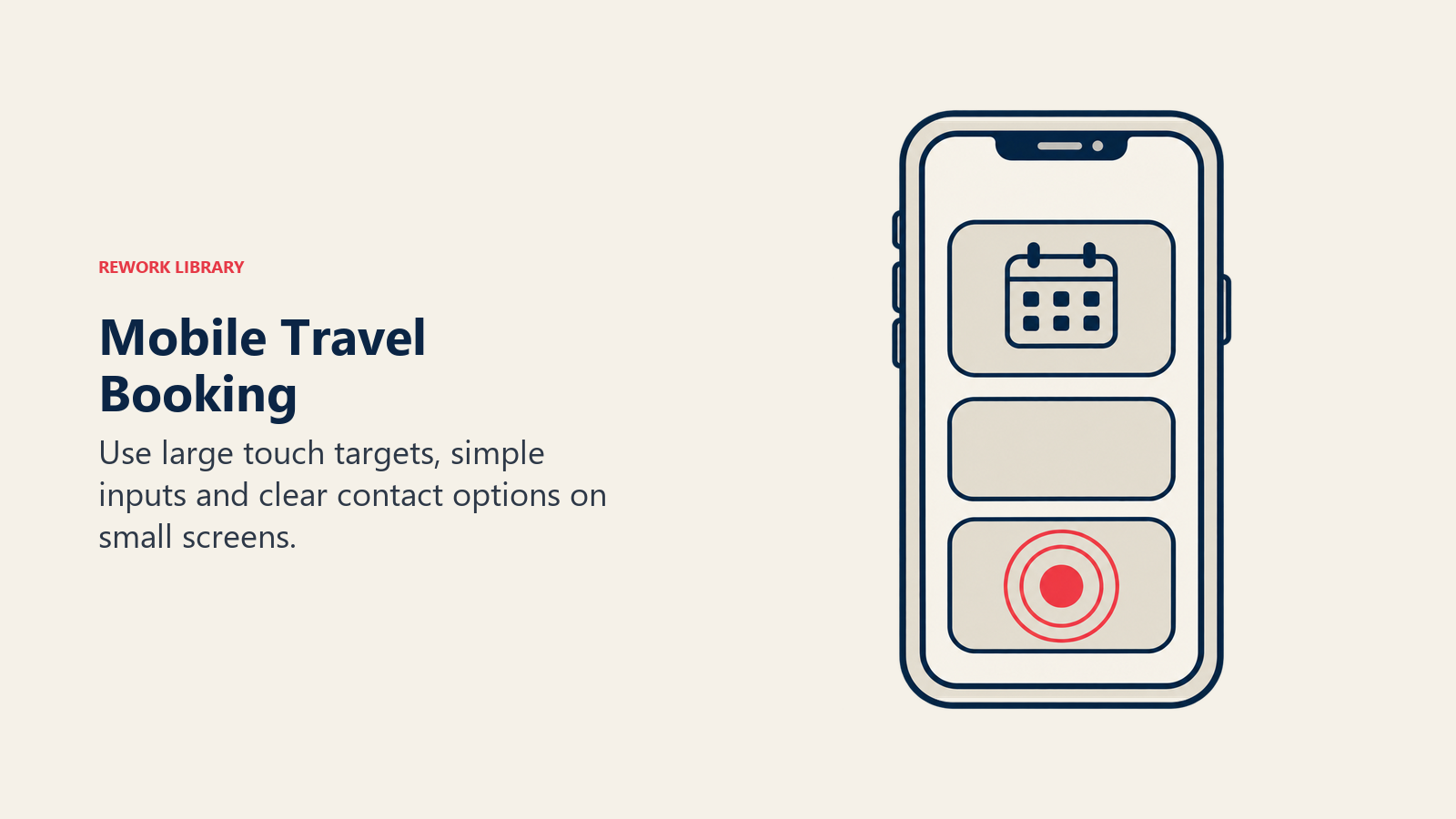
Thumb-friendly navigation means placing navigation controls within easy thumb reach (bottom third of screen for one-handed use). Hamburger menus work on mobile, don't try to fit full navigation bars. Use large, tappable buttons (minimum 44x44 pixels). Avoid hover-dependent interactions that don't work on touch screens.
Simplified booking flows for mobile reduce friction. Desktop booking might use multi-column layouts with 12 fields visible simultaneously. Mobile should present fields sequentially, one or two at a time, with large input areas. Auto-complete for cities and addresses. Date pickers optimized for touch. Minimal typing required.
Click-to-call prominence recognizes that mobile users often prefer speaking to typing. Display phone numbers as tappable links throughout the site. Feature "Call Now" buttons prominently on package pages. Mobile users researching complex trips will call if you make it easy.
WhatsApp integration for international markets where WhatsApp dominates. Add WhatsApp chat widget that lets visitors initiate conversations. International travelers from Europe, Asia, and Latin America expect WhatsApp as a contact option. Toll-free phone numbers mean nothing to someone calling from Germany.
App download versus mobile web is a false choice for most operators. Unless you're a massive brand with millions of bookings annually, investing in app development usually underperforms investing in excellent mobile web experience. Focus on progressive web apps (PWAs) that offer app-like experience without installation friction.
Page Speed and Performance
Slow sites bleed conversions invisibly.
Image optimization is the highest-leverage speed improvement. Travel sites are image-heavy by necessity, but unoptimized photos destroy performance. Use next-gen formats (WebP, AVIF), compress aggressively, and implement responsive images (different sizes for mobile vs desktop). A 5MB hero image that looks identical at 500KB saves 4 seconds of load time.
Lazy loading strategies defer loading images below the fold until users scroll to them. Your package page might have 30 images, but only 3 are visible initially. Lazy loading the other 27 means the page loads 80% faster. Implement for images, video embeds, and maps.
Core Web Vitals targets set by Google directly impact SEO and conversion. Largest Contentful Paint (LCP) should be under 2.5 seconds, how fast main content loads. First Input Delay (FID) under 100ms, how fast site responds to interactions. Cumulative Layout Shift (CLS) under 0.1, how much content jumps around while loading. Meeting these thresholds improves conversion 20-30%.
Impact on conversion rates is measurable. Sites loading in 2 seconds convert at baseline. 3-second loads drop conversion 20%. 5-second loads drop conversion 35%. 8-second loads drop conversion 50%. Audit your site's speed using Google PageSpeed Insights and prioritize fixes that impact user-facing performance.
Personalization Tactics
Dynamic content increases relevance and conversion.
Location-based customization shows relevant departures. If someone visits from Seattle, highlight tours with Seattle departures or feature destinations popular with Pacific Northwest travelers. Display prices in local currency for international visitors. Show seasonal messaging: promote Alaska tours to Florida visitors in summer, Caribbean tours to Canadian visitors in winter.
Returning visitor recognition acknowledges previous interactions. If someone viewed your Peru tour three times, show it prominently when they return. Display "Welcome back! Pick up where you left off" with links to previously viewed packages. This reduces friction and shows you're paying attention.
Behavioral targeting adjusts messaging based on browsing behavior. Someone who's viewed five adventure tours gets messaged differently than someone browsing luxury escapes. Surface relevant packages based on indicated interests rather than showing everyone identical homepages.
Dynamic pricing display can show discounts to visitors who've browsed without booking. Email subscribers might see exclusive pricing. Previous customers could see loyalty discounts. This requires technical sophistication but dramatically improves conversion for targeted segments.
Testing and Optimization Framework
Continuous improvement comes from systematic testing.
Prioritization methodology prevents random testing. Use PIE framework: Potential (how much improvement is possible), Importance (how much traffic/revenue affected), Ease (how difficult to implement). Score each potential test 1-10 on each dimension, multiply scores, and test highest-scoring opportunities first.
A/B testing best practices require discipline. Test one variable at a time so you know what drove results. Run tests until statistical significance (typically 95% confidence, 200+ conversions per variation). Don't stop tests early because one variation is winning, variance can mislead. Document all tests and results for institutional learning.
Multivariate testing when appropriate lets you test multiple variables simultaneously (headline + image + CTA). But it requires much higher traffic. If you get fewer than 10,000 visitors monthly, stick with A/B testing. Multivariate testing is for high-traffic sites that can reach significance quickly.
Statistical significance requirements prevent false positives. Calling a winner at 75% confidence means you're wrong 25% of the time. Wait for 95%+ confidence. For low-traffic sites, this means patience, some tests run 4-8 weeks before reaching significance.
Conclusion
Conversion optimization isn't a one-time project. It's a discipline of continuous measurement, hypothesis formation, testing, and iteration. The operators with 7% conversion didn't get there through one big redesign, they got there through 30 small improvements compounded over two years.
Start with speed, it's high-impact and measurable. Then focus on trust signals, reviews, testimonials, badges. Next optimize your booking flow, simplify, remove friction, reduce fields. Test continuously and let data guide decisions, not opinions.
Your traffic costs the same whether it converts at 2% or 6%. The difference is execution discipline applied to travel-specific conversion principles.
Frequently Asked Questions about Travel Website Conversion
What is bottleneck analysis for growth?
Bottleneck analysis is the practice of finding the single constraint that limits the most output, then fixing it before anything else. For a travel website, it means locating the funnel step (homepage, package page, or checkout) where the most visitors drop off, because improving that one step lifts overall conversion the fastest.
What is a good conversion rate for a travel website?
Industry average sits around 2 to 4%. Well-optimized travel operators reach 6 to 8%, roughly triple the average. The gap rarely comes from traffic quality, it comes from removing friction in trust, transparency, mobile experience, and page speed.
What is the most common bottleneck on travel booking sites?
Page speed and mobile experience are the most common. Every extra second of load time cuts conversion by about 7%, and mobile drives 60 to 70% of traffic but often only 35 to 45% of bookings. Closing that mobile gap is usually the highest-leverage fix.
How do you improve travel website conversion without a full redesign?
Work the bottlenecks in order: speed first, then trust signals (reviews, badges, testimonials), then a simplified booking flow with fewer fields. Test one change at a time and wait for statistical significance before declaring a winner. ---
Related Articles:

Business Consultant