Travel Industry Growth Model: Strategic Framework for Agencies and Tour Operators
Turn this article into takeaways for your work.


Each assistant summarizes the article only for you and suggests best practices for your work.
Most travel companies hit a growth wall around $5 million in revenue. They're doing everything the business books tell them to do, but their agencies and tour operations stubbornly refuse to scale like SaaS companies. That's because travel growth follows completely different rules.
The travel industry's unique economics demand a specialized framework. Long consideration cycles, high-touch sales, seasonal volatility, and complex multi-stakeholder decisions create friction that traditional growth playbooks simply don't address. If you're running a tour operator or travel agency and wondering why your growth has stalled, the problem isn't your execution, it's your model.
The Travel-Specific Growth Model
Growth in travel breaks into five distinct phases that map to how people actually buy trips:
Lead Generation (Inspiration Phase): This is where potential travelers start dreaming. They're not yet shopping, they're discovering. Your destination marketing strategy, social media presence, and brand awareness work drives this phase. Most travel companies underinvest here because ROI is hard to track, but this is where your flywheel begins.
Lead Capture (Inquiry Phase): When dream becomes intent, travelers start asking questions. They fill out inquiry forms, send emails, or call your team. This phase is about making it easy to raise their hand and ensuring you capture contact information for every signal of interest.
Deal Management (Booking Phase): Travel purchases are consultative, not transactional. Your sales team guides prospects through complex decision-making, often involving multiple stakeholders. This phase can take weeks or months and requires sophisticated nurturing and relationship management.
Post-Sales Success (Guest Experience Phase): The trip hasn't happened yet, but the clock is ticking. Pre-trip communication, preparation support, and the actual on-trip experience determine whether you'll see that customer again. Most operators focus on operations here but miss the marketing opportunity.
Retention & Advocacy (Repeat Booking Phase): Past guests are your most valuable asset. They book again, they refer friends, they leave reviews. The economics of acquiring a new customer vs retaining one are night and day in travel, yet most companies treat retention as an afterthought.
Each phase requires different capabilities, metrics, and investments. You can't skip phases or collapse them into a simple funnel.
The Travel Growth Equation
Here's how revenue actually works in travel:
Revenue = Inquiries × Booking Rate × Average Booking Value × Repeat Rate
Let's break down why each variable matters differently than in other industries.
Inquiries are hard-won in travel. You're not selling a $50/month software subscription, you're selling a $5,000 family vacation. The consideration cycle averages 3-12 months. That means your inquiry volume today converts to revenue six months from now. Traditional marketing funnels assume near-instant conversion; travel demands patience and sustained investment.
Booking Rate in travel typically ranges from 10-30%, dramatically lower than e-commerce or SaaS. Why? Because inquiries include tire-kickers, people shopping multiple vendors, customers whose plans change, and prospects who simply aren't ready. Your sales team's skill and your nurturing systems determine where you land in that range.
Average Booking Value varies wildly by trip type, destination, and customer segment. A weekend city break might be $1,200 per person; a luxury safari could be $15,000. Your product mix and customer targeting directly impact this number, and small improvements compound fast.
Repeat Rate separates mediocre operators from exceptional ones. If your repeat rate is below 20%, you're on a customer acquisition treadmill. Top performers see 40-60% repeat rates, fundamentally changing their unit economics and allowing sustainable growth.
Most travel companies obsess over inquiries because they're visible and urgent. But the real leverage often lives in booking rate and repeat rate optimization, areas that require operational excellence, not just more marketing spend.
Three Core Growth Levers
Growth in travel comes from aligning three systems:
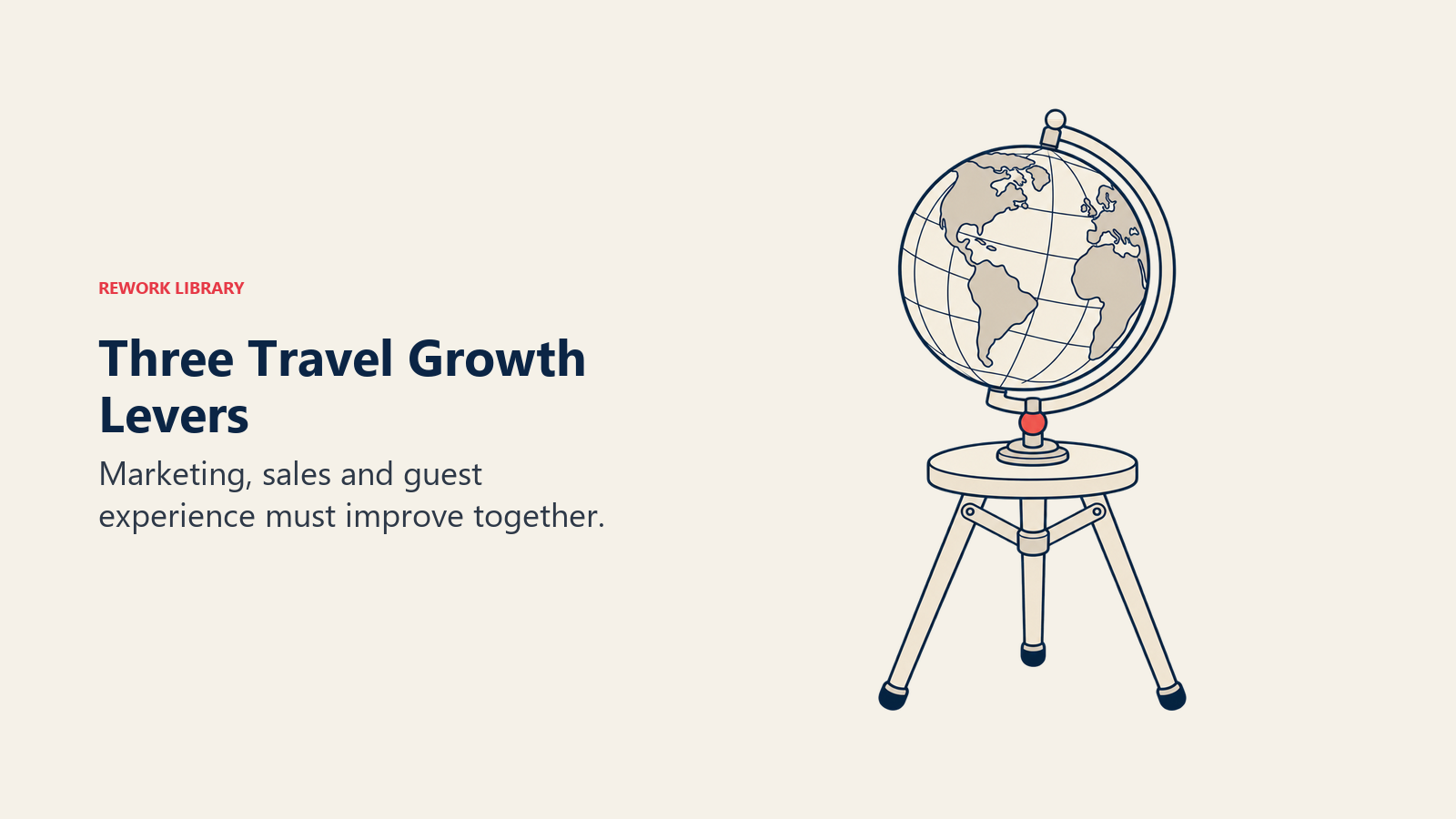
Marketing (Generating Dream Trips): Your marketing isn't just about driving traffic. It's about inspiring specific people to imagine themselves on specific trips. This requires destination authority, visual storytelling, social proof, and persistent presence across the long consideration cycle. Effective travel marketing feels more like media publishing than traditional lead generation.
Sales (Converting Inquiries to Bookings): Travel is sold, not bought. Your sales team consultatively guides prospects through complex decisions involving dates, budgets, companion preferences, and logistics. This isn't order-taking, it's relationship-building, expertise-demonstrating, and objection-handling that can span dozens of touchpoints over months.
Customer Success (Creating Advocates): The trip experience determines everything downstream. Exceptional operations create reviews, referrals, and repeat bookings. Poor experiences force you back to expensive acquisition channels. Your ground operations, guides, accommodations, and support systems are marketing investments, not just cost centers.
These three levers aren't sequential, they're simultaneous. You can't fix growth by only improving one. A tour operator with amazing marketing but poor sales execution wastes inquiries. Great sales with mediocre experiences creates one-time customers. Outstanding experiences without marketing never reach enough prospects.
Travel-Specific Growth Challenges
Understanding what makes travel growth difficult helps you build systems to overcome these challenges:
Long Consideration Cycles (3-12 Months): Your prospect saw your Instagram post in January, visited your website in March, signed up for your email list in May, requested a custom quote in August, and booked in October for next year's trip. That's a 22-month cycle from first touch to revenue recognition. Can your systems maintain relationships that long?
High-Touch Sales Requirements: You can't automate away the human element. Travelers want to talk to experts, ask questions, get recommendations, and feel confident before committing thousands of dollars. This creates a natural ceiling on how many deals one salesperson can manage and demands investment in experienced team members.
Seasonality Impact: If 80% of your revenue happens in six months, your cash flow, staffing, and marketing investments all become more complex. You're essentially running two businesses, high season and low season, with very different dynamics.
Complex Multi-Stakeholder Decisions: Family vacations involve spouses, kids, grandparents. Group trips need consensus. Corporate travel requires approvals. You're not just convincing one person, you're satisfying an entire decision-making committee, often with conflicting priorities.
High Perceived Risk for Buyers: Travelers are buying something they can't test-drive, see, or return. They're trusting you with their precious vacation time and significant money. Every friction point, unclear pricing, lack of reviews, hard-to-reach sales teams, amplifies doubt and kills conversions.
These challenges explain why travel companies can't simply copy growth tactics from other industries. You need approaches specifically designed for these constraints.
The Flywheel Effect
The most powerful growth dynamic in travel is the guest experience flywheel:
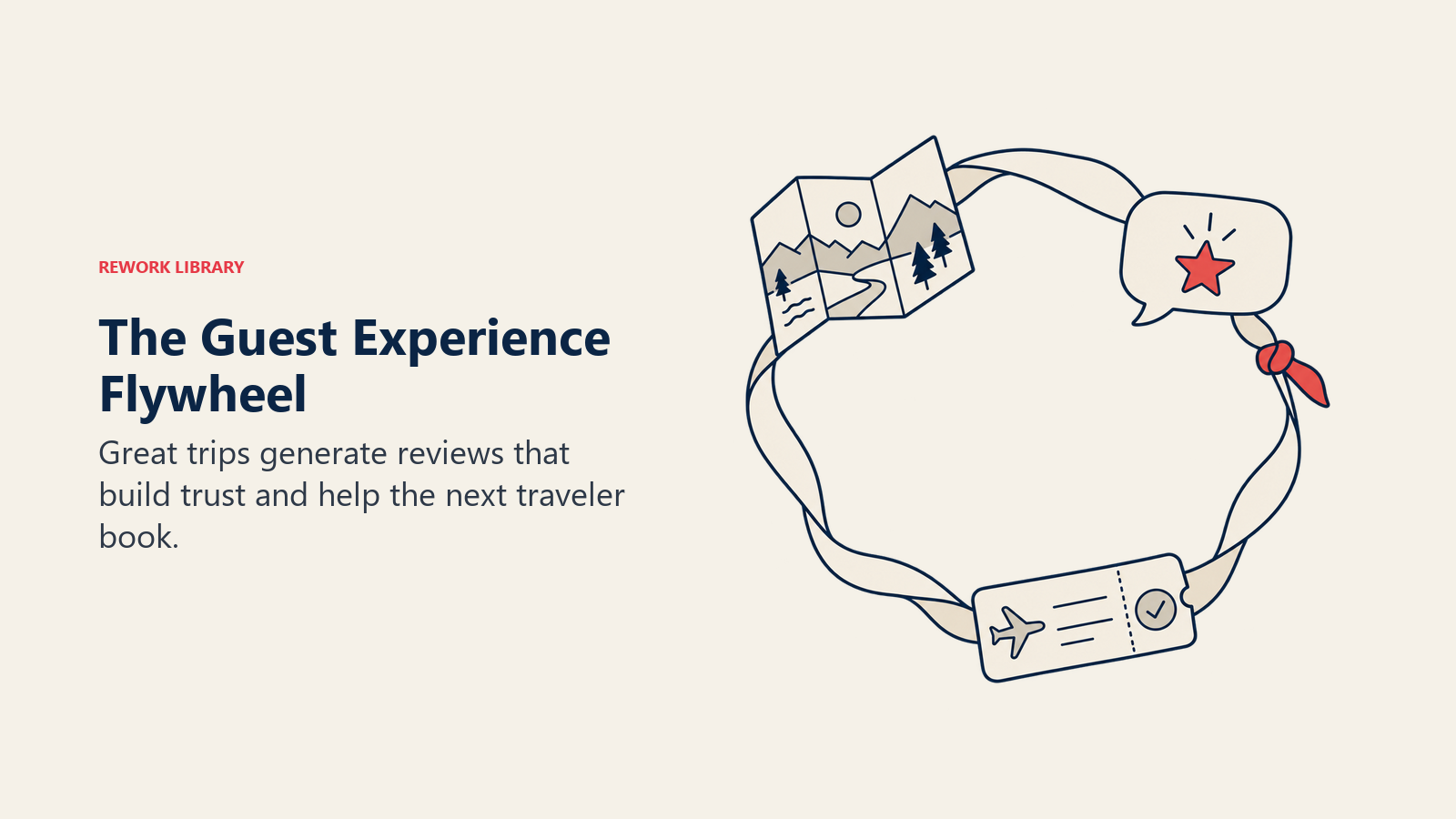
Exceptional trips create delighted guests. Delighted guests leave glowing reviews on TripAdvisor, Google, and social media. Reviews build social proof and trust for new prospects. Social proof lowers perceived risk and increases booking rates. Higher booking rates generate more guests. More guests mean more reviews. The cycle accelerates.
But here's the catch: it takes 12-18 months to build momentum. You need consistent delivery of great experiences, systematic review collection, and visible display of social proof. Most operators give up too early because they don't see immediate results.
The inverse is equally true. One bad trip creates negative reviews that persist for years. A few poor reviews can crater your booking rate. Negative booking rates mean fewer guests, slower feedback accumulation, and competitive disadvantage. The flywheel works both directions.
Your operations quality isn't just about customer satisfaction, it's your most important growth lever.
Growth Stage Evolution
Travel businesses evolve through distinct stages, each with different challenges:
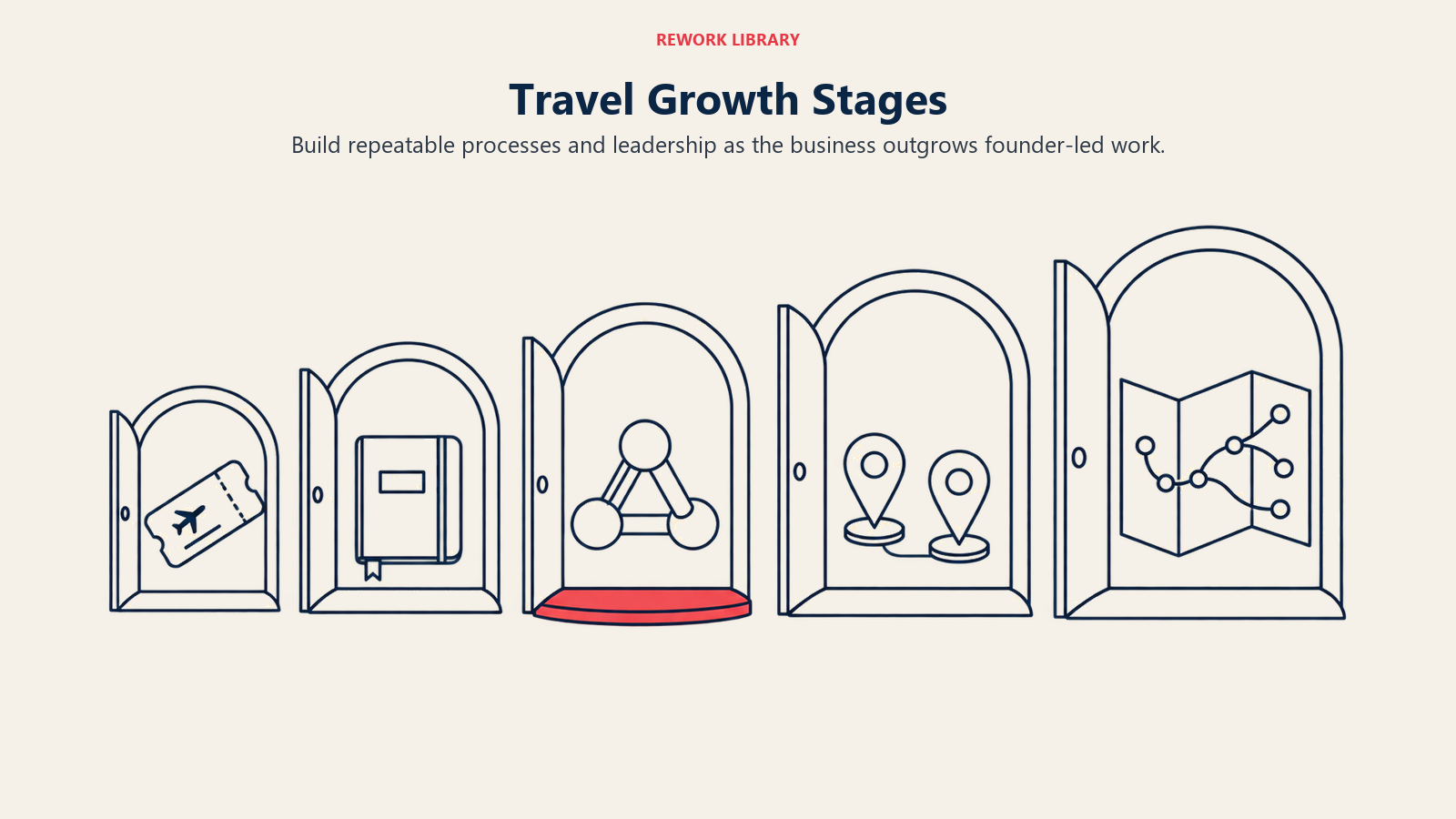
0-$1M (Startup): You're proving product-market fit. Focus on delivering exceptional experiences and generating word-of-mouth. Most revenue comes from referrals and personal networks. Your marketing is scrappy and opportunistic. You're wearing all hats.
$1M-$5M (Early Growth): You're systematizing what works. You've identified your best destinations and customer segments. You're building a small sales team, investing in content marketing, and developing repeatable processes. Cash flow becomes critical. You're starting to appear in search results.
$5M-$20M (Scaling): This is where most operators get stuck. You need to professionalize marketing, build sales infrastructure, diversify lead sources beyond OTAs, and develop leadership team. Systems that worked at $3M break at $10M. Your next level requires different capabilities.
$20M-$50M (Mature Growth): You're optimizing channel mix, building brand equity, expanding product portfolio, and potentially acquiring smaller operators. You have sophisticated analytics, clear unit economics, and professional management team. Growth comes from efficiency and strategic positioning, not just more effort.
$50M+ (Scale): You're likely multi-destination, possibly multi-brand. Your advantages are operational excellence, buying power, technology investments, and market presence. Growth comes from market share capture and strategic expansion.
Each stage requires different metrics, systems, and leadership focus. Trying to run a $10M business like a $1M startup or a $1M startup like a $10M company both fail.
Metrics Framework: Leading vs Lagging Indicators
Most travel companies only track lagging indicators, bookings, revenue, profit. These tell you what happened but don't help you predict or improve what's coming.
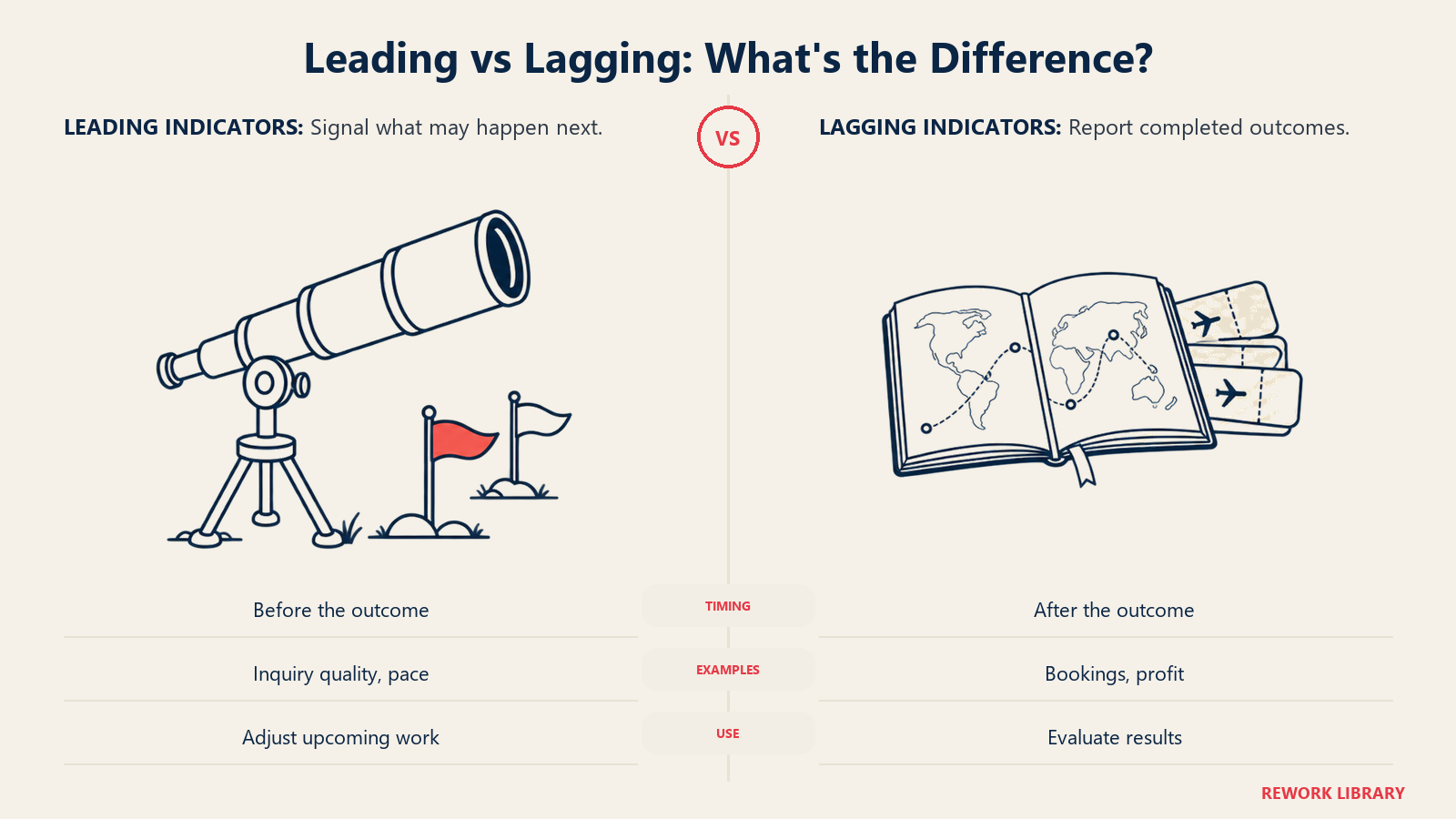
Leading Indicators (Predict Future Revenue):
- Website traffic from high-intent keywords
- Inquiry volume and quality by source
- Email list growth rate
- Sales pipeline value and velocity
- Quote-to-booking conversion rate
- Booking pace for upcoming seasons
- Review volume and average rating
Lagging Indicators (Report What Happened):
- Monthly bookings and revenue
- Average booking value
- Customer acquisition cost
- Profit margins
- Repeat booking rate
- Customer lifetime value
You need both. Lagging indicators tell you if you're winning. Leading indicators tell you if you'll keep winning.
Common Growth Pitfalls
Understanding where others stumble helps you avoid the same mistakes:
The $5M Plateau: Companies hit this wall when founder-led sales can't scale. You need to hire salespeople, systematize the sales process, and develop marketing that generates qualified inquiries without your personal brand. Most founders struggle to let go.
The $20M Plateau: At this level, you've maxed out your core destination or segment. Further growth requires expanding into new markets, developing new products, or acquiring competitors. It demands strategic thinking, not just operational execution.
The $50M Plateau: Here, the limitation is organizational complexity. You need sophisticated systems, professional management, clear accountability, and significant technology investment. Many operators try to maintain startup culture and informal processes, which creates chaos at this scale.
Each plateau requires fundamentally different capabilities. Recognizing which stage you're in helps you invest appropriately.
The Integrated Growth Advantage
Most travel companies treat marketing, sales, and operations as separate functions. Marketing generates leads, sales closes deals, operations delivers trips. This fragmentation kills growth.
The best operators integrate these functions into a unified growth system:
Your operations team provides content and expertise to marketing. Marketing creates materials that sales uses in consultations. Sales provides feedback on what objections and questions they're hearing. Operations follows up post-trip to generate reviews and referrals that feed marketing.
This isn't just organizational structure, it's a philosophical approach. Everyone understands they're contributing to growth, not just executing their functional role. Customer data, insights, and feedback flow freely. Decisions are made based on customer lifetime value, not departmental metrics.
Companies that achieve this integration grow faster with less friction. They don't waste inquiries, they turn more guests into advocates, and they continuously improve based on market feedback.
Related Articles

Business Consultant