Post-Trip Engagement - Building Lasting Guest Relationships 2025
Turn this article into takeaways for your work.


Each assistant summarizes the article only for you and suggests best practices for your work.
A tour operator calculated that acquiring new customers cost them $420 per booking. Their average customer booked once, maybe twice if they were lucky. Customer lifetime value barely exceeded acquisition cost. Then they implemented systematic post-trip engagement - staying connected between trips, personalizing recommendations, celebrating milestones. Three years later, average customer booked 2.8 times with lifetime value of $8,200. Same product. Same service. Better relationships.
The trip ending isn't the relationship ending. It's the beginning of a longer relationship that determines whether you've acquired a one-time customer or a lifelong advocate through effective repeat booking strategy. Most operators think about post-trip engagement as requesting reviews and maybe sending a newsletter. The best operators treat post-trip engagement as cultivation - nurturing relationships that grow into repeat bookings, referrals, and brand advocacy.
The return on this engagement is extraordinary. Repeat customers cost 70% less to book than new customers, spend 67% more per booking, and refer others at 5x the rate of first-time customers. Post-trip engagement isn't optional activity for companies with extra resources. It's essential growth strategy for companies serious about profitable scaling.
Post-Trip Engagement Strategy
Strategic post-trip engagement requires systematic planning and measurement, not ad hoc communication.
Understanding engagement as the bridge to repeat bookings means treating the post-trip period as active selling time, not passive waiting for customers to return spontaneously. You're maintaining presence, building preference, and creating conditions that make rebooking natural rather than requiring active reconsideration of all travel options. This positioning is deliberate cultivation, not intrusive marketing.
Mapping post-trip customer lifecycle stages creates natural engagement framework. Immediate post-trip (0-7 days): capture memories and feedback while fresh. Early post-trip (7-30 days): maintain enthusiasm and introduce next possibilities. Medium-term (30-90 days): provide value beyond selling and maintain relationship. Long-term (90+ days): periodic touchpoints that maintain presence without overwhelming. Each stage requires different content and frequency.
Balancing staying top-of-mind with avoiding over-communication requires testing and monitoring unsubscribe rates. Too much communication creates annoyance. Too little allows you to be forgotten. Most operators find monthly touchpoints with occasional additional communications for specific offers or content create good balance. Monitor unsubscribe rates - spikes indicate over-communication or irrelevant content.
Measuring engagement effectiveness through repeat booking rates provides accountability. Track repeat booking rates among engaged customers versus unengaged, time to next booking by engagement level, referral rates among highly engaged customers, and email engagement metrics (open rates, click rates). These metrics validate whether engagement efforts drive business results or just create busy work.
Immediate Post-Trip Follow-Up
The first week post-trip is critical for capturing memories and setting the foundation for ongoing relationship.
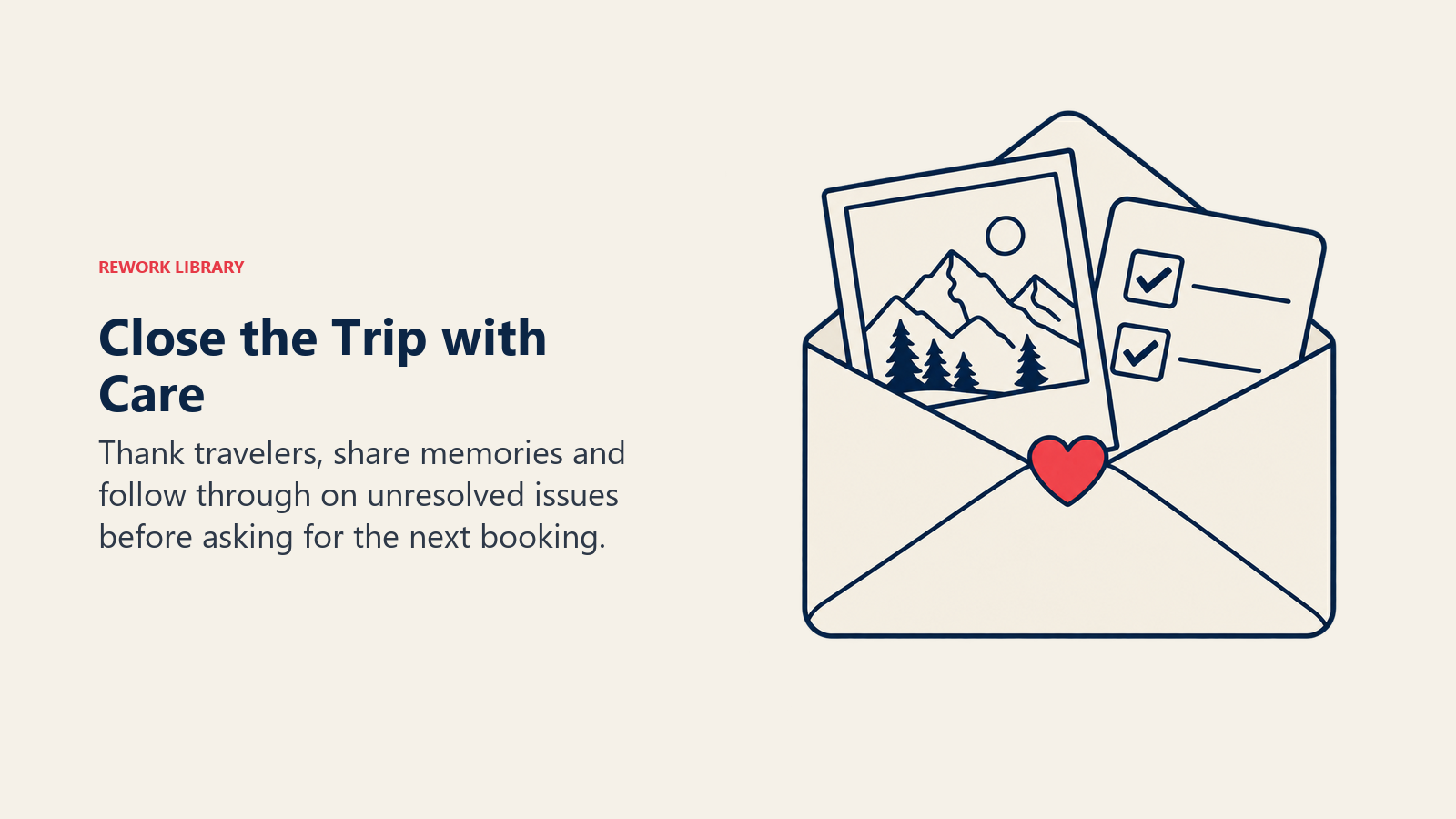
Sending thank-you messages within 24 hours of trip conclusion through travel email marketing automation creates positive final touchpoint. Personal thank you from guide or operations team, acknowledgment of specific moments or inside jokes from the trip, gratitude for choosing your company among options, and teaser about staying connected create warm closure while opening next chapter.
Sharing trip photos and memories provides tangible reminders of positive experiences. Group photos from the trip, highlight images from key activities, links to shared photo galleries where all guests can contribute, and simple slideshow or video montage create emotional connection to memories. These visual reminders trigger positive feelings associated with your brand through travel social media marketing.
Requesting feedback while experience is fresh through guest feedback collection enables issue resolution and captures authentic impressions. Link to comprehensive post-trip survey, personal request for feedback from satisfied guests, quick pulse check for overall satisfaction, and invitation to contact you directly with concerns all happen in this immediate window managed through travel CRM implementation. Feedback collected here is most authentic and actionable.
Addressing any unresolved issues from the trip prevents them from festering into permanent negative impressions. Follow up on problems that occurred during trip, confirm resolution or continued commitment to resolution, apologize again where appropriate, and offer service recovery gestures if issues were significant. How you handle problems post-trip often matters more than whether problems occurred.
Photo and Memory Sharing
Photos and memories create emotional connection that lasts longer than the trip itself.
Collecting and curating trip photos from guides and guests creates comprehensive visual record. Guides should systematically photo-document key moments, encourage guests to share their photos to common gallery, curate the best images into highlight collections, and organize chronologically or thematically for easy browsing. Well-organized photo libraries provide value guests appreciate and create touchpoints for engagement.
Creating shared photo galleries or albums enables community building. Google Photos shared albums, Dropbox folders, dedicated photo-sharing apps, or Facebook groups all create spaces where guests can contribute and browse. These shared spaces often generate ongoing engagement as guests revisit and share with friends long after trips end.
Offering professional photo packages or downloads creates additional value and revenue opportunity. Professional photographer on key trips or destinations, offering curated photo collections for purchase, providing high-resolution downloads for guests wanting print-quality images, or creating photo books guests can order all enhance memories while generating incremental revenue.
Encouraging social sharing with branded hashtags extends your marketing reach organically. Create unique hashtags for your company or specific trips, encourage guests to use hashtags when posting their photos, feature guest photos on your social channels, and create campaigns highlighting best photos each month. User-generated content performs better than branded content for attraction and conversion.
Review and Referral Requests
Converting satisfied guests into advocates requires explicit requests at the right time with the right incentives.
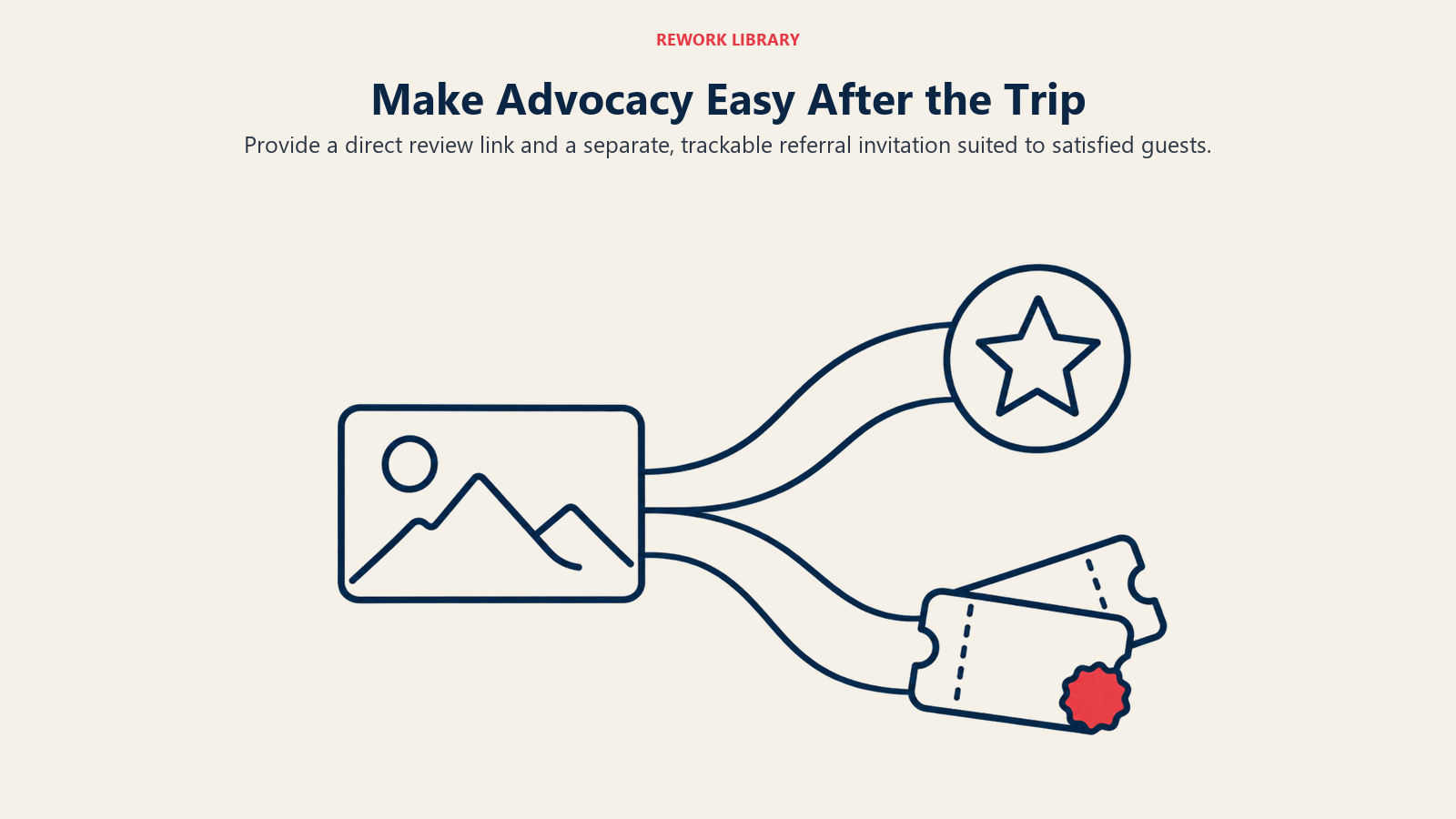
Timing review requests for maximum response (24-48 hours post-trip) balances freshness with rest. Too immediate and exhausted travelers ignore you. Too delayed and memories fade. The 48-hour window captures enthusiasm while respecting guests' need to recover from travel. Include direct links to review platforms to minimize friction.
Requesting referrals from promoters and satisfied guests converts satisfaction into growth. Identify guests who gave 9-10 NPS ratings or exceptional feedback through customer segmentation, send personalized referral requests to this segment specifically, provide unique referral codes tracking attribution, and make the ask personal: "Your friends would love this trip as much as you did - here's an exclusive referral code for them."
Offering referral incentives and programs provides motivation for advocacy. Standard structure: referring friend gets $50-100 discount, referred friend gets matching discount, tiered bonuses for multiple referrals, and public recognition for top referrers all work well. Balance incentive value with profitability - generous enough to motivate but not so large that people refer anyone regardless of fit.
Making review submission effortless with direct links dramatically improves completion rates. Email with buttons linking directly to your TripAdvisor, Google, and Facebook review pages, mobile-optimized review request pages, pre-populated some information to reduce typing, and thank you confirmation when reviews are submitted all reduce friction in the review process.
Educational Content Delivery
Providing value beyond selling maintains engagement and positions you as travel resource, not just vendor.
Sharing destination guides and articles related to visited locations extends the experience beyond the physical trip. Behind-the-scenes stories about places they visited, cultural deep-dives on topics they touched on, interviews with local partners they met, and follow-up recommendations for things they didn't have time for all keep destinations and experiences top-of-mind while adding value.
Providing travel tips and packing list improvements helps guests apply learnings from one trip to future travels. "What we learned works best for international flights," seasonal packing recommendations, destination-specific tips for places they expressed interest in, and advice based on common questions during the trip all demonstrate expertise and helpfulness beyond the transactional relationship.
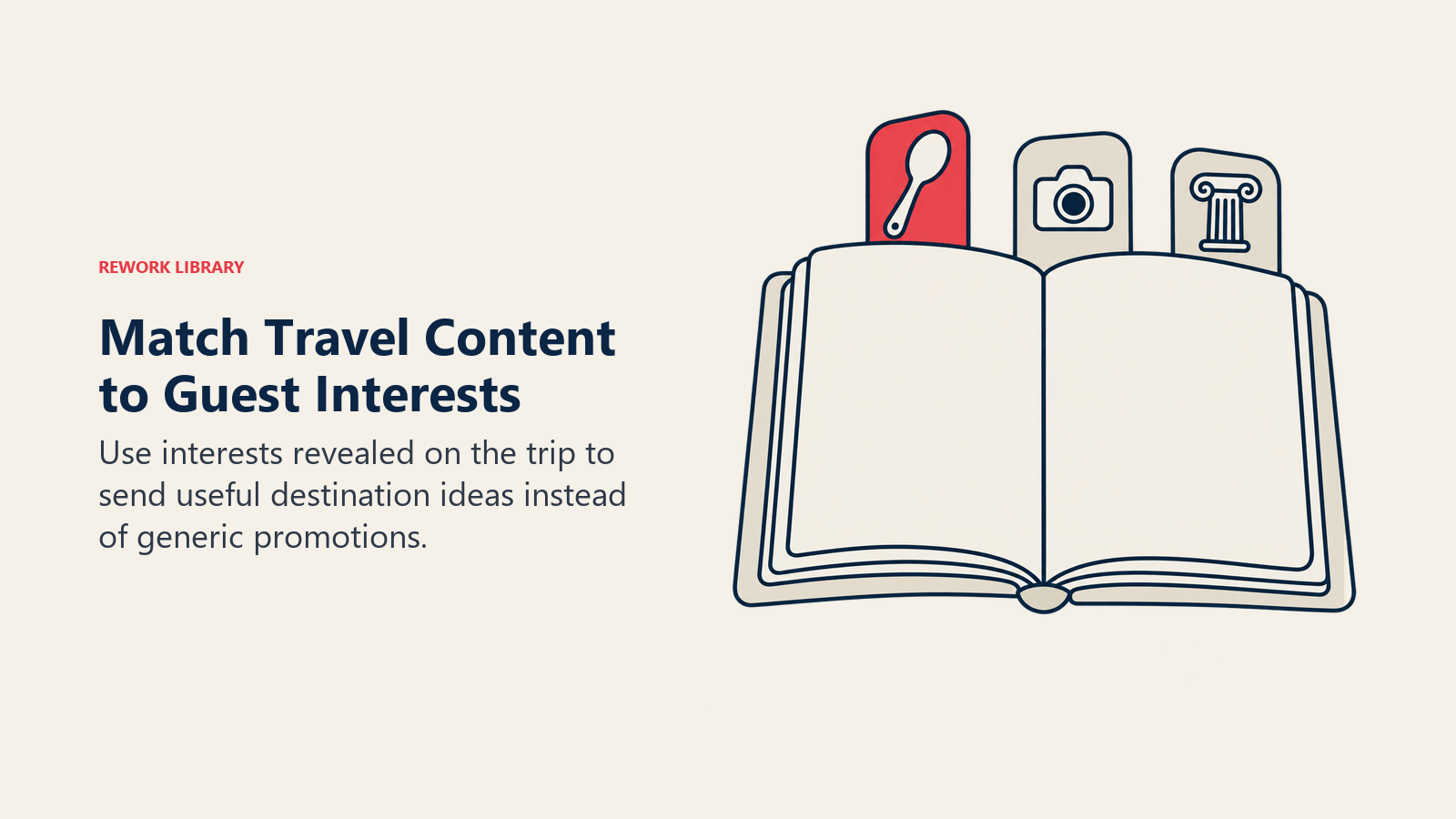
Sending relevant travel content based on interests shown during trips personalizes engagement. Guests who loved food experiences get culinary travel content, photography enthusiasts receive destination photography guides, history buffs get cultural and historical deep-dives, and adventure seekers receive activity-focused content. This personalization makes content relevant rather than generic blasts.
Positioning brand as travel knowledge resource creates long-term relationship where guests come to you first for travel inspiration and booking. When you've consistently provided valuable, interesting content between trips, you're top-of-mind when they start planning next travel. This positioning converts engagement into bookings more effectively than promotional emails alone.
Stay-in-Touch Communication
Consistent, valuable communication between trips maintains relationships and keeps you relevant.
Implementing monthly or quarterly newsletters for past travelers provides regular touchpoint without overwhelming. Monthly works for larger companies with significant content volume, quarterly works better for smaller operators with limited content. Focus on value: destination spotlights, travel tips, past guest stories, industry news, and modest selling of new offerings. 80% value, 20% promotion maintains engagement.
Sharing new trip offerings and destinations with past travelers first gives them insider status and early access. Announcement of new destinations being added, preview of upcoming season's trips, first-look at special departures or limited-availability experiences, and past traveler exclusive booking windows all create VIP feeling that strengthens relationship and drives early bookings.
Highlighting travel industry news and trends positions you as knowledgeable resource. New visa requirements or travel regulations, destination updates affecting popular locations, travel trends and emerging destinations, seasonal considerations and optimal timing guidance all demonstrate you're actively engaged in travel industry and thinking about their travel needs proactively.
Maintaining relationship between trips through valuable communication ensures you're not just appearing when you want to sell something. The newsletter sharing destinations they might love, the email with packing tips before summer travel season, and the article about places they mentioned interest in during their trip all build goodwill that makes promotional emails better received.
Special Occasion Engagement
Recognizing personal milestones creates emotional connection that transactional relationships never achieve.
Celebrating trip anniversaries with personalized messages acknowledges shared history. Email on anniversary of their trip with you, reminisce about moments from that trip, share photo from their trip, and offer trip anniversary discount on their next booking all personalize relationship and create touchpoint that feels human rather than automated marketing.
Recognizing birthdays with special offers shows attention to them as individuals. Birthday email with personalized greeting, exclusive birthday discount or offer, invitation to celebrate next birthday on a trip with you, and genuine recognition without requiring immediate booking all build goodwill. Even simple "Happy Birthday" from real person creates positive impression.
Acknowledging holidays with seasonal greetings maintains presence during key times. Holiday cards or emails that feel personal rather than mass marketing, seasonal travel inspiration for upcoming vacation periods, year-end review thanking past travelers for their business, and new year content inspiring travel goal-setting for the year ahead all leverage natural occasions for meaningful communication.
Marking personal milestones mentioned during trips demonstrates you remember them as individuals. Congratulations on wedding anniversaries if mentioned during trip, recognition of career milestones or life changes shared during travel, follow-up on goals or plans they mentioned, and genuine interest in their lives beyond just future travel bookings all deepen relationships beyond transactional exchanges.
Loyalty Program Communication
Formal loyalty programs require specific communication strategies that maintain engagement and motivation.
Updating members on points balance and tier status keeps loyalty program front-of-mind. Monthly or quarterly balance statements, notification when approaching tier upgrade thresholds, anniversary statements showing annual activity, and prediction of tier status for next period based on current pace all keep members engaged with loyalty program structure.
Announcing exclusive offers for loyalty members creates perceived value of membership. Members-only sales and flash offers, early access to new trips before public release, exclusive members-only departures or experiences, and tier-specific offers that recognize higher-tier members with better benefits all leverage loyalty status to drive engagement and booking.
Sharing early access to new trips and promotions gives loyal customers insider advantage. 48-72 hour exclusive booking window before public release, preview of upcoming season with member-first booking, advance notice of limited-availability experiences, and first shot at discounted inventory all reward loyalty tangibly while driving early bookings that help capacity planning.
Recognizing loyalty milestones and achievements celebrates customer relationship longevity. Recognition when reaching new tier levels, celebration of loyalty program anniversary, acknowledgment when reaching booking milestones, and public recognition (with permission) of top loyalty members all create emotional connection to loyalty program and your brand.
Win-Back Campaigns
Not all engagement succeeds at maintaining relationship. Win-back campaigns target customers who've disengaged or lapsed.
Identifying lapsed customers who haven't rebooked (12+ months) creates win-back campaign target list. Segment by lapse duration (12, 18, 24+ months), historical value and profitability, past engagement levels, and lapse reason if known. Prioritize high-value lapsed customers for personalized win-back efforts while using automated campaigns for lower-value segments.
Designing targeted win-back offers and messaging acknowledges time since their last trip while creating urgency. "We miss you" messaging that feels genuine, exclusive come-back discount (15-20% off), limited-time urgency to create action, and highlighting what's new since their last experience all work to reactivate dormant relationships through strategic travel loyalty program benefits.
Addressing potential barriers to rebooking requires understanding why customers don't return. Survey lapsed customers about barriers, offer solutions to common objections (payment plans for budget concerns, shorter trips for time constraints), demonstrate improvements if previous experience had issues, and remove obstacles rather than just offering discounts.
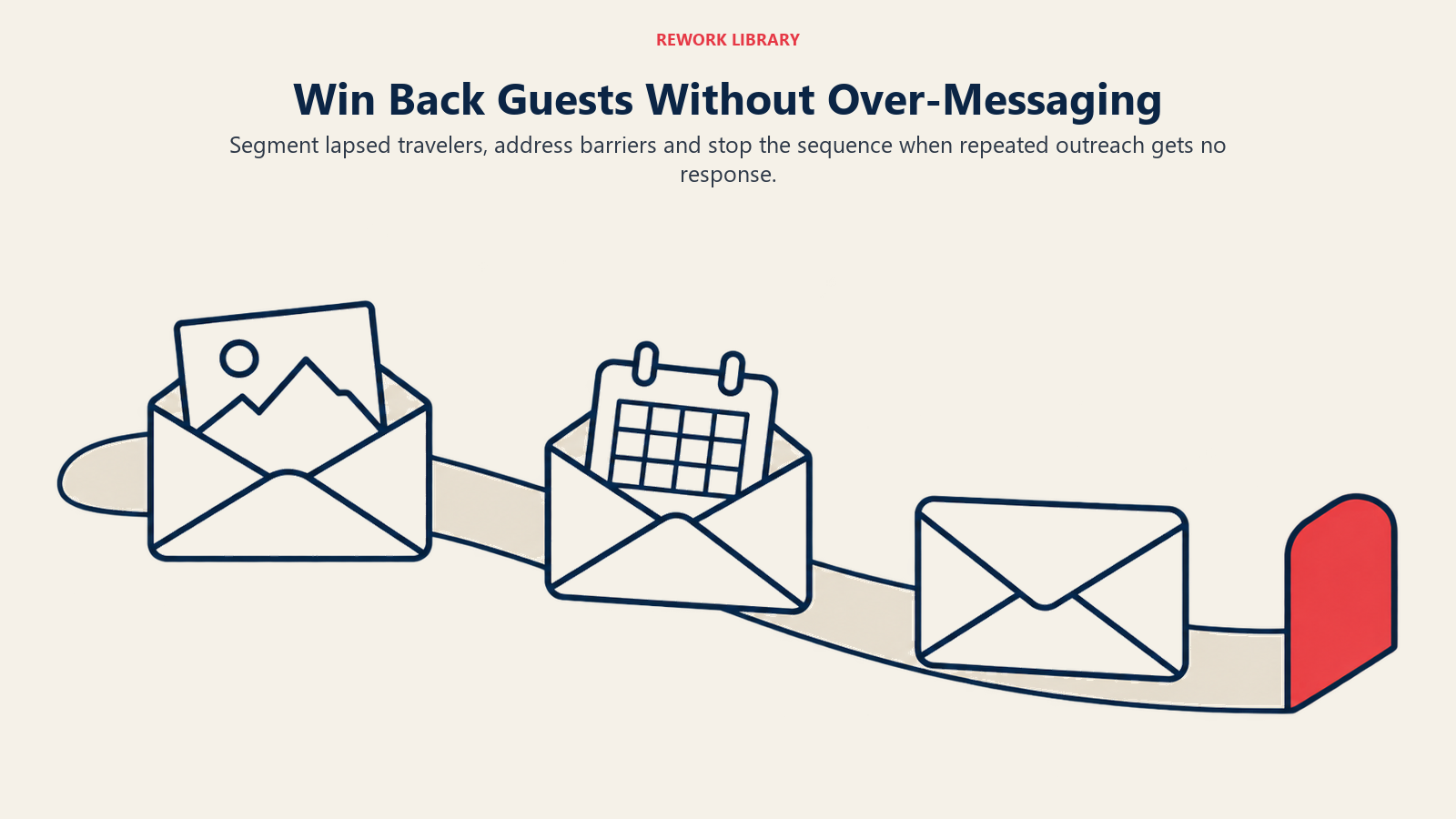
Implementing automated win-back sequences creates systematic approach. First touchpoint at 12 months: "Come back" offer, second touchpoint at 15 months with different angle or increased urgency, final touchpoint at 18 months as last effort, and suppression after non-response to avoid annoying uninterested former customers. These automated sequences ensure no lapsed customer is forgotten while not overwhelming staff with manual follow-up.
Community Building
Creating community among past travelers transforms individual customer relationships into tribe membership.
Creating online communities for past travelers (Facebook groups, forums) enables ongoing connection. Past traveler Facebook groups organized by interest or destination, online forums for trip planning and travel discussion, WhatsApp groups for specific trips or interests, and regular community events (virtual or in-person) all foster belonging. Community members often become strongest advocates because they identify with tribe, not just brand.
Facilitating connections among like-minded travelers creates network effects. Introducing solo travelers who have similar interests, organizing reunions for guests from same departures, hosting virtual gatherings on travel topics, and creating opportunities for past guests to meet and connect all build relationships that strengthen attachment to your brand as connector and community center.
Hosting alumni events and reunions maintains physical connections beyond digital engagement. Annual reunion events for past travelers, destination-specific gatherings in major cities, participation in travel shows or expos with past-traveler meetups, and special alumni-only trips or departures all create in-person touchpoints that deepen emotional connections.
Fostering sense of belonging to travel tribe positions your brand as identity marker, not just service provider. When customers identify as part of your travel community, they don't comparison shop each trip. They book with you because they're part of the tribe. This identity-based loyalty is stickier and more valuable than transactional satisfaction-based loyalty.
Post-trip engagement is the difference between transactional travel business and relationship-based travel community. The operators who invest in ongoing engagement, personalized communication, and genuine relationship building create sustainable competitive advantages that price-focused competitors can't replicate. When customers feel known, valued, and connected between trips, they stop shopping around and start planning their next adventure with you.
Related Articles:

Business Consultant