Travel Content Marketing: From Inspiration to Inquiry Generation
Turn this article into takeaways for your work.


Each assistant summarizes the article only for you and suggests best practices for your work.
Two tour operators publish destination content. Operator A creates one blog post per month, gets 5,000 monthly visitors, generates 15 inquiries, and calculates a $427 cost per inquiry. Operator B publishes 12 pieces monthly, gets 42,000 visitors, generates 380 inquiries, and calculates a $47 cost per inquiry.
The difference isn't quality, both operators write good content. It's volume, consistency, and strategic approach. Operator A treats content as occasional marketing tactics. Operator B built a systematic content engine that compounds monthly.
In travel, where buying cycles span 3-12 months and customers read 20+ articles before inquiring, content marketing isn't optional, it's your most important acquisition channel. But only if you do it right.
Why Content Wins in Travel
Travel is uniquely suited to content marketing for structural reasons:
Long Consideration Cycles Favor Content:
When customers spend months researching, they're consuming content constantly. Your one ad might reach them once. Your 50 destination articles reach them repeatedly throughout their journey. Content marketing scales with consideration time.
Visual and Experiential Nature of Travel:
Travel is inherently story-driven and visual. Photos, videos, experience narratives, these aren't marketing fluff; they're the product preview. Content marketing lets you showcase what you sell in ways ads can't.
Research-Heavy Buyer Behavior:
Travel customers don't impulse buy. They read destination guides, compare itineraries, check reviews, investigate safety, understand costs. Every stage requires content. Providing that content positions you as the expert they eventually book with.
SEO Advantages for Patient Marketers:
Travel searches have massive volume and relatively approachable competition. "Peru travel guide" gets 18,000 monthly searches. "Two week Peru itinerary" gets 3,200. "Peru family tours" gets 1,400. Rank for these and you have sustained free traffic feeding inquiries for years.
But SEO takes 12-18 months to compound. Operators who commit to systematic content production build moats around their businesses. Those who dabble in content never see results.
Travel Content Hierarchy
Not all content serves the same purpose. Structure your content strategically:
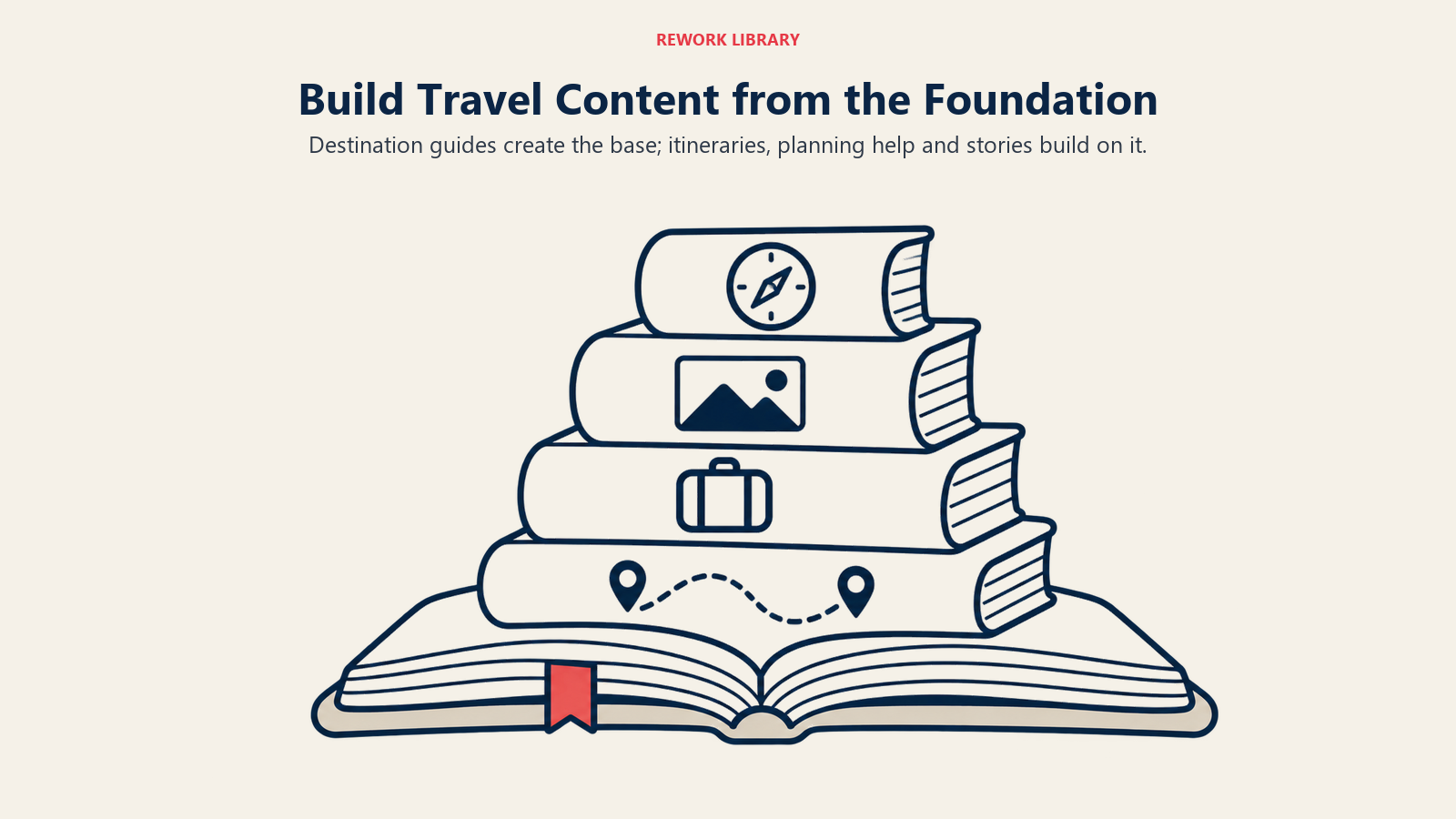
Tier 1: Destination Guides (Foundational SEO):
Comprehensive resources answering fundamental questions:
- Complete country or region travel guides
- Best time to visit destination
- Visa and entry requirements
- Transportation and getting around
- Where to stay and accommodation guides
- Budget planning and costs
- Safety and health information
These are 2,000-5,000 word pillar pages targeting high-volume search terms. They're SEO workhorses that attract early-stage researchers and establish your authority.
Tier 2: Itinerary Examples and Trip Ideas:
Specific trip structures showing what's possible:
- 7-day, 10-day, 14-day sample itineraries
- Trip ideas by interest (adventure, cultural, luxury, family)
- Combination itineraries linking multiple destinations
- Seasonal itinerary variations
- Budget vs luxury approaches
These convert inspiration into consideration. They're more specific than guides, more actionable, and closer to your actual products.
Tier 3: Travel Tips and Planning Resources:
Practical how-to content for trip planning:
- Packing lists for specific destinations or trip types
- Photography tips for destinations
- Cultural etiquette and customs guides
- Language basics and useful phrases
- Money, tipping, and payment guides
- How to choose between destinations or trip types
These demonstrate expertise, provide utility, and build trust. They're often shared and bookmarked, creating sustained engagement.
Tier 4: Experience Stories and Inspiration:
Narrative content that emotionally connects:
- First-person travel stories from your trips
- Customer testimonials and trip reports
- "Day in the life" content from destinations
- Local people and culture spotlights
- Unique experiences you offer
These move from rational evaluation to emotional connection. They help prospects imagine themselves on your trips.
Tier 5: Company Perspective and Expertise:
Content showcasing your unique approach:
- Your travel philosophy and values
- Team member profiles and expertise
- Behind-the-scenes trip planning and operations
- How you're different from competitors
- Your impact (sustainability, community, conservation)
This is least important tier but valuable for prospects in final decision stage comparing operators.
Build from Tier 1 up. Foundation first, then stories and inspiration.
Content Types That Convert
Different formats serve different purposes:
Comprehensive Destination Guides:
Long-form (3,000-7,000 words), regularly updated, covering everything about a destination. These are your SEO anchors and authority builders. They take 15-30 hours to create properly but generate value for years.
Include: interactive maps, photo galleries, downloadable resources, video embeds.
Visual Storytelling:
Photo Essays and Galleries: Curated collections telling visual stories. Great for social sharing and inspiration phase. Requires high-quality original photography.
Instagram Stories Highlights: Organized destination content that lives permanently. Easy to consume, mobile-first, authentic feeling.
Video Content:
Destination Showcases: 3-5 minute videos showing what destinations look like, capturing atmosphere and experiences.
Customer Testimonials: Past travelers sharing their experiences. Most powerful social proof format.
Itinerary Walkthroughs: Detailed explanations of what specific trips include, day by day.
Behind-the-Scenes: Trip planning, guide teams, local partnerships. Builds trust and differentiation.
Interactive Tools:
Budget Calculators: Help prospects estimate trip costs, capturing email and intent signals.
Trip Planners: Interactive questionnaires suggesting appropriate itineraries based on interests, budget, and timing.
Packing List Generators: Personalized packing recommendations by destination and season.
Interactive tools generate leads through utility while positioning you as helpful expert.
Sample Itineraries with Pricing:
Detailed day-by-day breakdowns with transparent pricing. These are high-conversion content, prospects reading these are serious. Include:
- Daily activities and experiences
- Accommodations and meals included
- Pricing tiers (budget/standard/luxury options)
- What's included vs not included
- Extension options
Travel Guides and Ebooks:
Gated content offered in exchange for email addresses:
- Ultimate destination planning guides
- Insider tips and recommendations
- Sustainable travel guides
- Family travel planning resources
These build email lists while demonstrating expertise.
Content Strategy Development
Random content doesn't work. Strategy does:

Keyword Research for Travel:
Identify what prospects actually search for. Use tools like Ahrefs, SEMrush, or free Google Keyword Planner.
High-Intent Keywords: "Peru tour packages", "guided Machu Picchu trek", "luxury Amazon lodge". Lower volume but conversion-focused.
Informational Keywords: "Peru travel guide", "when to visit Peru", "Peru visa requirements". Higher volume, earlier journey stage.
Balance both. Informational content builds traffic and authority. High-intent content captures ready buyers.
Topic Clustering by Destination:
Build interconnected content hubs around each core destination:
- Pillar page: Complete Peru travel guide
- Cluster content: Region-specific guides (Cusco, Sacred Valley, Amazon, etc.)
- Supporting content: Activities, tips, itineraries, stories
- All internally linked, creating topical authority
This "hub and spoke" model signals search engines you're authoritative source for that destination.
Creating Content Calendar Around Seasonality:
Align content publication with booking cycles:
- Publish summer Europe content in Oct-Dec when people plan next year
- Publish winter destination content in June-Aug for upcoming season
- Shoulder season content year-round to fill those trips
Match your content calendar to when prospects make decisions, not when they travel.
Balancing Inspiration vs Conversion Content:
70-80% of content should be educational and inspirational (early journey stage). 20-30% can be conversion-focused (late journey stage).
This reflects the actual funnel, more prospects at top than bottom. Don't optimize for conversion at the expense of awareness and consideration.
Production Workflow
Systematic production beats sporadic brilliance:
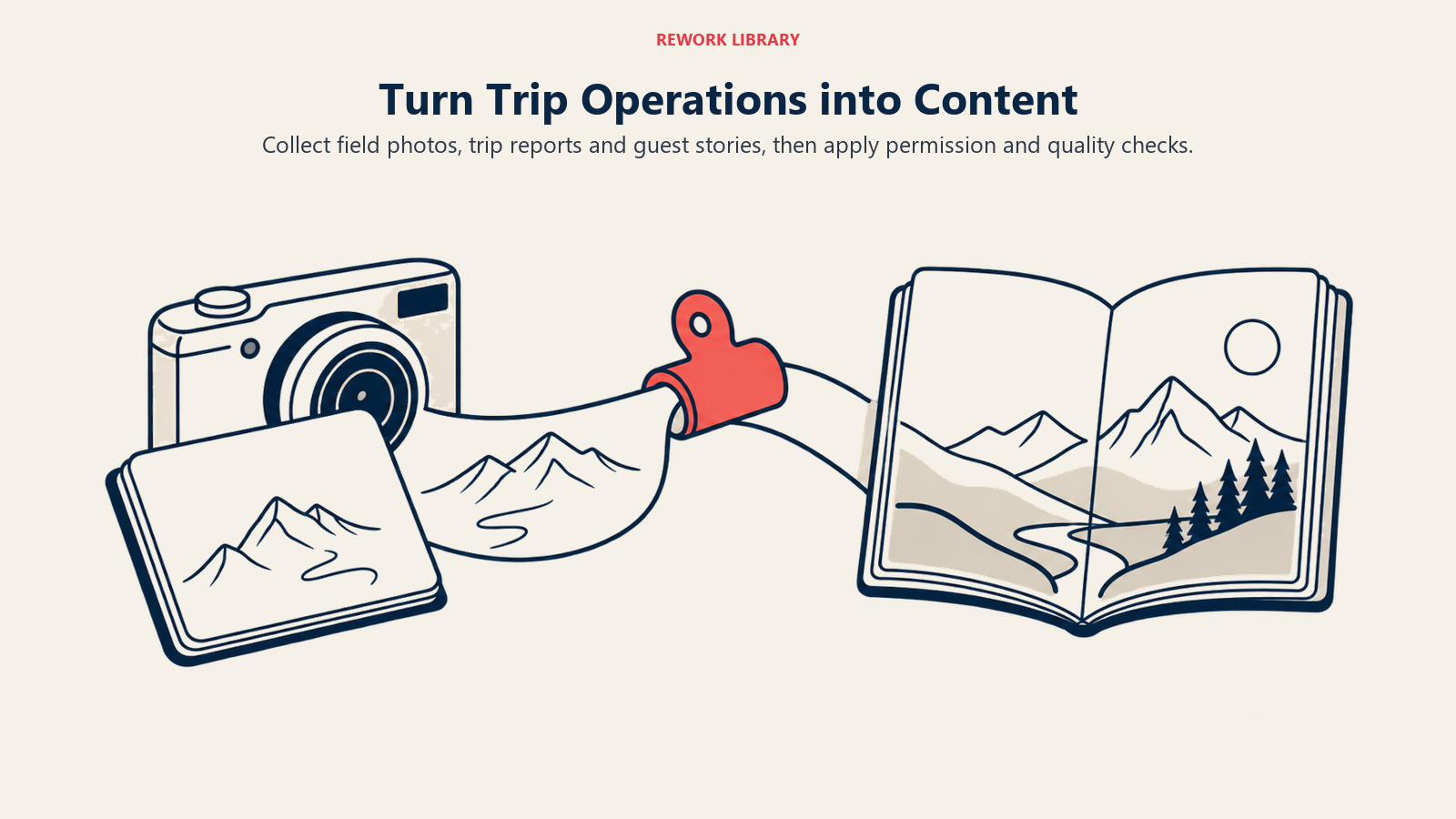
Building Content from Trip Operations:
Your ops team sees destinations constantly. Build content production into trip operations:
- Guides take photos and videos during trips
- Operations managers write trip reports
- Customer success team collects testimonials and stories
- Product development team documents scouting trips
This creates content volume without dedicated writers. Real experiences make better content anyway.
Working with Travel Writers and Photographers:
Hire freelance travel writers who:
- Have first-hand destination experience
- Understand SEO and keyword integration
- Can write in your brand voice
- Deliver on schedule
Budget $200-$500 for 2,000-word articles depending on complexity. Hire photographers for destination shoots ($1,500-$5,000 per assignment) or license stock photography ($10-$100 per image).
User-Generated Content Integration:
Your past guests create content. Systematically collect and repurpose:
- Request photos and stories post-trip
- Create contests encouraging content submission
- Get permission to use in marketing
- Feature guest stories prominently
UGC feels more authentic than marketing content and costs nothing to produce.
Quality Standards and Brand Voice:
Define standards:
- Minimum word counts
- Required elements (images, links, calls-to-action)
- Tone and style (inspirational, expert, casual, formal)
- SEO requirements (keyword usage, meta descriptions)
- Fact-checking and accuracy verification
Consistency builds trust. Random quality erodes it.
Distribution and Amplification
Creating content is half the battle. Distribution is the other half:
On-Site Optimization (Hub and Spoke Model):
Structure your website for discovery:
- Destination hubs as main navigation
- Topic clusters under each hub
- Clear internal linking between related content
- Search functionality for finding specific content
- Mobile-optimized reading experience
Make it easy for visitors to consume multiple pieces in one visit.
Email Newsletter Strategy:
Weekly or bi-weekly newsletters featuring:
- New destination content
- Trip ideas and inspiration
- Travel tips and resources
- Special offers and availability updates
Segment lists by destination interest when possible. General subscribers get varied content; Peru-interested subscribers get Peru-focused newsletters.
Social Media Promotion:
Share every piece of content across relevant social platforms:
- Visual excerpts on Instagram
- Full articles on Facebook
- Pins on Pinterest
- Video clips on TikTok and YouTube
- Professional content on LinkedIn (for corporate/group travel)
Create multiple social assets from each article, don't just share once.
Paid Amplification Tactics:
Boost high-performing content with paid promotion:
- Facebook/Instagram ads targeting destination interests
- Pinterest promoted pins for planning content
- Google search ads for high-value keywords
- Retargeting ads showing content to past visitors
Spend $500-$2,000 monthly amplifying your best organic content.
Content Performance Metrics
Track what matters:
Traffic and Engagement:
- Pageviews by article and category
- Time on page and scroll depth
- Bounce rate and pages per session
- Returning visitor rate
Inquiry Attribution:
- Which content pages lead to inquiry submissions
- First-touch content (what they read first)
- Last-touch content (what they read before inquiring)
- Content consumed before booking
Assisted Conversions:
- Bookings that interacted with content (even if not last touch)
- Value of bookings attributed to content
- Content's role in multi-touch journeys
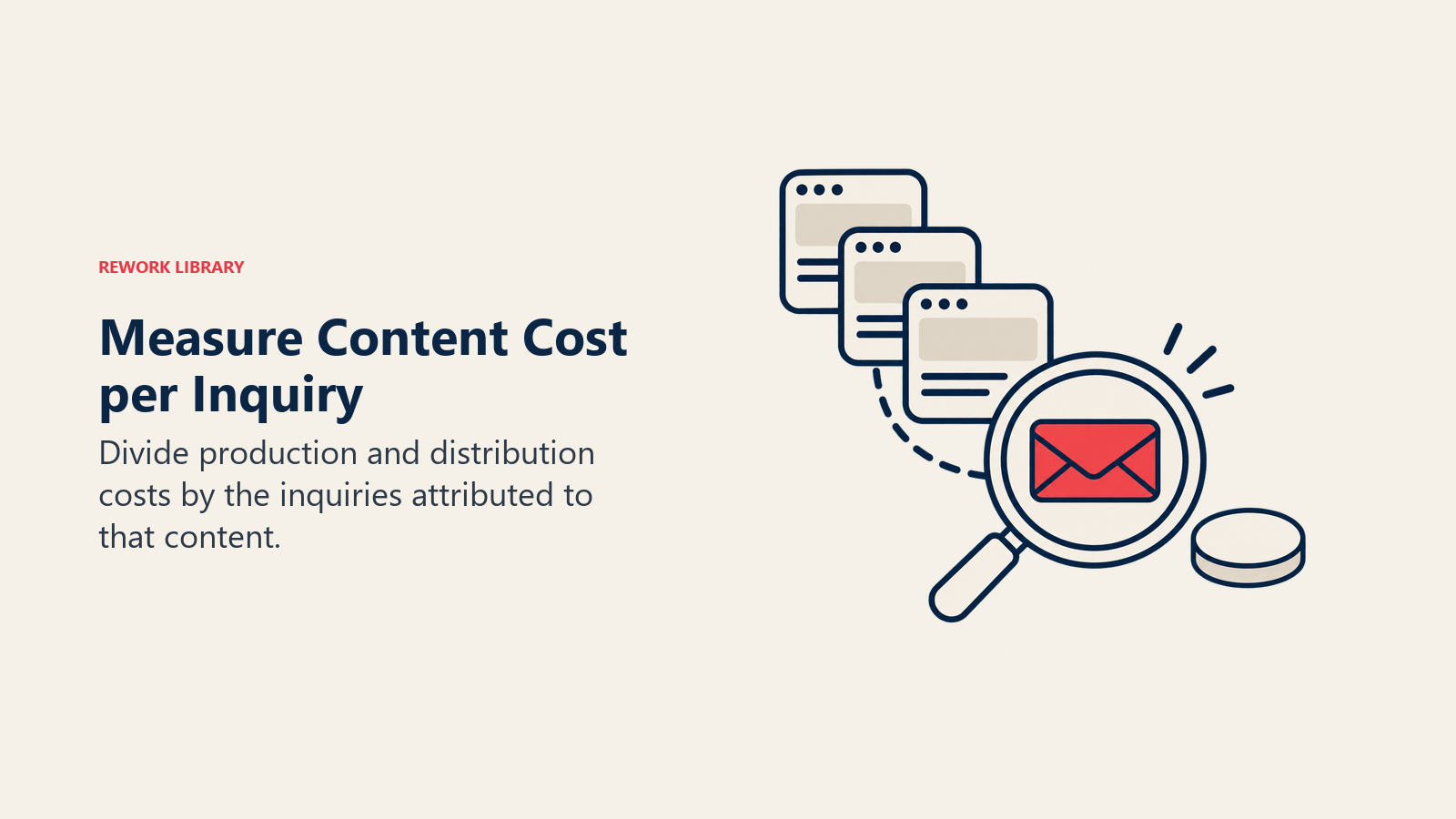
Content ROI Calculation: Cost per Inquiry = (Content Production + Distribution Costs) / Inquiries Attributed to Content
Healthy travel content generates inquiries at $30-$100 each, far better than paid advertising ($200-$500).
Scaling Content Production
Move from 1 article monthly to 100 annually:
Phase 1 (1-5 articles/month): Founder or marketing lead writes everything. Supplement with freelancers occasionally.
Phase 2 (5-15 articles/month): Hire dedicated content marketer. Establish production system with freelancers and UGC.
Phase 3 (15-50 articles/month): Content team with editor managing multiple writers, photographers, and video creators. Systematic production workflow.
Phase 4 (50+ articles/month): Full content studio operation with specialized roles (writers, editors, photographers, videographers, SEO specialists).
Most operators plateau at Phase 1 because they don't systematize. Moving to Phase 2 requires hiring and process, but it's where content ROI really compounds.
Common Pitfalls
Why most travel content fails:
Inconsistency: Publishing sporadically doesn't build momentum. SEO requires sustained effort over 12+ months.
Thin Content: 500-word surface-level posts don't establish authority or rank well. Go deep or don't bother.
No Keyword Strategy: Writing what you feel like rather than what prospects search for. Your content should target actual search demand.
Ignoring Internal Linking: Failing to interconnect related content. This dilutes topical authority and reduces time on site.
Poor User Experience: Walls of text, no images, mobile-unfriendly, slow loading. Even great content fails if site experience is bad.
No Distribution: Publishing and hoping people find it. Active promotion is required.
Short-Term Thinking: Quitting after six months because "it's not working." Content compounds over years, not months.
Related Articles