Travel Upselling Techniques: Maximizing Booking Value - 2026
Turn this article into takeaways for your work.


Each assistant summarizes the article only for you and suggests best practices for your work.
Your client books a $6,000 Italy trip. You could confirm the booking and move to the next inquiry. Or you could ask three strategic questions that add private wine tastings ($480), cooking class ($320), and room upgrades ($540), increasing the booking to $7,340 while genuinely improving their experience.
That's $1,340 in additional revenue from one conversation. Scale that across 100 bookings and you've added $134,000 in annual revenue without acquiring a single additional client.
Effective upselling isn't pushy or manipulative. It's enhancing experiences clients will genuinely value and helping them get more from their trips.
Upselling vs Cross-Selling in Travel
The distinction matters for strategy and execution.
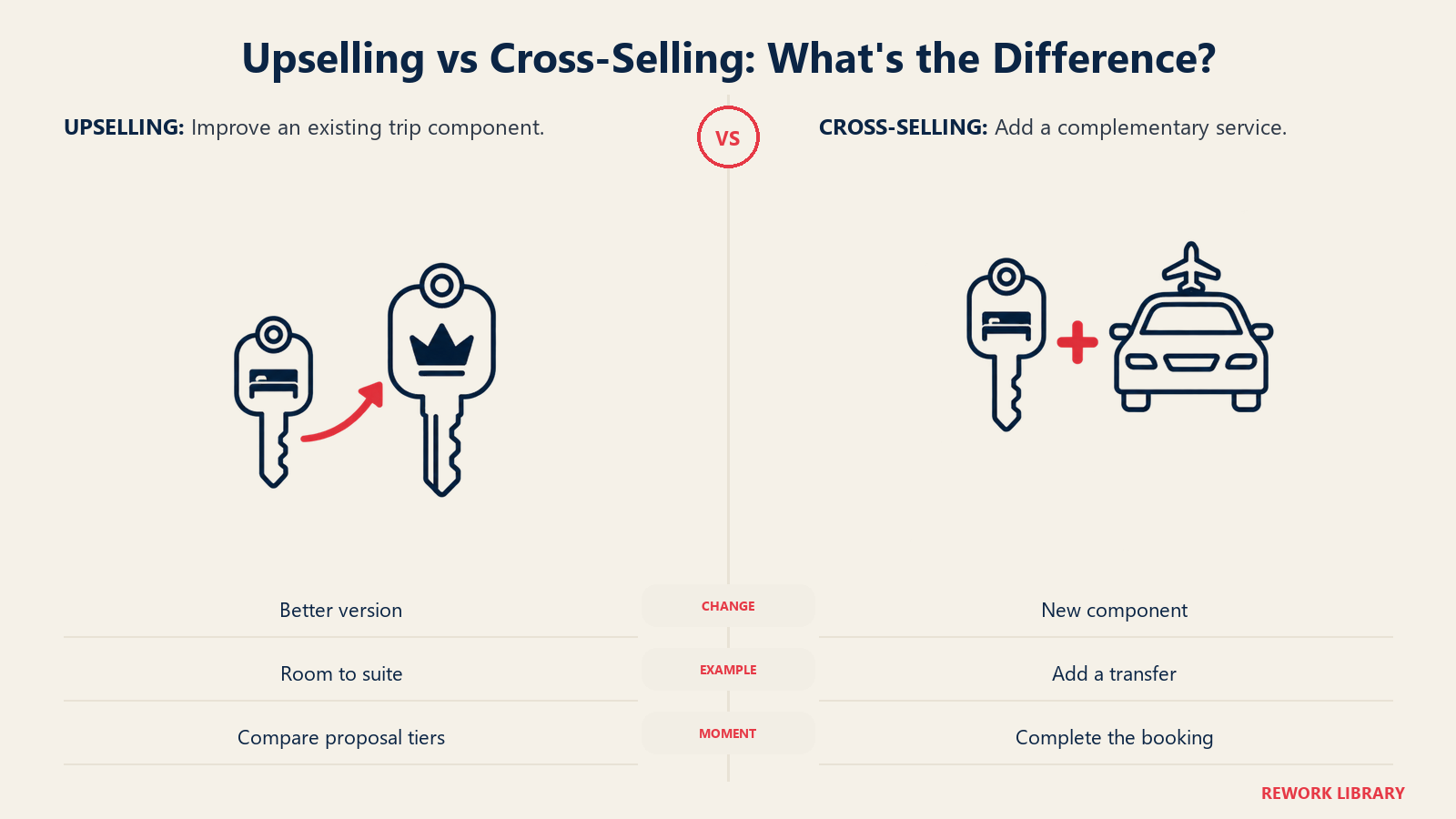
Upselling means upgrading what they're already buying, economy to business class, standard room to suite, shared tour to private guide, or good hotel to luxury property. You're enhancing the same element with a better version.
Cross-selling means adding complementary products they haven't considered, travel insurance to a booking, airport transfers to a hotel, spa treatment to an itinerary, or excursions to a cruise. You're expanding the scope of what they're purchasing.
When each applies: Upsell during initial proposal development when framing options. Cross-sell after core booking is confirmed when adding finishing touches. Both work throughout the customer journey at appropriate moments.
Integrated approaches combine both. "I'd recommend upgrading to the ocean-view suite [upsell], and we should add private transfers from the airport since you're arriving late [cross-sell]." Natural conversation flows better than separate upsell and cross-sell conversations.
Psychology of Travel Upselling
Understanding why travelers say yes enables more effective approaches.
Why travelers accept upgrades: They're already investing significantly and small incremental costs seem reasonable. The pain of paying has already been accepted, what's another $500 on a $5,000 trip? They want optimal experiences. Nobody wants to return from their dream vacation wishing they'd upgraded. Fear of regret drives upgrade acceptance.
FOMO tactics work when used authentically. "The rooftop suites are usually booked 4-6 months out, but one just became available for your dates. It's worth grabbing if you want it." Genuine scarcity creates urgency without artificial pressure.
Social proof influences decisions powerfully. "90% of our clients doing this itinerary add the cooking class. It's consistently rated as a trip highlight." If most people choose something, it signals it's worth doing.
Framing premium options as "standard plus these extras" rather than "expensive" changes perception. Don't say "the luxury suite is $800 more." Say "for $800, the luxury suite includes oceanfront views, separate living area, private balcony with jacuzzi, and complimentary sunset champagne. Most couples celebrating special occasions choose this option."
Quote Stage Upselling
Your initial proposal sets the frame for the entire booking value.
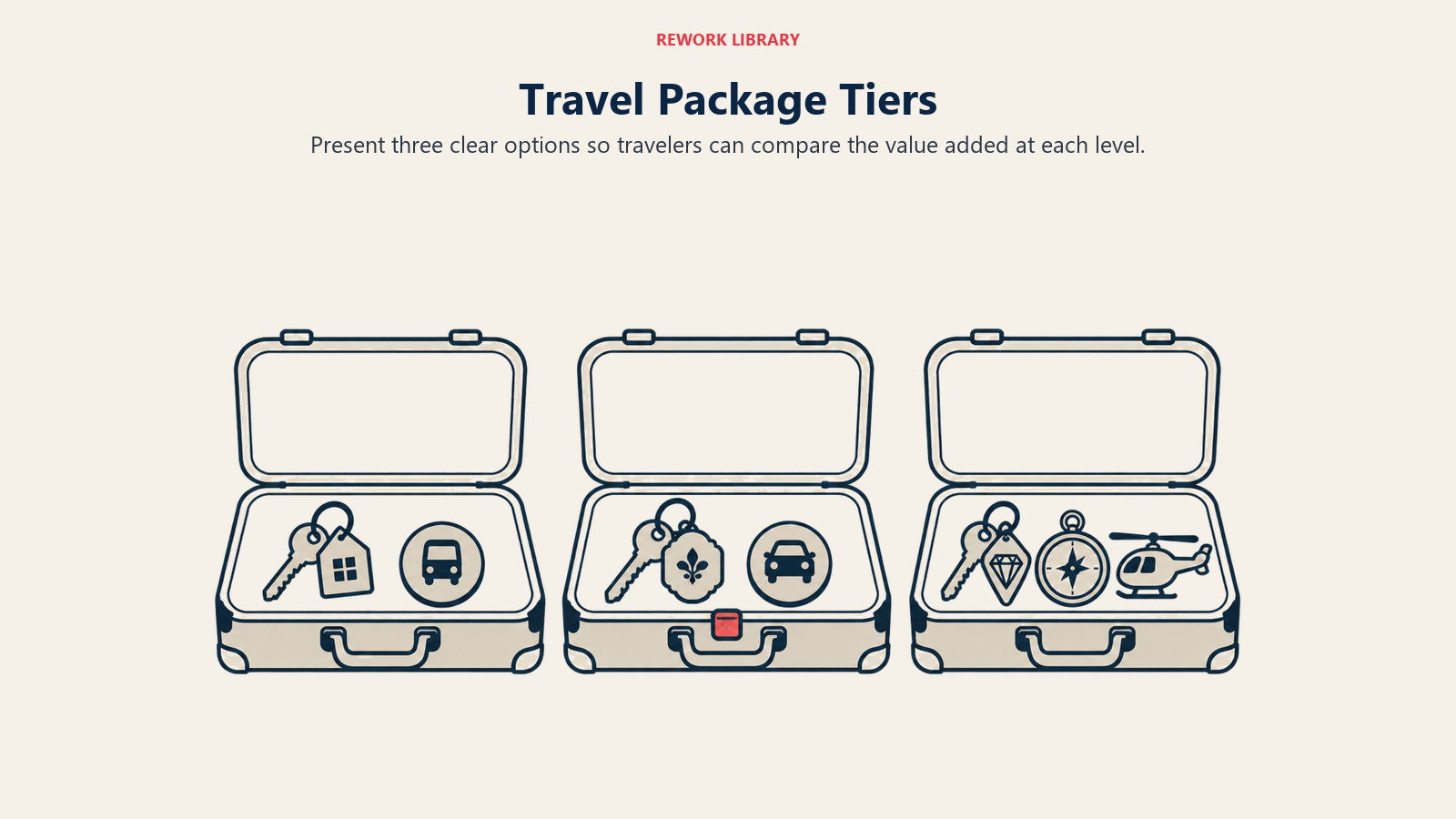
Presenting tiered packages using good-better-best frameworks guides clients toward mid-tier or premium options rather than automatically choosing cheapest. Structure three clear tiers showing value progression.
For a Costa Rica example: Base package ($4,200) includes mid-range ecolodges, shared shuttle transfers, group tours. Enhanced package ($5,600) adds boutique properties, private transfers, mix of small group and private tours, spa treatment, and zip-lining adventure. Premium package ($7,400) includes luxury lodges, private guides throughout, helicopter transfer, exclusive wildlife experience, and gourmet dining upgrade.
Strategically anchor with premium options by presenting the best option first. "Here's our signature Costa Rica experience, completely private touring, finest properties, helicopter access to remote areas. Not everyone chooses this level, but I wanted you to see what's possible. Most clients find our enhanced package offers the best balance of luxury and value." The premium option makes mid-tier seem reasonable.
Guide to mid-tier choices through subtle framing. Place it in the middle position. Call it "recommended" or "most popular." Highlight what it includes that base doesn't, rather than what it lacks versus premium. "Our enhanced package is what I'd recommend for your trip. It delivers exceptional experiences while being more accessible than our ultra-luxury option."
Accommodation Upgrades
Room category improvements are among the easiest and most profitable upsells.
Room category upgrades from standard to deluxe, deluxe to suite, or suite to premium suite carry high margins. Hotels often offer these to travel professionals at wholesale upgrades costs much lower than retail pricing. You might pay $60 to upgrade clients but charge $120, they save versus booking directly while you increase margin.
Suite offers work particularly well for special occasions. "You mentioned this is your anniversary trip. Most couples celebrating major milestones choose suite accommodations, separate living spaces, better views, and extra amenities make the experience more special. For your dates, the junior suite is available for an additional $480 for the week."
Better views can be sold based on destination. Beach destinations: oceanfront versus garden view. Mountains: valley views versus mountain vistas. Cities: skyline views versus street-facing. "The price difference is $35 per night, but you're spending most mornings and evenings in your room. That sunrise view over the water is worth it."
Premium locations within properties matter. Main building versus remote villa. Adults-only section versus family areas. Renovated wing versus older rooms. "The infinity pool villas are in the secluded section, away from where families with kids stay. For your romantic getaway, the location and privacy are worth the $600 upgrade."
Value communication strategies make upgrades feel justified. Break down daily costs: "$120 upgrade for 5 nights is $24 per day, less than you'd spend on lunch, for significantly better accommodations throughout your stay." Frame as small daily increments, not large lump sums.
Experience & Activity Upsells
Activities and experiences often carry the highest margins and most dramatically improve trips.
Adding tours that weren't in initial proposals: "I didn't include this in the base itinerary to keep costs down, but most clients doing this trip add the food tour through the old quarter. It's consistently the highlight people mention when they return."
Special experiences justify premium pricing. Not generic group tours but unique access: after-hours museum visits, meeting local artisans, private yacht sunset cruises, or helicopter flightseeing. "This isn't available as a standard tour, I can arrange it through my local partner. It's $650 for your group of four, but it's truly once-in-a-lifetime."
Private guides versus group tours is the ultimate experience upsell. "The group tour is $85 per person and runs on a fixed schedule with 12-15 other people. A private guide is $340 for your couple, so incrementally $170 more, but you control the pacing, can ask unlimited questions, and visit sites that interest you most rather than following the standard itinerary. Every client I've had who chose private guiding said it was worth every penny."
Exclusive access upsells work beautifully for cultural attractions. "Standard admission is $45 per person. For $125 each, I can arrange early access before crowds arrive, plus a private guide. You'll experience the space peacefully and learn much more than reading placards yourself."
Transportation Upgrades
Getting from place to place offers multiple upsell opportunities.
Business or first class flights make sense for long-haul international travel. Don't automatically quote economy. "For flights over 8 hours, I typically quote both economy and business class so you can decide if the comfort, sleep quality, and arrival feeling is worth the premium for this particular trip."
Private transfers versus shared shuttles is an easy upsell. "Shared shuttle is $25 per person but stops at 6 hotels before yours, taking 90 minutes. Private transfer is $80 total for your couple, gets you directly to your hotel in 35 minutes, and your driver speaks English if you have questions. After a long flight, most clients prefer private."
Car service for special occasions. "For your anniversary dinner at that Michelin-starred restaurant across town, I'd suggest arranging car service instead of navigating taxis. It's $120 round-trip, handles navigation, ensures you arrive relaxed, and you won't worry about drinking wine with dinner."
Helicopter transfers create exceptional experiences. "Standard boat transfer to the island is $45 per person and takes 2.5 hours. Helicopter is $380 per person, takes 15 minutes, and the aerial views are spectacular. Couples celebrating major milestones often choose the helicopter, it starts your trip with an unforgettable moment."
Pre-Trip Upselling
Before departure, multiple add-on opportunities exist.
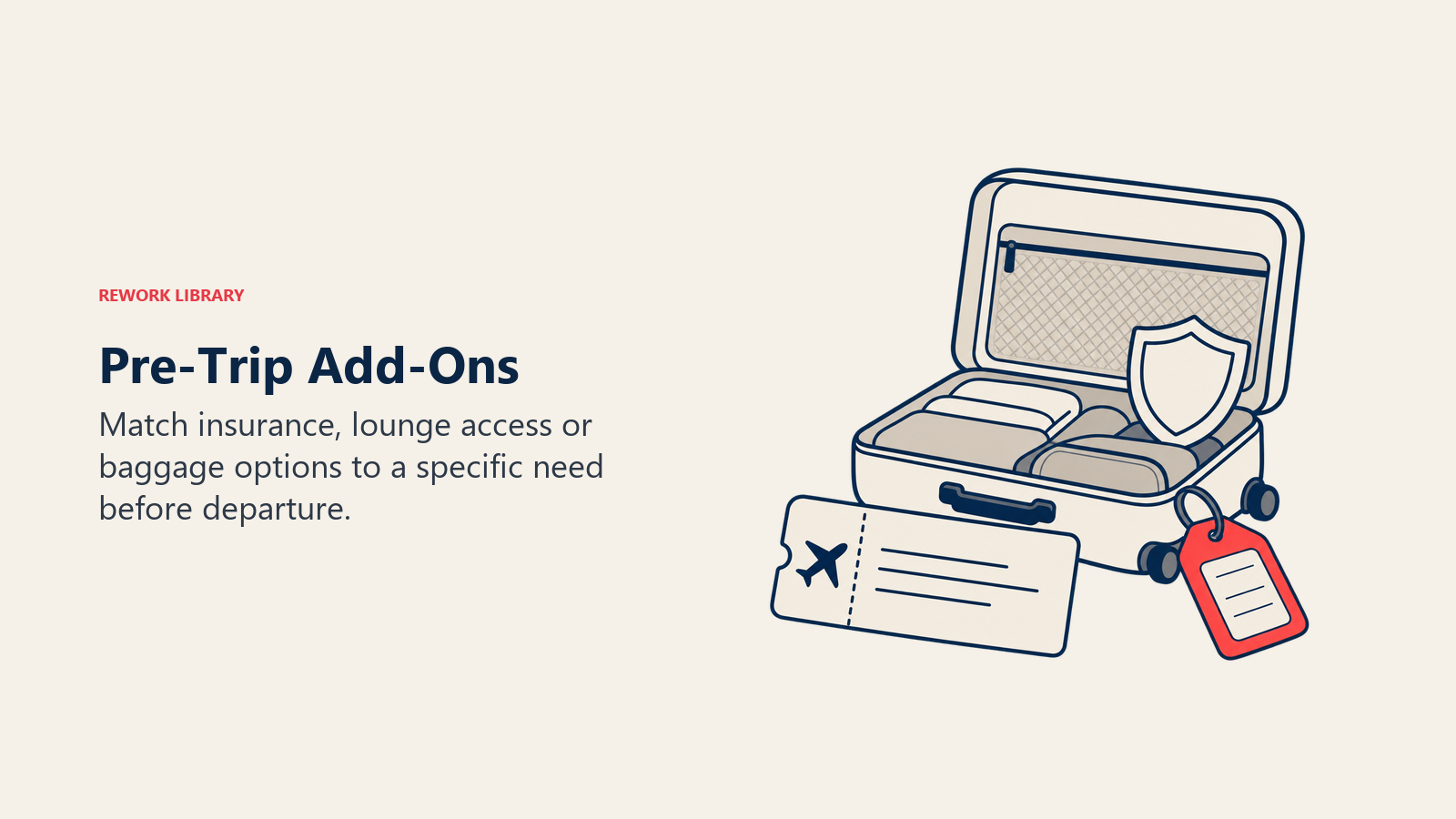
Travel insurance should be offered with every international booking. "For a trip this size, I strongly recommend travel insurance. It's about 6-7% of your trip cost and covers medical emergencies, trip cancellation, delays, lost luggage, and evacuation if needed. Given the investment, it's worth the protection." Many agents earn 20-30% commission on insurance sales.
Pre-trip hotels for awkward arrival times. "Your flight lands at 10:30 PM. Rather than arriving exhausted, I'd suggest adding a hotel near the airport the night before you fly out. Sleep well, easy morning airport transfer, and you'll arrive in Rome energized instead of exhausted. Adds $140 but improves the whole trip."
Lounge access for long layovers. "You've got a 4-hour layover in Frankfurt. Priority Pass lounge access is $35 per person and includes comfortable seating, food, drinks, and WiFi. Much better than sitting at the gate for four hours."
Seat selection on airlines that charge. "Your carrier charges for seat selection. For $60 per person, I can pre-select exit row or bulkhead seats with extra legroom. For a 10-hour flight, that's worth it to most people."
Extra baggage for shopping destinations. "You're going to Italy and mentioned shopping. Pre-purchasing an extra checked bag is $120 round-trip versus $200+ if you pay at airport. If there's any chance you'll need it, prepaying saves money."
On-Trip Upselling Opportunities
Revenue opportunities don't end once clients depart.
Real-time offers based on their experience. You're in touch during their trip via WhatsApp. They mention loving a destination: "So glad you're enjoying Tuscany! There's an optional wine tasting tomorrow afternoon at a family vineyard, $95 per person, truly special. Want me to arrange it?"
Last-minute experiences when they express interest. "You mentioned wanting to try scuba diving. The dive shop has openings tomorrow morning, $185 for a beginner dive with instructor. Should I book you?"
Extending stays when they're loving a destination. "Sounds like you're really enjoying Bali. Want to add two extra days? I can extend your villa and push back your return flights. Would only add about $740 total."
Capturing in-destination opportunities through local partner relationships. Your DMC partner can sell spa treatments, private dinners, adventure activities, or cultural experiences during the trip. Share commission on those sales.
Post-Trip Upselling
After return, upselling focuses on future bookings.
Future booking incentives while enthusiasm is high. "So thrilled you loved Vietnam! If you book your next trip within 90 days, I'll include a $200 credit toward experiences. Where would you like to explore next?"
Trip extensions for clients mentioning wanting more time. "You mentioned wishing you'd had longer in Kyoto. Next time, let's build extra days there. Actually, cherry blossom season is spectacular, should we start planning for next spring?"
Referral rewards create value for both parties. "When you refer friends or family, they receive priority booking and $150 credit toward their trip. You'll receive $200 credit toward your next booking for each referral that travels."
Loyalty program benefits for repeat clients. "As a returning client, you get preferred pricing, priority access to limited availability properties, and complimentary room upgrades when possible. Plus, I'll always prioritize your bookings during busy seasons."
Upselling Performance Metrics
Track upselling success to improve over time.
Attachment rates measure how often upsells succeed. If you offer room upgrades on 100 bookings and 35 clients accept, that's 35% attachment rate. Track rates by upsell type to see what works.
Average order value increase shows total impact. If average booking is $6,000 and successful upselling raises it to $7,200, you've achieved 20% AOV increase. This metric shows overall upselling effectiveness.
Upsell acceptance rates differ by product type. Insurance might have 60% acceptance. Room upgrades hit 40%. Private guides reach 25%. Transportation upgrades achieve 35%. Knowing these benchmarks helps set realistic expectations.
Team performance tracking shows which advisors excel at upselling. Top performers might generate 30% higher average bookings than bottom performers with similar client types. Study what top performers do differently and train others.
Upselling isn't about squeezing every possible dollar from clients. It's about enhancing their experiences with options they'll genuinely value while increasing your revenue and profitability.
The key is genuine belief in the value of what you're offering. If you truly think private guides improve the experience, you'll confidently recommend them. If you're skeptical about value, clients will sense that hesitation.
Upsell what you'd choose yourself. That authenticity sells.
Related Articles:

Business Consultant