Guest Onboarding Experience - First Impression Excellence 2025
Turn this article into takeaways for your work.


Each assistant summarizes the article only for you and suggests best practices for your work.
A guest arrived at the airport after a 14-hour flight, exhausted and anxious about finding her tour group in an unfamiliar country. She scanned the arrival hall for the meeting point described in the pre-departure email. Nothing. No signs, no guide, no familiar faces. Panic set in.
Twenty minutes of increasing stress later, she finally spotted a small, handmade sign with the tour company logo held by someone in regular street clothes. No uniform, no professional signage, no welcoming smile - just someone who looked as confused as she felt. That first impression colored her entire perception of the week-long trip that followed.
Your onboarding experience is your opportunity to exceed expectations at the moment of highest guest anxiety within the broader travel customer journey mapping. Travelers have invested significant money and time. They're in an unfamiliar place, often jet-lagged, sometimes struggling with language barriers. How you receive them in these first hours determines whether they trust you with the experience ahead.
Onboarding Experience Strategy
Onboarding isn't just logistics. It's the bridge between the anticipation built during pre-trip communication and the actual experience of your trip.
Understanding onboarding as this critical bridge means treating these first interactions with the same care you give to signature experiences during the trip. Guests judge your professionalism, competence, and attention to detail based on these initial touchpoints. A flawless onboarding experience creates trust. A fumbled onboarding creates doubt that you have to overcome throughout the trip.
Critical touchpoints in the first 24 hours form a sequence: airport arrival and pickup, welcome and registration, accommodation check-in, initial orientation, and first meal or activity together. Each touchpoint is an opportunity to impress or disappoint. Map these touchpoints specifically for each trip type and ensure you've designed intentional experiences for each.
Designing experiences that exceed expectations from arrival requires understanding what guests expect and then delivering something better. They expect to find you at the airport - delight them with professional signage, enthusiastic greeting, and cold towels in tropical destinations. They expect to check into their hotel - surprise them with welcome drinks and personalized notes in their room. Small touches create outsized impact.
Measuring onboarding success through guest feedback collection provides data for continuous improvement. Post-trip surveys should specifically ask about arrival experience: Was the pickup process smooth? Did you feel welcomed? Was the initial orientation helpful? Low scores on these questions indicate onboarding problems that need addressing before they affect future guests.
Pre-Arrival Coordination
The best onboarding experiences begin before guests even arrive, through meticulous coordination via pre-trip communication that prevents problems rather than solving them.
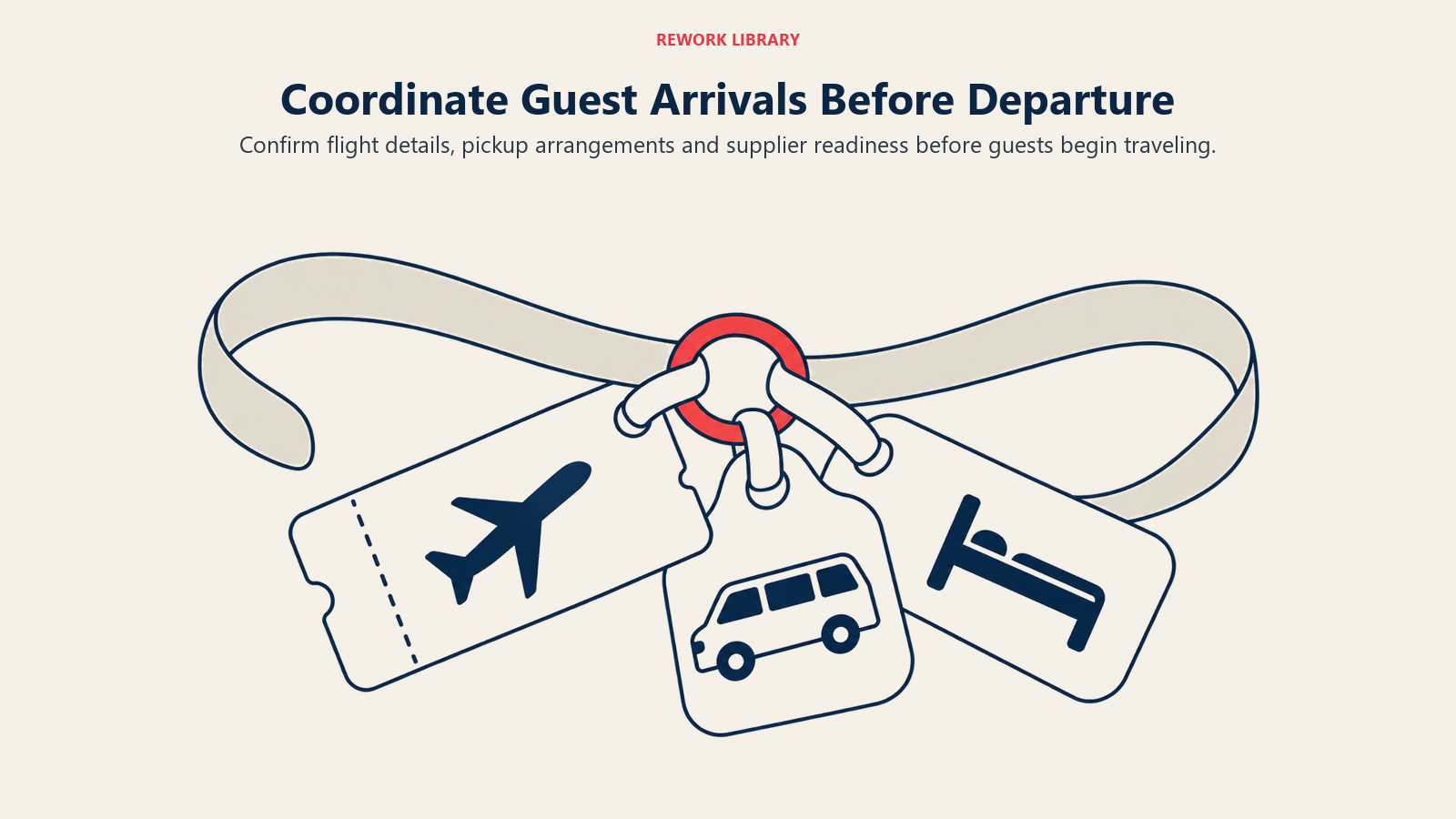
Confirming arrival details 48 hours before departure catches any last-minute changes. Flight times change, connections get missed, arrivals shift to different days. Automated confirmation emails asking guests to verify arrival details one final time identify changes while there's time to adjust pickup arrangements. Include a clear call to action: "Reply to this email if your arrival details have changed."
Coordinating airport transfers and pickup logistics requires precision timing and clear communication. Verify driver assignments, confirm pickup times accounting for flight arrival and customs/immigration processing, distribute guest photos and contact information to drivers, and create backup plans for flight delays. Nothing creates stress faster than guests standing at an airport with no one to meet them.
Preparing welcome materials and information packets gives you tangible deliverables for first impressions. Professional folders or bags containing welcome letters, itinerary summaries, local maps, emergency contacts from your travel documentation process, and small welcome gifts create immediate positive impressions. These packets demonstrate preparation and professionalism. They're also practical - guests reference this information throughout the trip.
Ensuring all suppliers are briefed on arriving guests prevents fumbles at hotels, restaurants, or activity providers. Hotels should have rooming lists with special requests confirmed. Restaurants should know group size and any dietary restrictions. Activity providers should expect your guests and have necessary equipment ready. This coordination happens behind the scenes, but guests notice when it's done well (smooth check-ins, no confusion) and when it's not (delays, errors, having to repeat information).
Airport and Arrival Experience
Airport arrival is where abstract planning becomes concrete experience. This moment matters more than almost anything else you'll do.
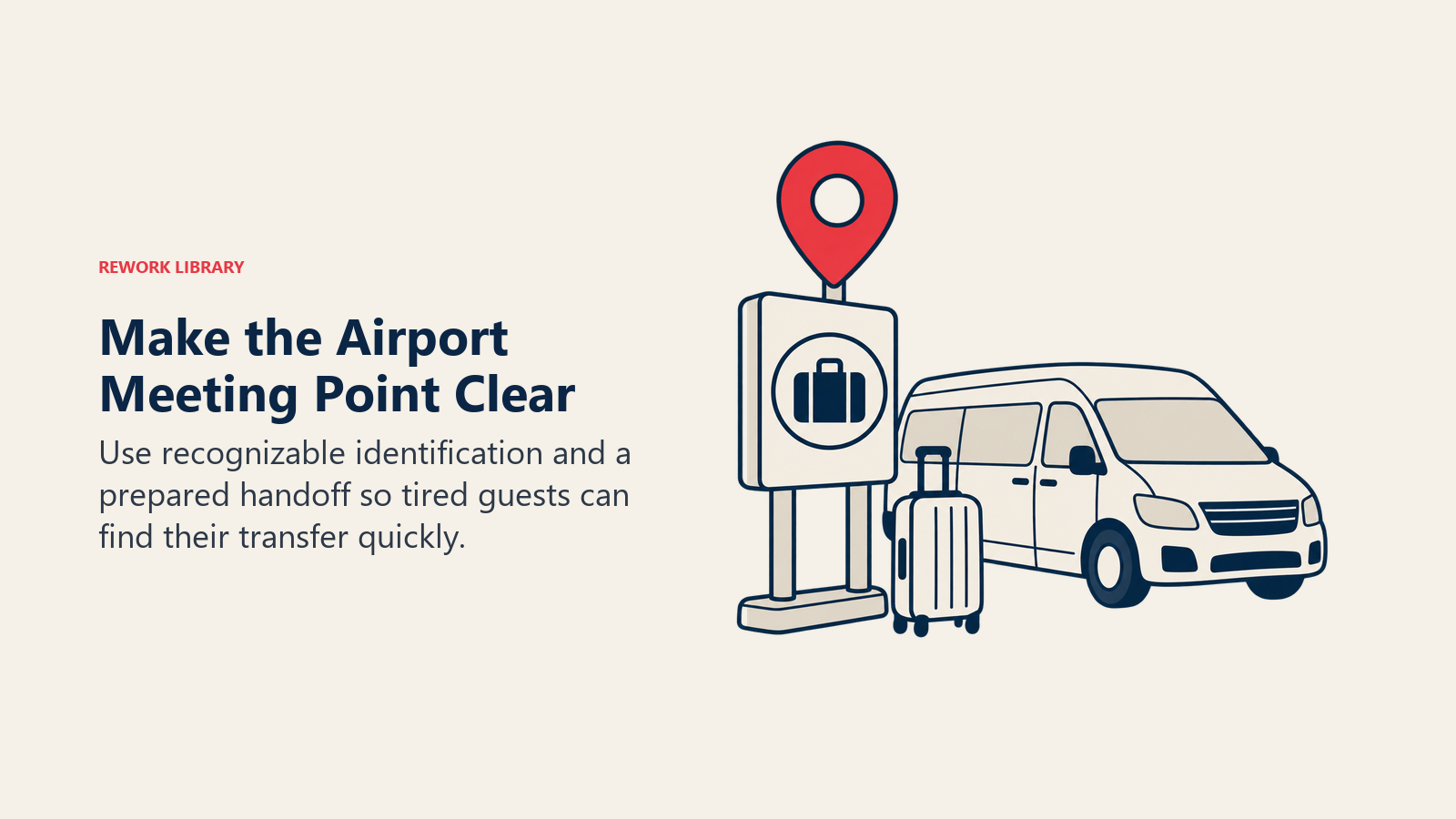
Clear signage and guide identification systems eliminate the anxiety of "will I find them?" Professional signs with your company logo and the group/tour name, held in the standard meeting areas at arrivals, create immediate visibility. Guides in branded clothing or uniforms provide instant recognition. Some operators provide photos of guides in pre-departure information so guests know exactly who they're looking for.
Streamlining guest check-in and registration processes respects that guests are tired and want to get to their accommodation quickly. Pre-printed rooming lists with passport information already collected, registration forms completed in advance during online check-in, and payment already processed mean airport registration takes minutes, not half an hour. Efficiency demonstrates respect for guests' time and energy.
Managing luggage handling efficiently prevents the chaos of 20 people trying to load bags onto a bus simultaneously. Porters or guides who assist with luggage, systematic loading that tracks all bags, and clear communication about when guests will next see their luggage (immediately at hotel, or after orientation) creates smooth transitions.
Creating memorable welcome moments transforms a logistical necessity into a positive experience. Cold towels and water bottles handed to arriving guests in hot climates provide immediate physical relief. Welcome leis in Hawaii trigger vacation mode instantly. Enthusiastic greetings and genuine smiles cost nothing but create authentic warmth. These moments don't need to be expensive - they need to be thoughtful and genuine.
Welcome Orientation and Briefing
Once everyone has arrived, orientation sets expectations and provides essential information for the days ahead.
Conducting comprehensive trip orientation sessions ensures everyone starts with the same information. Cover the full itinerary with highlights and logistics, introduce yourself and your role, explain how communication will work during the trip, review safety protocols and emergency procedures, and set expectations for timing, punctuality, and group dynamics. This orientation prevents confusion and misunderstandings later.
Introducing tour guides and support staff helps guests know who's responsible for what. Name and role clarification matters in complex trips with multiple guides, drivers, and local specialists. Guides sharing brief personal backgrounds create human connections. Explaining who to approach for different types of questions or issues creates clear lines of communication.
Reviewing itinerary highlights and logistics manages expectations about timing, pace, and what's included versus optional. Go beyond just reading the itinerary - explain why you've structured days as you have, what flexibility exists for personal time, how meal arrangements work, and what guests should bring for different activities. This detailed walk-through prevents the common complaint of "I didn't know that's how it would work."
Setting expectations for communication and support throughout the trip establishes protocols. Explain how you'll communicate daily schedules and any changes, what time wake-ups typically happen, how much advance notice you'll provide for departures, and how guests can reach you with questions or issues. Providing your mobile number and encouraging guests to contact you prevents small issues from becoming big problems.
Accommodation Check-In
Hotel check-in is a moment of high friction in any trip. Streamlining this process demonstrates operational competence.
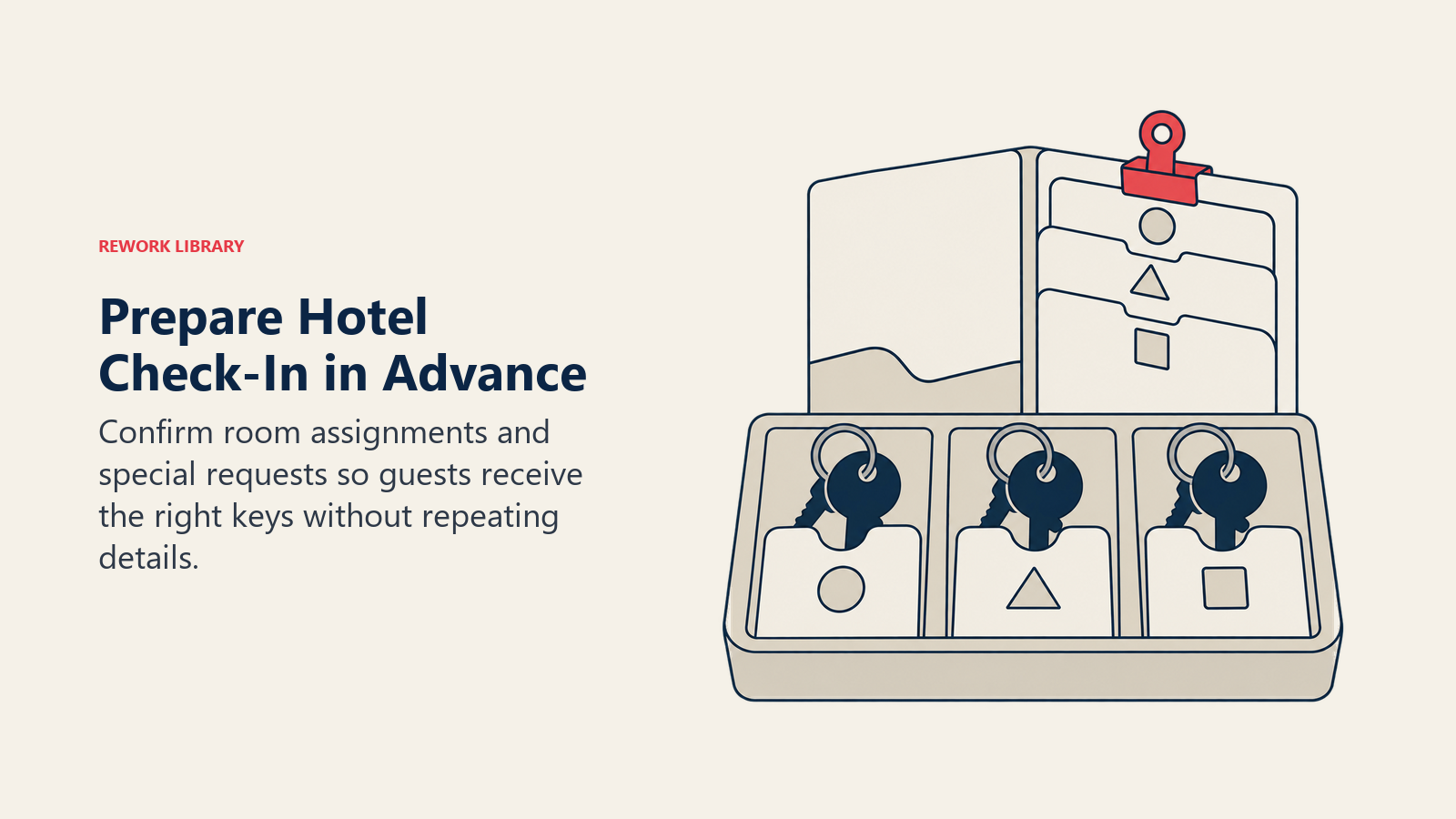
Coordinating smooth hotel check-in starts with advance preparation. Pre-registering groups with passport information and payment details provided ahead means individual guests simply receive keys rather than filling out forms. Blocking out multiple rooms for simultaneous check-in prevents 20 people queuing individually. Having rooming lists prepared and distributed eliminates confusion about room assignments.
Conducting room orientation and amenity tours helps guests settle quickly. Brief tours of facilities (restaurant, pool, fitness center, spa), explanations of room features that might be unfamiliar (bidets, Japanese toilets, electrical outlets), WiFi information and passwords, and emergency exit locations all prevent later questions and demonstrate thoroughness.
Confirming special requests and room assignments prevents disappointment. If guests requested connecting rooms, high floors, or specific bed types, verifying these arrangements on check-in shows you've paid attention. When requests couldn't be accommodated, explaining why and what alternatives exist manages expectations and prevents resentment.
Addressing any immediate concerns or issues quickly sets the tone for problem resolution throughout the trip. Room not clean? Get it resolved immediately. Temperature control not working? Handle it now. Strange noise? Address it. Your responsiveness during check-in demonstrates how you'll handle issues during the trip, building confidence that you'll take care of problems.
Technology Onboarding
Modern travel experiences involve technology integration that needs explanation during onboarding.
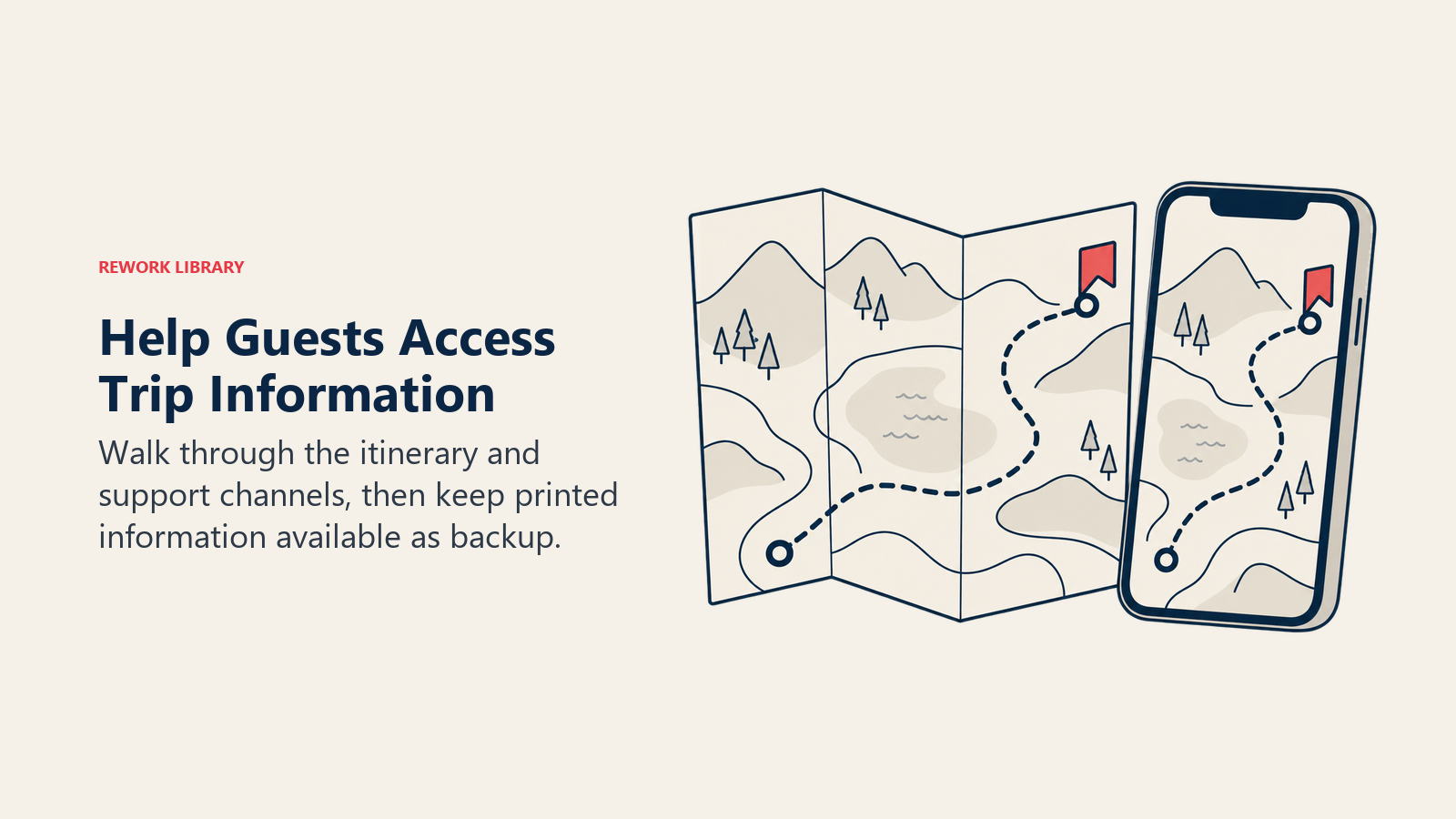
Providing WiFi access and connectivity information addresses one of the most common immediate guest questions. Many hotels require room numbers for WiFi access, have complex login procedures, or provide limited bandwidth. Explaining these details upfront prevents frustration and repeated questions. For destinations with limited connectivity, setting realistic expectations about what's available matters.
Demonstrating trip apps or digital tools ensures guests can actually use the technology you've provided. Simply sending app download links doesn't mean guests have installed or understand the app. Spending 10 minutes in orientation walking through key app features - where to find daily itinerary, how to access documents, where emergency contacts are located - dramatically increases app adoption and reduces information requests.
Sharing communication channels establishes how you'll stay connected. WhatsApp groups for quick updates and questions, emergency phone numbers for urgent issues, email for non-urgent communication, and in-person check-ins for daily briefings create multiple channels for different communication needs. Add guests to groups during orientation so everyone starts with the same access.
Ensuring guests can access digital itineraries and information matters especially for guests who struggle with technology. Showing them exactly where to find information, how to refresh content if updates occur, and ensuring they've successfully accessed it once means they can do it again later. Always have printed backup copies for guests who can't or won't use digital tools.
Relationship Building in Onboarding
Group dynamics and personal connections significantly impact trip experiences. Intentional relationship building during onboarding creates social foundation for the days ahead.
Facilitating introductions among group members helps break the ice early. Structured introduction activities during welcome orientation - name, where you're from, what you're most excited about on the trip - give everyone a chance to speak and learn about each other. Keep it brief but ensure everyone participates. These introductions reduce social anxiety and create conversation starters.
Encouraging early group bonding activities accelerates relationship development. Welcome dinners where seating mixes guests rather than letting immediate friendship pairs dominate, icebreaker games that are fun rather than forced, or brief group photos create shared experiences within the first 24 hours. These bonding activities make solo travelers feel included and help groups coalesce.
Establishing personal connections between guides and guests builds trust and rapport. Guides sharing why they love this work, what excites them about upcoming experiences, and demonstrating genuine interest in guests' backgrounds and interests creates relationship foundation. Guests need to trust their guide - early relationship building makes this happen.
Creating inclusive atmosphere for solo travelers prevents cliques from forming that exclude individual travelers. Proactively introducing solo travelers to each other, including them in conversations with couples or groups, and watching for social isolation patterns during the first day ensures everyone feels welcomed. Solo travelers pay premium rates precisely because they want full inclusion in group experiences.
Cultural and Safety Orientation
Preparing guests for cultural norms and safety realities prevents problems and demonstrates your expertise.
Sharing essential cultural norms and etiquette shows respect for destinations and prepares guests to engage appropriately. Dress codes at religious sites, photography restrictions, tipping expectations, and appropriate greetings vary across cultures. Explaining these norms before guests encounter situations where they matter prevents embarrassing mistakes and demonstrates cultural sensitivity.
Providing safety briefings and emergency procedures is both practical and legally prudent. Fire exits and emergency assembly points at hotels, general safety awareness for the destination (pickpocketing, scams, unsafe areas), emergency contact information and procedures, and when to involve guides versus handling things independently create clear safety framework.
Discussing local customs and appropriate behavior helps guests understand context. Why certain behaviors are offensive, how to interact respectfully with local people, what bargaining etiquette looks like in markets, and how to decline street vendors politely all help guests navigate cultural differences confidently. This education prevents offense and enriches guest experiences.
Offering language basics and communication tips empowers guests to engage with local people. Simple phrases (hello, thank you, how much, excuse me), pronunciation guidance, and encouragement to try speaking local language despite imperfect execution creates positive cross-cultural interactions. Even basic phrases show respect and often delight local people.
Managing Diverse Guest Needs
Every group includes guests with different backgrounds, abilities, and requirements. Excellent onboarding addresses this diversity.
Addressing language barriers with translation support ensures non-native speakers fully understand critical information. Slower speaking during orientation, providing written materials in multiple languages, using visual aids and demonstrations beyond just verbal explanation, and checking understanding through questions ensures communication succeeds across language differences.
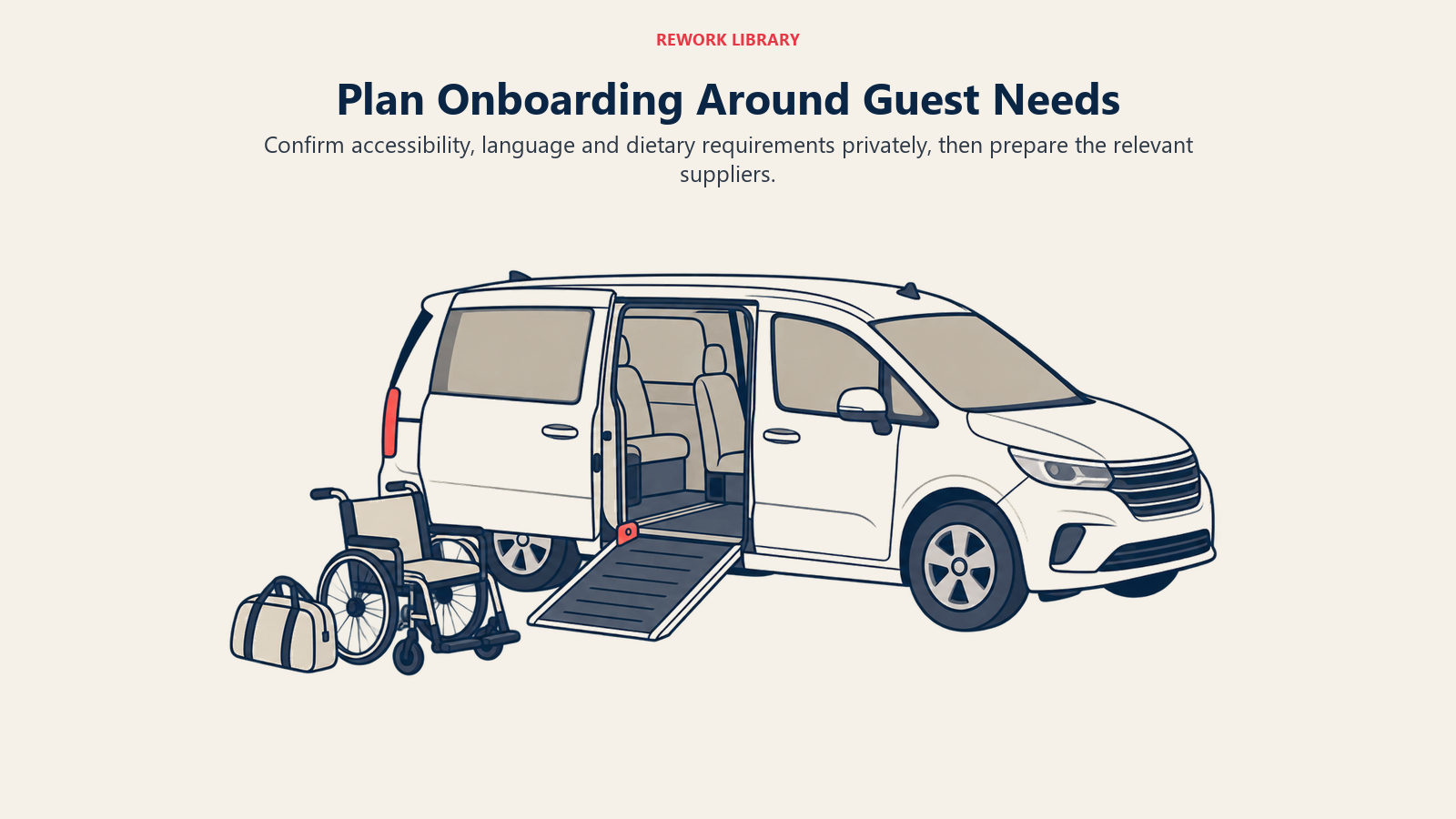
Accommodating accessibility requirements from arrival demonstrates that you've prepared for guests' specific needs. Wheelchair-accessible vehicles, rooms near elevators or with minimal steps, extra time for guests with mobility limitations, and proactive checking whether assistance is needed creates inclusive experiences that don't single out guests with accessibility needs.
Confirming dietary restrictions and special needs early in onboarding prevents problems at meals. Verbal confirmation of dietary requirements documented in booking, explanation of how you'll handle these requirements during the trip, what to do if restaurant misunderstands restrictions, and encouragement to speak up if any issues arise creates confidence that guests' needs will be met.
Providing extra support for first-time travelers acknowledges that some guests need more hand-holding. Checking in privately with guests who seem confused or anxious, offering additional explanation of logistics or expectations, and making yourself available for questions creates safety for nervous travelers to ask for help without embarrassment.
First Impression Recovery
Despite best planning, sometimes arrival doesn't go smoothly. How you recover from issues often matters more than whether issues occur.
Identifying and addressing arrival issues quickly prevents small problems from ruining entire trips. Flight delays causing missed pickups, lost luggage, room assignment mistakes, or documentation issues at border crossings all create stress. Acknowledging the problem, apologizing genuinely, and taking immediate action to resolve issues demonstrates competence and care.
Implementing service recovery protocols means having planned responses to common arrival problems. Lost luggage gets immediate assistance with replacement necessities and tracking. Missed pickups trigger immediate alternative transportation arrangements. Room issues get resolved with upgrades or compensation. These protocols ensure consistent, generous responses rather than making it up each time.
Turning negative situations into positive experiences through exceptional recovery creates loyal advocates. A guest whose luggage was lost but received immediate help purchasing replacement items, found those items waiting in their room, and was given a partial refund might leave more loyal than if nothing had gone wrong. Recovery done well demonstrates your values and competence under pressure.
Documenting issues for continuous improvement ensures the same problems don't repeat. After-action reviews following any onboarding issues, analyzing root causes, implementing preventive measures, and training staff on lessons learned creates systematic improvement. Issues become learning opportunities that improve experiences for future guests.
The onboarding experience is your opportunity to prove that you'll deliver on all the promises made during marketing and pre-trip communication. Guests arrive with expectations, anxiety, and hope. Your job is transforming that arrival uncertainty into confidence, excitement, and trust that the next days will be exactly what they hoped for when they booked.
Related Articles:

Business Consultant