Early Bird & Last Minute Pricing: Timing-Based Revenue Strategy
Turn this article into takeaways for your work.


Each assistant summarizes the article only for you and suggests best practices for your work.
Your Peru tour departing September 15 is completely full by May 1, all booked at early bird rates with 20% discounts. Total revenue: $54,400 from 16 travelers.
Another operator runs the identical tour. They sell 4 seats at full price six months out, then panic-discount the remaining 12 seats in August. Total revenue: $51,200 with the same 16 travelers.
You sacrificed margin for certainty. They held out for full price and made up the difference through desperation discounting. Neither approach is optimal.
Strategic time-based pricing uses early bird discounts purposefully to secure commitments and reduce risk, then manages remaining inventory with dynamic last-minute pricing that maximizes final revenue without training customers to wait for deals.
Time-Based Pricing Philosophy
Understanding why timing affects customer behavior and your economics.
Booking timing affects customer behavior in predictable ways. Early planners book 6-12 months ahead for peace of mind, guaranteed availability, and time to prepare. Mid-range bookers (3-6 months) research thoroughly and book once confident. Procrastinators wait until the last minute due to scheduling uncertainty, budget timing, or deal-seeking behavior.
Risk versus reward balance differs for customers and businesses. Customers booking early risk schedule changes or finding better deals later, but secure their preferred dates and plans. Businesses offering early discounts sacrifice margin but reduce marketing costs, improve forecasting, and lock in revenue.
Strategic objectives for early pricing include securing cash flow, building committed participant base (especially for tours with minimums), reducing marketing spend closer to departure (you're already sold out), and enabling better operational planning with confirmed numbers.
Strategic objectives for last-minute pricing include filling remaining inventory that would otherwise go unsold, attracting spontaneous or deal-seeking segments, and capturing revenue from inventory that has declining value (a tour departing tomorrow with empty seats has zero future value).
Early Bird Discount Strategies
Incentivizing advance bookings requires thoughtful structure.
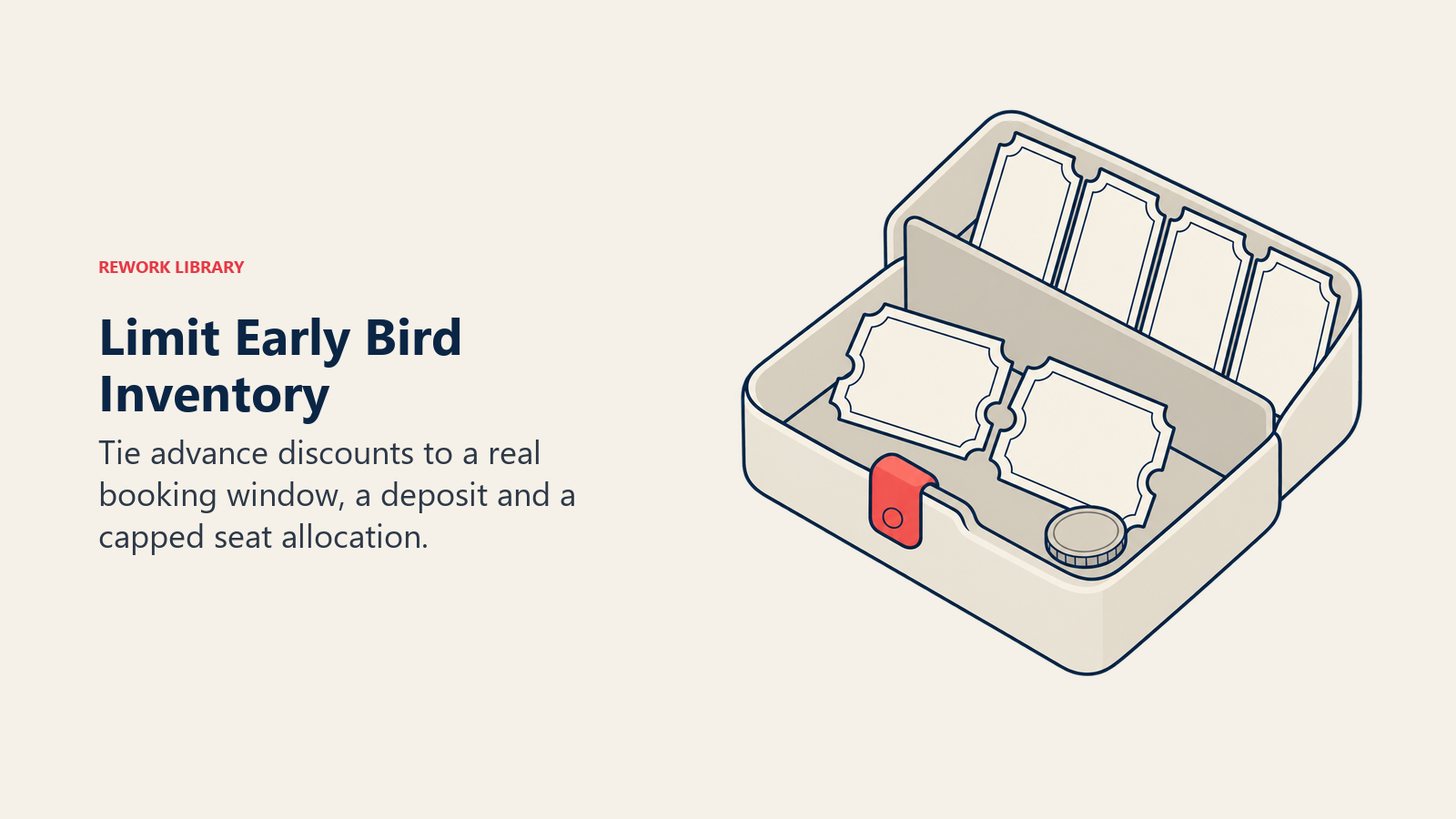
Discount depths typically range from 10-30% off regular pricing. Modest 10-12% discounts for less risky products (popular destinations, high demand dates). Aggressive 20-30% for new destinations, untested departures, or shoulder season tours requiring commitment.
Booking windows define when discounts apply. "Book 6+ months in advance" for major international trips. "Book 90+ days ahead" for shorter domestic tours. "Book by [specific date]" for seasonal products, "Book by March 15 for summer European tours."
Secure cash flow early through deposit requirements tied to early bird rates. "Lock in early bird pricing with 25% deposit, balance due 90 days before departure." This gets money in the door and commitment before you've incurred major supplier costs.
Reduce marketing costs through early sellouts. Tour that's full 6 months before departure requires no additional advertising, email campaigns, or sales effort. Those marketing dollars can focus on other departures.
Early Booking Psychology
Why customers book early and how to encourage it.
Planning and peace of mind drive many early bookers. Type-A planners need their year organized. They'll pay small premiums to lock in plans early rather than risk availability disappearing. Position early booking as securing certainty.
Selection advantage appeals to those wanting first choice. "Early bookers get first selection of room categories, seat assignments on tours, and activity time slots." First access is valuable even without price discounts.
Overcome procrastination through deadline-driven urgency. "Early bird pricing expires March 15" creates external deadline forcing decision. Without deadlines, "I'll book later" never becomes "I'll book now."
Create urgency for early action through limited availability. "Only 12 spots available at early bird pricing, once those sell, rate increases to standard pricing." First-come advantage motivates action.
Communicating Early Bird Value
How you frame early pricing affects uptake.
Frame savings in absolute terms and percentages. "$680 savings per couple, that's 20% off. Enough for a nice dinner and wine tasting we didn't include in the package." Make savings concrete and relatable.
Limited availability messaging creates scarcity. "Early bird rate available for first 8 bookings" or "Early bird pricing ends April 1 or when tour is 75% sold, whichever comes first." This adds urgency beyond just dates.
Deadline enforcement must be real. If you say early bird ends March 15 but continue offering it through March 31, you train customers that deadlines don't matter. Honor your deadlines strictly.
Avoid perpetual early bird rates that never actually end. "Early bird special" that's available year-round isn't special, it's your price. Have genuine pricing tiers with real deadlines.
Last Minute Pricing Strategies
Filling remaining inventory without destroying brand value.
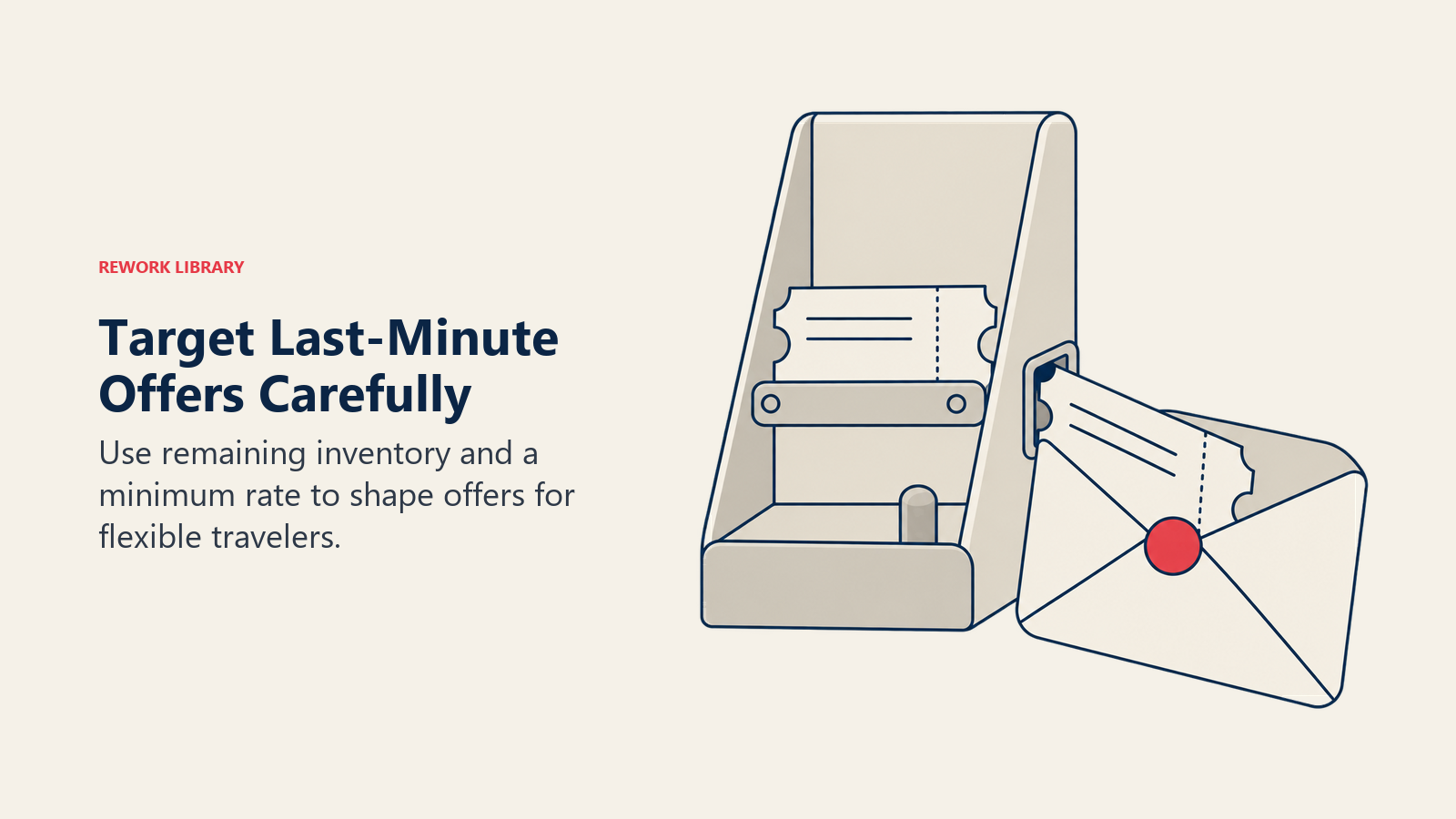
Liquidate inventory strategically when departure is approaching and seats remain. Better to sell remaining 4 seats at 25% discount than fly with empty seats generating zero revenue.
Price floors maintain brand positioning even when desperate. Don't drop a $4,000 tour to $1,800 last minute. That destroys brand perception and trains customers to wait for blowout deals. Maybe drop to $3,200 minimum, still discounted but maintaining integrity.
Channels for last-minute deals protect brand. Don't advertise deep last-minute discounts on your website where early bookers see them. Use last-minute deal sites (LastMinuteTravel, Luxury Link), email to discount seekers list, or flash sales to targeted segments.
Customer segment targeting focuses last-minute deals on spontaneous travelers and deal seekers, not your core audience. Market last-minute deals through channels that don't reach early planners who paid full price.
Last Minute Buyer Behavior
Understanding who books last minute informs strategy.
Spontaneous travelers have flexible schedules and decision-making. They see a deal Tuesday, book for departure Saturday. These buyers accept limited selection and last-minute logistics.
Deal seekers actively hunt for discounts. They have budget constraints or perceive value in finding deals. They'll compromise on dates, destinations, or specific tours to capture savings.
Flexible schedules characterize last-minute bookers. Retirees, remote workers, or people taking random vacation days can travel on short notice unlike families bound to school schedules or corporate employees with advance vacation requests.
Proximity to departure decision factors include reduced planning anxiety (departure is soon so commitment feels less risky), acceptance of limited availability (they're not picky about specific rooms or seats), and willingness to compromise on ideal preferences for value.
Dynamic Transition from Early to Late
Automated pricing rules manage the transition.
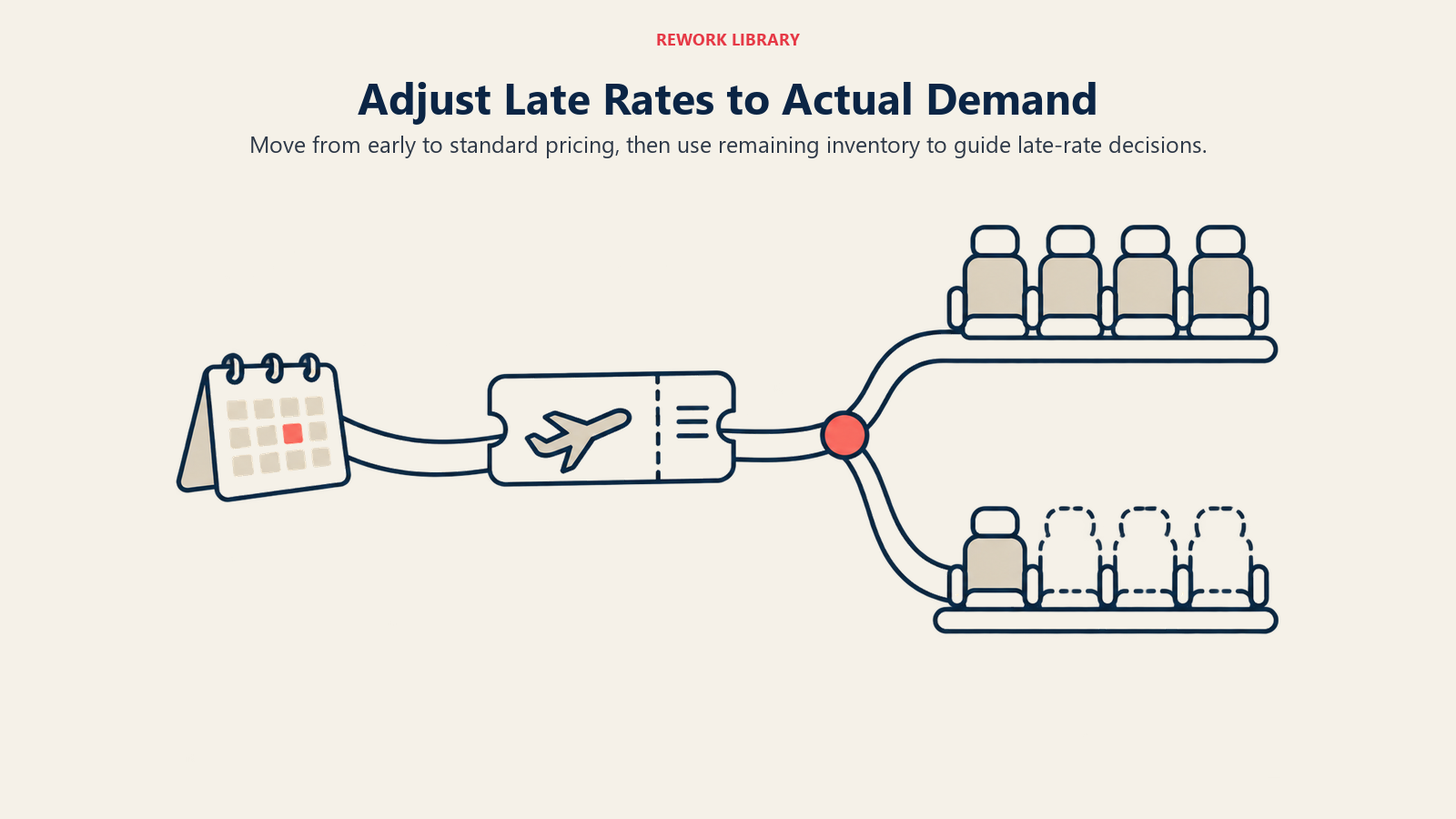
Gradual price increases over time create pricing tiers. Start at $3,200 early bird (6+ months), increase to $3,600 standard (3-6 months), then $4,000 regular (1-3 months). Predictable progression that rewards early booking without dramatic swings.
Surge pricing for high-demand dates when booking pace exceeds expectations. Tour normally priced at $3,600 is 80% sold 5 months before departure? Surge to $4,200 for remaining seats. Capture willingness to pay.
Last-minute price drops for low-demand departures when inventory remains. Tour at $3,600 only 40% sold 45 days out? Drop to $3,000 for final push. Better to sell remaining seats at discount than cancel.
Automated pricing rules execute without manual intervention. "If sold < 50% at 90 days, reduce price by 15%. If sold > 75% at 90 days, increase price by 12%." Set rules based on your business model and let system execute.
Fare Class Management
Multiple price tiers segment demand effectively.
Create pricing tiers by time: Super early (8+ months, 25% off), Early (4-8 months, 15% off), Standard (2-4 months, full price), Late (under 2 months, dynamic pricing), Last-minute (under 30 days, variable).
Restrictions on changes and cancellations justify lower prices. Super early bird might be nonrefundable, limited changes allowed. Standard pricing offers moderate flexibility. Late booking might be nonrefundable but priced lower.
Inventory allocation by class prevents selling all seats at lowest prices. Allocate 4 seats to super early bird, 6 to early bird, 4 to standard, 2 held for late/last-minute. Adjust allocations based on booking patterns.
Avoiding Pricing Pitfalls
Common mistakes undermine revenue potential.
Training customers to wait for deals happens when you consistently discount. If your tours always drop 30% last minute, savvy customers learn to wait. Some last-minute discounting is fine; predictable patterns are problematic.
Maintain full-price booking channels by not advertising discounts everywhere. Website shows standard pricing. Email list gets early bird offers. Last-minute deals go to separate channels. Segment messaging by audience.
Blackout dates for discounts on peak demand periods. Christmas, New Year's, cherry blossom season, or other peak times don't need early bird discounting. Demand is strong, charge accordingly.
Brand perception management requires consistency. Luxury brands can't heavily discount without cheapening image. Budget brands can't charge premium prices without alienating core audience. Discount within your positioning range.
Performance Monitoring
Track results to optimize over time.
Booking pace by pricing tier shows which tiers drive volume. Maybe super early bird gets 25% of bookings, early bird gets 45%, standard gets 20%, late gets 10%. Understanding distribution informs future allocation.
Optimize discount timing and depth through testing. Is 20% early bird discount at 6 months optimal, or would 15% at 8 months work better? Test variations and measure total revenue impact.
Revenue impact analysis compares scenarios. Did heavy early bird discounting generate higher total revenue than holding out for full price? Factor in reduced marketing costs and lower cancellation risk when early-sold.
Continuous testing of pricing tiers, discount levels, timing windows, and channel strategies. Travel markets evolve. Customer behavior shifts. Optimal pricing this year might not be optimal next year.
Time-based pricing is powerful because travelers genuinely have different needs, risk tolerances, and planning horizons. Some want certainty six months out and will pay for it (or accept modest discounts). Others are spontaneous and flexible, filling last-minute inventory you need to sell.
The key is intentional strategy, not reactive discounting when desperate, but systematic pricing that rewards early commitment, maximizes revenue from each segment, and fills inventory without training customers to wait for blowout deals.
Early bird pricing builds your foundation. Last-minute pricing optimizes final revenue. Dynamic pricing in between captures maximum value throughout the booking window.
Related Articles:

Business Consultant