Dynamic Pricing in Travel: Real-Time Revenue Optimization
Turn this article into takeaways for your work.


Each assistant summarizes the article only for you and suggests best practices for your work.
Dynamic pricing is the practice of adjusting prices in real time based on demand, available inventory, and timing, rather than charging one fixed rate. In travel, it lets tour operators and agencies charge more when demand is high and seats are scarce, and less when they need to stimulate bookings. Done well, it lifts revenue 15 to 30 percent without acquiring a single extra customer.
Your Iceland group tour departing in 90 days has sold 8 of 16 spots. Static pricing says charge everyone the same $3,400. Dynamic pricing asks: Should early bookers pay less to secure commitments? Should procrastinators pay more as inventory shrinks? Should prices surge when that Instagram influencer features Iceland and demand spikes?
Airlines have used dynamic pricing for decades. Hotels implemented it years ago. Tour operators and travel agencies are finally catching up, and those who do see revenue increases of 15-30% without acquiring a single additional customer.
Dynamic Pricing Defined
Understanding the concept is crucial before implementation.
Dynamic pricing means prices fluctuate based on real-time conditions rather than remaining fixed. The same hotel room costs $180 on Tuesday, $240 on Friday, and $320 during a festival weekend. The same flight to Miami costs $240 in September, $420 in December, and $680 during spring break.
How it differs from static pricing: Static pricing sets one price that stays constant regardless of demand, inventory levels, or timing. Dynamic pricing responds to market conditions automatically.
Real-world examples: Uber surge pricing during rush hour. Hotel rooms costing more during conferences. Concert tickets increasing as shows near sellout. Travel operates in similar environments, variable demand, limited inventory, time-sensitive products.
Applicability to tour operators and travel agencies depends on business model. Fixed-departure tours with capacity constraints benefit enormously. FIT travel with negotiated hotel blocks sees moderate benefits. Agencies purely booking suppliers' dynamic rates have less control but can still optimize timing recommendations.
Dynamic Pricing Algorithms & Logic
Behind the scenes, pricing rules drive automatic adjustments.
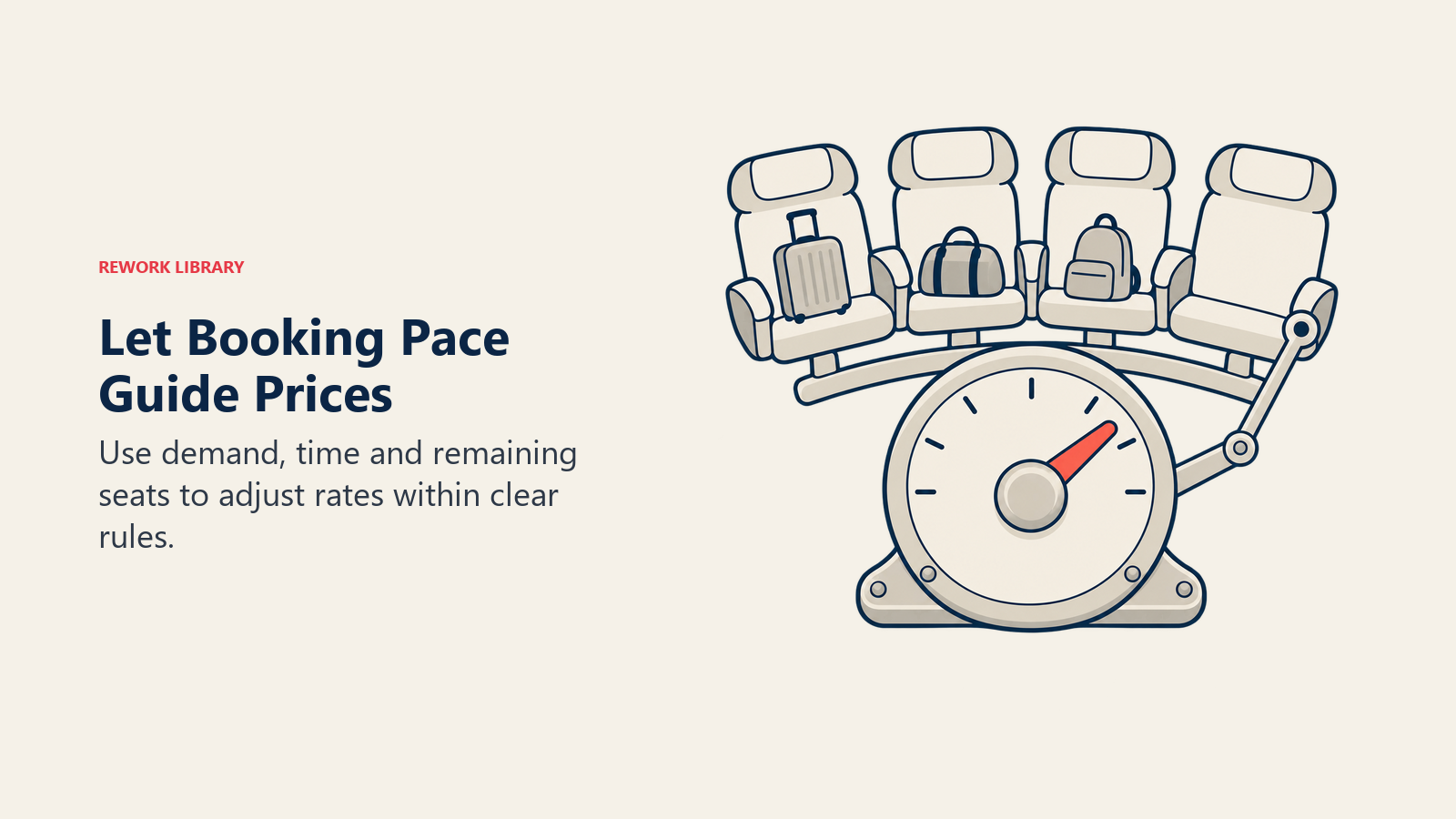
Demand forecasting uses historical booking patterns to predict future demand. If your March departures historically book 65% by December, but this year you're only at 40%, pricing should drop to stimulate demand. If you're at 85%, pricing should increase to capture willingness to pay.
Time-based pricing follows predictable patterns. Early bird discounts (6+ months out) secure commitments when clients are researching. Regular pricing (3-6 months) targets serious buyers. Last-minute pricing adjusts based on inventory, dropping prices if undersold and surging if near sellout.
Inventory-based adjustments trigger price changes at capacity thresholds. Tour with 16 seats: Spots 1-4 priced at $3,200 (early bird), spots 5-10 at $3,600 (standard), spots 11-14 at $4,000 (limited availability), final 2 spots at $4,400 (last seats). Scarcity drives premium pricing.
Automated rules execute pricing without manual intervention. "If booking pace is below 50% of forecast at 90 days pre-departure, reduce price by 12%. If above 110% of forecast, increase by 8%." Rules run continuously, adjusting pricing based on current conditions.
Data Inputs for Pricing Decisions
Good dynamic pricing requires good data.

Booking pace shows how quickly inventory sells. Normal booking pace for your summer tours might be 40% sold at 6 months, 70% at 3 months, 90% at 1 month. Actual pace above or below these benchmarks signals whether to price up or down.
Historical data from past years reveals patterns. Which departures sold out early? Which struggled to fill? What pricing levels converted best? Past performance predicts future results.
Competitor monitoring tracks what similar products cost. If competitors drop prices, you might need to respond. If they're sold out, you have room to increase pricing.
Search volume on your website or inquiries about specific departures indicates interest levels. High inquiry volume with low conversion might signal pricing resistance. Moderate inquiry with high conversion suggests room to test higher prices.
Seasonality patterns are predictable. Beach destinations peak in winter. Europe peaks in summer. Shoulder seasons offer moderate demand. Build seasonal patterns into base pricing, then adjust dynamically within those ranges.
External events like festivals, conferences, sporting events, or cultural celebrations create temporary demand spikes. Iceland erupts with volcano tourism. Japan during cherry blossoms. Rio during Carnival. Price accordingly.
Implementing Dynamic Pricing
Start simple, increase sophistication over time.
Technology requirements begin with centralized inventory management, pricing rule engines that can execute automatically, and reporting to track performance. Dedicated revenue management software exists (Pace, Duetto, or custom systems), but spreadsheets with manual rules work initially.
Start with simple rules before complex algorithms. Rule 1: Early bird discount (20% off) for bookings 6+ months out. Rule 2: Regular pricing 3-6 months out. Rule 3: Premium pricing (15% increase) when 85% sold regardless of timing. Three rules implement basic dynamic pricing without sophisticated systems.
Gradually increase sophistication as you gain experience. Add competitor price monitoring. Incorporate demand forecasting. Implement real-time inventory triggers. Eventually build machine learning models predicting optimal prices.
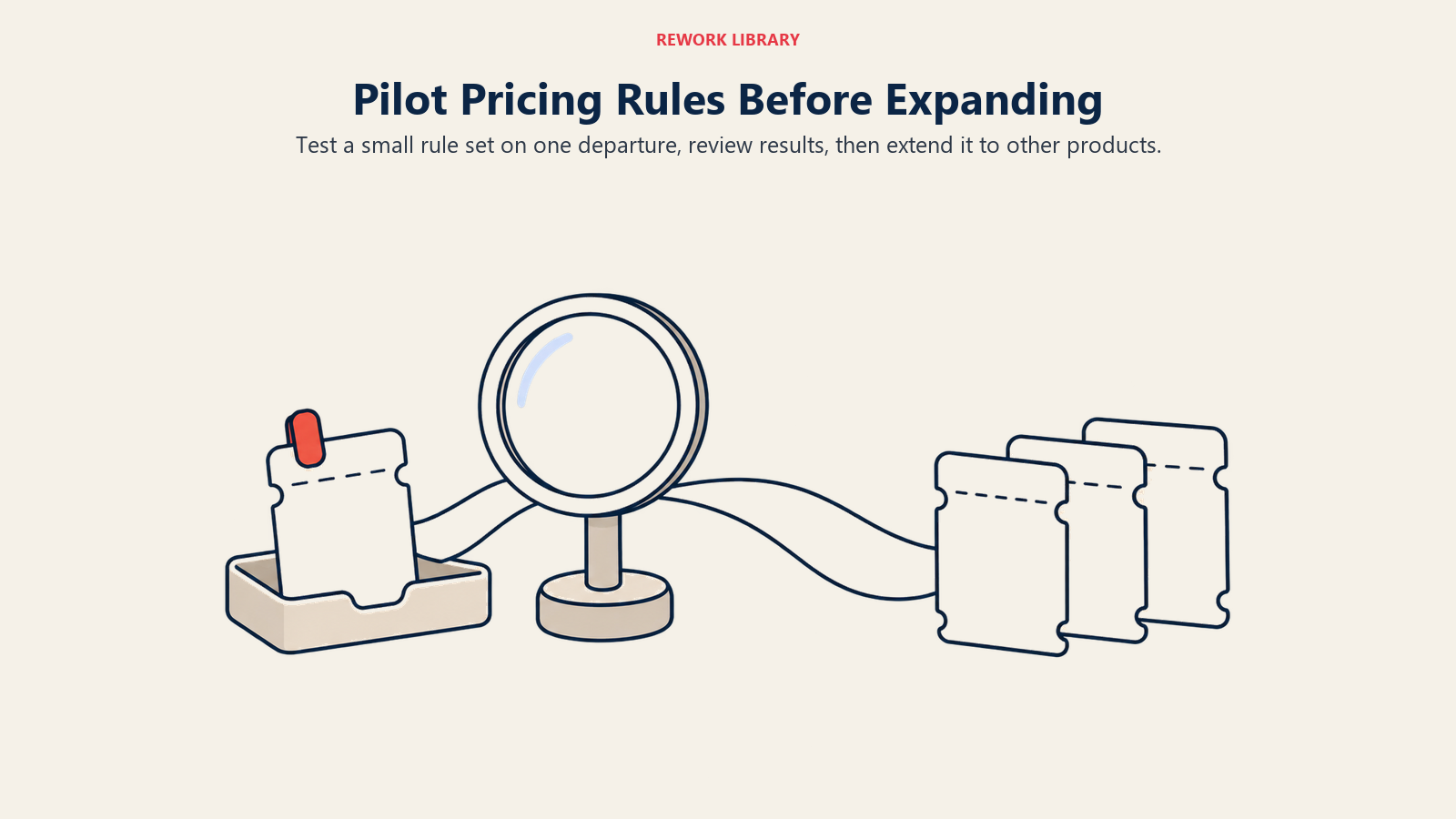
Testing frameworks prevent disasters. Test new pricing rules on one product or departure before rolling out broadly. Monitor conversion rates, revenue, and customer feedback. Iterate based on results.
Yield Management Principles
Yield management maximizes revenue from finite inventory.
Revenue per available seat (or room) calculates how much you earn per inventory unit. Tour with 16 seats departing 12 times yearly = 192 available seats annually. Total revenue $680,000 ÷ 192 seats = $3,542 per seat. Goal is maximizing this metric, not just filling every seat.
Managing inventory allocation means deciding how many seats to sell at each price tier. Don't sell all 16 seats at early bird pricing. Reserve later seats for premium pricing. Airlines do this with fare classes, and you can too.
Overbooking strategies account for typical cancellation rates. If you historically have 8% cancellations, booking to 108% capacity means you'll likely end up at 100% after cancellations. Risky but profitable if managed carefully with clear policies.
Capacity optimization balances load factor (percentage sold) with pricing. Better to sell 80% of seats at premium pricing than 100% at discounted pricing if revenue is higher. Sometimes intentionally leaving inventory unsold is optimal.
Price Floors & Ceilings
Constraints prevent algorithms from making terrible decisions.

Set minimum profitable prices below which you never sell. Calculate your breakeven cost per departure plus minimum margin. That's your floor. No matter how desperate to fill inventory, don't price below breakeven without strategic reasons.
Maximum market-acceptable prices prevent pricing yourself out of contention. Even if demand forecasting suggests you could charge $6,000, if competitors are at $4,200 and that's market rate, $6,000 won't sell. Set ceilings based on competitive intelligence.
Stay within brand positioning parameters. Luxury operators can't suddenly discount to budget levels without damaging brand perception. Budget operators can't surge to luxury pricing and expect acceptance. Price within your established positioning range.
Fare Classes & Restrictions
Multiple price tiers for the same product segment demand effectively.
Creating multiple price points for the same departure: Economy Early Bird ($3,200), Standard ($3,600), Flex ($4,000), Last Minute ($4,400+). Same tour, different prices based on timing and conditions.
Use restrictions to segment: Early bird requires full payment upfront and is non-refundable. Standard allows payment plan, partially refundable. Flex is fully refundable until 30 days. Restrictions justify price differences.
Manage inventory by class by allocating seats to each tier. Reserve 4 seats for early bird, 8 for standard, 2 for flex, 2 held for last-minute. Adjust allocations based on demand patterns.
Competitor Price Monitoring
Staying competitive requires awareness.
Automated tools scrape competitor pricing daily. Services like Pricepoint, Competera, or custom scrapers track competitor rates. Manual monitoring works for small operators checking a handful of competitors weekly.
Response strategies: If competitor drops prices 15%, should you match, hold position, or counter with value-adds instead of discounts? Depends on your positioning and capacity. If you're nearly sold out, hold pricing. If struggling to fill, consider matching.
When to match versus hold depends on differentiation. If your products are genuinely identical, matching might be necessary. If you offer superior value (better properties, private guides, included meals), hold your premium pricing and emphasize differentiation.
Strategic pricing moves include pricing slightly below a competitor to steal share, pricing above to position as premium, or bundling extras they don't include to justify higher rates.
Customer Perception Management
Dynamic pricing can backfire if handled poorly.
Avoid price discrimination backlash by framing it as supply/demand economics everyone understands. "Prices increase as seats fill" is acceptable. "Prices vary based on your browsing history" feels manipulative.
Communicate pricing logic transparently. "Book early and save 20%" or "Limited availability, prices increase as seats fill" sets clear expectations. Customers accept variable pricing when logic is obvious.
Transparency versus opacity: Some businesses hide dynamic pricing completely (different customers see different prices). Others make it explicit (countdown timers, "only 3 seats left at this price"). Transparency generally builds more trust.
Fairness considerations: People accept paying more for peak demand, but feel cheated if they discover someone else paid less for identical product/timing. Be consistent and logical in pricing rules.
Dynamic Pricing Performance Metrics
Track success to optimize over time.
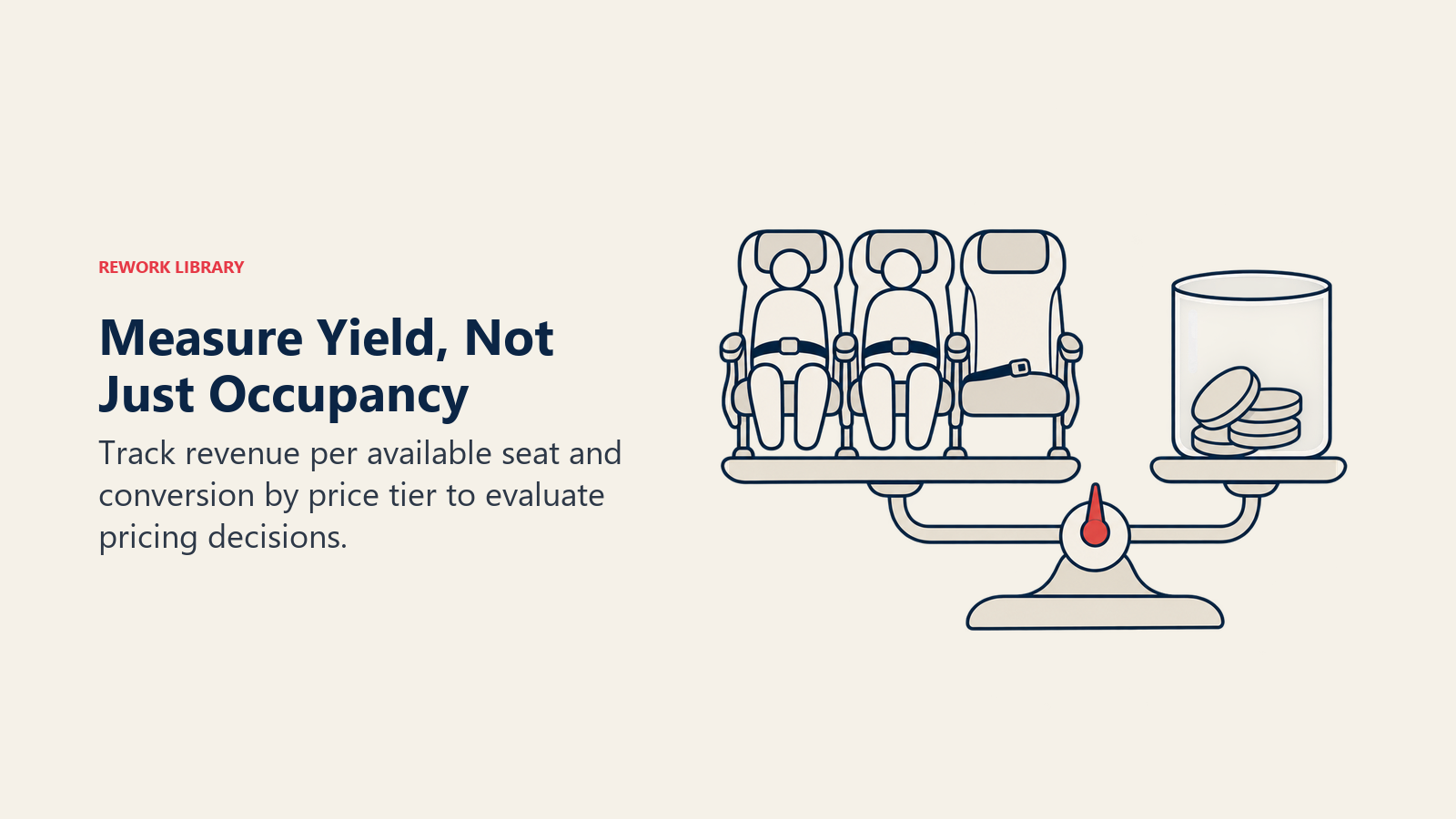
Revenue per available tour (RevPAT) shows yield effectiveness. Calculate total revenue divided by total available seats. Track monthly to see if dynamic pricing increases this metric.
Yield percentage measures how much of potential revenue you captured. If you could theoretically generate $400,000 at maximum pricing but actually generated $320,000, yield is 80%. Higher is better.
Conversion rates by price point reveal price sensitivity. If early bird pricing at $3,200 converts 45% of inquiries, but standard pricing at $3,600 only converts 28%, there's a price sensitivity threshold to understand.
Optimization opportunities emerge from data analysis. Maybe your last-minute pricing is too aggressive, leaving revenue on the table. Maybe early bird discounts aren't necessary because demand is strong without them. Test, measure, refine continuously.
Dynamic pricing isn't about random price changes or exploiting customers. It's about matching price to value based on market conditions, charging more when demand is high and inventory scarce, less when you need to stimulate bookings.
Airlines and hotels have proven dynamic pricing increases revenue dramatically. Tour operators and travel agencies are implementing successfully. The competitive advantage goes to those who master this discipline.
Start simple. Test carefully. Learn continuously. Optimize relentlessly.
Frequently Asked Questions about Dynamic Pricing in Travel
What is dynamic pricing in travel?
It is pricing that changes automatically based on real-time conditions like booking pace, remaining inventory, seasonality, and competitor rates. The same tour, room, or seat can sell at several different prices depending on when it is booked and how full the departure already is.
How much revenue can dynamic pricing add?
Tour operators and agencies that implement it well typically see revenue increases of 15 to 30 percent without acquiring additional customers, because they capture more from high-demand departures while still filling low-demand ones at a discount.
How do you start with dynamic pricing without complex software?
Begin with three simple rules: an early-bird discount for bookings 6 or more months out, regular pricing 3 to 6 months out, and a premium increase once a departure is roughly 85 percent sold. Spreadsheets with manual rules work for a first pass before you adopt revenue management tools.
Does dynamic pricing upset customers?
Not if the logic is transparent and consistent. People accept that prices rise as seats fill or during peak demand. Frame increases as supply and demand ("limited availability, prices rise as seats fill") and apply the same rules to everyone so no one feels singled out.
Related Articles:

Business Consultant