Group Travel Sales: Winning Multi-Passenger Bookings - 2026 Guide
Turn this article into takeaways for your work.


Each assistant summarizes the article only for you and suggests best practices for your work.
A single family vacation generates $8,000 in revenue. A corporate group of 25 generates $125,000. A destination wedding with 50 guests hits $400,000. Group travel offers exponentially higher revenue per sale, but the complexity scales dramatically too. Understanding the travel business economics helps you evaluate group booking profitability.
You're not just designing itineraries. You're managing diverse preferences, coordinating multiple decision-makers, negotiating supplier contracts, handling deposits from dozens of people, and ensuring 30 individuals have cohesive positive experiences. The fundamentals of the travel sales process still apply but at greater scale.
Group Travel Market Overview
Different group types have fundamentally different dynamics, economics, and sales approaches.
Corporate groups (10-50 participants) typically have clear decision authority, defined budgets, and business objectives driving travel. Decision cycles run 3-6 months for standard programs, longer for large international events. Pricing must be competitive but professionalism matters more than rock-bottom rates. Profitability is strong because logistics efficiency improves with volume. Learn specialized approaches for corporate travel sales.
Association groups (20-100+ members) involve committees, democratic decision-making, and budget sensitivity. Annual conferences or incentive programs for membership organizations, professional associations, or alumni groups. Sales cycles extend 6-12 months with extensive committee review. Volume matters, but so does demonstrating value to members paying individually.
Affinity groups (10-30 people) form around shared interests, wine enthusiasts, photography clubs, adventure travelers, or cultural learners. These groups value expertise and unique access over cost savings. Someone in the group typically organizes but lacks professional event planning experience, so you're educating while selling.
Educational groups (15-40 students plus chaperones) come from schools, universities, or learning organizations. Pricing is extremely sensitive, parent approvals add complexity, and safety/supervision requirements are paramount. These generate lower margins but can provide steady annual business.
Family reunion groups (15-40 relatives) span multiple generations with varying budgets, preferences, and travel experience. Decision-making is complex, often one or two people organizing, but everyone has opinions. Emotions run high because family dynamics are involved.
Group Lead Generation & Targeting
Group business doesn't typically come from web inquiries. You need proactive outreach.
Identify group travel opportunities by looking for organizations that regularly gather: companies with sales teams exceeding quotas, associations holding annual conferences, alumni groups planning milestone reunions, religious organizations coordinating pilgrimages, or sports teams traveling for tournaments.
Reach decision-makers through targeted networking. Attend local business events where you'll meet HR directors, sales managers, and executives who plan corporate travel. Join associations where you can demonstrate expertise. Connect with event planners who coordinate but don't book travel.
Leverage association relationships by becoming a preferred vendor. Many associations maintain lists of vetted suppliers members can use. Getting on these lists requires application processes and often relationship building with association leadership, but it provides qualified leads.
Build corporate relationships through consistent value delivery. Your first group from a company might be modest, 15 people for a sales conference. Execute flawlessly, and they'll bring you larger programs. Corporate repeat business provides revenue stability that FIT bookings can't match. Effective group travel lead capture systems manage these opportunities systematically.
Group Inquiry Qualification
Not every group inquiry deserves full proposal development. Qualify rigorously.
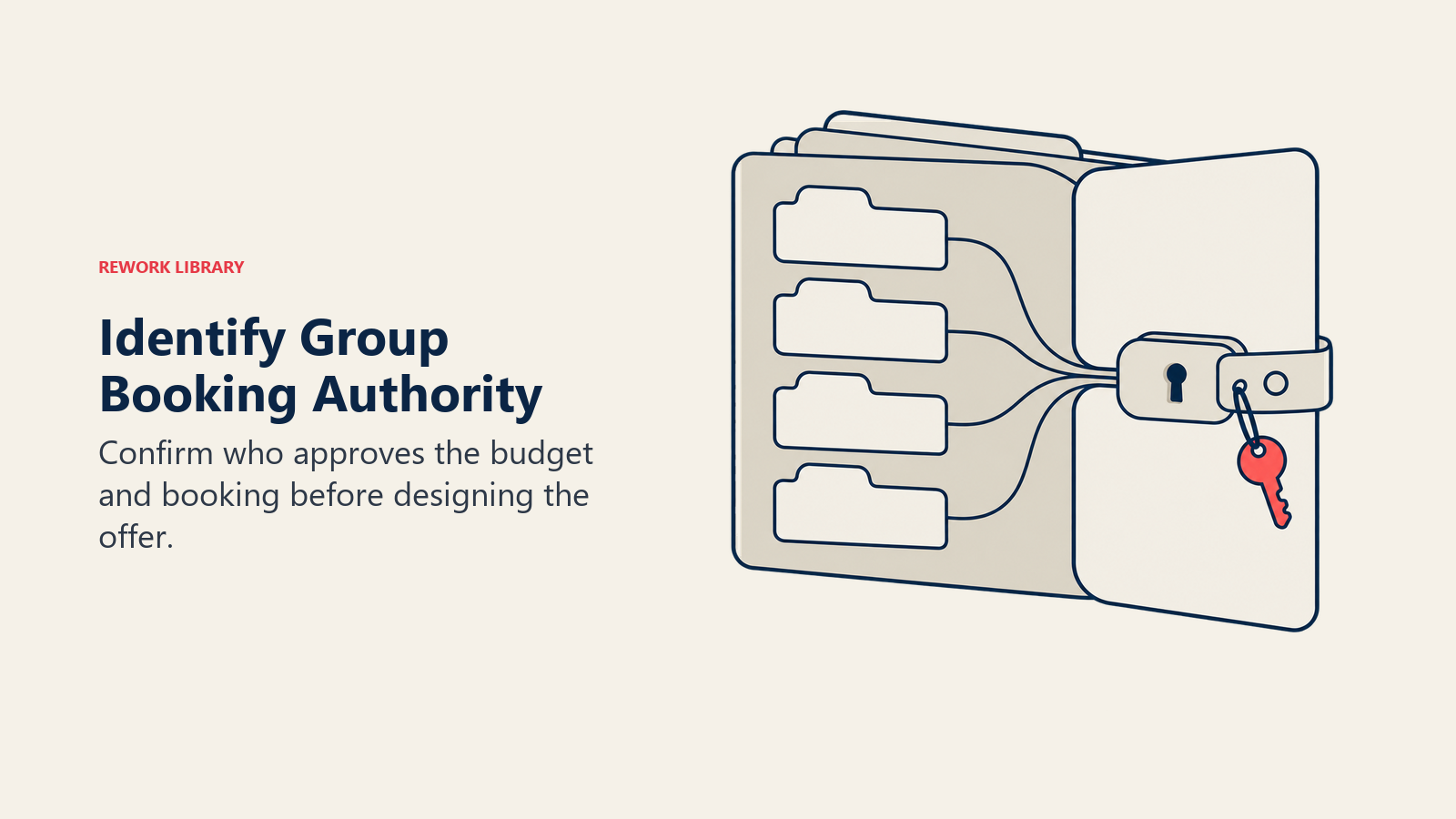
Assess group viability through key questions. Confirmed dates or flexible? (Flexible usually means not serious yet.) Budget already allocated or still being determined? (No budget often means no booking.) Decision authority identified or unclear? (Without knowing who decides, you can't sell effectively.)
Understand group dynamics early. Is this a top-down decision (company executives planning for employees) or democratic (group members voting on options)? Top-down is simpler, convince decision-makers. Democratic requires buy-in from the broader group, which takes longer and includes more variables.
Identify decision authority explicitly. "Who has final approval on budget and booking?" Corporate groups usually have clear authority, CEO, owner, sales director. Social groups might have informal leaders or committees requiring consensus. Know who you're actually selling to.
Budget ranges and flexibility determine what you can propose. A corporate group with $4,000 per person budget allows completely different programming than an association group at $1,800 per person. Understand constraints before designing proposals.
Booking timeline reality checks prevent wasted effort. A group wanting to travel in six weeks is unlikely to happen unless you have inventory already contracted. Groups booking 12+ months out are more likely tire-kickers than committed buyers unless they have specific reasons for early planning.
Group Pricing Strategies
Group pricing is both art and science, balancing profitability with competitiveness.
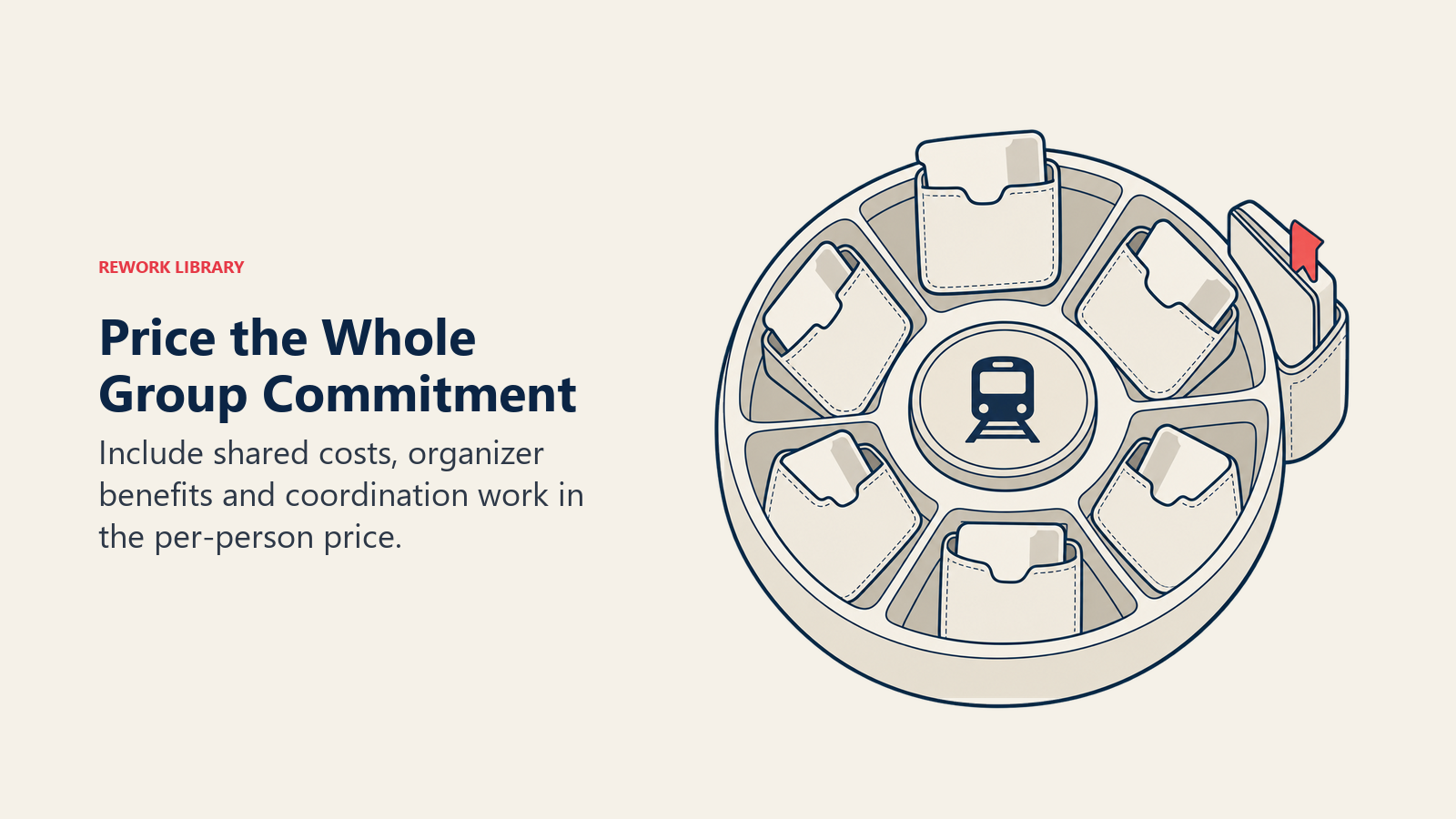
Volume discounts make group travel economically attractive. Hotels offer reduced rates for room blocks. Tour operators discount for guaranteed volume. Transportation providers lower per-person costs. Your job is capturing these savings while maintaining healthy margins.
Complimentary ratios reward group organizers. Standard ratios are 1:15 (one free participant for every 15 paying) or 1:20 for larger groups. The free spots typically go to the organizer, teacher, or group leader. Build these into pricing rather than absorbing them, charge 16 people to cover 15 plus one comp.
Markup optimization for groups differs from FIT. You're working with lower per-person margins but much higher total revenue. A 12% margin on $150,000 group booking generates $18,000 profit. That same 12% on an $8,000 FIT booking is only $960. Volume compensates for lower percentages.
Transparency with organizers builds trust. Show them the per-person breakdown: accommodations, activities, transportation, meals, and your coordination fee. They need to justify pricing to participants or decision-makers. Making your value clear helps them sell internally.
Profit margin considerations balance competitiveness with sustainability. Groups in the $100,000-200,000 range should generate 15-20% gross margin. Larger groups ($200,000+) might operate at 12-18% because of scale and competitiveness. Below 12% margin, you're underpricing for the complexity involved.
Group Proposal Development
Group proposals are sales tools, operational documents, and risk management contracts simultaneously.
Create compelling group packages that address diverse needs. Don't design one-size-fits-all programming. Include core experiences everyone participates in, optional activities for different interests, and free time for independent exploration. Balance structure with flexibility.
Room configurations for groups require careful planning. Who's sharing rooms? (Corporate groups rarely share, family groups often do, youth groups require specific ratios.) Single supplements for solo travelers? (Someone's paying for that unmatched room.) Suite options for VIPs or group leaders? Accessibility requirements?
Special event inclusions differentiate your proposal. Welcome reception to kick off the trip. Farewell dinner bringing the group together at the end. Private venue rental for exclusive experiences. These create group cohesion and memorable moments that participants will rave about.
Payment collection options simplify coordinator burden. Individual payment plans where each participant pays directly? (Administratively complex for you, easier for organizer.) Organizer collects and remits in bulk? (Requires trust and clear deadlines.) Hybrid where deposits are individual but final payment is bulk? Each has implications for cash flow and administration.
Organizer benefits incentivize the person doing coordination work. Beyond free or discounted travel, consider: upgraded accommodations, special experiences not available to general participants, or small gifts/amenities showing appreciation. The organizer is your partner, treat them accordingly.
Managing Multiple Stakeholders
Groups involve complex relationship dynamics.
Coordinate with group leaders who are your primary contact. They're usually not professional event planners, they're teachers, HR managers, social committee chairs, or enthusiastic family members. Provide tools that make their coordination easier: participant sign-up links, customized websites with trip information, FAQ documents addressing common questions.
Communicate with individual participants carefully. Don't bypass the group leader, maintain their authority. But be available for individual questions about special requirements, room preferences, or concerns they're uncomfortable raising in group settings. Balance accessibility with respecting hierarchy.
Handle diverse preferences through tiered options. Not everyone wants the same activity level, food choices, or luxury standards. Offer optional excursions beyond core programming. Provide restaurant recommendations for free dinners beyond group meals. Give flexibility where possible while maintaining group cohesion where needed.
Maintain group cohesion through shared experiences. Daily group meals create bonding opportunities. Welcome and farewell events bookend the trip with collective memories. Group photos and recap videos create artifacts that participants treasure afterward.
Group Deposits & Payment Collection
Money management makes or breaks group travel profitability.
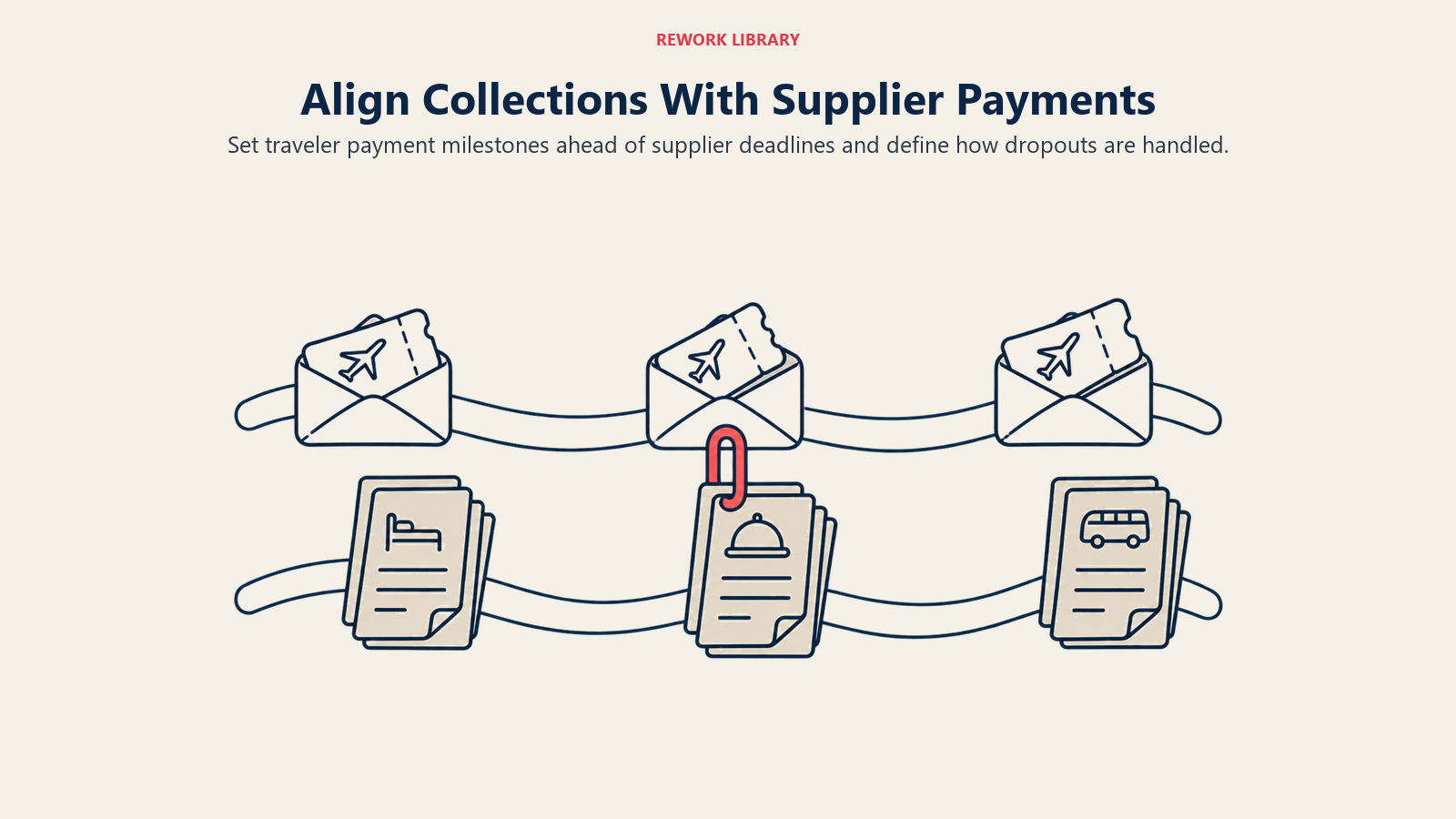
Structured payment schedules align with supplier deposit requirements. Typical timeline: initial deposit (20-25%) to secure inventory, second payment (30-35%) at 90 days, third payment (25-30%) at 60 days, final balance at 30 days pre-departure. Match your collection timing to when you must pay suppliers.
Managing organizer versus individual payments depends on group type and size. For corporate groups, organizer collects nothing, the company pays directly. For social groups, organizer often collects deposits but you collect final payments directly from participants (reduces organizer's financial liability). For educational groups, school handles everything or requires parent payments directly to you.
Handling dropouts is inevitable with groups. Your terms and conditions must address this: deposits are non-refundable after X date, participants dropping out are responsible for finding replacements, or cancellations within Y days forfeit Z percentage. Balance flexibility with protecting yourself from revenue loss.
Final rooming lists and details require firm deadlines. Set final date for participant names, room configurations, dietary restrictions, and passport information. After that date, changes incur fees. Otherwise, groups will tinker endlessly.
Group Contract Negotiation
Negotiating group rates and terms protects profitability and manages risk.
Secure favorable supplier terms by leveraging volume. "I have a group of 28 for your property. What's your best group rate, and can we get complimentary suite upgrades for group leaders?" Ask for discounts, amenities, flexible cancellation terms, and space holds without immediate commitment.
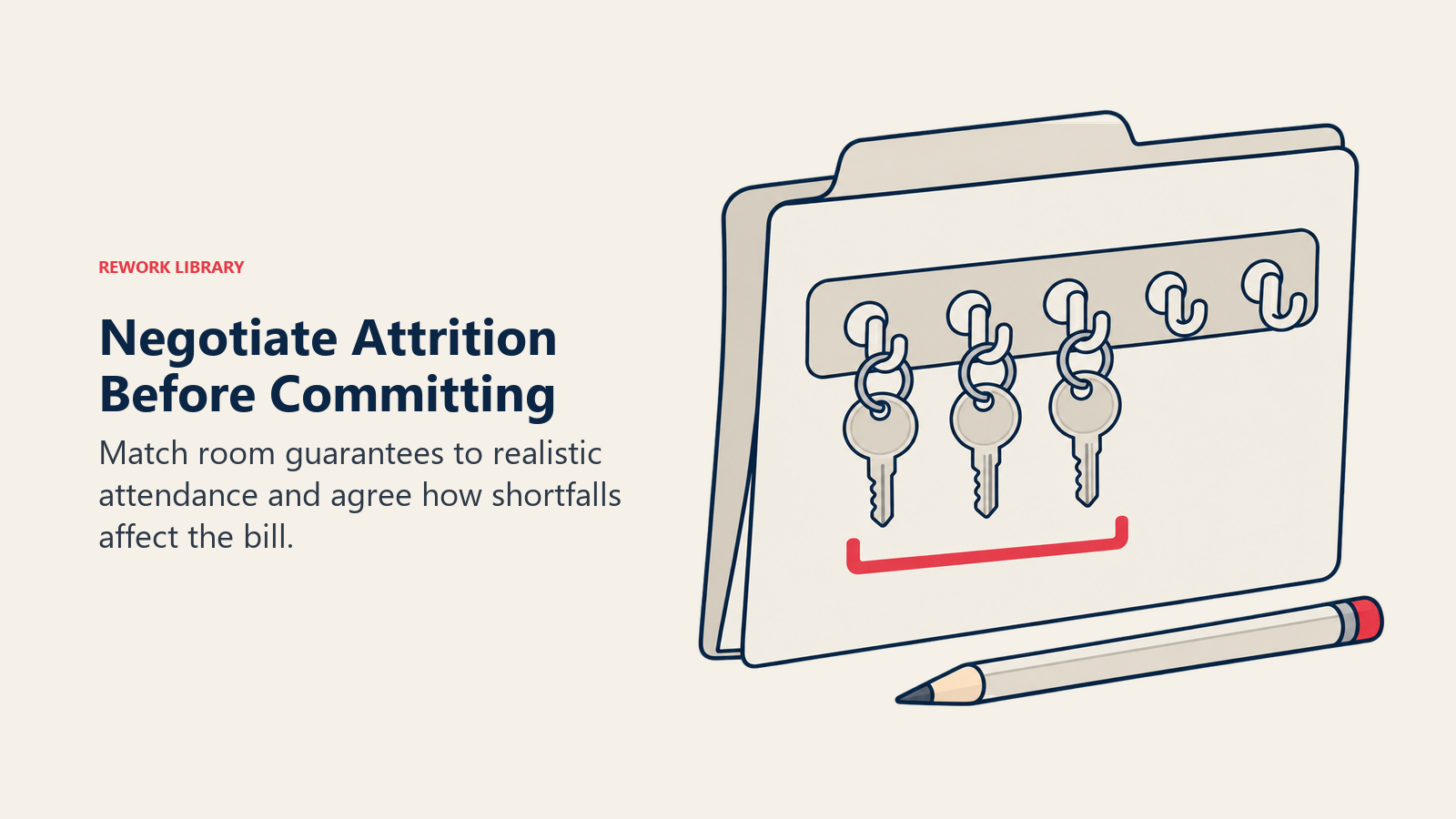
Attrition clauses require careful attention. Hotels might require guaranteeing 20 rooms. If only 16 materialize, you're paying for the 4 empty rooms. Negotiate: lower guarantees, attrition allowances (10% drop without penalty), or ability to substitute revenue (fewer rooms but more food/beverage spending).
Cancellation policies escalate over time. Six months out, maybe you forfeit deposits. Three months out, 50% of total. Within 30 days, 100%. Negotiate these aggressively, your risk increases as dates approach, and you need terms that protect you without making the group afraid to commit.
Group amenities add value without significant cost. Complimentary meeting space, welcome amenity in rooms, discounted spa access, cocktail reception, early check-in, or late checkout. These cost suppliers little but make your package more attractive.
Special requests demonstrate personalization. Specific room configurations, dietary accommodations, private spaces for meetings, or exclusive access to facilities. The more customized, the higher value participants perceive.
Pre-Departure Group Coordination
The weeks before departure determine whether your trip runs smoothly or chaotically.
Provide group leaders with tools that empower them. Pre-trip communication templates they can send to participants. Packing list specific to your destination and season. FAQ document answering common questions. Participant roster so people can connect before the trip.
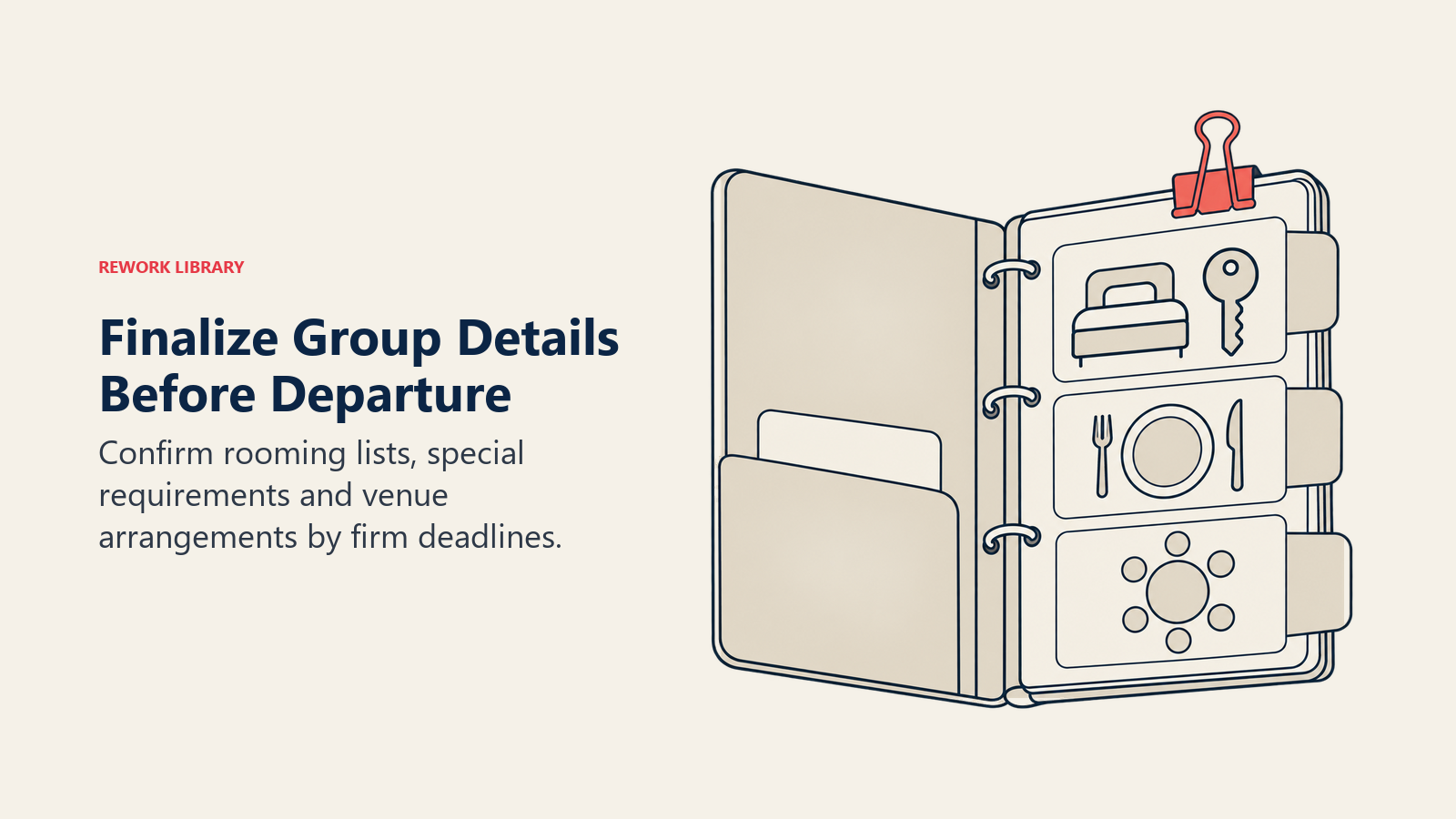
Manage rooming lists systematically. Create spreadsheet template for the organizer to populate: participant names exactly as on passports, birthdates, room configurations, special dietary needs, medical conditions affecting travel, emergency contacts. Set firm deadline for submission.
Coordinate special meals and events with venues well in advance. Private dinners require minimum guarantees, menu selections, seating arrangements, and audio-visual needs if there are presentations. Confirm details 2-3 weeks out, reconfirm one week before.
Communication strategies for groups differ from FIT. Create private Facebook group or WhatsApp group for participants to connect? Weekly email updates counting down to departure? Video calls addressing common questions? Balance keeping people informed and excited without overwhelming them.
Group Travel Operations & Support
During the trip, you're managing complexity in real-time.
On-trip coordination can be handled remotely or on-site. Small groups (10-15) with experienced travelers can usually self-manage with local guide support. Large groups (30+), youth groups, or high-touch corporate programs often justify having your staff on-site.
Handle group changes with clear policies. Someone wants to skip group activity and do something independently? Fine, but they're not refunded. Two people want to upgrade hotel rooms? Possible if arranged before departure, likely not once on-site. Boundaries prevent requests from spiraling.
Emergency procedures for groups are critical. One person having medical emergency shouldn't derail 30 others' experiences. Have protocols: local emergency contacts, travel insurance claim procedures, communication chains, and decision authority when issues arise.
Ensure organizer satisfaction because they're your referral source and potential repeat client. Check in daily during the trip. Address issues immediately. Go above and beyond when you can. They're experiencing stress you can't fully control, your responsiveness and competence determine whether they'd work with you again.
Group travel sales offer revenue potential that dwarfs individual bookings. But the complexity, coordination, and risk management required isn't just "bigger versions" of FIT travel, it's fundamentally different business requiring specific expertise.
Master group dynamics, pricing strategy, stakeholder management, and operational execution. The payoff is transforming your revenue model from many small transactions to fewer, much larger, more profitable bookings that create business stability.
Related Articles:

Business Consultant