Pre-Trip Communication Strategy - Guest Preparation Guide 2025
Turn this article into takeaways for your work.


Each assistant summarizes the article only for you and suggests best practices for your work.
A travel operator I know received a panicked email three days before departure: "I just realized I need a visa. Can I still go on this trip?" The answer was no. Not because visa processing is impossible in three days, but because they'd communicated the visa requirement 60 days earlier and again at 30 days. The guest simply missed both messages in the flood of their daily emails.
That operator lost $4,200 in revenue, burned through hours of customer service time trying to resolve the situation, and left a disappointed customer who told everyone about their "nightmare experience" with visa requirements. The problem wasn't lack of communication, it was ineffective communication.
Pre-trip communication serves three critical purposes: preparing guests practically, building excitement emotionally, and establishing your relationship before you meet face-to-face through the travel customer journey mapping process. Get it right and guests arrive confident and ready. Get it wrong and you're fixing problems throughout the trip.
Strategic Pre-Trip Communication Timeline
Timing matters as much as content. Too early and information gets forgotten. Too late and guests can't act on it. The right sequence delivers information when guests need it and can use it.
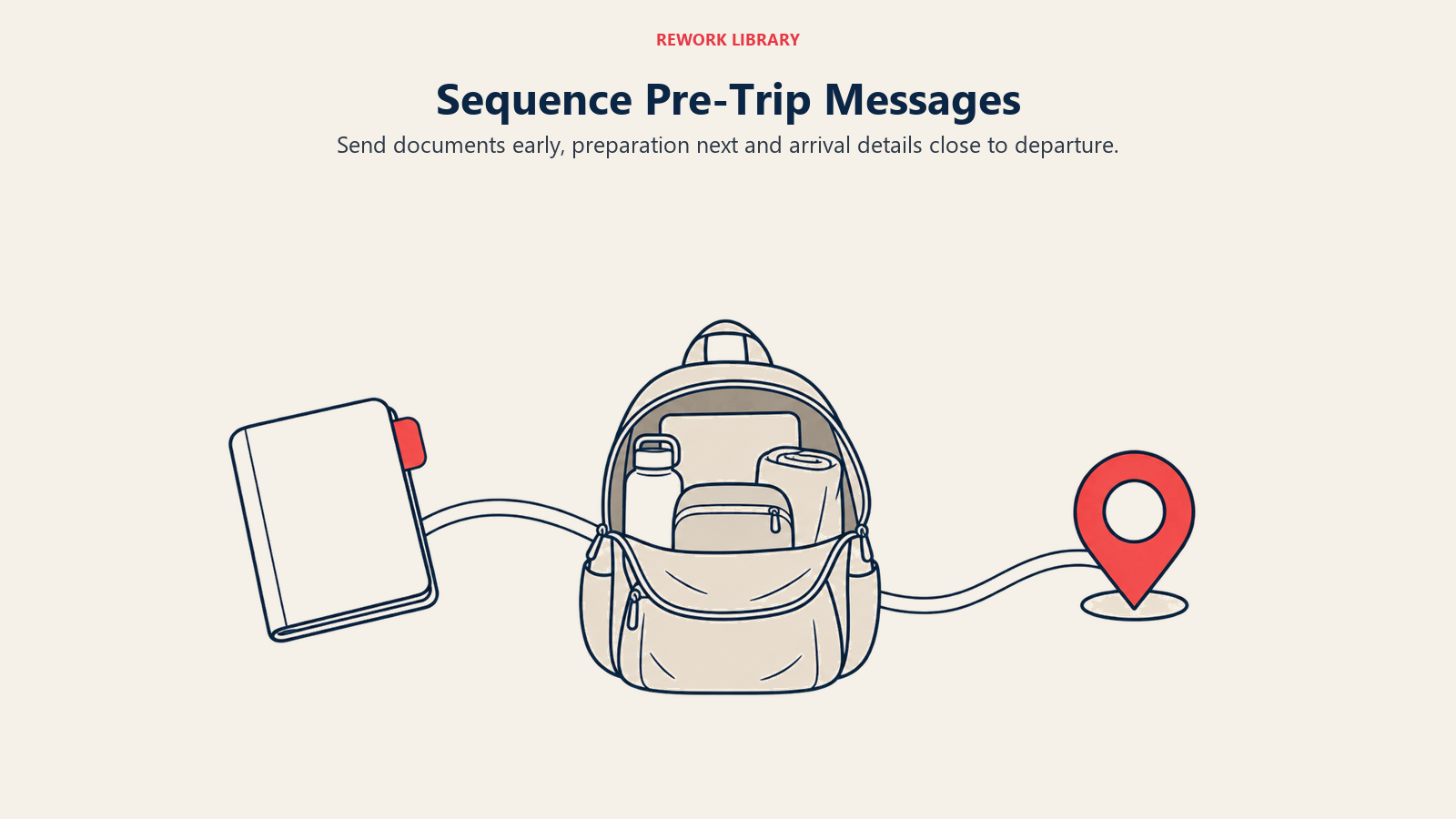
Immediate booking confirmation establishes trust at the moment of highest anxiety. Guests have just committed thousands of dollars to a trip months away. Within minutes of booking completion, they need confirmation that everything is legitimate and their money is safe. This first message includes booking reference numbers, trip summary with dates and destinations, payment confirmation, and what happens next.
Sixty days before departure marks the documentation phase. This is when visa applications need to begin, passports need renewing if validity is borderline, and travel insurance should be purchased. Information delivered at 60 days gives guests enough time to handle these requirements without stress. Closer to departure and time pressure creates anxiety.
Thirty days out shifts to preparation mode. Guests start thinking practically about the trip: what to pack, what to expect, how to prepare physically if it's an active trip. This is when detailed itinerary information becomes relevant. It's also when excitement builds naturally as the trip approaches.
Seven days before departure delivers final practical details. Meeting points, arrival instructions, last-minute itinerary updates, weather forecasts, and final reminders about documentation. This message should be short, actionable, and impossible to miss.
Departure day communication provides comfort and logistics support. Flight delays happen, traffic creates stress, uncertainty builds. A simple message saying "Looking forward to meeting you today at 3 PM at the hotel lobby" creates reassurance that someone is expecting them.
Booking Confirmation Communications
The booking confirmation sets the tone for everything that follows. It's your first opportunity to demonstrate professionalism and build trust.
Immediate automated confirmation proves the booking succeeded. Guests shouldn't wonder whether their payment went through or their reservation was recorded. Within seconds of completing the travel booking funnel process, they receive an email confirming all details. This automation requires reliable booking system integration but pays dividends in customer confidence.
Trip summary information in the confirmation prevents confusion later. Full names of all travelers, departure and return dates, destinations included, accommodation details, meal plan, and total amount paid. Guests often reference this confirmation multiple times before departure, so make it comprehensive and easy to understand.
Next steps and expectations set the communication relationship. Tell guests when they'll hear from you again, what information they'll receive, and what actions they need to take. "Within 14 days, our team will contact you to discuss any special requirements. 60 days before departure, you'll receive detailed documentation information. 30 days before departure, you'll get your complete itinerary and packing guide."
Guest portal or app access modernizes communication and centralizes information through effective travel CRM implementation. Rather than asking guests to save multiple emails, give them a login to a portal where all trip information lives in one place. They can access itineraries, upload required documents, communicate with your team, and find answers to common questions. Mobile apps take this further with offline access to critical information.
Pre-Departure Information Packages
Comprehensive pre-departure information transforms anxious travelers into confident guests who know exactly what to expect.
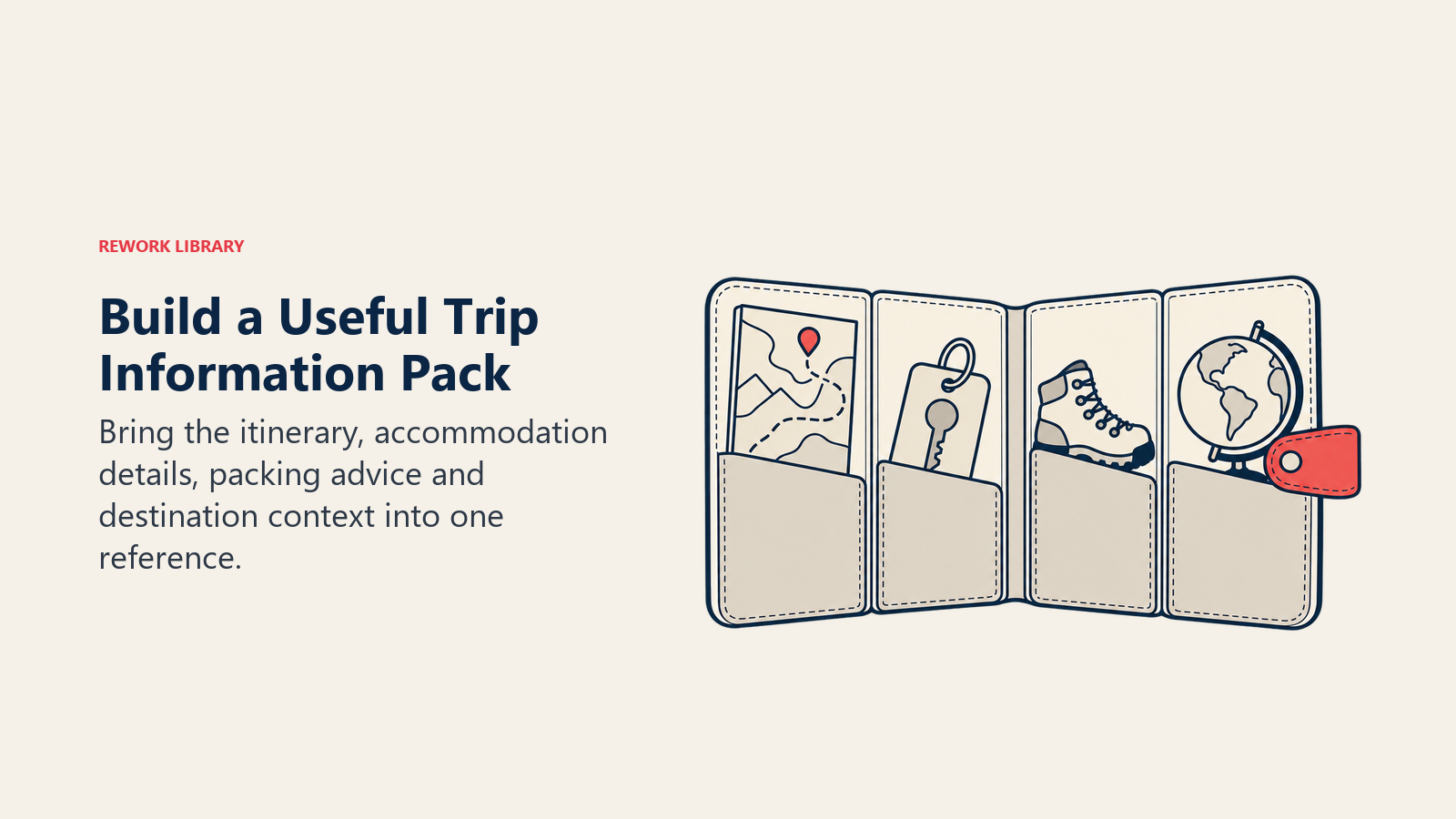
Detailed itinerary information goes beyond day-by-day schedules. Include specific activity start times, duration of each activity, physical difficulty ratings, optional versus included activities, free time periods, and meal arrangements. The more detail you provide, the better guests can mentally prepare and set realistic expectations.
Accommodation information helps guests know what to expect at each property. Include hotel names and addresses, room types and amenities, check-in and check-out times, WiFi availability, and any unique features or restrictions. Photos help guests visualize where they'll be staying.
Packing lists tailored to trip type prevent the classic overpacking problem while ensuring guests bring essentials. Activity-specific items need highlighting: hiking boots for mountain treks, sun protection for beach trips, formal attire if any dressy dinners are included. Weather-appropriate clothing recommendations based on seasonal norms help guests pack smart.
Destination information creates cultural context. Brief overviews of destinations visited, cultural customs and etiquette to observe, basic language phrases, local currency and payment norms, tipping guidelines, and interesting facts or history. This information builds excitement while preparing guests to engage respectfully with local cultures.
Documentation and Requirements
Documentation requirements create the highest stress for international travelers. Clear, timely communication about these requirements through your travel documentation process prevents last-minute problems.
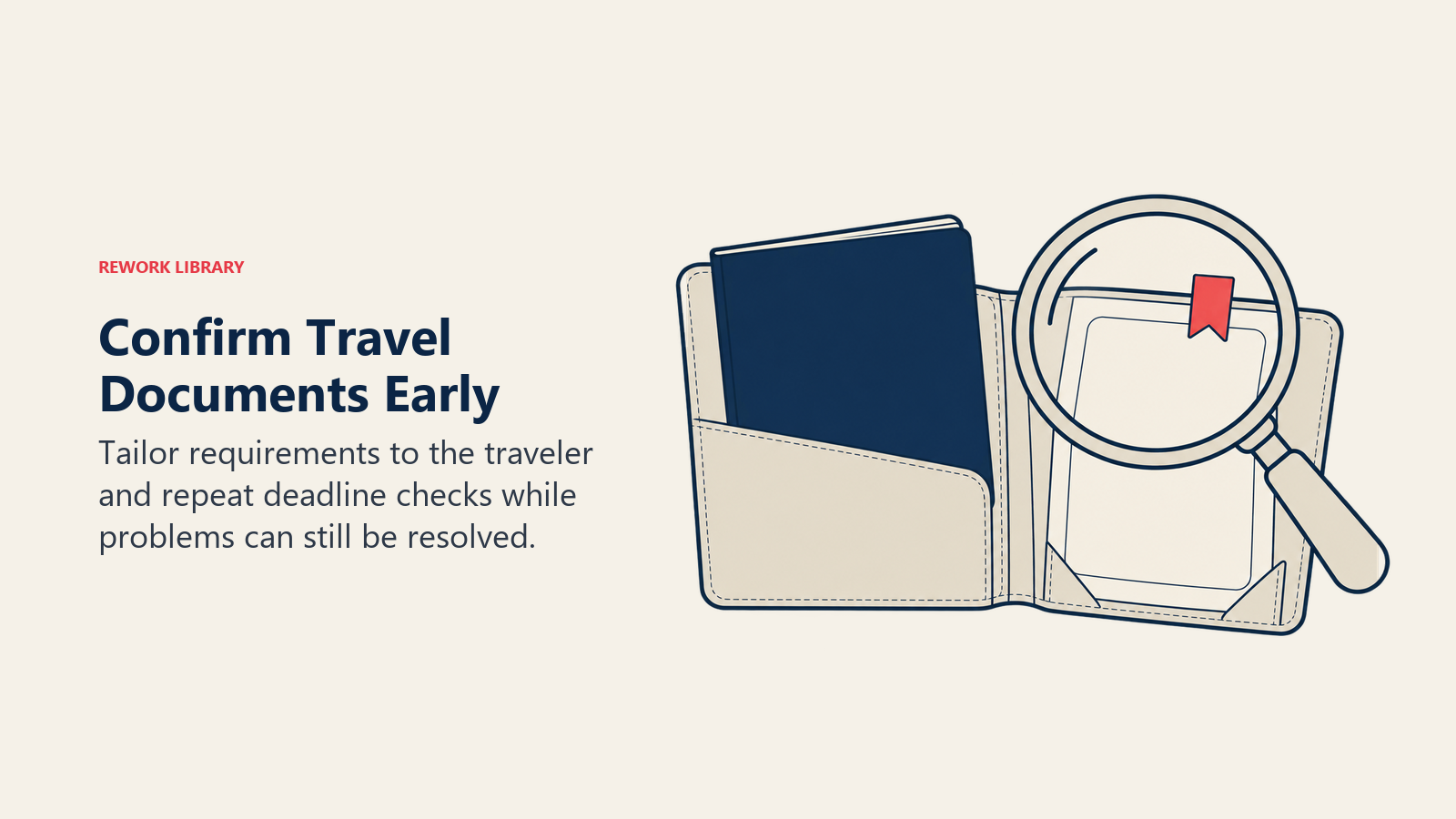
Visa and passport requirements must be communicated early and repeatedly. Different nationalities face different requirements, so generic information doesn't suffice. Ideally, your booking system collects nationality during booking and provides customized documentation requirements based on each traveler's specific situation. This personalization prevents confusion and ensures relevant guidance.
Vaccination and health documentation has gotten more complex in recent years. Some destinations require specific vaccinations with enough processing time. Others have health declaration forms. Travel during health emergencies adds additional layers. Provide specific guidance on what's required, how to obtain necessary documentation, and where to access official information sources.
Travel insurance information and recommendations protect both guests and your business. Explain what insurance covers (trip cancellation, medical emergencies, evacuation, baggage loss), why it's important, and when it should be purchased (usually immediately after booking for maximum coverage). Some operators require insurance; others strongly recommend it. Be clear about your policy.
Time-sensitive reminders ensure guests don't miss critical deadlines. An automated reminder 90 days before departure: "If you need a visa, please begin the application process now." At 60 days: "Visa applications should be submitted by now if required." At 30 days: "Confirm you have received your visa if applicable." These touchpoints catch issues while there's still time to fix them.
Building Pre-Trip Excitement
Practical preparation is essential, but emotional engagement transforms a purchase into an anticipated experience.
Destination photos and videos bring the trip to life. Share stunning imagery of locations guests will visit, activities they'll experience, and accommodations where they'll stay. User-generated content from past guests often resonates more than professional photography - it looks more authentic and achievable.
Traveler testimonials and reviews from past guests provide social proof and build confidence. Share stories from guests who had similar concerns or interests. Solo travelers want to hear from other solo travelers. First-time international travelers relate to others who were nervous but had amazing experiences. These testimonials make the trip feel real and achievable.
Pre-trip webinars or Q&A sessions create community before the trip begins through effective travel community building. Host a live video call 30-45 days before departure where guests can meet the tour guide, ask questions, and connect with fellow travelers. These sessions reduce anxiety, build relationships, and create shared excitement. Record them for guests who can't attend live.
Countdown communications tap into the natural excitement that builds as departure approaches. At 30 days: "One month until your adventure begins!" At 14 days: "Two weeks to go - here are five things to get excited about on your trip." These brief, enthusiastic messages keep your trip top-of-mind and maintain engagement.
Practical Preparation Guidance
Guests want to arrive prepared but often don't know what preparation means for your specific type of trip.
Detailed packing lists go beyond generic clothing advice. Activity-specific gear needs explicit mention: "You'll need closed-toe water shoes for the reef walk" rather than "comfortable footwear." Technical specifications help: "Daypack with 20-25L capacity" rather than "small backpack." Links to recommended products make shopping easier for guests who don't know where to find specialty items.
Weather forecasts and activity-specific gear recommendations should update as departure approaches. The weather forecast 60 days out is meaningless. But the weather forecast 7 days before departure is actionable. Send updated weather information with packing reminders based on actual forecast conditions.
Local currency and payment tips prepare guests for financial transactions. Explain what currency is used, where to get it (airport exchange, local ATM, bring from home), what credit cards are accepted, whether cash is necessary, and typical price ranges for common purchases. This practical information reduces stress and prevents guests from being unprepared or overpaying.
Communication and connectivity guidance sets realistic expectations. Will there be WiFi at hotels? Cellular coverage in remote areas? Should guests purchase local SIM cards? Which providers work best? What apps are useful for local communication? Guests increasingly expect connectivity, so addressing this proactively prevents frustration.
Multi-Channel Communication Strategy
Different messages suit different channels. Using the right channel for each message type improves effectiveness.
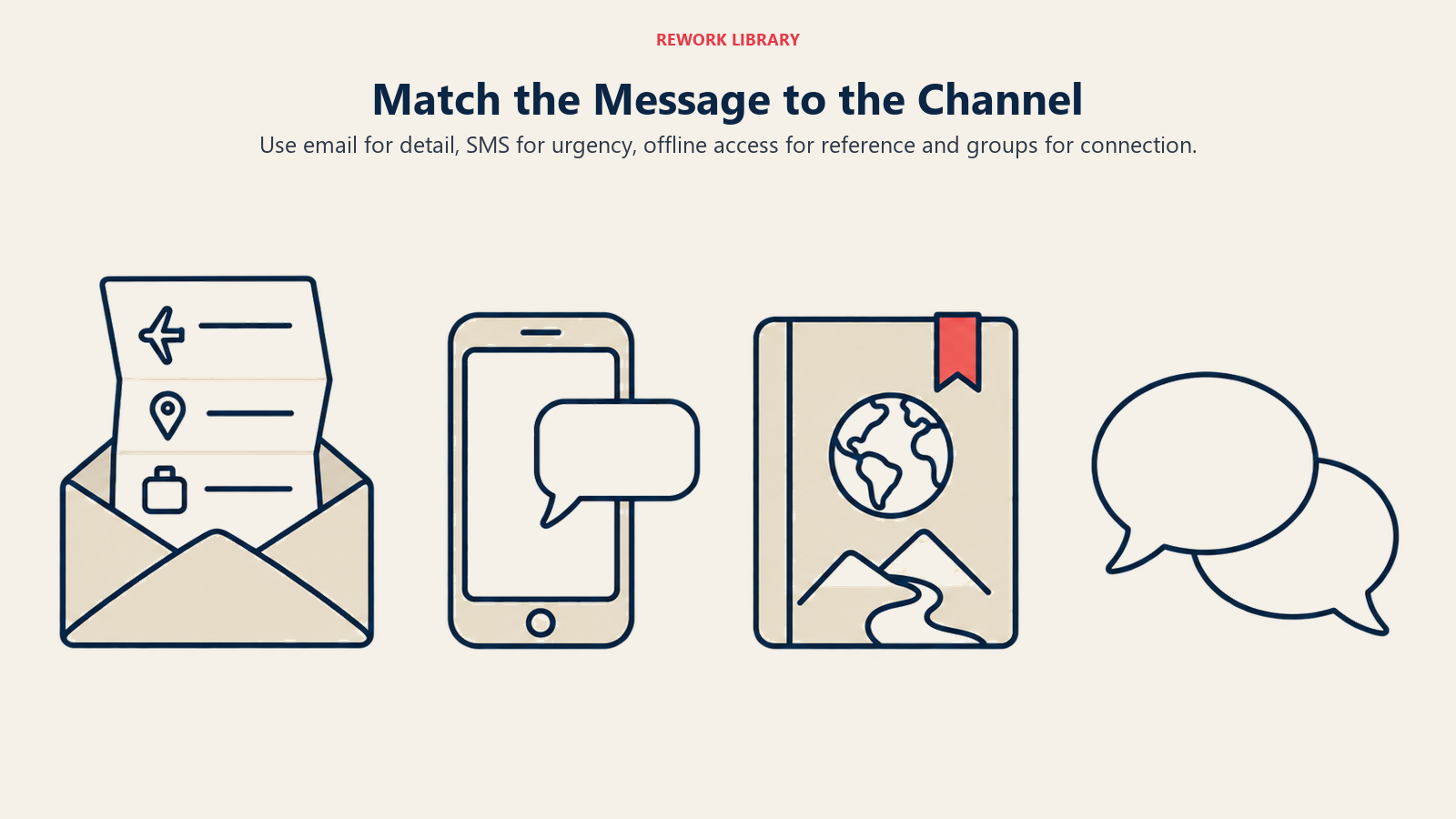
Email delivers detailed information that guests can save and reference later. Comprehensive itineraries, packing lists, documentation requirements, and terms and conditions all belong in email. The permanence of email makes it ideal for information guests will need to review multiple times.
SMS works for time-sensitive reminders and urgent updates. "Your trip departs in 48 hours - see your email for final details" gets read immediately. "Weather update: bring rain jacket" reaches guests even if they're not checking email. SMS cuts through the noise when immediate attention matters.
Mobile apps centralize information access and provide offline functionality. Rather than hunting through emails, guests open the app to find everything: itinerary, contact information, documents, FAQs. Offline access means this information remains available even without internet connectivity during travel.
Private groups on Facebook or WhatsApp create community among guests before the trip. These groups let travelers introduce themselves, ask questions, coordinate logistics like airport transfers, and build relationships. The community aspect often enriches the trip experience as guests arrive already knowing their fellow travelers.
Personalization in Pre-Trip Communication
Generic information serves no one well. Personalized communication based on guest profiles creates better experiences.
Tailoring messages based on travel customer segmentation acknowledges different needs and interests. First-time international travelers need more hand-holding about documentation and what to expect. Repeat customers with your company can skip basic information. Solo travelers appreciate different preparation advice than families. Adventure guests need different packing lists than luxury travelers.
Addressing special requirements or requests made during booking shows you've listened and haven't forgotten, which is especially important for VIP guest programs. If a guest mentioned they're celebrating an anniversary, acknowledge it in pre-trip communication. If they requested specific dietary accommodations, confirm those arrangements. These small touches demonstrate attention to detail.
Birthday or anniversary recognition when relevant to trip dates creates memorable moments. If a guest will celebrate a birthday during the trip, mentioning it in pre-trip communication and planning a small celebration during the trip creates disproportionate goodwill. These gestures don't require significant expense but generate enormous appreciation.
Personalized recommendations based on interests enhance the experience. If a guest mentioned they love photography, share best photo opportunities on the itinerary. If they're interested in local cuisine, recommend restaurants or markets near the hotel. This personalization requires collecting interest information during booking, but the payoff in guest satisfaction is substantial.
Managing Pre-Trip Anxiety
Even excited travelers experience anxiety as departure approaches. Proactive communication addresses concerns before they escalate.
Proactively addressing common concerns and FAQs prevents repetitive support inquiries and supports your on-trip support service preparation. Create a comprehensive FAQ document addressing typical questions: What if I miss a connection? What happens if I get sick during the trip? Can I do laundry? Are tips included? Can I charge devices? Anticipating questions and providing answers upfront reduces anxiety.
Providing reassurance about safety and support systems helps nervous travelers feel secure through your travel crisis management framework. Explain your emergency protocols, how guides are trained, what support is available 24/7, and how you handle common issues. First-time adventure travelers especially need this reassurance that they'll be safe and supported.
Offering easy access to customer support team means guests can ask questions when they arise. Provide multiple contact methods: email for non-urgent questions, phone for immediate concerns, chat for quick clarifications. Response time expectations set clear boundaries while ensuring guests know they won't be left wondering.
What-to-expect guidance for first-time travelers demystifies the experience. Explain exactly what happens from airport arrival through departure: how they'll recognize their guide, what the pace of days looks like, how much time they'll spend on buses versus activities, what meals feel like. The unknown creates anxiety; concrete information builds confidence.
Final Pre-Departure Checklist
The 48-hour window before departure requires focused, actionable communication.
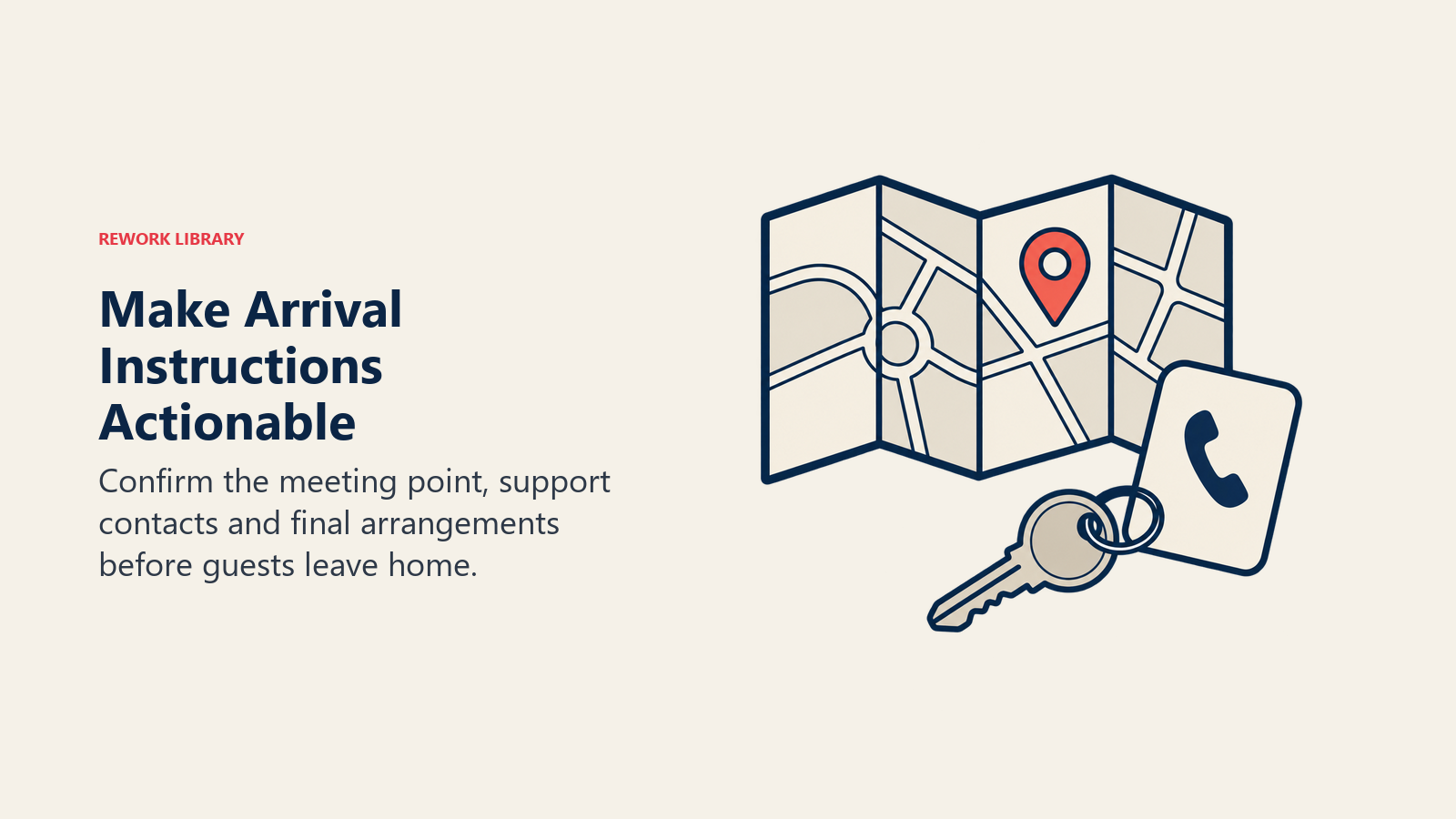
Final confirmation with meeting point details eliminates the most common source of arrival stress. Exact address with Google Maps link, photos of the meeting location, what to look for when they arrive, contact number if they can't find the meeting point, and what time to arrive. Remove all ambiguity about where and when the trip begins.
Emergency contact numbers and local support information provide security. Primary guide contact, emergency hotline number, local office contact if applicable, and 24/7 support number. Guests should have these numbers saved in their phones before departure, not buried in email they might not be able to access.
Last-minute itinerary changes happen sometimes. Flight times change, accommodation issues force alternatives, weather creates necessary adjustments. Communicating these changes clearly and calmly, with explanation of why and what it means for guests, maintains trust even when plans shift.
Confirming special requests or dietary requirements one final time catches any miscommunication before it becomes a problem during the trip. "We have you confirmed for vegetarian meals throughout the trip" lets guests verify or correct before arriving to find incorrect arrangements.
Pre-trip communication is your opportunity to shape expectations, build confidence, and create excitement before you ever meet guests face-to-face. The operators who excel at this arrive at departure day with guests who are prepared, excited, and confident - ready to have the experience of a lifetime because you've prepared them thoroughly for what's ahead.
Related Articles:

Business Consultant
On this page
- Strategic Pre-Trip Communication Timeline
- Booking Confirmation Communications
- Pre-Departure Information Packages
- Documentation and Requirements
- Building Pre-Trip Excitement
- Practical Preparation Guidance
- Multi-Channel Communication Strategy
- Personalization in Pre-Trip Communication
- Managing Pre-Trip Anxiety
- Final Pre-Departure Checklist