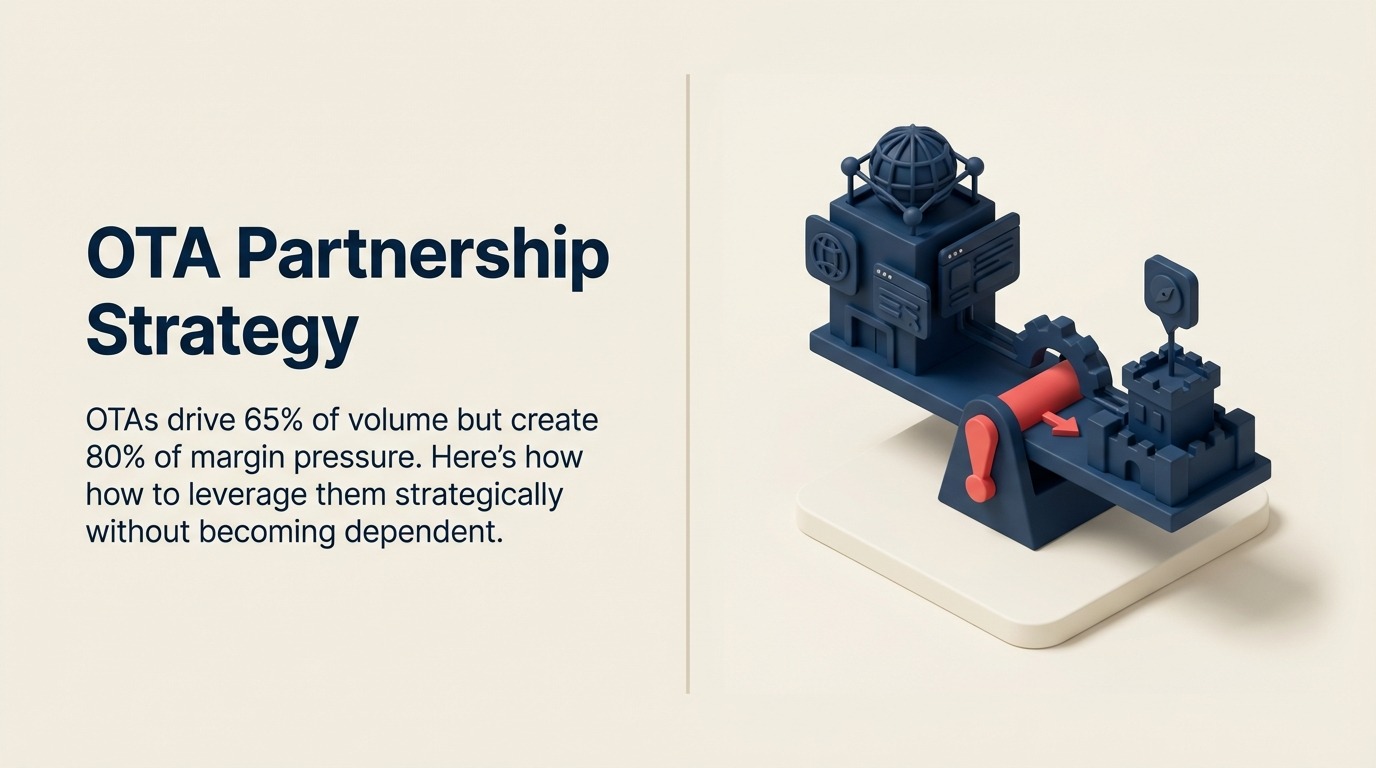
OTA Partnership Strategy: Leveraging Online Travel Agencies for Growth
Turn this article into takeaways for your work.


Each assistant summarizes the article only for you and suggests best practices for your work.
Tom's tour company generated $4.8 million annually, 78% through Viator and GetYourGuide. His net margins were 12%. Commission ate 25% of revenue. He had no direct customer relationships for future marketing. When Viator changed search algorithms and commission structures, his business dropped 40% in 90 days.
Meanwhile, Lisa used OTAs strategically. They represented 35% of her revenue, filled shoulder season inventory, and provided market validation for new products. But her core business was direct bookings at 40% margins. When OTA terms changed, she barely noticed.
The difference? Tom treated OTAs as his business. Lisa treated them as a channel, valuable but not essential. This strategic perspective determines whether OTAs fuel growth or become a dependency trap.
Understanding the OTA Landscape
Know the players and their roles:
Major OTAs:
Expedia/Viator: Largest OTA conglomerate. Viator dominates tours and activities. Massive traffic but 25-30% commissions. Good for volume and market entry.
Booking.com: Primarily accommodations but expanding to experiences. Strong European presence. 20-25% commissions. Growing activities marketplace.
TripAdvisor Experiences: Reviews drive traffic, experiences marketplace converting that traffic. 20-25% commissions. Booking.com powers their backend. Strong for operators with excellent reviews.
GetYourGuide: Major European-based OTA focusing on tours and activities. Strong mobile presence. 25-30% commissions. Tech-forward, good for certain destinations.
Niche and Specialist OTAs by Destination/Type:
Adventure/Activity-Focused: Adrenaline Hunter, Bookmundi, TourRadar (specific niches)
Luxury Travel: Remote Lands, Luxury Escapes, Black Tomato (high-end market)
Regional Specialists: Local OTAs strong in specific geographies (Klook in Asia, etc.)
Better margins sometimes, less volume typically.
Meta-Search Platforms:
Kayak, Skyscanner, Google Travel: Aggregate listings from multiple sources. Drive traffic but often to other OTAs. CPC model or feed-through to booking platforms.
Good for awareness, less for direct bookings.
Emerging Platforms and Marketplaces:
New entrants constantly emerge. Test carefully but don't over-invest until proven. Platform risk is real, many fail or get acquired.
The OTA Business Model
Understanding their economics helps you negotiate:
Commission Structures (15-40% Typical):
Standard rates:
- Mass Market Tours: 20-25%
- Activities and Experiences: 25-30%
- Premium/Luxury: 15-20% (if you have leverage)
- Last-Minute Inventory: 30-40% (desperation pricing)
Everything is negotiable based on volume, exclusivity, and your leverage.
Merchant Model vs Agency Model:
Merchant Model: OTA buys at net rate, sets retail price, keeps difference. You get guaranteed net rate regardless of selling price. OTA controls pricing and customer relationship.
Agency Model: You set retail price, OTA earns commission percentage. More pricing control but OTA still owns customer.
Most OTAs prefer merchant model because it gives them pricing control.
Marketing and Visibility Costs:
Beyond commission, OTAs offer (or pressure you to buy):
- Featured placements ($500-$5,000/month)
- Promoted listings (pay-per-click)
- Premium support (priority customer service)
- Marketing campaigns (co-op advertising)
These add 5-10% to effective cost. Factor in when calculating true CAC.
How OTAs Make Money from Suppliers:
- Base commission (their revenue)
- Merchant model markup (when they sell above net rate)
- Paid placements and advertising
- Payment processing fees (some charge extra)
- Volume bonuses and kickbacks from suppliers
- Data monetization (they know what sells)
They're sophisticated businesses optimizing their margins just like you optimize yours.
Strategic Role of OTAs
When OTAs make sense:
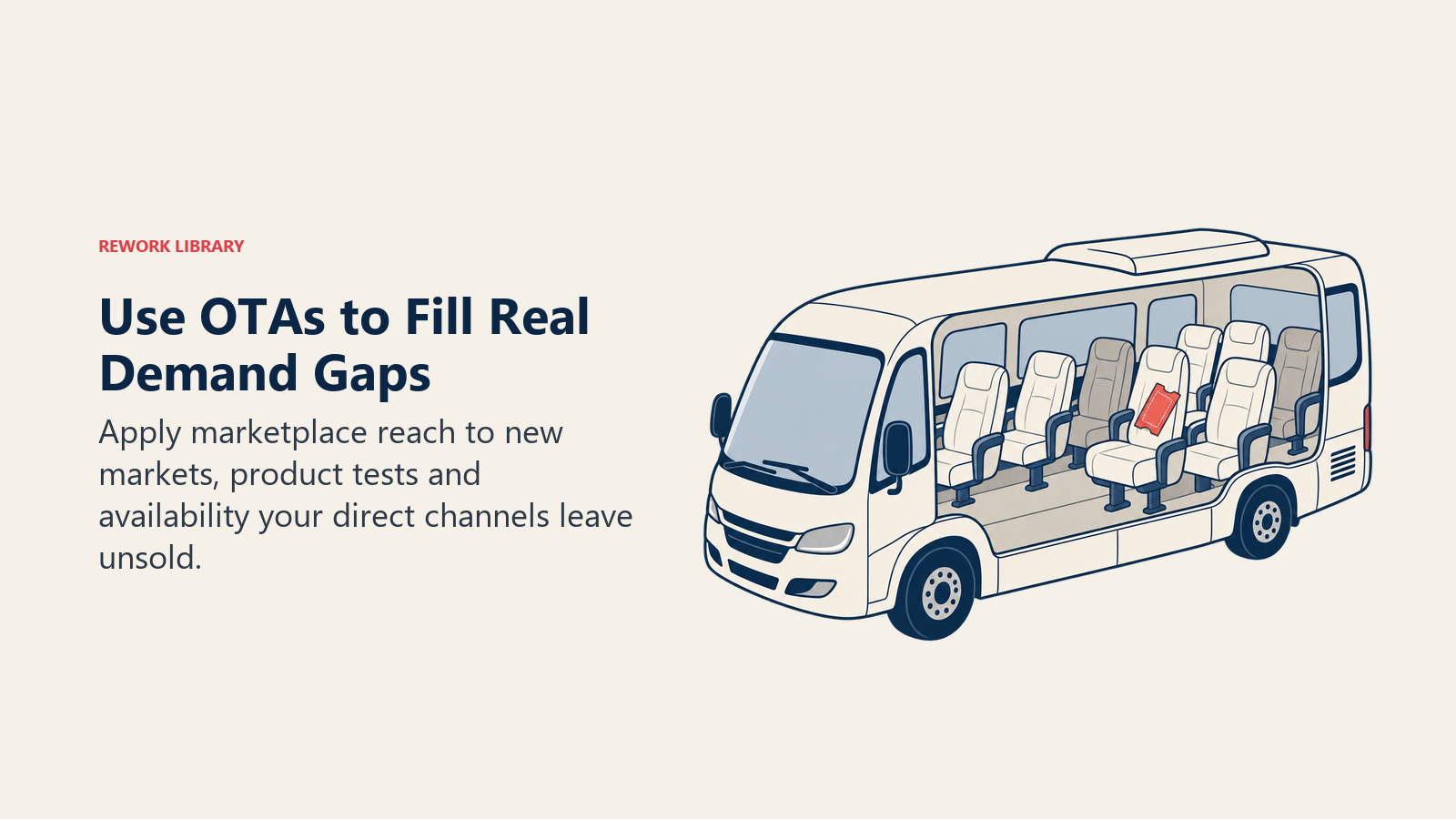
Volume and Discovery Engine:
OTAs provide access to millions of shoppers you couldn't reach directly. Especially valuable for:
- New operators building track record
- Lesser-known destinations
- Shoulder and low season filling
- Testing demand for new products
Use OTAs for volume you wouldn't otherwise capture.
Market Expansion into New Geographies:
Entering new source markets (European travelers, Asian tourists, etc.) is expensive. OTAs give instant access to those markets without building separate marketing operations.
Filling Off-Season Inventory:
Use OTA distribution to fill low-season and last-minute availability. Better to run trip at lower margin than cancel due to insufficient direct bookings.
Dynamic pricing: High season direct bookings, shoulder season OTA deals.
Testing New Products with Limited Risk:
Launching new destination or trip type? List on OTAs first:
- Validate demand before major marketing investment
- Gather reviews and social proof
- Understand pricing and positioning
- Test itinerary before scaling
OTAs provide market research at low risk.
Building Social Proof Through Reviews:
OTA reviews are portable social proof. 100 five-star Viator reviews help sell direct bookings. New operators especially benefit from OTA review volume.
The OTA Dependency Trap
Warning signs and risks:
Margin Compression Over Time:
OTAs start at 20%, then negotiate to 25%, then 28%. Meanwhile, you're cutting your net rates to stay competitive. Your margin slowly erodes.
Before you know it, you're running at breakeven or loss just to maintain volume.
Loss of Customer Relationship:
OTA owns customer data. You can't:
- Email them for future trips
- Build relationship for referrals
- Collect testimonials easily
- Upsell other products
- Market to them again
You're renting customers, not building equity.
Pricing Pressure and Rate Parity:
Many OTA contracts include rate parity clauses: You can't sell cheaper elsewhere (including your own website). This prevents using price as differentiation for direct bookings.
Brand Dilution:
On OTAs, you're one option among hundreds. Your brand becomes commodity. Customers don't remember who operated their tour, they remember booking through Viator.
Path to Direct Booking Strategy:
The goal isn't eliminate OTAs, it's reduce dependency to 30-40% while building direct channels delivering 60-70% of bookings at higher margins.
Optimizing OTA Performance
Get maximum value from partnerships:
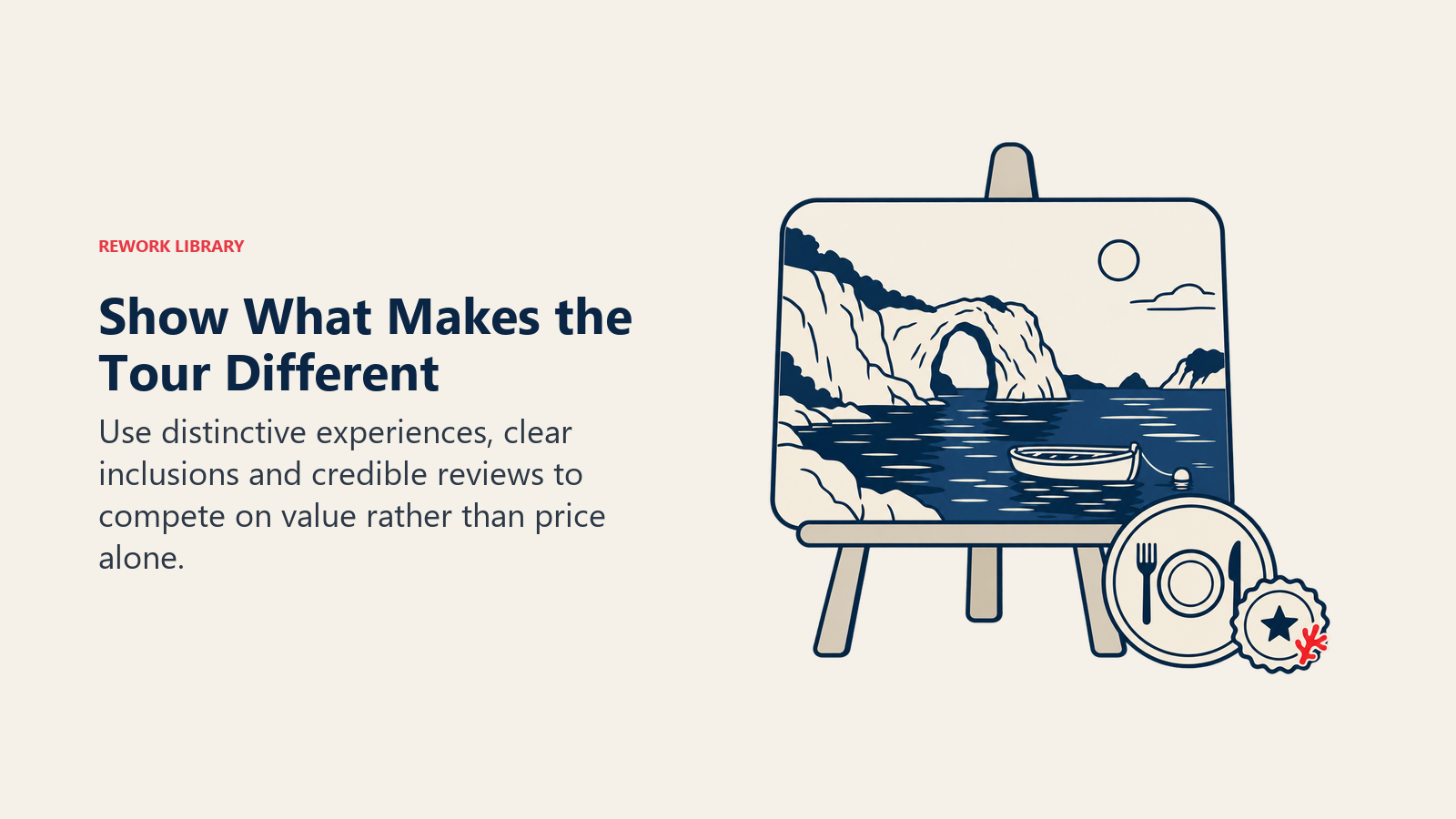
Product Positioning and Differentiation:
Stand out in crowded marketplace:
- Unique itineraries competitors don't offer
- Clear value proposition in title and description
- Highlighting what makes you different (sustainability, local guides, authentic experiences)
- Premium positioning (not competing on price)
Differentiation allows premium pricing and higher booking rates.
Pricing Strategy (Rate Parity Considerations):
Navigate rate parity strategically:
- Offer different packages on OTA vs direct (legally different products)
- Bundle extras in direct bookings (not technically cheaper, more value)
- Create OTA-exclusive packages if no parity clauses
- Price appropriately recognizing commission burden
Don't race to bottom on price. Position value.
Content Optimization:
OTA listings are mini landing pages:
Photos: First photo is critical. High-quality, compelling, showing key experiences. 15-25 photos showing diverse aspects. Before/after, during activities, happy guests.
Descriptions: Front-load key information. Use formatting (bullets, bold, short paragraphs). Address common questions. Include emotional and practical details.
Highlights: What's special? What's included? What should they know? Clear, compelling bullets.
Great content drives clicks and conversions.
Review Management and Response:
Reviews make or break OTA performance:
- Systematically request reviews post-trip
- Respond to every review (positive and negative) professionally
- Address concerns publicly showing you care
- Use feedback to improve operations
- Highlight review scores in marketing
Target: 4.8+ stars with 100+ reviews.
Promotional Calendar and Deals:
Strategic promotions:
- Early bird discounts for high season (booked 6+ months out)
- Last-minute deals for unsold inventory (30-45 days out)
- Shoulder season promotions (20-30% off)
- Package deals (combine multiple days/experiences)
Time promotions to booking behavior patterns.
Featured Placement Strategies:
Invest in paid placements when:
- Launching new products needing visibility
- High season with strong conversion rates
- Testing to measure incremental bookings vs cost
- Competitive destinations where you need edge
Track ROAS. Stop if not profitable.
Contract Negotiation
Improve terms with leverage:
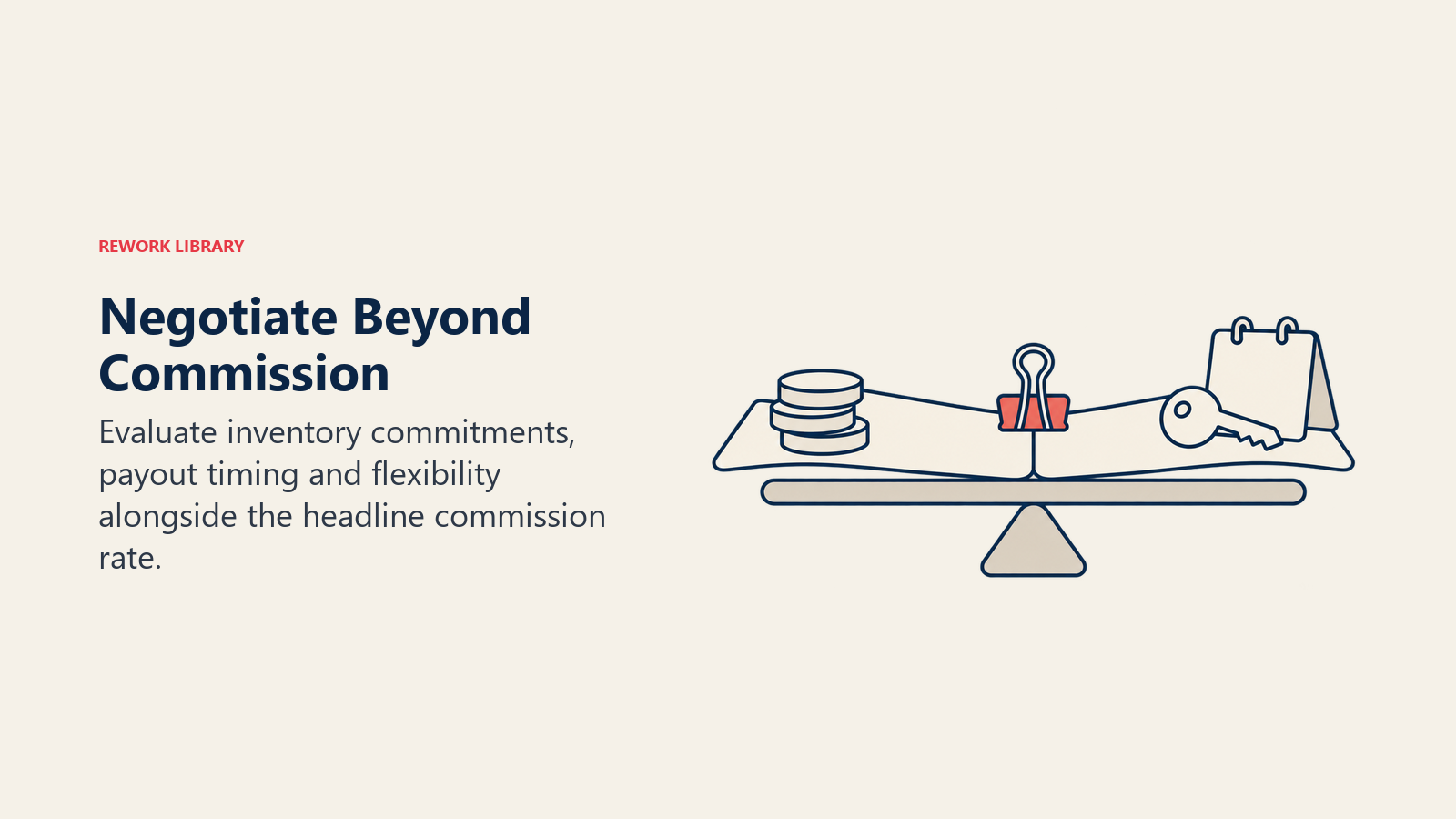
Commission Rate Negotiation Tactics:
You have leverage with:
- High volume or proven track record
- Exclusive inventory or unique products
- Strong reviews and high conversion rates
- Multiple OTA relationships (competition)
Negotiate:
- Lower base commission (20% vs 25% is huge)
- Volume-based tiers (25% first $100K, 20% above)
- Promotional funds or marketing credits
- Better payment terms (faster payouts)
Everything is negotiable. Ask.
Volume Commitments and Guarantees:
Some OTAs want minimum availability:
- Guaranteed allocation of seats/spots
- Exclusive windows or products
- Priority inventory access
Trade these for better commission rates or terms. But don't commit inventory you might sell direct at better margins.
Marketing Co-op Opportunities:
OTAs sometimes offer:
- Co-branded marketing campaigns
- Destination promotions with reduced commission
- Email marketing to their list featuring your products
- Social media exposure
These can be valuable if well-executed. Negotiate details carefully.
Rate Parity Clauses and Flexibility:
Push back on strict rate parity:
- Negotiate no parity clauses (ideal)
- Limited parity (only public prices, not member/email deals)
- Different products exempted from parity
- Ability to bundle additional value in direct bookings
Parity clauses limit your direct booking growth. Resist them.
Terms and Payment Structures:
Improve cash flow:
- 15-day payment vs 30-day standard
- Upfront payment vs post-trip
- Currency and foreign exchange terms
- Chargeback and refund policies
Better terms improve working capital position.
Multi-OTA Portfolio Strategy
Don't put all eggs in one basket:
Diversifying Across Platforms:
List on multiple OTAs:
- Viator for broad reach
- GetYourGuide for European travelers
- TripAdvisor for review-driven bookings
- Regional specialists for niche markets
But manage carefully, inventory, pricing, review aggregation gets complex.
Product Differentiation by Platform:
List different products on different platforms:
- Premium experiences on one OTA
- Budget options on another
- Destination A on Viator, Destination B on GetYourGuide
Reduces direct competition with yourself and allows different positioning.
Resource Allocation and Management:
Managing multiple OTAs requires:
- Channel manager software (TourPlan, TripWorks, Rezdy)
- Dedicated team member time
- Consistent pricing and inventory management
- Review monitoring across platforms
Don't over-extend. Add channels only when you can manage them properly.
Preventing Race-to-Bottom Dynamics:
Multiple OTAs plus price competition creates downward pressure:
- Set minimum acceptable margin
- Don't compete primarily on price
- Differentiate through quality and uniqueness
- Withdraw from platforms destroying profitability
Protect your business model.
OTA to Direct Migration
Strategic shift over time:
Building Direct Booking Capability:
Invest in:
- Professional website with booking functionality
- SEO and content marketing
- Email marketing system
- Brand development
- Customer service infrastructure
These take 12-24 months to mature but create long-term value.
Retargeting OTA Researchers:
Many people research on OTAs then search company names to book direct:
- Strong brand presence for name searches
- Clear "book direct" messaging
- Website optimized for converting these visitors
- Retargeting ads to OTA visitors
Capture these bookings at higher margins.
Rate Incentives for Direct Bookings:
If rate parity allows, offer:
- 10-15% direct booking discount
- Free upgrades or add-ons for direct bookings
- Better cancellation terms
- Payment plans unavailable on OTAs
Make direct booking obviously better deal.
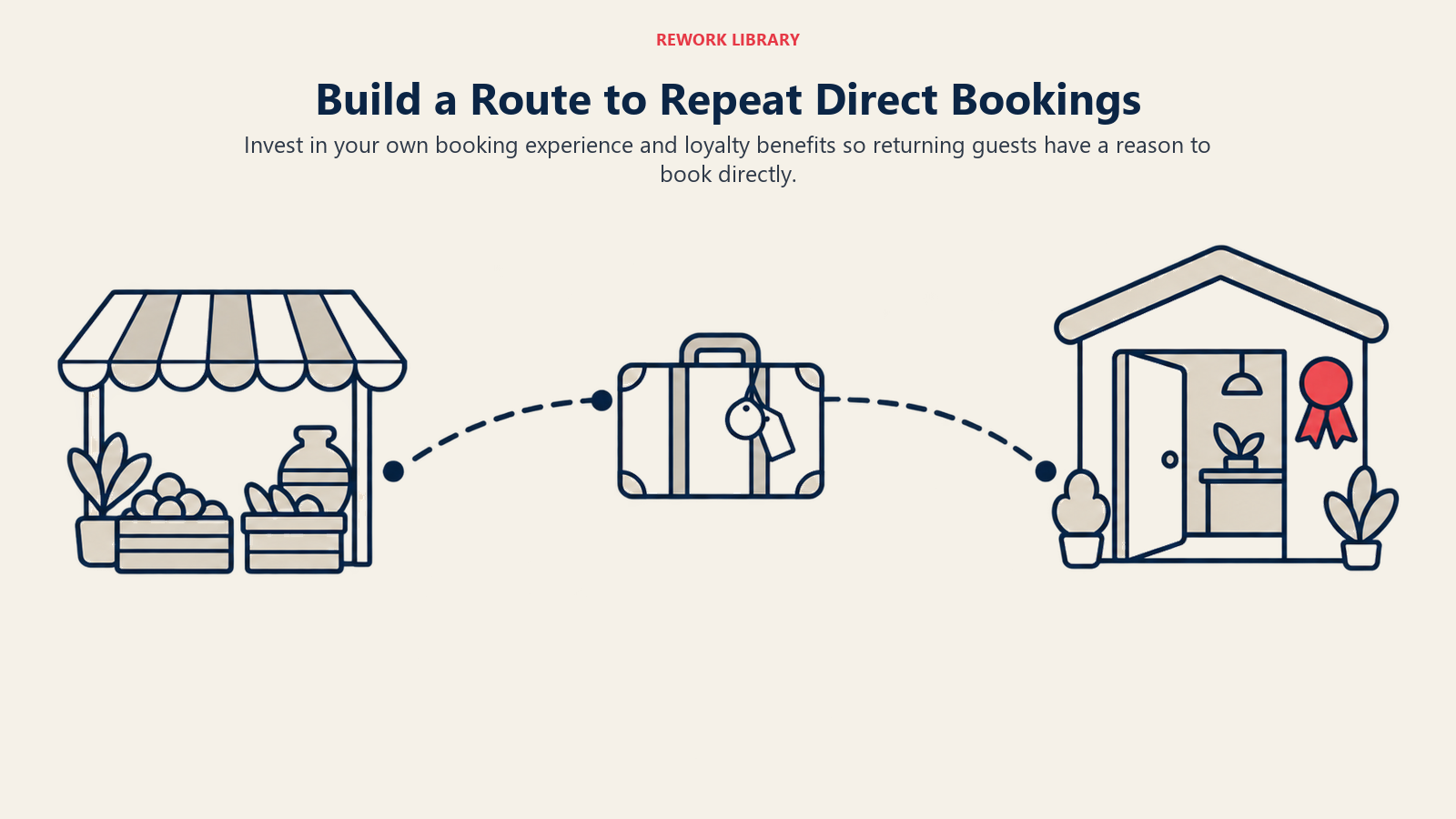
Loyalty Program Strategies:
Build repeat customer base:
- Points or credits for future trips
- Exclusive early access to new trips
- Referral bonuses
- VIP experiences for loyal customers
Repeat customers book direct, improving margins and LTV.
Measurement Framework
Track true profitability:
True Profitability by Channel:
Calculate fully loaded costs:
- Base commission (25%)
- Paid placements ($200/month = X% of bookings)
- Processing fees (1-2%)
- Operations time managing channel
- Cancellation and refund losses
Real cost might be 30-35%, not 25%.
Customer Lifetime Value from OTA Customers:
Track:
- Do OTA customers ever return?
- Do they book direct next time?
- Do they refer others?
- What's their total LTV?
If OTA customers are one-and-done, they're less valuable than direct customers who return and refer.
OTA customers generating $5,000 booking once = $1,250 gross profit (25% margin) = $4 per inquiry at 25% conversion.
Direct customer generating $5,000 booking once, then $5,000 repeat at 40% margin, plus referring one friend = much higher LTV justifying higher CAC.
Related Articles