Travel Customer Journey Mapping: From Inspiration to Advocacy
Turn this article into takeaways for your work.


Each assistant summarizes the article only for you and suggests best practices for your work.
Jennifer first saw a photo of Santorini on Instagram in February. She visited three travel blogs in March. She signed up for a Greece travel newsletter in April. She requested custom quotes from two tour operators in July. She booked in September. Her trip happened the following June. From first awareness to experience delivery: 16 months.
This isn't unusual. The average travel customer journey spans 287 days and includes 38 touchpoints across multiple channels. Compare that to software purchases (45 days, 8 touchpoints) or e-commerce (7 days, 3 touchpoints), and you see why travel marketing and sales require completely different strategies.
Most tour operators treat inquiries as the start of the journey. By then, prospects have already spent months researching, considering, and narrowing options. You're entering late in a process you should have influenced from the beginning.
The Five Travel Journey Phases
Travel purchasing breaks into distinct phases with different psychology, behavior, and decision criteria:
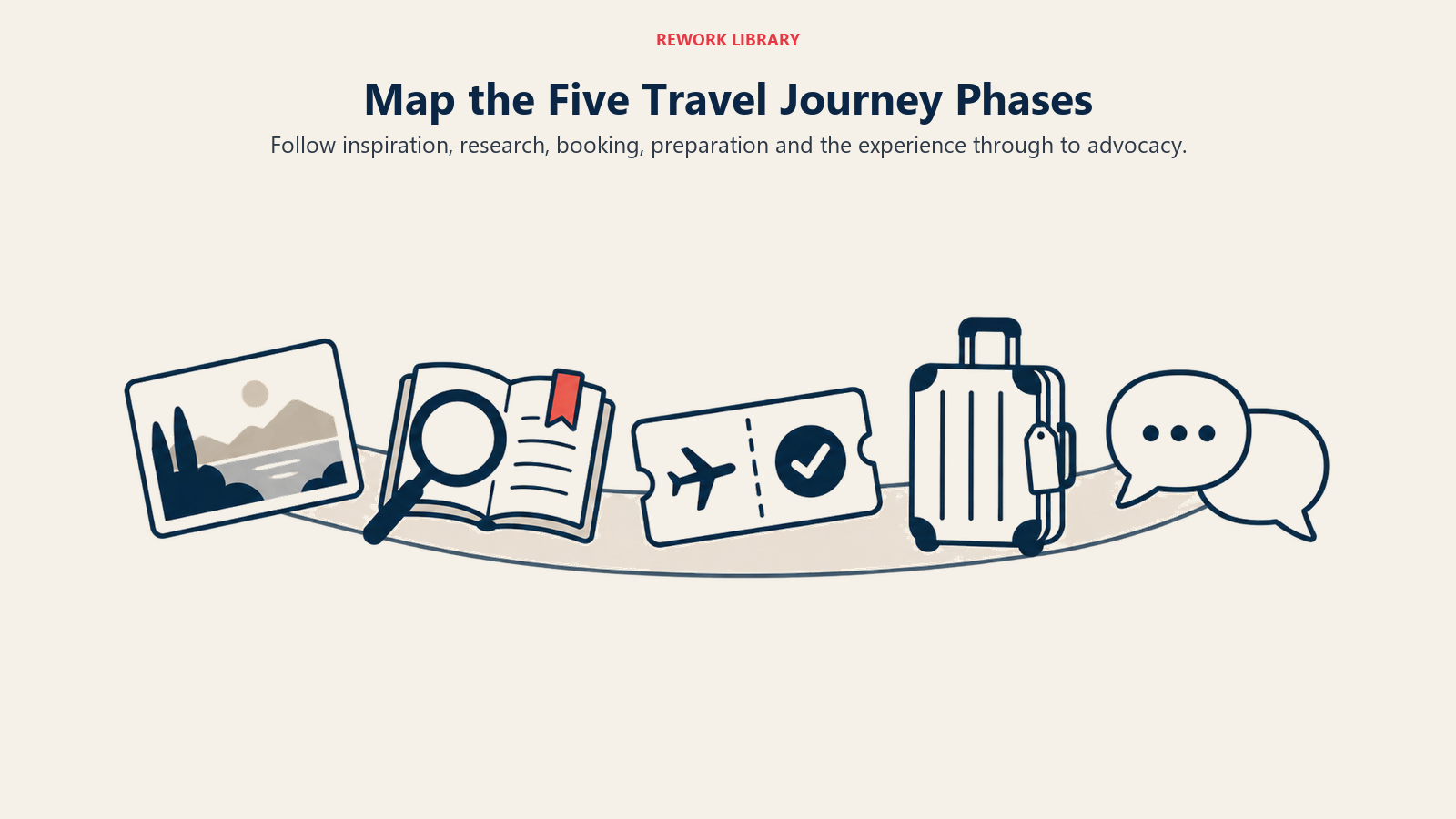
Phase 1: Dream/Inspiration (3-12 Months Before Booking)
This is where travel journeys begin. Something triggers the dream: a friend's photo, a documentary, a life milestone, or just wanderlust. The traveler isn't yet shopping; they're exploring possibilities.
Triggers and Touchpoints:
- Social media (Instagram, TikTok, Pinterest)
- Travel content (blogs, videos, TV shows)
- Word-of-mouth and recommendations
- Personal circumstances (anniversary, retirement, sabbatical)
- Current events or trends
Content Consumption Patterns:
- Consuming destination content voraciously
- Creating Pinterest boards and saving posts
- Following travel creators and destination accounts
- Reading "best of" lists and inspiration articles
- Not ready for pricing or booking details
Emotional Decision Drivers:
- Aspiration and escape
- FOMO (fear of missing out)
- Identity and self-expression
- Adventure and novelty
- Bucket list fulfillment
Your goal in this phase is simple: be present, be inspiring, and be memorable. You're not selling yet; you're becoming part of their consideration set.
Phase 2: Research/Planning (1-6 Months Before Booking)
The dream has solidified into intent. They've decided on a destination or experience type. Now they're figuring out the details: when, how long, what to do, what it costs.
Information Gathering Behavior:
- Reading comprehensive destination guides
- Watching itinerary videos and vlogs
- Comparing different trip types and operators
- Joining Facebook groups and forums
- Reading hundreds of reviews
Comparison Shopping Patterns:
- Visiting 15-20+ travel company websites
- Requesting quotes from 3-5 operators
- Creating spreadsheets comparing options
- Looking for authentic social proof
- Identifying deal-breakers and must-haves
Review Site Influence:
- TripAdvisor, Google Reviews, Trustpilot
- Focus on recent reviews and negative patterns
- Looking for specific concerns they have
- Assessing overall volume and ratings
- Checking for response to complaints
FAQ and Objection Patterns:
- What's included and what costs extra?
- How physically demanding is it?
- Is it safe?
- What if I need to cancel?
- Can I customize it?
- What about dietary restrictions, mobility issues, or other special needs?
This phase is where most prospects are lost. If your website lacks depth, your reviews are mediocre, or your sales process is slow to respond, they move to competitors.
Phase 3: Booking/Commitment (1-3 Months Before Departure)
Decision time. They've narrowed to 1-2 options and are ready to commit, but there's still significant friction and anxiety.
Decision Acceleration Factors:
- Limited availability creating urgency
- Promotional pricing with deadlines
- Group pressure (friends have booked)
- Life events requiring specific dates
- Desire to stop researching and commit
Friction Points and Abandonment:
- Unclear pricing or hidden fees
- Difficult booking process
- No immediate human help available
- Concerns about cancellation policies
- Group dynamics (getting everyone to agree)
- Budget concerns or need for approval
Trust Signals Needed:
- Reviews and testimonials from similar travelers
- Credentials and certifications
- Clear cancellation and refund policies
- Easy access to sales team for questions
- Secure payment processing
- Professional communication and materials
Consultation vs Self-Service Preferences:
- High-value trips ($5,000+): Want consultation
- Simple trips: Prefer self-service booking
- Complex itineraries: Need expert guidance and itinerary building
- Nervous travelers: Want reassurance
- Young travelers: May prefer chat/text over calls
Understanding which approach your customers prefer determines your booking flow design.
Phase 4: Pre-Trip Anticipation (Booking to Departure)
The trip is booked but hasn't happened yet. This phase is often neglected but creates huge opportunities and risks.
Communication Expectations:
- Booking confirmation immediately
- Itinerary details within days
- Preparation timeline (what to do when)
- Regular updates as departure approaches
- Easy access to questions or changes
Upsell Windows:
- Add-on experiences and activities
- Upgrades (room, seat, guide services)
- Pre/post trip accommodation
- Travel insurance (if not already sold)
- Equipment rentals or specialized gear
Anxiety Management:
- Travelers get increasingly nervous as departure nears
- They need reassurance that everything is handled
- They want to know what to expect
- They appreciate preparation guidance
- They may have questions they're embarrassed to ask
Community Building:
- For group trips, connecting travelers beforehand
- Creating Facebook groups or WhatsApp chats
- Sharing participant backgrounds and interests
- Building excitement through countdown content
- Reducing anxiety about traveling with strangers
Exceptional pre-trip experience turns bookers into advocates before the trip even starts.
Phase 5: Experience & Beyond (During and Post-Trip)
The actual trip and aftermath determine whether this customer generates future value.
Service Recovery Moments:
- Things will go wrong (weather, delays, personality conflicts)
- How you handle problems matters more than the problems
- Empathy, responsiveness, and creative solutions
- Making guests feel heard and valued
- Going above and beyond when possible
Review Solicitation Timing:
- Too soon: Trip still fresh, may not have processed
- Too late: Details faded, moved on mentally
- Sweet spot: 3-7 days post-trip
- Make it easy: Direct links, simple prompts
- Incentivize: Discount on future trip, contest entry
Referral Trigger Events:
- Friends asking about their trip
- Sharing photos and stories
- Seeing deals or promotions you share
- Life events (friends' anniversaries, retirements)
- Strong emotional experiences during trip
Re-Booking Opportunities:
- Strike while emotional high is fresh
- Offer incentive for booking another trip
- Suggest related destinations or experiences
- Stay top-of-mind through ongoing communication
- Make it easy to return
The trip experience determines everything downstream: reviews, referrals, repeat bookings, and word-of-mouth marketing.
Multi-Traveler Journey Complexity
Individual journeys are complex enough. Group and family decisions add layers:
Couples: Both need to agree on destination, timing, budget, and activities. Often one is initiator and researcher; the other needs convincing. Your content and sales must address both.
Families: Parents make final decision but kids influence. Budget-conscious but value-driven. Safety and logistics are paramount. Age-appropriate activities matter.
Friend Groups: Informal consensus building. One organizer herding cats. Price sensitivity varies wildly. Commitment and flake-out risk.
Multi-Generational: Diverse needs and preferences. Mobility and accessibility concerns. Wide range of interests. Complicated to plan.
Corporate/Group Leaders: They're buying for others. Need approval and justification. Risk-averse. Want everything documented.
Your sales process must accommodate these dynamics: providing materials for the influencer to share, offering group communication options, and structuring flexible payment.
Channel Journey Mapping
Journeys differ significantly by how travelers find you:
OTA-Sourced Journeys:
- Shorter consideration (browsing to booking in days/weeks)
- Price-sensitive and comparison shopping
- Lower brand loyalty
- Seeking convenience and reviews
- May not visit your website
Direct Website Journeys:
- Longer consideration (months of research)
- Higher engagement and brand affinity
- More questions and customization requests
- Reading your content extensively
- Following your social channels
Referral Journeys:
- Trusted recommendation accelerates decision
- Less price-sensitive
- Higher conversion rate
- Shorter sales cycle
- Pre-sold on your company
Social Media Journeys:
- Started with inspiration phase
- Younger demographic typically
- Visual and experience-focused
- May follow for months before inquiring
- Expect immediate response when ready
Understanding the channel context helps you tailor your approach for each source.
Optimization Framework
Use journey maps to identify growth opportunities:
1. Map Current State: Document actual customer journeys with real data, not your assumptions. Where do they first hear about you? What pages do they visit? How long until inquiry? How many touchpoints before booking?
2. Identify Friction Points: Where do prospects drop off? What questions do they ask repeatedly? What causes booking abandonment? Where do they get stuck?
3. Analyze Content Gaps: What questions aren't answered on your website? What stages lack supporting content? Where do prospects go to competitors for information?
4. Evaluate Touchpoint Quality: Is each touchpoint advancing the journey or creating confusion? Are responses fast enough? Is messaging consistent across channels?
5. Design Improvements: Create content for gaps. Reduce friction at abandonment points. Improve response time. Add trust signals where doubt exists.
6. Measure Impact: Track metrics at each phase: awareness to inquiry rate, inquiry to quote rate, quote to booking rate. Small improvements compound across the journey.
Journey optimization is continuous work, not a one-time project.
Related Articles

Business Consultant
On this page
- The Five Travel Journey Phases
- Phase 1: Dream/Inspiration (3-12 Months Before Booking)
- Phase 2: Research/Planning (1-6 Months Before Booking)
- Phase 3: Booking/Commitment (1-3 Months Before Departure)
- Phase 4: Pre-Trip Anticipation (Booking to Departure)
- Phase 5: Experience & Beyond (During and Post-Trip)
- Multi-Traveler Journey Complexity
- Channel Journey Mapping
- Optimization Framework
- Related Articles