Influencer Marketing in Travel: From Awareness to Attribution
Turn this article into takeaways for your work.


Each assistant summarizes the article only for you and suggests best practices for your work.
Jessica's boutique tour company hosted a travel influencer with 500,000 followers on a $12,000 complimentary Peru trip. The influencer posted 15 Instagram posts, 40 stories, and two YouTube videos. The content received 2.3 million impressions. Jessica's website traffic spiked for three days. They generated four inquiries, zero bookings.
Meanwhile, competitor Maria paid five micro-influencers with 15,000-40,000 followers $500 each plus discounted trips. Those partnerships generated 47 inquiries and 11 bookings worth $78,000. Total investment: $7,500.
The difference isn't budget, it's strategy, influencer selection, and realistic expectations. Influencer marketing works in travel, but not the way most operators think it does.
Influencer Marketing in Travel Context
Understanding the unique fit and limitations:
Unique Fit for Visual, Experiential Products:
Travel is the perfect influencer marketing category. The product is visual, aspirational, and experience-based, exactly what performs well on social media. Seeing someone actually experiencing a destination is more compelling than any ad.
But influence doesn't automatically convert to sales. Travel purchases involve extensive research, multiple decision-makers, significant budget, and long consideration cycles. One influencer post rarely converts immediately.
Trust and Social Proof Amplification:
Influencers lend credibility. Their audience trusts their recommendations more than branded advertising. When an influencer shares authentic enthusiasm for your tours, it's third-party validation that advertising can't buy.
This matters most for lesser-known operators and destinations. If you're already established, influencer impact is incremental. If you're unknown, influencers can jumpstart awareness.
Reaching Specific Traveler Segments:
Targeted influencers reach specific audiences:
- Adventure travel influencers reach active travelers
- Family travel influencers reach parents planning trips
- Luxury travel influencers reach high-end customers
- Sustainable travel influencers reach values-aligned travelers
This segmentation allows precise audience targeting impossible with traditional advertising.
Awareness vs Direct Response Expectations:
Set appropriate expectations. Influencer marketing primarily drives:
- Awareness: People learning you exist
- Consideration: People adding you to research list
- Social proof: Validation of your quality
Direct conversions are secondary outcome. If you need immediate bookings, invest in search ads. If you need brand building, influencers can work.
Influencer Tier Strategy
Different influencer sizes serve different purposes:
Mega Influencers (1M+ Followers): Brand Awareness:
Pros: Massive reach, celebrity status, potential for viral moments.
Cons: Extremely expensive ($10K-$50K+), less authentic, lower engagement rates (often <2%), audience not targeted, unlikely direct conversions.
When to Use: If you have big budget and need pure awareness play. Rarely worth it for operators under $10M revenue.
Macro Influencers (100K-1M): Targeted Reach:
Pros: Significant reach, established credibility, professional content quality.
Cons: Expensive ($3K-$15K), still lower engagement than smaller influencers, some inauthenticity concerns.
When to Use: If you have moderate budget and want to reach specific travel audiences (adventure, luxury, family, etc.) with proven influencers.
Micro Influencers (10K-100K): High Engagement and Conversion:
Pros: High engagement rates (5-10%), authentic connection with audience, affordable ($500-$3K), often better conversions.
Cons: Limited individual reach requires multiple partnerships to scale.
When to Use: Best ROI for most tour operators. Affordable, engaged audiences, reasonable conversion potential.
Nano Influencers (<10K): Niche Authority and Authenticity:
Pros: Highly engaged audiences (often 10%+), extremely authentic, very affordable ($0-$500 plus comp trips), niche expertise.
Cons: Tiny individual reach, requires many partnerships for scale.
When to Use: For very niche destinations or travel types, or when building grassroots advocacy programs with many partners.
For most operators, focus on micro and nano influencers. Better engagement, more authentic, affordable.
Selecting Travel Influencers
The biggest mistakes happen in selection:
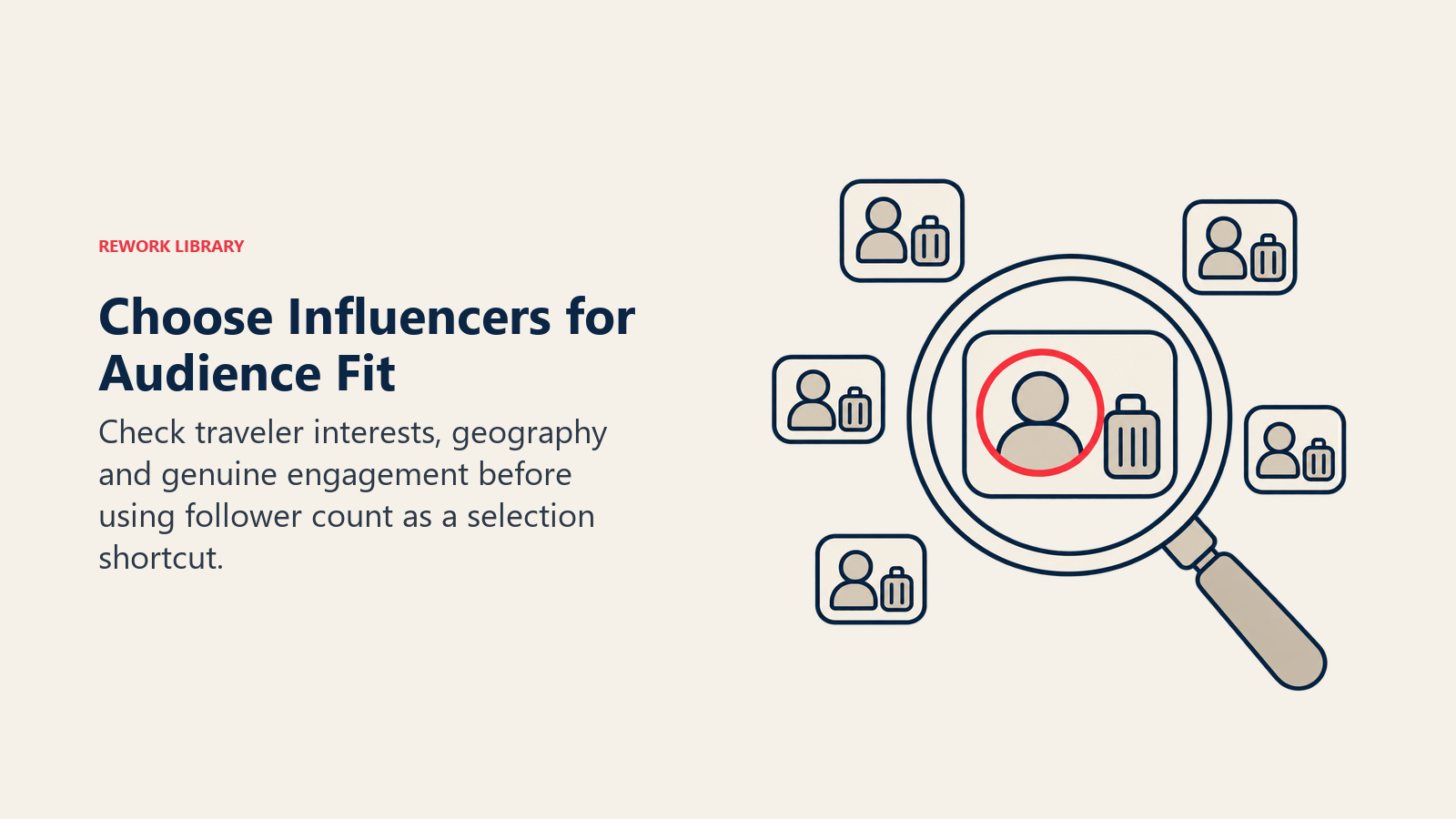
Audience Alignment Over Follower Count:
Check: Who actually follows them?
- Age and demographics matching your customers
- Geographic location (where do followers live?)
- Interests and values alignment
- Travel style and budget level matching your offerings
An influencer with 200K followers who are mostly teenagers living in regions you don't serve is worthless. One with 20K followers who are your exact target is gold.
Engagement Rate Analysis:
Calculate: (Total Engagement / Followers) × 100
Healthy Benchmarks:
- 10%+ = Excellent (nano influencers)
- 5-10% = Good (micro influencers)
- 3-5% = Average (macro influencers)
- 1-3% = Low (mega influencers)
- <1% = Probably fake followers
Many influencers have fake followers. High follower count with <2% engagement is red flag.
Content Quality and Aesthetic Fit:
Review their content library:
- Photography and video quality
- Editing style and consistency
- Storytelling ability
- Tone and voice (does it match your brand?)
- Visual aesthetic alignment
You're partnering with their creative output. Make sure you like their work.
Previous Brand Partnerships Review:
Check: How do they handle sponsored content?
- Disclosure practices (proper FTC compliance)
- Quality of sponsored vs organic content
- Frequency of sponsored content (if too much, audience is numb)
- Types of brands they partner with (alignment with their niche)
- Results they've driven for others (if they'll share)
Authenticity and Credibility Assessment:
Red flags:
- Sudden follower spikes (bought followers)
- Comments don't match content (bots)
- Partnering with conflicting brands
- Generic engagement ("Great shot!" on every post)
- Refusing to share analytics
Green flags:
- Steady organic growth
- Meaningful comment conversations
- Selective brand partnerships
- Transparent about sponsored content
- Willing to share performance data
Influencer Program Models
Different partnership structures:
Hosted Trips and FAM Tours:
You provide complimentary trip; they create content.
Structure:
- Full trip comp (you cover all tour costs)
- Clear content deliverables specified upfront
- Timeline for content publication
- Usage rights for you to repurpose content
Pros: Lower cash outlay, you control experience, builds relationships.
Cons: Higher total cost (trip retail value), logistical complexity, no guarantee of quality content.
Best For: Micro and nano influencers, new destination launches, building long-term ambassador relationships.
Paid Content Partnerships:
You pay fee plus potentially discounted trip.
Structure:
- Flat fee for content package
- Specific deliverables (X posts, X stories, X videos)
- Timeline and approval process
- Usage rights and exclusivity terms
Pros: Professional relationship, clear expectations, better quality control.
Cons: Higher upfront cash, requires budget, may feel less authentic.
Best For: Established influencers, specific campaign needs, when you need guaranteed delivery.
Affiliate and Commission Structures:
Influencer earns commission on bookings they generate.
Structure:
- Unique booking link or promo code
- Commission percentage (5-15% of booking value typically)
- Comp or discounted trip upfront
- Ongoing commission on future bookings
Pros: Pay only for results, ongoing motivation, scalable.
Cons: Requires tracking systems, commission tracking administrative burden, lower quality influencers may game system.
Best For: Performance-focused influencers, long-term partnerships, supplement to other models.
Long-Term Brand Ambassadors:
Ongoing relationship with annual retainer or regular comps.
Structure:
- Annual agreement with ongoing content creation
- Multiple trips annually
- First rights to new products
- Regular content cadence
- Exclusivity in your category
Pros: Sustained presence, authentic advocacy, deeper relationship, consistent content.
Cons: Higher total investment, commitment risk, managing ongoing relationship.
Best For: Perfect-fit influencers, operators with budget for sustained programs, building authentic long-term advocates.
User-Generated Content Licensing:
Pay to use existing content creators' photography/video.
Structure:
- License specific existing content
- Payment for usage rights
- Attribution requirements
- Usage scope and duration
Pros: Lower cost than custom creation, large library to choose from, immediate access.
Cons: Content wasn't created for your brand, less authentic, limited control.
Best For: Budget-constrained operators, filling content gaps, testing before bigger partnerships.
Campaign Planning and Execution
Running effective campaigns:
Objective Setting and KPI Definition:
Define what success looks like:
- Awareness Goals: Reach, impressions, follower growth
- Engagement Goals: Likes, comments, shares, saves
- Traffic Goals: Website visits, content views
- Conversion Goals: Inquiries, bookings, revenue
Be realistic. Don't expect 1,000 bookings from one influencer partnership.
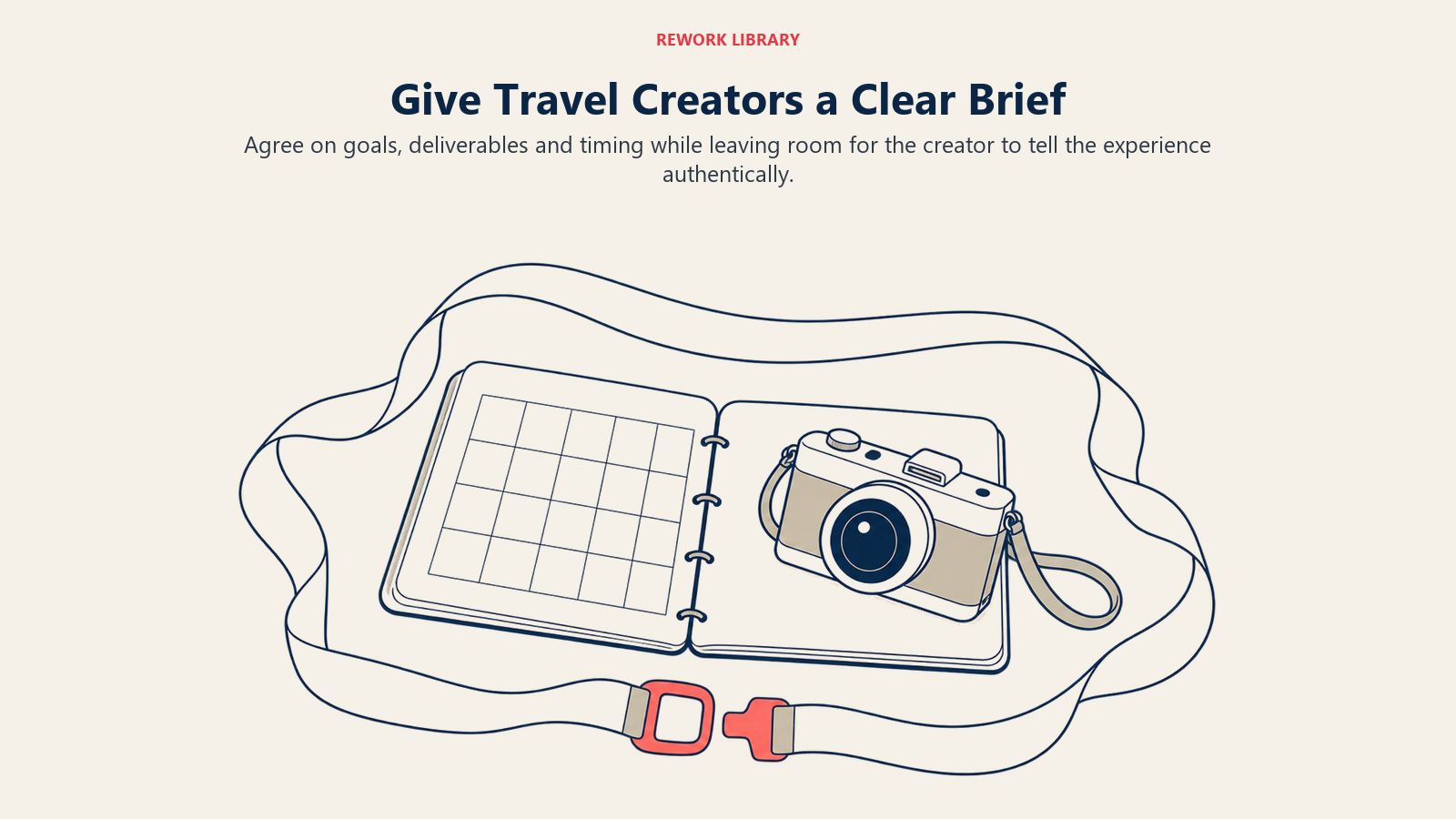
Brief Creation and Creative Guidance:
Provide clear direction without overcontrolling:
- Trip highlights and key experiences to feature
- Messaging points and brand values
- Must-have shots or content types
- Hashtags and handles to include
- What NOT to do (guidelines and guardrails)
- Creative freedom within framework
Best content comes from authentic influencer perspective, not scripted corporate messaging.
Contract and Legal Considerations:
Essential Contract Terms:
- Compensation and payment terms
- Content deliverables (quantity, type, specs)
- Timeline and deadlines
- Usage rights and licensing
- Exclusivity (can't work with competitors)
- Disclosure requirements (FTC compliance)
- Performance expectations or guarantees
- Cancellation terms
- Confidentiality if relevant
Don't do handshake deals. Contracts protect both parties.
Content Approval Workflows:
Balance quality control with creative freedom:
- Option 1: Pre-approval before posting (more control, slows down process, can feel inauthentic)
- Option 2: Creative freedom with brand guidelines (faster, more authentic, less control)
- Option 3: Hybrid, approve key messages but trust execution
Most successful partnerships use Option 2 or 3.
Campaign Timeline Management:
Typical timeline:
- Week 1-2: Influencer selection and outreach
- Week 3-4: Negotiation and contracting
- Week 5-6: Pre-trip planning and briefing
- Week 7: Trip happens
- Week 8-10: Content creation and posting
- Week 11-12: Performance review and analysis
Build buffer time. Influencers miss deadlines. Content requires revisions. Allow flexibility.
Content Deliverables and Rights
Specify clearly upfront:

Content Format Specifications:
- Instagram: X feed posts, X stories, X reels
- TikTok: X videos
- YouTube: X videos (length specifications)
- Blog: X articles (word count)
Include: Image resolution requirements, video quality specs, caption length, hashtag requirements.
Usage Rights Negotiation:
Standard Terms:
- Influencer posts on their channels
- You can share/repost with attribution
- Limited commercial use for specified period
Extended Rights (negotiate and pay extra):
- Unlimited commercial use
- Paid advertising use
- Website and marketing collateral use
- Perpetual license vs limited term
More rights = higher cost. Negotiate based on how you plan to use content.
Content Repurposing Strategies:
Maximize value from influencer content:
- Repost to your social channels
- Embed in website and landing pages
- Include in email marketing
- Use in paid social advertising (if rights allow)
- Feature in sales presentations
- Include in press kits
One influencer trip can generate content for 6-12 months if repurposed strategically.
Paid Amplification of Influencer Content:
Boost influencer posts with paid ads:
- Run influencer's content as ads from your account
- Target their engaged followers
- Target your customer demographics
- A/B test influencer content vs branded content
Influencer content often performs better as ads than branded content because it feels more authentic.
Measurement and Attribution
Prove ROI:
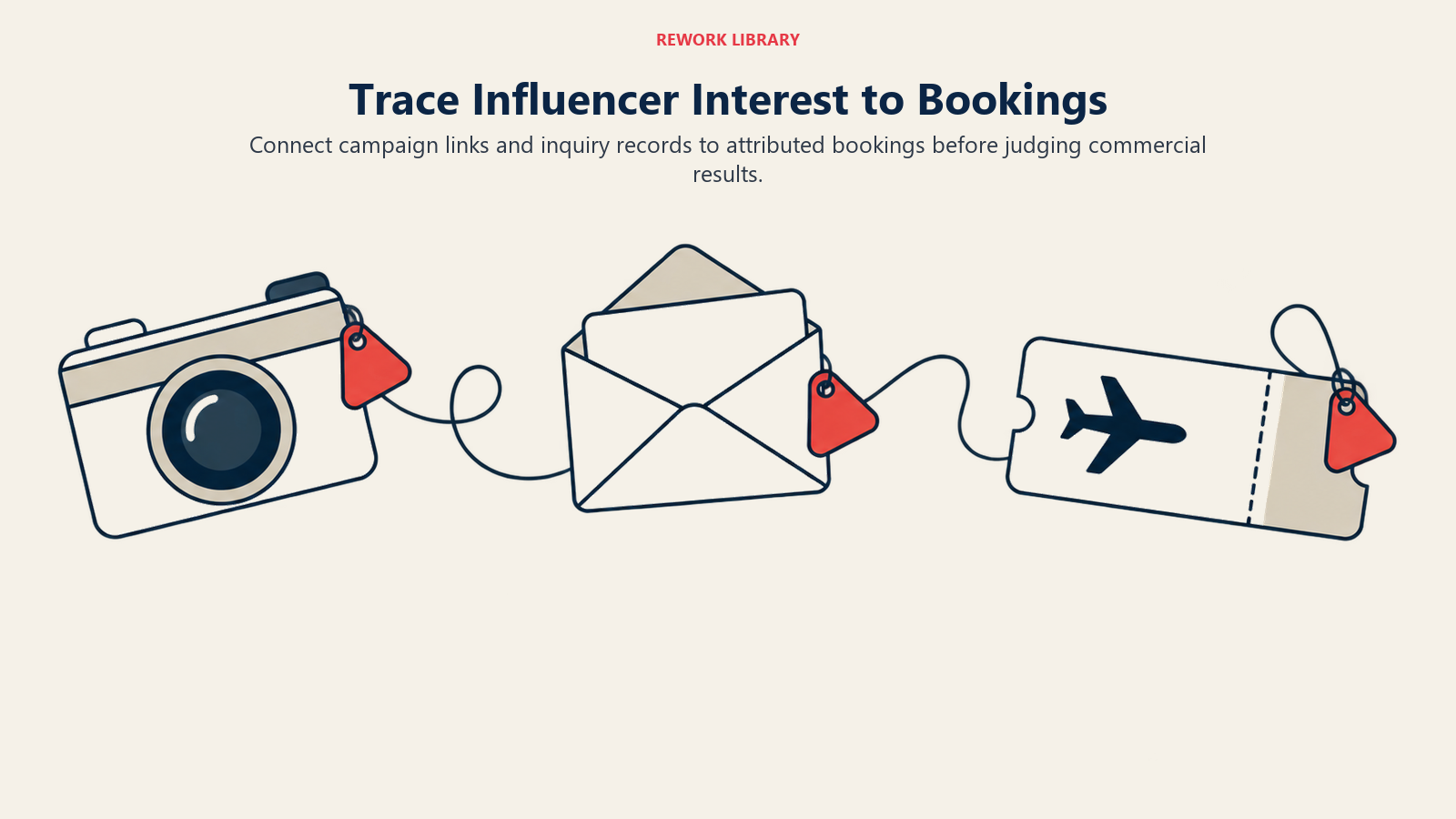
Tracking Mechanisms:
- UTM Parameters: Track website traffic from influencer links
- Promo Codes: Unique codes track bookings
- Custom Landing Pages: Dedicated URLs for each influencer
- Inquiry Forms: Ask "How did you hear about us?"
Reach and Engagement Metrics:
Request from influencer:
- Total reach and impressions
- Engagement (likes, comments, shares, saves)
- Story views and interactions
- Video views and watch time
- Link clicks (if trackable)
- Follower demographics
Inquiry and Booking Attribution:
Track business outcomes:
- Website visits from influencer traffic
- Inquiries mentioning influencer or using tracking link
- Bookings using promo codes
- Revenue generated from attributed bookings
Brand Lift Measurement:
Harder to measure but valuable:
- Brand search volume change
- Social media follower growth
- Website traffic trend
- Inquiry volume trend
- Review and testimonial mentions
ROI Calculation Methodology:
ROI = (Revenue Attributed - Total Investment) / Total Investment × 100
Total Investment Includes:
- Cash payment to influencer
- Trip retail value (your cost, not retail price)
- Staff time coordinating
- Content production support
Revenue Attributed:
- Direct bookings from tracking codes
- Inquiries that mention influencer and eventually book
- Estimated assisted conversions (conservatively)
Aim for 2:1 ROI minimum (every dollar generates $2 revenue). Great programs achieve 5:1 or higher.
Scaling Influencer Programs
Moving from 1 to 50 partnerships:
Start Small: Test with 3-5 micro-influencers in one destination.
Learn and Optimize: What messaging works? Which influencer types convert? What content performs?
Systematize: Create standard agreements, workflows, and tracking systems.
Build Pipeline: Develop ongoing sourcing and vetting process for new influencers.
Diversify: Multiple influencers per destination, multiple tiers, multiple content types.
Build Community: Create ambassador program for best performers, nurture long-term relationships.
Don't scale before proving the model works.
Common Pitfalls
Why most travel influencer campaigns fail:
Selecting Based on Follower Count: Vanity metrics don't drive business results. Engagement and audience alignment matter more.
No Clear Agreement: Handshake deals lead to disappointment. Specify deliverables, timeline, and payment clearly.
Unrealistic Expectations: Expecting immediate bookings from awareness campaigns. Influencer marketing is top-of-funnel.
No Tracking: Can't measure impact if you don't set up proper attribution. Use codes, links, landing pages.
One-and-Done Mentality: Single influencer partnerships rarely deliver major impact. Sustained programs compound.
Ignoring Micro-Influencers: Chasing mega-influencers when smaller creators deliver better ROI.
Poor Experience: If the trip is disappointing, content will reflect it. You can't fake enthusiasm.
Related Articles

Business Consultant