Travel Data Analytics - 2026 Complete Guide
Turn this article into takeaways for your work.


Each assistant summarizes the article only for you and suggests best practices for your work.
Travel data analytics is the practice of turning booking, website, CRM, and review data into decisions that lift revenue and cut acquisition cost. It connects siloed systems so you can answer questions like true cost per channel and repeat-booking rates, then act on them. Done well, dynamic pricing alone lifts revenue 15-25% without changing anything except how you set rates.
Your competitor books 40% more tours than you with the same marketing budget tracked in customer acquisition cost in travel. They're not better at sales. They're better at analytics through travel KPI dashboard. They know which acquisition channels deliver customers who actually book using booking conversion metrics. They can predict demand surges weeks in advance. They adjust travel pricing strategy based on real behavioral data, not gut feelings.
Most travel businesses drown in data but starve for insights. Booking systems generate reports. Website analytics track visitors. Email platforms measure opens. CRM systems log interactions. But these data silos don't talk to each other. Nobody can answer simple questions like "What's our true customer acquisition cost by channel?" or "Which destinations have the highest repeat booking rates?"
Data analytics transforms raw information into strategic advantage.
Why Data Analytics Matters in Travel
Pricing optimization relies entirely on data. Guessing at rates leaves massive money on the table. Too high and you lose bookings. Too low and you're sacrificing margin. Analytics reveals price sensitivity by segment, booking window patterns, and competitive positioning. Dynamic pricing based on data lifts revenue 15-25% without changing anything except how you price.
Marketing ROI becomes measurable when analytics connects spend to outcomes. You're investing in Facebook ads, Google search, email campaigns, and content marketing. Which channels actually drive bookings? Which bring high-value customers versus price shoppers? Attribution analytics answers these questions with precision.
Customer satisfaction improves when you can identify problems systematically. Analytics reveals patterns: cancellations spike after specific operational changes, negative reviews cluster around certain guides, repeat bookings drop for particular destinations. These insights direct improvement efforts to what matters most.
Competitive positioning sharpens with market intelligence. Rate shopping tools show how your pricing compares to competitors daily. Review analytics benchmark your satisfaction scores. Booking pace data indicates whether you're winning or losing market share in key segments.
Operational efficiency gains come from understanding bottlenecks. Analytics shows where inquiries stall in your pipeline. Which agents convert best. How quote turnaround time affects booking rates. Where manual processes create delays. Data reveals where to invest in improvements for maximum impact.
Key Data Sources in Travel
Booking systems hold the truth about completed transactions. Every reservation includes dates, destinations, traveler count, booking source, revenue, and costs. This is your foundation. If booking data is inaccurate or incomplete, all downstream analytics is flawed.
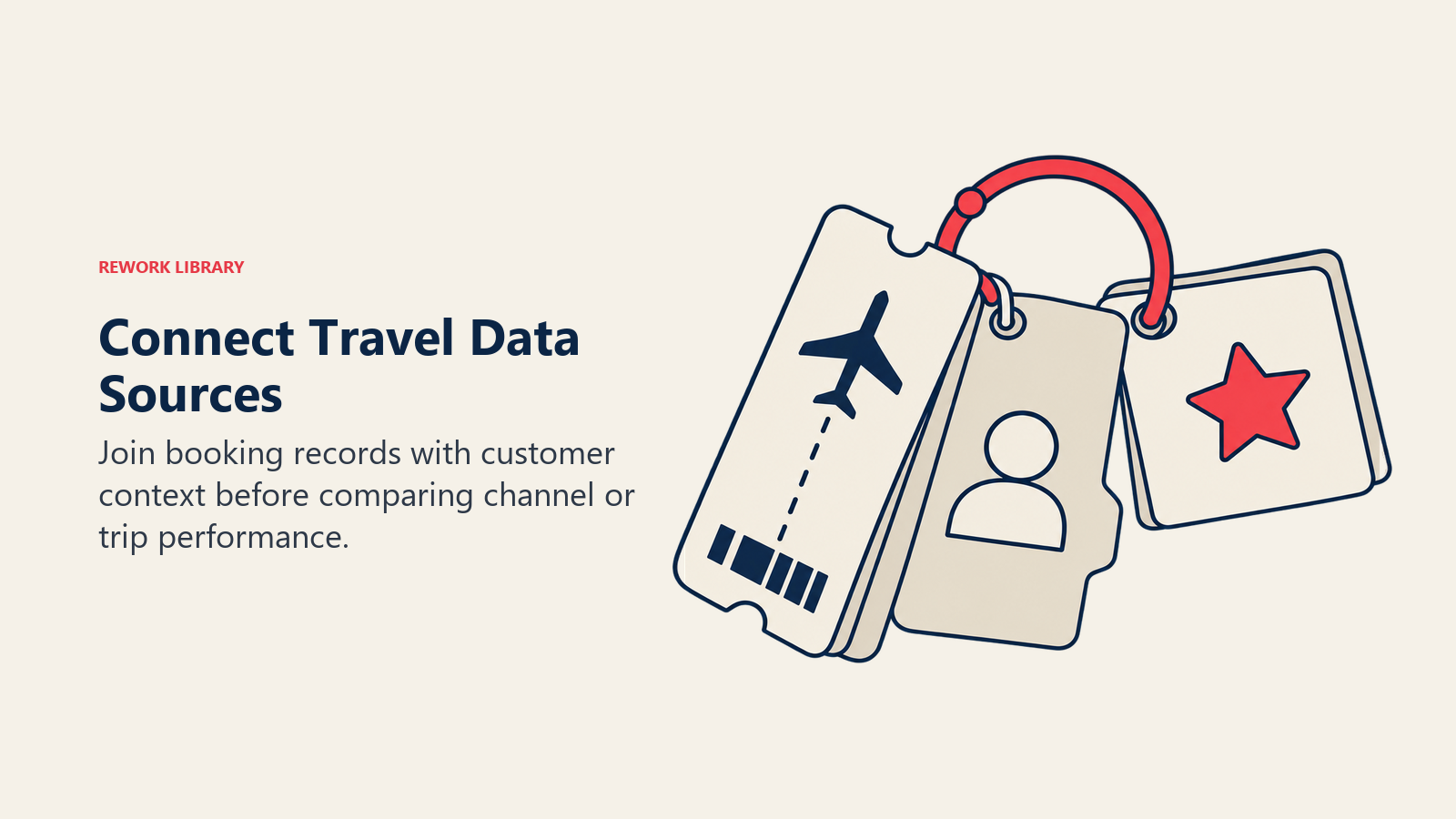
Ensure your booking system captures: acquisition channel source, booking window (days between booking and departure), customer segment tags, payment method, add-on purchases, cancellation reasons, and actual vs. projected costs. The more granular your data capture, the richer your analysis.
Website analytics from Google Analytics or similar tools show how travelers find you and what they do on your site. Which landing pages convert best? Where do visitors drop off in the booking funnel? Which content drives the most inquiries? This behavioral data guides marketing and UX optimization.
CRM data tracks relationships beyond transactions. Email engagement, quote history, communication logs, preferences, and past booking patterns. CRM analytics reveals lifetime value, re-booking cycles, and relationship health indicators.
Review platforms aggregate customer sentiment. Your ratings and reviews on TripAdvisor, Google, Facebook, and specialized travel sites reflect perceived quality. Sentiment analysis of review text uncovers specific strengths and recurring complaints.
Social media generates engagement data and brand mentions. Who's talking about you? What content resonates? Which influencer partnerships drive traffic? Social listening tools track mentions and sentiment across platforms.
Supplier data from hotels, tour operators, and activity providers includes rate sheets, availability feeds, and performance metrics. Analyzing supplier costs and reliability informs purchasing decisions and itinerary planning.
Essential Travel Analytics Dashboards
If you are starting from scratch, these five metrics give you the fastest payback. Track them first, then expand into predictive and attribution work as your data matures.
| Metric | What It Tells You | Healthy Benchmark |
|---|---|---|
| Customer acquisition cost by channel | Which channels deliver profitable customers | Below 1/3 of customer lifetime value |
| Inquiry-to-booking conversion | Where the sales funnel leaks | 30-40% for qualified inquiries |
| Quote turnaround time | Speed advantage over competitors | Under 1 hour (7x better conversion) |
| Load factor | How full your tours actually run | 60-75% for group tours |
| Repeat booking rate | Retention and lifetime value health | Varies; track the trend, not the number |
Revenue dashboards show total bookings, revenue trends, average booking value, and year-over-year comparisons. Break down by destination, tour type, customer segment, and acquisition channel. Display current month, quarter, and year progress toward targets.
Include forward-looking indicators: booking pace for future departures, pipeline value by expected close date, and new inquiry trends. Revenue dashboards should answer "Where are we now?" and "Where are we headed?"
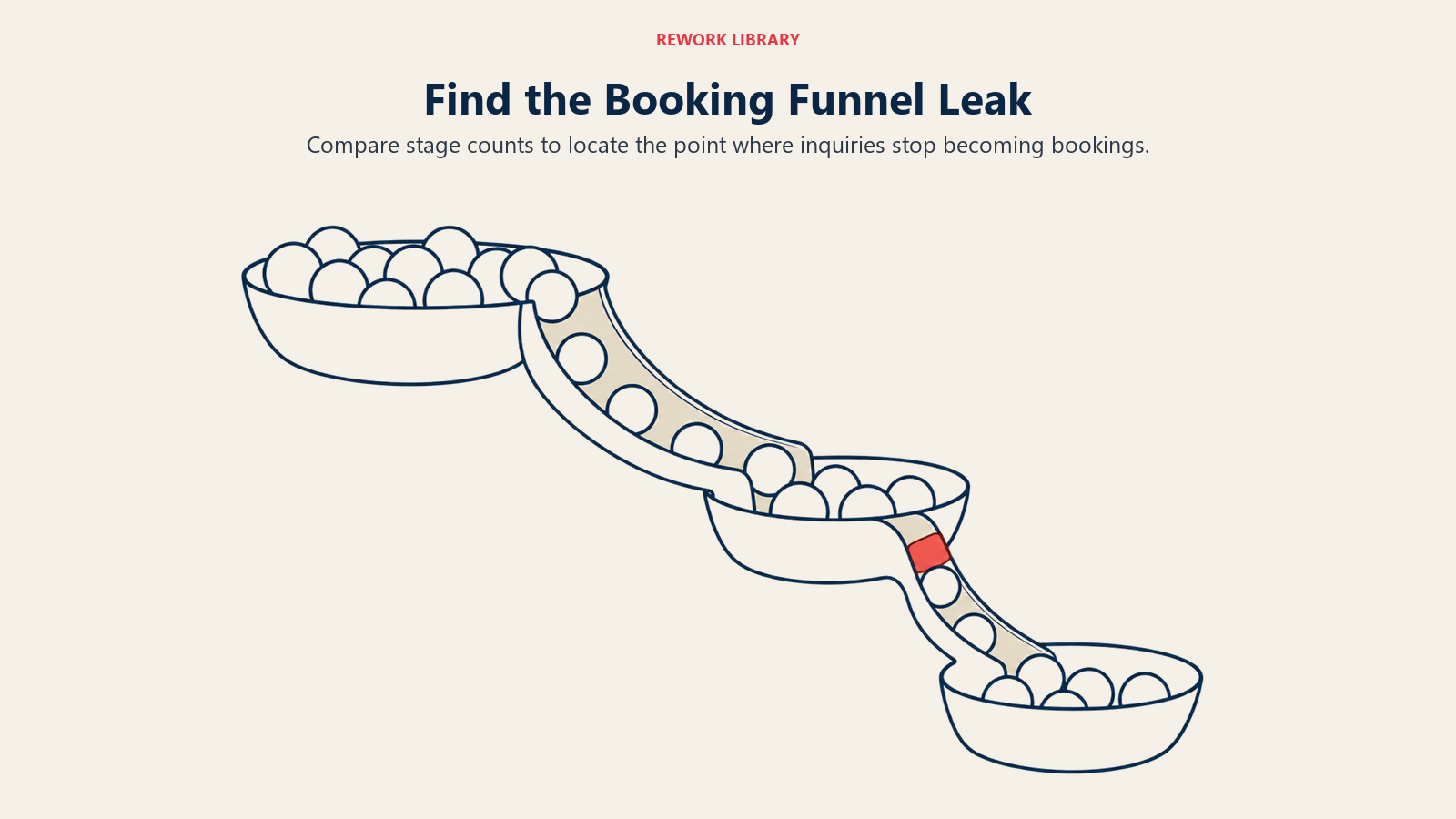
Booking funnel analytics track conversion at each stage: website visitors → inquiries → quotes → bookings → payments. Identify where leakage occurs. If inquiry-to-quote conversion is 85% but quote-to-booking drops to 25%, focus improvement efforts on the quote-to-booking stage.
Funnel visualization makes drop-off obvious. Use actual numbers, not just percentages. "We generated 240 inquiries last month. 204 received quotes (85%). Only 51 booked (25% of quoted, 21% of total inquiries)." This clarity drives action.
Customer segment performance dashboards compare lifetime value, repeat booking rates, referral behavior, and satisfaction scores across segments. Your luxury travelers might generate 3x revenue of budget travelers but require 2x sales time. These insights guide resource allocation.
Channel attribution dashboards answer the critical question: where do profitable bookings come from? Track customer acquisition cost, conversion rates, average booking value, and lifetime value by source. Compare organic search, paid search, social media, email, referrals, and OTAs.
Operational metrics dashboards monitor efficiency: inquiry response time, quote turnaround time, booking modification frequency, document processing time, and agent productivity. These leading indicators predict customer satisfaction and operational bottlenecks.
Customer Behavior Analytics
Booking lead times reveal when travelers plan trips. Adventure tours might book 4-6 months ahead. Beach vacations book 2-3 months out. Last-minute travelers book under 30 days. Understanding lead time patterns by destination and segment enables better inventory management and marketing timing.
Plot distribution curves: what percentage of bookings happen 180+ days out, 120-180 days, 60-120 days, 30-60 days, and under 30 days? This shows when to push marketing for specific departures.
Destination preferences by customer segment guide product development. Families book Disney and beach destinations. Solo travelers favor adventure and cultural tours. Luxury clients prefer boutique and exclusive experiences. Matching product offerings to segment preferences drives conversion.
Price sensitivity analysis reveals how demand changes with pricing. When you raise tour prices 10%, do bookings drop 5% or 30%? Understanding elasticity by tour type and season enables smarter pricing. Some products are price-sensitive (budget categories). Others aren't (luxury, unique experiences).
Travel party composition affects itinerary design. Couples want romantic experiences and flexibility. Families need kid-friendly activities and convenience. Solo travelers value group dynamics and safety. Analyzing booking patterns by party composition improves product-market fit.
Repeat booking patterns show customer lifecycles. How long between first and second bookings? What triggers third bookings? Which destinations drive the highest repeat rates? Understanding these cycles shapes retention marketing timing and messaging.
Marketing Attribution & ROI
Multi-touch attribution assigns credit to all touchpoints in the customer journey, not just the last click. A traveler might discover you through a blog post, return via Google search, join your email list, receive nurture emails, and finally book through a Facebook ad. Simple last-click attribution credits Facebook. Multi-touch models credit all interactions appropriately.
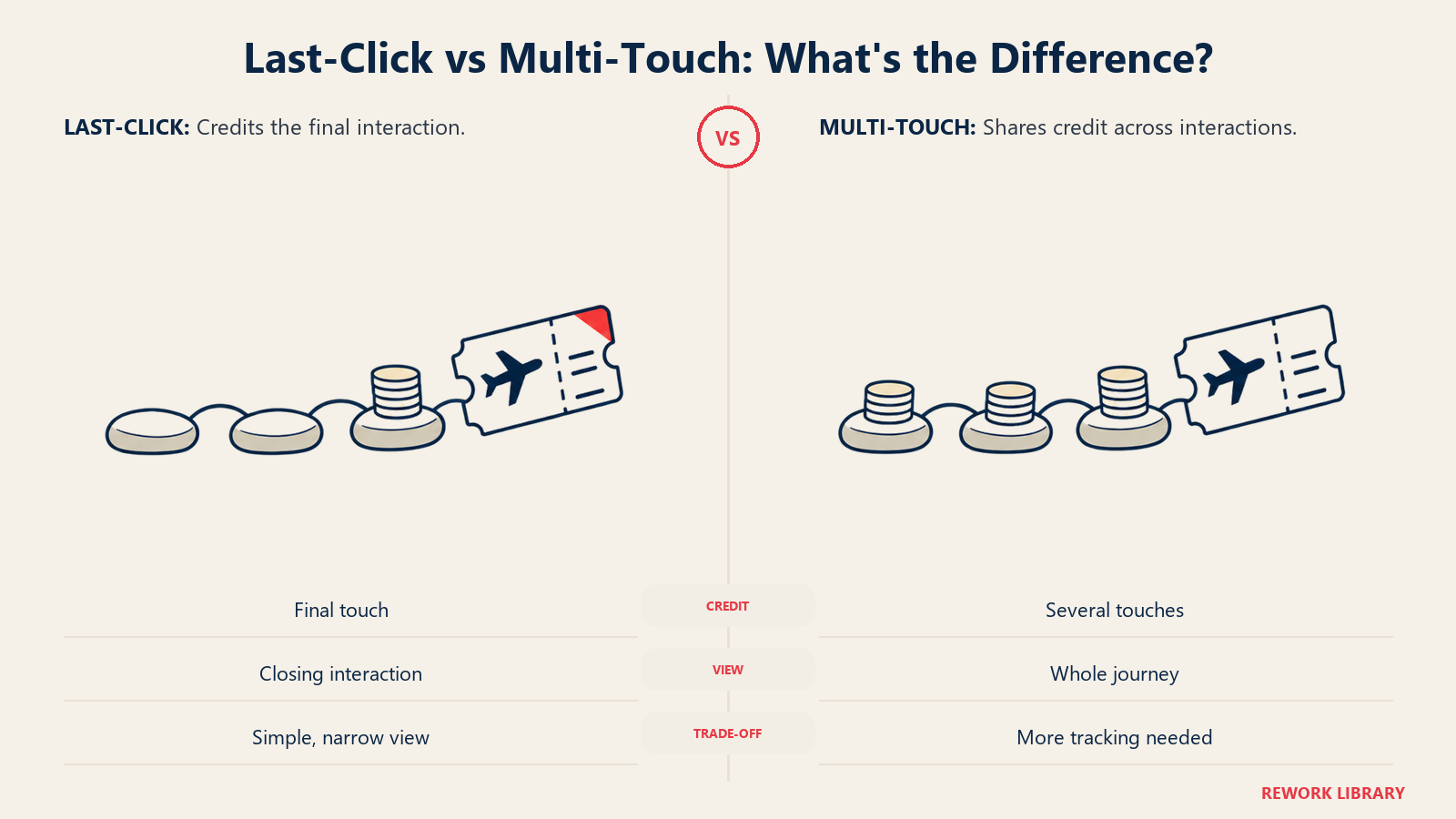
Implement attribution models in Google Analytics or specialized platforms. Position-based attribution gives 40% credit to first touch, 40% to last touch, and distributes 20% to middle interactions. Time decay models credit recent touchpoints more heavily.
Channel performance analysis compares cost per lead, lead-to-booking conversion, average booking value, and customer lifetime value across channels. Your organic search might deliver fewer leads than paid search but convert at higher rates with better customer lifetime value.
Calculate true cost per acquisition by channel including all expenses. Paid search CAC includes ad spend, landing page creation, and campaign management time. Content marketing includes writing, design, SEO tools, and promotional budget. Don't just count ad spend.
Campaign ROI calculation requires tracking revenue to specific campaigns. Use UTM parameters religiously. When sending email promotions, track which recipients book and calculate: (Revenue from Campaign - Campaign Costs) / Campaign Costs. Positive ROI campaigns deserve more investment.
CAC by source determines marketing budget allocation. If referrals cost $85 to acquire and deliver $3,200 lifetime value, invest heavily in referral programs. If paid search costs $650 and delivers $1,800 lifetime value, proceed cautiously or optimize aggressively.
Revenue Analytics
RevPAT (Revenue Per Available Tour) measures tour operator efficiency. Calculate total tour revenue divided by total available capacity. A 10-day tour with 16 available seats running 24 times annually has 384 total seats. If it generates $460,800 revenue, RevPAT is $1,200 per seat.
Track RevPAT by tour, season, and booking channel. Compare year-over-year to identify improving and declining products. Low RevPAT tours need repricing, better marketing, or discontinuation.
ADR (Average Daily Rate) applies to accommodation businesses. Track ADR trends by season, day of week, and booking window. Compare to competitors using rate shopping tools. ADR should move with demand - higher during peak seasons, lower in shoulder periods.
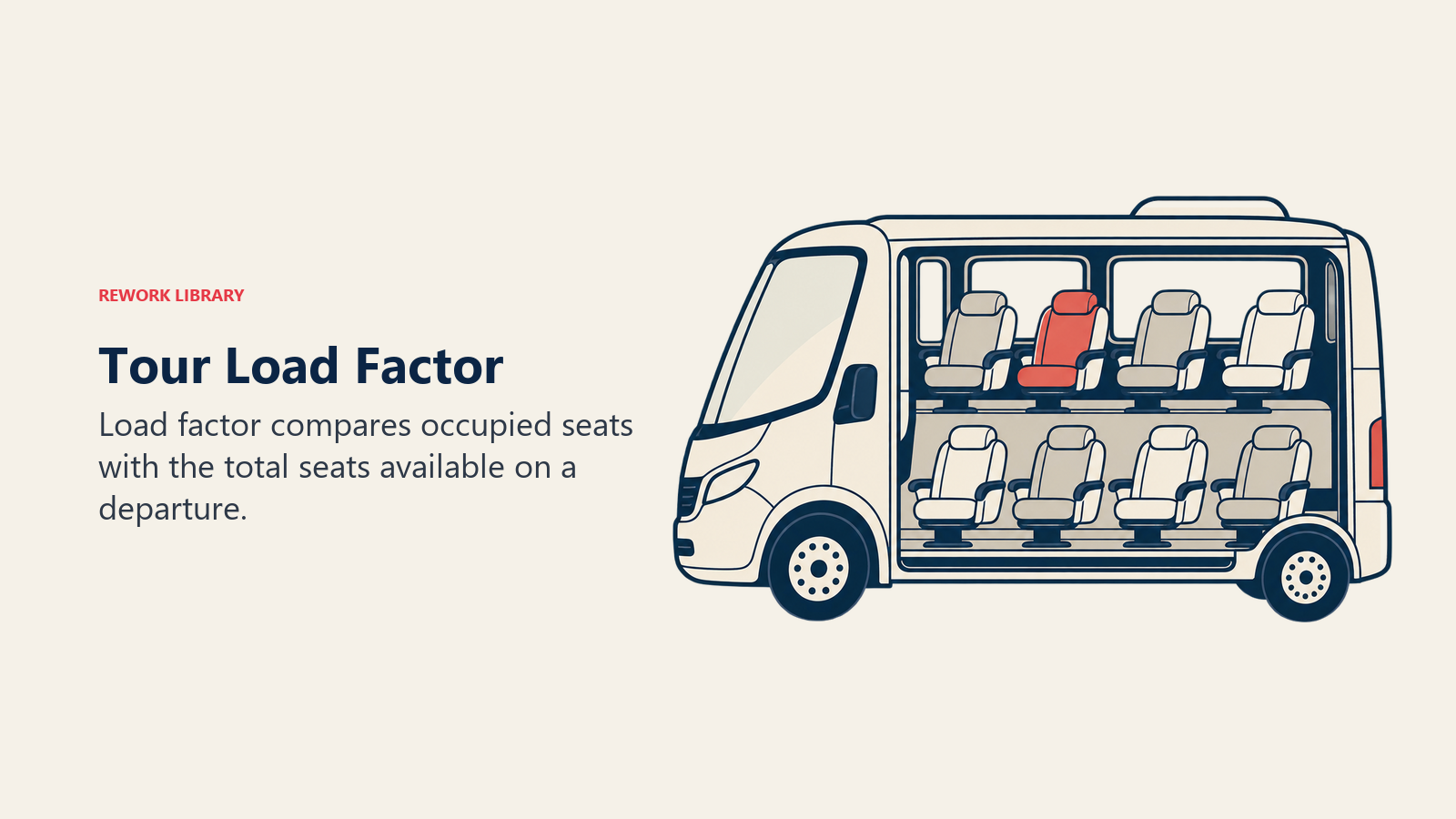
Load factor analysis shows how full your tours run. A tour with 16 capacity that averages 12 travelers has 75% load factor. Higher is better, but 100% is rare. Industry averages run 60-75% for most group tours. Private tours obviously run lower.
Yield management insights combine pricing and occupancy data. Sometimes lowering prices fills tours that would otherwise run with low load factors. The slightly lower per-seat price multiplied by more seats generates more total revenue than high prices with empty seats.
Revenue growth trends should be segmented. Total revenue might be flat while luxury segment grows 25% and budget segment declines 15%. These insights guide strategic pivots.
Predictive Analytics Use Cases
Demand forecasting uses historical booking patterns to predict future demand. If European tours always surge in bookings during January for summer departures, allocate more inventory and marketing budget accordingly. Machine learning models can incorporate multiple variables: historical demand, economic indicators, competitor pricing, and seasonal patterns.
Customer churn prediction identifies at-risk relationships. Travelers who previously booked annually but haven't inquired in 18 months are churn risks. Engagement scores based on email opens, website visits, and response to campaigns predict likelihood of repeat bookings. Proactive outreach to high-risk customers prevents churn.
Upsell propensity modeling predicts which customers will purchase premium upgrades or add-ons. Travelers who previously purchased travel insurance, upgraded rooms, or added optional excursions are likely to do so again. Target upgrade offers to high-propensity segments.
Dynamic pricing recommendations use AI to optimize rates in real-time. Systems analyze current bookings versus historical pace, competitor pricing, remaining inventory, and seasonality to suggest optimal pricing adjustments. This beats static pricing dramatically.
Lifetime value prediction based on early behavioral signals helps identify high-value customers quickly. First booking characteristics, engagement during planning, review participation, and referral behavior all predict future value. Treat predicted high-LTV customers with extra attention early in the relationship.
Operational Analytics
Inquiry-to-booking conversion funnels reveal where your sales process succeeds and fails. Best-in-class travel agencies convert 30-40% of qualified inquiries to bookings. If you're converting 15%, investigate why. Are responses too slow? Quotes uncompetitive? Sales approach ineffective?
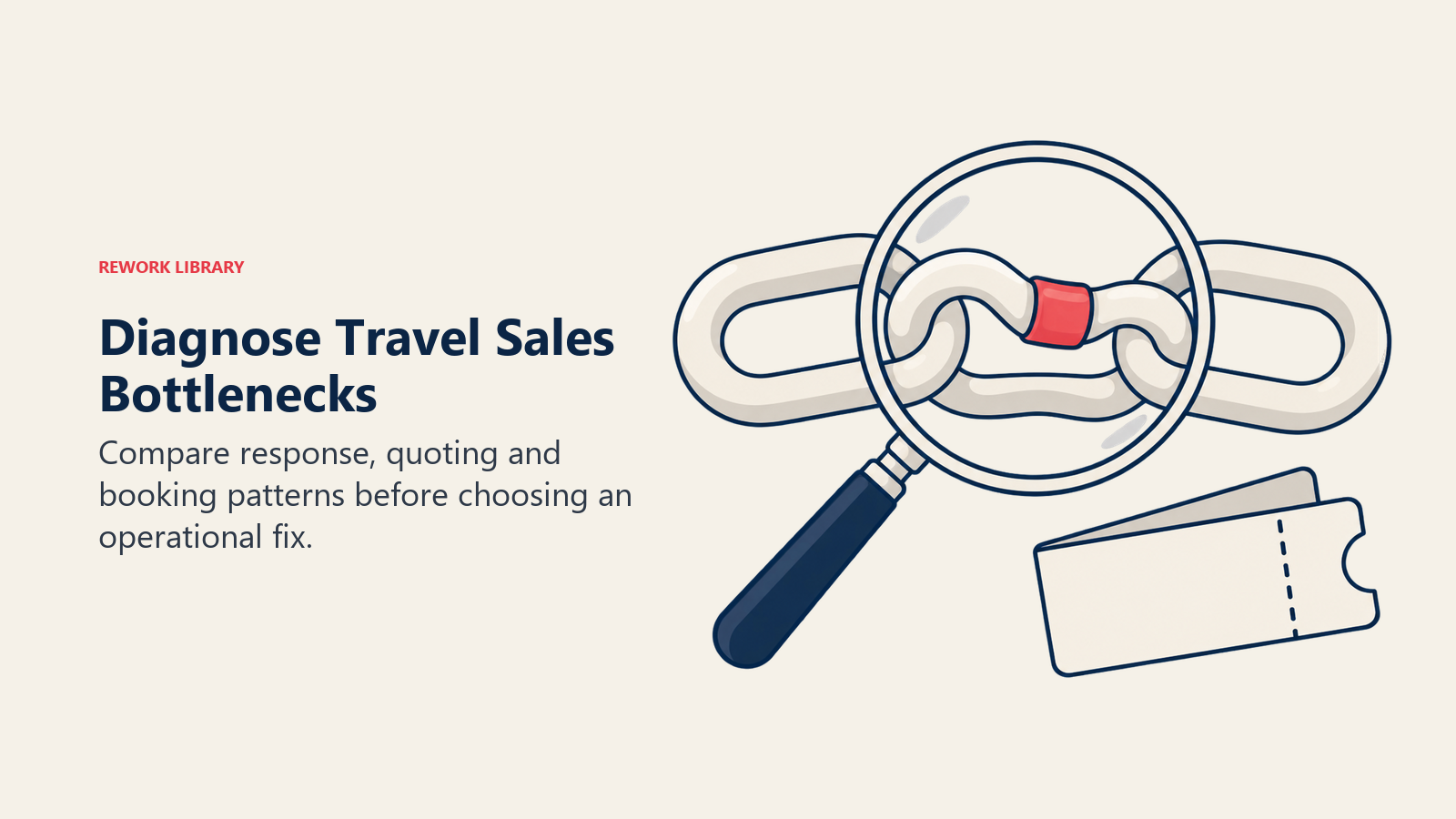
Break conversion down by agent, destination, lead source, and customer segment. Patterns emerge. One agent converts luxury inquiries at 45% but budget at only 20%. Another does the opposite. This guides lead assignment strategy.
Quote turnaround time directly correlates with conversion. Agencies responding to inquiries within 1 hour convert 7x better than those responding after 24 hours. Track this meticulously. If operational constraints prevent fast response, implement automation.
Booking modification rates indicate both customer indecision and operational inefficiency. Some modifications are normal (travelers change dates, add people). But excessive modifications suggest unclear initial communication or complicated booking processes.
Cancellation pattern analysis uncovers problems. If cancellations cluster around specific tours, guides, or seasons, investigate. Are expectations misaligned? Is quality inconsistent? Do certain conditions cause problems? Data-driven investigation is more effective than anecdotes.
Team productivity measures include inquiries handled per agent, bookings closed per agent, and revenue per agent. Compare top performers to average. What do top performers do differently? Response speed? Product knowledge? Follow-up consistency? Identify best practices to train others.
Analytics Tools & Platforms
Google Analytics provides robust website and behavior analytics free. Track traffic sources, user flow, goal conversions, and campaign performance. Google Analytics 4 (GA4) offers enhanced attribution modeling and cross-device tracking essential for modern customer journeys.
Looker Studio (formerly Data Studio) creates visual dashboards connecting multiple data sources. Pull booking data from your reservation system, traffic data from Analytics, email data from your ESP, and create unified views. Free and powerful for agencies without BI budgets.
Tableau and Power BI offer enterprise-grade business intelligence. They connect to virtually any data source, handle massive datasets, and provide sophisticated visualization and analysis capabilities. The learning curve is steep but the capabilities justify it for data-intensive operations.
Travel-specific BI tools like OTA Insight, Rate Gain, and Travel Analytics integrate directly with common travel platforms. They provide pre-built dashboards for RevPAR, rate parity monitoring, review analytics, and competitive benchmarking. More expensive but require less technical setup.
CRM analytics built into HubSpot, Salesforce, and similar platforms track the full customer lifecycle from acquisition through repeat bookings. Marketing attribution, sales pipeline analysis, and customer health scoring come standard.
Building a Data Culture
Democratize data access so everyone can make informed decisions. Don't gate analytics behind IT or management. Give agents access to their performance metrics. Let operations teams see booking pace dashboards. Enable marketing to track campaign ROI directly.
Train teams on analytics interpretation. Raw data is useless without understanding. Teach what metrics mean, how they're calculated, and why they matter. A 5% conversion rate isn't good or bad without context. Industry benchmarks and historical trends provide meaning.
Make decisions based on evidence rather than intuition. When debating strategy, ask "What does the data show?" Intuition has value, but data provides objective truth. Combine both for best results.
Set targets based on data-driven insights. Instead of arbitrary goals ("grow revenue 20%"), use data to set achievable targets ("improve conversion from 23% to 28% through faster response times and better quote quality, generating 20% revenue growth").
Review analytics regularly in team meetings. Monthly dashboard reviews keep everyone aligned on performance. Celebrate wins visible in data. Discuss concerning trends. Brainstorm solutions to data-revealed problems. This embeds analytics into operations.
Conclusion
Data analytics separates travel businesses that scale successfully from those that plateau. Every booking, inquiry, website visit, and customer interaction generates data. The question is whether you're capturing it systematically and using it strategically.
Start with foundational analytics: revenue trending, booking funnel conversion, and customer acquisition cost by channel. These basics provide immediate value. Build toward predictive analytics, sophisticated attribution modeling, and automated optimization as your data infrastructure matures. The investment in analytics capability returns multiples through better pricing, smarter marketing, and operational efficiency.
Frequently Asked Questions
What is travel data analytics? Travel data analytics is the process of collecting and analyzing booking, website, CRM, and review data to guide pricing, marketing, and operations decisions. It connects systems that normally do not talk to each other so a travel business can measure true acquisition cost, conversion, and lifetime value instead of guessing.
What metrics should a travel business track first? Start with customer acquisition cost by channel, inquiry-to-booking conversion, quote turnaround time, load factor, and repeat booking rate. These five give the fastest payback and expose the biggest revenue leaks before you invest in predictive modeling or advanced attribution.
How much revenue can analytics actually add? Data-driven dynamic pricing typically lifts revenue 15-25% on its own. Faster quote response, better channel allocation, and reduced cancellations add further gains, since agencies replying within an hour convert up to 7x better than those responding after a day.
Which tools do small travel agencies need? Most agencies can start free with Google Analytics 4 and Looker Studio to build dashboards from booking, traffic, and email data. Power BI, Tableau, or travel-specific BI tools become worthwhile once data volume and complexity outgrow free platforms.
How is travel analytics different from a standard KPI dashboard? A KPI dashboard reports what happened. Analytics goes further by explaining why and predicting what comes next, using attribution models, segmentation, and forecasting to drive specific pricing and marketing actions.
Related Articles:

Business Consultant
On this page
- Why Data Analytics Matters in Travel
- Key Data Sources in Travel
- Essential Travel Analytics Dashboards
- Customer Behavior Analytics
- Marketing Attribution & ROI
- Revenue Analytics
- Predictive Analytics Use Cases
- Operational Analytics
- Analytics Tools & Platforms
- Building a Data Culture
- Conclusion
- Frequently Asked Questions