AI in Travel Operations - 2026 Complete Guide
Turn this article into takeaways for your work.


Each assistant summarizes the article only for you and suggests best practices for your work.
A couple messages your travel agency at midnight asking about honeymoon destinations. Your AI-powered system through travel automation tools analyzes their inquiry using travel inquiry management, recognizes "honeymoon" keywords, checks their budget hints, and responds within 60 seconds with three personalized destination suggestions complete with itinerary building presentation and pricing. The couple is impressed based on booking conversion metrics. They book a call for morning. Meanwhile, your competitor sees the inquiry when their team arrives at 9 AM, six hours after this couple already scheduled consultations with two other agencies.
This isn't science fiction. This is travel operations in 2026. AI has moved far beyond basic chatbots that frustrate users with canned responses. Modern AI understands context, generates personalized recommendations, optimizes pricing dynamically, and predicts customer needs before humans can process the data.
The travel companies winning today use AI to augment their teams, not replace them. AI handles repetitive tasks, data analysis, and initial engagement. Humans focus on relationship building, complex problem-solving, and delivering experiences AI can't create.
AI in Travel - Current State 2026
Natural language processing has reached human-level comprehension for travel queries. AI systems understand "We want somewhere warm with good snorkeling that's family-friendly but not too touristy, ideally under $5,000 for four people in March." They parse preferences, budget, dates, party composition, and priorities to generate relevant suggestions.
Machine learning models train on millions of booking patterns to recognize what drives conversions. They know that families booking in summer prioritize convenience and kid-friendly activities. Couples booking winter getaways want romance and relaxation. Solo travelers value safety and social opportunities. AI applies these insights to every interaction.
Computer vision analyzes destination photos to understand appeal. An AI can evaluate which hotel images drive bookings, which destination photos generate inquiries, and which visual styles resonate with different customer segments. This guides content strategy and marketing creative.
Predictive analytics forecast demand, cancellations, and customer lifetime value with accuracy that improves monthly. AI processes more variables than humans can consider: historical patterns, economic indicators, weather forecasts, competitor actions, and emerging trends. Predictions inform pricing, inventory allocation, and marketing timing.
And generative AI creates content at scale. Destination descriptions, itinerary narratives, email copy, social media posts, and even customized trip proposals. The quality now passes as human-written when properly prompted and edited.
AI-Powered Customer Service
Chatbots for 24/7 inquiry response have evolved dramatically. Early chatbots followed rigid decision trees: "Press 1 for bookings, 2 for cancellations." Modern AI chatbots conduct natural conversations, understand intent, access your full product catalog, and provide personalized answers.
When someone asks "What's your best tour for seeing wildlife in Africa?", the AI considers their conversation history, previous bookings if they're returning customers, current availability, and typical preferences of similar travelers. The response isn't generic. It's contextual.
Natural language understanding detects intent beyond literal words. If someone asks "Is it safe to travel to Egypt right now?", AI recognizes this as a travel concern requiring current safety information, not just a yes/no answer. It provides nuanced responses citing official travel advisories and recent guest experiences.
Automated qualification of leads improves efficiency. The AI can determine within a few exchanges whether an inquiry is serious (specific dates, reasonable budget, clear destination interest) or casual (browsing, unrealistic expectations, not ready to commit). Serious leads route to agents immediately. Casual inquiries enter nurture sequences.
Sentiment analysis during chat interactions detects frustration, excitement, or confusion. If a traveler seems frustrated with the booking process, AI can offer to connect them with a human agent. If they're excited about a destination, it suggests complementary experiences to increase booking value.
Multi-language support breaks down barriers. AI-powered translation enables your English-speaking team to serve travelers in Spanish, French, German, Mandarin, and dozens of other languages. The AI translates incoming inquiries and outgoing responses in real-time with cultural context awareness.
Personalized Itinerary Generation
AI systems that create custom trip recommendations have become sophisticated. They analyze stated preferences ("We love hiking and local food"), booking history ("They've previously booked active tours in mountainous regions"), engagement data ("They downloaded our Peru guide and spent 5 minutes on Machu Picchu content"), and demographic factors to generate tailored suggestions.
The recommendations aren't just destination lists. AI-powered itinerary builders create day-by-day plans pulling from your product catalog. "Day 1: Arrive in Cusco, acclimatization walk through San Blas neighborhood, dinner at local restaurant. Day 2: Sacred Valley tour including Pisac market and Ollantaytambo ruins..." Complete with pricing, logistics, and booking options.
Dynamic itinerary adjustments happen in real-time as travelers indicate preferences. If they say "Actually, we'd prefer more free time and less structured touring," the AI rebuilds the itinerary instantly reducing guided activities and suggesting self-guided options.
Budget optimization algorithms find the best combination of experiences within spending limits. Your traveler has $6,000 for two weeks in Europe. The AI evaluates thousands of combinations: hotel tiers, transportation options, activity selections. It presents the itinerary maximizing experiences within budget.
Collaboration between AI and human agents works best. The AI generates initial recommendations in seconds. The human agent refines based on nuanced understanding and relationship building. The client experiences fast, personalized service combining AI efficiency with human expertise.
Dynamic Pricing & Revenue Optimization
AI analyzes demand patterns with granularity humans can't match. It processes historical booking data, current booking pace, competitor pricing, seasonal trends, local events, economic indicators, and weather forecasts. Then it recommends optimal pricing for every tour departure, room night, or service.
Real-time price optimization adjusts rates throughout the day. If morning bookings surge for a particular tour date, AI raises afternoon pricing. If a competitor drops rates, AI considers whether to match, undercut, or hold firm based on your positioning strategy and remaining inventory.
The systems learn continuously. Early recommendations might miss targets. But machine learning improves accuracy with every booking, inquiry, and market change. After six months, pricing suggestions become remarkably accurate.
Competitor price monitoring happens automatically. AI systems crawl competitor websites, OTAs, and GDS daily to track their pricing. You receive alerts when significant changes occur. Some advanced systems automatically adjust your rates in response based on predetermined rules.
Yield management for tours balances pricing and load factor. Running a tour with 8 people at $2,000 each generates $16,000. Running it with 14 people at $1,700 each generates $23,800. AI calculates optimal pricing to maximize total revenue given current booking pace and time until departure.
Revenue forecasting based on current booking pace helps plan capacity. AI predicts final load factors for future departures based on how many bookings you have now compared to historical patterns. This informs whether to run additional departures, cancel low-booking tours, or adjust marketing spend.
Predictive Analytics
Demand forecasting prevents overcommitting or underutilizing capacity. AI models predict how many travelers will book each destination by month based on historical patterns, macro trends, and leading indicators like website traffic and inquiry volume.

If predictions show Thailand demand will spike 30% next winter, you lock in hotel inventory and tour guide capacity now before prices rise. If predictions show European bookings will soften, you avoid overcommitting to suppliers.
Predicting cancellations enables proactive management. AI identifies bookings at risk of cancellation based on signals: payment delays, reduced email engagement, extended time between booking and departure, lack of document submission. You can intervene with special offers or assistance to salvage bookings.
Identifying upsell opportunities increases revenue per booking. AI recognizes that travelers who booked your standard package and engaged with luxury content are candidates for premium upgrades. It triggers recommendations to agents at optimal times in the booking journey.
Estimating customer lifetime value from early interactions guides service levels. AI can predict with surprising accuracy whether a new customer will be a one-time booker or loyal repeat traveler based on their first inquiry characteristics, booking behavior, and engagement patterns.
Churn prediction alerts you when previously active customers are drifting away. If a customer who booked annually hasn't inquired in 18 months and stopped opening emails, AI flags them for proactive outreach before the relationship is lost entirely.
Content Generation
Destination descriptions written by AI save enormous time while maintaining quality. Instead of manually writing descriptions for 500 hotels, AI generates them from structured data: location, amenities, nearby attractions, review highlights. A human editor reviews and refines, but 80% of the work is automated.
The content quality depends heavily on prompts and training. Generic AI-generated text is obvious and poor. But AI trained on your best writing, fed detailed information, and properly prompted produces content indistinguishable from human-written copy.
Email copy generation creates personalized campaigns at scale. Instead of one mass email, AI can generate hundreds of variations tailored to segments. Adventure travelers receive adventure-focused messaging. Luxury clients get different copy. Families see family-oriented content. All created from templates with AI-powered customization.
Social media posts scheduled and generated based on trending topics and your content calendar keep feeds active without consuming staff time. AI can create captions, suggest hashtags, and even generate simple graphics. A human approves, but creation is automated.
Customized trip proposals go from days to minutes. An agent inputs destination, budget, dates, and preferences. AI generates a complete proposal with itinerary, descriptions, pricing, and images. The agent customizes details and sends. What took a day now takes 20 minutes.
And SEO content creation for blog posts and landing pages helps maintain visibility. AI can research trending search terms, generate outlines, write drafts, and even optimize for keywords. Human editors ensure quality and add expertise, but productivity multiplies.
Operational Efficiency
Supplier matching algorithms connect bookings to optimal suppliers automatically. When a client books a Rome hotel, AI evaluates your supplier relationships considering price, commission, past guest satisfaction, inventory availability, and contract commitments. It recommends the best match.
Tour guide scheduling becomes simple when AI handles the complexity. Consider guide availability, language skills, destination expertise, guest preferences, past performance reviews, and assignment balance. AI generates optimal schedules faster than manual planning.
Crisis response using AI monitoring detects emerging issues early. Natural disasters, political instability, or health alerts trigger immediate notifications. AI compiles affected bookings, suggests alternative arrangements, and drafts customer communications. Your team approves and executes, but response time shrinks from hours to minutes.
Resource allocation optimization ensures efficient use of limited resources. Should you allocate your best destination specialist to the high-value inquiry or the complex multi-destination quote? AI considers value potential, complexity, agent expertise, and workload to recommend optimal assignments.
Document processing automation extracts information from passports, visas, and travel documents using computer vision. Upload passport photos and AI populates traveler records with names, numbers, expiration dates, and nationality. Manual data entry disappears.
Sentiment Analysis & Review Monitoring
Review platforms analyzed automatically provide early warning of emerging issues. Instead of manually reading every review across TripAdvisor, Google, Facebook, and specialized sites, AI aggregates them, identifies themes, and alerts you to problems.
If three reviews mention "The guide seemed unprepared" within a week, AI flags it immediately. You can investigate and address before more guests have subpar experiences and leave negative reviews.
Social media monitoring tracks brand mentions and sentiment across platforms. When someone tweets frustration with your booking process, AI alerts your customer service team for immediate response. When influencers mention you positively, you're notified to engage and thank them.
Competitor review analysis reveals their strengths and weaknesses. AI can analyze thousands of competitor reviews to identify what travelers love and hate about alternatives. This competitive intelligence guides your positioning and service improvements.
Improvement opportunities surface from feedback analysis. AI categorizes feedback themes: "Amazing guides," "Great destinations but logistics were rough," "Communication before the trip was confusing." These insights prioritize where to invest in improvements.
Trend detection identifies changing traveler preferences before they're obvious. If sustainability mentions in reviews increase 40% quarter-over-quarter, it signals growing importance. You can adapt offerings before competitors notice the trend.
AI Implementation Strategy
Start with high-impact use cases where AI delivers immediate value. Don't try to deploy AI across your entire operation simultaneously. Choose one pain point: inquiry response speed, pricing optimization, or content generation. Implement. Measure results. Expand.
Chatbot implementation for after-hours inquiries is often the best starting point. The ROI is obvious: inquiries that previously sat for hours get instant engagement. Conversion rates improve. No complex integration required. Many platforms offer easy chatbot builders.
Dynamic pricing tools integrate with existing revenue management. Systems like RateGain, Duetto, or Pace Revenue can connect to your inventory systems and make pricing recommendations. Start with suggestions that humans approve. As confidence builds, automate more decisions.
Content generation for routine descriptions frees writers for strategic work. Use AI to draft hotel descriptions, activity overviews, and email copy. Editors refine for brand voice and accuracy. Productivity doubles while maintaining quality.
Selecting tools and platforms requires evaluating travel-specific AI solutions versus general AI tools configured for travel. Specialized platforms understand travel workflows but may be more expensive and less flexible. General tools like ChatGPT, Claude, or Jasper require more configuration but offer broader capabilities.
Measure ROI religiously. Track metrics before and after AI implementation: inquiry response time, conversion rates, revenue per booking, time spent on routine tasks, customer satisfaction scores. Prove value or pivot.
Ethics & Limitations
Data privacy concerns require strict protocols. AI systems processing personal information - passport details, payment data, travel histories - must comply with GDPR, CCPA, and other privacy regulations. Use vendors with strong security. Limit data access. Get proper consent.
Algorithmic bias can creep into AI systems inadvertently. If your AI learns from historical data showing agents prioritize high-value inquiries, it might perpetuate this by recommending similar prioritization. Regularly audit AI decisions for fairness and unintended bias.
Over-automation risks removing the human touch that defines excellent travel service. Travelers choose agencies over DIY booking sites partly for expertise and personalization. If everything is automated, you're just a more expensive OTA. Maintain human interaction at key relationship moments.
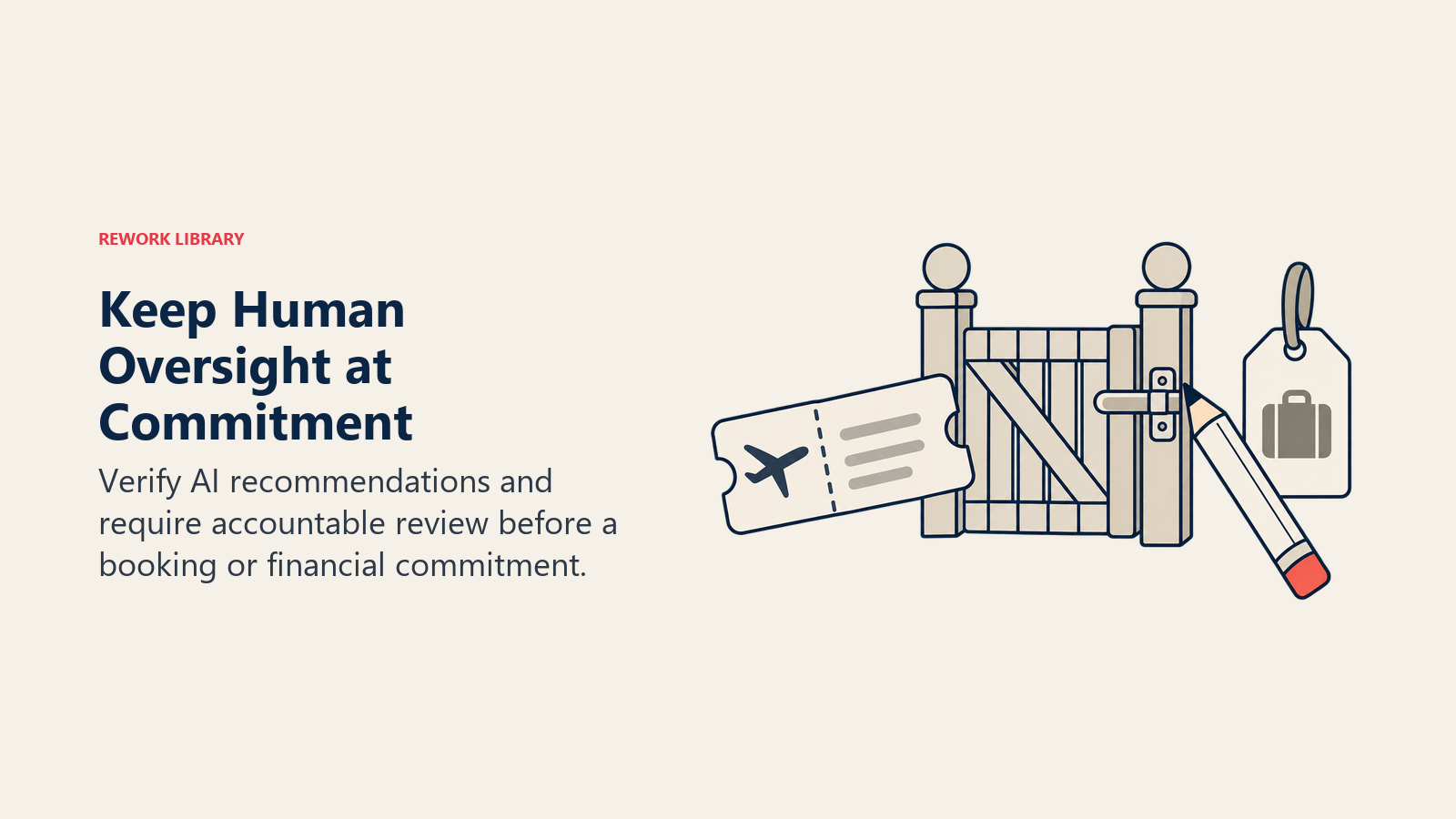
AI hallucinations and errors still occur. Generative AI sometimes fabricates information confidently. Always have humans verify AI-generated content, recommendations, and critical decisions. Never let AI directly book travel or make financial commitments without human oversight.
Maintaining authenticity in AI-assisted relationships matters to travelers. Be transparent when AI assists customer interactions. Some travelers appreciate efficiency. Others want purely human service. Offer both options where possible.
And job displacement concerns require thoughtful change management. Frame AI as augmentation, not replacement. Agents spend less time on routine tasks and more on complex planning and relationship building. Productivity increases without headcount reduction through attrition and redeployment.
Conclusion
AI in travel operations has matured from experimental novelty to essential competitive tool. The agencies and tour operators winning in 2026 use AI to handle routine work at scale while freeing their teams for high-value human interactions.
Implementation should be strategic and measured. Start with clear pain points, choose appropriate tools, measure results carefully, and expand based on proven value. The goal isn't to eliminate human expertise. It's to augment it with computational power, enabling better service, faster responses, and smarter decisions than either humans or AI could achieve alone.
Related Articles:

Business Consultant