Travel SEO Optimization: Ranking for High-Intent Destination Searches
Turn this article into takeaways for your work.


Each assistant summarizes the article only for you and suggests best practices for your work.
Rachel's tour company invested $80,000 in Google Ads over 18 months, generating 420 inquiries at $190 each. Her competitor invested the same $80,000 in SEO, content creation, technical optimization, and link building. After 18 months, the SEO investment generated 3,400 monthly organic visitors producing 285 inquiries monthly at an ongoing cost of $2.30 per inquiry.
That's not a typo. Once SEO compounds, cost per inquiry drops to near-zero while paid advertising costs remain constant. An inquiry that cost you $190 through ads costs you $2.30 through organic search. That's 8,200% ROI improvement.
But here's the catch: SEO requires 12-24 months to compound, technical expertise, sustained investment, and patience. Most tour operators aren't willing to wait, so they overpay for ads forever.
Travel SEO Fundamentals
SEO in travel operates under unique conditions:
How Travel Search Differs:
Travel searchers are dreaming, researching, and comparing for months. They'll visit your site 5-10 times before inquiring. They'll read competitors. They'll compare reviews. This multi-visit, long-consideration behavior rewards comprehensive sites with deep content that keep them coming back.
Understanding Searcher Intent:
Not all travel searches signal the same intent:
- Informational: "Peru climate", "when to visit Peru", "Peru travel tips", early research
- Navigational: "REI Adventures Peru", "G Adventures Machu Picchu", brand-specific
- Commercial Investigation: "Best Peru tour companies", "Peru tour reviews", "group vs private Peru tours", comparing options
- Transactional: "Book Peru tour", "Peru tour packages", "Machu Picchu trek booking", ready to buy
Your content must serve all intents, with volume weighted toward informational (highest volume, earliest stage).
Competition Landscape:
You're competing against:
- OTAs: Expedia, Booking.com, Viator, GetYourGuide with massive budgets and domain authority
- Aggregators: TripAdvisor, Lonely Planet with millions of pages
- Publishers: Travel + Leisure, Conde Nast Traveler with editorial teams
- Other Operators: Direct competitors in your destinations
Can you compete? Yes, through specialization, authority, and better content. You can't outrank TripAdvisor for "Peru travel" but you can own "small group Peru hiking tours" or "family-friendly Peru adventures."
Long-Term vs Short-Term SEO Strategies:
Short-Term (0-6 months): Technical fixes, quick wins on low-competition keywords, optimizing existing pages, claiming quick rankings.
Medium-Term (6-18 months): Building content library, establishing topical authority, earning backlinks, ranking for moderate competition keywords.
Long-Term (18+ months): Dominating destination categories, ranking for high-volume keywords, sustainable organic traffic growth.
Don't expect page one rankings in month three. SEO is a compounding investment.
Keyword Strategy for Travel
Strategic keyword targeting is foundational:
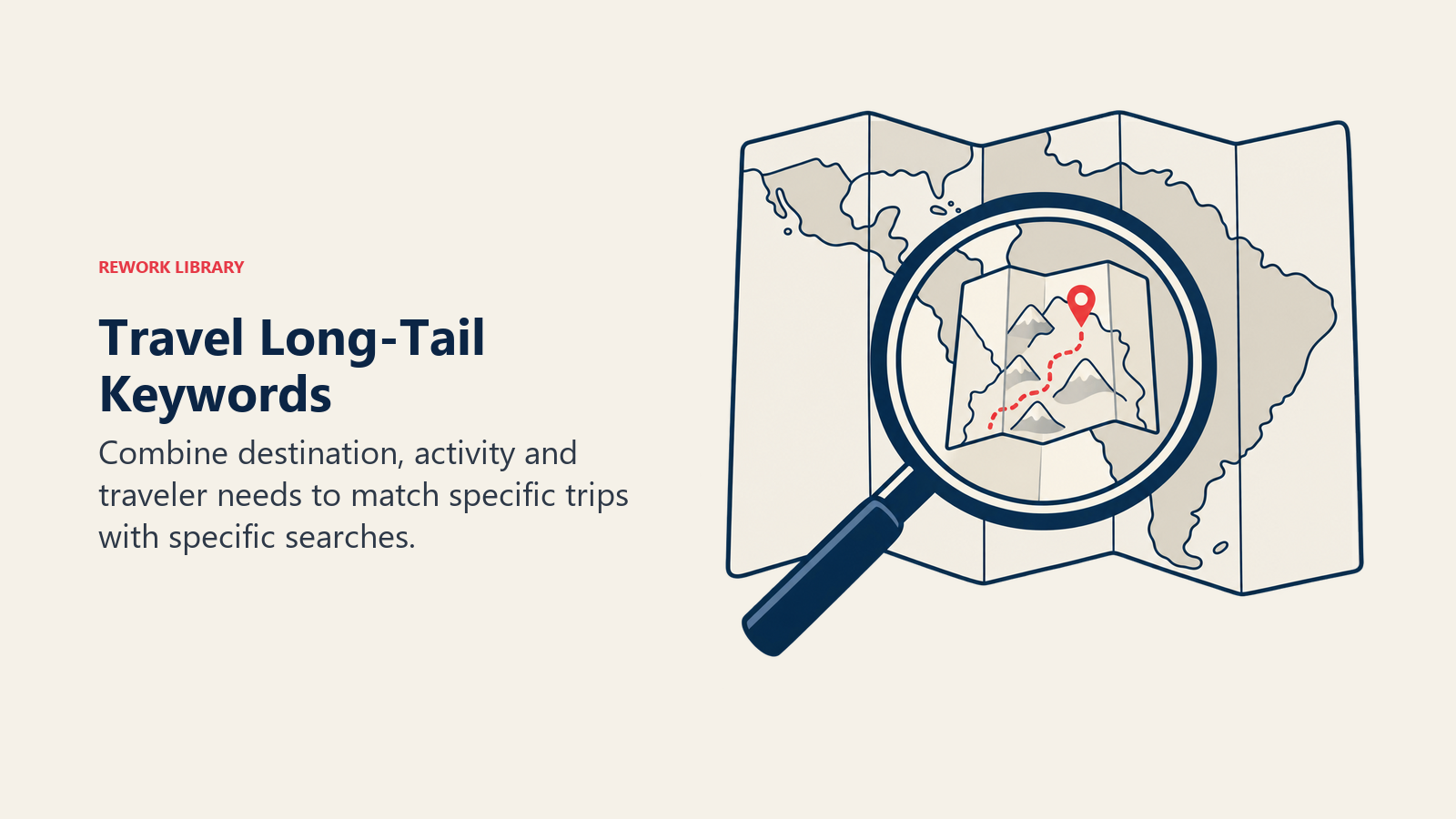
Destination Keywords (Broad to Specific):
- Country/Region: "Peru travel", "South America tours" (huge volume, brutal competition)
- Destination-Specific: "Machu Picchu tours", "Amazon rainforest tours", "Cusco Peru travel" (moderate volume, moderate competition)
- Very Specific: "Machu Picchu tours from Cusco", "Amazon lodge tours Peru", "Sacred Valley hiking" (lower volume, achievable competition)
Start specific, build authority, expand to broader terms over time.
Experience and Activity Keywords:
- "Inca trail trek", "Peru cooking class", "Amazon wildlife tours"
- "Peru cultural immersion", "Peru adventure travel", "Peru family tours"
- Combine destination + activity for targeted long-tail: "luxury Amazon river cruise Peru"
Trip Type Keywords:
- "Peru honeymoon packages", "Peru family vacation", "Peru tours for seniors"
- "Small group Peru tours", "private Peru tours", "Peru solo travel"
- "Budget Peru tours", "luxury Peru travel"
These segment by customer type, allowing personalized content.
Long-Tail Opportunity Identification:
Long-tail keywords are your competitive advantage:
- Lower competition than head terms
- Higher conversion intent
- More specific matching to your actual products
- Combined volume adds up significantly
Example: "Peru tours" gets 74,000 monthly searches but is impossible to rank for. But:
- "10 day Peru tour" - 1,200 searches
- "Peru tour small group" - 850 searches
- "Peru tours for families" - 650 searches
- "Peru adventure tours" - 1,100 searches
50 long-tail keywords at 500-1,500 searches each = 25,000-75,000 potential monthly visitors with far less competition.
Informational vs Transactional Intent:
Balance your keyword portfolio:
- 60-70% informational (building awareness and authority)
- 20-30% commercial investigation (influencing consideration)
- 10-20% transactional (capturing ready buyers)
Most operators over-index on transactional, missing the awareness opportunity where real volume lives.
On-Page Optimization
Making your content rank-friendly:
Title Tag and Meta Description Best Practices:
Title Tags:
- 50-60 characters (so they display fully in results)
- Include primary keyword near the beginning
- Make compelling and click-worthy
- Good: "Peru Tours: Small Group Adventures | Local Guides | Authentic Experiences"
- Bad: "Peru Tours | TravelCompanyName | Book Now"
Meta Descriptions:
- 150-160 characters
- Include primary keyword and related terms
- Compelling call-to-action or value proposition
- Accurately summarize page content
These don't directly impact rankings but dramatically affect click-through rate, which does impact rankings.
Heading Structure for Destination Pages:
Use proper H1-H6 hierarchy:
- H1: Primary topic (only one per page): "Complete Peru Travel Guide"
- H2: Major sections: "Best Time to Visit Peru", "Peru Regions and Destinations", "Peru Travel Costs"
- H3: Subsections under H2s: "Peru Weather by Season", "Peru High Season vs Low Season"
Include keywords naturally in headings. This signals content structure to search engines and improves readability.
Image Optimization:
Images are crucial in travel but often hurt SEO if not optimized:
- File Names: Use descriptive names: "machu-picchu-sunrise-view.jpg" not "IMG_1234.jpg"
- Alt Text: Describe image for accessibility and SEO: "Sunrise over Machu Picchu ruins with Huayna Picchu mountain in background"
- Compression: Use tools like TinyPNG to reduce file size without quality loss
- Lazy Loading: Load images as user scrolls, not all at once
- Responsive Images: Serve appropriately sized images for device
Internal Linking Strategies:
Link related content extensively:
- From destination guide to specific itineraries
- From itineraries back to destination guide
- From blog posts to relevant tour pages
- Use descriptive anchor text: "our 10-day Peru adventure tour" not "click here"
Internal linking:
- Distributes authority across your site
- Helps search engines understand topic relationships
- Keeps visitors engaged longer
- Improves crawl efficiency
Schema Markup for Travel:
Structured data helps search engines understand your content:
- Trip Schema: Mark up itineraries with structured trip data
- TravelAction Schema: Indicate bookable travel actions
- Review Schema: Display star ratings in search results
- FAQ Schema: Get featured FAQ boxes in results
- Breadcrumb Schema: Show page hierarchy
Implement via JSON-LD in page code or using schema plugins.
Site Architecture for Travel SEO
How you structure your site impacts discoverability:
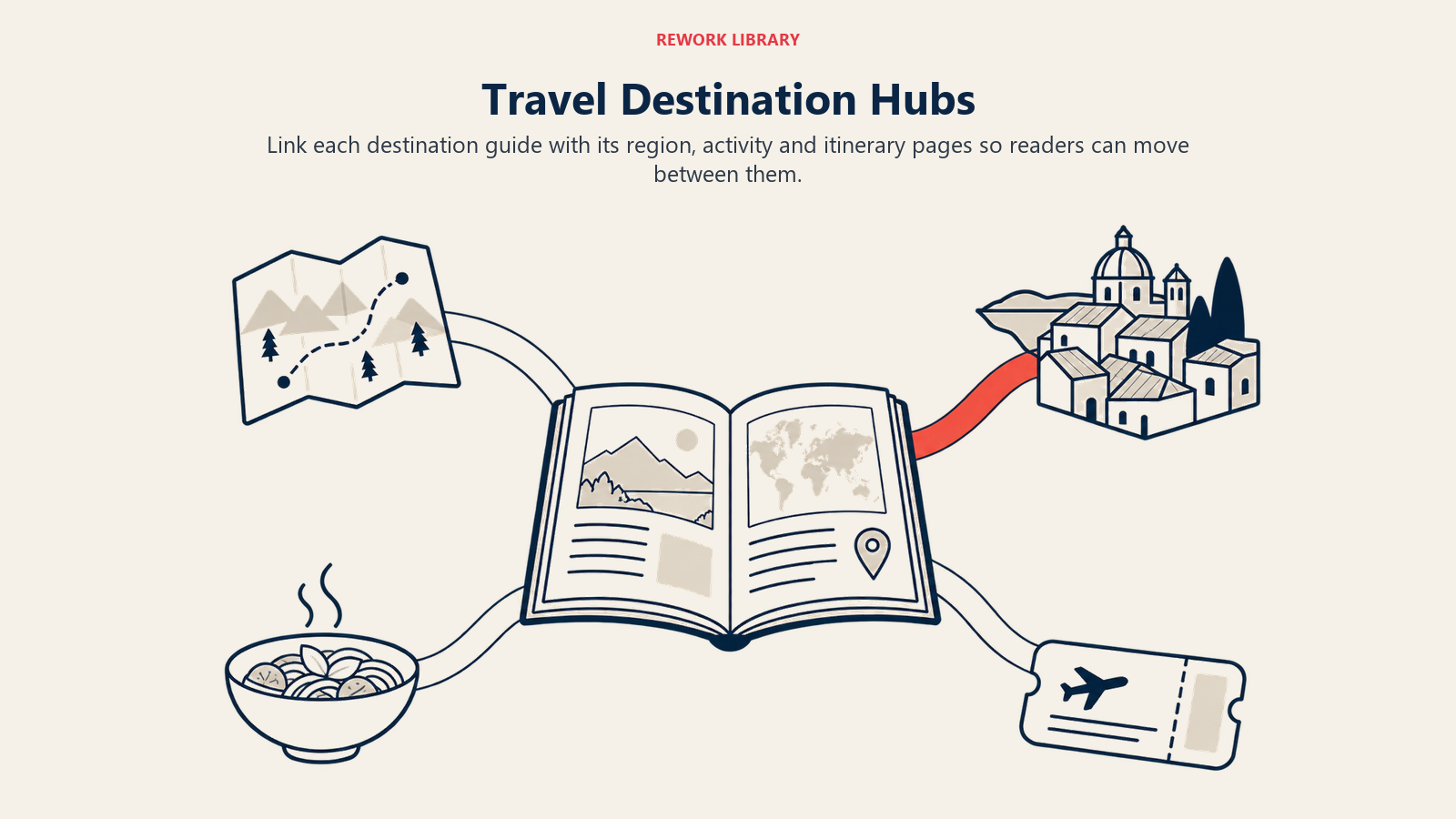
Hub and Spoke Model:
Create destination hubs as content centers:
- Hub: "Peru Travel Guide" (comprehensive pillar page)
- Spokes: Region guides, city guides, activity guides, itineraries, tips, all linking back to hub
- Hub links to all spokes
This creates topical authority and intuitive navigation.
Destination Category Organization:
Structure by geography and trip type:
- Primary: By Country/Region (Peru, Ecuador, Bolivia, etc.)
- Secondary: By Trip Type (Adventure, Cultural, Family, Luxury)
- Tertiary: By Activity (Trekking, Wildlife, Culinary, etc.)
Use breadcrumb navigation showing hierarchy.
URL Structure Best Practices:
Clean, descriptive URLs:
- Good:
/destinations/peru/machu-picchu-tours - Bad:
/p=1234or/tour-details?id=abc123®ion=sa
Include keywords, keep short, use hyphens, stay consistent.
Handling Similar Itineraries and Packages:
If you have multiple slightly different Peru tours, you risk duplicate content issues:
- Use canonical tags pointing to primary version
- Make substantive differences in descriptions
- Consider consolidating very similar tours into one page with variations
- Use structured data to specify different options
Don't create 20 pages that are 90% identical, this dilutes authority.
Content Optimization
Making content rankable and valuable:
Comprehensive Destination Guides (2000+ Words):
Depth signals quality and authority:
- Cover topic completely, climate, logistics, costs, safety, culture, regions, activities, accommodations, food, transportation
- Include original insights from experience
- Update regularly to remain current
- Add multimedia, images, videos, maps, infographics
Google rewards comprehensiveness. Thin content doesn't rank.
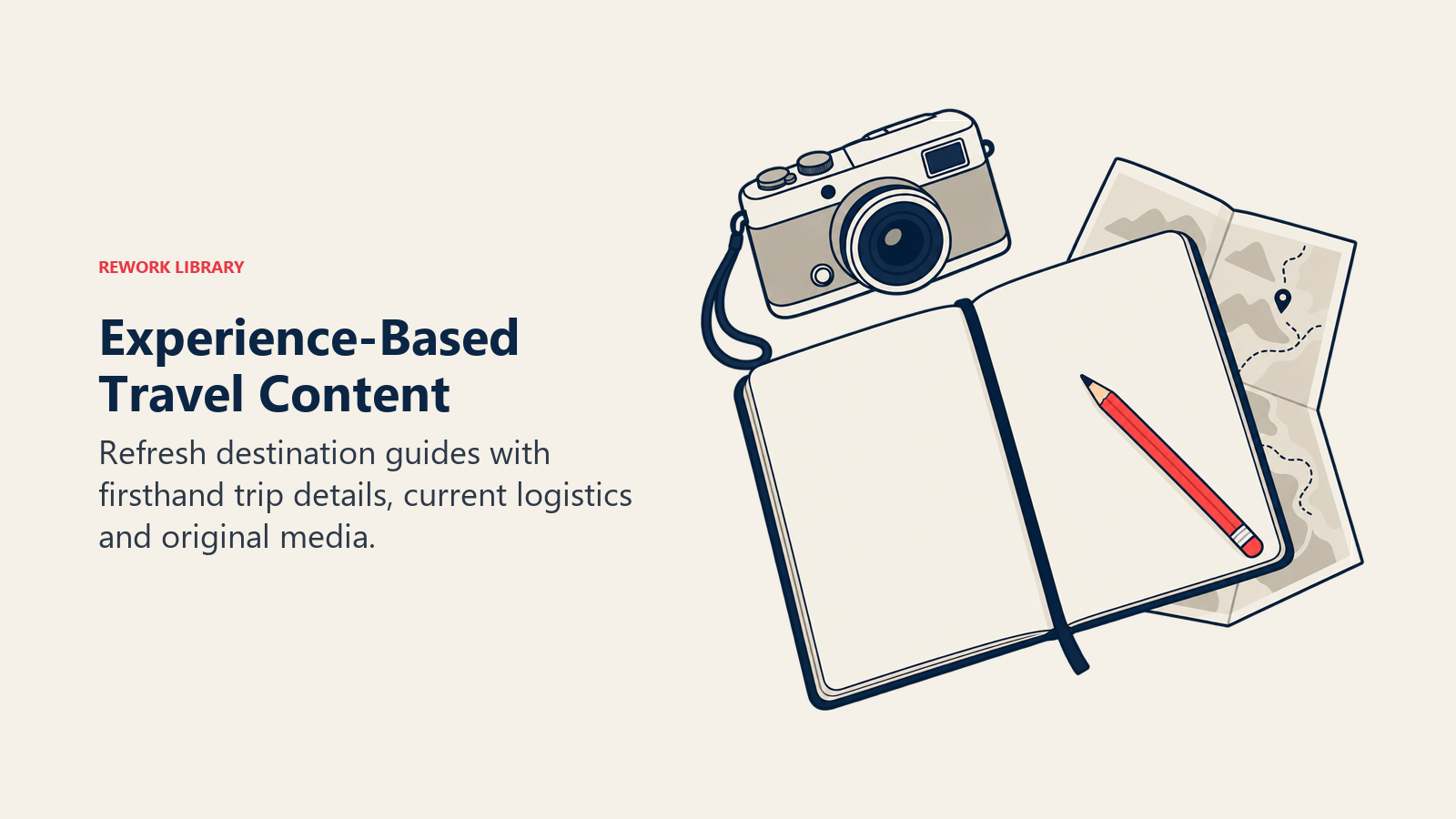
Experience-Based Content Strategy:
Share authentic experiences:
- Trip reports from your actual tours
- Guide perspectives and recommendations
- Customer stories with specific details
- Behind-the-scenes content showing operations
This differentiates you from content aggregators and builds trust.
Freshness and Updating Older Content:
Google values fresh, current content:
- Update destination guides annually
- Add recent photos and videos
- Reflect current prices and logistics
- Note recent changes or conditions
- Update published/modified dates
Refreshing old content often outperforms publishing new content.
Multimedia Integration for Engagement:
Break up text with:
- High-quality original photography
- Embedded videos (YouTube, Vimeo)
- Interactive maps (Google Maps, custom)
- Infographics and visual data
- Downloadable PDFs (guides, checklists)
These improve engagement metrics (time on site, scroll depth) which influence rankings.
Technical SEO for Travel Sites
The technical foundation matters:
Page Speed Optimization:
Travel sites are image-heavy, making speed challenging:
- Compress images aggressively
- Implement lazy loading
- Use CDN for asset delivery
- Minimize JavaScript and CSS
- Enable browser caching
- Use modern image formats (WebP)
Target: Under 3 seconds load time on mobile.
Mobile Optimization:
70% of travel searches happen on mobile:
- Responsive design (not separate mobile site)
- Tap targets properly sized
- Text readable without zooming
- No horizontal scrolling
- Fast mobile page speed
- Mobile-friendly forms
Google uses mobile-first indexing, your mobile site determines rankings.
Core Web Vitals for Travel:
Google's user experience metrics:
- LCP (Largest Contentful Paint): Main content loads in under 2.5 seconds
- FID (First Input Delay): Page responds to interaction within 100ms
- CLS (Cumulative Layout Shift): Content doesn't jump around while loading
These directly impact rankings. Measure in Google Search Console.
Structured Data Implementation:
Add schema markup for:
- Organization and brand information
- Trip itineraries and activities
- Reviews and ratings
- FAQs and how-to content
- Local business data
Structured data enables rich results in search, improving click-through.
Link Building for Travel
Backlinks remain a primary ranking factor:
Earning Links Through Destination Authority:
Create linkable assets:
- Comprehensive destination guides that others reference
- Original research or data about destinations
- Unique photography and visual resources
- Expert interviews and insights
- Interactive tools (budget calculators, planners)
Quality content earns links naturally over time.
Tourism Board and DMO Partnerships:
Destination marketing organizations want operators promoting their destinations:
- Apply for partnership programs
- Get listed on official tourism websites
- Participate in co-marketing campaigns
- Attend trade shows and networking events
These provide authoritative, relevant backlinks.
Guest Posting in Travel Publications:
Write for established travel blogs and publications:
- Target sites with high domain authority
- Provide genuinely valuable content
- Include natural link back to your site
- Build relationships with editors
Focus on quality over quantity, one link from major publication worth more than 100 from low-quality blogs.
Digital PR for Travel Brands:
Generate newsworthy stories:
- Sustainability initiatives
- Community impact programs
- Unique new itineraries or experiences
- Expert commentary on destination trends
- Data and research about travel behavior
Pitch to travel journalists and publications for coverage and links.
Local SEO for Multi-Location Travel Businesses
If you have physical offices:
- Create Google Business Profile for each location
- Include accurate NAP (Name, Address, Phone) consistently across web
- Gather reviews on Google
- Create location-specific pages on website
- Use local schema markup
But most tour operators are primarily digital businesses where local SEO is less critical.
Measurement and Reporting
Track SEO progress:
Key Metrics:
- Organic traffic volume and trend
- Keyword rankings for target terms
- Click-through rate from search results
- Pages indexed and crawled
- Backlink quantity and quality
- Domain authority growth
- Conversion rate from organic traffic
Attribution to Inquiries and Bookings:
Connect SEO to business outcomes:
- Tag organic traffic sources in CRM
- Track which content pages lead to inquiries
- Calculate cost per inquiry from SEO investments
- Compare organic vs paid acquisition costs
- Measure booking value from organic customers
Tools:
- Google Search Console (performance data)
- Google Analytics (traffic and behavior)
- Ahrefs or SEMrush (keyword research, backlinks, competition)
- Screaming Frog (technical audits)
- PageSpeed Insights (performance)
Regular reporting shows progress over time and justifies continued investment.
Related Articles

Business Consultant