Commission & Margin Management in Travel Sales - 2025 Guide
Turn this article into takeaways for your work.


Each assistant summarizes the article only for you and suggests best practices for your work.
A travel operator I know lost $180,000 last year. Not from bad marketing or poor service. They simply gave away too much margin to distribution partners without realizing it until year-end financials arrived. Their commission structure looked competitive on paper, but they hadn't calculated the true cost across all channels.
Managing commissions and margins isn't just about setting percentages and hoping for the best. It's about designing compensation structures that motivate partners while protecting your profitability. Done right, it creates win-win relationships that drive sustainable growth within a healthy travel business economics framework.
Understanding Travel Commission Models
Travel industry commission structures have evolved a lot over the past decade, but certain standards persist across different business models.
Traditional travel agents typically earn 10-15% commission on package tours, with variations based on the complexity and value of the booking. But that's just the baseline. Override bonuses add another 2-5% for high-performing agents who consistently deliver volume. Some operators implement quarterly performance tiers that can push total compensation to 18-20% for elite partners.
The B2B versus B2C equation changes the math entirely. When you're selling through agents, that 10-15% commission comes off your gross margin. When you're selling direct to consumers, you're investing that same percentage (or more) into marketing and customer acquisition. The question isn't which channel is cheaper, it's which delivers better lifetime value and sustainable growth.
Tour type dramatically affects commission expectations. Group tours with 20-30 participants operate on tighter margins, so commission rates typically stay at the lower end. Luxury travel commands premium pricing and better margins, which allows for more generous agent compensation. Adventure tours fall somewhere in the middle, with commission rates reflecting the specialized knowledge required to sell them effectively.
First-time independent travelers (FIT) bookings create unique commission challenges. These customized itineraries require significant sales effort and expertise, yet the booking value might not justify higher commission percentages. Many operators solve this by implementing minimum commission amounts rather than pure percentage-based compensation.
Margin Structure for Different Products
Profit margins vary dramatically across tour types, and understanding these differences shapes your entire travel pricing strategy.
Group tours typically deliver 20-30% gross margins. The economies of scale work in your favor. Fixed costs like transportation and guide fees spread across multiple participants, while your per-person variable costs remain relatively low. But these margins are vulnerable. One unfilled seat reduces your profitability disproportionately, which is why effective revenue management for tours becomes critical.
Luxury travel operates in the 30-40% margin range. Affluent travelers expect exceptional experiences and personalized service, which commands premium pricing. Your costs increase, but not proportionally to your pricing power. The real challenge comes from the higher expectations and lower error tolerance. One service failure can devastate your reputation in this segment.
Adventure tours land in the 25-35% range. Equipment costs, specialized guides, and safety requirements create higher fixed costs than standard group tours. Yet the experiential nature of adventure travel supports premium pricing. Clients aren't just buying a trip; they're investing in transformative experiences that justify higher margins.
Fixed versus variable costs fundamentally affect how you think about margins. Fixed costs (vehicles, office overhead, guide salaries) don't care about your booking numbers. Variable costs (meals, entrance fees, accommodation) scale with every guest. High fixed cost operations need volume to survive. High variable cost businesses can be profitable at lower volumes but struggle to scale without proportional cost increases.
Wholesale versus retail pricing creates another strategic decision point. Wholesale rates to agents need enough margin for them to mark up and still remain competitive. Most operators aim for a 25-30% difference between wholesale and retail prices. Set it too narrow and agents won't prioritize your products. Too wide and you're leaving money on the table with direct bookings, impacting your direct booking strategy effectiveness.
Agent Commission Programs
Designing commission programs that motivate performance without destroying your margins requires strategic thinking and clear structure.
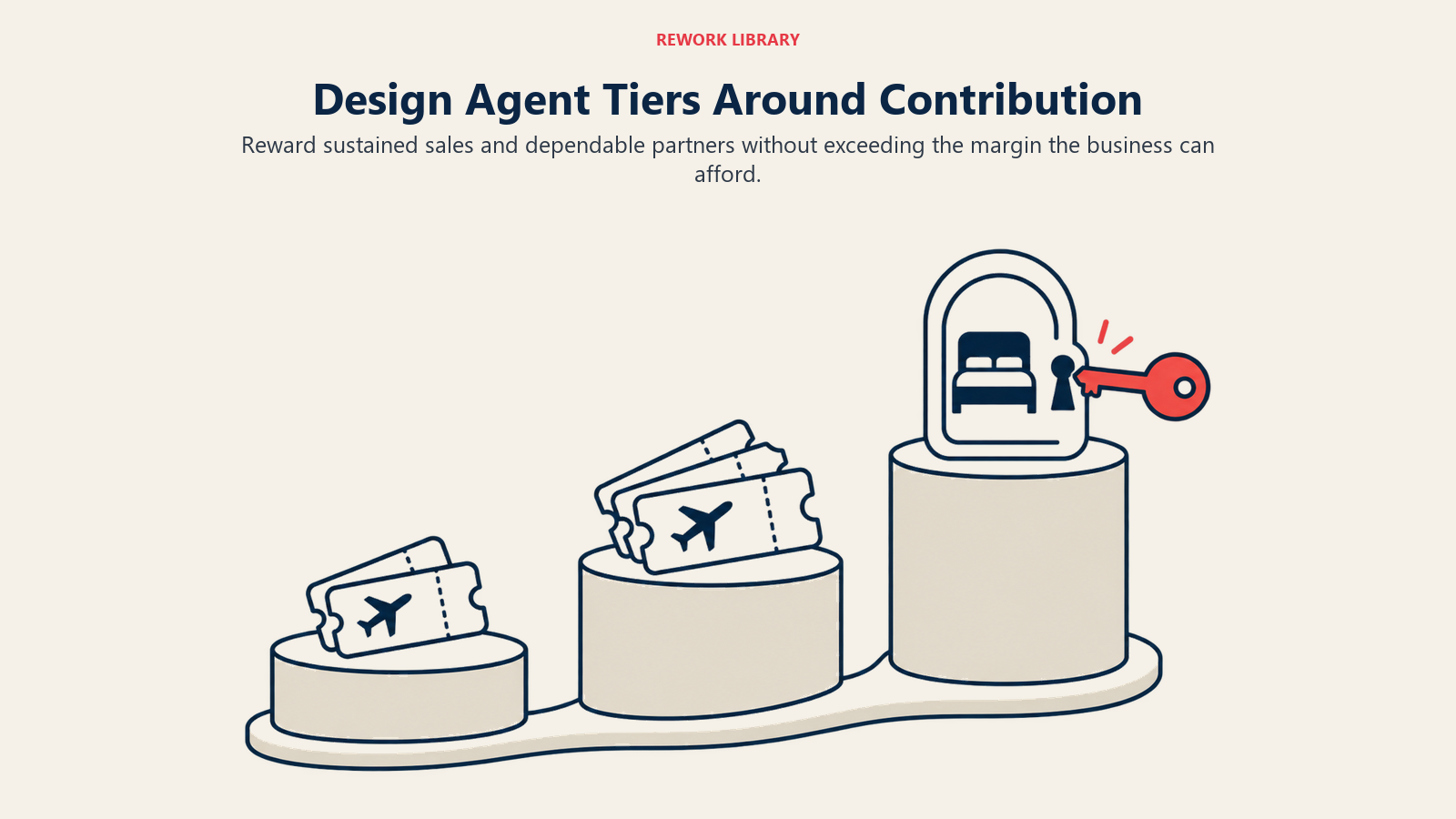
Tiered commission structures create natural motivation for agents to increase their sales volume. Start with a base rate of 10% for agents doing minimal volume, say under $50,000 annually. Bump it to 12% for agents hitting $50,000-$150,000, and offer 15% for top performers exceeding $150,000. These tiers need to align with your business economics. Don't set volume thresholds so high that few agents can reach them, but don't make them so easy that everyone maxes out.
Override bonuses work differently than tiers. While base commissions pay on every booking, overrides reward sustained performance over time. An agent hitting their annual target might receive an additional 2-3% bonus on all bookings made during that period. Some operators pay overrides quarterly, others annually. Quarterly payments provide more frequent motivation but require more administrative overhead.
Volume-based incentives extend beyond pure commission percentages. Consider offering preferred inventory access for high-performing agents. When you have limited spots on your most popular departures, give first access to agents who've proven they can sell. Marketing co-op funds provide another powerful incentive. Contribute a percentage of an agent's sales to their marketing efforts promoting your products.
Preferred partner relationships deserve special treatment. These agents consistently deliver quality clients, require minimal support, and represent your brand well. Many operators create VIP tiers with benefits beyond commission: priority customer service, dedicated account managers, advance notice of new products, and invitations to familiarization trips. These relationships often outperform pure commission-motivated partnerships.
Direct Booking vs Channel Partner Margins
The direct versus indirect channel debate misses a critical point: you need both, but you must understand the true economics of each.
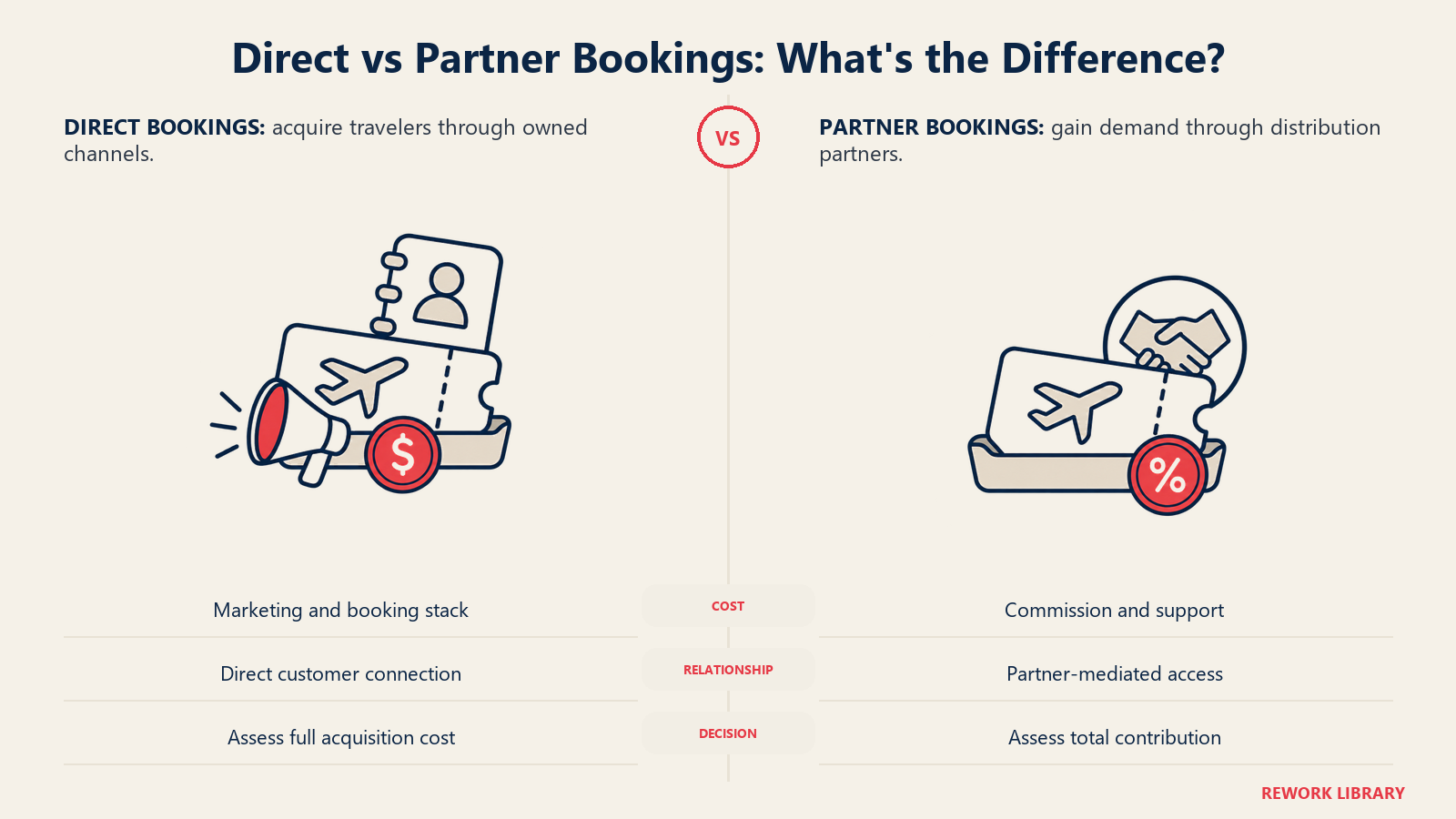
Direct bookings eliminate commission expenses, but they don't eliminate costs. When you calculate customer acquisition cost in travel, include your marketing spend, website development and maintenance, booking system costs, payment processing fees, and the staff time spent on sales and customer service. Many operators discover their cost per direct booking ranges from 8-15% - not dramatically different from agent commissions.
OTA bookings and agent bookings carry different cost structures. OTAs typically take 15-25% commission, provide instant visibility to millions of potential customers, and handle the entire booking process through their OTA partnership strategy. Agents take 10-15%, bring personal recommendations and trust to the equation, but often require more hand-holding through the booking process. Neither channel is inherently superior; both serve different customer segments.
True cost per acquisition must account for lifetime value differences across channels. Direct bookers who come through your marketing efforts might cost 12% to acquire, but they're now in your database for future marketing. OTA customers cost 20% per booking, and you typically don't capture their contact information for remarketing. Agents bring you customers repeatedly with relatively stable commission costs.
Optimizing margin distribution across channels requires active management. If you're paying 15% to agents but spending 18% acquiring direct customers, you're economically incentivized to grow your agent network. If your direct acquisition costs are 8% and agent commissions are 15%, you should invest more in direct marketing. But these calculations change over time as your marketing matures and your brand recognition grows.
Strategies to increase direct booking percentage include retargeting past customers with exclusive direct-only offers, creating referral programs that reward customers for bringing friends, developing content marketing that builds organic traffic, and implementing email nurture sequences that convert inquiries into bookings. Each strategy requires different investment levels and produces different timeframes for return.
Dynamic Margin Management
Static pricing and fixed margins leave money on the table in today's dynamic travel market. Flexible approaches to margin management respond to real-time market conditions through yield management in travel.
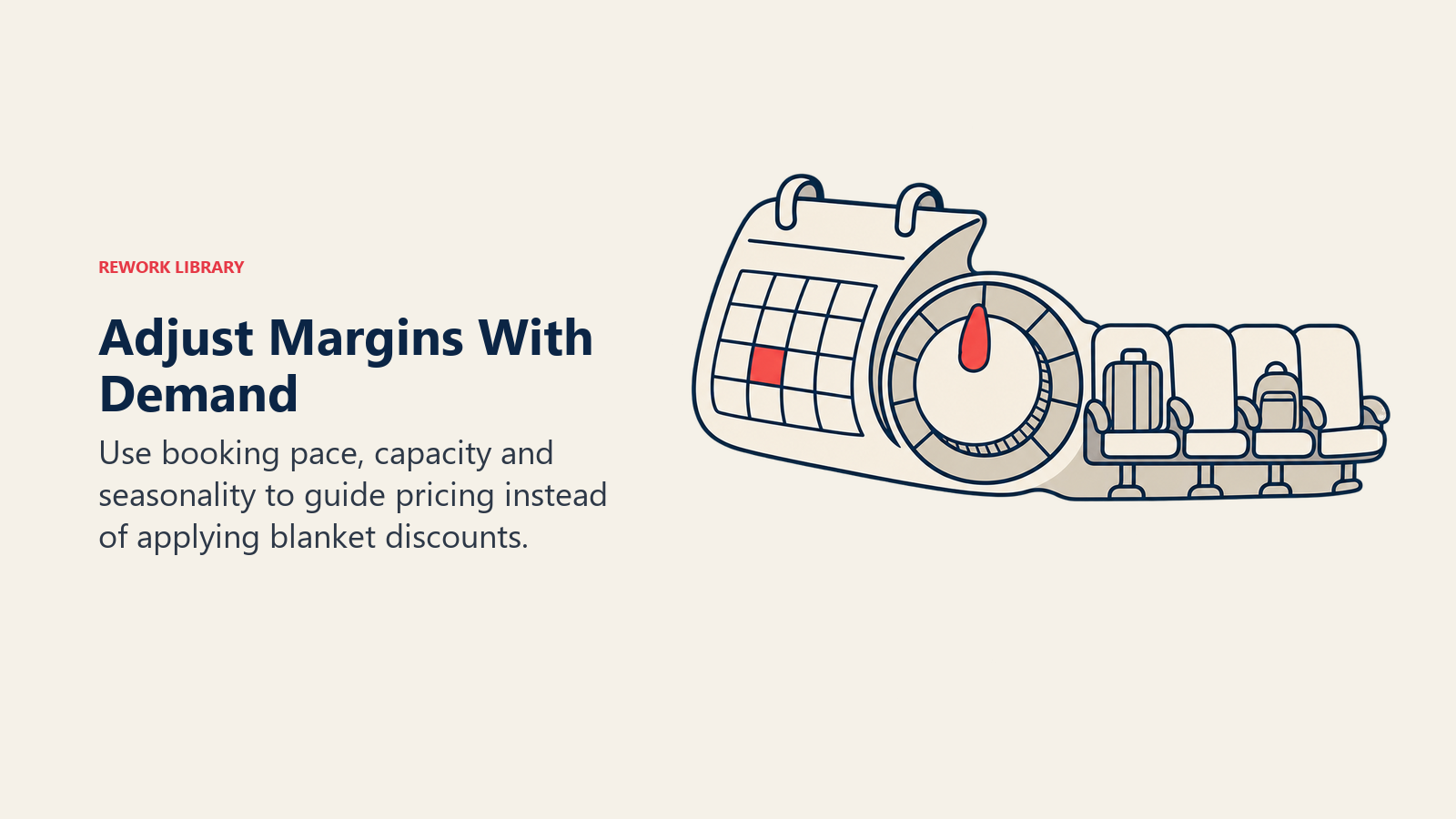
Demand forecasting drives intelligent margin decisions. When you can predict high demand for a particular departure, you can maintain higher margins because you're less likely to need discounting to fill spots. Low-demand forecasts signal opportunities to accept lower margins in exchange for confirmed revenue and avoided cancellation costs.
Early bird pricing typically sacrifices margin for certainty. Offering 15-20% discounts for bookings made 6-9 months in advance reduces your gross margin but provides valuable cash flow and reduces marketing costs as you approach departure. Understanding early bird & last minute pricing dynamics helps you make strategic decisions about margin sacrifice versus marketing costs.
Last-minute bookings present different margin considerations. Some operators maintain premium pricing right up to departure, banking on urgency to drive sales. Others progressively reduce margins as departure approaches, preferring some revenue to empty seats. Your approach depends on your market position and typical booking patterns. Luxury operators generally avoid last-minute discounting to protect brand positioning. Adventure and group tours often benefit from strategic last-minute offers.
Seasonal margin optimization requires different strategies for peak, shoulder, and off-season periods. Peak season allows premium pricing and maximum margins - demand exceeds supply. Shoulder seasons need more strategic pricing: margins high enough to remain profitable but competitive enough to attract price-sensitive travelers. Off-season might accept minimal margins just to cover fixed costs and maintain operations, making effective seasonality management essential for year-round profitability.
Promotional period margin management becomes critical for maintaining profitability during sales events. Black Friday, wave season, and summer sales create customer expectations for discounts. Rather than blanket percentage discounts that destroy margins, consider value-add promotions: include airport transfers, upgrade accommodations, or add excursions. These additions cost you less than their perceived value to customers.
Commission Payment Systems
How and when you pay commissions affects cash flow, administrative efficiency, and partner satisfaction in equal measure.
Automated commission calculation eliminates manual errors and reduces administrative burden. Modern booking systems can track commission rates by agent, product, and booking date, calculating amounts owed in real-time. Integration with accounting systems creates seamless monthly commission runs without manual intervention. The upfront investment in automation typically pays back within 6-12 months through reduced administrative time.
Payment terms vary widely across the industry. Net 30 days after departure is common - this ensures the trip has operated successfully before releasing commission. Net 60 or 90 days improves your cash flow but may frustrate agents who prefer faster payment. Some operators offer early payment discounts: pay commission within 15 days and receive an additional 1%, or wait 60 days for standard commission. This gives agents flexibility while rewarding those who don't need faster payment.
Commission on cancellations creates policy challenges. Most operators don't pay commission on cancelled bookings, but timing matters. If cancellation occurs more than 60 days before departure, no commission is typically owed. Cancellations within 60 days where deposits are forfeited create gray areas: some operators pay commission on retained deposits, others don't. Clear policies prevent disputes.
Transparent commission tracking systems benefit both you and your partners. Agent portals that show real-time booking status, commission amounts earned, payment dates, and booking history reduce support inquiries and build trust. Mobile accessibility lets agents check their performance and pending commissions anywhere. The best systems send automatic notifications when bookings are made, when commissions are calculated, and when payments are issued.
Negotiating Supplier Commissions
Your profitability depends not just on what you charge customers, but on what you pay suppliers. Effective negotiation improves your margins without raising customer prices.
Hotel commissions typically range from 10-15%, with luxury properties often at the higher end. But published commission rates are starting points, not final offers. Volume commitments earn better rates: guarantee 500 room nights annually and negotiate 15-18%. Multi-property relationships with hotel chains create leverage for system-wide rate improvements. Shoulder and off-season bookings often command higher commissions as properties seek to fill inventory.
Attraction and activity commissions range from 8-12%, with popular attractions offering lower rates because they don't need the distribution help. Lesser-known activities and emerging experiences often pay 15-20% to gain market access. Become an early partner with new attractions and lock in favorable long-term rates before they become popular and reduce commissions.
Transportation providers (coaches, trains, ferries) typically offer 5-10% commission. These lower rates reflect their thin margins and commodity nature. Volume-based improvements come slowly in transportation. Better strategies include negotiating contracted rates that provide margin through favorable net pricing rather than commission percentages.
Long-term supplier relationships create negotiation leverage that transactional partnerships never achieve. Annual volume commitments, multi-year contracts, and partnership marketing initiatives all strengthen your negotiating position. Suppliers invest in relationships they believe will be profitable over time.
Commission clawbacks occur when you've been paid commission on a booking that later cancels. Supplier terms typically allow them to deduct these commissions from future payments. Track these carefully to ensure accuracy. Dispute any clawbacks that don't match your records or fall outside your contractual cancellation windows.
Performance-Based Commission Models
Traditional flat commission rates are giving way to performance-based structures that align agent behavior with your business objectives.
Tiered structures based on sales targets create clear incentives for growth. An agent selling $100,000 annually at 10% commission earns $10,000. Increase that to 12% for sales above $100,000, and they earn $12,000 on the same volume, plus additional incentive to grow further. These tiers can be annual or quarterly, individual or team-based.
Upselling and add-on bonuses motivate agents to increase booking value, not just booking volume. Offer additional 2% commission on bookings exceeding $5,000 per person, or bonus payments for guests who purchase travel insurance, private tours, or premium accommodation upgrades. These incentives align agent behavior with your highest-margin opportunities through effective travel upselling and cross-selling strategy.
Team-based versus individual incentives each serve different purposes. Individual commissions reward personal performance and drive competitive behavior among sales teams. Team commissions encourage collaboration and knowledge sharing. Many operators implement hybrid models: base commission on individual performance, bonus structures on team achievement.
Base versus variable compensation decisions affect recruiting and retention. Pure commission structures attract entrepreneurial personalities who thrive on performance-based income but may struggle to recruit agents who prefer income stability. Base salary plus commission models provide security while maintaining performance incentives. Your market and competitive landscape will dictate what compensation structure attracts the talent you need.
Technology for Commission Management
Manual commission tracking worked when you had 10 partners and 100 bookings annually. At scale, technology becomes essential for accuracy and efficiency.
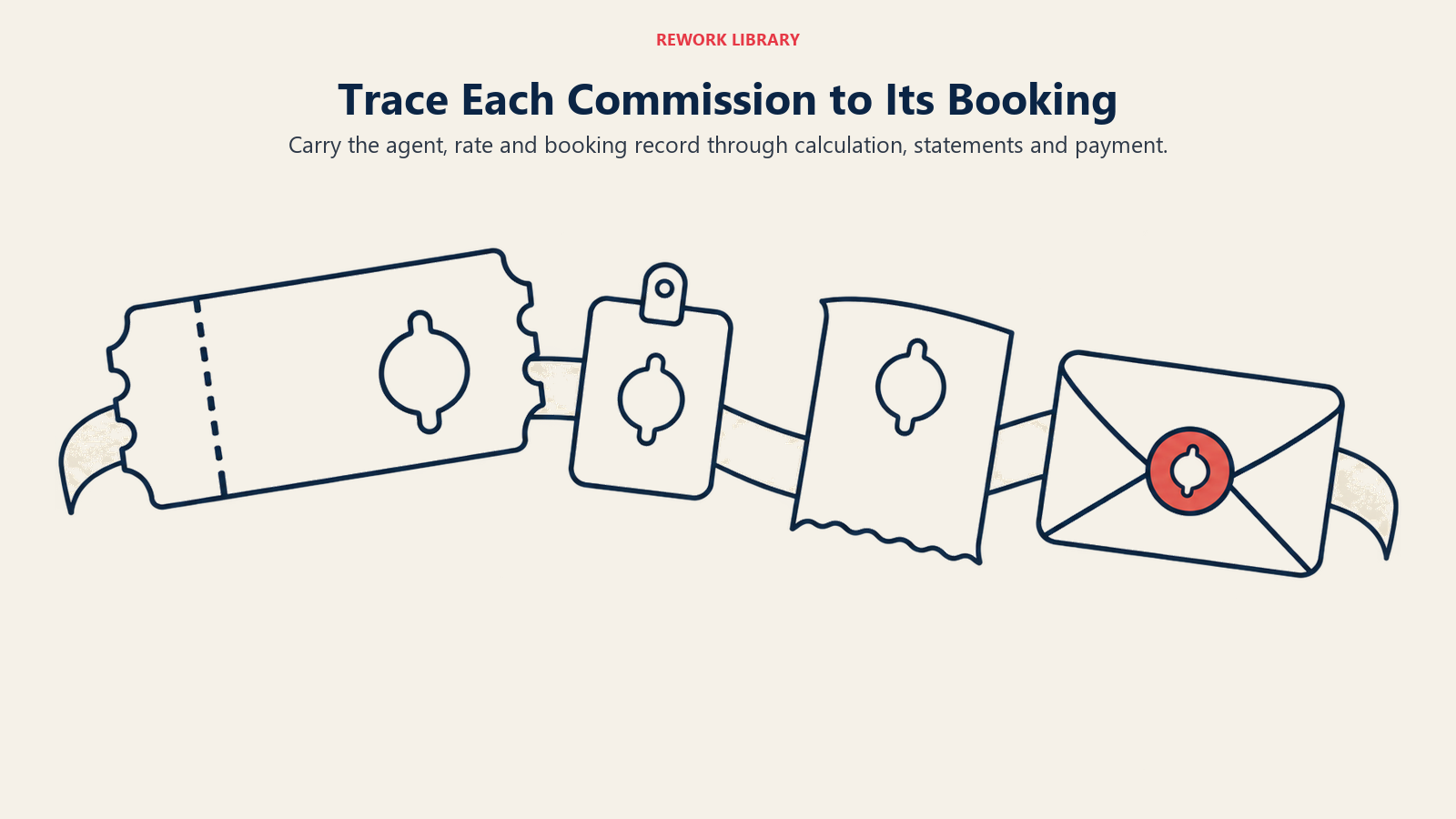
CRM and booking system integration eliminates double data entry and ensures commission calculations use accurate, real-time booking data. When implementing travel CRM implementation with booking system integration, the system should automatically identify the agent's current commission tier, calculate the amount owed, and create a commission payable record in your accounting system. This end-to-end automation reduces errors and administrative overhead dramatically.
Commission reporting dashboards give agents visibility into their performance without requiring customer service intervention. Real-time dashboards show year-to-date bookings, current commission tier, earnings to date, and progress toward next tier. Mobile-optimized dashboards let agents check performance anytime, anywhere.
Automated payment calculations and disbursements streamline month-end commission processing. Rather than manually calculating hundreds of commission amounts, reviewing for accuracy, and processing individual payments, modern systems batch all due commissions, generate detailed statements, and facilitate bulk payment processing through ACH or international wire transfer systems.
Accurate commission attribution prevents disputes and maintains trust. When bookings involve multiple touchpoints - initial inquiry with one agent, follow-up with another, final booking by a third - your system needs clear rules for commission attribution. First-touch attribution credits whoever made initial contact. Last-touch credits whoever closed the sale. Split commissions divide payment among multiple contributors based on predefined percentages.
Margin Protection Strategies
Protecting margins requires vigilance and systematic approaches to identifying and eliminating revenue leakage.
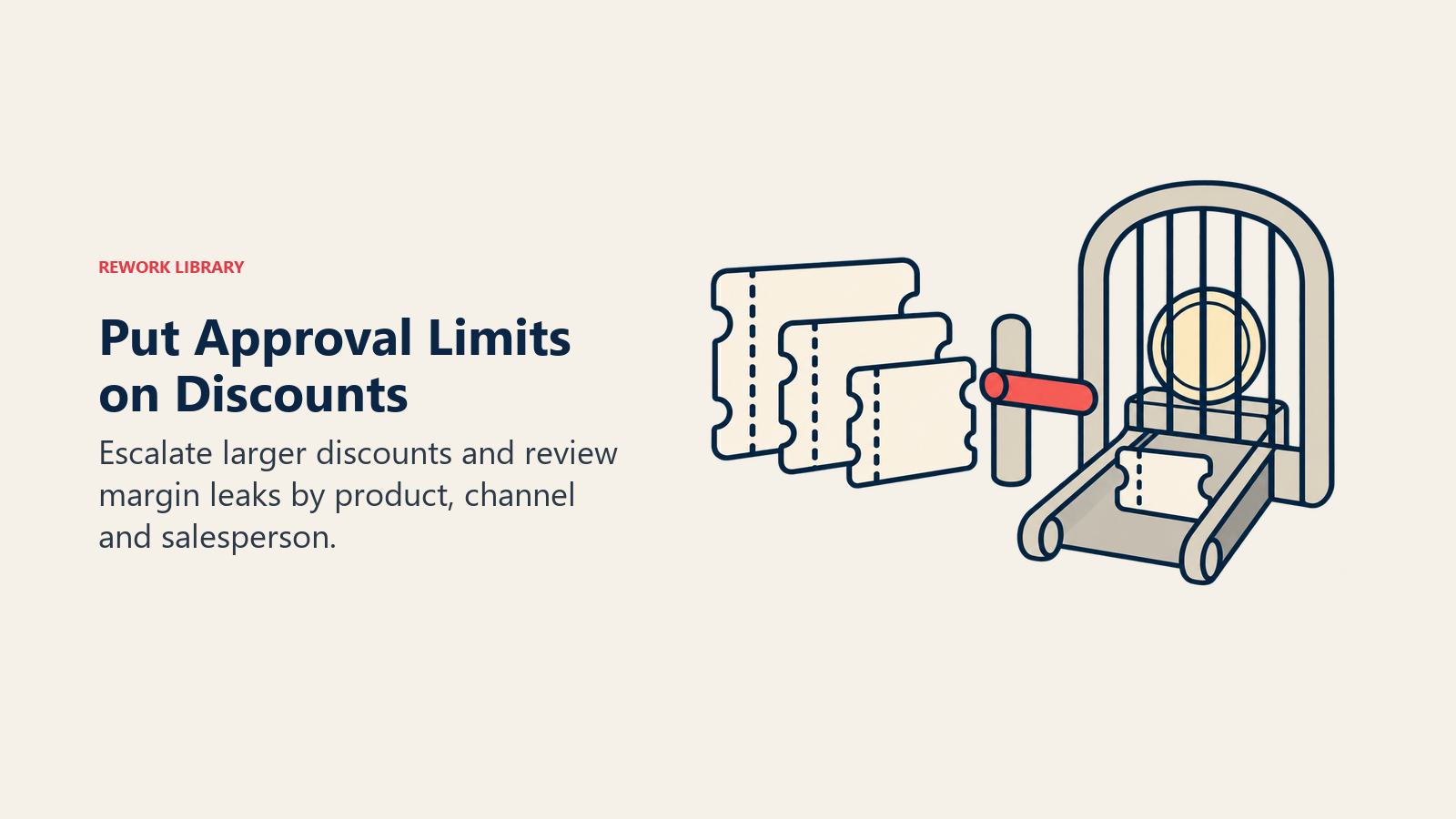
Margin leaks happen when discounts are applied unnecessarily, commission rates are miscalculated, or suppliers charge more than contracted rates. Monthly margin analysis by product, channel, and sales person reveals patterns. If one sales person consistently closes deals at lower margins, they may be discounting too aggressively or poorly estimating costs.
Discount authority and approval workflows prevent unauthorized discounting. Define clear discount authorization limits: sales people can discount up to 5% independently, 5-10% requires manager approval, anything above 10% needs director-level authorization. Electronic approval workflows track who authorized each discount and why.
Negotiation process discipline maintains margin integrity. Train sales teams to negotiate on value-added items rather than price. Instead of offering 10% off, include airport transfers or upgrade meal plans. The perceived value to the customer exceeds your actual cost, protecting your margin while satisfying customer price sensitivity.
Price erosion monitoring across channels identifies when your pricing becomes inconsistent. If agents are regularly selling at 15% below your direct prices, you've either priced too high direct or given too much margin to agents. If OTAs undercut your website pricing, you need to address your OTA agreements. Regular competitive price monitoring ensures your positioning remains consistent across all channels.
Managing commissions and margins isn't a set-it-and-forget-it exercise. Market conditions change, competitive dynamics shift, and your business evolves. What worked last year might leave money on the table this year. Or it might be unsustainably generous. Regular analysis, clear policies, and systematic execution protect profitability while maintaining productive partner relationships.
Related Articles:

Business Consultant
On this page
- Understanding Travel Commission Models
- Margin Structure for Different Products
- Agent Commission Programs
- Direct Booking vs Channel Partner Margins
- Dynamic Margin Management
- Commission Payment Systems
- Negotiating Supplier Commissions
- Performance-Based Commission Models
- Technology for Commission Management
- Margin Protection Strategies