Destination Marketing Strategy: Building Brand Authority for Travel Companies
Turn this article into takeaways for your work.


Each assistant summarizes the article only for you and suggests best practices for your work.
Two tour operators both specialize in Peru. Operator A spends $120,000 annually on Google Ads, generates 800 inquiries, and converts 12% to bookings. Operator B spends $45,000 on content marketing, generates 1,200 inquiries, and converts 18%. The difference? Operator B built destination authority over three years while Operator A chased short-term clicks.
90% of travel marketing fails because it skips the awareness phase. Companies jump straight to conversion tactics, ads, promotions, discounts, without establishing why anyone should care about them specifically. In travel, where consideration cycles span months and customers conduct exhaustive research, authority matters more than visibility.
Destination marketing isn't about selling trips. It's about becoming the recognized expert in specific destinations or experience types, so when prospects are ready to buy, you're already their first choice.
Destination Marketing Fundamentals
Let's clarify what destination marketing actually means:
Definition and Scope: Destination marketing is the work of building awareness, interest, and preference for specific geographic areas or experience types. You're not promoting individual trips, you're establishing expertise around Peru, sustainable tourism, culinary travel, family adventure, or whatever your focus area is.
Difference from Product Marketing: Product marketing promotes specific itineraries and departures. Destination marketing creates the foundation that makes product marketing work. Think of it as the difference between selling a book versus establishing yourself as an author. Authority enables sales.
Role in the Inspiration Phase: Most travel journeys start with "I wonder where we should go?" rather than "I need to book Peru for September." Destination marketing speaks to explorers at the very beginning of their journey, planting seeds that grow into inquiries months later.
Building Destination Authority: Authority comes from demonstrated expertise, comprehensive knowledge, first-hand experience, depth of coverage, insider access, and consistent presence. It's earned through years of content creation, customer success, and market presence.
You can't fake authority. Prospects see through thin content and marketing fluff. Real authority comes from real expertise.
Strategic Positioning Framework
Where you focus determines your competitive advantage:
Destination Specialization vs Multi-Destination:
Single Destination Focus: All-in on one country or region. You become THE expert. Every resource goes toward dominating one market. Works well for operators under $5M. Examples: only Iceland, only New Zealand, only Costa Rica.
Advantages: Easier to build authority, clearer brand identity, operational excellence, supplier leverage, word-of-mouth concentration.
Risks: Market size limitation, vulnerability to destination-specific disruptions, saturation.
Multi-Destination Portfolio: You offer 5, 10, or 50 destinations. Diversifies risk and revenue. Allows market-specific scaling. Required for operators over $10M.
Advantages: Revenue diversification, ability to serve customers across lifecycle, resilience to local disruptions.
Risks: Diluted marketing, harder to build authority, operational complexity, resource spread thin.
Niche Positioning:
Rather than compete broadly, dominate a specific slice:
Adventure Travel: Trekking, climbing, multi-sport. Appeals to active travelers seeking physical challenge.
Luxury Travel: High-end accommodations, exclusive access, personalized service and premium positioning. Premium pricing justifiable.
Cultural Immersion: Deep local interaction, community-based tourism, authentic experiences.
Family Travel: Kid-friendly itineraries, age-appropriate activities, multi-generational appeal.
Sustainable/Responsible Tourism: Conservation focus, community benefit, minimal environmental impact.
Niche positioning allows premium pricing, reduces direct competition, and builds passionate communities.
Geographic Focus Decisions:
Start narrow. One destination or region. Build authority. Then expand to adjacent markets sharing similar customers. If you dominate Peru, natural expansion is Ecuador, Bolivia, or Galapagos, same core customers, adjacent experiences.
Don't scatter. Going from Peru to Thailand to Iceland dilutes everything.
Competitive Differentiation:
In every destination, you're competing with established operators, OTAs, and travel influencers. You differentiate through:
- Unique itineraries others don't offer
- Special access to sites, experiences, or people
- Expertise others lack (guides, knowledge, relationships)
- Service quality and personalization
- Values alignment (sustainability, community impact)
Your differentiation must be meaningful, provable, and consistently delivered.
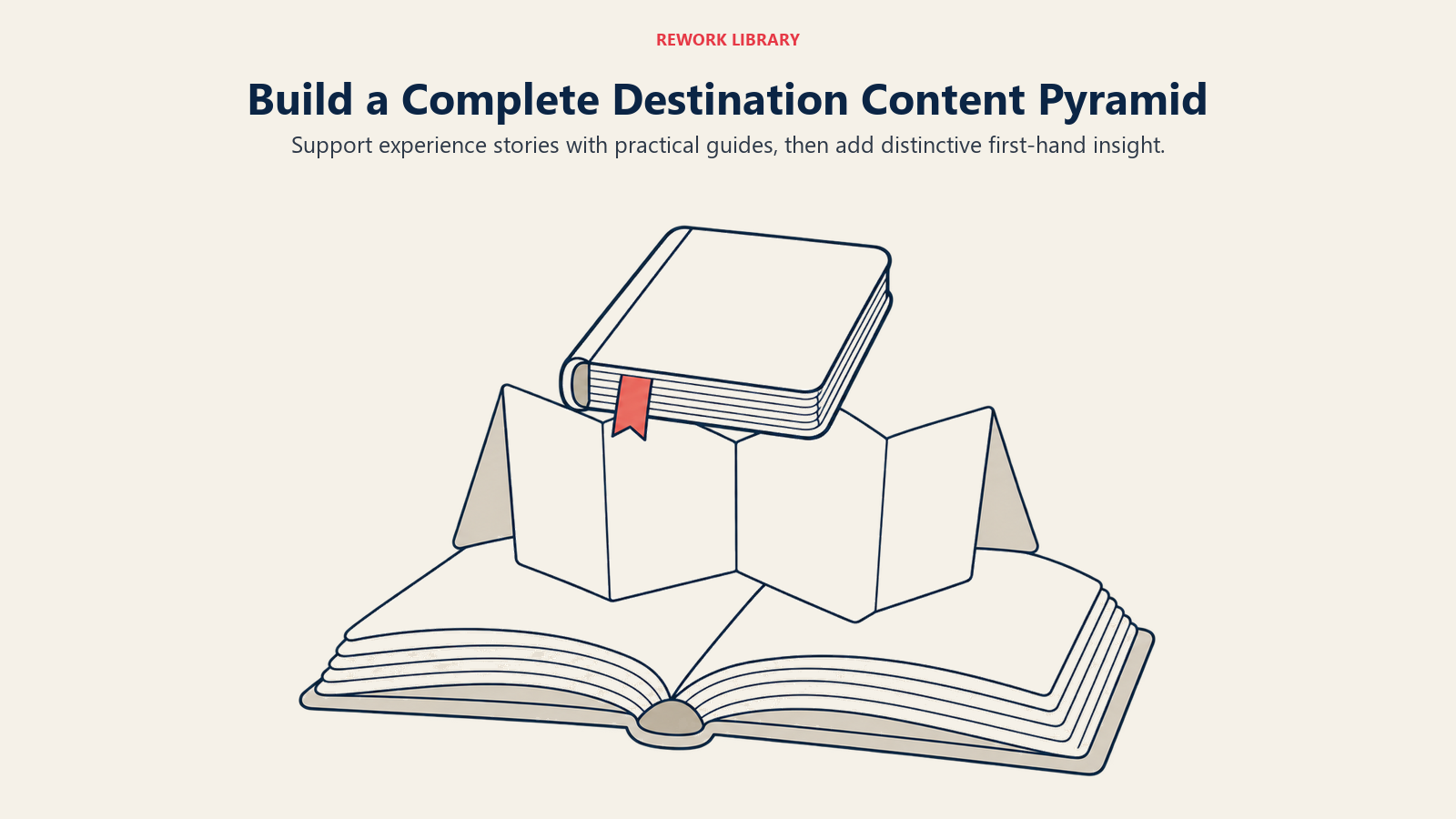
The Destination Content Pyramid
Content is how you build and demonstrate authority. Structure it strategically:
Foundation: Destination Guides and Resources:
These are comprehensive, evergreen resources answering fundamental questions:
- Complete Peru travel guide (climate, culture, logistics, tips)
- When to visit Peru (season by season breakdown)
- Peru visa and entry requirements
- Peru packing lists
- Peru health and safety guide
Foundation content captures organic search traffic from early-stage researchers. It's SEO-focused, educational, and positions you as helpful expert.
Middle: Experience Stories and Itineraries:
These show what's possible and inspire specific trips:
- 10-day Machu Picchu and Amazon itinerary
- Family-friendly Peru adventures
- Peru food and culinary tour experiences
- Off-the-beaten-path Peru destinations
- Budget vs luxury Peru travel options
Middle layer content converts inspiration into consideration. It's more specific, more visual, and more emotionally engaging.
Top: Unique POV and Insider Knowledge:
These demonstrate expertise no one else has:
- Behind-the-scenes with local weavers in the Sacred Valley
- Hidden archaeological sites tourists never see
- Our guide team's personal Peru recommendations
- How sustainable tourism is changing Cusco
- Interview with local conservation leaders
Top layer content differentiates you from competitors. It's proof you're not just marketing Peru, you live and breathe it.
Most operators create scattered middle-layer content and wonder why it doesn't drive inquiries. The pyramid needs all three levels working together.
Channel Strategy for Destination Marketing
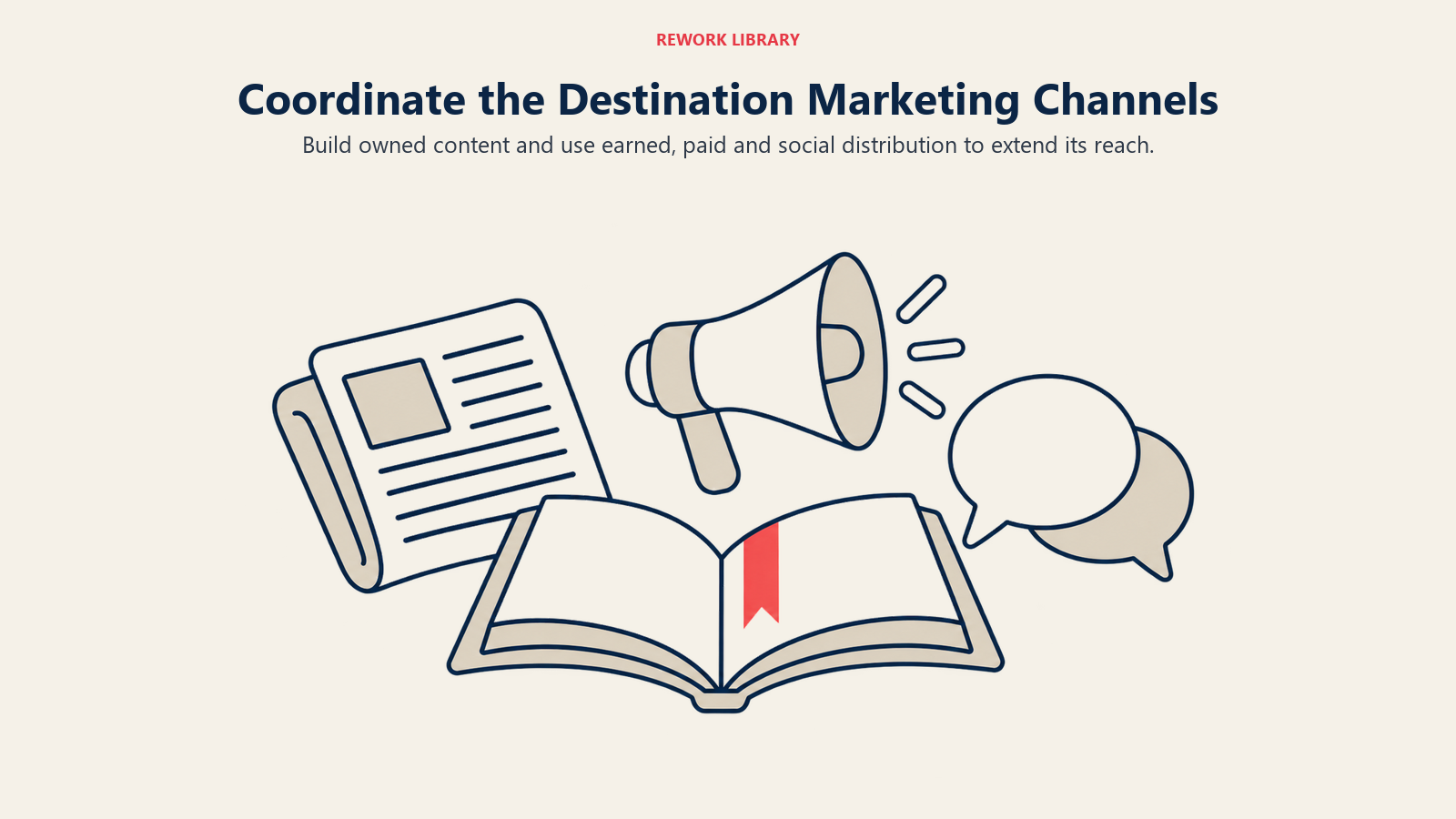
Authority building happens across multiple channels simultaneously:
Owned Channels:
- Website/Blog: Hub for all content. SEO-optimized destination guides and itineraries.
- Email Newsletter: Nurture relationships with destination-specific content, stories, and offers.
- Podcast/Video Series: Deep dives into destination topics building ongoing audience.
Owned channels give you control and direct access to your audience. Build these first.
Earned Channels:
- PR and Media: Getting featured in travel publications, broadcast segments, podcasts as destination expert.
- Influencer Partnerships: Working with travel creators who provide authentic destination coverage.
- Tourism Board Partnerships: Co-marketing with destination marketing organizations.
- Speaking and Events: Presenting at travel shows, expos, and conferences.
Earned channels leverage other people's audiences and credibility. They amplify your authority signals.
Paid Channels:
- Search Ads: Capturing high-intent destination searches.
- Social Advertising: Awareness campaigns targeting destination interests.
- Sponsorships: Supporting travel publications, events, or communities.
- Display/Programmatic: Retargeting destination researchers.
Paid channels accelerate awareness and capture demand. They work better when layered on top of strong owned and earned presence.
Social Channels:
- Instagram: Visual destination showcasing and inspiration.
- Facebook: Community building and detailed content sharing.
- Pinterest: Trip planning and idea discovery.
- YouTube: Destination video content and vlogs.
- TikTok: Short-form destination discovery for younger travelers.
Social channels meet travelers where they spend time. Organic reach has declined, but engaged communities still provide value.
Effective destination marketing coordinates all channels toward building authority, not just driving clicks.
Building Destination Authority
Authority isn't accidental. It's built systematically:
Content Depth and Quality Signals:
Shallow content doesn't build authority. Google's algorithm (and human readers) recognize comprehensive, well-researched content. Your Peru guide should be 5,000+ words, covering every aspect in depth with first-hand knowledge evident throughout.
Quality signals:
- Length and comprehensiveness
- Original photography and media
- Regular updates showing current knowledge
- Specific details demonstrating experience
- Cited sources and attribution
Topical Authority Through Comprehensive Coverage:
Cover every angle of your destination:
- Planning and logistics guides
- Itinerary examples across trip types
- Destination deep-dives on specific regions
- Activity and experience guides
- Cultural and historical context
- Practical tips and insider knowledge
Google rewards sites demonstrating topical authority through comprehensive, interconnected content. One great article doesn't build authority, 100 great articles do.
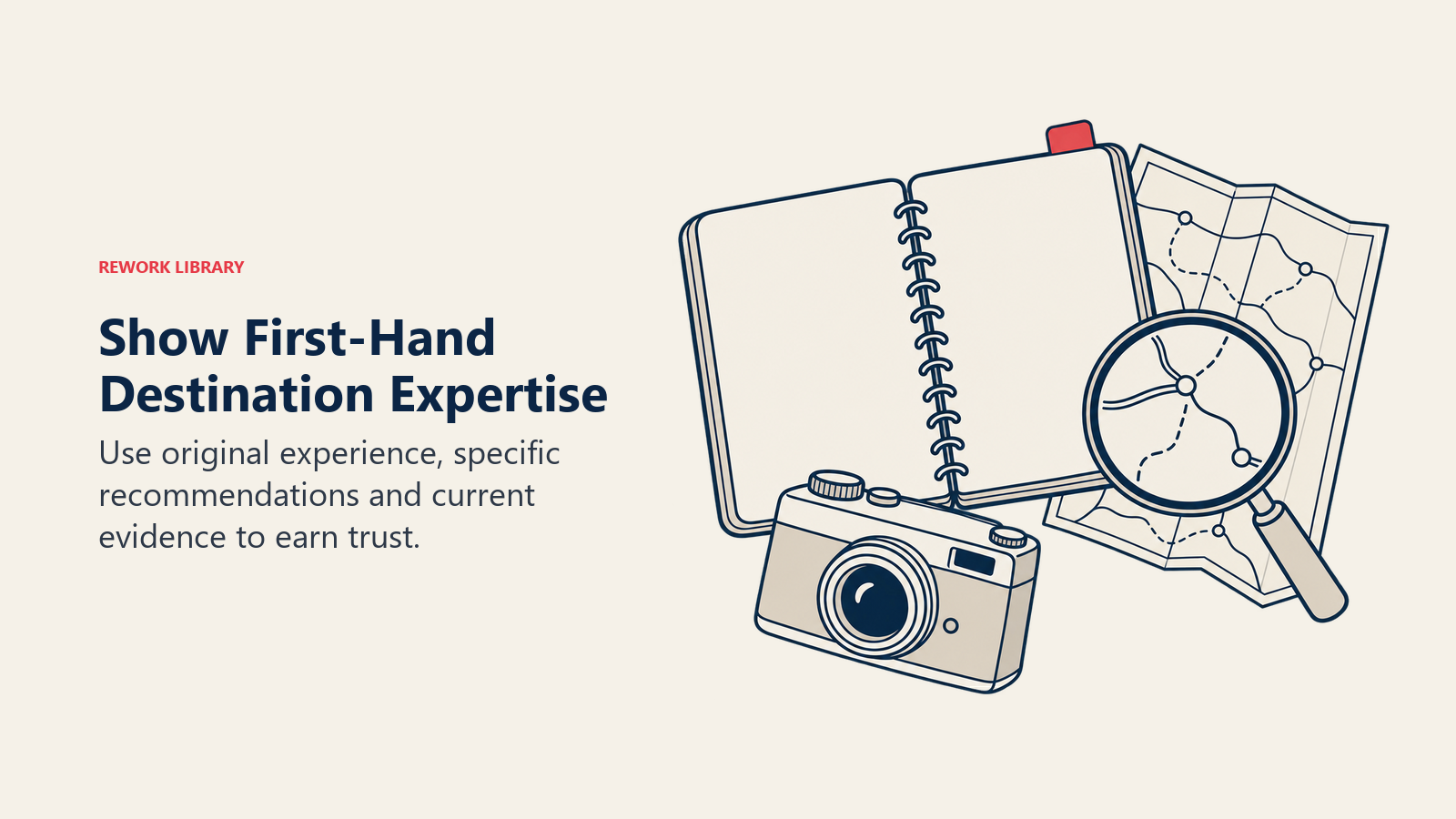
First-Hand Experience Demonstration:
Prove you're not just aggregating information from other sites:
- Original photography from your trips
- Personal stories and anecdotes
- Specific recommendations with context
- Updates based on recent visits
- Relationships with local people and businesses
Anyone can rewrite Lonely Planet. Demonstrating genuine expertise requires showing, not telling.
Expert Positioning and Credentials:
Highlight qualifications that establish expertise:
- Years operating in the destination
- Number of trips led personally
- Professional credentials and certifications
- Awards and recognition
- Partnerships with local organizations
- Team member backgrounds and experience
Authority comes from proven track record, not self-proclaimed expertise.
Multi-Destination Portfolio Marketing
Managing authority across multiple destinations requires strategic resource allocation:
Pillar Destinations: 2-3 destinations where you invest heavily in authority building. Comprehensive content, strong supplier relationships, regular trips, deep expertise. These drive majority of your inquiries.
Secondary Destinations: 5-10 destinations where you maintain solid content and presence but don't dominate. Good itineraries, regular departures, serviceable authority.
Opportunistic Destinations: 10-20 destinations you offer but don't actively promote. Customer-requested or fill-in offerings. Minimal marketing investment.
Don't spread resources evenly. Concentrate on pillars, maintain secondaries, and let opportunistic destinations ride on your broader brand.
Partnership Strategies
Leverage partnerships to expand reach and credibility:
DMO (Destination Marketing Organization) Partnerships:
National and regional tourism boards want operators promoting their destinations. They offer:
- Co-marketing funds and support
- Familiarization trip opportunities
- PR and media connections
- Content collaboration
- Event and trade show support
Build relationships with DMOs in your key destinations. They're motivated partners.
Tourism Board Collaborations:
Similar to DMOs but often more regional or specialized. Great for niche positioning and local credibility.
Hotel and Supplier Co-Marketing:
Properties and experience providers want promotion too. Create co-branded content, shared advertising, or bundled promotions that benefit both parties.
Complementary Brand Partnerships:
Partner with non-competing brands serving similar customers:
- Outdoor gear companies (for adventure operators)
- Travel insurance providers
- Photography education brands
- Language learning apps
- Cultural organizations
These partnerships extend reach without direct competition.
Measurement Framework
Destination marketing requires patience, but track leading indicators:
Awareness Metrics:
- Organic search traffic to destination content
- Social media followers and engagement
- Email list growth
- Brand search volume
- Media mentions and PR placements
Consideration Metrics:
- Time on site and pages per visit
- Content engagement (downloads, video views)
- Email open and click rates
- Destination page views before inquiry
- Returning visitors percentage
Inquiry Attribution:
- Traffic source for inquiry submissions
- First-touch and last-touch attribution
- Content consumed before inquiry
- Keyword rankings for destination terms
Brand Health Indicators:
- Share of voice in destination space
- Net Promoter Score
- Customer testimonials mentioning expertise
- Social sentiment and review quality
- Organic vs paid traffic ratio
Destination marketing delivers returns over 12-24 months, not 30 days. Measure progress, not immediate conversion.
Budget Allocation for Sustainable Growth
Recommended destination marketing investment by revenue stage:
$0-$2M Revenue: 15-20% of revenue on marketing, with 60% toward content and owned channels, 40% to paid acquisition.
$2M-$10M Revenue: 12-15% of revenue, shifting toward 50/50 content vs paid as authority compounds.
$10M+ Revenue: 10-12% of revenue, with increasing efficiency from accumulated authority. More budget toward paid channels layered on strong organic presence.
Within destination marketing specifically, allocate:
- 40% to content creation (writing, photography, video)
- 30% to distribution and amplification (paid social, PR, partnerships)
- 20% to SEO and technical optimization
- 10% to community building and engagement
Adjust based on your stage and competition, but remember: authority is built through consistent investment over years, not sporadic campaigns.
Related Articles

Business Consultant
On this page
- Destination Marketing Fundamentals
- Strategic Positioning Framework
- The Destination Content Pyramid
- Channel Strategy for Destination Marketing
- Building Destination Authority
- Multi-Destination Portfolio Marketing
- Partnership Strategies
- Measurement Framework
- Budget Allocation for Sustainable Growth
- Related Articles