Booking System Integration - 2026 Complete Guide
Turn this article into takeaways for your work.


Each assistant summarizes the article only for you and suggests best practices for your work.
A guest tries to book your Bali villa on your website. It shows available. They click confirm. Payment processes. Then you discover it was already sold through Airbnb yesterday. Now you're calling guests to cancel, issuing refunds, and dealing with angry reviews. This disaster started with poor system integration.
Modern travel distribution through direct booking strategy and OTA partnership strategy demands real-time synchronization across multiple platforms. Your website, OTA channels, GDS connections, and direct sales team all need to see the same inventory simultaneously. When systems don't talk to each other properly, you either oversell or undersell. Both cost you money and reputation.
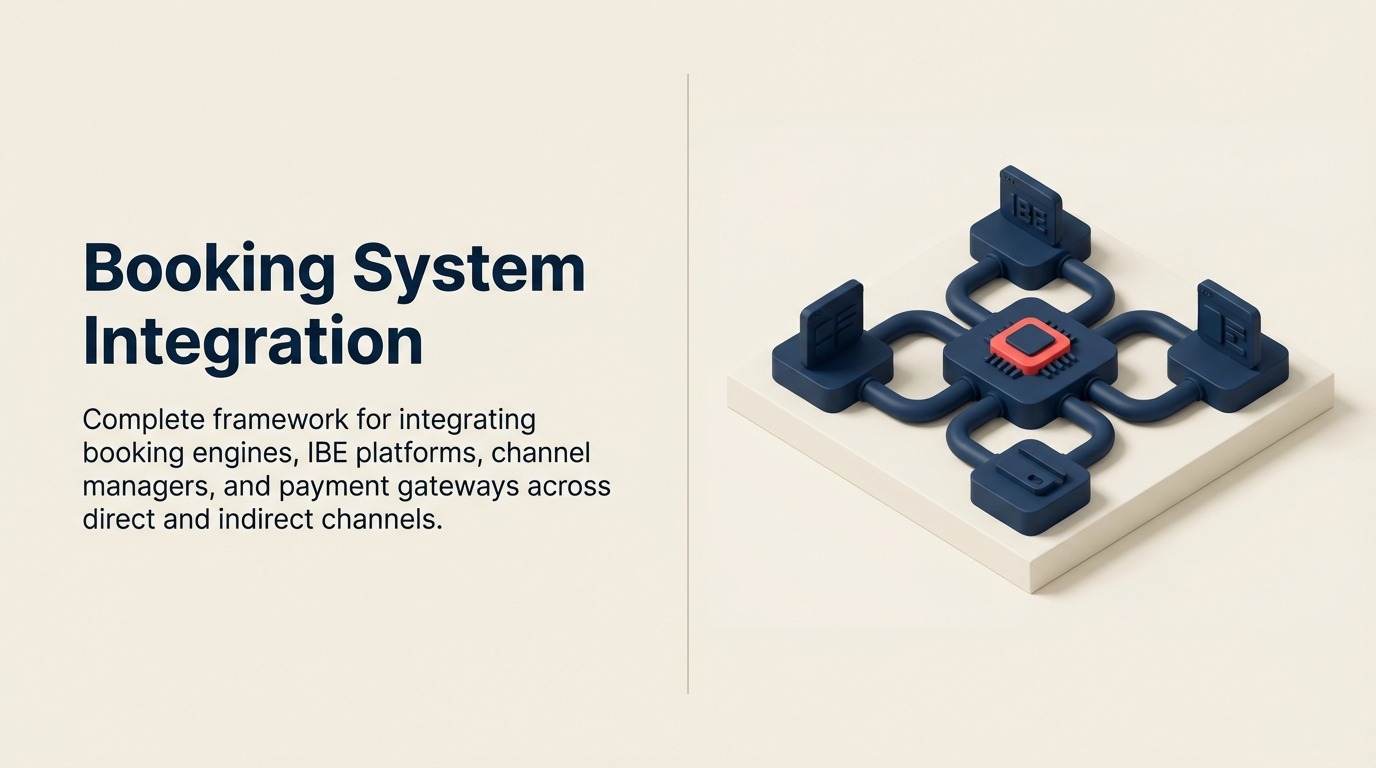
Smart integration creates seamless booking flows while maintaining data integrity across your entire technology stack.
The Travel Technology Stack
Your booking ecosystem consists of layers that must communicate flawlessly. At the foundation sits your Property Management System (PMS) or tour inventory system. This is your source of truth for availability and rates.
Above that, channel managers distribute inventory across platforms. They sync availability to OTAs, GDS, and direct channels. When a booking occurs anywhere, the channel manager updates all other systems instantly to prevent double-bookings.
Booking engines enable direct reservations. Internet Booking Engines (IBE) on your website let travelers book without human intervention. These engines query your PMS or channel manager for real-time availability and pricing.
CRM systems through travel CRM implementation track the relationship beyond the transaction. After a booking completes, guest data flows to your CRM for pre-trip communication, upselling, and post-trip nurture.
Payment gateways process transactions securely. They integrate with booking engines and PMS to automatically update payment status and trigger confirmations.
When these systems integrate properly through travel automation tools, data flows automatically: booking → payment → confirmation → CRM → accounting. Manual entry disappears. Errors drop to near zero. Your team focuses on service, not data shuffling.
Booking Engine Types
IBE platforms for direct bookings live on your website through booking engine optimization. Travelers select dates, choose room types or tours, add extras, and complete payment without contacting you. Modern IBEs like Bokun, Rezdy, and Checkfront offer user-friendly interfaces with upsell prompts and mobile optimization.
The best IBEs load fast, work perfectly on mobile using mobile booking optimization, and guide users smoothly from search to confirmation. They should suggest relevant add-ons, display trust signals like reviews, and minimize steps between interest and payment.
GDS connections through GDS channel management reach travel agents globally. Amadeus, Sabre, and Travelport connect your inventory to tens of thousands of travel agents worldwide. If you're a hotel or tour operator wanting wholesale distribution, GDS connectivity is essential.
But GDS integration isn't simple. You typically work through aggregators or technology providers who translate your inventory into GDS formats. Transaction fees range from $8-12 per booking. You're paying for massive distribution reach.
OTA integrations with Booking.com, Expedia, Airbnb, and Viator require either XML connections or channel manager middleware. Direct XML feeds give you more control but require technical resources to build and maintain. Channel managers provide simpler integration at monthly subscription costs.
Custom booking systems built specifically for your business offer maximum flexibility but require significant development investment. Large hotel chains and tour operators with unique requirements sometimes build proprietary systems. For most businesses, commercial platforms are more cost-effective.
Channel Manager Integration
Channel managers like SiteMinder, RateGain, and D-EDGE solve the synchronization problem. You update rates and availability in one central system. The channel manager pushes changes to all connected channels simultaneously.
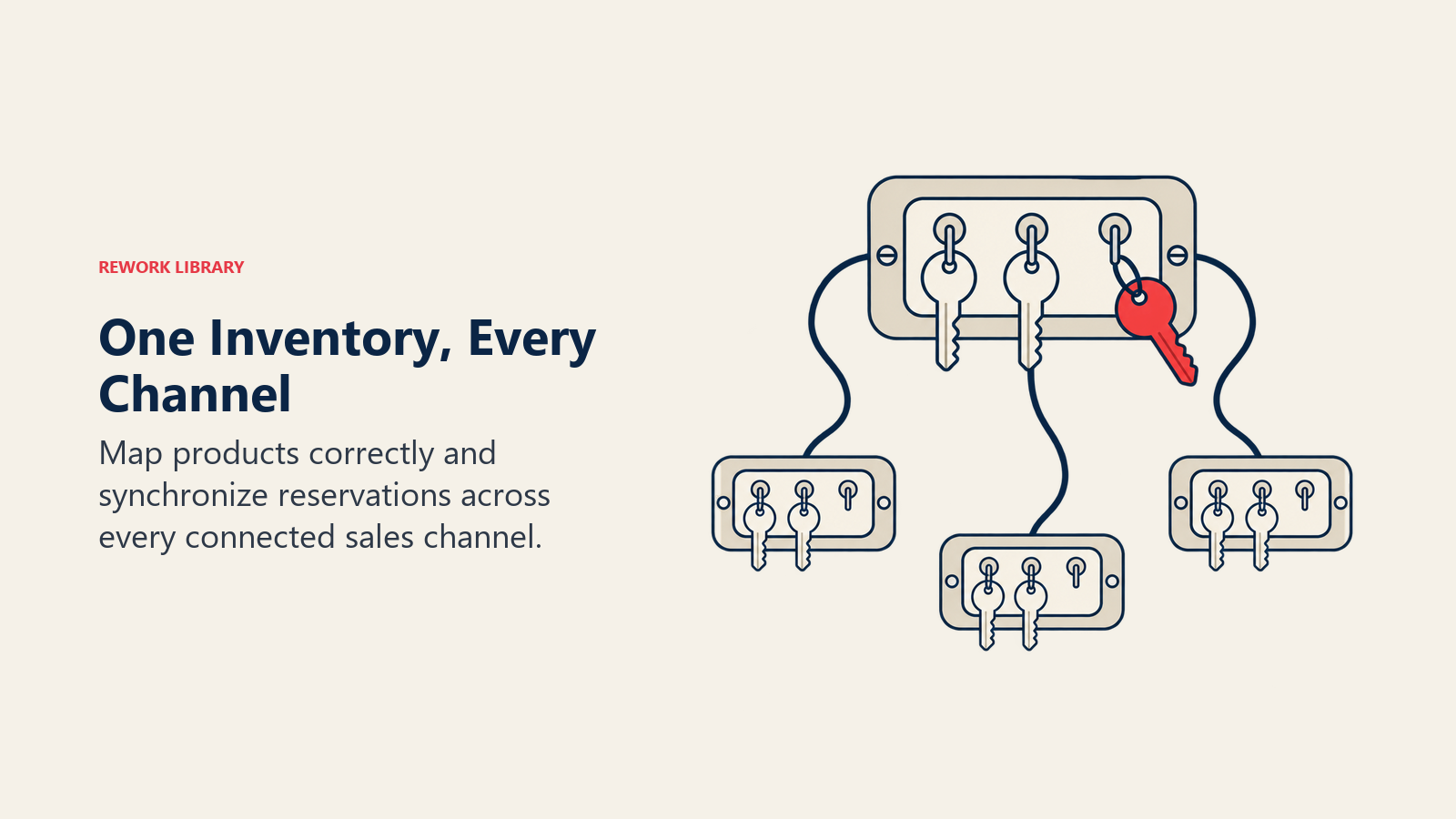
This two-way synchronization prevents overbookings. When a reservation comes through Booking.com, the channel manager receives the booking via XML, updates your PMS, and closes availability on all other channels for those dates.
The setup requires mapping your room types or tour products to each channel's categories. Your "Deluxe Ocean View Room" might map to "Superior Double with Sea View" on one OTA and "Deluxe King Ocean Facing" on another. Accurate mapping ensures travelers get what they booked.
Rate parity maintenance is simpler with channel managers. You set base rates centrally. The channel manager applies channel-specific markups or commissions automatically. If you raise rates 10%, all channels update instantly.
But channel managers aren't perfect. Sync delays of 15-30 seconds occasionally cause race conditions where simultaneous bookings on different channels create brief availability conflicts. Quality channel managers resolve these automatically, but monitoring helps catch edge cases.
API vs iFrame Implementations
iFrame embedding is the fastest implementation. You paste code into your website, and the booking engine appears in an embedded window. Setup takes hours, not weeks. The booking interface is maintained by the provider, so updates happen automatically.
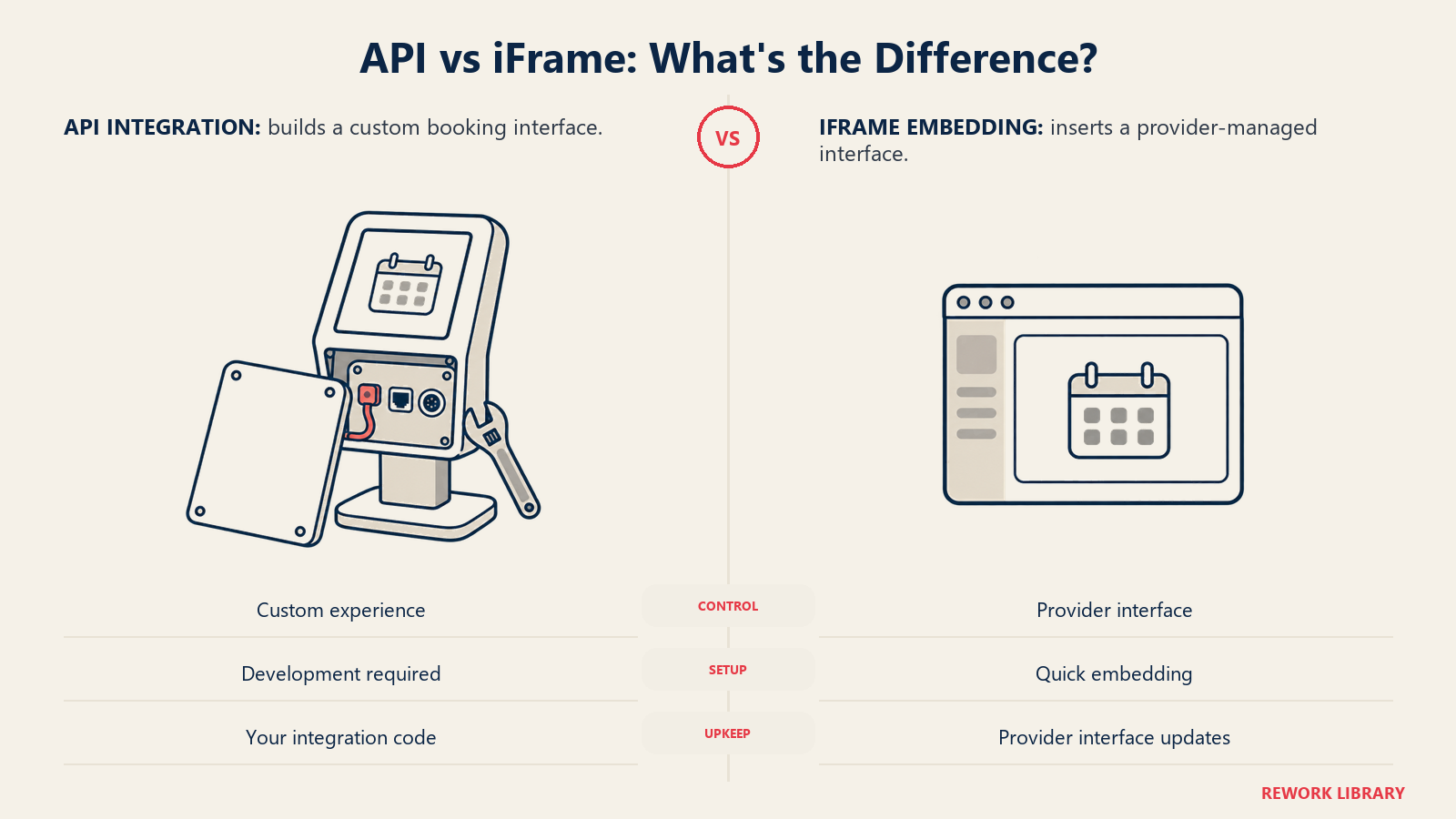
The downside is limited control over user experience. The embedded interface may not match your site's design perfectly. You're dependent on the provider's feature roadmap. Some travelers distrust iframes, worrying about security.
Native API integrations give you complete control. You build the user interface exactly how you want. The booking flow matches your brand perfectly. You can add custom features and optimize the experience based on your data.
But API integration requires development resources. You're building the entire front-end. When the booking engine updates its API, you need to modify your integration. Ongoing maintenance is your responsibility.
Hybrid approaches combine both. Use iframes for complex features like calendar availability and payment collection. Build custom interfaces for search, product display, and promotional content. This balances development effort with control.
Most small to mid-sized travel businesses start with iframes and migrate to API integration when booking volume justifies the investment.
Real-Time Availability Sync
Inventory management across channels requires centralized control. Your PMS or tour system holds the master inventory. Channel managers replicate it across platforms. When availability changes, updates propagate within seconds.
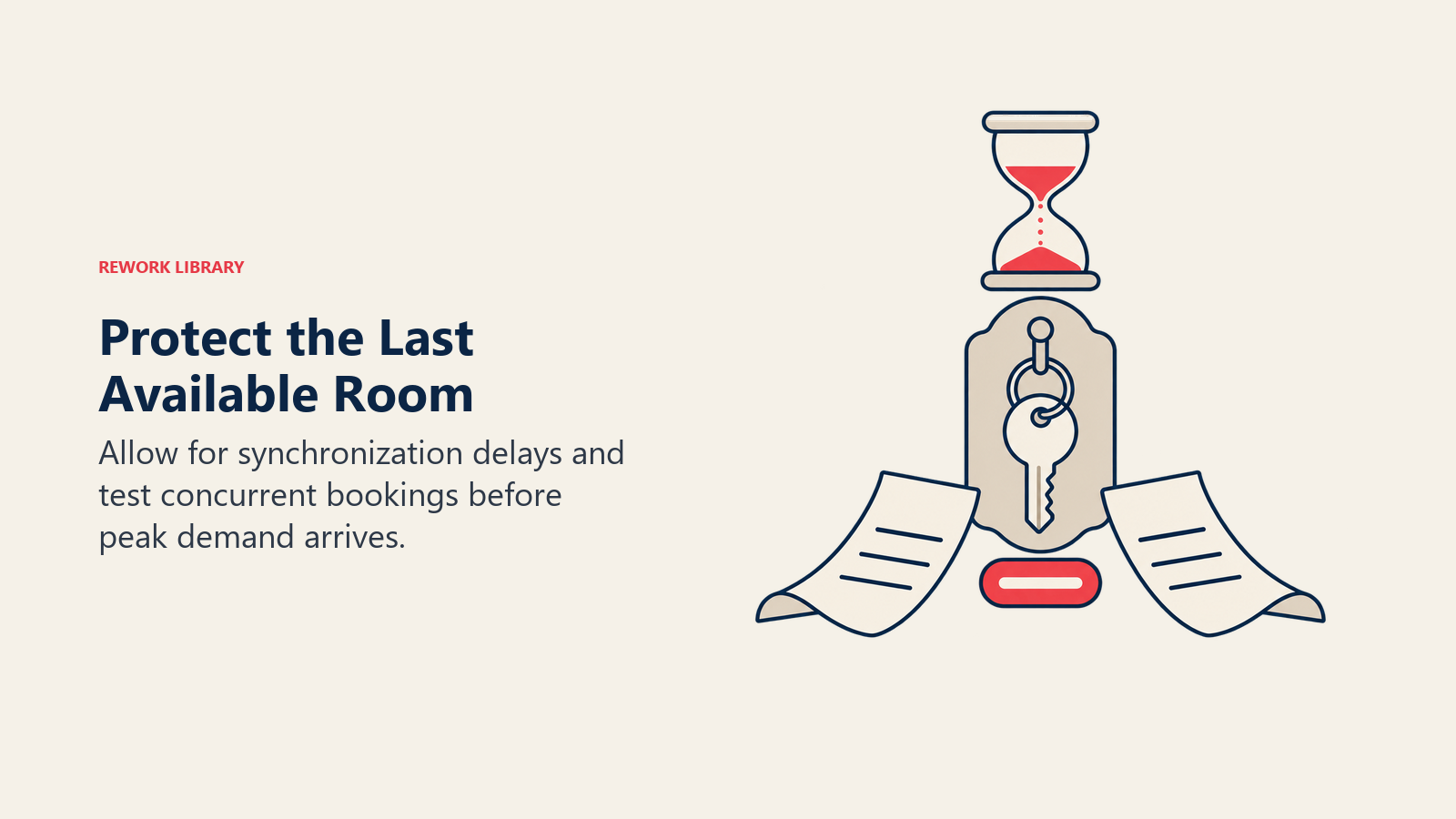
But network latency and API rate limits create small delays. A booking on one channel takes 5-30 seconds to reflect on others. During high-demand periods, this creates risk of simultaneous bookings for the last available unit.
Cache strategies help manage this. Instead of querying the PMS every time someone searches, booking engines cache availability for 30-60 seconds. This reduces server load and speeds up searches. But it means availability displayed to users might be slightly stale.
Conflict resolution protocols handle the rare cases when overselling occurs. Quality systems detect conflicts immediately and either automatically reassign inventory or alert operations teams for manual intervention. Some systems maintain buffer inventory to cover synchronization gaps.
Test your sync reliability during peak periods. Book simultaneously on multiple channels and verify updates propagate correctly. Monitor sync logs for errors. Most integration issues surface under load, not during casual use.
Payment Gateway Integration
Stripe, PayPal, and Authorize.net dominate travel payment processing. They offer international currency support, subscription billing for deposits, and fraud protection. Integration is straightforward with pre-built libraries for most booking platforms.
Stripe excels at developer experience and international payments. Their documentation is excellent. They support 135+ currencies and handle currency conversion automatically. Payment links can be generated programmatically and sent via email for installment payments.
PayPal remains popular because travelers trust it. The brand recognition reduces payment hesitation. But their fees are higher (2.9% + $0.30 for US transactions) and their interface forces users through PayPal's branded flow.
Travel-specific payment solutions like TravelBank and Flywire handle complex scenarios: multi-currency payments, installment schedules, group payment splitting, and supplier payouts. They're built for travel's unique needs but charge premium fees.
Installment plan support matters in travel where bookings cost thousands. Your payment gateway should handle scheduled payments: deposit on booking, second payment 60 days before departure, final payment 30 days out. Automated reminders and processing reduce administrative burden.
Security and PCI compliance are non-negotiable. Never store credit card numbers in your own databases. Use tokenization where the payment gateway provides a token you can charge later without touching raw card data. This keeps you out of PCI compliance scope.
Multi-Property & Multi-Product Booking
Hotels with multiple properties need booking engines that handle property selection seamlessly. Travelers shouldn't need to visit different websites or fill separate forms for your beach resort versus city hotel.
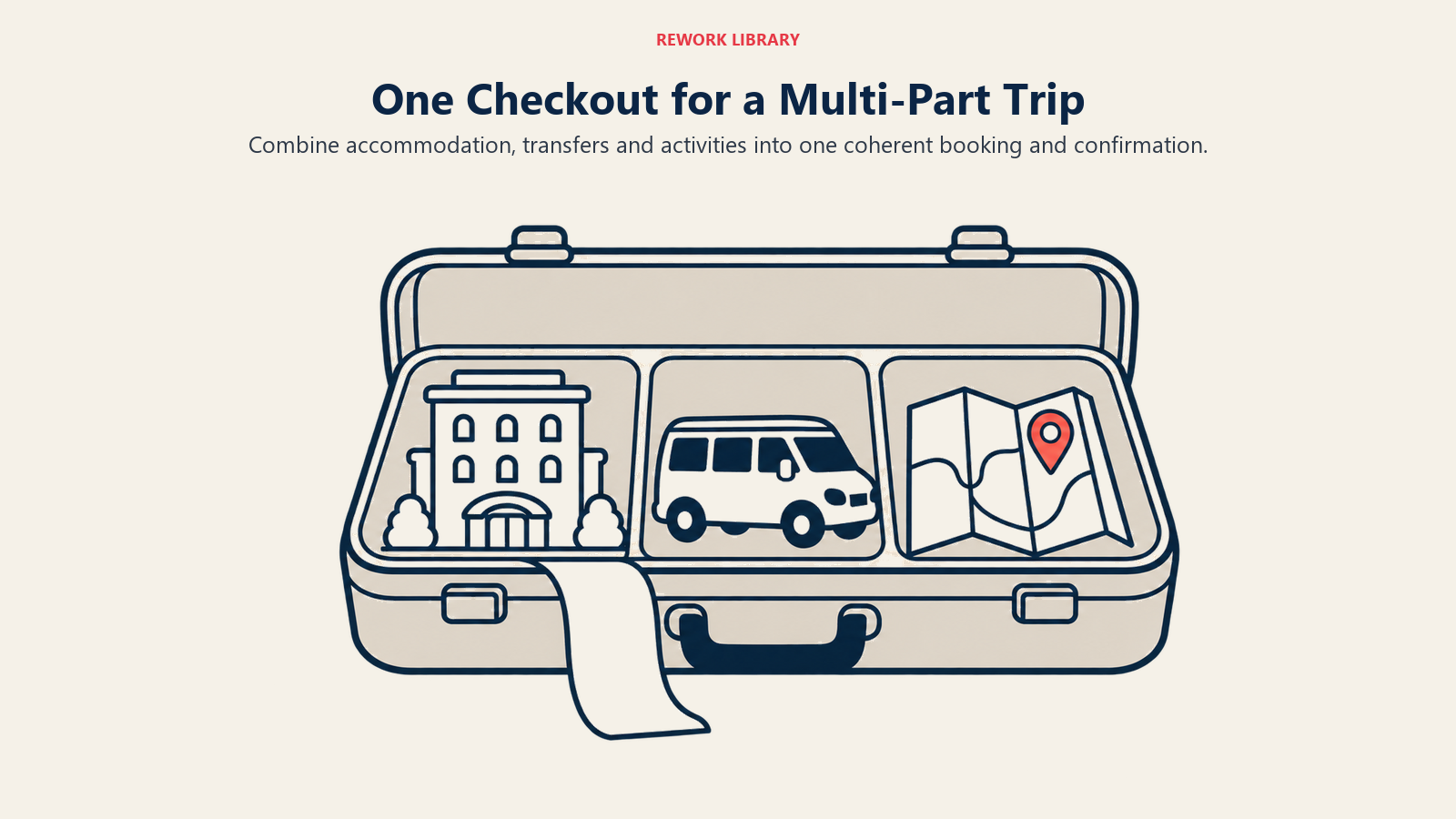
Cross-property availability searches let guests compare options. They enter dates and see which of your properties have availability. The booking engine shows rates across properties, enabling easy comparison.
Multi-product scenarios are even more complex. A tour operator might sell 3-day tours, 7-day tours, optional add-ons, airport transfers, and pre/post-accommodation. The booking engine needs to bundle these products logically.
The checkout flow should feel unified despite complexity. One cart. One payment. One confirmation. Behind the scenes, the booking might trigger separate transactions with multiple suppliers, but travelers see simplicity.
Dynamic packaging capabilities let you combine flights, hotels, transfers, and activities into custom packages. This requires integration with multiple supplier systems, complex pricing logic, and sophisticated booking workflows. Platforms like Travelfusion and Ratehawk specialize in this.
Mobile Booking Integration
Responsive design is mandatory. Over 60% of travel searches happen on mobile devices. If your booking engine doesn't work flawlessly on smartphones, you're losing more than half your potential direct bookings.
But responsive isn't enough. Mobile-optimized booking flows reduce steps. Autofill for passenger details. One-tap payment with Apple Pay or Google Pay. Minimal typing required. Every unnecessary tap increases abandonment.
Progressive Web Apps (PWA) offer app-like experiences without requiring downloads. Travelers can add your booking interface to their home screen. It loads instantly. Works offline for browsing. Feels native.
Native mobile apps make sense for high-frequency booking scenarios like tours and activities operators with loyal customer bases. Apps enable push notifications for flash sales, location-based recommendations, and instant booking without browser friction.
Test your mobile booking flow ruthlessly through travel checkout optimization. Complete actual bookings on various devices. Time how long each step takes. Identify where users get confused or frustrated. Optimize relentlessly because mobile conversion rates lag desktop by 30-40% in travel.
Booking Data Flow & Analytics
Booking confirmation should trigger automated data flows to multiple systems simultaneously. The CRM receives guest details for pre-trip communication. Accounting gets financial data for invoicing. Operations receives service details for delivery.
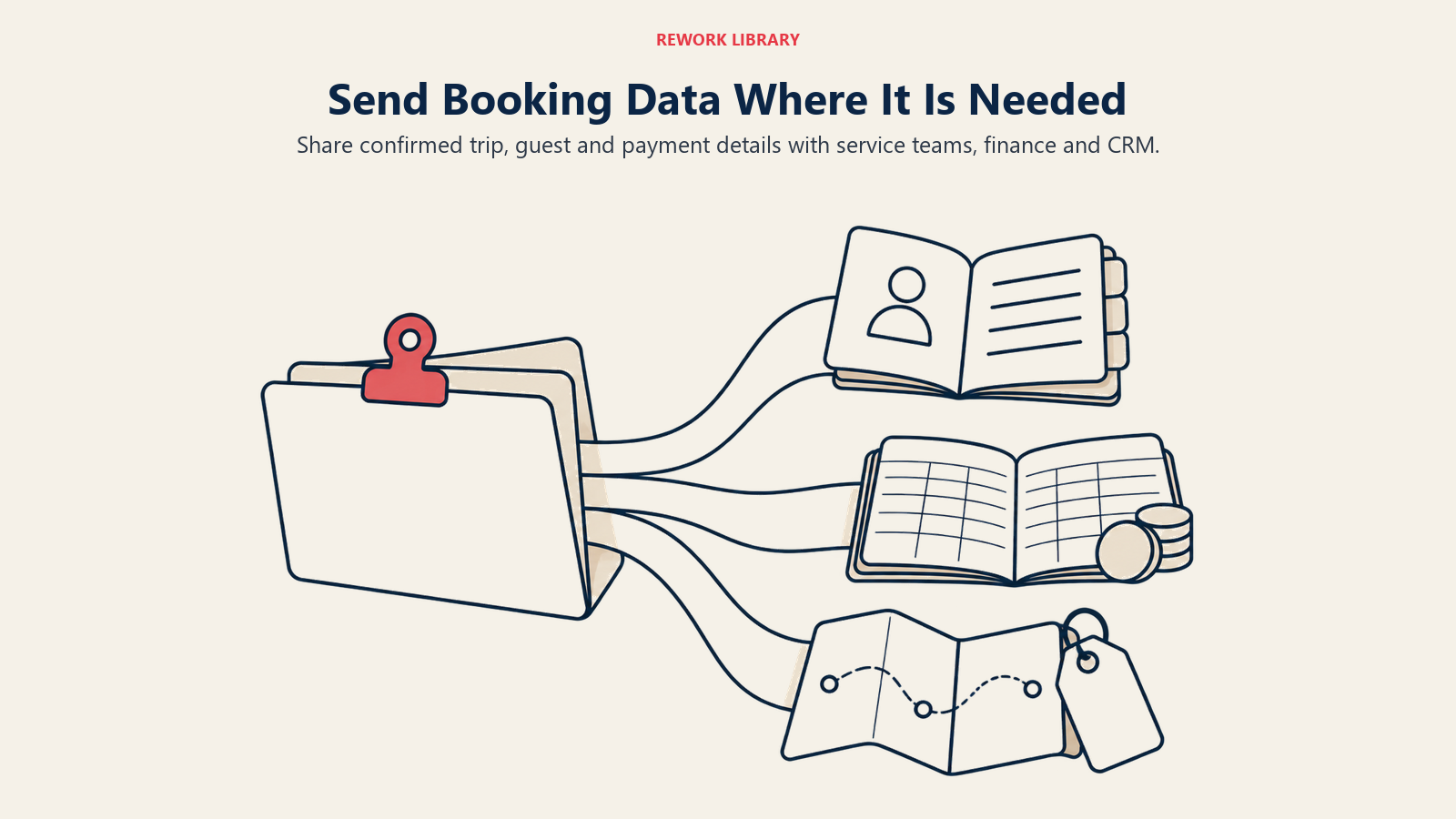
These flows should be real-time and bidirectional. When payment status updates in accounting, the booking record should reflect it. When operations modifies services, pricing should recalculate automatically.
Analytics integration through travel data analytics feeds business intelligence. Every booking contains valuable data: source channel, booking window, traveler demographics, selected products, revenue. This data should flow to your analytics platform for travel KPI dashboard and reporting.
Event tracking captures the complete booking journey. Which search filters did they use? What products did they view? What caused them to abandon and return? Where did they hesitate in checkout? This behavioral data reveals optimization opportunities.
Data quality monitoring ensures accurate reporting. Set up alerts for anomalies: unusually high cancellations, revenue spikes, sync failures, or payment problems. Catch integration issues before they compound.
Common Integration Pitfalls
Rate parity violations happen when prices aren't consistent across channels. Your website shows $200 but an OTA shows $180 for the same room on the same night. This violates OTA agreements and damages direct booking conversion.
Monitor rate parity regularly. Most channel managers include parity checking tools. Set alerts for discrepancies. When found, investigate immediately - often caused by incorrect markup settings or failed rate updates.
Sync delays during high-traffic periods cause overselling. Your systems can't keep up when hundreds of searches happen simultaneously. Invest in infrastructure that scales. Cache aggressively. Use content delivery networks.
Currency conversion errors create pricing confusion. A €200 room might display as $220 on your website but $215 on an OTA due to different exchange rates or timing. Standardize on a currency provider and update rates consistently.
Failed payment handling needs graceful error management. When a credit card declines, your system should offer alternatives: try another card, use PayPal, pay via bank transfer. Don't just show "Payment Failed" and abandon the customer.
Integration breaks occur when third-party providers update APIs without warning. Monitor integration health continuously. Set up synthetic transactions that test the entire booking flow hourly. Detect breaks before customers do.
Conclusion
Booking system integration is the technical foundation for modern travel distribution. When done right, it creates seamless experiences for travelers, prevents costly errors, and enables you to sell across multiple channels without operational chaos.
Invest in quality integration from the start. Choose platforms with proven reliability. Test thoroughly under load. Monitor continuously. The cost of poor integration - lost bookings, oversells, manual workarounds - far exceeds the cost of doing it properly.
Related Articles:

Business Consultant