Tour Operator vs Travel Agency: Business Models and Strategic Positioning
Turn this article into takeaways for your work.


Each assistant summarizes the article only for you and suggests best practices for your work.
When Marcus launched his travel business in 2019, he called it a "boutique tour operator" because that sounded more impressive than "travel agency." Three years later, he discovered this positioning error had cost him over $400,000. His website promised custom-designed adventures, but his business model was built on commissions from suppliers. Customers expected operator-level service at agency-level margins. The mismatch nearly killed his company.
The confusion between tour operators and travel agencies isn't just semantic, it's strategic. Each model has different economics, operational complexity, capital requirements, and competitive advantages. Getting this wrong shapes everything from your pricing to your hiring to your growth potential.
Core Definitions
Let's start with clear definitions:
Travel Agency: An intermediary that connects travelers with existing travel products and services. Agencies don't create trips, they book them. You want a flight to Paris, hotel in the Marais, and tickets to the Louvre? An agency accesses supplier systems, makes those bookings, and earns commission. The supplier owns the product; the agency provides access and service.
Tour Operator: A company that creates, packages, and delivers original travel experiences. Operators design itineraries, contract directly with on-ground suppliers, often employ guides and staff, and take responsibility for the entire experience. You book a 10-day Peru adventure with a tour operator, and they've designed that trip, negotiated hotel rates, hired the guides, and manage all logistics.
Hybrid Models: Many successful travel companies combine both. They operate signature group tours in core destinations while also booking individual travel using agency model. This diversifies revenue and leverages different margin opportunities.
The distinction isn't always clean, but understanding where you fall on the spectrum shapes your entire business strategy.
Business Model Comparison
The operational differences cascade through every aspect of the business:
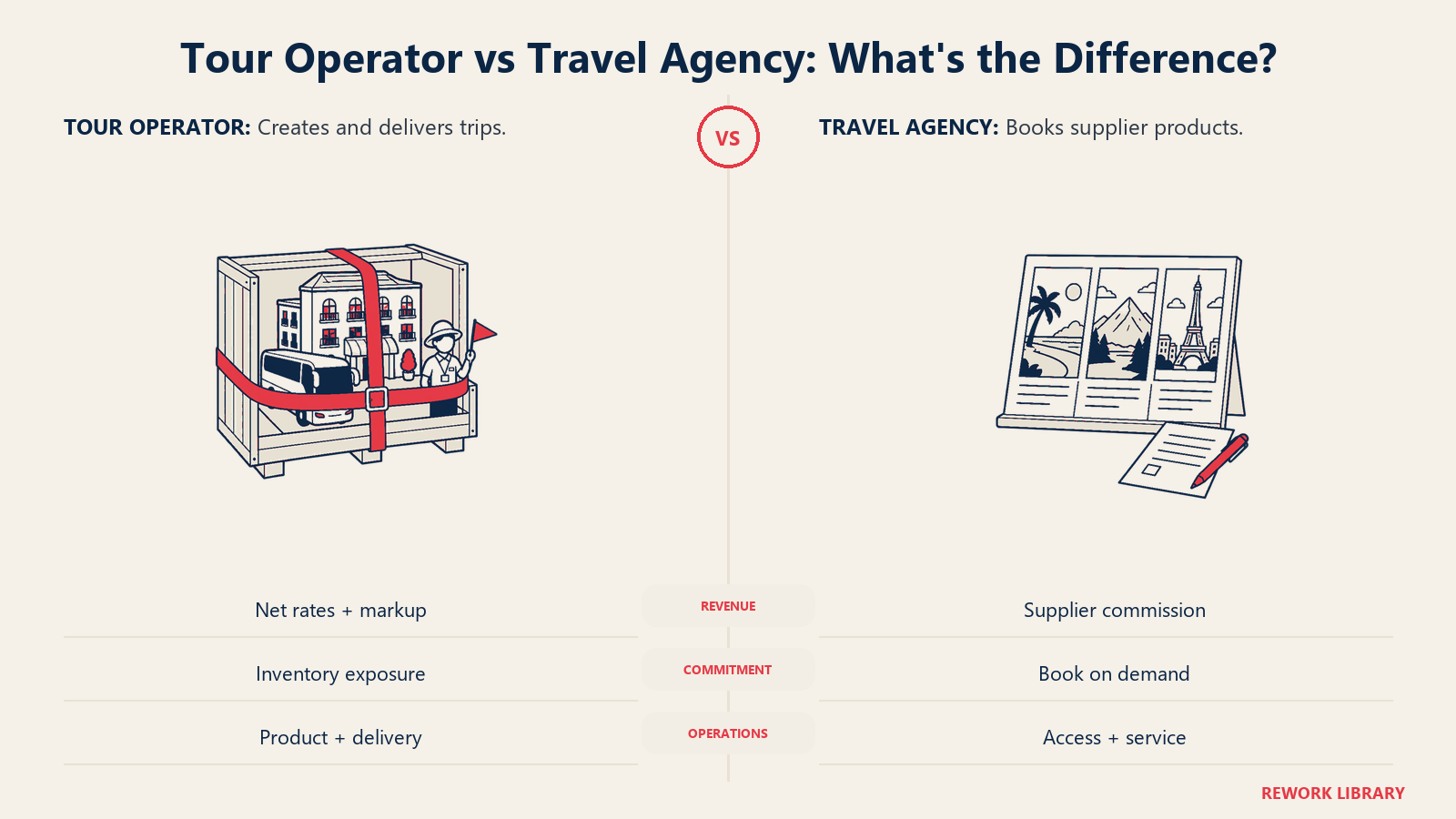
Revenue Models:
- Agency: Earns commission from suppliers (typically 10-15%). You sell a $5,000 package, you earn $500-$750. Simple, predictable, low-risk.
- Operator: Buys services at net rates and adds markup (typically 25-40%). You contract hotel at $150/night and sell at $225. More complex, higher margin, more risk.
Inventory Risk:
- Agency: Zero inventory risk. You book when the customer commits. If they cancel, you don't own unsold inventory.
- Operator: Significant inventory risk. You commit to hotel blocks, transport capacity, and guide time before customers book. Unsold inventory is dead cost.
Operational Complexity:
- Agency: Relatively straightforward. Access to booking systems, relationship management with suppliers, customer service.
- Operator: Highly complex. Product development, supplier contracting, operations management, quality control, guide training, crisis management.
Capital Requirements:
- Agency: Low capital needs. Main investments are technology, marketing, and team. Can start with $50,000-$100,000.
- Operator: High capital requirements. Need working capital for supplier deposits, inventory commitments, and operational infrastructure. Typically $200,000-$500,000+ to start.
Supplier Relationships:
- Agency: Transactional relationships. You're one of many booking channels. Limited negotiating power.
- Operator: Strategic partnerships. You're committing volume and bringing repeat business. Better terms, priority handling, customization options.
Profit Margin Potential:
- Agency: Thin margins (10-15%) but low risk. Scale through volume.
- Operator: Higher margins (25-40%) but more risk and complexity. Scale through operational excellence.
Neither model is universally better. The question is which aligns with your goals, capabilities, and market opportunity.
Strategic Advantages of Each Model
Understanding the inherent advantages helps you leverage your chosen model:
Agency Model Advantages:
Lower Risk, Faster Start: You don't need to design products, contract suppliers at scale, or manage complex operations. This means you can launch quickly with limited capital and test market response without huge commitment.
Easier Scaling: Adding new destinations or products is relatively simple, you gain access to new supplier systems and booking options. You're not building operational capacity; you're expanding your catalog.
Flexibility: Customer wants to change plans? Easier to accommodate when you're booking existing products versus managing committed inventory and contracted services.
Broader Offering: You can offer virtually any destination or trip type without being expert in all of them. You're curator, not creator.
Operator Model Advantages:
Higher Margins: Controlling the product and building direct supplier relationships yields 25-40% margins versus 10-15% for agencies. This margin expansion creates room for reinvestment and profitability.
Brand Control: You're not selling someone else's product, you're selling your designed experience. This allows authentic brand differentiation and premium positioning.
Unique Offerings: Agencies sell what everyone else sells. Operators create proprietary trips that competitors can't match. This reduces price sensitivity and builds loyal customer base.
Customer Ownership: You control the entire experience and the customer relationship. You're not just an intermediary; you're the provider. This drives higher repeat rates and referrals.
The agency model optimizes for efficiency and breadth. The operator model optimizes for margin and differentiation.
Operational Differences
The day-to-day operations look completely different:
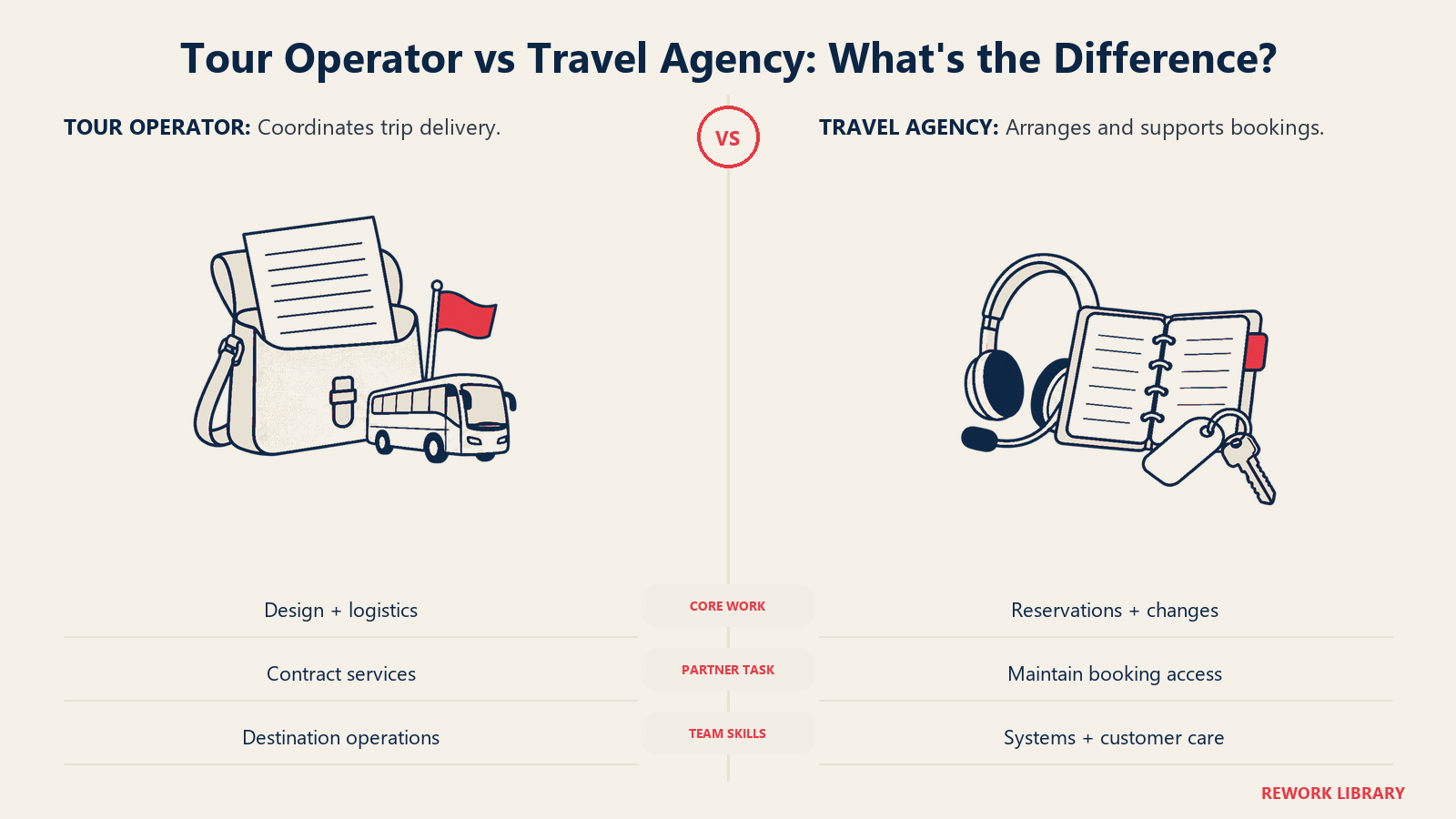
Agency Operations:
- Booking Systems: Primary tools are GDS (Global Distribution Systems) like Sabre or Amadeus, supplier booking portals, and CRM.
- Supplier Relationships: Maintaining preferred partnerships with consolidators, wholesalers, and direct suppliers for best commission rates.
- Service Support: Helping customers navigate options, process bookings, handle changes and cancellations, and provide travel support.
- Key Skills: Systems proficiency, product knowledge, customer service, relationship management.
Operator Operations:
- Product Development: Designing itineraries, scouting destinations, testing experiences, refining based on feedback.
- Supplier Contracting: Negotiating net rates, securing inventory blocks, managing contracts and terms.
- Operations Management: Coordinating logistics, managing guides and local staff, quality control, handling on-trip issues.
- Key Skills: Destination expertise, logistics management, people management, crisis handling, product design.
Most agencies can run with 3-5 people at $1M-$2M in revenue. Most operators need 5-10 people at the same revenue level due to operational demands.
Licensing and Legal Requirements
The regulatory environment varies significantly:
Agency Licensing:
- Many states don't require seller of travel registration for pure agencies under certain thresholds
- Simpler compliance requirements
- Standard business insurance and errors & omissions coverage
- IATA accreditation optional but valuable for better supplier access
Operator Licensing:
- Most states require seller of travel registration for operators
- California, Florida, Hawaii, and Washington have strict bonding and registration requirements
- Need substantial liability insurance
- Must comply with consumer protection regulations
- International operations add complexity (local licensing, DMC regulations)
Legal compliance is non-trivial for operators. Budget $10,000-$25,000 annually for legal and insurance costs beyond standard business needs.
Technology Stack Differences
Your business model determines your technology investments:
Agency Technology Stack:
- GDS Access: Sabre, Amadeus, or Worldspan for flight, hotel, and car bookings
- CRM: Customer relationship management for inquiry tracking and follow-up
- Booking Tools: Supplier-specific booking portals and aggregators
- Communication: Email, phone, video consultation tools
- Accounting: Standard bookkeeping and commission tracking
Typical technology spend for agencies: $10,000-$30,000 annually depending on size.
Operator Technology Stack:
- Booking Engine: Custom or white-label booking system for your products
- Operations Management: Trip coordination, passenger manifests, supplier communication
- Inventory Systems: Tracking allotments, availability, and commitments
- CRM: More sophisticated sales and marketing automation
- Mobile Tools: Guide apps, passenger apps, check-in systems
- Accounting: Complex revenue recognition, supplier payment tracking, deposit management
Typical technology spend for operators: $30,000-$100,000+ annually for custom solutions.
The operator technology stack is significantly more complex and expensive.
Market Positioning Strategy
Your business model shapes how you position in the market:
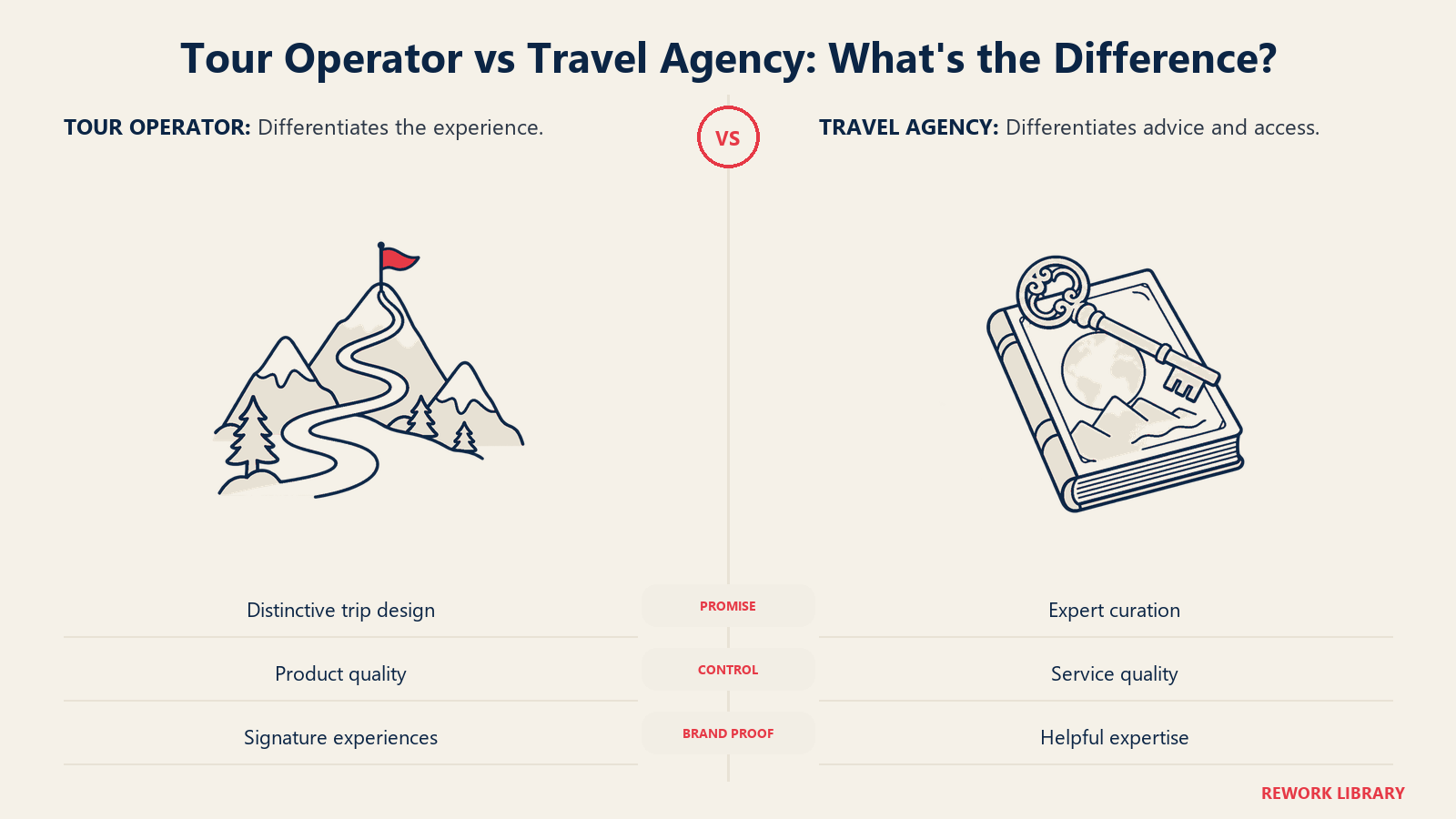
Agency Positioning Approaches:
- Specialization: Focus on specific customer segment (luxury, family, LGBTQ+, adventure)
- Service Excellence: Compete on expertise, responsiveness, and personalized planning
- Access: Offer exclusive deals, preferred partnerships, or hard-to-book properties
- Convenience: Make booking easy with technology and streamlined process
Agencies differentiate on service and access since products are largely commoditized.
Operator Positioning Approaches:
- Unique Experiences: Offer trips no one else has
- Expertise: Build authority in specific destinations or activity types
- Quality: Deliver exceptional experiences that justify premium pricing
- Values Alignment: Sustainable tourism, community impact, conservation focus
Operators differentiate on the actual product and experience since they control it.
Your positioning determines your marketing, pricing, and competitive strategy.
Evolution Path: Moving Between Models
Many travel companies evolve between models as they grow:
Agency to Operator Evolution:
You start as agency because it's lower risk. As you develop destination expertise and customer base in specific areas, you see opportunities to create better products than what's available. You start operating small group tours in your specialty areas while maintaining agency services for everything else.
This path requires:
- Capital for inventory commitments and operational infrastructure
- Operations expertise you probably don't have (hire it)
- Regulatory compliance and insurance
- Systems to manage both models simultaneously
Operator to Agency Evolution (less common):
Sometimes operators realize the operational complexity isn't worth it. You have great customer relationships but tired of managing logistics. You shift to curating and booking excellent existing products rather than operating your own.
This path is emotionally difficult (you're giving up control) but can improve profitability if your operations weren't world-class.
Hybrid Model Success
The most successful approach for many companies is intentional hybrid strategy:
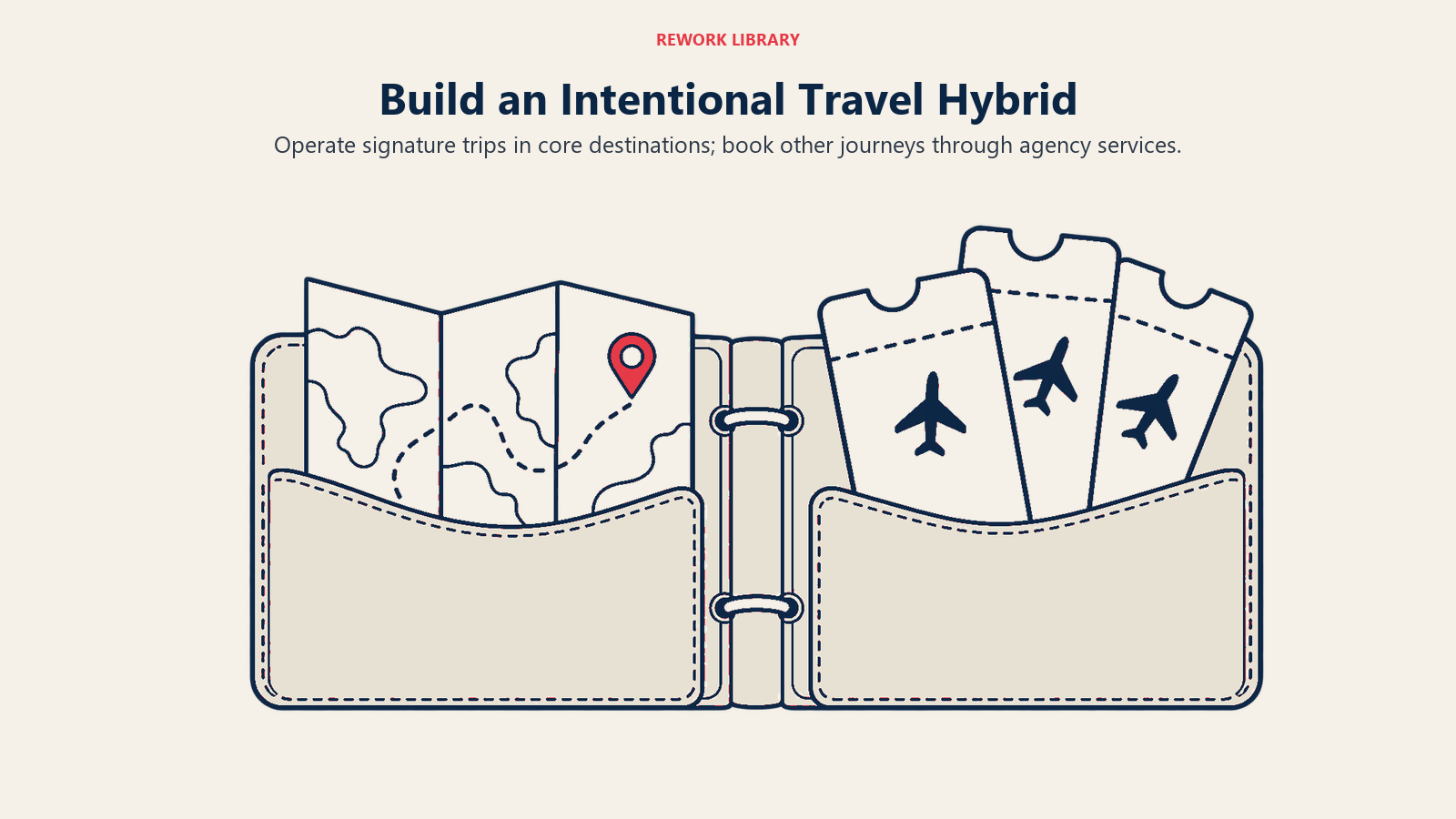
Core Operator Products: You operate signature group tours in 2-3 destinations where you have deep expertise, can commit volume, and deliver exceptional experiences. This builds brand and generates strong margins.
Agency Services: You book individual travel and destinations outside your operational focus. This serves customers who want to work with you but for different trips. It generates revenue without operational burden.
Clear Segmentation: You're explicit about what's an operated tour versus a booked trip. Different pricing, different positioning, different service levels.
The hybrid model maximizes revenue opportunity while managing operational complexity and capital requirements.
Related Articles

Business Consultant