Repeat Booking Strategy - Customer Lifetime Value Growth 2025
Turn this article into takeaways for your work.


Each assistant summarizes the article only for you and suggests best practices for your work.
Getting someone to book their first trip with you is expensive through travel marketing strategy. Getting them to book a second one? That's where the real business is built through effective customer segmentation.
The numbers tell the story. A repeat customer costs about five times less to secure than acquiring a new one. They spend 67% more on average. And they're far more likely to recommend your business to friends through loyalty programs.
But here's the thing: most travel businesses spend their entire budget chasing new customers while neglecting the people who've already said yes. That's like filling a bucket with a hole in it.
This guide shows you how to build a systematic approach to repeat bookings that transforms occasional travelers into loyal customers who return year after year.
Repeat Booking Economics
Let's start with the math that should shape your entire marketing strategy.
Customer acquisition cost (CAC) in travel typically runs between $200 and $500 per booking, depending on your channels and trip price points. That includes your advertising spend, sales team time, website costs, and everything else that goes into converting a stranger into a paying customer.
A repeat booking? You're looking at $40 to $100 in marketing costs. Maybe a targeted email campaign, a personalized offer, some retargeting ads. But you've already done the heavy lifting of building trust and delivering an experience.
The spending difference is just as dramatic. First-time customers book conservatively. They're testing you out, often choosing entry-level trips or shorter durations. Repeat customers know what they're getting. They book longer trips, add more inclusions, and upgrade more frequently.
Calculate your customer lifetime value (CLV) this way: average booking value × number of trips per customer × gross margin. For a tour operator with $3,000 average trips and 30% margins, a customer who books twice is worth $1,800 in gross profit. Three trips? You're at $2,700.
Industry benchmarks for repeat booking rates vary dramatically. Budget tour operators typically see 15-25% of customers return. Mid-range companies hit 20-40%. Luxury operators and specialized adventure companies can reach 40-60% repeat rates.
Where does your business sit? And more importantly, what would a 10-point increase in repeat rate mean for your revenue?
Setting repeat booking targets should account for your business model. If you offer bucket-list trips to exotic destinations, 30% might be excellent. If you run local food tours or weekend getaways, you should be targeting 50% or higher.
Identifying Repeat Booking Potential
Not all customers are created equal when it comes to repeat potential.
Some people book trips to Antarctica because it's a once-in-a-lifetime experience. They're not coming back for a second Antarctic adventure. Others book cooking classes in Tuscany because they love travel and cultural experiences. They're exactly who you want to identify and cultivate.
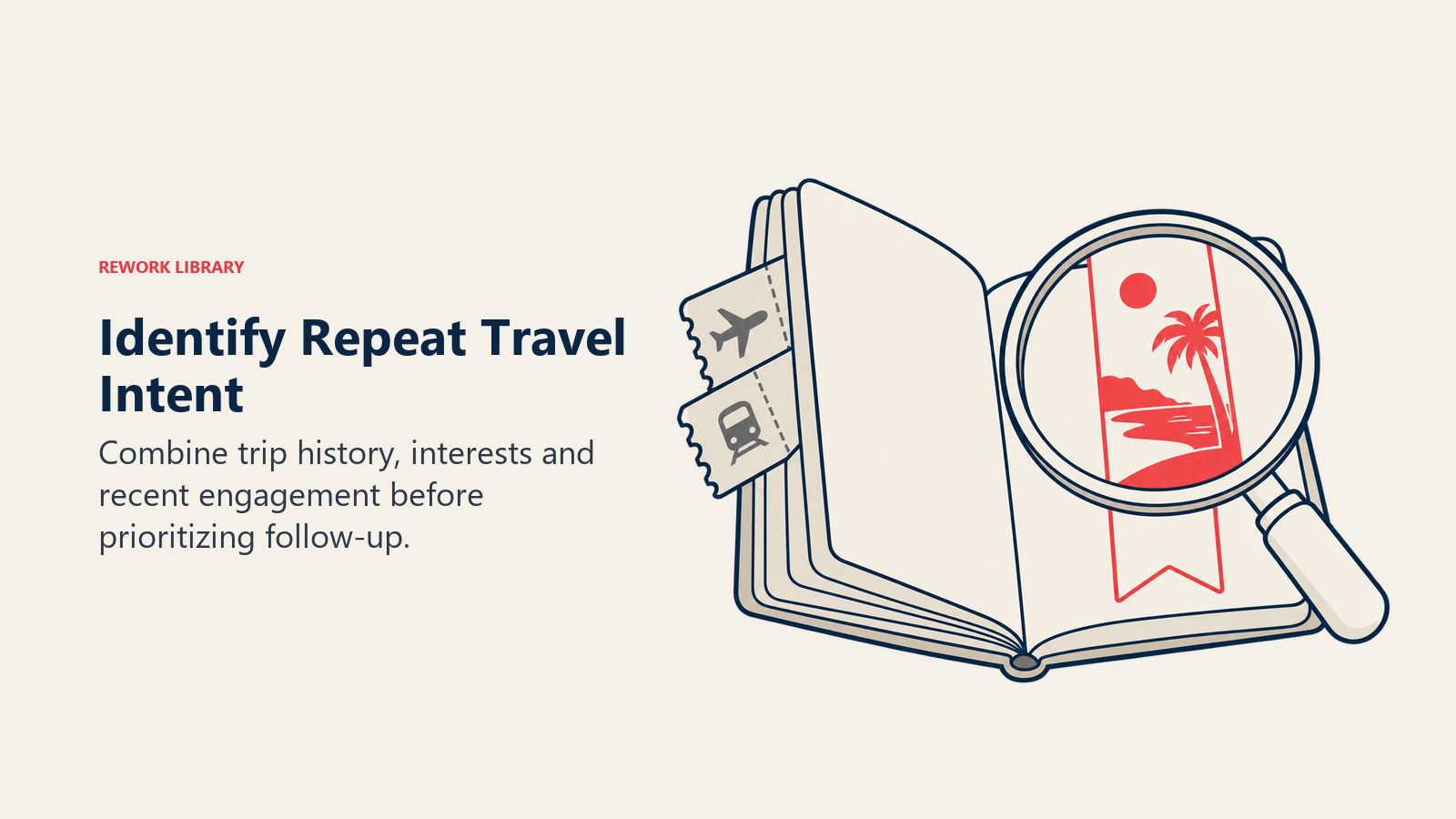
Start by segmenting your customer base into repeat likelihood categories. Look at travel frequency patterns in their booking history and profile data. Someone who's taken five international trips in the past three years is fundamentally different from someone who travels once every five years.
Analyze booking patterns beyond just frequency. What types of trips do they book? Are they adventure-seekers who progress to more challenging experiences? Cultural enthusiasts who want to explore different regions? Luxury travelers who prioritize service and comfort?
High-CLV profiles typically share common characteristics. They respond quickly to emails. They engage with your content between trips. They ask questions about future destinations. They refer friends without being asked.
Predictive analytics can help you anticipate next booking timing. If someone books an annual summer trip and it's been 11 months since their last one, that's your window. If they typically book 3-4 months in advance, start your outreach at the right time.
Behavioral signals matter too. Website visits to your destination pages. Email opens on your monthly newsletter. Social media engagement with your content. These indicate interest before they're ready to book.
Create a simple scoring system: 10 points for a trip in the past year, 5 points for email engagement, 3 points for website visits, bonus points for referrals or reviews. Anyone above 15 points gets priority in your repeat booking campaigns.
Immediate Post-Trip Rebooking
The single most effective time to secure a repeat booking is before your customer even leaves their first trip.
They're on day six of a seven-day adventure tour. They're having an amazing time. The guide is excellent, the group is fun, and they're already getting nostalgic about returning to normal life. That's when you make the offer.
On-trip rebooking programs work because they capture enthusiasm at its peak. Offer an exclusive 15% discount on their next trip if they book before departure. Make it a last-evening ritual: "We have a special offer for tonight only..."
The conversion rate on these offers can hit 20-30% for the right trips and audiences. That's extraordinary compared to the 2-5% you'll see from email campaigns six months later.
Create urgency with legitimate time limits. "This offer expires when you get home" isn't manipulation when the discount is genuinely only available on-trip. Your cost to secure that booking is minimal, and you've locked in revenue months or years in advance.
Capture future trip intent even if they don't book immediately. "Not ready to commit? Tell us where you want to go next." Collect that information. Use it to personalize every communication they receive afterward.
Make the booking process convenient. Tablet with your booking system. Credit card on file from the current trip. Five-minute conversation with the guide who knows them and can make personal recommendations.
Some companies take deposits for future trips at a 25% discount, with the full booking finalized later. It creates commitment without requiring customers to choose specific dates or destinations on the spot.
The psychology is powerful: they're already in "travel mode," they're surrounded by other travelers who are excited, and they're experiencing the joy of your service firsthand. Use that moment.
Repeat Customer Communication
Email is your primary channel for staying connected between trips, but most companies get it completely wrong.
Don't send generic newsletters. Don't blast promotions to everyone. And definitely don't go silent for 11 months and then pop up with a "we miss you" discount.
Design targeted email sequences based on past trip types. Someone who took a cultural tour of Japan doesn't want to hear about beach resorts in Mexico unless you can connect it thoughtfully. But a cultural tour of Peru? That's relevant.
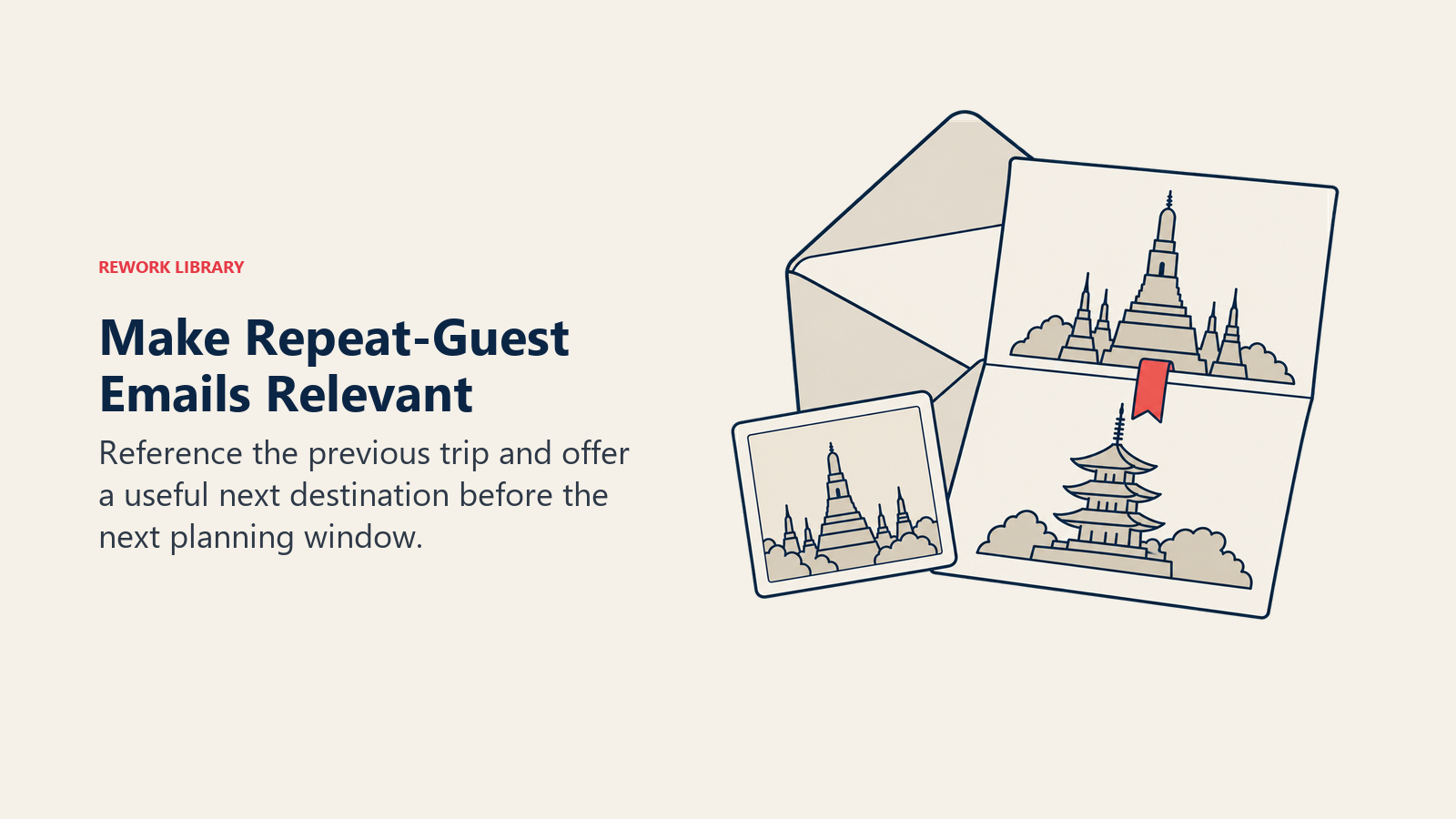
Personalization through travel CRM goes beyond using their first name. Reference their previous trip specifically. "Since you loved exploring temples in Kyoto..." or "After your amazing trek to Machu Picchu..." Show that you remember them.
Maintain engagement between trips with valuable content, not just sales pitches. Send destination guides. Share travel tips. Highlight new trips that match their interests. Provide value in every email so they actually open the next one.
Timing matters enormously. If your customers typically book trips 12-18 months apart and plan 3-4 months ahead, start your reactivation sequence at 8 months. Don't wait until they've already booked with someone else.
Create a "repeat traveler" email series that treats them differently from first-timers. They don't need the basics about how your trips work. They want insider information about new destinations, early access to popular trips, and recognition that they're valued customers.
Test your send frequency. Once a month is probably right for most travel businesses. Too much and you're annoying. Too little and they forget you exist. Track your open rates and unsubscribe patterns to find your sweet spot.
Include reactivation triggers beyond time-based sequences. New trip announcement in a region they've expressed interest in? Send it. Their travel anniversary with you? Acknowledge it. Their birthday? That's a great time to plant the seed for their next adventure.
Past Traveler Incentives
Discounts are the obvious incentive, but they're not the only one, and they might not even be the best one.
Exclusive repeat customer pricing in the 10-15% range is standard. It's enough to feel meaningful without destroying your margins. Frame it as insider pricing, not a discount: "Our repeat traveler rate for this trip is $2,700 instead of our standard $3,000."
Early access to new trips and destinations often works better than discounts for your best customers. Launch a new trip to Iceland. Give past travelers 72 hours to book before you announce it publicly. Scarcity and exclusivity drive action.
Bring-a-friend discounts serve double duty: they incentivize repeat bookings and generate new customer acquisition. "Book your next trip and bring a friend for 15% off their first trip with us." You get a repeat booking and a referred customer.
Flash sales exclusively for past travelers create urgency without training your entire market to wait for deals. Send an email on Tuesday: "48-hour sale for past travelers only. 20% off these five trips." You'll see a spike in bookings.
But here's what often works better than any of this: better experiences. Priority booking when a trip is filling up. Complimentary upgrades to better rooms. Special welcome amenities. Recognition and treatment that makes them feel like VIPs.
The best customers care more about exclusivity and recognition than price. They want to feel valued. They want access others don't have. They want to be treated like the loyal customers they are.
Create a tiered approach. All repeat customers get 10% off. Customers with 3+ trips get 15% and early access. Customers with 5+ trips get VIP treatment and pricing tiers you don't advertise publicly.
Test different incentive types with different segments. Luxury travelers respond to upgrades and exclusive experiences. Budget-conscious travelers want clear price savings. Adventure seekers want access to unique new trips.
Trip Series and Collections
Stop selling individual trips. Start selling journeys.
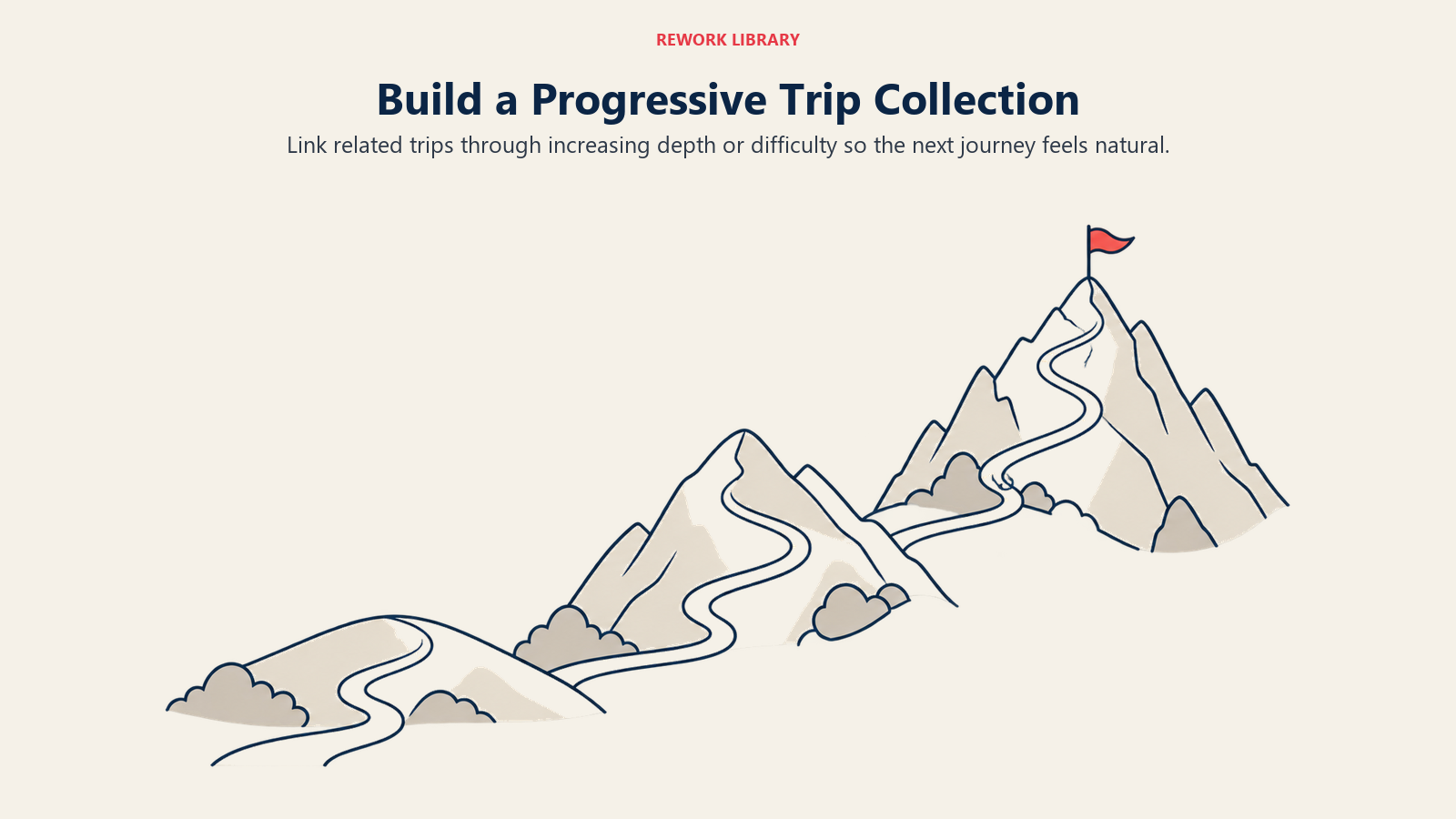
Design multi-trip collections that encourage sequential booking. An "Asia Discovery Series" with progressive trips through Japan, Vietnam, Thailand, and Indonesia. An "Adventure Collection" that builds from moderate day hikes to multi-day wilderness treks.
The psychology is simple: people love completing things. Fitness trackers work because we want to close the rings. Stamp cards work because we want to fill the card. Trip collections work because travelers want to complete the series.
Create progressive difficulty or depth in related trips. Start with "Introduction to Hiking in Patagonia." Progress to "Patagonia Trek: Torres del Paine." Advance to "Advanced Patagonia: Off the Beaten Path." Each trip is a natural next step for someone who loved the previous one.
Offer collection completion rewards. Finish all five trips in the Mediterranean Collection and get a free weekend trip or a significant discount on a longer journey. It's a long-term play, but you're building customers who'll book with you repeatedly over years.
Position trips as an ongoing journey rather than one-off experiences. Create content and marketing that assumes they'll travel with you multiple times. "After you experience the temples of Angkor Wat, you'll be ready for our deeper cultural immersion trip..."
Give collections names that create identity and aspiration. Not "Asia Trips" but "The Grand Asia Journey." Not "Hiking Trips" but "The Mountain Adventurer Collection." People want to see themselves as adventurers and explorers, not just tourists.
Track progress publicly. "You've completed 2 of 6 trips in the South America Explorer Series." Make it visible in their customer portal. Send milestone emails when they're getting close to completion.
Collections work especially well for businesses with geographic focus or activity specialization. A kayaking company can create collections by difficulty and location. A cultural tour operator can organize by theme and region.
The business impact is significant. You're not competing for every single booking against every competitor. You're creating a relationship and a journey that builds commitment over time.
Seasonal and Lifecycle Marketing
Your customers' lives are changing. Your marketing should change with them.
Young couples book different trips than families with school-age kids. Empty nesters travel differently than they did when their children were home. Retirees have different constraints and priorities than working professionals.
Match trip recommendations to customer lifecycle stage. The couple who honeymooned with you five years ago probably has young kids now. Stop sending them adventure trips that require significant time away. Start showing them family-friendly destinations.
Promote seasonal trips based on past travel timing. If someone books trips in June every year, start your marketing push for summer trips in February. If they're November travelers, hit them in August.
Suggest complementary destinations to previous trips. They went to Peru? Show them Bolivia and Chile. They loved Vietnam? Thailand and Cambodia are natural progressions. Create geographic and cultural connections that make sense.
Anticipate life changes that trigger new travel interests. Kids graduating and leaving home is a major life transition that often reignites travel. Retirement obviously changes everything. Career changes, relocations, and major milestones all create opportunities.
Use purchase history to identify patterns. Someone who's booked three cultural trips in a row might be ready for something more active. Someone who's done five adventure trips might want a more relaxed experience next time.
Seasonal triggers work well for specific trip types. Beach destinations when northern winters hit. Fall foliage trips in late summer. Holiday trips in early autumn. Time your campaigns to match decision-making windows.
Create email segments based on likely lifecycle stage derived from data you have: booking patterns, trip types, ages if you've collected it, family status if known. Don't treat a 28-year-old solo traveler the same as a 55-year-old couple.
The most sophisticated operators combine multiple factors: lifecycle stage + past trip type + seasonal timing + time since last trip. That creates hyper-relevant recommendations that feel personally curated.
Referral Programs for Repeat Customers
Your repeat customers are your best sales team. Make it easy and rewarding for them to send business your way.
Satisfied repeat customers have credibility that no ad campaign can match. When they tell friends about their experiences through social proof, those referrals convert at dramatically higher rates than cold traffic.
Incentivize referrals through loyalty program with meaningful rewards. Travel credits of $200-500 for successful referrals work well because they encourage the referrer to book another trip. Cash bonuses can work too, but they don't reinforce the behavior you want.
Create tiered referral bonuses that increase with volume. Refer one friend, get $200 credit. Refer three, get $250 per referral. Refer five, get a free trip. The tier structure encourages ongoing referral behavior.
Make the referral process simple. Personal referral links. Easy sharing through email and social media. Landing pages that explain the offer clearly. Every point of friction you add reduces referrals.
Recognize top referrers with special status. Create a "Brand Ambassador" designation for customers who've referred five or more bookings. Give them permanent benefits: lifetime discounts, first access to everything, special recognition.
Time referral campaigns strategically. Right after someone returns from a trip is ideal. They're enthusiastic, they're talking to friends about it anyway, and they're thinking about travel. Strike while that enthusiasm is hot.
Offer dual incentives: reward for the referrer and a first-trip discount for the referred friend. "Give your friends 10% off their first trip, and you'll get $300 credit when they book." Both parties benefit.
Track referral sources diligently. Use referral codes or links that identify who sent the business. Thank referrers promptly. Update them when their referrals book. Make them feel appreciated and informed.
The lifetime value of a customer who refers others is exponentially higher than one who doesn't. Identify your referrers early and treat them like gold.
Technology for Repeat Booking
Manual repeat booking outreach doesn't scale. You need systems that automate personalization.
CRM automation is the foundation. Tag customers based on trip history, preferences, and behavior. Create automated campaigns triggered by time since last trip, email engagement, website visits, or other signals.
Implement predictive analytics for next-booking timing. Machine learning can identify patterns in your booking data that indicate when someone is likely to be ready to book again. Surface these customers to your sales team or trigger automated campaigns.
Create seamless rebooking experiences in customer portals. "Book your next trip" should be prominent. Show personalized recommendations based on their history. Make it one-click easy to see trips that match their interests.
Track repeat booking attribution carefully. Which campaigns drive repeat bookings? What offers convert best? How does email timing impact results? You need data to optimize your approach.
Integrate your booking system, CRM, email platform, and website. When someone books a trip, that should trigger a series of automated touchpoints: welcome sequence, pre-trip emails, post-trip follow-up, and long-term nurture campaigns.
Use website behavior to trigger campaigns. Someone visits your Italy page three times in two weeks? They're interested. Send them a personalized email about Italy trips with a special offer.
Implement customer portals where past travelers can view their trip history, access photos and memories, see recommended trips, and manage their bookings. Make it valuable enough that they return to it regularly.
Test and optimize continuously. A/B test subject lines, offers, timing, and messaging. Track what works for different segments. Apply those learnings to future campaigns.
The goal is automated personalization that feels human. Technology handles the heavy lifting of segmentation, timing, and delivery. But the content should feel like it was crafted specifically for that individual customer.
Barriers to Repeat Booking
Understanding why customers don't come back is as important as knowing why they do.
Survey one-time customers explicitly through guest feedback collection. "We noticed you haven't booked another trip with us. We'd love to know why." Offer an incentive for completing the survey. The insights are worth it.
Common barriers fall into predictable categories. Budget constraints are real, travel is expensive. Timing and scheduling conflicts keep people from booking. Desire for variety means they want different destinations or styles. Dissatisfaction with their experience means you have service quality issues to address.
Identify addressable versus non-addressable factors. If someone's financial situation has changed and they simply can't afford to travel, you can't solve that. But if they think your trips are too expensive compared to perceived value, that's addressable through better communication or adjusted pricing.
Create solutions for common objections. "Too expensive" might be addressed with payment plans, off-season pricing, or shorter trip options. "Don't have time" could be solved with weekend or long-weekend trips. "Want to try new destinations" is an opportunity to expand your offerings.
Implement win-back strategies for lapsed customers, but we'll cover that in detail in our dedicated article on travel win-back campaigns.
Pay attention to early warning signs. Declining email engagement. Not opening your messages. No website visits. These indicate fading interest before someone becomes fully lapsed.
Address service issues immediately. If someone had a problem on their trip, you need to know about it and fix it. Post-trip surveys, real-time feedback during trips, and proactive outreach catch issues before they become reasons not to return.
Sometimes the barrier is simply that you're not staying top of mind. They loved their trip, they intend to travel with you again, but life gets busy and they forget. That's why consistent, valuable communication matters.
Segment non-repeaters and analyze patterns. Are certain trip types less likely to generate repeats? Certain demographics? Certain time periods? Understanding patterns helps you adjust your approach.
The goal isn't converting every customer into a repeat booker. It's maximizing repeat rates among those who have the potential and removing unnecessary barriers that prevent natural repeat behavior.
Building Sustainable Growth
Repeat bookings aren't just a revenue channel. They're the foundation of a sustainable, profitable travel business.
Companies that focus on repeat bookings grow more efficiently, spend less on marketing, and build more predictable revenue. They're less vulnerable to acquisition cost increases and advertising platform changes.
Start by measuring your current repeat booking rate. Calculate it by year: what percentage of customers who booked in 2023 booked again in 2024 or 2025? Break it down by trip type, price point, and customer segment.
Set targets that push your business forward. If you're at 20% repeat rate, target 25% this year and 30% next year. Every point increase is significant revenue.
Invest in systems and processes that support repeat bookings: CRM, email automation, customer portals, loyalty programs. These aren't expenses; they're investments that compound over time.
Train your team to think in terms of lifetime value, not just transaction value. The guide who delivers an exceptional experience creates future bookings. The customer service rep who solves a problem saves a customer relationship. Everyone contributes to repeat rates.
Align your entire business around customer retention. Product development should consider what will bring people back. Marketing should balance acquisition and retention. Operations should deliver experiences that create loyalty.
Your most valuable customers aren't necessarily the ones who spend the most on a single trip. They're the ones who come back year after year, refer their friends, and become advocates for your brand.
Build your business on that foundation, and you'll create something far more valuable than just a collection of one-time transactions.
Related Resources

Business Consultant
On this page
- Repeat Booking Economics
- Identifying Repeat Booking Potential
- Immediate Post-Trip Rebooking
- Repeat Customer Communication
- Past Traveler Incentives
- Trip Series and Collections
- Seasonal and Lifecycle Marketing
- Referral Programs for Repeat Customers
- Technology for Repeat Booking
- Barriers to Repeat Booking
- Building Sustainable Growth
- Related Resources