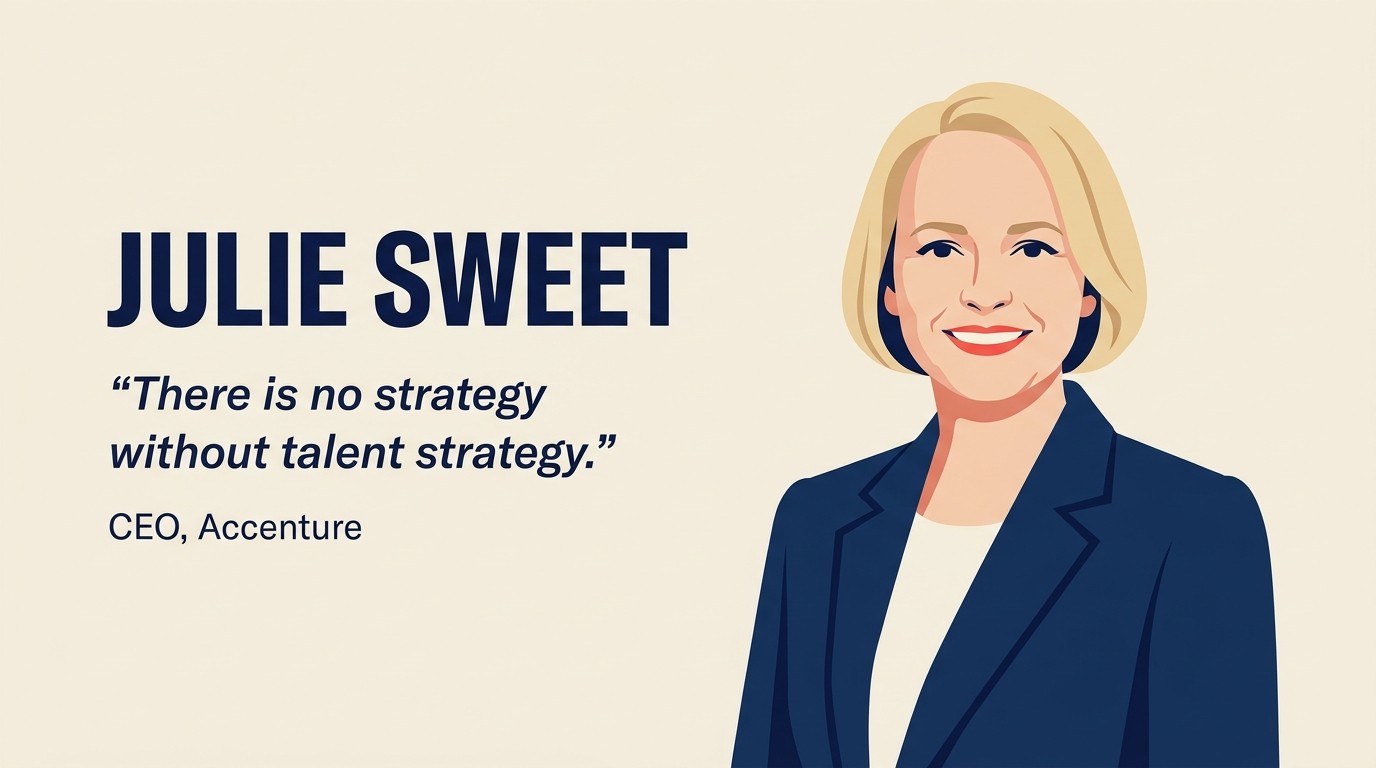
ジュリー・スウィート・リーダーシップスタイル:スケール、再発明、およびAIエラを通じて750,000人の主導
Turn this article into takeaways for your work.


Each assistant summarizes the article only for you and suggests best practices for your work.
主要事実:ジュリー・スウィート
- 生まれた: 1967年(タスティン、カリフォルニア)
- 教育: クレアモント・マッキナ・カレッジ(BA)、コロンビア法学大学院(JD)
- アクセンチュア前: Cravath、Swaine&Moore(1999-2010)のパートナー、企業M&A実施
- アクセンチュアに参加: 2010年、一般的なカウンセル、秘書、最高コンプライアンス役員として
- 北米CEO: 2015-2019年(最速成長アクセンチュア地域に地域を成長)
- グローバルCEO: 2019年9月から現在
- 議長: 2021年9月に追加タイトル
- 収益スケール: 43.2B ドル(FY2019)→ 64.9B ドル(FY2024年)彼女の任期の下で
- 労働力: ~492,000 → 750,000人以上、120人以上の国
- 署名の賭け: 2023年3月に発表された30億ドルのAI投資、最初の大きな専門サービス企業は、その規模でコミットすること
- 認識: フォーチュンビジネスの女性(年次)、Time 100最も影響力のある
ジュリー・スウィートはCravath、Swaine&Mooreで10年を過ごしました。最も選抜される法律事務所の1つ、そのパートナーシップは本当にレアさです。彼女はパートナーを作りました。その後2010年に、彼女はアクセンチュアに参加しました。一般的なカウンセル。ほとんどのBigLawパートナーはその動きを作りません。これは、紙の上で給与の削減、法的圏での地位のステップダウン、機能役ではなくリーダーシップの1つへの入場です。
彼女は2015年に北米のCEOになり、アクセンチュアの最大のビジネスユニットを実行しました。2019年9月に、彼女はグローバルCEOになり、43.2億ドルの収益で会社を継承し、492,000人の従業員。財政年度2024年までに、アクセンチュアは64.9B ドルの収益と、120以上の国全体で約750,000人以上の従業員に達しました。
2023年の生成AIの波がその明らかな動きを作る前に、彼女はAI変換の周りにアクセンチュアを再位置付けた。彼女は2023年3月に30億ドルのAI投資を発表し、アクセンチュアの全体の労働力を生成AIで訓練しました。最初の大きな専門サービス企業は、大規模でそう。フォーチュンは、ビジネスリストの彼女の最も強力な女性を毎年彼女の任期で名前を付けました。彼女はIndra NooyiおよびSheryl Sandbergの一緒に彼女の世代の最も研究した女性CEOの1つとして座ります。
しかし、より興味深い質問は、実際にスケール、文化、および価値をどのように相互作用するかは、750,000人の会社を実行する方法です。アクセンチュアのCEOとして、サービス巨人がAI遷移をナビゲートしますが、スウィートの位置はGinni Romettyとの直接的な比較に招きます—両方が大規模な専門サービス組織を実行していましたが、スウィートは前とより速く賭けにコミットする資本で移動しました。
リーダーシップスタイルの分析
| スタイル | 割合 | どのように現れたか |
|---|---|---|
| 運用スケーラー | 60% | スウィートのリーダーシップは、スケール時の実行について根本的です。彼女の任期の下のアクセンチュアは、従業員のヘッドカウントをおよそ260,000人増やし、従業員当たりの収益とクライアント関係の品質を維持しました。彼女はクラウド、AI、およびデジタル機能を構築するために年あたり40以上の買収を実行しました。この速度で、その規律が統合プロセスと明確な取得論文を必要としました。スケールの決定、雇用、統合、組織化が彼女のプライマリドメインです。 |
| 戦略的再位置付け | 40% | AIのピボットは反応的ではありませんでした。スウィートは、彼女の北米CEO日から、テクノロジー変換がアクセンチュアのコア位置付けとして公開話していました。生成AIが2022-2023年に出現したとき、変換パートナーとしてのアクセンチュアの位置付けは、単なるスタッフまたはアウトソーシングのビジネスではなく、既に確立されました。彼女は2023年3月にAI投資発表を移動しました。ほとんどの専門サービスの競争相手が一貫したAI戦略を表現する前に。 |
60対40の分割は、スウィートの執行信頼性が彼女の再位置付けクレームに市場の体重を与えるため重要です。多くのコンサルティング企業はAI戦略を発表しました。アクセンチュアの発表は異なるランディング:スウィートはすでに大規模なスケールで実行できることを示していました。40以上の買収/年、260,000人の従業員追加、5年間で210億ドルの収益成長。戦略クレームは、運用上の証拠によってサポートされていました。
主要なリーダーシップ特性
| 特性 | 評価 | 実践におけるその意味 |
|---|---|---|
| ドメイン切り替えの信頼性(法律から操作へ戦略へCEO) | 非常に高い | スウィートのキャリアパス(BigLaw パートナー、GC、地域CEO、グローバルCEO)は、各遷移が自分の以前の認証が与えていなかった領域の競争を示すことを必要としているという点で珍しいです。彼女のGC年は彼女にリスクとガバナンスの信頼を与えました。彼女の北米CEO年は彼女にP&L信頼を与えました。ドメイン変更なしに各段階での信頼を失うことなく、複数のドメイン間での信頼の蓄積は、1つの機能トラック内に留まる最高経営者が開発しない特定のスキルです。 |
| 期待位置付け(AIピボット前に競争相手が移動する) | 高い | 30億ドルのAI投資は、アクセンチュアのダイレクト競争相手のほとんどが同等のコミットメントを行った後でも発表されました。アクセンチュアのテクノロジービジョン—技術を形成する年間レポート—は、数年間、AIを変革レバーとしてシグナルしていました。スウィートのコミットの意志は、市場コンセンサスが形成される前に、本当のリーダーシップ品質です。リスクは、初期のコミットメントが間違っている可能性があります。AIの賭け、今のところ、そうされていません。 |
| クライアント中心のスケール | 高い | アクセンチュアのビジネスモデルは、大企業のクライアントとの長期関係に依存します。平均的なアクセンチュアの契約は数か月続きません。それは数年続く。スウィートの北米年は、これらの関係の維持と成長に基づいていました。彼女のグローバルCEO役割は、関係品質が120以上の国とダースで業界の縦方向に保持されるため。リスクは、クライアント依存とベンダー依存が外側から同じように見える可能性があります。 |
| 750,000人の従業員全体での実行規律 | 強い | 40以上の取引/年で取得プログラムを実行し、取得された何かを構築したものを破壊することなく、統合する組織規律は、本当に難しいです。アクセンチュアの吸収は、多くの場合、テクノロジーブティックまたはデジタルエージェンシーを取得している、個別の文化を持つか、その値を作った価値を失うことなく、アクセンチュアのシステム、ガバナンス、クライアントベースに接続する必要があります。スウィートは、彼女が取得を直接同族化しようとしないことが明確です。彼女は時間をかけて統合に向かって構築します。 |
Sweet Transformation Model:AI-First Services Doctrine
Sweet Transformation Model
Sweet Transformation Modelはリーダーシップの学説であり、サービスCEOは市場コンセンサスが形成される前にテクノロジープラットフォームの変動へのキャピタルをコミットし、その後、AIを販売、構築、内部使用するオペレーティングレイヤーとして扱いながら、戦略的位置付けと同時の運用実行を組み合わせます。
スウィートを定義した3つの決定
1. 2010年にBigLawからアクセンチュアGCに移動
これは基本的な決定であり、それは独自の条件では理解する価値があります。CEOの役割への脚注としてではなく。
Cravath、Swaine&Moore パートナーシップは、特定の種類の資格情報です。Cravathは、そのロックステップ補償モデル、その異常にセレクティブなパートナートラック、および米国での最も複雑なM&Aおよびセキュリティライティングの仕事で知られています。スウィートは1992年から彼女がいました。彼女はパートナーになった。その時点で左は何か本当に放棄していた。
アクセンチュアでのGC役割は、法的市場基準では、多くのCravathのパートナーが取らない側方の動きでした。企業から段階的にBigLawから段階的に。しかし、それはまた、米国全体で事実上すべての主要な産業で動作していて、120以上の国全体の企業への入場でした。組織的な露出の範囲は、法律事務所の役割が提供したよりも大きかった。
彼女が得たもの:グローバル専門サービス企業が実際にどのように実行されるのか、リーダーシップチームの内側から。契約の構造方法、クライアント関係の管理方法、労働力の決定方法、複数の管轄区域全体で同時に規制の課題をナビゲートしました。GC役割の5年は、ほとんどのエグゼクティブになる弁護士よりも、運用基礎を与えました。
エグゼクティブが機能的遷移を検討している:スウィートのGC-to-CEO経路は、特定の原則を示します。大規模な企業での一般的なカウンセルの役割は支援機能ではありません。これは、企業が行うすべての重要な決定への最前列:M&A、規制、雇用、ガバナンス。エグゼクティブが機能役を学習位置として使用しており、キャリア目的地ではなく、同じ機能トラックにとどまる人よりも速く、クロス機能的信頼を蓄積します。
2. アクセンチュアをAI-Led Transformation Company(2022-2023)として再位置付ける
2023年3月、アクセンチュアはAIに30億ドルのコミットメントを発表しました。1つの大きなプロフェッショナルサービスファームの最大のAIコミットメントの中で時間があります。Accenture Wikipedia Article詳細については、見てください。これは、AIセンター・オブ・エクセレンスの作成を含みました。すべての業界の縦方向全体にAI固有の実施。Google、Microsoft、およびAWSとの大きなパートナーシップは、AIインフラストラクチャについて。生成AIの能力で全従業員トレーニング。
発表は、ChatGPTの公開ローンチの約4か月後に来ました。しかし、位置付けはChatGPTへの反応的ではありませんでした。アクセンチュアのテクノロジービジョンレポートは、数年間のためのテクノロジーレバーとしてのAIを強調しています。スウィートは2021年および2022年に「責任ある AI」および企業のAI準備について公開で話していました。30億ドルのコミットメントは、彼女がビルドしていた戦略的な物語と一致した資本コミットメントでした。
実行は本当でした。アクセンチュアのAI収益は、会計年度2023および2024で全体の企業収益より速く成長しました。会社は、金融サービス、医療、製造全体にわたるクライアントとのAI変換エンゲージメントに署名し、公開されました。「LearnVantage」プラットフォームはAI訓練のためにこれは750,000人の全労働力に展開されました。それ自体が運用物流です。
大規模な賭けをする技術プラットフォームをするリーダーのために:スウィートのAI再位置付けは、大規模な賭けをすることが何のように見えるのかを示しています。操作コンポーネント(トレーニング、パートナーシップ、買収)コンセンサスの前にバックアップを開けます。戦略的クレームと運用実行は同時でした。シーケンシャル、ではない。
3. 競争相手が契約している間、労働力スケーリングの維持
2022-2023で、ほとんどの大きなテクノロジーおよび専門サービス企業は重大なレイオフを実行しました。マイクロソフトは2023年1月に10,000人をレイオフしました。Google、Meta、Amazon、およびSalesforceはすべて大きな削減を実行しました。McKinsey、Boston Consulting Group、およびDeloit意はヘッドカウントを切りました。
アクセンチュアは2023年に減少を実行しました、約19,000の位置または約2.5%の労働力。しかし、AI、クラウド、およびデジタルの能力で淡い速度で継続していました。純粋なヘッドカウント変化は控えめでした。労働力スケーリングの維持は、市場遷移を通じて人材密度が複合化する賭けです。つまり、AIおよびクラウドスキルを持つダウンチューニンググループ内でのサプライを持つのは、ダウンチューニン側での複製が難しい利点を作成します。
これは、いくつかのテクノロジー企業が歴史的に行ったのは、雇用ファイアループを実行するのではなく、サイクル全体で才能をしました。短期では高価。それは本当の組織的密度と機能深さを作成し、賭けが正しい場合。リスクは、柔軟労働コストを搬送され、リバウンドは十分に速く計上されていません。
専門サービスビジネスまたは労働集約的な組織を実行するエグゼクティブのために:労働力スケーリングの決定は、市場修正中にあなたが作る最も難しいものの1つです。アクセンチュアの2023年のパス、衰退する領域での標的削減と成長領域での継続的な雇用、大規模な見出しの減少または大規模なカットよりも外科的モデルです。次が必要な能力を知り、全体削減が、機能を削減しない機能を削減しようとするほど規律のある訪問が必要です。
スウィートがあなたの役割でしていることはできます
あなたがテクノロジープラットフォーム変動のためのあなたの企業を位置付けるCEOであれば、スウィートのAIピボットには直接モデルがあります。彼女は資本、30億ドルをコミットしました。市場コンセンサスが形成される前に。それは戦略的ピボットと戦略的発表の違いです。あなたの企業の位置付けクレームが予算配分、雇用計画、およびパートナーシップコミットメントでサポートされていない場合、それらは位置付けです。それらはマーケティングです。質問:テクノロジーまたはAI変換クレームを信頼できるようにするためにどのようなドルのコミットメントが必要ですか。そして、それをしてください。
あながCOOまたはスケールで管理するOpsリーダーであれば、スウィートの取得統合モデルは検査する価値があります。アクセンチュアは年あたり40以上の買収を実行し、各買収を統合する必要があります。通常、買収を価値がある特定の技術的な機能、文化的なアイデンティティ、またはクライアント関係。それは、通り途中で何かが壊れることなく、取得された企業をアクセンチュアのシステムに接続することを要求します。ガバナンス、およびクライアントベース。統合プレイブックと文化的判断を必要とします。文化と才能は吸収できません。質問:私たちが取得するもののための明示的な統合哲学は何ですか。そして、その哲学は私たちの実際の統合の行動と一致していますか。
あなたが製品またはテクノロジーリーダーであれば、アクセンチュア・テクノロジー・ビジョン・アプローチは、市場位置付けでの思想指導についてのレッスンを持っています。スウィートは、アクセンチュアの年間技術予測を戦略的なコミュニケーション・ツールとして使用しました。それは、同じテクノロジーシフトを販売していた同じテクノロジーシフトについての企業をガイドとして配置しました。あなたの企業が業界がどこに向かっているかについての本当の知識を持っている場合、その知識を公開して公開しても、競争上の保護よりも多くのクライアント信頼が構築されています。公開右のある信頼は、洞察をプライベートのままで秘密に保つよりも価値があります。
営業またはクライアント関係管理にあれば、スウィートの北米CEO記録は有用なテンプレートです。アクセンチュア北米は彼女のリーダーシップの下での最速成長アクセンチュア地域になり、約150億ドルから成長しました。その成長は、新しいクライアント取得と既存のアカウント拡張の組み合わせから来ました。拡張モデル、既存のクライアントで収益を成長させることで新しいサービスラインを追加し、クライアント信頼がより深くなります。新しいクライアント取得より多くの資本効率。自問:既存のクライアントが彼らの独自のニーズを過度に提供しているんですが、あなたが提供できた領域を提供しています。これはあなたの拡張パイプラインです。
Reworkがスウィート変換モデルをどのようにサポートするか
スウィートのプレイブックは、サービス主導のAI変換を各エンゲージメント、各取得チーム、および各クライアント拡張スレッドのどれかの見通しを失うことなく追跡する運用規律とペアリングします。そのデュアル需要—戦略的位置付けと実行の厳密さ—正確に、小規模でアクセンチュアモデルをコピーしようとすると、コンサルティング企業、代理店、サービス企業が争う。
Reworkは、AI変換パイプライン、クライアントエンゲージメントポートフォリオ、およびクロスチームコラボレーションの全体が一緒に座っている単一のワークスペースを提供しています。CRM and Sales Opsモジュール($12/user/mo)は既存アカウント内で拡張収益を追跡します。スウィートが北米アクセンチュアを成長させるために使用したパターン。Work Ops($6/user/mo)は、分散コンサルタント全体での配信実行をハンドルするため、パートナーが容量、利用率、およびエンゲージメント健康を1つの見解で見ます。自分たちのAIピボットを通過するサービス企業はReworkを使用して、変換の発表を正直に保ちます—資本コミット、トレーニングのロールアウト、スライドデッキだけではなく、クライアント勝つ追跡された戦略的物語。
注目すべき引用と教室の外の教訓
スウィートは、彼女が「新しい方向へのローテーション」と呼ぶことについて一貫して話しました。これはブランドのタグラインではなく、運用フレーミングです。アイデアは、成長している組織が安定しているか衰退している領域から、成長している領域へのリソース、人、資本、リーダーシップの注意を移動しなければならないということです。難しい部分は、どこから成長するかを識別しません。それは、現在収益を生成しているもの投資を減らしたいという意思です。これは、3年で生産するするものを構築します。
「リーダーは主なローテーション役員である必要があります」彼女はインタビューで言った。そのフレーミングは故意に反ノスタルジック。あなたは会社がある社を保存しません。あなたはそれがなる必要があるのの方にアクティブに移動します。
スケールガバナンスでは、彼女は750,000人の従業員がどの直言的でした:「あなたはすべてを知ることはできません。あなたはシステム、文化、およびリーダーを構築し、あなたがいない部屋で良い決定を下す必要があります。」それは極端なスケールでのリーダーシップへの制約ベースのアプローチです。あなたは他のすべての決定をしようとしていません。あなたは良い決定が下されるという条件を構築しようとしています。そのフレーミングは、意味のある地理的または機能的分散を持つ任意の組織に適用されます。
このスタイルが壊れるところ
スウィートのアクセンチュアは大きいは、「変換」が製品カテゴリーではなく、配信結果になる可能性があります。大規模なコンサルティング契約の批評的、多くの正当なものがあり、アクセンチュアの変換仕事が時々依存性を作成するというポイント。クライアントは、構築されたものを維持するための内部能力なしに、長期的なアクセンチュア契約から見た。それはコンサルティングモデルの真の構造的批評です。単にアクセンチュアだけではなく。
750,000人の従業員で、文化メッセージは避けられずに抽象化になります。Tim Cookは、Appleで構造的に同様の課題に直面しています—CEOの文化的確信をグローバル組織全体に翻訳することで、ほとんどのほとんどの従業員は、トーンを設定している人と相互作用しません—しかし、Apple製品中心性は、サービス企業がない異なる内部的結束メカニズムを与えます。スウィートが公開コミュニケーションで表明している値と原則は本当ですが、120以上の国のオフィス、ダースの業界実施、およびこれらの指数のクライアント対面チームを通じて移動しなければなりません。CEOが言うものと、ジュニアコンサルタントが難しいクライアント契約で経験しているもの間のギャップは、5,000人の企業での場合よりも広い。そのギャップは、極端なスケールの永続的な機能です。それについて正直に価値があります。
AIの再位置付けは方向的には正しいですが、コンサルティング産業のAI値のモデルはまだテストされています。内部のAI能力を構築しているクライアント可能性が見つけることがあります。彼らはアクセンチュア・オーバーの時間が必要ですが、より。AIの複雑さが変換ガイダンスのための需要を作成するという賭けであり、それを削減するのではなく、プラスティックです。しかし、それは賭けであり、結果はまだ書かれています。
ジュリー・スウィートのリーダーシップについてのよくある質問
ジュリー・スウィートは誰ですか?
ジュリー・スウィート(1967年生まれ)は、世界最大の専門サービス企業のチェアおよびCEOです。彼女は2010年にCravath、Swaine&Mooreのパートナーの10年後のアクセンチュアに参加しました。一般的なカウンセルとして、2015年に北米CEOになり、2019年9月のグローバルCEO、および2021年9月にChair タイトルを追加しました。彼女のリーダーシップの下で、アクセンチュアは43.2Bドルから64.9Bドルの収益に成長し、約492,000から750,000人以上の従業員に成長しました。
スウィートはアクセンチュアをどのように変換しましたか?
スウィートは、アクセンチュアを広いアウトソーシングとコンサルティング企業からAI主導の変換パートナーに位置付け直しました。彼女は年あたり40以上の買収を実行して、クラウド、AI、およびデジタルの能力を構築し、5年間で約210億ドルの収益で成長し、約260,000人の従業員を追加しました。彼女はまた、企業の戦略的な物語を「デジタル変換」から「AI主導の再発明」に移動しました。競争相手が同じシフトをする前に。
アクセンチュアのAI戦略はスウィートの下で何ですか?
2023年3月、スウィートは30億ドルのAI投資を発表し、専門サービス企業による最大の単一のAIコミットメント。その戦略には、すべての業界の縦方向全体にAIセンター・オブ・エクセレンス、AIの実施、Google、Microsoft、およびAWSとの深いパートナーシップ、およびLearnVantageプラットフォームが含まれます。これは、アクセンチュアの750,000人の労働力全体を生成AIについて訓練しました。
スウィートの法的な背景は何ですか?
スウィートはコロンビア法学大学院からJDを獲得しました。1992年にCravath、Swaine&Mooreに参加しました。臭く選択されたロックステップ・パートナーシップで1999年にパートナーを作成しました。彼女は、アクセンチュアCEOの750,000人のサービス企業の珍しい認証である場合、企業M&AおよびセキュリティーLawの10年間の実践者でした。
スウィートの才能へのアプローチは何ですか?
スウィートは、才能の密度を複合した利点として扱っています。ほとんどの大きなテクノロジーおよび専門サービス企業が2022-2023年に重大なレイオフを実行したが、アクセンチュアは約2.5%の労働力削減(約19,000の位置)を作成しながら、AI、クラウド、およびデジタルで積極的に雇用し続けました。彼女はまた、労働力全体のAIトレーニングをしなくて、賭けた。AIのfluent750,000人の労働力は、単一のテクノロジー投資より複製が難しい。
CEOはジュリー・スウィートから何を学ぶことができますか?
3つのレッスンは目立ちます。最初に、戦略クレームをキャピタルで持ち上げてください—アクセンチュアのAI位置付けは信頼性がありました。30億ドルのコミットメントがレトリックと一致しました。次に、反応的な位置付けであるのではなく、期待的な位置付けを実行してください。コンセンサスが形成される前に仮説にコミット。第三に、取得統合を90日のプレイブックではなく、長期ゲームとして扱うこと。アクセンチュアは、年あたり40以上の買収を吸収し、文化統合が厳密なシステム、ガバナンス、クライアント接続のために患者のままで、生成されます。
詳しく知る

On this page
- リーダーシップスタイルの分析
- 主要なリーダーシップ特性
- Sweet Transformation Model:AI-First Services Doctrine
- Sweet Transformation Model
- スウィートを定義した3つの決定
- 1. 2010年にBigLawからアクセンチュアGCに移動
- 2. アクセンチュアをAI-Led Transformation Company(2022-2023)として再位置付ける
- 3. 競争相手が契約している間、労働力スケーリングの維持
- スウィートがあなたの役割でしていることはできます
- Reworkがスウィート変換モデルをどのようにサポートするか
- 注目すべき引用と教室の外の教訓
- このスタイルが壊れるところ
- 詳しく知る