Cross-Selling Heat Pumps and Home Electrification
Turn this article into takeaways for your work.


Each assistant summarizes the article only for you and suggests best practices for your work.
A homeowner who just said yes to solar has already crossed a bigger psychological hurdle than most people realize. They've committed to a five-figure home investment, they've thought seriously about their energy costs, and they're often genuinely curious about what else they could do to cut their utility bills or reduce their environmental footprint. That's a rare moment of openness, and a lot of solar companies leave it entirely on the table.
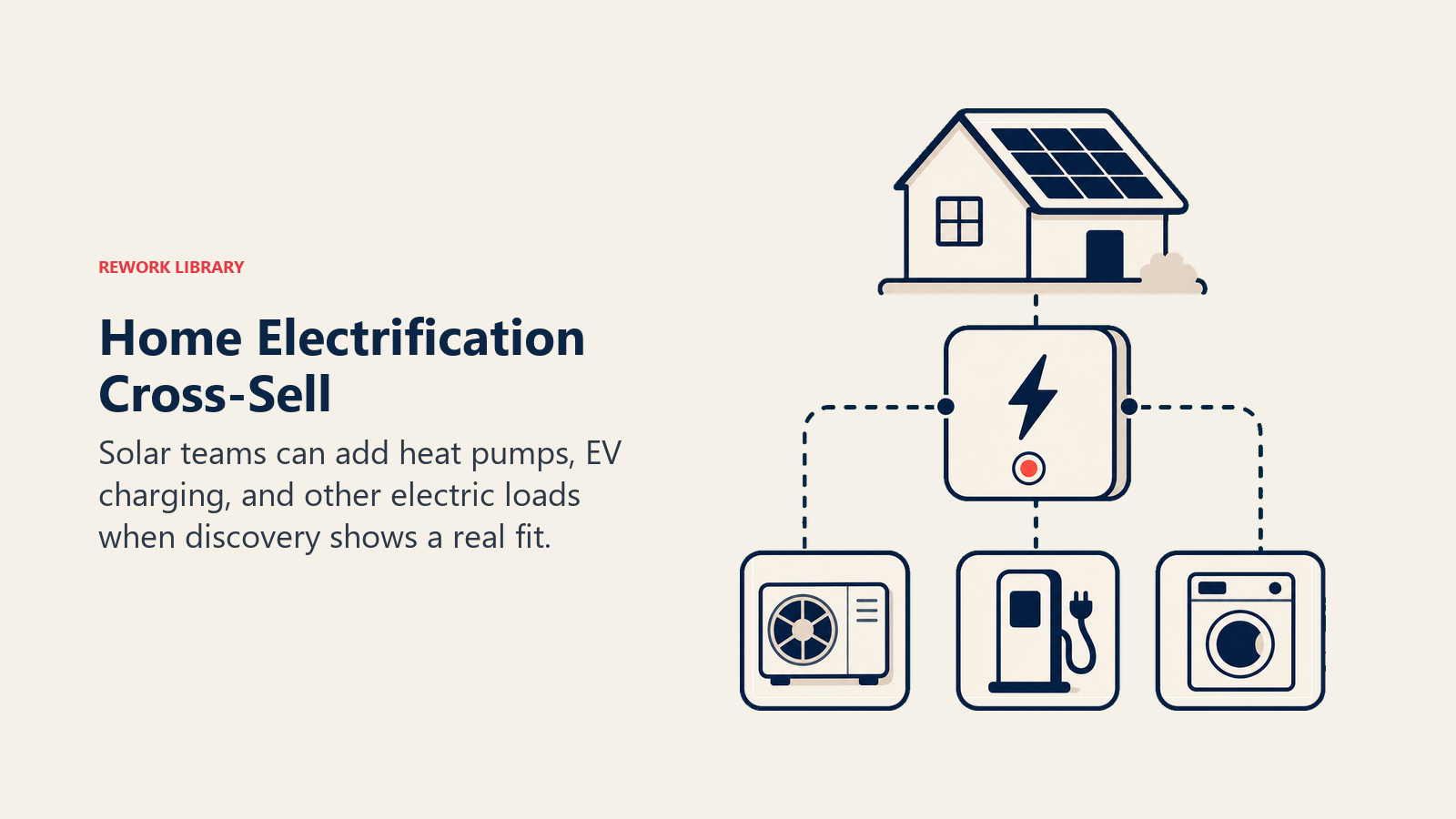
Heat pumps for heating and cooling, heat pump water heaters, induction cooktops, and EV chargers are the natural next step for a home that's already electrifying its power source. Combined intelligently with a solar system, they can increase system size and deal value, improve the homeowner's overall payback math, and build a stickier, higher-lifetime-value customer relationship.
Done poorly, cross-selling turns a clean solar pitch into a confusing menu of unrelated products that slows down the close and erodes trust. Here's how to do it well.
Why Home Electrification Pairs Naturally With Solar
Electrification means replacing gas-powered home systems (furnaces, water heaters, stoves) with electric alternatives, most efficiently heat pump-based ones. The logic connecting it to solar is straightforward: a home that generates its own electricity and also uses electricity for heating, cooling, water heating, and even cooking captures more value from that same solar investment.
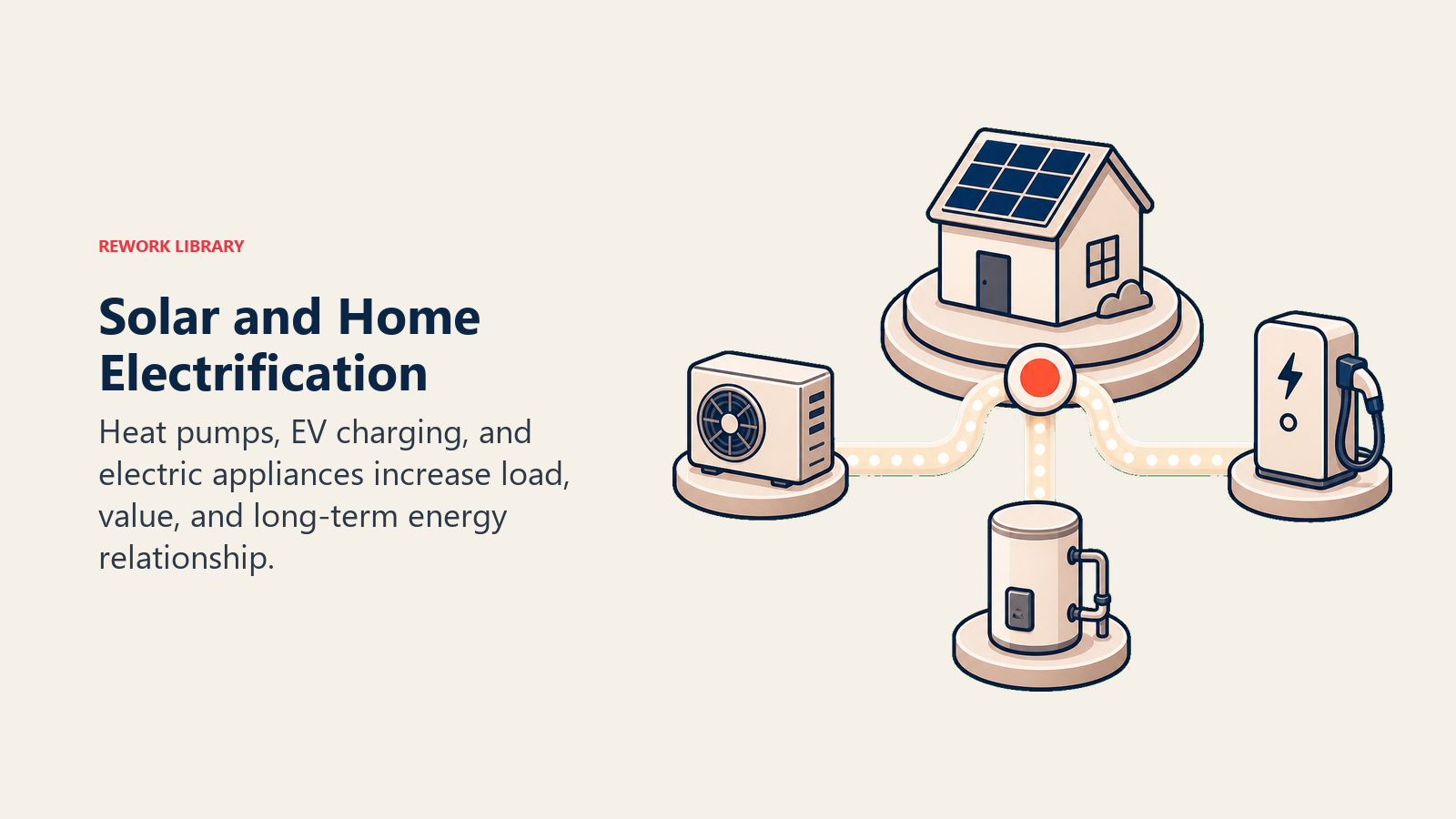
A few reasons this pairing works:
- Bigger solar systems make more financial sense with more electric load. A homeowner who adds a heat pump and an EV charger will use meaningfully more electricity, which often justifies a larger, more cost-effective-per-watt solar system.
- The homeowner is already primed for an energy conversation. You don't have to introduce a brand-new topic. You're extending one they're already having.
- It differentiates you from single-product competitors. A solar-only company competing purely on panel price is in a race to the bottom. A company that can talk credibly about a whole-home energy strategy has a different, stickier value proposition.
- It increases average deal value and long-term customer relationship. A homeowner who bought solar, a heat pump, and an EV charger from the same company is far more likely to call that company first for anything else energy-related, and to refer them enthusiastically.
Key Facts: Home Electrification Cross-Sell
- Americans purchased 21% more heat pumps than gas furnaces in 2023, according to shipment data from the Air-Conditioning, Heating, and Refrigeration Institute reported by Grist, continuing a trend that began in 2021.
- A modern heat pump can cut electricity use for heating by up to 75% compared to electric resistance heating, according to the US Department of Energy.
- Homes with solar panels have sold for an average of 4.1% more than comparable homes without, per Zillow research, a data point worth pairing with electrification when framing the long-term value of a fully electrified home.
Which Electrification Products Actually Make Sense to Cross-Sell?
Not everything electrification-related belongs in a solar sales conversation. Focus on products with a clear, provable financial and practical connection to the solar decision.
| Product | Why It Connects to Solar | Sales Complexity |
|---|---|---|
| Heat pump HVAC (heating/cooling) | Major electric load; often replaces an aging or inefficient gas furnace or AC | Moderate: requires HVAC-specific sizing knowledge |
| Heat pump water heater | Meaningful electric load addition; often a simpler standalone upsell | Low: simpler install, easier to explain |
| EV charger (Level 2) | Directly ties to solar production; homeowner may already own or plan to buy an EV | Low: straightforward hardware add |
| Battery storage | Pairs with both solar and backup power needs; increases system value | Moderate to high: requires its own sizing and use-case conversation |
| Induction cooktop | Completes the "fully electric home" narrative; smaller ticket item | Low: simple, but smaller dollar impact |
| Electrical panel upgrade | Sometimes required to support the above; a necessary enabling step, not a product itself | Varies: depends on the home's existing panel capacity |
Battery storage deserves its own dedicated sales conversation and sizing methodology given its complexity and cost, so many solar companies treat it as a closely related but separate discussion rather than folding it into a general electrification pitch.
Sequencing the Conversation: Don't Lead With the Menu
The single biggest mistake in cross-selling home electrification is turning the in-home presentation into a product catalog. Homeowners came in interested in solar, or at most solar plus one specific product they already had in mind, often an EV charger. Presenting five products at once creates decision paralysis and can make the whole appointment feel like an upsell trap rather than a genuine conversation.
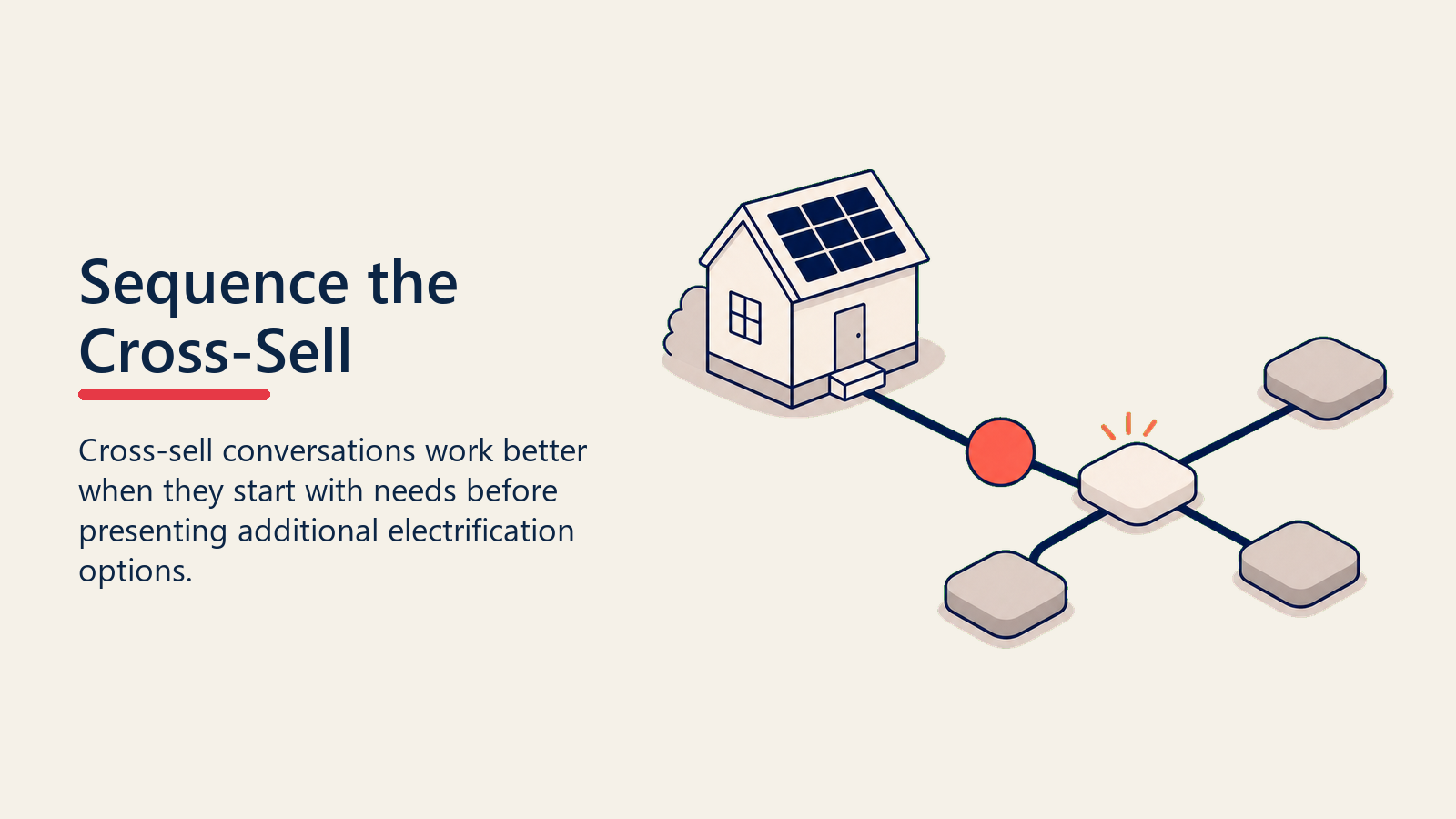
A sequence that works better:
- Close the solar conversation first, or at minimum get clear buy-in on the core system. Don't let electrification derail the primary decision.
- Ask discovery questions naturally, not as a pitch. "How's your current furnace/water heater holding up?" or "Have you thought about an EV, or do you already have one?" These are conversational, not salesy, and tell you which electrification products are even relevant. This is the same discovery instinct behind lead nurturing programs: you're gathering real signal before you offer anything, not working from a fixed script.
- Introduce only what's genuinely relevant based on their answers. If they mention their furnace is 15 years old, that's your opening for the heat pump conversation. If they don't drive an EV and have no plans to, skip the charger entirely.
- Frame it as sizing the solar system correctly, not as a separate sale. "If you're planning to add a heat pump or EV in the next couple of years, it makes sense to size your solar system for that now rather than adding panels later." This reframes the cross-sell as smart planning rather than a second pitch.
- Offer to follow up separately if the timing isn't right for a same-visit decision. Not every electrification product needs to close in the same appointment as solar. Forcing it can cost you the solar deal itself.
The Close-Discover-Size Sequence: close or confirm buy-in on the core solar system first, ask discovery questions about furnace age and EV plans naturally rather than pitching, then introduce only the electrification products that discovery actually surfaced, framed as sizing the system correctly rather than as a second sale.
The Financial Case: Bundling vs. Sequential Purchases
Homeowners often assume that adding more products means a bigger, scarier number. Reframe with the math:
System sizing efficiency. A slightly larger solar system installed once, sized for future electric load, is almost always more cost-effective per watt than installing a smaller system now and adding panels later. Mobilization costs (permitting, site visit, crew scheduling) are largely fixed regardless of system size, so a single larger install spreads those costs more efficiently.
Combined monthly payment math works the same way as solar-alone financing. Use the same payment-to-bill framework described in presenting price and financing: show the homeowner what they currently pay across electric and gas bills combined, then show the combined new payment covering solar plus the electrification product. Often the total new payment is lower than their current combined utility spend, especially when a gas furnace or water heater is aging and due for replacement anyway.
Timing existing replacement needs strategically. If a homeowner's water heater or furnace is near end-of-life, framing the heat pump alternative as "you're replacing this either way, so replace it with the version that works with your new solar system" removes the sense that they're buying something extra. They were going to spend that money regardless.
Handling the Objections Specific to Electrification Cross-Sell
"I just wanted solar, not a whole home renovation." Acknowledge directly. "Totally fair, and solar stands completely on its own. I only bring this up because [specific relevant detail, e.g., your furnace age or your EV plans] made it worth mentioning. No pressure either way." Respecting the boundary keeps trust intact for the core sale.
"Isn't a heat pump more expensive to run than gas?" It depends heavily on local electricity and gas rates and the specific equipment efficiency, so avoid a blanket claim. The Department of Energy notes that a modern heat pump can cut electricity use for heating by up to 75% compared to electric resistance heating, and where heat pumps do offer a strong efficiency and cost advantage, especially when paired with solar generation offsetting the electric cost, show the specific numbers for their home and climate rather than a generic pitch.
"We're not getting an EV, so skip the charger." Respect it. Don't push a product with no near-term relevance just to increase deal size. That erodes trust and can cost you referrals down the line when the homeowner tells others you tried to oversell them.
"Can we add this later instead of now?" Yes, and be honest about the tradeoff. Adding electrification later usually means a second mobilization (new site visit, potentially added panels or inverter capacity) that costs more than sizing for it now. But if the homeowner isn't ready, don't force it. Pushing an add-on decision before someone's ready can jeopardize the primary solar close.
Training Reps to Cross-Sell Without Sounding Like a Pitch
Reps need practice distinguishing a natural conversational opening from a forced pivot. A few training approaches that work:
- Role-play discovery questions, not the pitch itself, so reps get comfortable asking about furnace age, EV plans, and cooking preferences in a genuinely curious way rather than reciting a script.
- Build simple qualifying criteria so reps know when a cross-sell is worth raising: furnace or water heater over 12-15 years old, homeowner mentions an EV or plans to buy one, or the home already runs on electric heat and could benefit from a heat pump upgrade.
- Cap the pitch to one electrification product per visit unless the homeowner asks about more. Reps who mention every possible product in one sitting overwhelm the homeowner and dilute the core solar message.
- Use coaching and ride-alongs specifically focused on electrification cross-sell conversations, since this is a newer skill for most residential solar reps and benefits from direct observation and feedback.
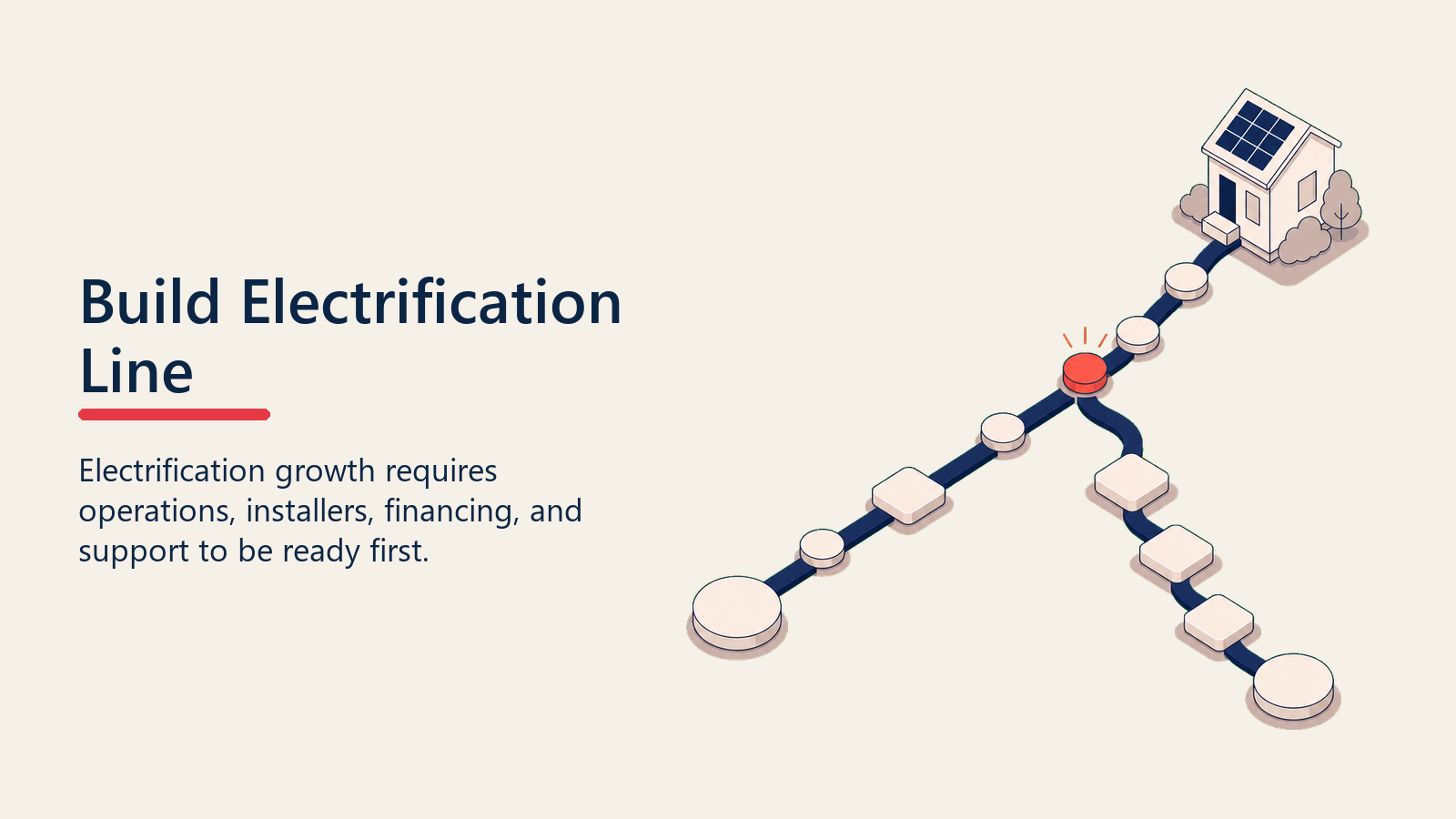
Building the Electrification Line Into Your Business
Adding electrification products to your offering isn't just a sales training exercise. It has operational implications worth planning for before you push reps to start selling them.
- Installer capability. Confirm your install partners or in-house crews are licensed and experienced with HVAC and electrical work, not just solar-specific installation. See EPC and installer channel partnerships for how to vet a partner's full capability set, not just their solar credentials.
- Financing options for bundled products. Confirm your lending partners will finance a combined solar-plus-electrification package under one loan, or whether the homeowner needs separate financing for each product. A confusing multi-loan structure can kill a bundled deal at the signature table.
- Proposal software that handles bundled systems. Your proposal tools need to model combined system sizing and combined payment math clearly, not just solar in isolation.
- Post-install support for a broader product set. Homeowners with a heat pump, water heater, and solar system installed by the same company expect one point of contact for support, not three separate vendor relationships. That's a real differentiator if you can deliver it well, and a real liability if you can't.
The Retention Value of a Broader Product Relationship
A homeowner who bought only solar from you has one reason to think about your company again: when something goes wrong with the panels, or years later when they consider an add-on. But a homeowner who bought solar, a heat pump, and an EV charger has a much broader ongoing relationship, more touchpoints, more reasons to call you first, and a stronger sense that you're their trusted home energy provider rather than a one-time vendor.
That broader relationship compounds into stronger long-term retention and a customer far more likely to refer you for anything energy-related that comes up among their friends and neighbors, not just solar specifically. It also gives your team more natural reasons to stay in touch post-install without it feeling like an upsell attempt every time.
Quotable Nuggets
"Americans purchased 21% more heat pumps than gas furnaces in 2023, according to Air-Conditioning, Heating, and Refrigeration Institute shipment data, extending a trend of heat pumps outselling furnaces that began in 2021."
Frequently Asked Questions about Cross-Selling Heat Pumps and Home Electrification
Should electrification products be pitched in the same appointment as solar?
Only if genuinely relevant based on discovery questions about the homeowner's furnace age, water heater condition, or EV plans. Leading with a full product menu creates decision paralysis; a natural, conversational mention tied to something the homeowner said works far better and protects the core solar close.
What's the biggest financial argument for bundling solar with a heat pump or EV charger?
Sizing a slightly larger solar system once is typically more cost-effective per watt than installing solar now and expanding it later, because mobilization costs like permitting and site visits are largely fixed regardless of system size. It's also common to time a heat pump against a homeowner's existing furnace or water heater replacement need, since they were going to spend that money either way.
Which electrification products have the lowest sales complexity to start with?
Heat pump water heaters and Level 2 EV chargers tend to be the simplest additions to explain and install, making them a good starting point for reps newer to electrification cross-selling before moving into full HVAC heat pump conversations.
Does cross-selling electrification risk hurting the core solar close?
Yes, if done poorly. Presenting too many products, pushing irrelevant items, or turning the appointment into a catalog pitch can create hesitation that jeopardizes the primary solar decision. The safest approach is closing solar first (or securing clear buy-in) before introducing any additional product conversation.
Does the home need an electrical panel upgrade to add heat pumps or EV chargers?
Sometimes, depending on the home's existing panel capacity and age. This should be assessed during the site survey alongside the solar system design, not discovered as a surprise after the sale, since it affects both cost and installer scheduling.

Senior Implementation Consultant
On this page
- Why Home Electrification Pairs Naturally With Solar
- Which Electrification Products Actually Make Sense to Cross-Sell?
- Sequencing the Conversation: Don't Lead With the Menu
- The Financial Case: Bundling vs. Sequential Purchases
- Handling the Objections Specific to Electrification Cross-Sell
- Training Reps to Cross-Sell Without Sounding Like a Pitch
- Building the Electrification Line Into Your Business
- The Retention Value of a Broader Product Relationship
- Quotable Nuggets