Blending Door-to-Door with Inbound and Omnichannel Leads
Turn this article into takeaways for your work.


Each assistant summarizes the article only for you and suggests best practices for your work.
A pest control company runs a website, Google ads, and a Facebook page. The leads come in. Then they sit in a shared inbox for days before anyone calls, because the sales organization is built around canvassers walking neighborhoods, not around responding to a form fill.
Meanwhile, that same company's canvassers knock a door where the homeowner already filled out a form last week and is annoyed nobody called. The rep has no idea. The rep pitches cold. The homeowner feels like the company doesn't know its own customers.
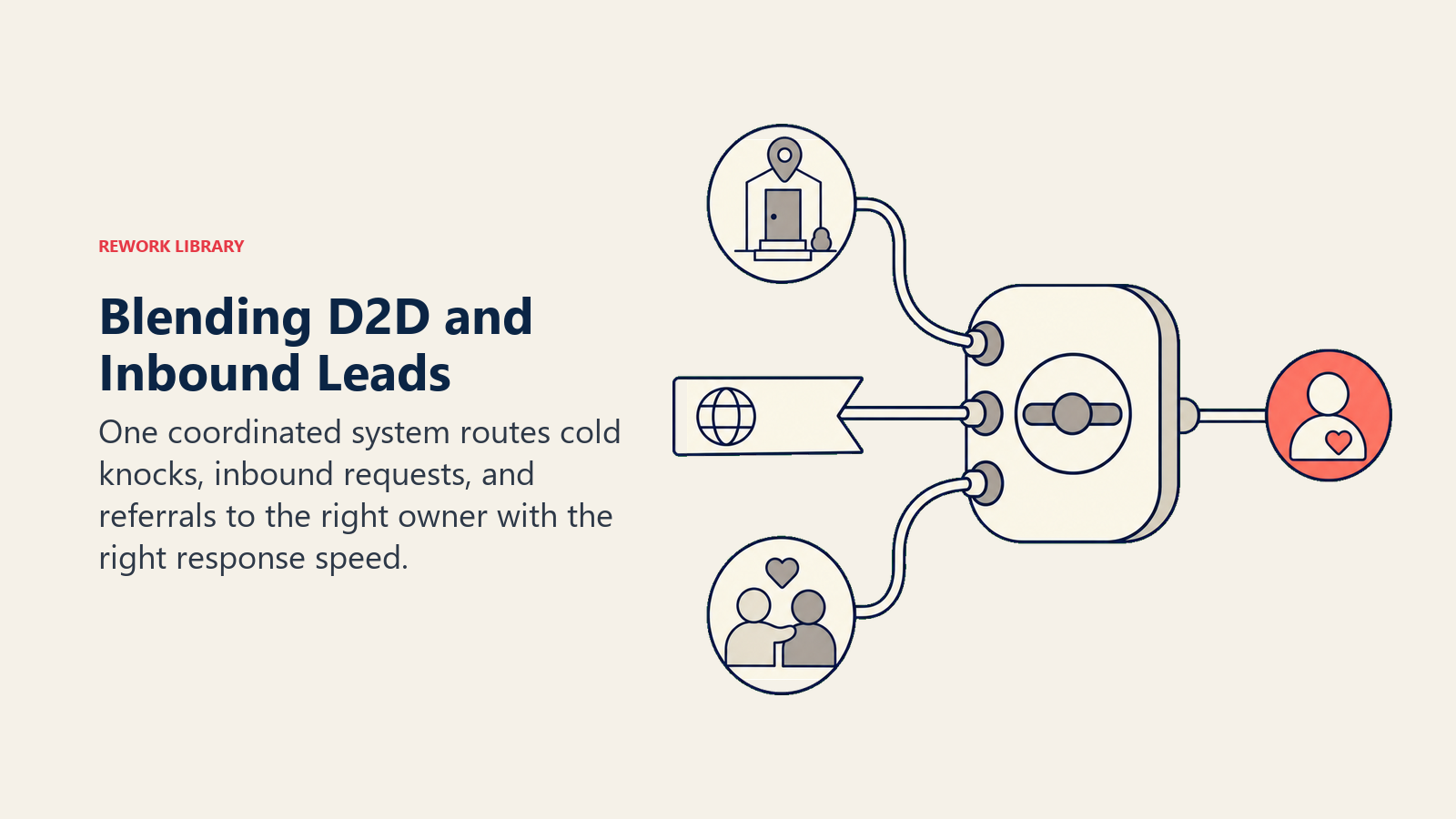
This is the most common failure mode in door-to-door (D2D) companies that also generate inbound leads. The two channels run as separate businesses instead of one coordinated system. This article covers how to blend them so canvassing and inbound reinforce each other instead of tripping over each other.
Why Pure Canvassing Models Leave Money on the Table
The traditional D2D model assumes canvassing is the only lead source: a rep walks a territory, knocks doors, and every conversation starts cold. That model still works, and the canvassing fundamentals that support it remain the backbone of most home services D2D businesses.
But most companies today also generate leads through channels that have nothing to do with a rep's feet: a website contact form, a Google search ad, a Facebook lead ad, a neighbor's referral link, a Nextdoor post, or a call to the main line. These leads are fundamentally different from a cold knock in one big way. The person has already raised their hand. Nobody interrupted them; they initiated contact.
Treating an inbound lead like a cold knock, or worse, ignoring it because the sales org is built entirely around field reps, wastes a lead that converts at a materially higher rate than a cold door. Companies that never build a process for inbound leads are effectively paying for marketing and then throwing away a chunk of what it generates.
The opposite failure also happens: some companies overinvest in inbound systems, build a beautiful CRM workflow for web leads, and never connect that same data to what canvassers see at the door. A rep who has no idea the homeowner in front of them already requested a quote online is missing the easiest opening line of the conversation.
Key Facts: Speed-to-Lead in Home Services
- Companies that contact a web-generated lead within one hour are nearly 7 times more likely to qualify that lead than those that wait even a day, and the average company in the study took 42 hours to respond at all (Harvard Business Review, "The Short Life of Online Sales Leads," 2011).
- Responding to a new lead within 5 minutes raises engagement odds roughly ninefold compared to waiting, per the Velocify Lead Response Management study cited in SPOTIO's compiled sales statistics.
- US direct selling, the broader channel D2D subscription sales sit inside, generated $34.7 billion in retail sales in 2024, according to the Direct Selling Association's 2025 Growth & Outlook Study, a reminder of how much revenue is now flowing through mixed canvassing-and-digital channels rather than canvassing alone.
The Three Lead Types D2D Teams Actually Work
Before building a blended process, it helps to separate leads into three categories that require genuinely different handling.
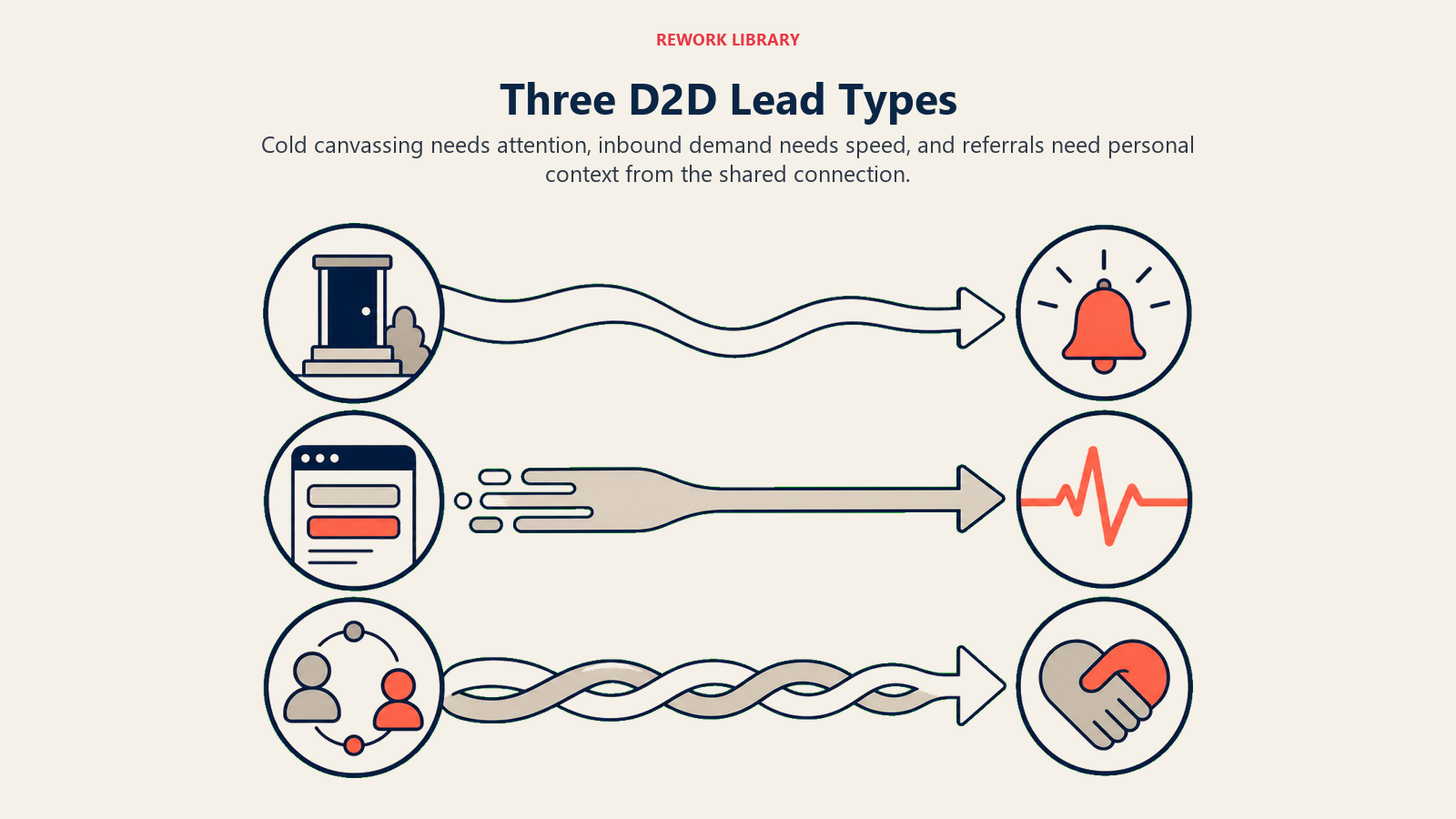
| Lead type | Source examples | Temperature | Right first move |
|---|---|---|---|
| Cold canvassing | Unplanned knock, no prior contact | Cold | Standard door approach and qualifying |
| Inbound digital | Website form, paid search, paid social, chat widget | Warm to hot | Fast phone or in-person follow-up, ideally same day |
| Referral/warm | Existing customer referral, neighbor mention, review response | Hot | Personalized outreach referencing the connection |
Cold canvassing is the traditional D2D motion. The door-to-door sales funnel covers this end to end: territory, knock, qualify, present, close.
Inbound digital leads have already expressed intent, which changes everything about how fast and how you should respond. A homeowner who fills out a "get a quote" form on a Tuesday evening is comparing you against two or three competitors in that moment. Speed matters more than polish. The widely cited Harvard Business Review study on online sales leads, which audited how thousands of companies handled a web-generated test lead, found that firms contacting a prospect within an hour were nearly seven times more likely to qualify that lead than firms that waited even a day. The average company in the study took 42 hours to respond at all.
Referral and warm leads convert at the highest rate of the three because they arrive with pre-existing trust. The referral generation from subscribers guide covers how to generate more of these. This article focuses on what to do once they exist.
How Should a Blended Routing Model Assign Leads?
The core design decision is: who handles which lead type, and how fast? This playbook calls the answer the One Lead, One Owner Model: every lead, regardless of source, has exactly one owner at any given moment, and ownership transfers cleanly and visibly when the lead moves from inside sales to the field. Most successful blended D2D operations build their routing around this rule.
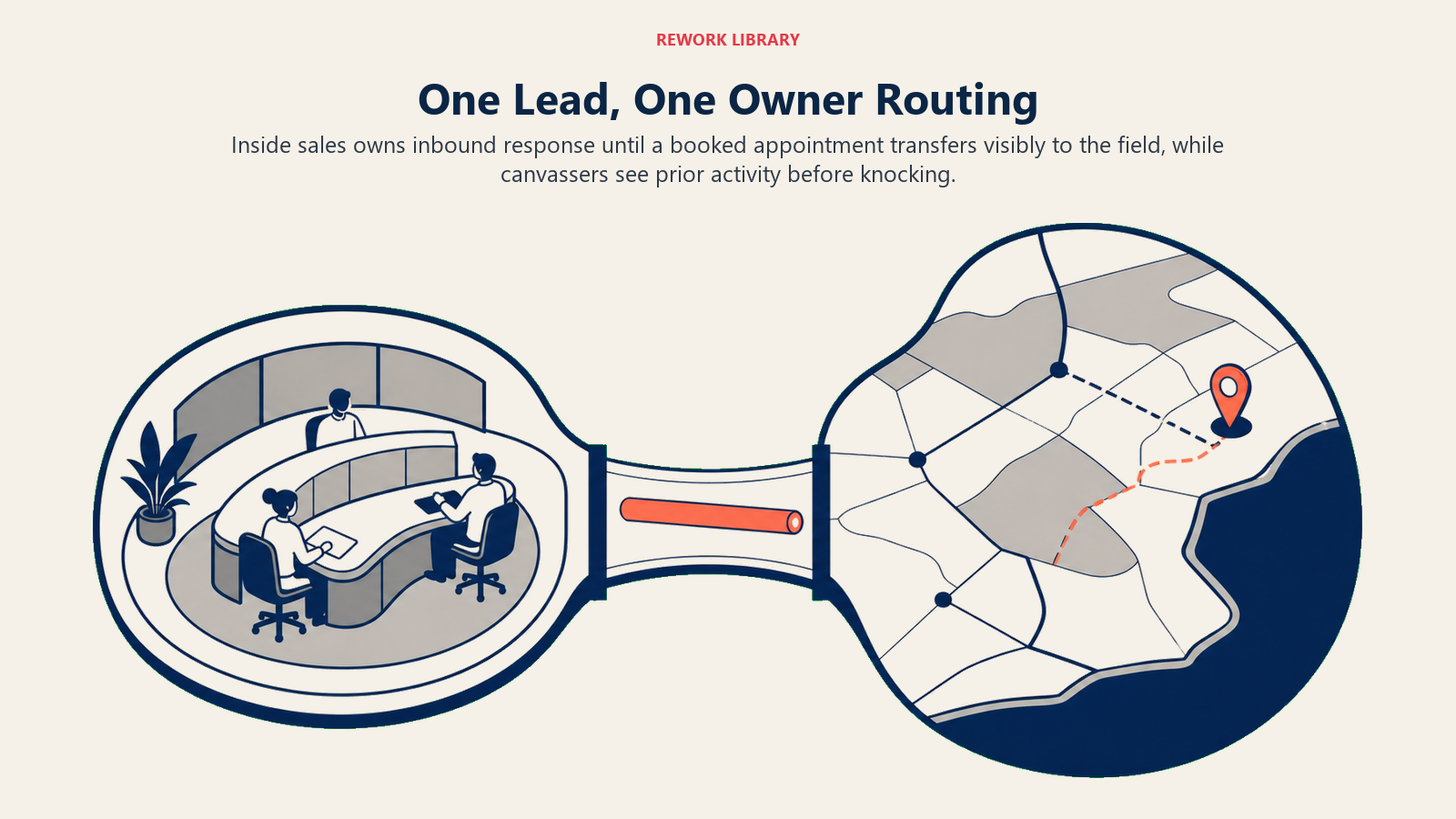
Inbound leads route to a dedicated inside sales or scheduling function first, not directly to a field rep's daily queue. This function's job is speed: call or text within minutes, qualify basic fit (service area, need, timing), and either book an in-home or virtual presentation, or in fast-close verticals like fiber, quote and close over the phone.
Field reps get inbound leads as pre-qualified, scheduled appointments, not as cold territory to knock. This is a fundamentally different job than canvassing and should be treated as one. A rep walking into a scheduled appointment with a homeowner who already requested a quote needs a presentation-focused skill set. A rep knocking cold needs an approach-and-qualify skill set instead. Some companies use the same reps for both. Others specialize.
Canvassers still own the territory, but they check for existing inbound activity before knocking. This is the piece most companies skip, and it's the one that prevents the awkward "you already filled out our form and nobody called you" scenario. A CRM that flags addresses with recent inbound activity lets a canvasser open differently: "Hey, I saw you'd reached out about pest service, I'm actually out in the neighborhood today, want me to just take a look now instead of scheduling something separate?" That's a warm open dressed as a cold knock, and it converts far better than either pure version.
Referral leads get a named-owner, fast personal follow-up, ideally from someone connected to the referring customer, whether that's the original closing rep or a dedicated referral coordinator. The personal connection is the asset. Routing a referral into a generic queue wastes it.
Quotable: An inbound lead and a cold knock are not the same sales motion wearing different clothes. One is a homeowner who raised their hand; the other is a rep interrupting someone's afternoon. Routing them through the same process at the same speed treats a warm opportunity like a cold one and a cold one like a warm one, and both mistakes cost accounts.
What Is the Speed-to-Lead Problem in D2D Companies?
This mismatch is common because the entire company culture and incentive structure was built around field production, and inbound leads feel like an afterthought bolted onto a canvassing business.
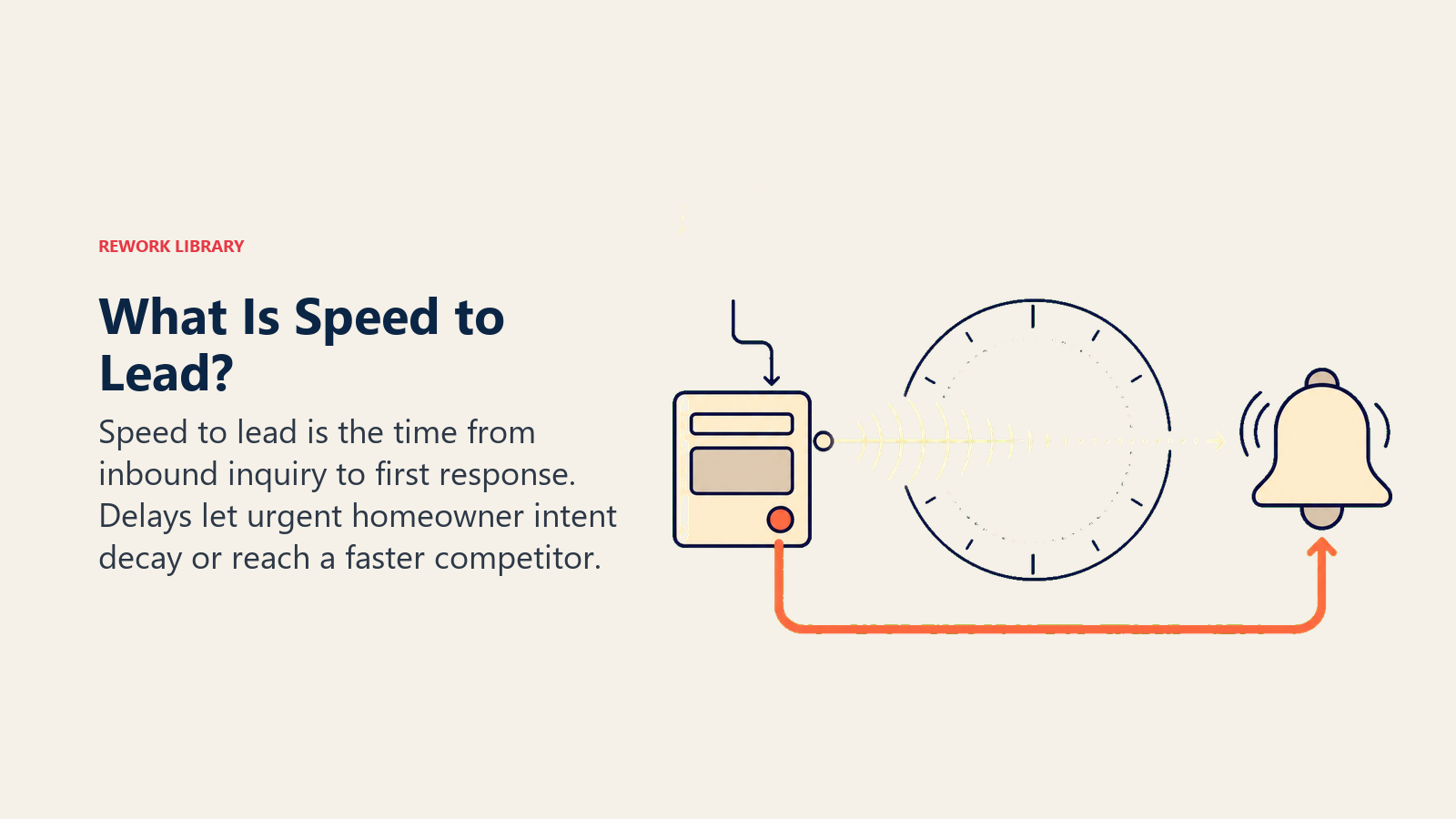
Fixing this doesn't require a large team. It requires:
- A designated response owner for every inbound channel (website form, chat, paid ad, phone line), even if that's a single person wearing multiple hats in a smaller company
- A response time service-level agreement (SLA) that's actually tracked, not just aspirational. Many operations target first-contact within 5 to 15 minutes during business hours
- After-hours coverage, since a meaningful share of home services inbound leads arrive in the evening when homeowners have time to research
- A no-lead-left-behind rule: every inbound lead gets logged in the same CRM canvassers use, so it doesn't sit in a separate silo where field ops never sees it
The D2D CRM and canvassing apps guide covers the specific tools that support this kind of shared visibility between inbound response and field canvassing, which is the technical foundation the blended model depends on.
How Warm Follow-Up Differs from a Cold Knock
Reps who are excellent at cold doors sometimes struggle with warm follow-up, and the reverse is also true. The skills genuinely differ.
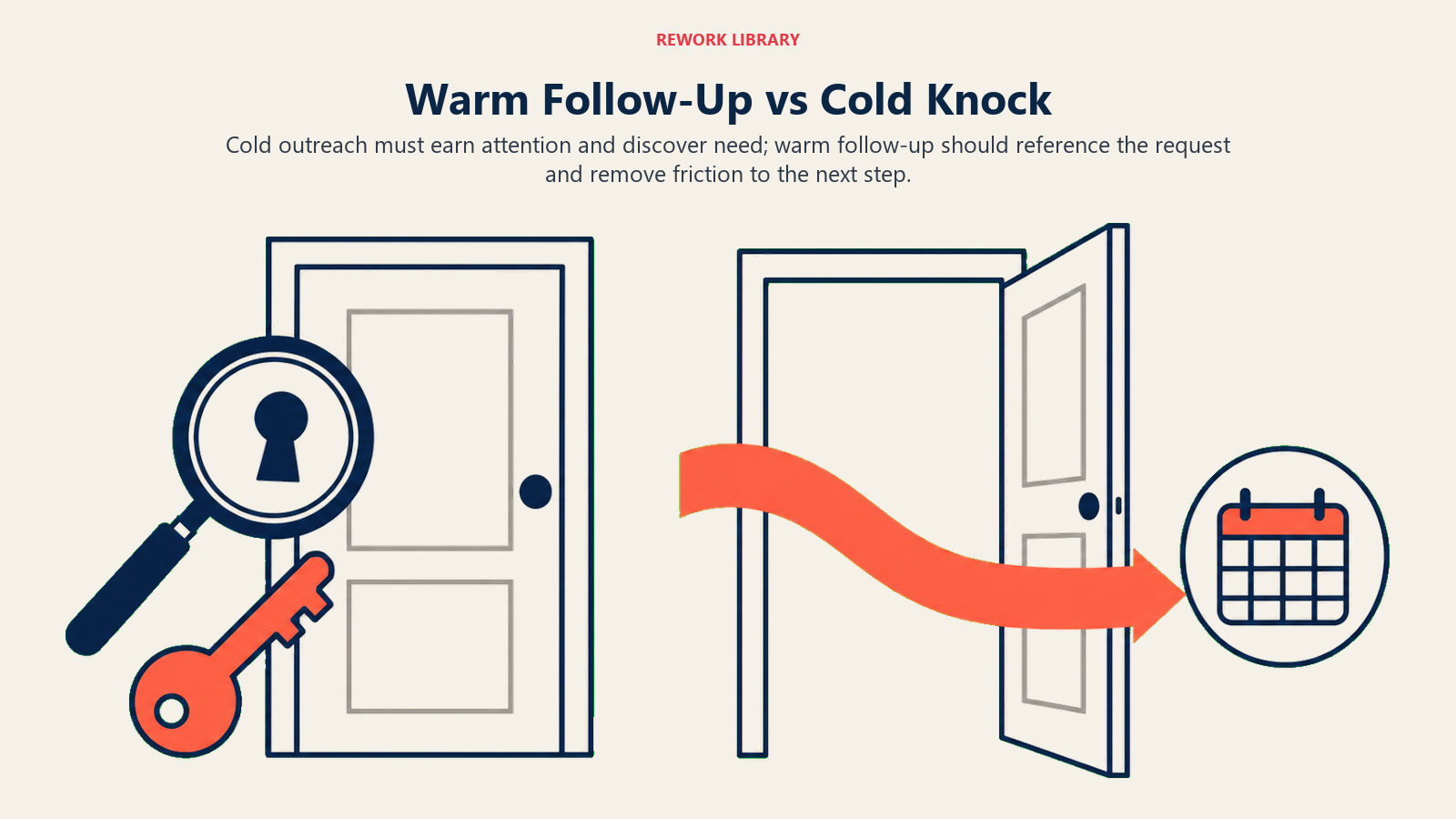
Cold knock: The rep has seconds to earn attention, diagnose a need the homeowner wasn't necessarily thinking about, and build enough trust to get a real conversation. Energy, quick rapport, and pattern-interrupt openers matter most.
Warm follow-up: The homeowner already has a need and already reached out. The job shifts to confirming details, answering the specific question that made them reach out, and removing friction to scheduling or closing. Overusing a canvassing-style hard pitch on someone who already wants the service can actually create resistance, because it feels like they're being sold rather than served.
A practical rule: when following up on an inbound lead, open by referencing what they asked for, not by re-pitching from scratch. "You mentioned you're seeing ants near the garage, when's a good time this week for us to come take a look?" moves faster than restarting the full needs-discovery conversation, because that discovery already happened when they filled out the form.
Quotable: Re-pitching a homeowner who already filled out a form is the digital equivalent of a canvasser knocking on a door that just opened by itself. The hard part of the conversation, getting attention and establishing a reason to talk, is already done. Treating it like a cold open wastes the one advantage an inbound lead actually has.
Nurturing Leads That Don't Close Immediately
Not every inbound lead converts on the first contact. Someone who requests a quote might be six weeks from actually deciding, comparing multiple companies, or dealing with a problem that isn't urgent yet.
This is where most D2D companies, built around the immediacy of a same-visit close, fall down. A canvassing culture optimized for closing today doesn't naturally build a system for nurturing a lead over weeks. But a meaningful share of inbound leads need exactly that.
Structured lead nurturing, the kind covered in lead nurturing programs, applies directly here: a sequence of value-add touches (seasonal reminders, educational content, a check-in call) that keeps the company top of mind until the homeowner is ready to act, rather than a single follow-up call that goes nowhere and then silence.
A simple nurture cadence that works for home services inbound leads:
| Day | Touch | Channel | Goal |
|---|---|---|---|
| 0 | Immediate response | Call/text | Confirm interest, answer immediate question |
| 1-2 | Follow-up if no answer | Call + email | Reach a live conversation |
| 7 | Value touch | Email or text | Seasonal tip or relevant content, not a hard pitch |
| 14 | Check-in | Call | Re-qualify timing and interest |
| 30 | Long-term nurture entry | Email/SMS sequence | Move to ongoing nurture if still not ready |
Leads that go quiet for 30+ days shouldn't be abandoned. Move them into a longer nurture sequence that periodically re-engages them without daily sales pressure.
Measuring the Blended Model
Once canvassing and inbound run together, measurement needs to reflect both, not just gross accounts closed.
Track by source, not just in aggregate. Close rate, average deal value, and 90-day retention should all be measured separately for cold canvassing, inbound digital, and referral leads. These numbers will differ significantly, and blending them into one company-wide average hides which channel is actually performing.
Watch for cannibalization, not just addition. If inbound lead volume grows while total canvassing-sourced accounts shrink at the same pace, check whether canvassers are simply working fewer doors because inbound leads feel easier, rather than the two channels genuinely adding up.
Track response time as a leading indicator, not an afterthought metric. A company that doesn't know its median time-to-first-contact on inbound leads is very likely losing a meaningful percentage of leads to a faster-responding competitor without realizing it.
The D2D sales KPIs and metrics guide covers dashboard structure for canvassing-specific metrics. Layer source-based tracking on top of that framework rather than building a separate reporting system for inbound.
Bringing It Together Without Confusing the Field Team
The risk in blending channels is organizational confusion: canvassers who don't know if they're supposed to chase inbound leads too, inside sales reps who don't know when to hand off to the field, and homeowners who get contacted twice by two different people from the same company.
A workable operating principle: one lead, one owner, at any given time. Inbound leads are owned by inside sales or scheduling until an appointment is booked, then ownership transfers cleanly to the field rep running that appointment. Canvassers who discover an existing inbound lead at a door they're about to knock should be able to see that in the CRM and adjust their approach, not duplicate outreach that's already happening elsewhere.
Companies that get this right stop treating canvassing and digital marketing as competing budgets and start treating them as one funnel with two entry points. The homeowner doesn't care how they came into contact with your company. They care whether the experience felt coordinated or chaotic. Getting that right is a bigger competitive advantage in most home services markets than either channel is on its own.
Learn more: Territory design and assignment covers how to avoid canvassing territory that overlaps with active inbound campaigns. On-site sales presentation covers the appointment-based selling skills that scheduled inbound leads require. Solar canvassing and door-to-door covers how a higher-consideration vertical blends digital lead generation with field canvassing, a useful comparison for security and fiber teams facing similar dynamics.

Senior Implementation Consultant
On this page
- Why Pure Canvassing Models Leave Money on the Table
- The Three Lead Types D2D Teams Actually Work
- How Should a Blended Routing Model Assign Leads?
- What Is the Speed-to-Lead Problem in D2D Companies?
- How Warm Follow-Up Differs from a Cold Knock
- Nurturing Leads That Don't Close Immediately
- Measuring the Blended Model
- Bringing It Together Without Confusing the Field Team