Sample-to-Script Conversion: Turning Free Product Into First Prescriptions and Repeat Business
Turn this article into takeaways for your work.


Each assistant summarizes the article only for you and suggests best practices for your work.
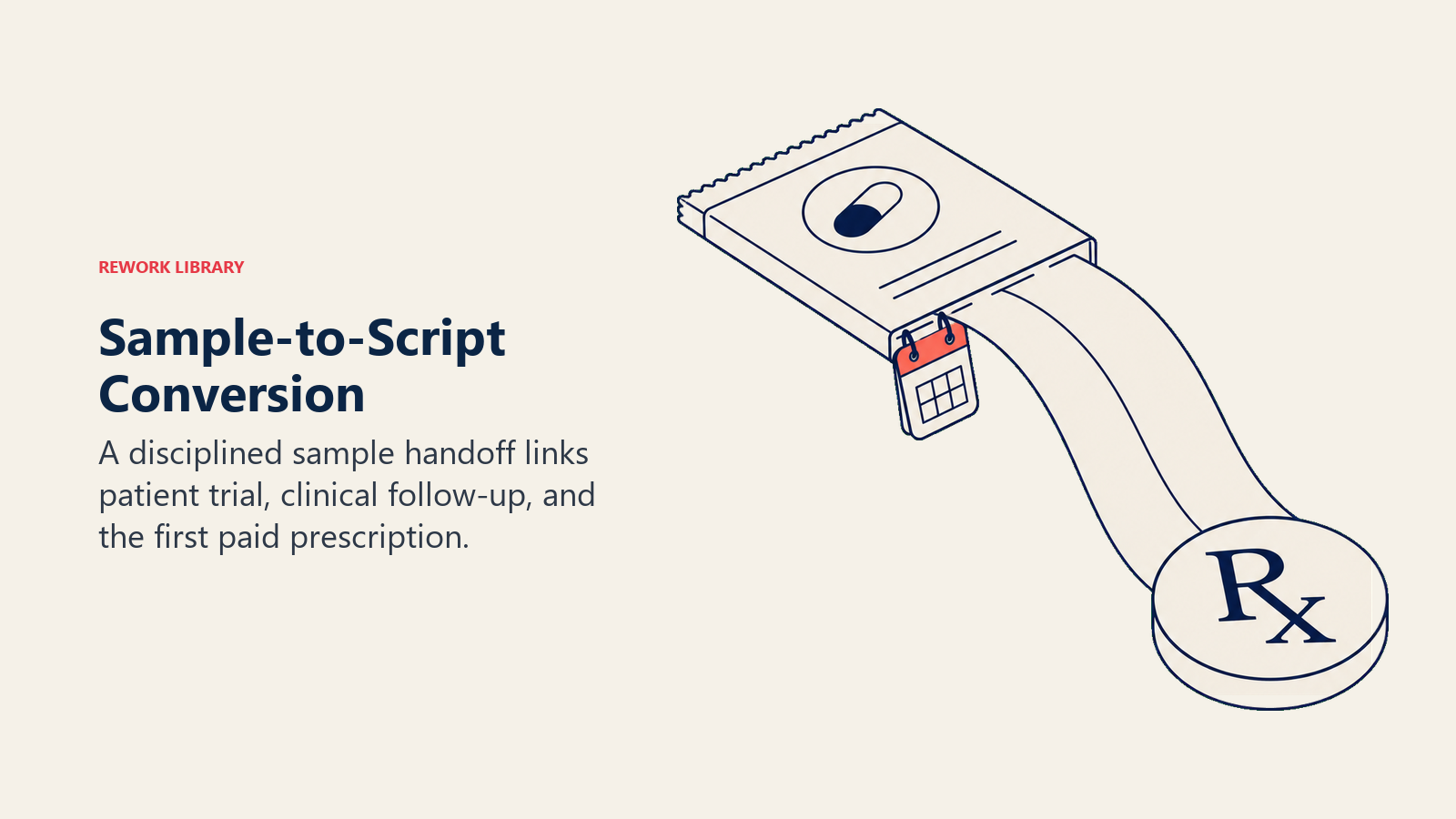
There's a territory where the rep samples generously. Every visit to every practice ends with a handful of units. The doctor always says "thanks, we'll use these." The rep leaves feeling productive. But when the regional manager pulls the secondary sales data for that territory, the prescription numbers are flat. The rep can't explain it. Neither can the manager. The samples went somewhere. Just not into scripts. This is one of the most common and most expensive gaps in pharma field force performance. Sampling is treated as a goodwill gesture or a relationship maintenance tool rather than what it should be: a structured clinical trial facilitation program with a defined conversion step.
Without a conversion protocol, sampling is a cost center. The product costs money. The rep's time costs money. The administrative burden of accountability and compliance costs money. And if none of that investment connects to a measurable prescribing outcome, the ROI conversation becomes very uncomfortable very fast.
With a conversion protocol, sampling becomes one of the highest-leverage tools a field force has. A doctor who tries a product with the right patient type, sees a positive outcome, and gets a structured follow-up conversation from a rep who asks the right question at the next visit is well on the path to becoming a reliable prescriber. The protocol is what connects the trial to the script.
The Purpose of Sampling
Key Facts: Sample-to-Script Conversion
- Patients who receive a first-month free sample experience the therapy during the period when side effects are most likely and persistence is lowest, giving the prescribing physician a chance to assess outcomes before the patient faces a financial decision about continuing.
- To illustrate the protocol gap: imagine one rep generating 18 scripts per 100 sample units while a comparable rep in a similar territory generates only 4. That gap is rarely a product or market problem; it's a protocol problem, and it closes with focused coaching on the conversion habit rather than increased sampling volume.
- The sample log's follow-up date field is the one most frequently left blank in practice, and it's the field that matters most; without a planned follow-up visit, there is no conversion event in the protocol, and the sample becomes a donation rather than a trial facilitation.
Before getting to the protocol, it's worth being precise about what sampling is actually supposed to accomplish.
Sampling is trial facilitation for the prescribing physician. It removes the financial and inertial barriers to trying a product with a first appropriate patient. The doctor doesn't have to write a prescription the patient might not fill, doesn't have to manage a prior authorization for an unfamiliar drug, and doesn't have to take the rep's word for how the product performs. They can try it. That's the purpose.
Sampling is also patient experience for adherence. When a patient takes their first thirty-day supply at no cost, two things happen. First, they experience the therapy during the period when side effects are most likely and persistence is lowest. Second, they return to the doctor for follow-up before they've had to make a financial decision about continuing. The physician can assess the outcome and write a full prescription with a patient who's already successfully on therapy.
What sampling is not: a relationship maintenance gesture, a way to fill a visit without a real objective, or an inventory item to distribute broadly across accounts to hit an activity metric. Every sample should be tied to a specific patient type, a specific clinical objective, and a planned follow-up conversation.
Sample Accountability Framework
Commercial organizations have regulatory and legal obligations around sampling that vary by market, but the common elements are: accurate rep inventory tracking, HCP signature at point of transfer, and documentation of the patient context at time of delivery.
Rep inventory reconciliation Every rep bag should have an accurate count of units in at the start of the day and units acknowledged by HCPs at the end of the day. The gap is what reconciles. Units that left the bag without a documented HCP signature are a compliance risk and an audit exposure. Field managers conducting ride-alongs should include a bag reconciliation check as a standard activity, not just a periodic audit.
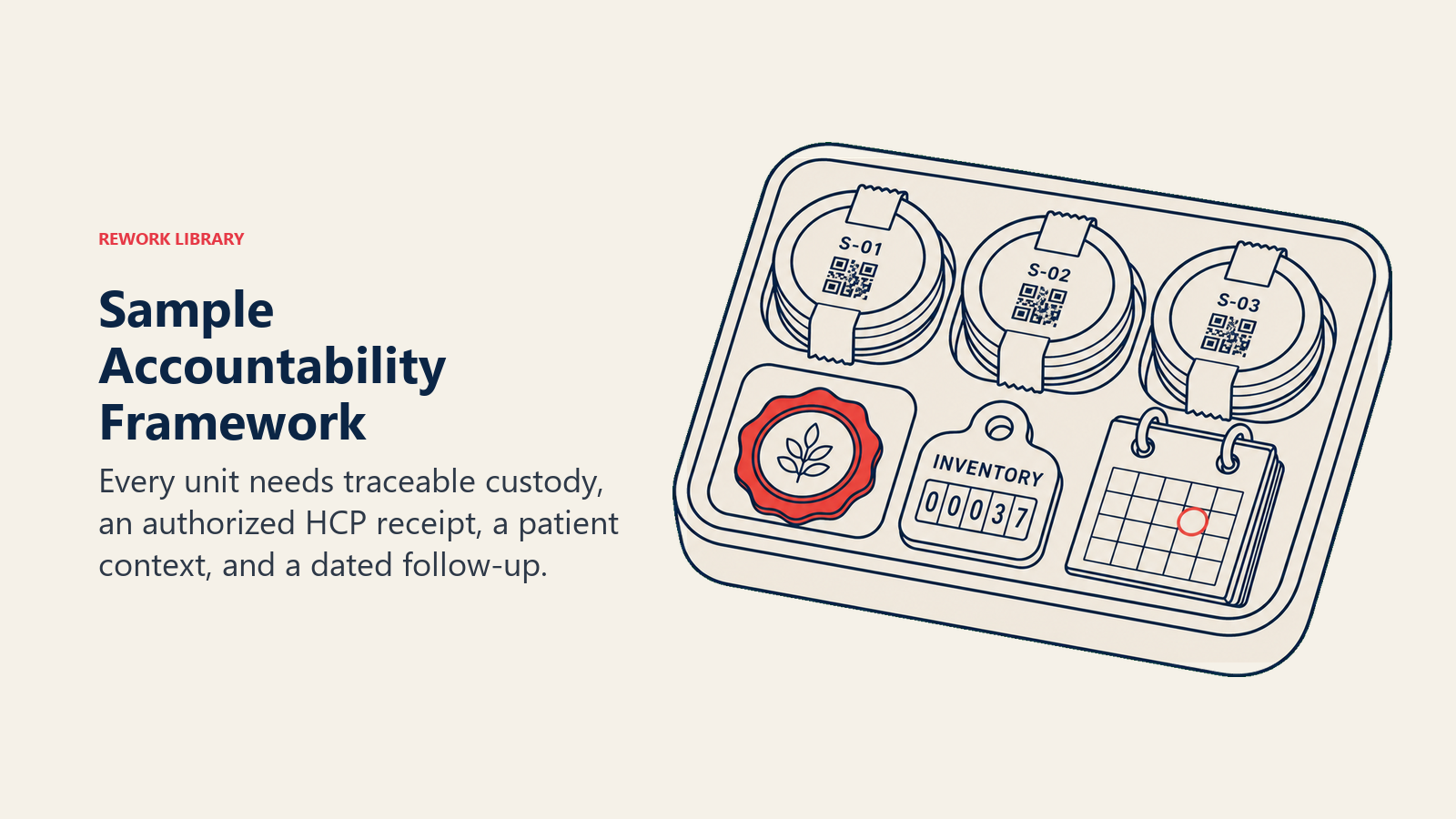
Inventory apps and CRM integrations handle much of this automatically in modern field force setups. But the habit of manual reconciliation is worth maintaining, because it builds the rep's relationship with their inventory as an asset to be deployed strategically rather than a supply to give away.
HCP signature and receipt requirements
Most markets require a documented HCP signature at the time samples are transferred. This isn't a formality. It's what connects the unit to an authorized prescriber, which is what makes the transfer legally compliant. In the US, 21 CFR 203.31 requires a signed receipt from the licensed practitioner at the point of direct sample delivery, and every unit must be reconcilable back to that receipt. Reps who leave samples at the front desk without a signature, hand them to a nurse with a promise to get the physician's signature later, or transfer without documentation at all are creating exposure that no business relationship justifies.
The signature requirement also forces a conversation. A rep who needs a physician's signature to complete a sample transfer has, at minimum, a reason to get in front of the physician rather than leaving materials with staff.
Sample request tied to patient type
The most important compliance and conversion element is this: before handing over samples, the rep asks the physician what patient they have in mind. Not as a check-the-box compliance step, but as the beginning of the conversion conversation.
"Who was the patient you had in mind when you requested these?" That one question changes everything. If the doctor has a specific patient, the rep now knows the profile to reference at the follow-up visit. If the doctor doesn't have a specific patient, the rep has an opportunity to describe the patient type most likely to benefit from a trial, sharpening the clinical targeting before the units leave the bag.
Doctor detailing best practices cover the broader clinical conversation, but this patient-type question belongs specifically in the sampling interaction. It's the step that connects sample handoff to clinical intent.
Converting the Sample to a Script
The sample event is not the conversion event. It's the setup for the conversion conversation, which happens at the next visit. The follow-up question
At the next call, the rep's first substantive topic is the patient from the last visit. "Last time you took samples for a patient with [profile the doctor described]. How did that patient respond?" This question does three things. It shows the rep was listening and engaged at the last visit. It opens a clinical dialogue about patient outcomes rather than a sales pitch about product features. And it creates the natural conversational bridge to writing a full prescription if the trial went well.
If the doctor had a positive experience, the conversion question is direct: "Would it make sense to start that patient on a full prescription at this point?" If the trial didn't go as expected, the conversation shifts to troubleshooting: was the patient selection right, was there an adherence issue, does the doctor have questions about the clinical approach? Either conversation is more productive than the rep arriving and pretending the previous sample interaction didn't happen.
Post-sample detailing at the next visit
The first five to ten minutes of the follow-up visit should be structured around the sample outcome, not a fresh product pitch. This is where the rep demonstrates clinical partnership rather than transactional sales behavior. The prescribing doctor who feels that a rep is genuinely interested in patient outcomes, not just prescription numbers, is much more likely to engage in a meaningful clinical dialogue about future patients. This follow-up structure mirrors the logic of lead nurturing programs: the goal is a sequence of value-adding touchpoints, not a single conversion moment, and the quality of each interaction determines whether the relationship deepens or stalls.
Linking sample uptake to secondary sales data at the pharmacy
Secondary sales tracking and pull-through is the mechanism that connects what happens in the doctor's office to what happens at the pharmacy counter. In markets where pharmacy-level sales data is available by prescriber, the rep can track whether a sample interaction produced a first prescription fill at a nearby pharmacy. When the data is available, this closes the loop completely: doctor sampled on date X, first prescription filled at date Y, patient refilled at date Z.
Where pharmacy-level prescriber data isn't available, HCP relationship retention conversations about patient outcomes serve as the qualitative proxy.
Which Accounts Should Receive the Highest Sample Investment?
Not all accounts are equal candidates for sampling investment. Commercial leaders who allocate samples broadly to avoid conflict between reps and physicians often find that the accounts most likely to convert actually receive fewer units than they'd need for meaningful trial, while accounts that haven't moved a single new script in six months receive regular replenishment. Sample allocation should be concentrated on high-potential new trialists. The criteria for high-potential vary by product, but typically include:
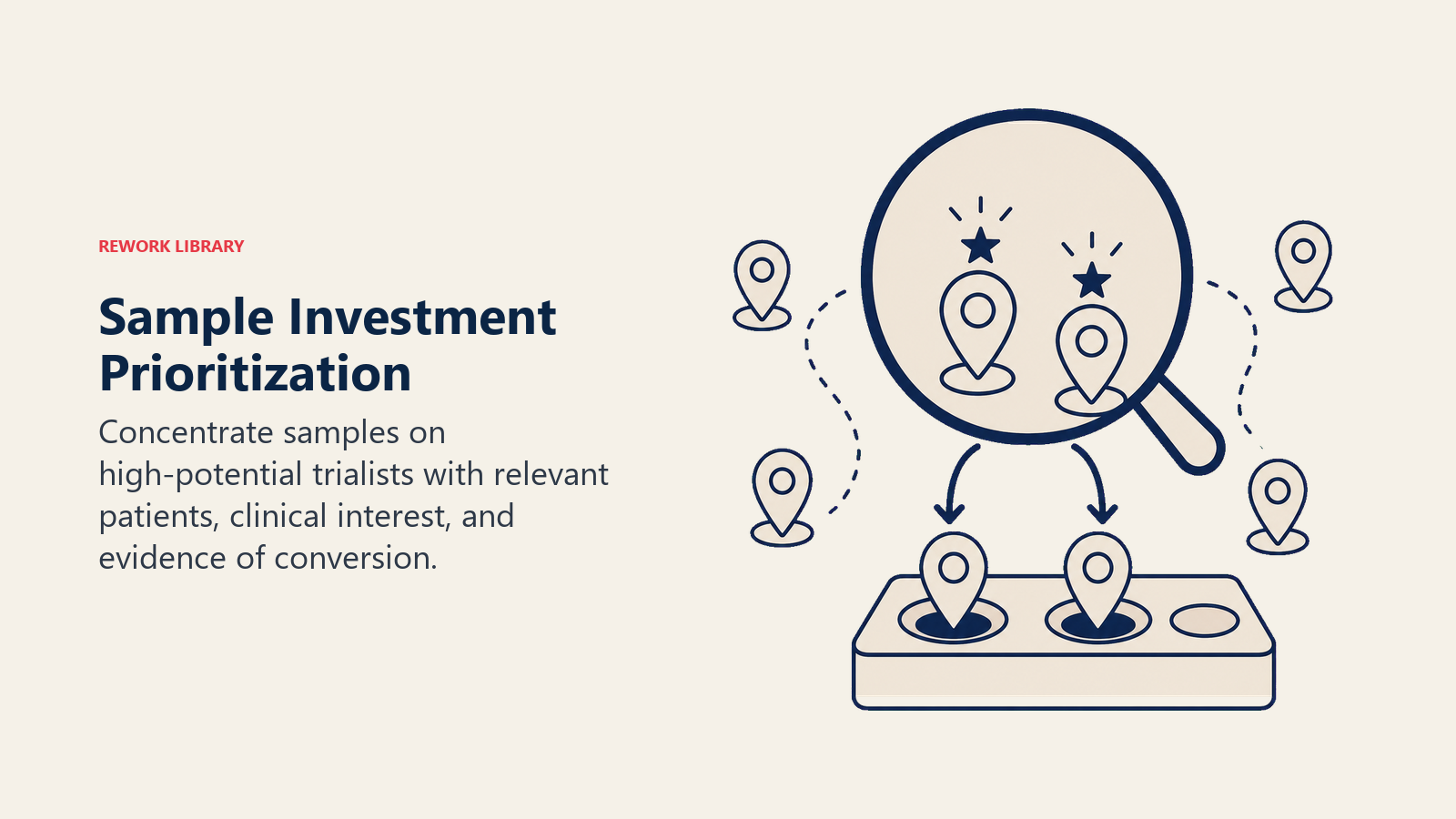
- Physicians who treat a volume of patients matching the approved indication profile
- Accounts that have not yet prescribed the product but have prescribed competitive alternatives
- Physicians who have expressed clinical interest but cited cost or inertia as barriers to a first trial
- Accounts where a previous sample trial produced an early script, indicating responsiveness
Accounts that have received substantial samples across multiple visits without any script movement are not automatically entitled to continued sample investment. The conversation with those physicians should shift: what would change the calculus? Is the barrier clinical, financial, or habitual? The answer shapes what comes next, whether that's a different patient type conversation, a different support tool, or a decision to redirect samples to a higher-potential account.
Common Sampling Mistakes
Over-sampling loyalists: Physicians who already prescribe consistently and enthusiastically don't need a continuous sample supply to maintain their behavior. Samples delivered to loyal prescribers are essentially free product for patients who would have been prescribed the medication anyway. The rep gets credit for the interaction, but no incremental conversion occurs. Redirect that inventory toward conversion targets.
Sampling without a patient conversation: Handing over samples in response to "do you have any samples?" without asking about the specific patient type is the fastest way to produce the territory described in the opening. The patient question isn't a sales technique. It's the clinical framing that makes the sample useful.
No follow-up protocol: A sample that isn't followed up is a donation. The conversion happens in the conversation at the next visit. If there's no next visit, or if the next visit doesn't reference the sample interaction, the trial has no closure and no learning.
Measuring Sample ROI
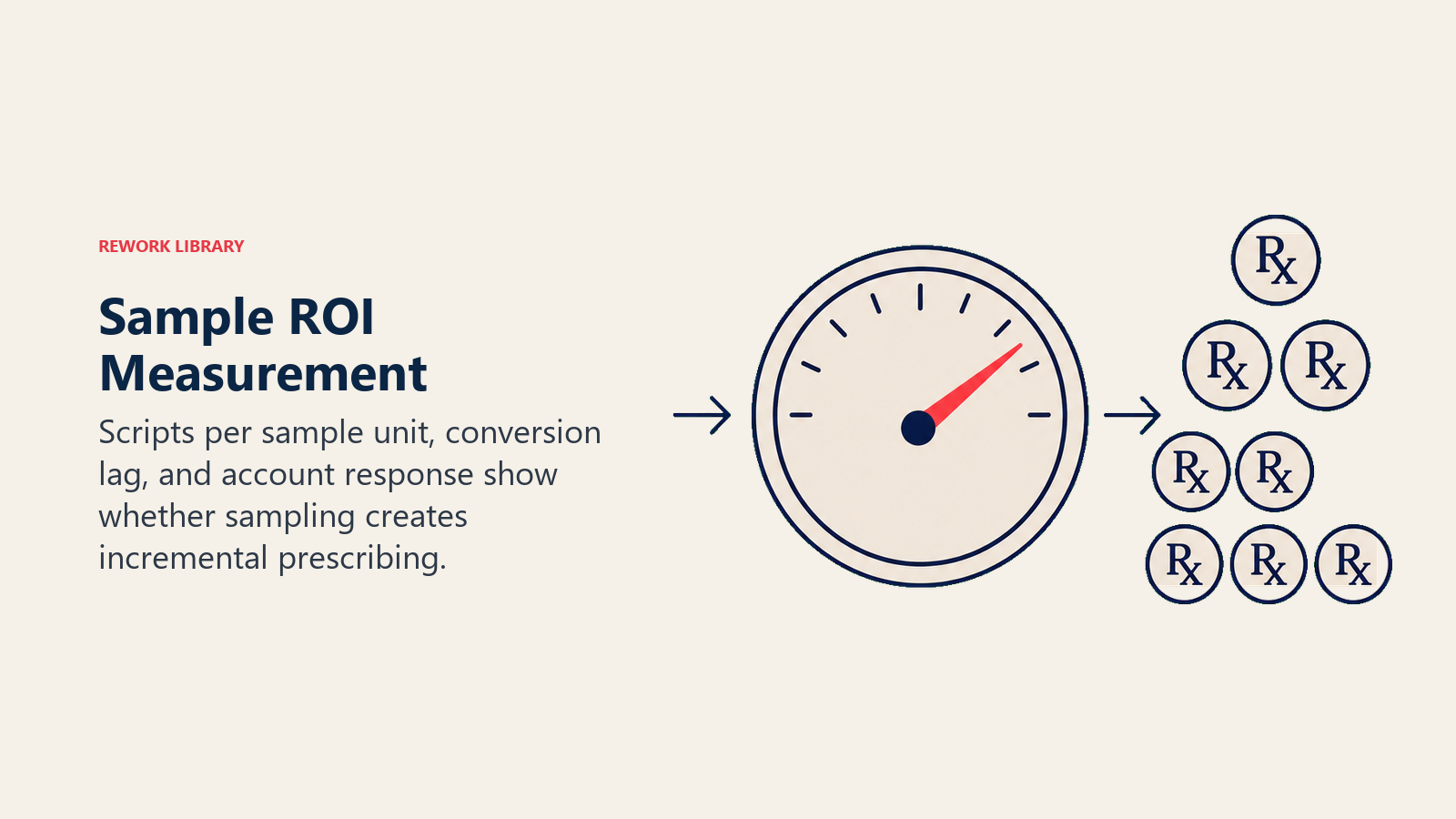
Sample ROI is measurable, and commercial organizations that don't measure it are flying blind on one of their highest-cost field activities.
The core metric is scripts generated per sample unit, calculated by product, territory, and rep. The table below shows how this analysis typically structures across a territory review.
 | Dimension | Metric | Use Case |
|---|---|---|
| By product | Scripts per 100 sample units | Compare conversion efficiency across products in portfolio |
| By territory | Scripts per rep per quarter vs. sample units deployed | Identify reps who convert well vs. those who sample and don't follow up |
| By account | Scripts per account vs. samples received | Identify accounts over-sampled relative to conversion; reallocate |
| By time period | Conversion lag (days from sample to first script) | Track whether follow-up timing is optimized |
| Dimension | Metric | Use Case |
|---|---|---|
| By product | Scripts per 100 sample units | Compare conversion efficiency across products in portfolio |
| By territory | Scripts per rep per quarter vs. sample units deployed | Identify reps who convert well vs. those who sample and don't follow up |
| By account | Scripts per account vs. samples received | Identify accounts over-sampled relative to conversion; reallocate |
| By time period | Conversion lag (days from sample to first script) | Track whether follow-up timing is optimized |
When one rep generates substantially more scripts per 100 sample units than a comparable rep in a similar territory, it is rarely a product problem or a market problem. It's a protocol problem. The first rep has a conversion habit. The second doesn't. Closing that gap across a regional team is one of the highest-return coaching investments a field manager can make. The same measurement discipline that drives this analysis across a field team is what RevOps metrics frameworks apply to every stage of a commercial pipeline: track conversion rate by rep, segment, and activity type so coaching goes to the right people on the right behaviors.
Prescription demand generation analytics often break this down further by indication or patient segment, which helps brand teams understand whether the product is converting in the approved patient population or being used off-label. That distinction matters for both commercial strategy and regulatory compliance.
Sample Accountability Log Template
Each rep should maintain a running sample log, either in CRM or as a structured mobile entry. The log captures six elements per sample interaction.
| Field | What to Record |
|---|---|
| Date | Date of sample transfer |
| HCP name and account | Physician name, clinic or practice |
| Product and quantity | Units transferred by product SKU |
| Patient type discussed | Brief description of patient profile the physician described |
| HCP signature | Confirmed or pending |
| Follow-up date | Target date for next visit to review trial outcome |
The follow-up date is the field most often left blank in practice, and it's the field that matters most. If there's no follow-up date, there's no conversion event planned.
Conversion Follow-Up Question Bank
These are the questions that drive sample-to-script conversion at the follow-up visit. They're direct, clinical, and designed to open a dialogue about patient outcomes rather than push toward a transactional close.
- "Last time you took samples for a patient with [profile]. How did they respond?"
- "Were there any tolerability questions that came up in the first two weeks?"
- "Is that patient a candidate for a full prescription at this point?"
- "What would make you comfortable writing a prescription for the next patient who fits that profile?"
- "Was there anything about the trial that gave you new information about how the product performs in your patient population?"
- "If the first patient had a positive response, who's the next patient in your panel who might benefit from a trial?"
The last question is the most powerful and the most underused. It extends the conversion conversation from one patient to the next, building a pattern of trial that compounds over time.
Regulatory and Compliance Controls
Pharmaceutical marketing compliance and ethics standards govern sampling programs tightly, and for good reason. The specific requirements vary by market and by product category, but the common compliance controls include:
- Sample limits per physician per year: Most markets cap the number of units a single physician can receive from a single manufacturer. Reps must know the cap and track against it.
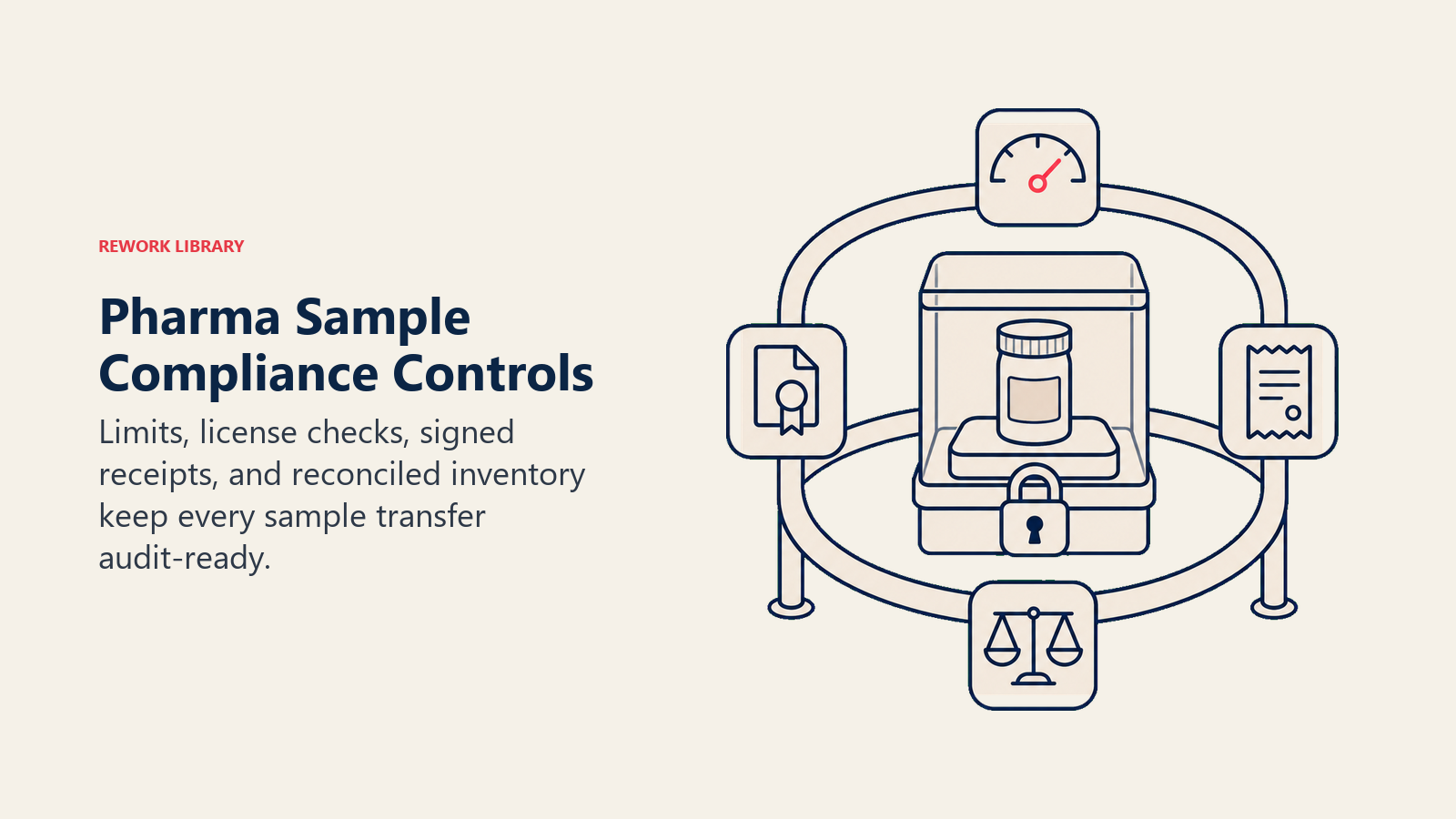
- Physician eligibility: Physicians must be licensed and in good standing with their licensing authority to receive samples. Reps should confirm eligibility through their CRM before sample delivery.
- Audit-readiness: Sample logs must be complete, accurate, and retrievable for regulatory audit. Missing signatures, unreconciled inventory, or undocumented transfers are audit findings, not minor administrative oversights.
- Controlled substance restrictions: In many markets, controlled substance sampling is prohibited entirely. Reps working in areas like pain management or psychiatry need explicit guidance on what can and cannot be sampled.
Sample compliance isn't just a regulatory concern. It's a brand integrity issue. A manufacturer whose field force has sample compliance problems loses credibility with physicians, payers, and regulators simultaneously.
The OIG's guidance on physician relationships with vendors notes that sample programs require clear segregation between compliance-required documentation and the commercial interaction itself, and that mixing the two creates both ethical and audit risk. Studies on prescription fill rates in linked claims data show that initial non-fill rates are highest in the first 30 days, which is precisely why structured follow-up after a sample handoff matters: the patient who received a free trial unit is still at high risk of not progressing to a paid prescription without a clinical touchpoint.
Physicians who receive samples without a patient-type question at handoff and no follow-up conversation at the next visit tend to use those samples as a goodwill gesture for any patient who asks, rather than as a targeted trial for the specific patient profile most likely to convert to a full prescription.
The "last patient who fit that profile" question at follow-up is the most powerful and most underused tool in the conversion protocol. Asking "who's the next patient in your panel who might benefit from a trial?" extends a single sample event into a repeatable prescribing pattern, converting occasional trialists into reliable prescribers.
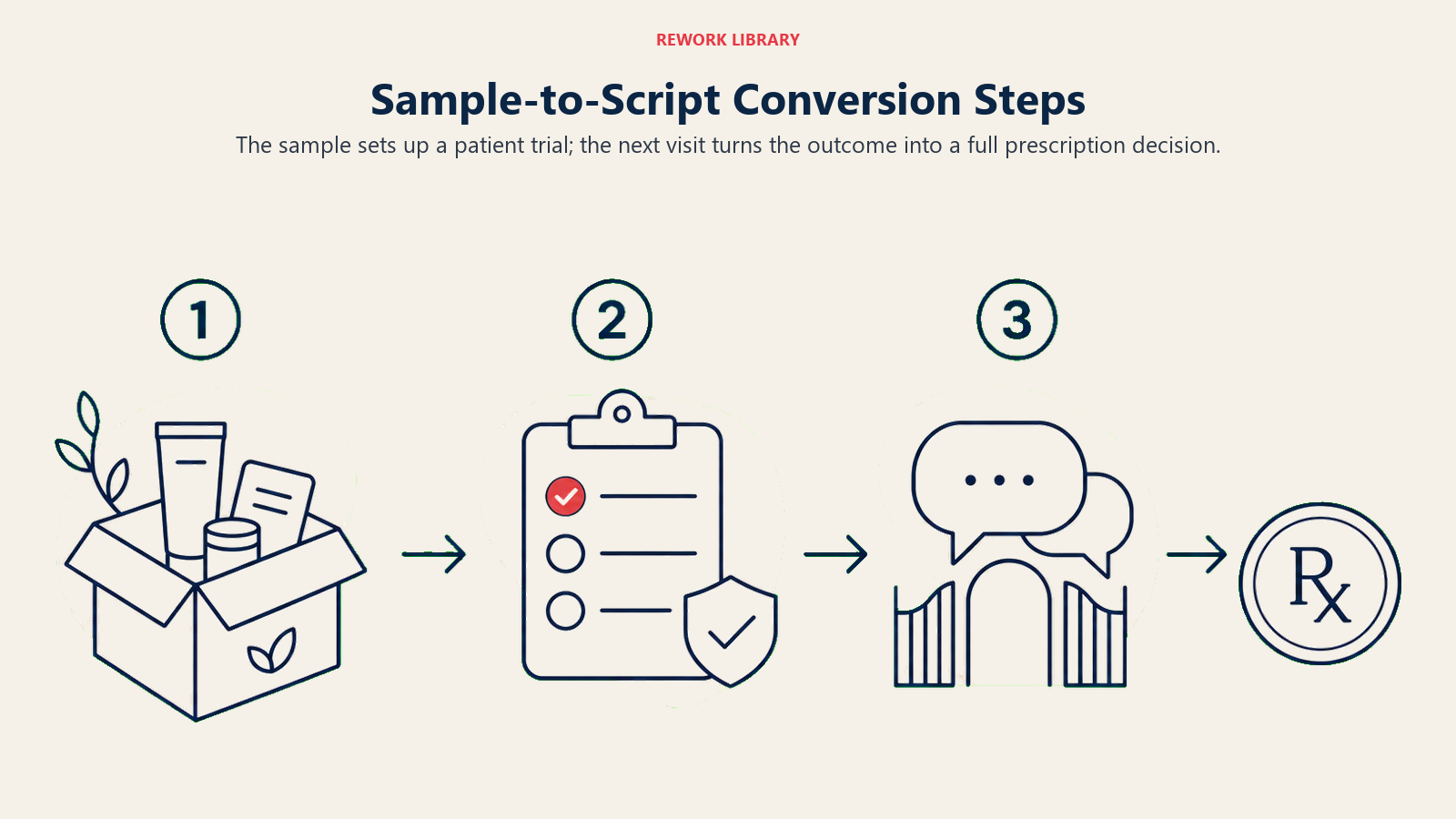
The Sample Conversion Protocol is the three-step sequence described in this article: a patient-type question at the point of sample handoff ("who was the patient you had in mind?"), a structured follow-up conversation at the next visit built around the trial outcome for that specific patient, and a direct conversion ask when the outcome was positive ("would it make sense to start that patient on a full prescription at this point?"). The protocol is what connects sample cost to prescription revenue.
Conclusion: Sampling Without Conversion Protocol Is a Cost Center
The math is simple. Each sample unit has a cost of goods. The rep visit has a labor cost. The administrative infrastructure has a compliance cost. Add those up across a territory and a year, and sampling is a substantial investment. The return on that investment is one thing only: prescriptions.
Organizations that treat sampling as a territory management tool or a relationship maintenance activity without a conversion protocol attached to every sample event are spending that investment without the mechanism to collect a return. They're the territory in the opening of this article: heavy samplers, flat scripts, and no explanation for why.
The conversion protocol is the mechanism. Patient-type question at sample handoff. Follow-up conversation structured around trial outcome. Conversion ask when the outcome was positive. Clinical dialogue when it wasn't. Scripts per unit tracked by rep, territory, and account. Manager coaching focused on conversion habits, not sample volume.
With that protocol in place, sampling isn't a goodwill gesture. It's one of the highest-leverage field activities in the commercial toolkit.
Frequently Asked Questions about Sample-to-Script Conversion
What is the sample conversion protocol in pharma field sales?
The protocol has three steps. At the point of sample handoff, the rep asks which patient the physician has in mind. At the next visit, the rep opens with the trial outcome for that specific patient. If the outcome was positive, the rep asks directly whether a full prescription makes sense for that patient. If the outcome was negative or unclear, the rep shifts to troubleshooting: was the patient selection right, was there an adherence issue, what would need to change? Every sample event needs a planned follow-up conversation. Without one, the sample has no conversion mechanism.
How do you measure sample ROI?
The core metric is scripts generated per 100 sample units, calculated by product, territory, and rep. The table in this article structures that analysis across four dimensions: by product (comparing conversion efficiency across portfolio), by territory (identifying reps who convert well versus those who sample and don't follow up), by account (identifying over-sampled accounts relative to conversion), and by time period (tracking conversion lag from sample to first prescription). Consistent measurement at the rep and account level is what surfaces the protocol gaps that coaching needs to address.
What is the single most important compliance step in pharmaceutical sampling?
HCP signature at the point of sample transfer. Not collected later, not given to a nurse with a promise to pass it along, but confirmed with the physician at the time units change hands. This is what connects the unit to an authorized prescriber and makes the transfer legally compliant. It also forces a face-to-face interaction that creates the opportunity for the patient-type conversation that begins the conversion process.
Which physicians should not receive continued sampling investment?
Loyal prescribers who already prescribe consistently and enthusiastically do not need a continuous sample supply to maintain their behavior. Units delivered to those physicians are free product for patients who would have been prescribed the medication anyway, with no incremental conversion occurring. Sample allocation should be concentrated on high-potential new trialists: physicians who treat the right patient population, have prescribed competitive alternatives, or have expressed clinical interest but cited cost or inertia as barriers to a first trial.
What is the correct question to ask at a sample follow-up visit?
"Last time you took samples for a patient with [profile the doctor described]. How did they respond?" That question does three things: it signals that the rep was listening at the last visit, it opens a clinical dialogue about patient outcomes rather than a product pitch, and it creates the natural bridge to a full prescription if the trial went well. The worst follow-up question is a generic "did the samples work?" It implies the rep forgot the specific patient context and treats the interaction as transactional rather than clinical.
What compliance rules govern pharmaceutical sampling programs?
The common elements across most markets include: sample limits per physician per year, physician eligibility verification through a licensing check, documented HCP signature at every transfer, and full audit-readiness for all sample logs. Controlled substance sampling is prohibited in many markets entirely. Reps working in pain management or psychiatry need explicit guidance on what cannot be sampled before they enter the field. Missing signatures, unreconciled inventory, or undocumented transfers are audit findings, not administrative oversights.
Learn More

Senior Implementation Consultant
On this page
- The Purpose of Sampling
- Sample Accountability Framework
- Converting the Sample to a Script
- Which Accounts Should Receive the Highest Sample Investment?
- Common Sampling Mistakes
- Measuring Sample ROI
- Sample Accountability Log Template
- Conversion Follow-Up Question Bank
- Regulatory and Compliance Controls
- Conclusion: Sampling Without Conversion Protocol Is a Cost Center
- Learn More