Repeat Order and Reorder Systems: Building Automatic Revenue in Pharma Channels
Turn this article into takeaways for your work.


Each assistant summarizes the article only for you and suggests best practices for your work.
Ask any experienced pharma sales manager where revenue disappears when territories are temporarily unassigned or when a rep goes on leave. The answer is almost always the same: reorders. Not because prescriptions stop being written, but because nobody remembered to call.
In a field force model where reorders depend on a rep showing up at the right moment, spotting low stock, and asking the pharmacist to place an order, the revenue is only as reliable as the rep's calendar. That is not a system. It is relationship-dependent heroics dressed up as operations. And it is the source of a predictable, measurable revenue drain that shows up in secondary sales tracking and pull-through data as erratic stockout cycles and missed secondary sales targets.
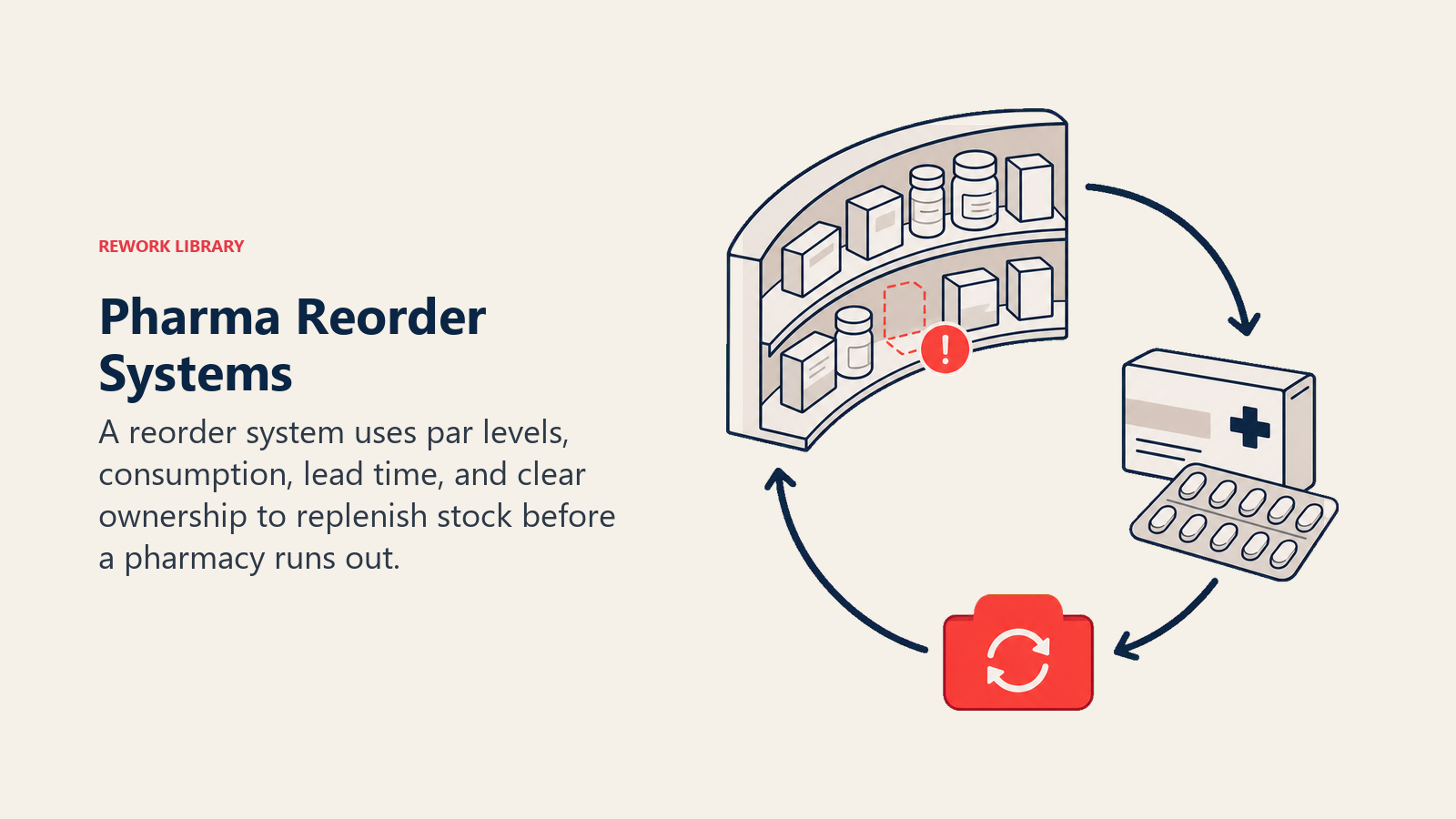
Building a repeat order and reorder system means replacing that dependency with a process that continues whether the rep visits this week or not. It means par levels are set, consumption is tracked, thresholds trigger restocking, and the rep's role shifts from firefighter to overseer. This article shows commercial leaders how to design that system and how to measure whether it is actually working.
Is Your Reorder System Reactive or Proactive?
The distinction matters enormously in commercial terms. Most pharma field forces operate in reactive mode. The rep visits a pharmacy, notices that stock is lower than expected, and either places an order on the spot or follows up after the visit. If the rep does not visit before a stockout occurs, the product is simply unavailable. Scripts written during that window may be substituted, deferred, or lost entirely.
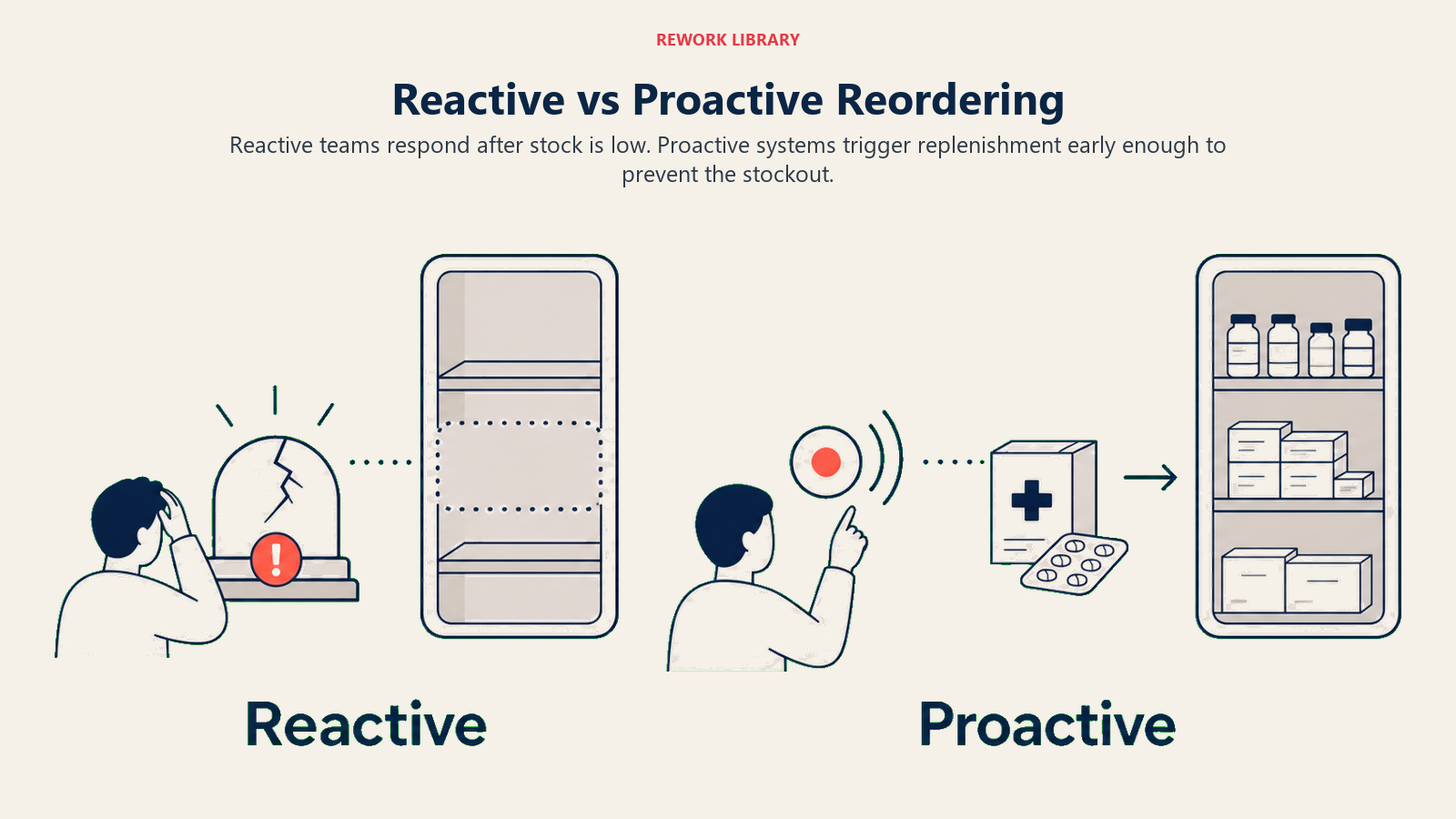
Proactive reorder systems work differently. Stock levels are reviewed on a schedule. When inventory at an account falls below a pre-agreed par level, an order is automatically triggered or a prompt is sent to whoever owns the reorder action (rep, pharmacy buyer, or distributor). The order arrives before the stockout, not after. The pharmacist never has to tell a patient the product is out of stock. And the rep's visit focuses on relationship development and detailing, not emergency restocking.
Key Facts: Stockouts and Reorder System Failures
- Patients experiencing stockouts reduce adherence and seek alternative vendors; in infectious-disease categories such as HIV and tuberculosis, treatment interruptions from stockouts are associated with drug resistance, according to a study of essential medicine availability in low- and middle-income countries (PMC, 2022: https://pmc.ncbi.nlm.nih.gov/articles/PMC9287964/).
- Seasonal demand fluctuations and variable delivery lead times are the leading reasons facilities stock out even when product is available upstream, per a field study on inventory management and essential drug availability in Zambia (PMC, 2016: https://pmc.ncbi.nlm.nih.gov/articles/PMC4882057/).
- Static par levels calibrated to average demand commonly fail during peak periods, often triggering stockouts at exactly the moment detailing investment is highest.
The commercial case for proactive systems is straightforward. Stockouts do not just delay revenue; they cause permanent revenue loss. A patient who goes to the pharmacy for a refill and finds the product unavailable has three options: wait, substitute, or lapse. In chronic therapy categories, substitution and lapse are far more common than waiting. Research on essential medicine stockouts across low- and middle-income countries confirms this pattern at scale: patients experiencing stockouts reduced adherence and sought alternative vendors; in infectious-disease categories such as HIV and tuberculosis, treatment interruptions were associated with drug resistance. Each stockout is a potential adherence cliff trigger, which connects directly back to the pull-through loop described in pharmacy order and stock management.
Designing a Reorder Trigger System
A reorder trigger system has four components: par level setting, consumption rate tracking, lead time buffering, and trigger ownership. The underlying logic is simple: stock falls to a threshold, and an order is triggered before the shelf goes empty. The Par-Trigger-Buffer Framework formalizes this: set a par level per account and SKU based on 8-12 weeks of consumption data, define the trigger point as par level plus lead time buffer, assign clear ownership for the order action, and verify system performance on every rep visit.
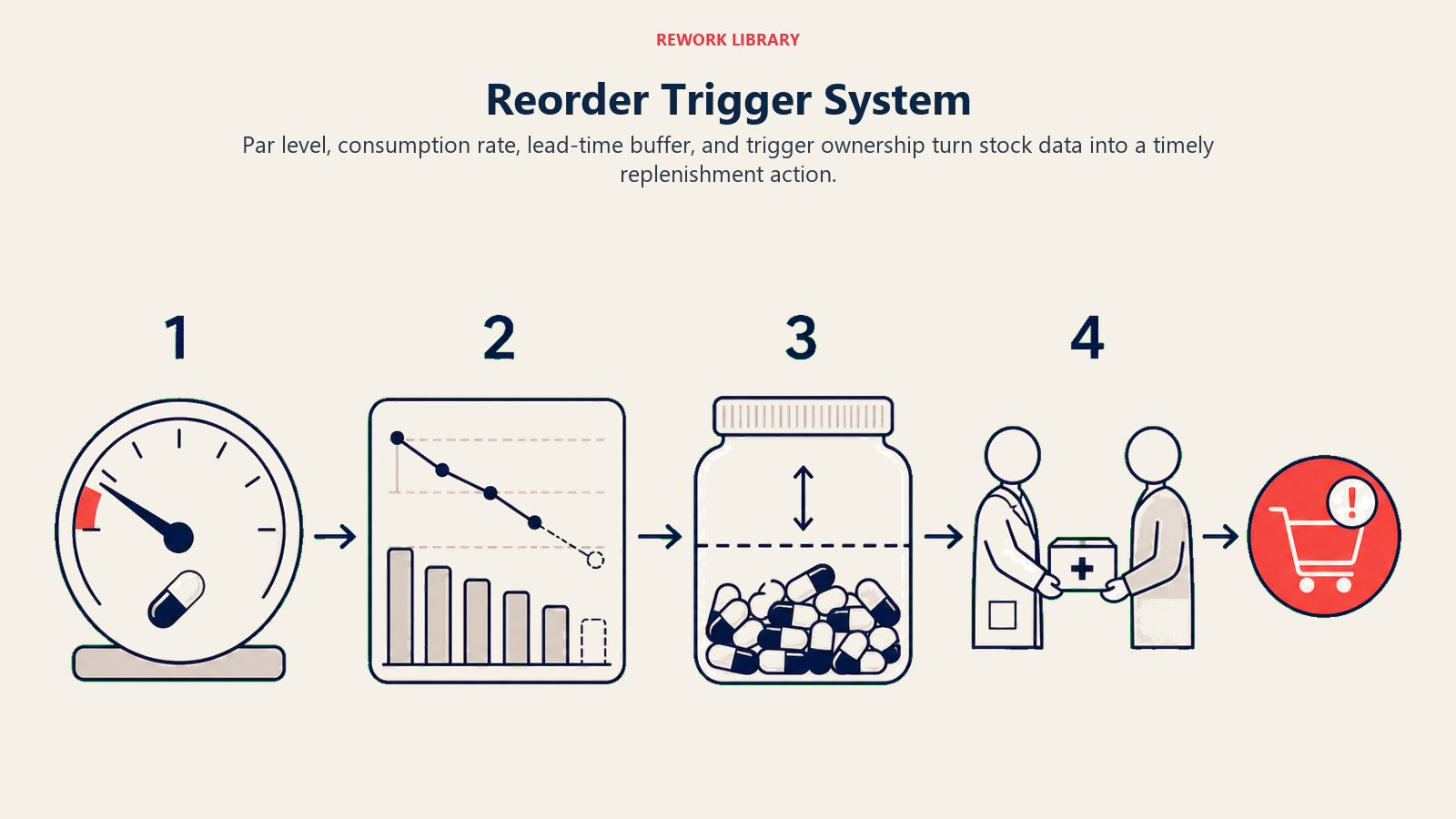
Par level setting determines how much of each SKU a given account should hold at any time to cover expected demand without over-committing capital to slow-moving inventory. Par levels should be set per account, per stock-keeping unit (SKU), and should account for the account's average weekly consumption rate and the supplier's typical lead time.
A simple par level framework:
| Account Variable | Formula Input | Example |
|---|---|---|
| Average weekly unit sales | Based on last 8-12 weeks | 40 units/week |
| Lead time from order to delivery | Distributor-specific | 3 days |
| Safety buffer (days of cover) | Commercial risk appetite | 7 days |
| Minimum par level | (weekly units / 7) x (lead time + buffer) | (40/7) x 10 = 57 units |
| Reorder trigger point | Minimum par level | Stock falls to 57 units |
| Reorder quantity | 2 to 4 weeks of supply | 80 to 160 units |
These numbers are not static. Consumption rates shift with seasonal demand, new prescriber uptake in the area, and patient adherence patterns. Par levels should be reviewed quarterly at high-volume accounts and whenever a significant change in prescription volume occurs in the territory.
Consumption rate tracking requires data. In markets where distributors provide sell-out reports or pharmacy POS data is accessible, consumption rates can be tracked systematically across the territory. In markets where data is sparse, reps must track stock levels manually during calls and build a consumption picture over multiple visits. A rep who records the stock count at each visit and timestamps those records builds a usable consumption rate within two to three visit cycles.
Lead time buffering accounts for the gap between placing an order and receiving stock. This is often underestimated. Distributor lead times are averages, not guarantees. Weeks where demand spikes, distributor warehouses run short, or logistics disruptions occur can extend actual lead times well beyond the norm. A safety buffer of five to seven days on top of the standard lead time protects against these events and prevents the system from triggering too late.
Trigger ownership is the most important design decision and the one most frequently left ambiguous. Someone must own the action when a reorder trigger fires. The three possible owners are the rep, the pharmacy buyer, and the distributor.
Rep-owned triggers work for smaller territory networks but do not scale and are vulnerable to rep absence. Pharmacy-owned triggers require that the pharmacy buyer has visibility into agreed par levels and the discipline to act on them, which requires coaching and monitoring. Distributor-owned triggers are the most automated and scalable option but require an agreement with the distributor and a monitoring process to verify they are functioning.
Most effective reorder systems use a combination: the distributor or pharmacy buyer holds primary trigger ownership, the rep verifies on each visit that the system is functioning, and the sales ops team monitors aggregate stockout data to catch systemic failures. What that verification looks like on a pharmacy call is where the rep's role shifts most visibly.
The Rep's Role in Systematic Reordering
When a reorder system is operating correctly, the rep's role is not to place orders. It is to verify that the system is placing them.
On every pharmacy visit, the rep should complete a structured stock check that covers four questions. First, is current stock above the agreed par level? Second, has an order been placed since the last visit? Third, is the expected delivery on schedule? Fourth, are there any reasons to expect a demand spike before the next visit?
A practical rep reorder checklist for each pharmacy call:
- Record current stock of each relevant SKU
- Compare to last visit stock level and calculate implied consumption rate
- Confirm whether an order is open or pending
- Review last delivery date and quantity against expected lead time
- Note any local factors affecting demand (flu season, nearby hospital discharge patterns, new prescriber in area)
- Flag any par level anomalies for review with sales ops or the distributor account manager
This checklist turns what was previously an ad hoc observation into a structured data collection activity. Over time, the accumulated records from these checks give commercial leaders a territory-level picture of reorder system health that does not depend on waiting for secondary sales reports.
Distributor and Stockist Alignment
In most pharma markets, the distributor or stockist sits between the manufacturer and the pharmacy. Getting the reorder system to work reliably requires explicit alignment with the distributor, not just with the pharmacy.
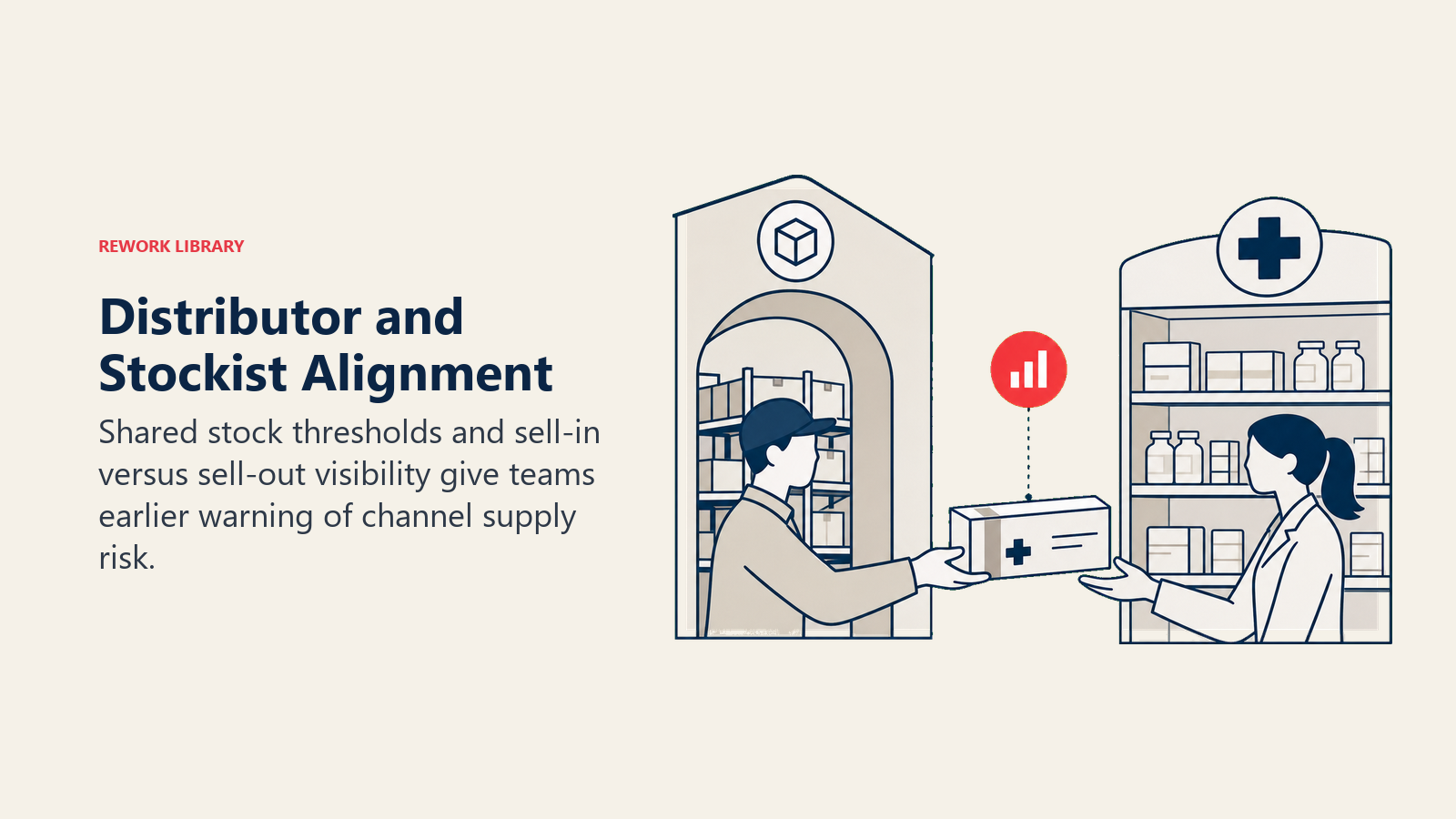
Distributors have their own ordering patterns, warehouse constraints, and stock optimization logic. They do not automatically hold inventory at levels that protect against pharmacy stockouts. Without a deliberate agreement, distributor stock levels will often be lower than commercial teams assume, and delivery schedules will be more variable than lead time averages suggest.
The key alignment activities are: agreeing on minimum stock holding commitments at the distributor level by SKU, establishing a notification protocol that alerts the rep or sales ops team when distributor stock for a given SKU falls below a threshold, and reviewing distributor-level sell-in versus sell-out data to identify whether distributor inventory is building or contracting.
Connecting this to distributor and stockist management practices, the distributor relationship needs to include a commercial data-sharing component, not just a transactional order-and-deliver component. Reps who treat the distributor account manager as a partner in inventory visibility get earlier warning of potential supply problems than those who treat them as a logistics vendor.
Technology Options for Reorder Management
The right technology depends on the market's infrastructure and the commercial team's resources. But technology is not a prerequisite for a functioning reorder system. Low-tech approaches can be highly effective when designed with discipline.
CRM-triggered reorder reminders are the closest thing to automation for field forces that do not have distributor portal access. The rep logs stock levels during each visit. When a manually entered stock count falls below the par level stored in the CRM, an alert is generated prompting the rep or the pharmacy buyer to place an order. This requires data entry discipline but works in any market with CRM access. The underlying principle mirrors what CRM data hygiene teams enforce in B2B commercial organizations: the system is only as reliable as the data being entered, and stale or incomplete records produce alerts that fire too late or not at all.
Distributor portals with auto-replenishment represent the highest automation level. The distributor's system monitors pharmacy sell-out in real time, compares against agreed par levels, and generates automatic replenishment orders when the threshold is crossed. This is the gold standard but requires distributor investment and is not universally available.
WhatsApp or messaging-based stock alerts are a practical intermediate option in markets where formal distributor portals are absent but smartphone penetration is high. Pharmacy staff message the distributor or rep contact when stock reaches a low-water mark. The rep or distributor responds with an order. This is not as reliable as a data-driven system but is far better than waiting for the next scheduled visit.
Laminated stock cards placed at pharmacy dispensing counters or stockrooms are the most basic option. The card shows the par level for each SKU and includes a visual indicator (fill a circle when stock reaches the reorder point) that prompts pharmacy staff to call the distributor or rep. Simple, durable, and surprisingly effective when pharmacy staff are trained on how to use them.
A comparison of options:
| Technology Option | Setup Complexity | Reliability | Best Fit |
|---|---|---|---|
| CRM-triggered reminders | Medium | Rep-dependent | Markets with CRM adoption |
| Distributor portal auto-replenishment | High | High | Mature markets with distributor partnerships |
| WhatsApp/messaging alerts | Low | Moderate | Emerging markets, smartphone-enabled |
| Laminated stock cards | Very low | Pharmacy-dependent | Any market, low-resource context |
| Manual rep visit checks | None | Low | Baseline only, not a standalone system |
Handling Seasonal Demand Spikes
Certain therapy categories face predictable seasonal demand increases. Respiratory products peak in flu season. Products for conditions exacerbated by heat or cold have predictable peaks. Products tied to agricultural or occupational health cycles see demand concentrate around planting, harvest, or industrial season timings.
These spikes create two failure modes. The first is stockout: the system was set up for average demand and cannot handle the surge, so the product runs out and patients cannot fill prescriptions. The second is prescriber disappointment: when a product is unavailable at the moment a prescriber is actively recommending it, the prescriber's confidence in reliability erodes. A study on inventory management and essential drug stockouts in Zambia found that seasonal demand fluctuations and variable delivery lead times were the leading reasons facilities stocked out even when stock was available upstream, underscoring why static par levels fail during peak periods.
Pre-loading key accounts before high-demand periods is the commercial response. The rep works with the pharmacy buyer and distributor to agree on elevated stock commitments for the six to eight weeks before the expected demand spike. Par levels are temporarily raised. Delivery schedules are adjusted to account for higher-than-normal consumption rates.
Building emergency reorder protocols is the backup plan. When a spike exceeds the pre-loaded stock and a stockout risk appears mid-season, the rep needs a fast-track order process with the distributor, a fallback option for directing patients to nearby pharmacies that carry stock, and a communication plan to inform the prescriber community about temporary availability constraints.
Measuring Reorder System Performance
A reorder system that is not measured will degrade over time. The metrics to track are few but critical.
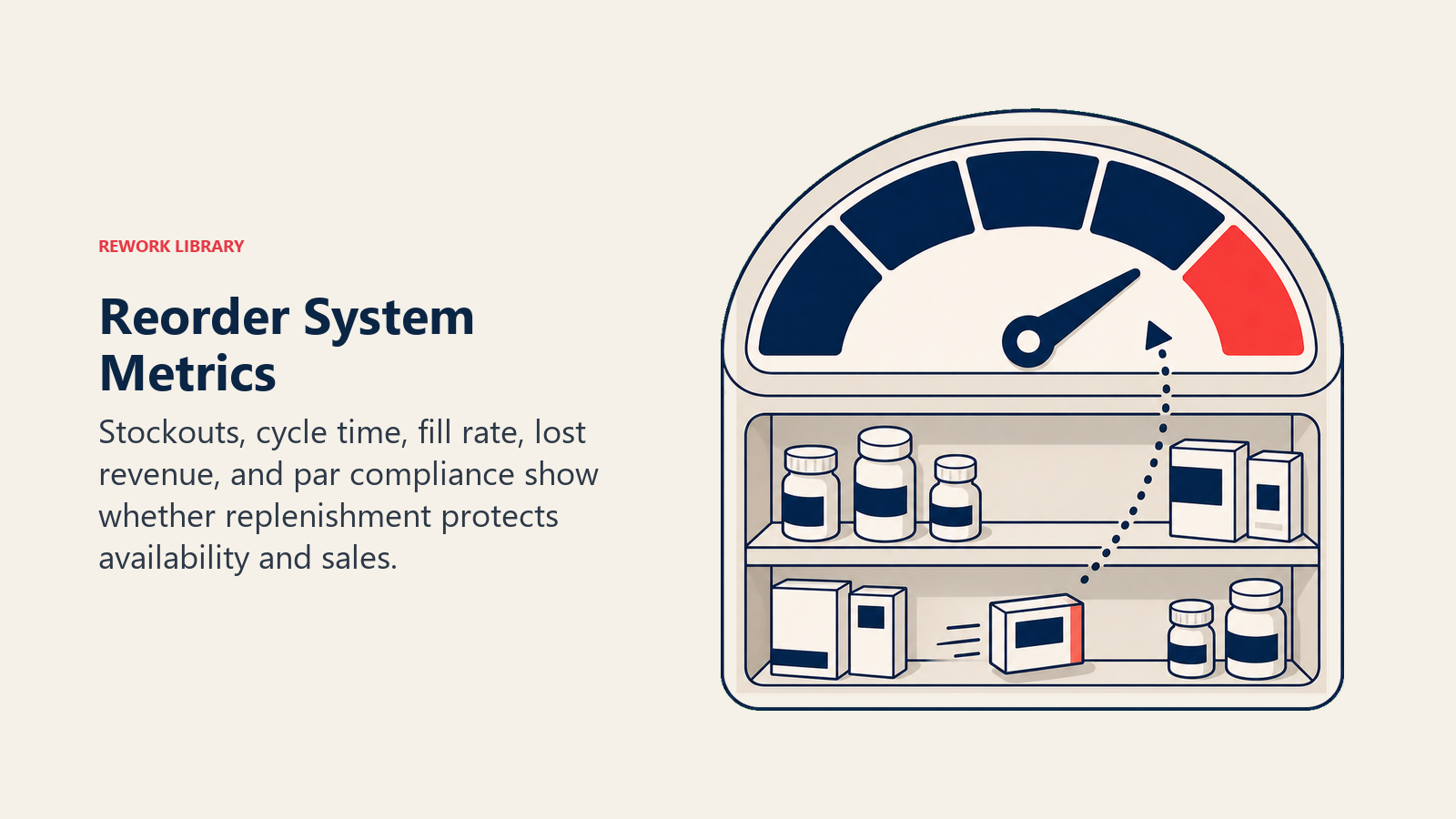
| Metric | Definition | Target |
|---|---|---|
| Stockout frequency | Number of accounts with zero stock, per period | Zero at high-volume accounts |
| Reorder cycle time | Days from trigger to delivery | Within agreed lead time + 20% buffer |
| Order fill rate | Percentage of orders delivered in full | 95%+ |
| Revenue lost to delayed reorders | Estimated scripts missed during stockout periods | Downward trend period over period |
| Par level compliance rate | Percentage of accounts with stock above minimum par | 85%+ |
Connecting these metrics to secondary sales tracking data surfaces the revenue impact of reorder system performance. When stockout frequency at an account correlates with secondary sales gaps in that territory, the business case for system investment becomes concrete and quantifiable.
Revenue lost to delayed reorders is the most important metric for commercial leadership because it converts an operational problem into a financial one. To calculate it, multiply the average daily secondary sales rate for an account by the number of days stock was below par or at zero. Aggregate this across accounts and territories to get a territory-level and company-level picture of the revenue the current system is failing to capture.
Connecting Reorder Systems to Supply Chain Visibility
A reorder system at the pharmacy level is only as reliable as the supply chain feeding it. If distributor stock is volatile or manufacturer supply is inconsistent, even a well-designed pharmacy-level par system will fail because there is nothing to order from.
Commercial teams need visibility into the supply chain upstream of the pharmacy to anticipate and manage these risks. When a manufacturing batch is delayed or a distributor warehouse allocation is constrained, the commercial team needs early warning, not a stockout report two weeks after the fact.
This means building the reorder system with supply chain event visibility in mind, including alerts for distributor stock constraints, manufacturer delivery delays, and allocation issues that could prevent orders from being fulfilled even when they are correctly triggered. Without that upstream view, the pharmacy-level par system is only as reliable as the supply feeding it.
A Revenue System, Not Rep Heroics
The shift from reactive reordering to systematic reorder management is not primarily a technology change. It is a commercial design choice. It requires deciding that revenue reliability at the pharmacy level is too important to depend on individual rep behavior, and then building the processes, agreements, and monitoring to back that decision up.
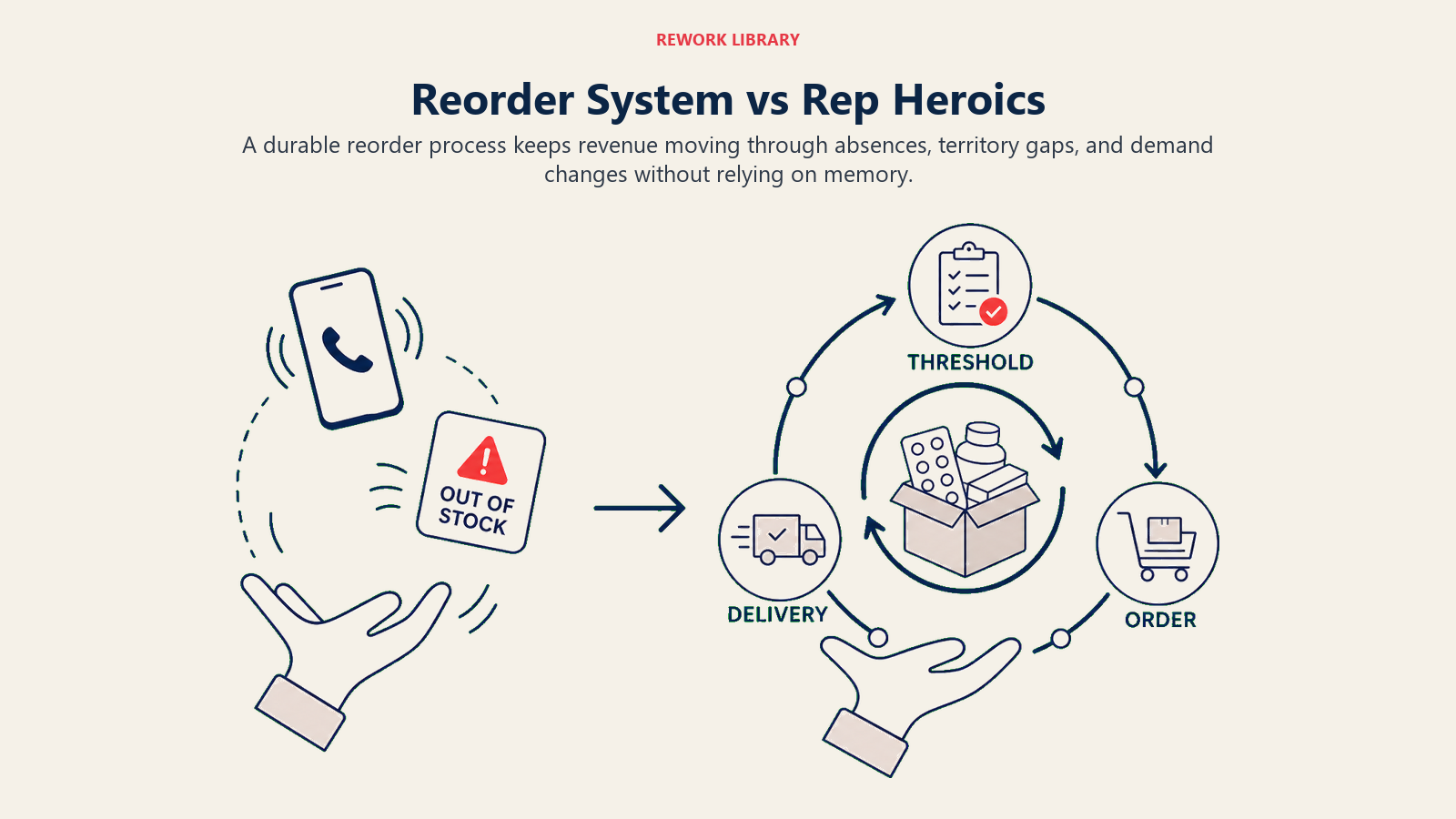
Reps who operate within a well-designed reorder system spend less time firefighting stockouts and more time building the pharmacy relationship management quality that creates long-term territory value. The reorder system handles the operational baseline. The rep focuses on the relationship and the clinical conversation.
That is what the shift from reactive to proactive reordering actually enables: a rep model where heroics are no longer necessary because the system works.
Frequently Asked Questions about Repeat Order and Reorder Systems
What is a pharmacy par level and how is it set?
A par level is the minimum quantity of a specific SKU a pharmacy should hold at any time to cover expected demand without overstocking. It is calculated by multiplying average daily unit consumption by the sum of the supplier's lead time and a safety buffer, typically five to seven days. Par levels should be reviewed quarterly at high-volume accounts and whenever prescription volume changes significantly.
Who should own the reorder trigger at a pharmacy account?
The most reliable arrangement is shared ownership: the distributor or pharmacy buyer holds primary trigger responsibility, the rep verifies system function on each visit, and sales ops monitors aggregate stockout data to catch systemic failures. Rep-owned triggers alone do not scale and create a single point of failure when reps are absent or managing large territories.
How does a rep conduct a structured stock check?
On each visit, a rep should record current stock per SKU, compare to the prior visit to estimate implied consumption, confirm whether an open order is pending, review last delivery date against expected lead time, and note any local demand factors such as a new prescriber in the area or seasonal category trends. This structured check takes under five minutes and builds a running consumption picture for the territory.
What is the easiest reorder technology to implement in a market with limited infrastructure?
Laminated stock cards placed at pharmacy dispensing counters are the most accessible option. The card shows par levels per SKU and uses a simple visual indicator that prompts pharmacy staff to contact the distributor or rep when stock reaches the trigger point. WhatsApp-based stock alerts are a practical step up in markets with high smartphone penetration but no distributor portal access.
How should commercial teams prepare for seasonal demand spikes?
Key accounts should be pre-loaded six to eight weeks before the expected peak by agreeing on elevated stock commitments with the pharmacy buyer and distributor. Par levels should be temporarily raised for the duration of the high-demand period, and delivery schedules should be adjusted for higher consumption rates. Emergency reorder protocols should be built in advance as a backstop if demand exceeds the pre-loaded position.
How do you calculate revenue lost to delayed reorders?
Multiply the average daily secondary sales rate for a given account by the number of days stock was below par or at zero. Aggregate this number across accounts within a territory for a territory-level revenue leak figure, and across territories for a national picture. This converts a logistics metric into a financial one that commercial leadership can act on.
How does the rep's role change in a well-designed reorder system?
The rep shifts from firefighter to overseer. Rather than spotting stockouts during visits and placing emergency orders, the rep verifies on each call that the system is placing orders correctly, flags any anomalies for investigation, and focuses the remainder of the visit on the clinical conversation and relationship development. This shift frees significant call time and reduces the revenue exposure that comes from rep-dependent heroics.
Learn More

Senior Implementation Consultant
On this page
- Is Your Reorder System Reactive or Proactive?
- Designing a Reorder Trigger System
- The Rep's Role in Systematic Reordering
- Distributor and Stockist Alignment
- Technology Options for Reorder Management
- Handling Seasonal Demand Spikes
- Measuring Reorder System Performance
- Connecting Reorder Systems to Supply Chain Visibility
- A Revenue System, Not Rep Heroics
- Learn More