AI Vendor Evaluation: Choosing Your AI Partner Without Regrets
Turn this article into takeaways for your work.


Each assistant summarizes the article only for you and suggests best practices for your work.
AI vendor evaluation is a structured process for comparing AI service providers across technical capability, pricing, integration, security, reliability, contract terms, and strategic fit before committing to a multi-year relationship. Scoring vendors on these seven dimensions with real pilot data, not sales pitches, is how you avoid lock-in, runaway costs, and migration pain.
Your team evaluated three AI vendors for two weeks. Everyone chose different winners based on different criteria. Sales promised capabilities the product doesn't have. Legal found contract clauses that would cost millions if you need to switch. The wrong AI vendor locks you into inferior technology, unpredictable costs, and migration nightmares. The right choice accelerates AI adoption with confidence.
The Evolution of AI Vendor Selection
AI vendor evaluation emerged as a discipline when AWS launched SageMaker in 2017, creating the first major buy-vs-build decision. The field exploded after OpenAI's GPT-3 API in 2020 introduced competitive alternatives. By 2023, enterprises faced dozens of large language model vendors with wildly different capabilities, pricing, and promises.
According to Forrester's 2024 AI Vendor Landscape report, AI vendor evaluation is defined as "a structured assessment process for comparing AI service providers across technical capabilities, commercial terms, integration requirements, security posture, and strategic alignment to select optimal partners for specific business needs."
The breakthrough came when Gartner published AI vendor quadrants showing massive capability variance, proving that not all "AI platforms" deliver equal value despite similar marketing claims.
AI Vendor Evaluation for Business Leaders
For business leaders, AI vendor evaluation means systematically comparing AI service providers across technical performance (accuracy, speed, capabilities), commercial terms (pricing, contracts, SLAs), operational fit (integration, support, reliability), and strategic factors (roadmap, lock-in risk, partnership quality) to minimize risk and maximize AI investment returns.
Think of AI vendor selection like hiring a CFO. You assess expertise (capabilities), verify references (track record), negotiate compensation (pricing), review employment agreements (contracts), and ensure cultural fit (integration). One bad hire costs millions; one bad vendor decision costs more.
In practical terms, this means scoring vendors on 20+ criteria using actual data, not sales pitches, before committing to multi-year relationships.
Seven Evaluation Dimensions
AI vendor evaluation examines these critical factors:
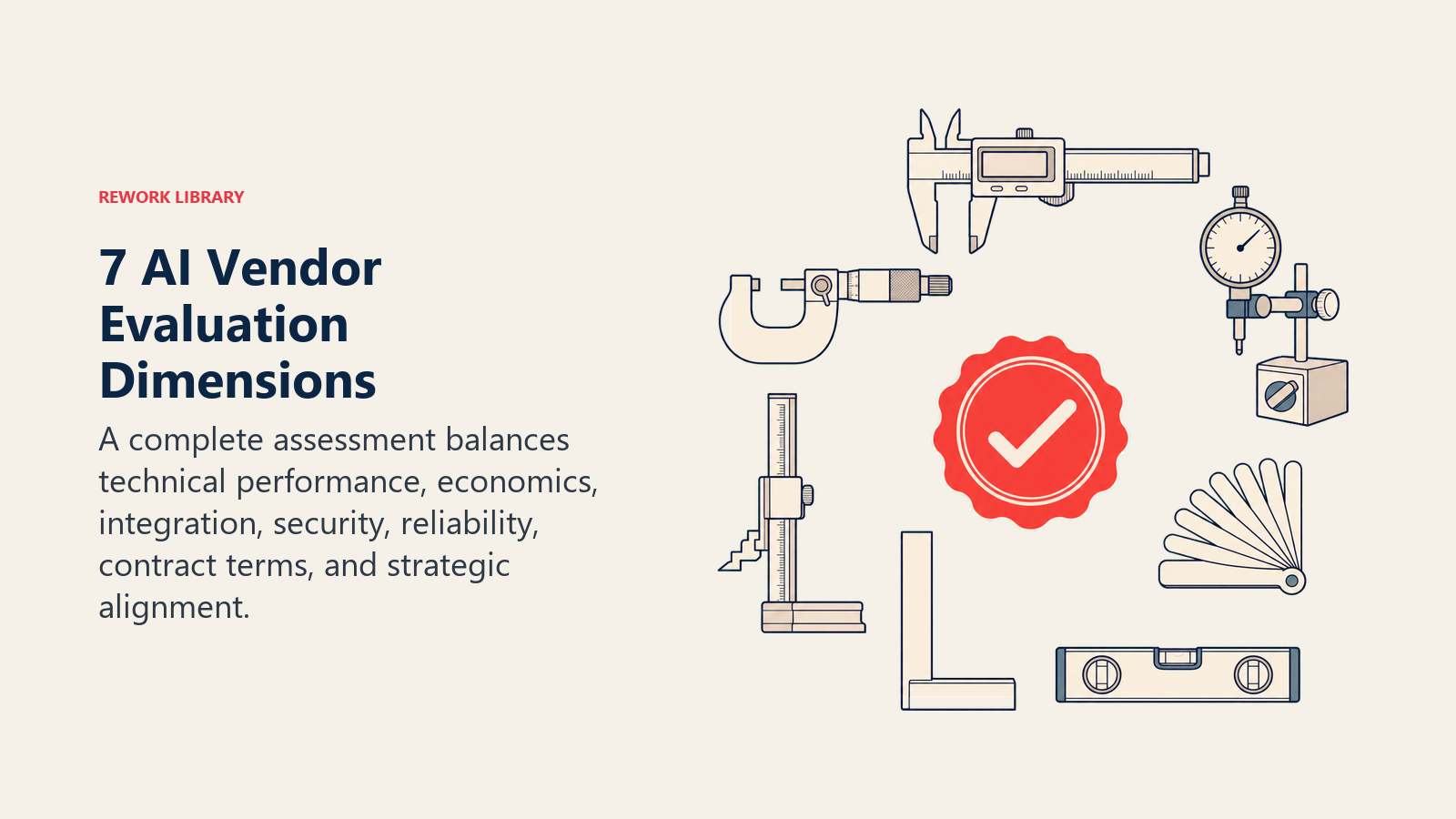
• Technical Capabilities: Model performance, accuracy, speed, supported use cases, language coverage, and continuous improvement trajectory
• Pricing & Economics: Cost structure clarity, pricing predictability, volume discounts, overage handling, and total cost of ownership
• Integration & APIs: Ease of implementation, API quality, SDK availability, documentation, existing integrations, and technical support responsiveness
• Security & Compliance: Data handling policies, encryption standards, compliance certifications (SOC2, HIPAA, GDPR), audit capabilities, and breach history
• Reliability & Performance: Uptime guarantees, SLA terms, geographic availability, disaster recovery, performance consistency, and incident transparency
• Contract Terms: Lock-in provisions, exit rights, data portability, IP ownership, liability limits, termination clauses, and price protection
• Strategic Alignment: Vendor roadmap, company stability, partnership approach, customer success support, and long-term viability
The Evaluation Process
Apply this systematic approach:
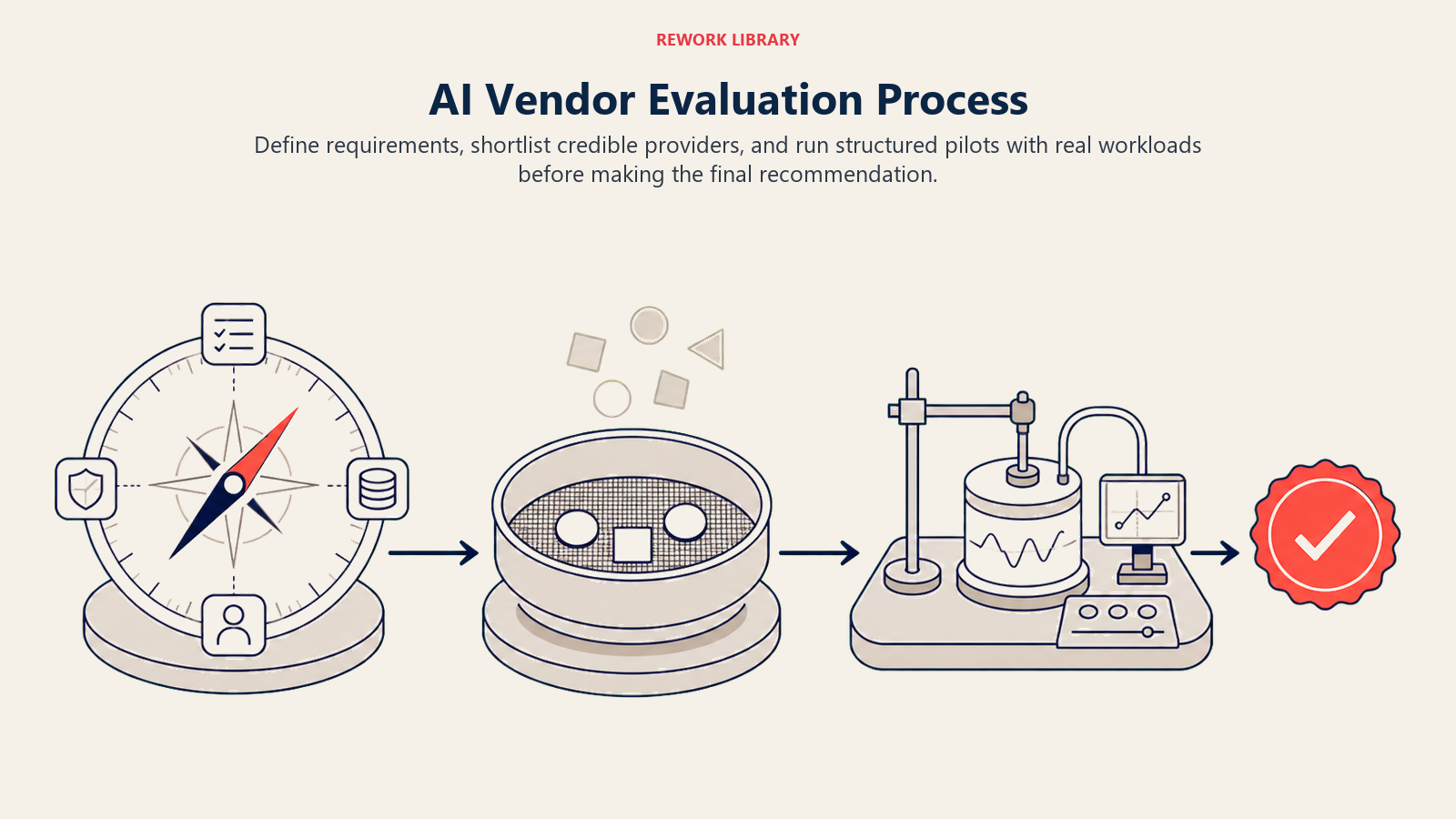
Define Requirements: List specific AI needs - "generate product descriptions, support 50K requests/month, 99.9% uptime, GDPR compliant, API-first, <2 second response time" creating clear evaluation criteria
Shortlist Vendors: Identify 3-5 candidates matching requirements - OpenAI for general intelligence, Anthropic for safety, Google for multimodal, AWS for integration breadth, Azure for enterprise features
Run Structured Pilots: Test each vendor with real use cases for 2-4 weeks, measuring actual performance, costs, integration effort, and support quality with objective metrics
This produces data-driven recommendations: "Vendor A exceeded accuracy targets but costs 3x estimate. Vendor B met all requirements at predictable costs. Vendor C underperformed despite low pricing."
Major AI Vendor Landscape
OpenAI (ChatGPT, GPT-4) Strengths: Market-leading capabilities, broad use case coverage, continuous innovation Weaknesses: Pricing uncertainty, limited customization, occasional reliability issues Best for: General-purpose AI, content generation, reasoning tasks Typical cost: $0.01-$0.15 per 1K tokens, volume discounts available Key question: "How do pricing and capabilities evolve with new model releases?"
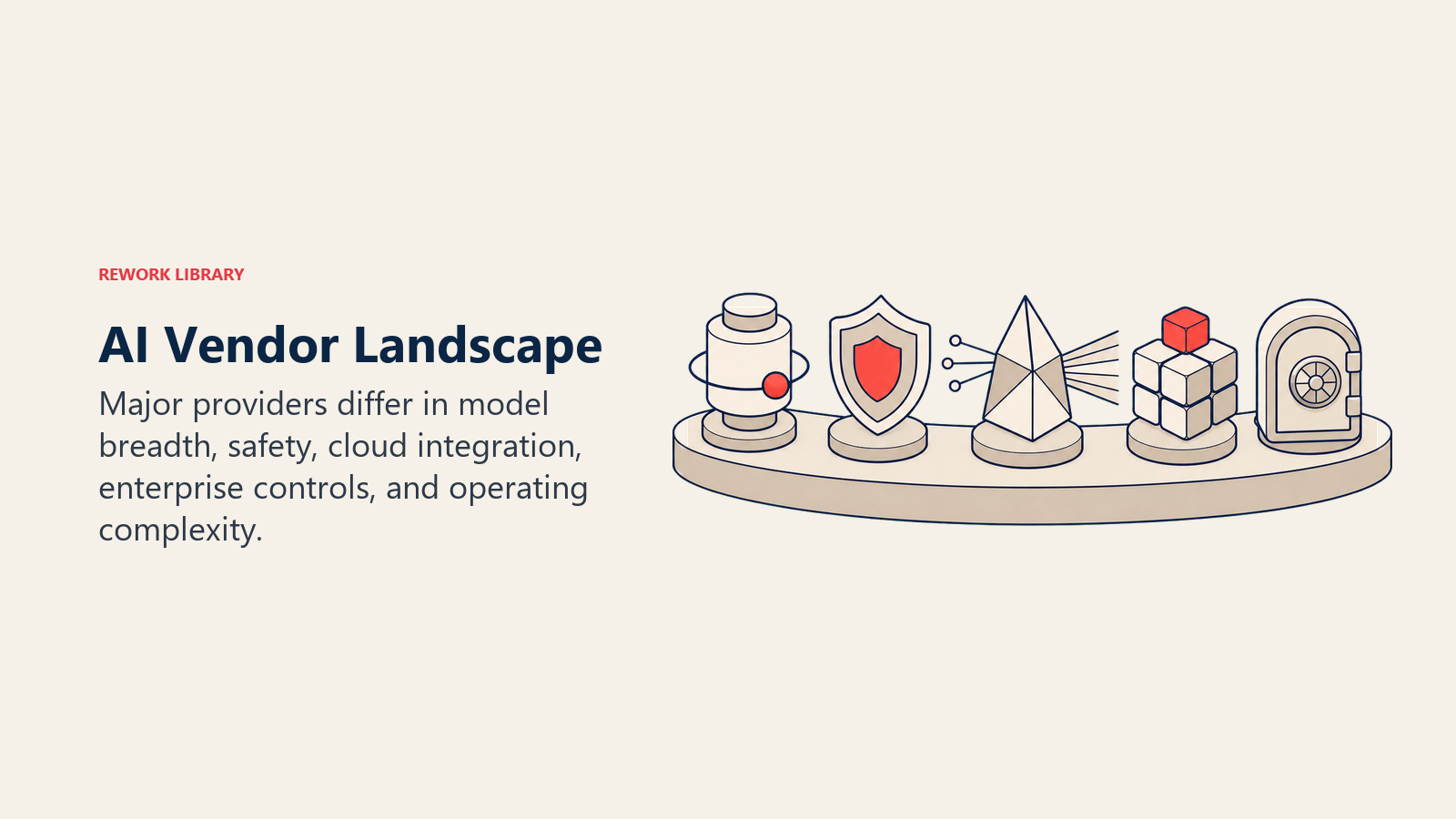
Anthropic (Claude) Strengths: Enhanced safety, consistent performance, excellent API reliability, longer context windows Weaknesses: Smaller ecosystem, newer vendor, limited third-party integrations Best for: Enterprise applications, complex analysis, safety-critical uses Typical cost: $0.008-$0.24 per 1K tokens depending on model Key question: "What's your roadmap for enterprise features and integrations?"
Google AI (Gemini, Vertex AI) Strengths: Multimodal capabilities, GCP integration, competitive pricing, research backing Weaknesses: Frequent product changes, complex pricing, less developer-friendly Best for: Existing GCP customers, multimodal needs, cost-sensitive projects Typical cost: $0.0001-$0.03 per 1K tokens plus infrastructure Key question: "How stable is product roadmap given Google's history of deprecating services?"
Amazon Bedrock (AWS) Strengths: Model choice (multiple vendors), AWS integration, enterprise security, infrastructure scale Weaknesses: Complexity, requires AWS expertise, potentially higher total costs Best for: AWS-native companies, regulated industries, custom deployments Typical cost: Varies by chosen model, plus AWS infrastructure costs Key question: "What's included in support, and what requires additional consulting?"
Microsoft Azure OpenAI Strengths: Enterprise agreements, Microsoft ecosystem integration, data residency options Weaknesses: Slightly delayed model releases, complex licensing, Microsoft dependency Best for: Microsoft shops, enterprise compliance needs, private deployment Typical cost: Similar to OpenAI with enterprise volume discounts Key question: "How do model updates lag behind OpenAI's direct releases?"
Critical Questions to Ask
Technical Capability Questions:
- "Show our test cases running on your platform with actual performance metrics"
- "What's your model update policy? Do we get forced upgrades?"
- "How do you handle edge cases and errors in production?"
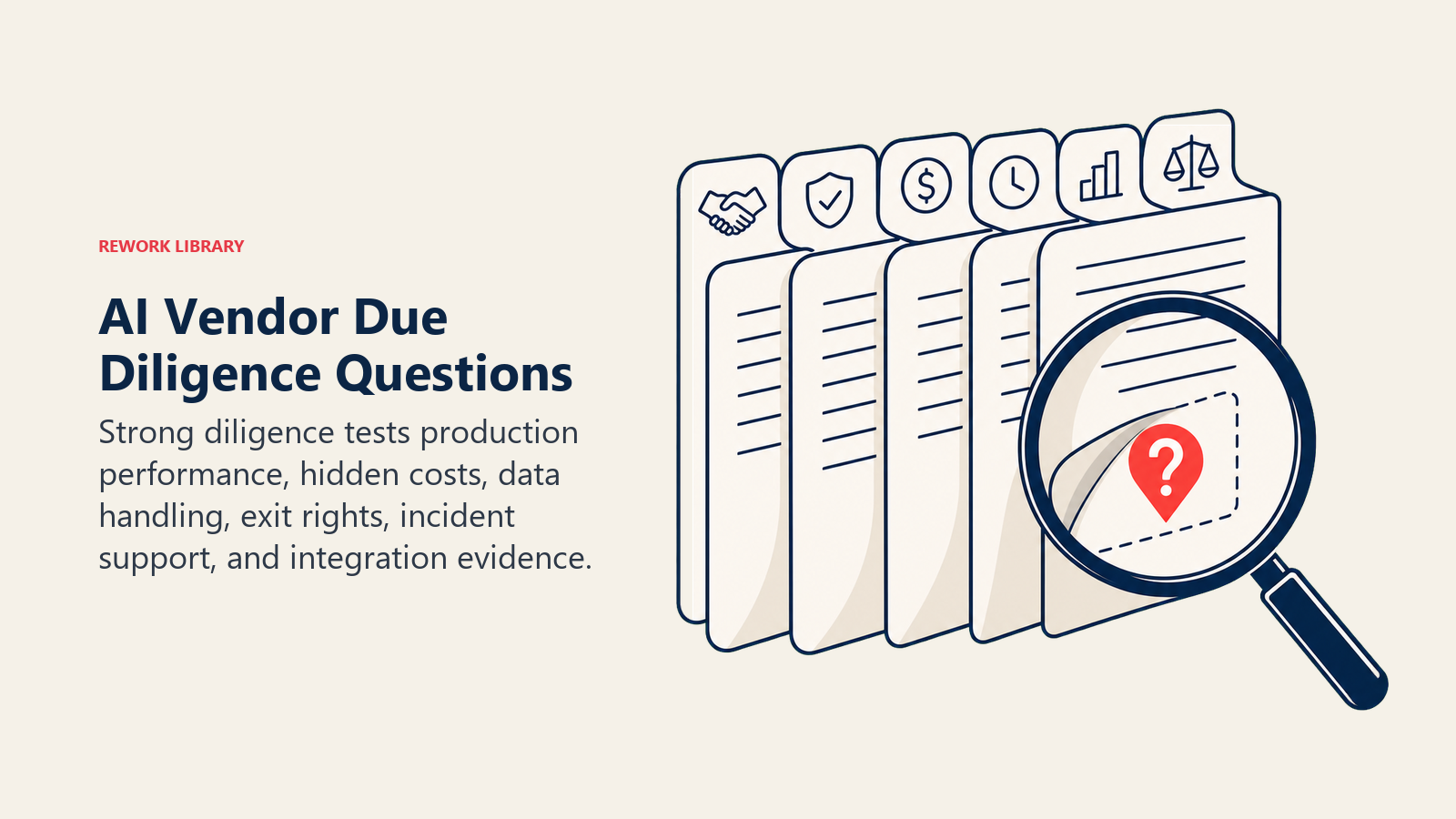
Pricing & Cost Questions:
- "What's included in base pricing, and what costs extra?"
- "Show historical customer bills - what causes unexpected overages?"
- "Do you offer committed use discounts and what are minimums?"
Security & Compliance Questions:
- "Where is our data stored and processed geographically?"
- "Do you train on customer data? Can we opt out?"
- "Show your most recent SOC2 and penetration test reports"
Contract & Legal Questions:
- "What are termination terms and data export rights?"
- "How do you handle pricing changes for existing customers?"
- "What happens if you're acquired or shut down services?"
Integration & Support Questions:
- "What's average response time for P1 incidents?"
- "Do you provide implementation support or just documentation?"
- "Show examples of companies with similar integration complexity"
Contract Pitfalls to Avoid
Red Flag 1: Data Rights Ambiguity Problem: "We may use customer data to improve models" Impact: Your proprietary data trains competitors' AI Fix: Demand explicit opt-out and data deletion guarantees
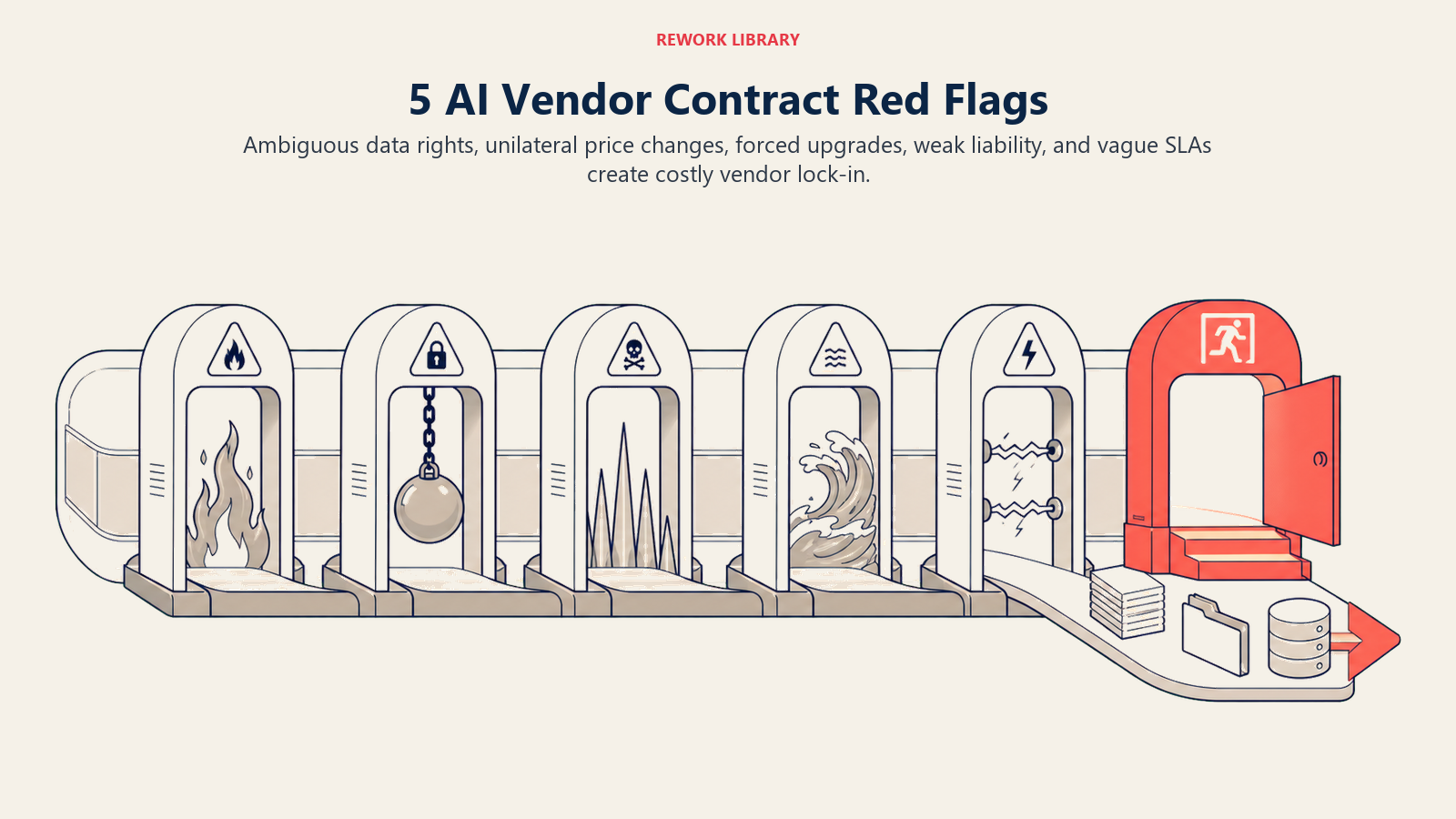
Red Flag 2: Unilateral Price Changes Problem: "Vendor may adjust pricing with 30 days notice" Impact: Locked in while costs multiply uncontrollably Fix: Negotiate annual price protection caps (e.g., max 10% increase)
Red Flag 3: Forced Upgrades Problem: "Deprecated models removed with 90 days notice" Impact: Forced costly migrations on vendor's timeline Fix: Require 12-month deprecation windows and migration support
Red Flag 4: Limited Liability Problem: "Liability capped at 1 month of fees paid" Impact: Vendor's outage costs you millions, they pay $10K Fix: Negotiate SLA credits and meaningful liability limits
Red Flag 5: Vague Performance Guarantees Problem: "We strive for 99% uptime" (not guaranteed) Impact: No recourse for unreliability affecting your business Fix: Demand contractual SLAs with financial penalties
Vendor Comparison Matrix
| Criteria | OpenAI | Anthropic | AWS | Azure | |
|---|---|---|---|---|---|
| Capabilities | ★★★★★ | ★★★★☆ | ★★★★☆ | ★★★☆☆ | ★★★★☆ |
| Cost Predictability | ★★☆☆☆ | ★★★☆☆ | ★★★★☆ | ★★☆☆☆ | ★★★☆☆ |
| Ease of Integration | ★★★★★ | ★★★★★ | ★★★☆☆ | ★★☆☆☆ | ★★★☆☆ |
| Enterprise Features | ★★★☆☆ | ★★★★☆ | ★★★★☆ | ★★★★★ | ★★★★★ |
| Documentation | ★★★★★ | ★★★★☆ | ★★★☆☆ | ★★★★☆ | ★★★☆☆ |
| Support Quality | ★★★☆☆ | ★★★★☆ | ★★☆☆☆ | ★★★★☆ | ★★★★☆ |
| Security/Compliance | ★★★☆☆ | ★★★★☆ | ★★★★☆ | ★★★★★ | ★★★★★ |
| Contract Flexibility | ★★☆☆☆ | ★★★☆☆ | ★★★☆☆ | ★★★☆☆ | ★★★★☆ |
Scale: ★☆☆☆☆ (Poor) to ★★★★★ (Excellent) based on 2024 enterprise evaluations
Real Vendor Selection Examples
Mid-Market SaaS Company: Evaluated OpenAI, Anthropic, AWS Bedrock for customer support automation. Requirements: 99.9% uptime, GDPR compliance, <$50K annual budget. Winner: Anthropic Claude - met reliability targets, predictable pricing, excellent safety features. OpenAI had better performance but 2x cost overruns in pilots.
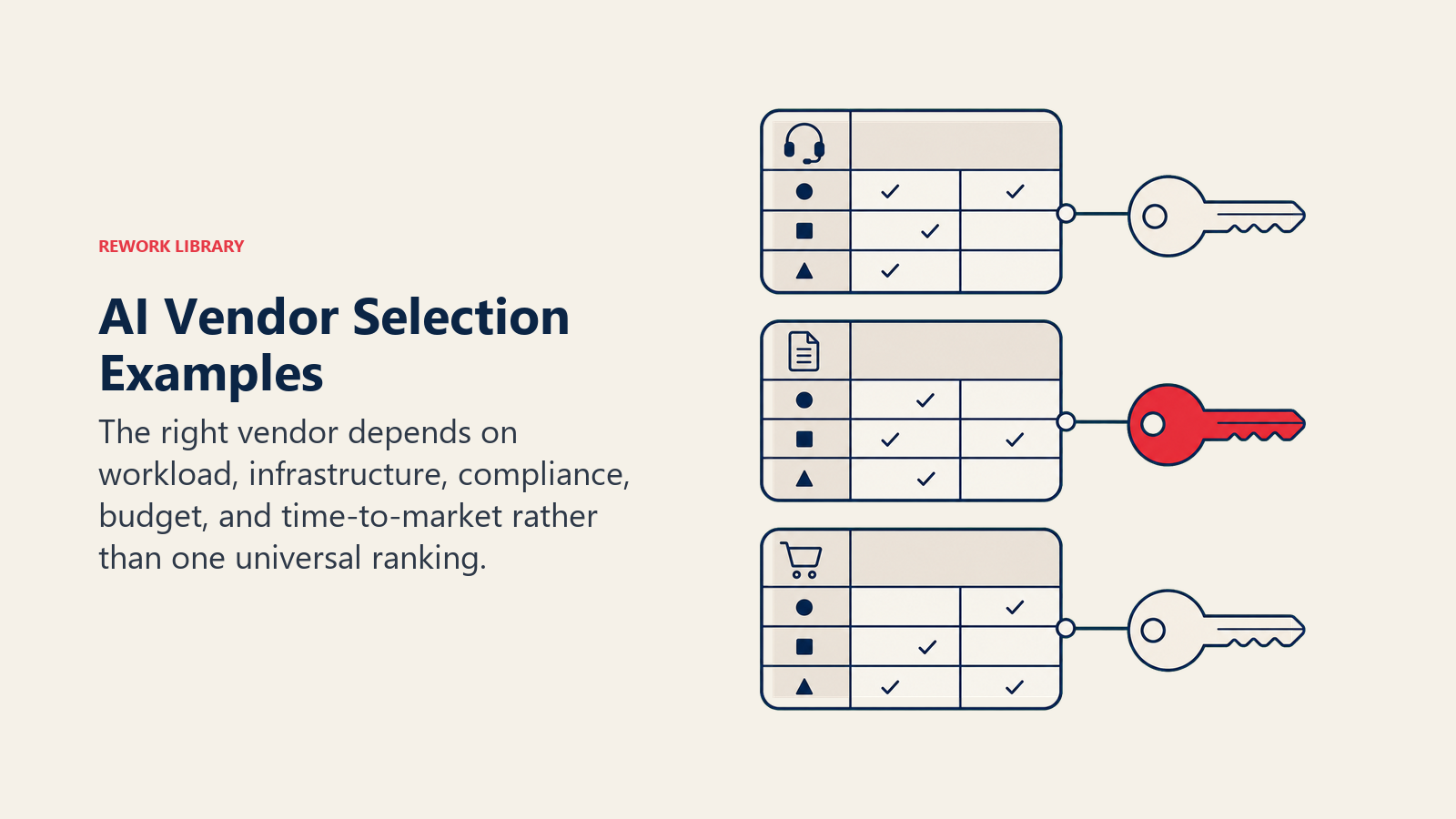
Enterprise Financial Services: Compared Azure OpenAI, AWS Bedrock, Google Vertex for document analysis. Requirements: Private deployment, SOC2/FINRA compliance, existing Azure infrastructure. Winner: Azure OpenAI - leveraged existing enterprise agreement, met compliance needs, simplified procurement. Google had better pricing but required new infrastructure.
Startup E-Commerce: Tested OpenAI, Anthropic, Cohere for product description generation. Requirements: Simple integration, low minimum commitment, fast time-to-market. Winner: OpenAI GPT-4 - fastest setup, best developer experience, startup credits available. Anthropic had better safety but slower integration.
Building Your Selection Process
Ready to choose the right AI vendor?
- Calculate investment requirements via AI Total Cost of Ownership
- Define build vs buy strategy using AI Build vs Buy framework
- Set success metrics with AI ROI Measurement
- Prioritize use cases via AI Use Case Prioritization
Frequently Asked Questions about AI Vendor Evaluation
What is AI Vendor Evaluation?
AI vendor evaluation is a structured assessment process for comparing AI service providers across technical capabilities, commercial terms, integration requirements, security posture, and strategic alignment to select optimal partners for specific business needs.
What are the seven key dimensions for evaluating AI vendors?
Technical capabilities, pricing and economics, integration and APIs, security and compliance, reliability and performance, contract terms, and strategic alignment. Each dimension requires specific evaluation criteria.
Which AI vendor is best for enterprise deployments?
No single "best" vendor exists. Azure OpenAI and AWS Bedrock excel for existing Microsoft/AWS customers with enterprise compliance needs. Anthropic Claude offers excellent reliability and safety. OpenAI leads in raw capabilities but with less enterprise-specific features.
What contract terms should companies negotiate with AI vendors?
Negotiate annual price protection caps, 12-month deprecation windows, data opt-out rights, meaningful liability limits, SLA credits for downtime, flexible termination clauses, and data portability guarantees.
How long should AI vendor evaluations take?
Plan 4-8 weeks for thorough evaluation: 1 week defining requirements, 1 week shortlisting vendors, 2-4 weeks running structured pilots with real use cases, 1-2 weeks analyzing results and negotiating contracts.
External Resources
- Gartner Magic Quadrant for AI - Vendor landscape analysis
- OpenAI Platform - API documentation and pricing
Related Resources
Explore these related concepts to master AI vendor selection:
- AI Build vs Buy - Decision framework for vendor vs custom AI
- AI Total Cost of Ownership - Complete cost framework for vendor comparison
- Large Language Models - Understanding vendor AI capabilities
- AI ROI Measurement - Measuring vendor performance impact
Part of the AI Terms Collection. Last updated: 2026-02-09

Co-Founder, Rework.com
On this page
- The Evolution of AI Vendor Selection
- AI Vendor Evaluation for Business Leaders
- Seven Evaluation Dimensions
- The Evaluation Process
- Major AI Vendor Landscape
- Critical Questions to Ask
- Contract Pitfalls to Avoid
- Vendor Comparison Matrix
- Real Vendor Selection Examples
- Building Your Selection Process
- External Resources
- Related Resources