What are AI Copilots? When AI Becomes Your Team's Digital Assistant
Turn this article into takeaways for your work.


Each assistant summarizes the article only for you and suggests best practices for your work.
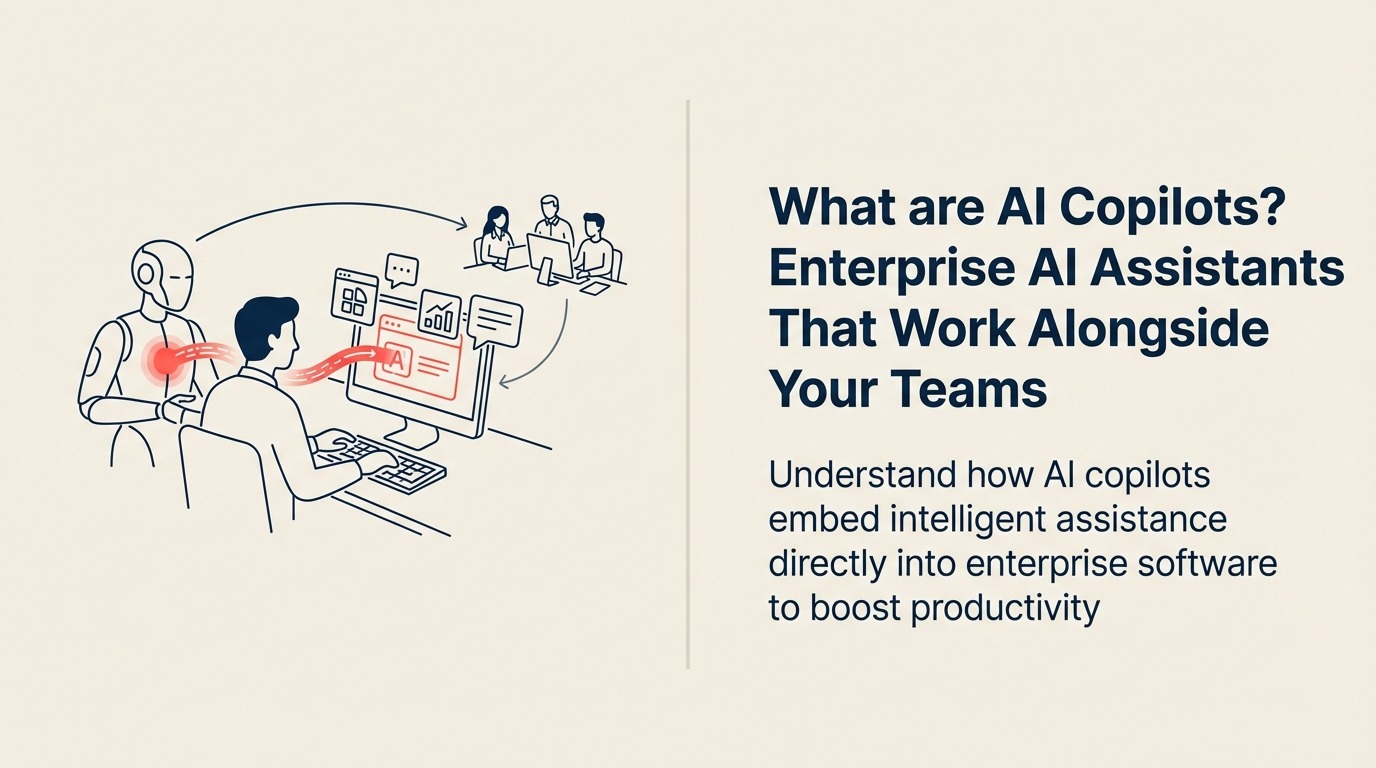
Your sales team spends 70% of their time on administrative work instead of selling. Your customer service agents toggle between eight different systems to answer one question. Your developers write the same boilerplate code for the hundredth time. AI copilots eliminate this waste by embedding intelligent assistance directly into the tools your teams already use.
The Academic Foundation
The term "copilot" in the AI context emerged from Microsoft's 2021 GitHub Copilot launch, drawing from aviation terminology where a copilot assists the primary pilot. In computer science, AI copilots are defined as "context-aware AI assistants integrated into software applications that suggest, generate, or automate tasks based on user intent and environmental context" (Microsoft Research, 2023).
Unlike standalone chatbots or AI agents, copilots are characterized by their deep integration with existing workflows and their collaborative rather than autonomous nature. They leverage large language models combined with application-specific context to provide relevant, actionable assistance.
The architecture evolved from basic autocomplete systems in the 2000s to today's sophisticated assistants that understand business context, user preferences, and organizational data through retrieval-augmented generation.
What This Means for Business
For business leaders, AI copilots mean productivity multipliers embedded directly into your existing enterprise software, reducing administrative burden and accelerating every knowledge worker's output.
Think of copilots as giving each employee a tireless assistant who knows your company's data, policies, and best practices. Just as a human assistant drafts emails, summarizes meetings, and prepares reports, AI copilots do the same but instantly, consistently, and at scale across your entire organization.
In practical terms, this translates to sales reps generating proposals in minutes instead of hours, customer service agents resolving issues 40% faster, and developers shipping features twice as quickly.
Essential Components
AI copilots consist of these essential elements:
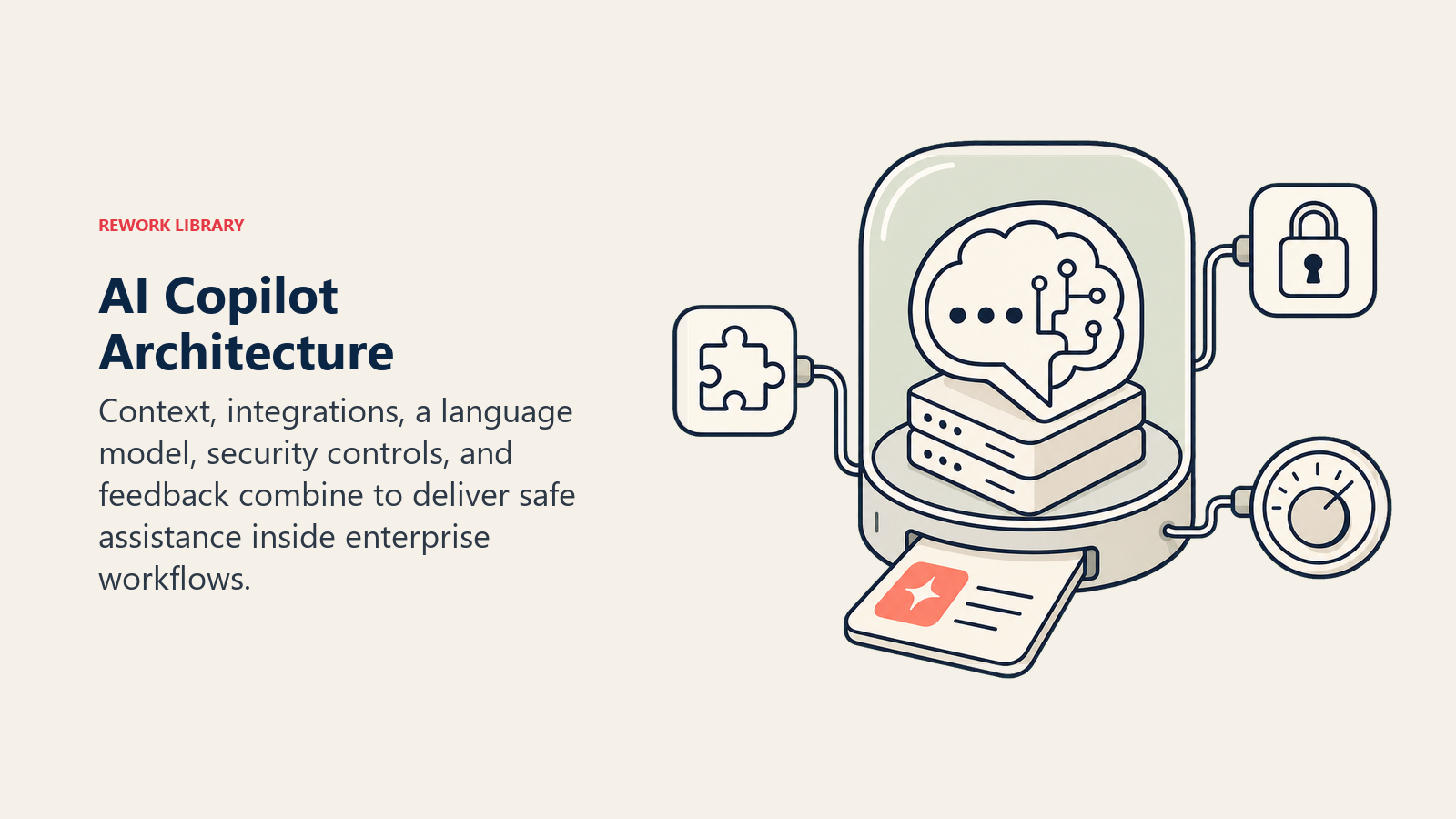
• Context Engine: The system that understands where users are working, what they're doing, and what information is relevant, pulling from application state, user history, and organizational data
• Integration Layer: Deep connections to enterprise software APIs, databases, and workflows, enabling copilots to read, write, and act within existing systems rather than requiring context switching
• Language Model Core: The underlying generative AI capability that understands requests, generates responses, and creates content, typically based on GPT-4, Claude, or domain-specific models
• Security Framework: Role-based access controls, data governance, and audit trails ensuring copilots only access information users are authorized to see
• Feedback Loop: User interaction monitoring that improves suggestions over time, learning organizational preferences and individual working styles
The Working Process
AI copilots follow these steps:
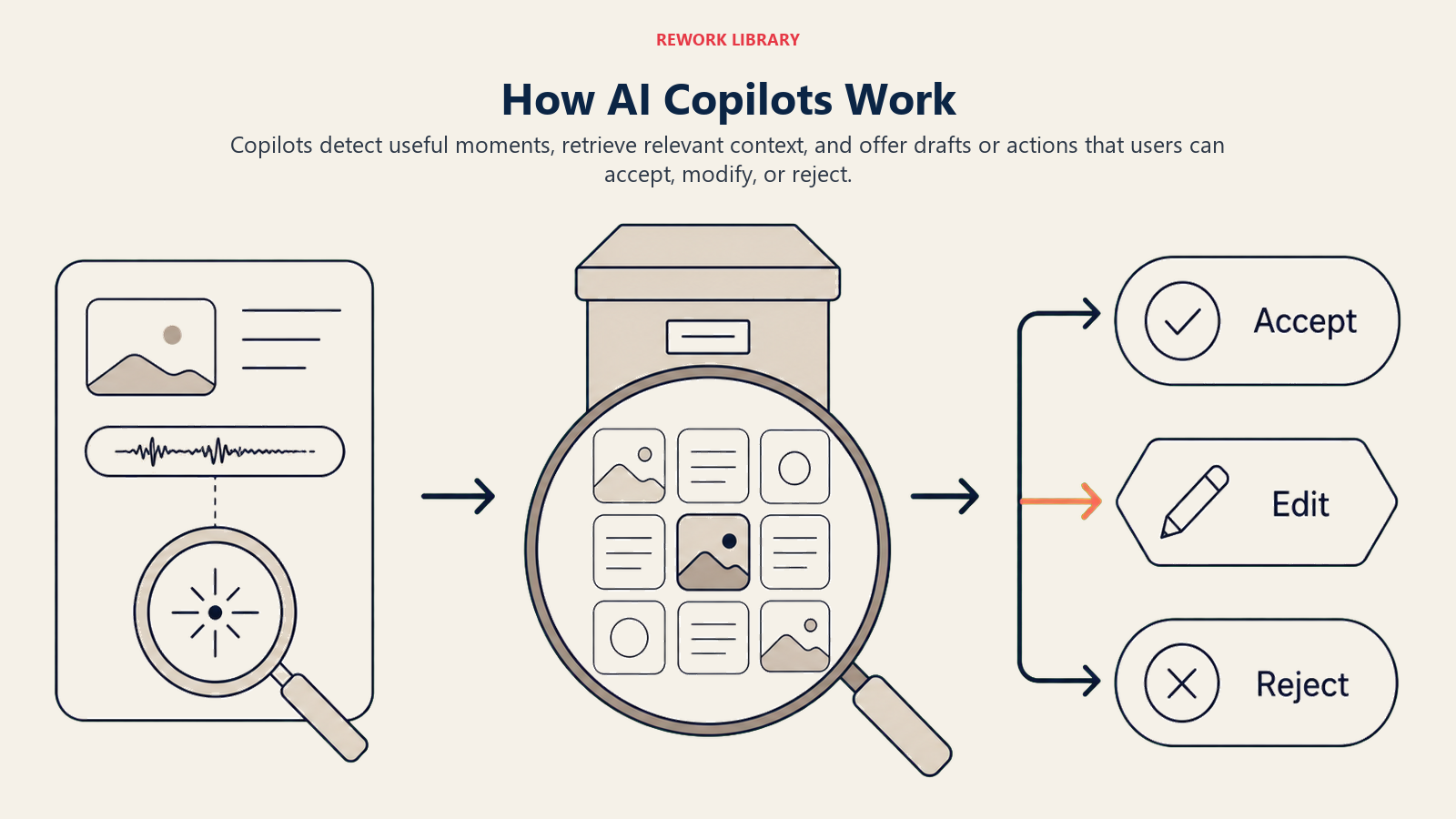
Context Awareness & Signal Detection: The copilot continuously monitors user activity, detecting moments where assistance would be valuable like starting to compose an email, opening a blank document, or searching for information
Intent Analysis & Retrieval: Based on context clues, the system interprets user intent and retrieves relevant organizational data, past examples, templates, or best practices from connected systems
Generation & Suggestion: The copilot generates contextual suggestions, drafts, or automations, presenting options that users can accept, modify, or reject with a single click
This creates an augmentation loop where copilots handle routine cognitive tasks, freeing humans for strategic thinking and relationship building.
Four Deployment Models
AI copilots generally fall into four main categories:
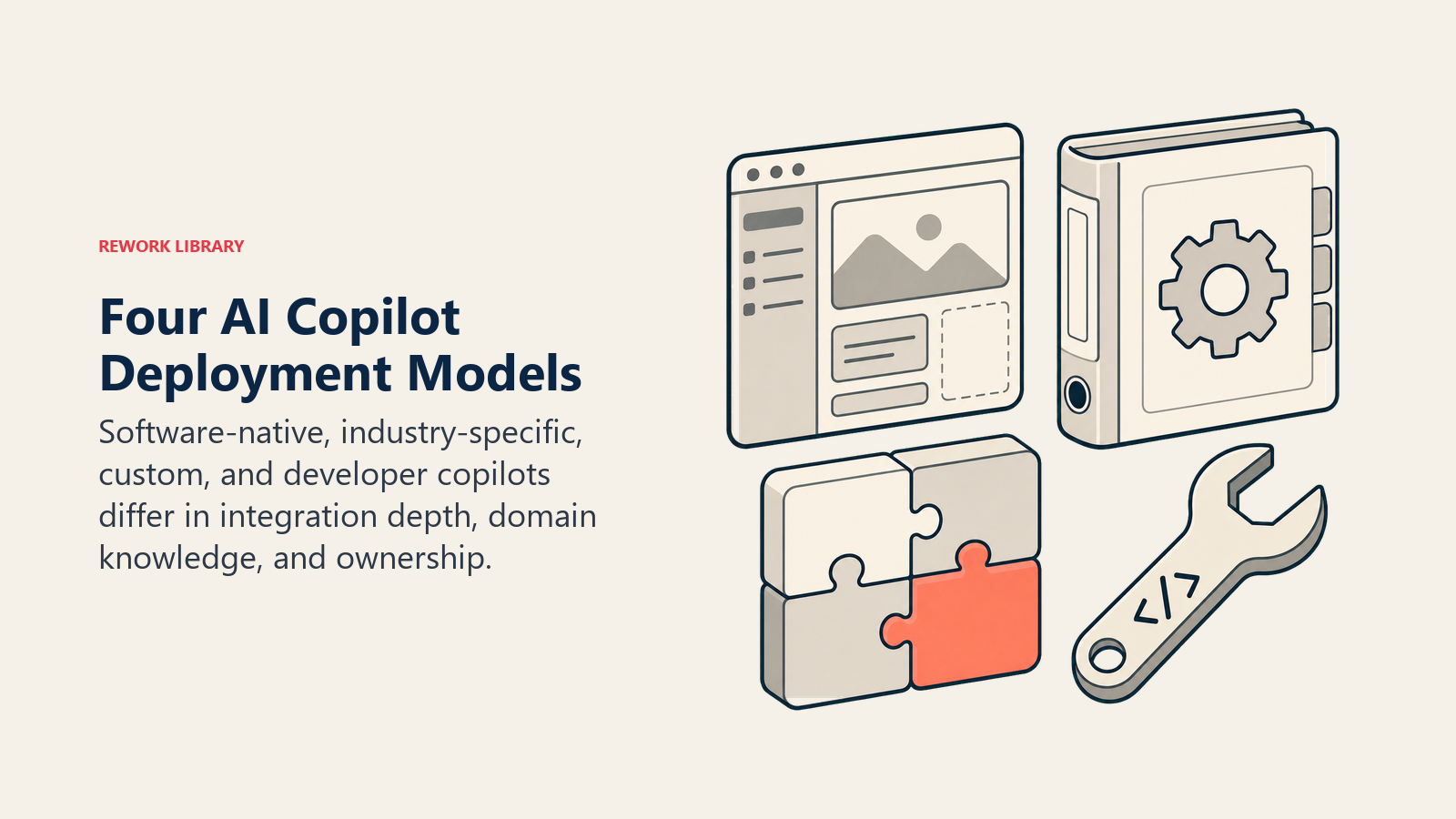
Type 1: Software-Native Copilots Best for: Organizations standardized on major platforms Key feature: Built directly into enterprise software Examples: Microsoft 365 Copilot, Salesforce Einstein GPT, ServiceNow Now Assist
Type 2: Industry-Specific Copilots Best for: Regulated industries with specialized workflows Key feature: Pre-trained on domain knowledge and compliance requirements Examples: Epic's clinical documentation copilot, Bloomberg GPT for finance
Type 3: Custom Copilots Best for: Unique processes or proprietary systems Key feature: Built on your data with your workflows Examples: Internal copilots using OpenAI API or Anthropic Claude with company RAG systems
Type 4: Developer Copilots Best for: Engineering teams shipping software Key feature: Code generation, testing, and documentation Examples: GitHub Copilot, Amazon CodeWhisperer, Tabnine
AI Copilots in Action
Here's how businesses actually use AI copilots:
Professional Services Example: Accenture deployed Microsoft 365 Copilot across 50,000 employees, reducing time spent on meeting summaries and follow-up emails by 60%, freeing consultants to focus on client-facing work. First-year ROI exceeded 250%.
Customer Support Example: Zendesk's AI copilot suggests responses based on historical tickets and knowledge base articles, reducing average handle time from 11 minutes to 7 minutes while maintaining 95% customer satisfaction scores.
Software Development Example: Stripe's engineering team using GitHub Copilot ships features 30% faster, with junior developers reporting the most significant productivity gains as the copilot suggests best practices and catches common errors.
Implementation Roadmap
Ready to deploy AI copilots in your organization?
- Start by understanding AI Integration requirements for your tech stack
- Evaluate security with Explainable AI governance frameworks
- Plan rollout using Change Management best practices
- Measure impact with AI ROI tracking methodologies
Related AI Concepts
Explore these topics to build comprehensive copilot strategies:
- AI Agents - Autonomous AI that acts independently versus collaborative copilots
- Prompt Engineering - Optimize how users communicate with copilots
- RAG Systems - Connect copilots to your knowledge base
- AI Governance - Policies for responsible copilot deployment
External Resources
- Microsoft Research - GitHub Copilot and Microsoft 365 Copilot research
- OpenAI Research - Foundation models powering enterprise copilots
- Anthropic Claude - Enterprise AI assistant capabilities
Frequently Asked Questions about AI Copilots
What are AI Copilots?
AI copilots are intelligent assistants embedded directly into enterprise software applications that suggest, generate, or automate tasks based on user context and intent, augmenting human productivity without requiring workflow changes.
What's the difference between AI copilots and chatbots?
Chatbots are standalone conversational interfaces you go to for help. Copilots are embedded in your existing tools, proactively offering assistance based on what you're doing. Copilots understand application context; chatbots require you to explain context.
What are the main types of AI copilots?
Four types: Software-native copilots (built into platforms like Microsoft 365), industry-specific copilots (pre-trained for healthcare, finance, etc.), custom copilots (built for proprietary systems), and developer copilots (focused on code generation).
What ROI can we expect from AI copilots?
Early enterprise deployments show 20-40% productivity gains on administrative tasks, with payback periods of 6-12 months. Microsoft reports 365 Copilot users save 10 hours per week on average, translating to $10,000-15,000 annual value per knowledge worker.
How do we ensure AI copilots don't access sensitive data?
Enterprise copilots inherit existing security models - users only get AI assistance on data they're already authorized to access. Implement role-based access controls, audit logging, and data classification policies before deployment.
Part of the AI Terms Collection. Last updated: 2026-02-09
