Online Booking Optimization: Reducing Friction from Discovery to Appointment
Turn this article into takeaways for your work.


Each assistant summarizes the article only for you and suggests best practices for your work.
Booking flow optimization is the practice of removing every unnecessary step between a client discovering your business and confirming an appointment. For beauty businesses, the biggest wins come from mobile-first design, guest checkout instead of forced account creation, clear service descriptions, and live availability. The goal is a booking that takes under 90 seconds.
Every unnecessary click between a potential client finding your business and confirming an appointment is revenue walking out the door. And most beauty businesses have more of those unnecessary clicks than they realize.
The typical booking journey for a new client discovering a salon through Instagram looks something like this: they click the bio link, land on a homepage, look for a "book" button, find it buried in navigation, get redirected to a booking platform, face a service menu with 47 options and no descriptions, hit a required account creation screen, abandon the process entirely, and book somewhere else.
The client didn't leave because they didn't want your services. They left because the booking flow was harder than the alternative. That's a fixable problem, and fixing it doesn't require a new website or an expensive platform switch. A well-optimized booking flow works best when it connects to a strong Google Business Profile for salons, since that's often where high-intent clients first discover you.
Key Facts: Booking Friction in Beauty
- The average online booking abandonment rate for beauty businesses is 37% (Fresha, 2024)
- Mobile devices account for 73% of beauty booking traffic, and a booking flow that isn't mobile-optimized loses nearly three-quarters of its potential conversions
- Each additional required form field in a booking flow reduces completion rates by 3-5%
- Statista's data on cart abandonment rates in the beauty category shows mobile shoppers in beauty abandon baskets at a rate of up to 87%, making mobile booking optimization the single highest-leverage fix for most salons
Booking Platform Selection: What Actually Matters
The booking platform question gets treated as a technology decision. It's a business decision. The criteria that matter most for a beauty business:
Real-Time Availability: Clients expect to see actual open slots, not submit a request and wait for confirmation. Any platform that doesn't show live availability creates a delay that drops conversion significantly.
Mobile Experience: Open your own booking link on a phone right now. If the text is small, the tap targets are cramped, or the service selection requires zooming, you're losing mobile bookings. This is the most important criterion for most beauty businesses.
Payment Collection: The ability to take deposits or full prepayment at booking reduces no-shows by 30-50%. Platforms that don't support payment collection at booking are leaving a significant operational problem unsolved. The full framework for managing missed appointments is covered in no-show and cancellation management, where deposit policies are one piece of a broader system.
Booking from Social Platforms: Can clients book directly from your Instagram profile? From your Google Business Profile? From a Facebook page? The fewer redirects between social discovery and booking confirmation, the better.
Review and Comparison Note: The market leaders in beauty booking software (Fresha, Vagaro, Mindbody, Boulevard, and Square Appointments) each have different strengths. Fresha is commission-based and free to use (with a fee on new clients), which makes it attractive for smaller businesses. Boulevard and Vagaro offer deeper management features but at higher subscription costs. Before switching platforms, identify which specific friction points are costing you bookings and verify that the new platform actually resolves them.
Booking Flow UX: The Ideal Journey
The optimal booking flow for a beauty service should take no more than 60-90 seconds from service selection to confirmation. Every additional step loses a percentage of potential bookers.
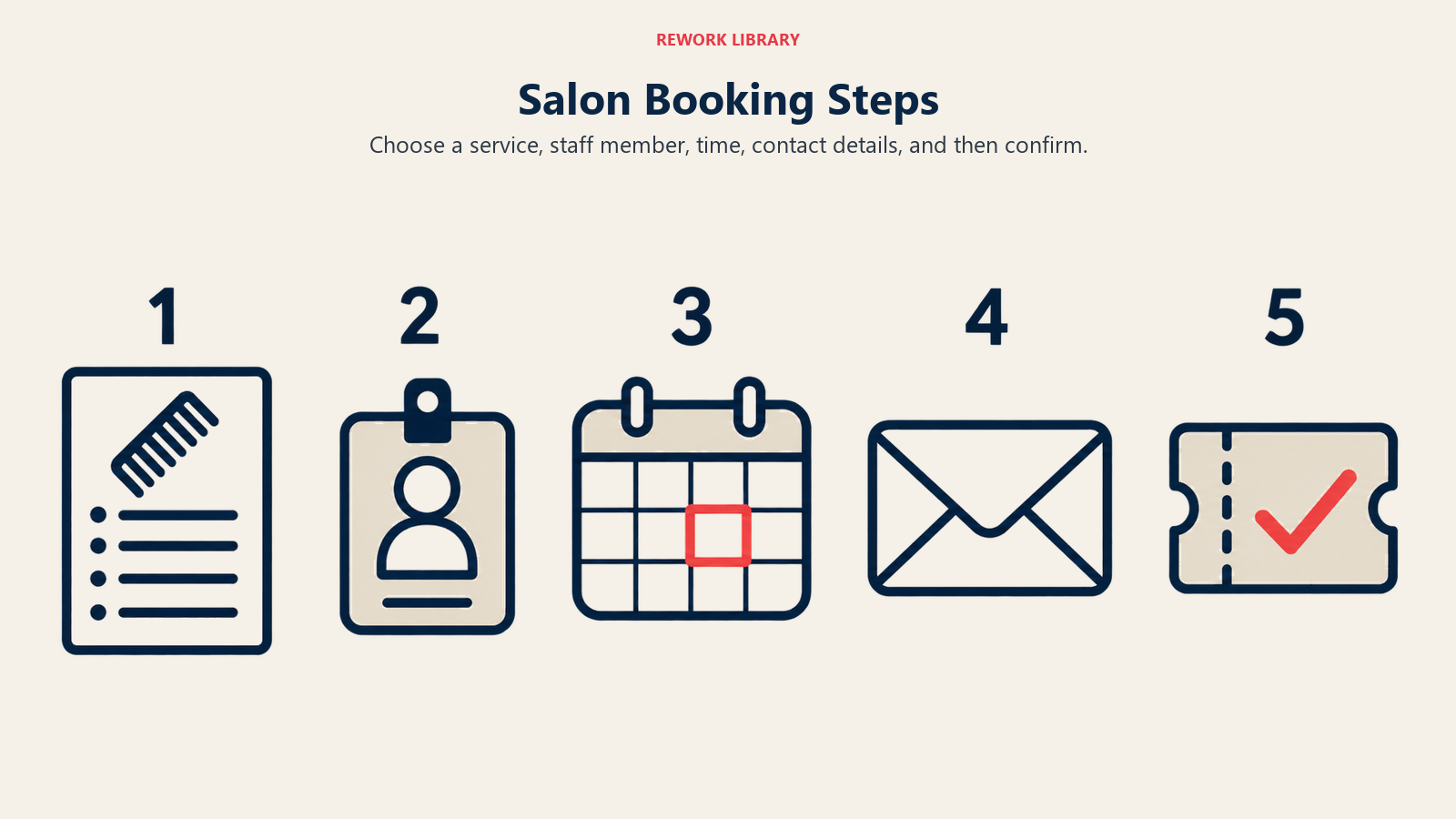
The Ideal Steps:
- Service selection (with clear categories)
- Staff selection (or "any available")
- Date and time selection
- Contact information (name, phone, email only at this stage)
- Confirmation
That's five steps. If your flow has more than five distinct decision points before confirmation, look at which steps can be combined or eliminated.
Account Creation Trade-offs
Requiring account creation before booking consistently reduces completion rates. For first-time clients, guest checkout (email + name) converts significantly better than mandatory account creation. Statista's research on checkout abandonment reasons identifies mandatory account creation as one of the top reasons U.S. consumers abandon a purchase, a finding that applies directly to beauty booking flows. You can prompt account creation in the post-booking confirmation email instead, where the client is already committed. Once a client has an account, that relationship becomes the foundation for CRM for salons and beauty centers, tracking preferences, service history, and communication for future visits.
Progress Indicators
A simple "Step 2 of 4" progress indicator reduces abandonment on longer booking flows. The psychology is straightforward: clients who can see how close they are to completion are more likely to finish than clients who don't know how many steps remain.
Mobile Optimization: Where Most Bookings Are Lost
If 73% of your booking traffic comes from mobile devices, mobile optimization isn't a nice-to-have. It's your primary booking experience.
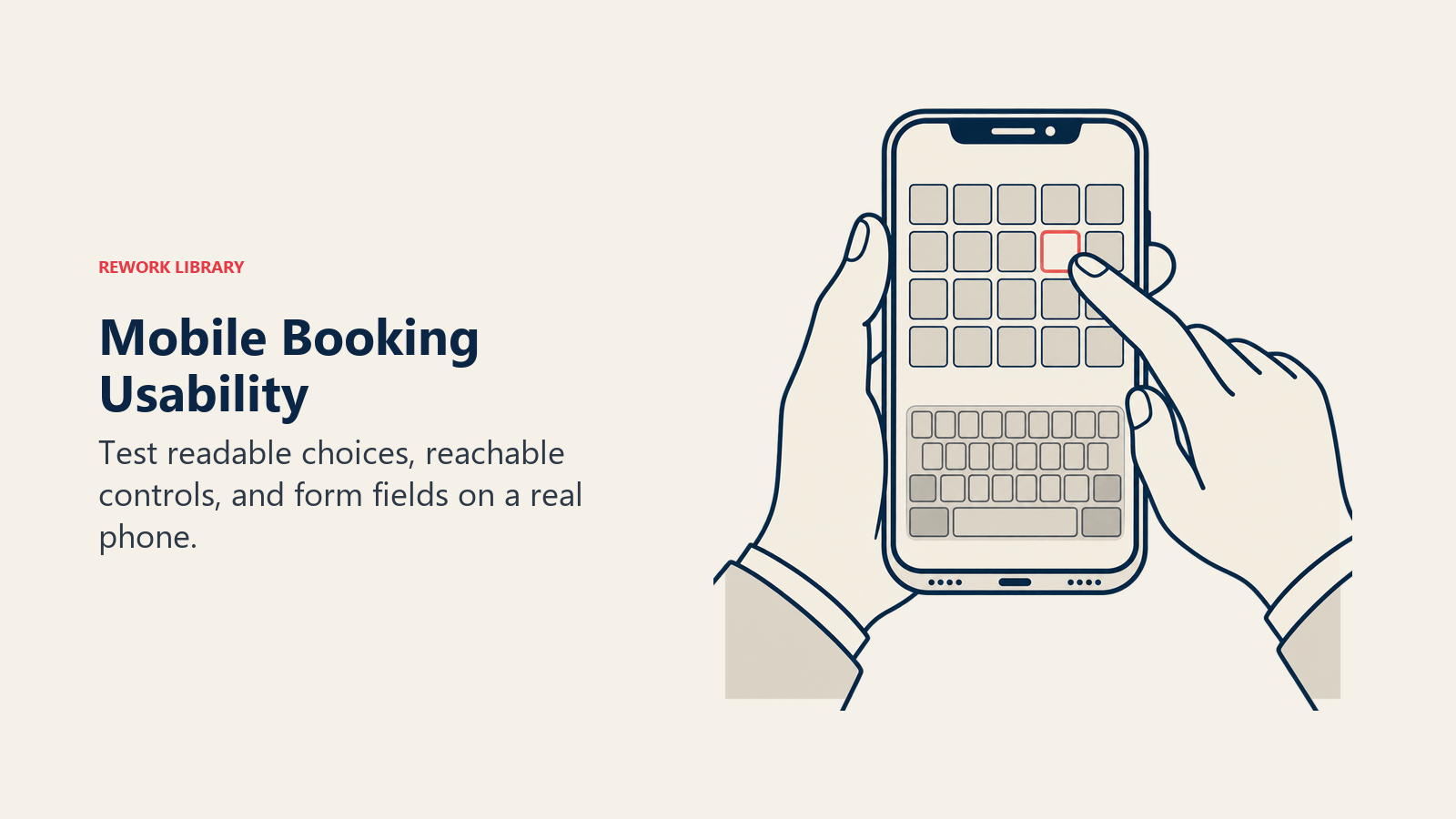
The Mobile Test Checklist:
- Open your booking link on an actual phone (not a desktop browser with a reduced window)
- Can you complete the entire booking in under 90 seconds?
- Are all tap targets (buttons, date selectors, service options) large enough to tap accurately without zooming?
- Does the keyboard cover any form fields when it opens?
- Is the service menu scrollable without losing context?
- Does the confirmation page display correctly on mobile?
If you find three or more problems in this test, your mobile conversion rate is materially below what it should be.
Page Load Speed: On mobile connections, slow-loading booking pages cause immediate abandonment. Use Google's PageSpeed Insights to test your booking page speed. A load time above three seconds on mobile loses a significant portion of visitors before they see anything. Statista's mobile commerce data shows mobile now drives the majority of e-commerce traffic globally, yet conversion rates on mobile consistently lag desktop. The gap is almost always a UX and speed problem.
One-Click Pre-Fill: If your booking platform supports it, enable phone number or email pre-fill from the browser. For returning clients, removing the re-entry of contact information removes a meaningful friction point, especially on mobile keyboards.
Service Descriptions That Convert
The service menu is where most beauty booking flows silently fail. A client who lands on a menu that reads "Classic Balayage - $180" with no further description doesn't know:
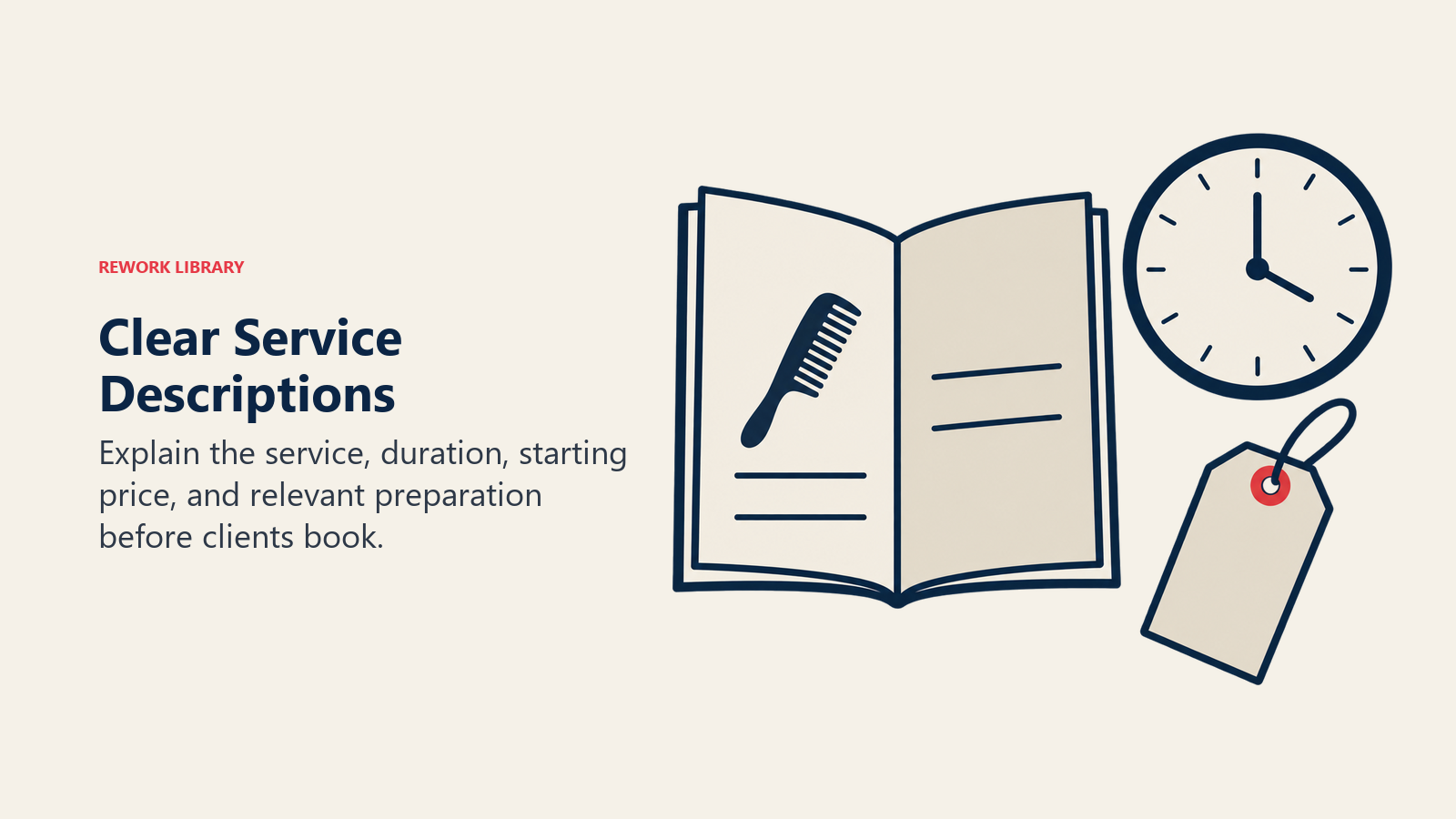
- How long the appointment takes
- Whether this service is right for their hair type or length
- What to expect during and after
- Whether they need to come in with or without freshly washed hair
The anxiety created by these unknowns is a conversion killer, especially for new clients who've never been to your salon. Answer the questions before they need to ask:
Service Description Template:
[Service Name] - From $[price]
[One sentence on what the service is]
[One sentence on who it's best for or what results to expect]
Duration: [X] hours | Ideal for: [hair type/skin type/starting point]
[Any pre-appointment instructions: clean hair, no product, etc.]
Example: "Lived-In Balayage - From $195 A freehand highlighting technique that creates soft, natural-looking dimension that grows out beautifully. Best for clients wanting low-maintenance color with 8-12 weeks between appointments. Duration: 3-4 hours | Ideal for: medium to long hair, any base color Come with clean, dry hair (no heavy products)."
That description eliminates most of the pre-booking anxiety for a new client. It also reduces mismatched expectations that lead to unhappy clients and refund conversations.
Real-Time Availability and Last-Minute Slots
The psychology of open slots works in your favor if you surface them correctly. A client who sees "Today at 3pm: available" and "Tomorrow at 10am: available" on a Tuesday afternoon is more likely to book impulsively than a client who has to navigate through a week-long calendar to find openings. Making last-minute availability visible also connects to your walk-in conversion strategies. The same psychology that drives impulsive online bookings applies to clients walking past your door.
How to Surface Last-Minute Availability:
- Most booking platforms allow you to configure a "Book Today" or "This Week's Availability" view. Use it.
- Post open slots in Instagram Stories with a direct booking link: "We have two openings this afternoon: [service name] at 2pm and 4:30pm. Tap the link to grab one."
- Enable push or email notifications for clients on your waitlist when a cancellation creates an opening
Waitlist Management: Every salon management platform now offers some form of waitlist. If yours does, actively prompt clients to join it. "We're fully booked for that day. Want me to add you to the waitlist? We'll text you if a slot opens." A waitlist that fills cancellations immediately is a significant revenue recovery tool. Automated appointment reminders work alongside the waitlist system: fewer no-shows means fewer slots that need to be recovered in the first place.
Booking Confirmation Flow
The booking confirmation is the first post-purchase touchpoint. Most salons send a generic "Your appointment is confirmed" email and nothing else. That's a missed opportunity.
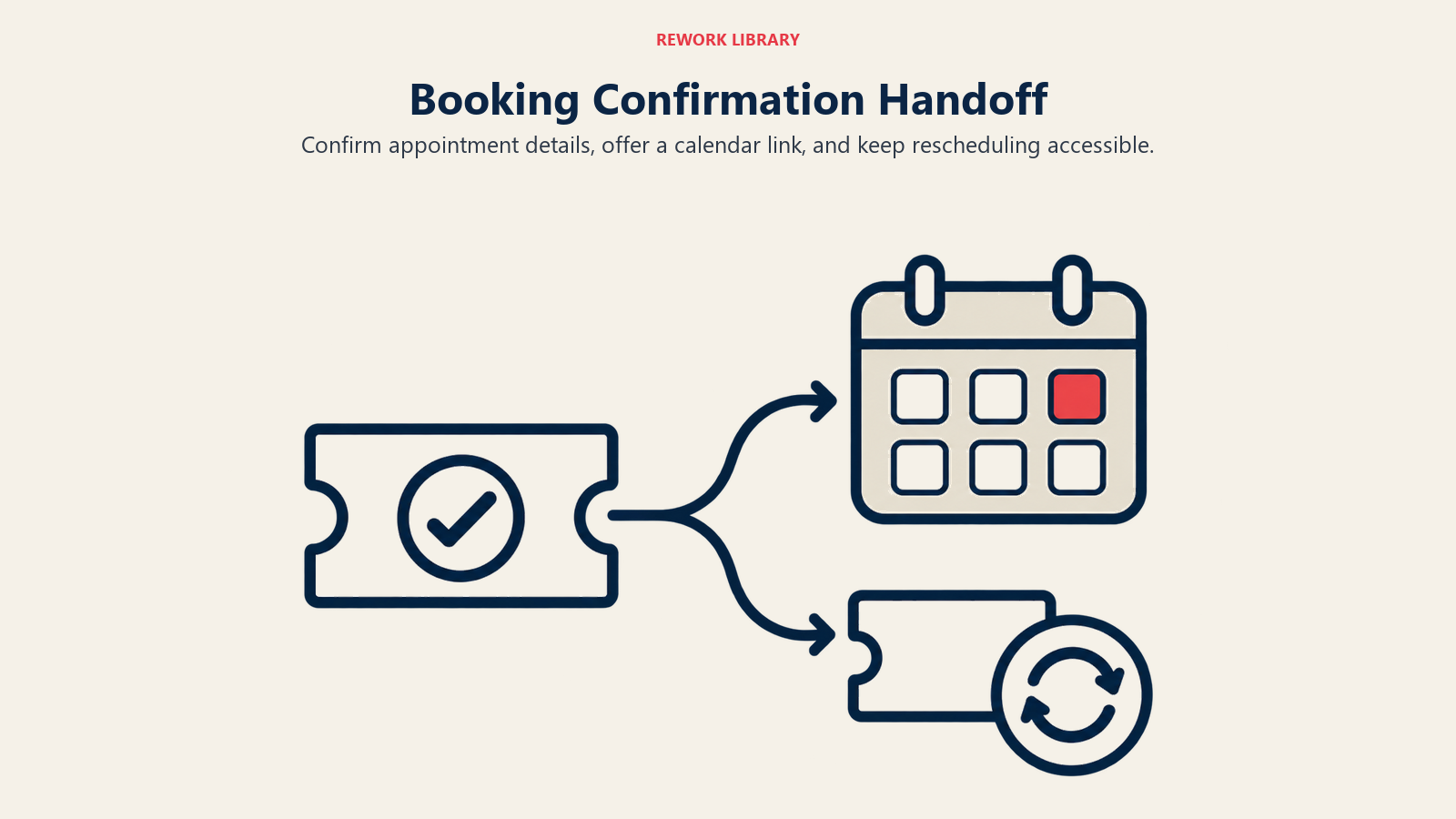
What Your Confirmation Sequence Should Include:
Immediate confirmation (email + SMS):
- Appointment details (service, staff, date, time, location)
- What to bring, what to wear, any pre-appointment instructions
- A link to add to calendar
- A reminder that deposits are non-refundable (if applicable)
Reminder 48 hours before:
- Restate the appointment details
- Include a link to confirm or reschedule
- Reiterate any preparation instructions
Reminder 2-3 hours before (SMS only):
- Simple text: "See you at [time] today at [salon name]. Reply STOP to unsubscribe."
This sequence reduces no-shows significantly. Industry data suggests a 48% reduction with a two-step reminder sequence compared to no reminders.
Reducing Booking Abandonment
Booking Flow Audit Checklist:
- Can a new client complete a booking in under 90 seconds?
- Is account creation optional (not required) for first booking?
- Are service descriptions clear enough to answer pre-booking questions?
- Is the mobile experience tested and functional?
- Does the confirmation page include all relevant appointment information?
- Are reminders sent at 48 hours and 2-3 hours before the appointment?
- Is deposit collection enabled to reduce no-shows?
- Is there a clear cancellation policy visible before payment?
Retargeting Incomplete Bookings: Some booking platforms (Fresha, Boulevard) can detect when a potential client starts the booking flow and exits without completing. The global online shopping cart abandonment rate sits above 70% (Statista, 2026), meaning recovery sequences aren't optional: they're a standard part of any optimized booking operation. These platforms can automatically send a follow-up email: "You were so close. Here's your booking from where you left off." The completion rate on these retargeting emails typically runs 15-20%.
Trust Signals at the Booking Stage: Review snippets ("4.9 stars, 280 reviews on Google"), before-and-after photos, and staff photos visible at the booking stage reduce abandonment from hesitant new clients. If your booking platform allows custom content at the booking page level, use it to add social proof. A strong service menu optimization strategy also reduces abandonment by making choices clearer and reducing overwhelm for first-time bookers.
Treat your booking flow as an ongoing optimization project, not a one-time setup. Run the mobile test quarterly. Update service descriptions when your menu changes. Track where clients are dropping off and fix the most significant drop-off point first.
Frequently Asked Questions About Booking Flow Optimization
What is booking flow optimization?
Booking flow optimization is the process of reducing friction in your online booking so more visitors complete an appointment. It covers platform choice, mobile experience, the number of steps, service descriptions, and confirmation messaging. The aim is a clear path from discovery to a confirmed booking in under 90 seconds.
How many steps should an online booking take?
Five at most: service selection, staff selection, date and time, contact details, and confirmation. If your flow has more than five distinct decision points before confirmation, look for steps you can combine or remove. Each extra step loses a share of potential bookers.
Why do clients abandon online booking?
The most common causes are forced account creation, a poor mobile experience, slow page loads, unclear service descriptions, and too many form fields. The average beauty booking abandonment rate is around 37%, and each extra required field cuts completion by 3 to 5%.
Should I require account creation before booking?
No. For first-time clients, guest checkout with just name and email converts better than mandatory account creation, which is one of the top reasons people abandon checkout. Prompt account creation in the confirmation email instead, once the client is already committed.
How does mobile optimization affect bookings?
Mobile drives about 73% of beauty booking traffic, so a flow that is not mobile-optimized loses most of its potential conversions. Test on a real phone: check tap target sizes, load speed under three seconds, keyboard behavior over form fields, and a confirmation page that displays correctly.
Learn More

Senior Operations & Growth Strategist