Referral Programs for Beauty Centers: Turning Clients into Brand Ambassadors
Turn this article into takeaways for your work.


Each assistant summarizes the article only for you and suggests best practices for your work.
A referred client costs roughly five times less to acquire than one you bring in through paid advertising. They also spend about 25% more per visit and retain at significantly higher rates. Yet most salons leave referrals entirely to chance, hoping happy clients will mention them to friends without any nudge, structure, or incentive to do so.
That gap between what referrals could deliver and what most salons actually get from them is a straightforward business problem. The clients who love your work are already telling some people about you. The question is whether you're making it easy, rewarding, and systematic enough that they tell many more.
A referral program isn't a suggestion box on the front desk. It's a structured system with defined incentives, clear tracking, regular promotion, and staff trained to make the ask at exactly the right moment. Build it that way and referrals become one of your lowest-cost, highest-quality growth channels. Harvard Business Review research confirms that referred customers generate higher profits and loyalty than those acquired through conventional marketing. Pairing a referral program with a strong loyalty programs for beauty centers structure maximizes both the acquisition and retention sides of the same happy client relationship.
Key Facts: Referral Marketing in Beauty
- Referred clients have a 37% higher retention rate than clients acquired through other channels (Wharton School of Business)
- Salons with a formal referral program generate 3–5x more referrals than those without one (Beauty Industry Group, 2024)
- 83% of satisfied customers say they're willing to refer, but only 29% actually do without being asked (Texas Tech University)
What a Referral Program Actually Is
Most beauty business owners conflate a referral program with a referral idea. "Tell your friends and we'll give you 10% off" printed on a business card is not a program. A program has these components:
Defined incentive structure: exactly what the referrer gets, what the new client gets, and under what conditions.
A tracking mechanism: how you know who referred whom, so you can actually deliver on the incentive.
Active promotion: ongoing visibility through signage, email, post-appointment messaging, and staff conversations.
Staff involvement: team members trained to make the referral ask naturally at the right moment.
Without all four, you'll get occasional referrals. With all four, you'll get a consistent stream.
Referral Incentive Structures: Which Model Fits Your Business
There's no universal right answer on incentive design. The best structure depends on your price point, client psychology, and margin position.
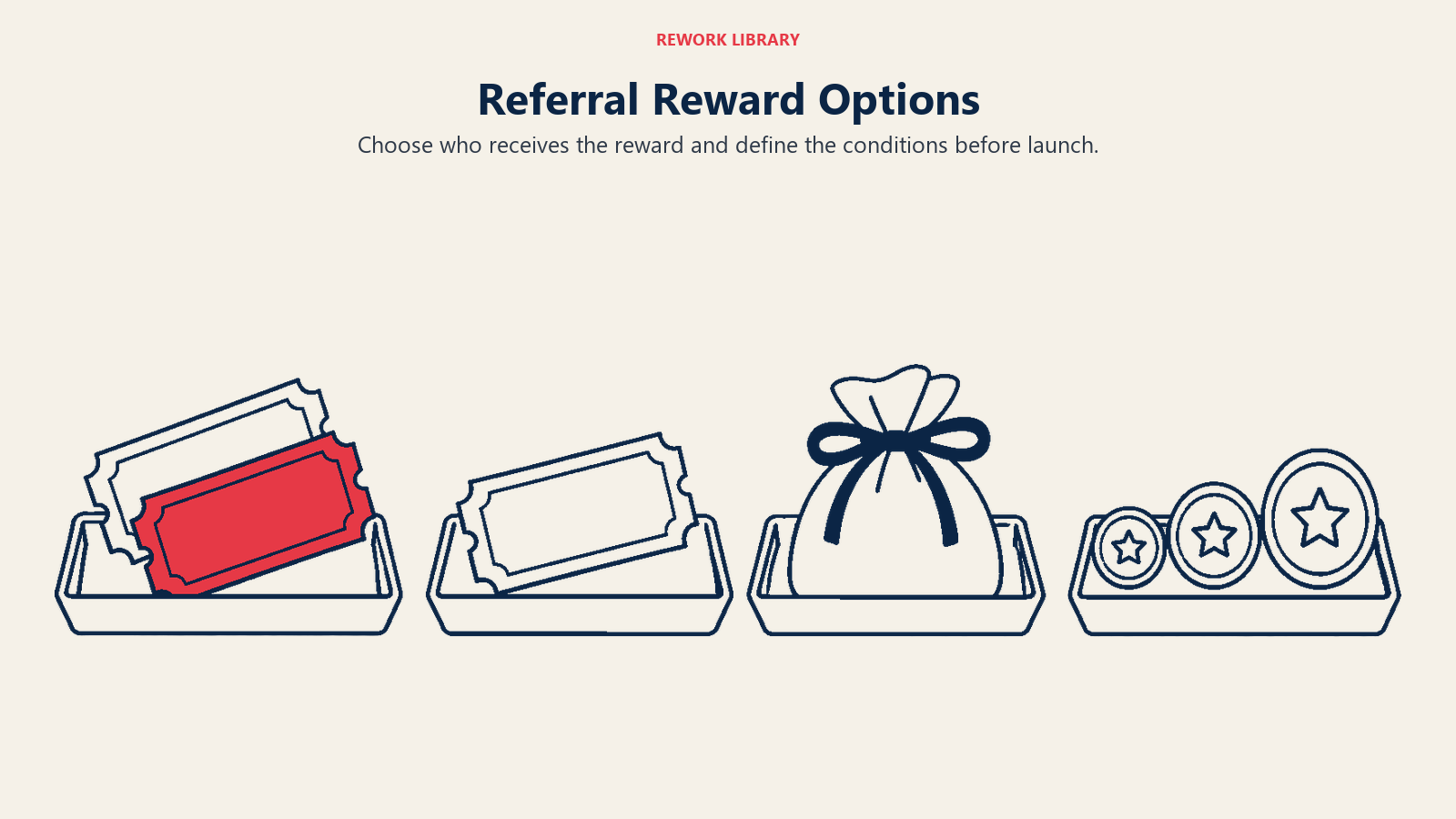
Give/Get (reward both sides)
The referrer receives a service credit or discount, and the new client receives a welcome offer on their first visit. This is the most commonly effective structure because it removes a psychological barrier: clients who might feel awkward recommending you for personal gain feel better when their friend also benefits.
Example: "Refer a friend and you both get $20 off your next visit."
This works well in mid-market salons where clients are price-conscious and peer-to-peer gifting feels natural. Understanding where your salon sits in the market helps you calibrate how generous the welcome offer should be, which is why reviewing your market positioning for salons and spas before finalizing incentive amounts is worth the time.
Referrer-Only Reward
The existing client earns a credit or product reward. The new client comes in at full price. This structure works better in premium-positioned salons where discounting a new client's first visit sends the wrong signal about your pricing. The referrer gets rewarded without the business appearing to discount its services.
New Client-Only Offer
The referred client receives a welcome discount or complimentary add-on. The referrer gets nothing beyond goodwill. This is the weakest structure for volume because it removes the incentive for the referring client to actively promote you. It may work in high-demand situations where you don't need referrers motivated, but most businesses aren't in that position.
Tiered Rewards (escalating incentives)
Referrers earn increasing rewards as they send more clients. First referral: $20 credit. Third referral: free service. Fifth referral: product bundle. Tiered programs work exceptionally well with clients who are genuinely enthusiastic about your salon and want to be recognized for their advocacy. They tend to generate a small number of high-volume referrers rather than a large number of occasional ones.
Service credit vs. cash vs. product reward
Service credits have a high perceived value and low actual cost to the business. Cash discounts feel more flexible but can condition clients to seek discounts on every visit. Product rewards work well if you retail well-regarded products. They also introduce clients to retail they might buy again. In general, service credits are the sweet spot for most beauty businesses: they bring the referrer back in, generate another appointment, and cost you margin rather than cash.
Designing Incentives That Match Your Segment
A $20 credit feels meaningful at a $60 haircut salon. At a med spa where clients spend $400 per visit, a $20 credit feels dismissive. Match the incentive magnitude to your average ticket.
A reasonable benchmark: referral rewards should represent 15–25% of an average service price. Below that threshold, the offer isn't compelling. Above 30%, you're eroding margin unnecessarily. The numbers behind this are clearer when you've worked through your unit economics for beauty centers, which shows exactly how much margin you can afford to invest per acquired client.
Luxury segments need non-monetary rewards: priority booking access, complimentary add-ons, exclusive product samples. These carry high perceived value without signaling that your prices are negotiable.
Value segments benefit from clear cash-equivalent savings. Clients who are price-sensitive appreciate directness over experiential rewards they might not value equally.
Tracking Referrals: Making It Work Operationally
The biggest failure point in referral programs is attribution. The client refers a friend, the friend books, but no one captures the connection. Neither the referrer nor the new client gets the promised benefit. The program collapses in trust.
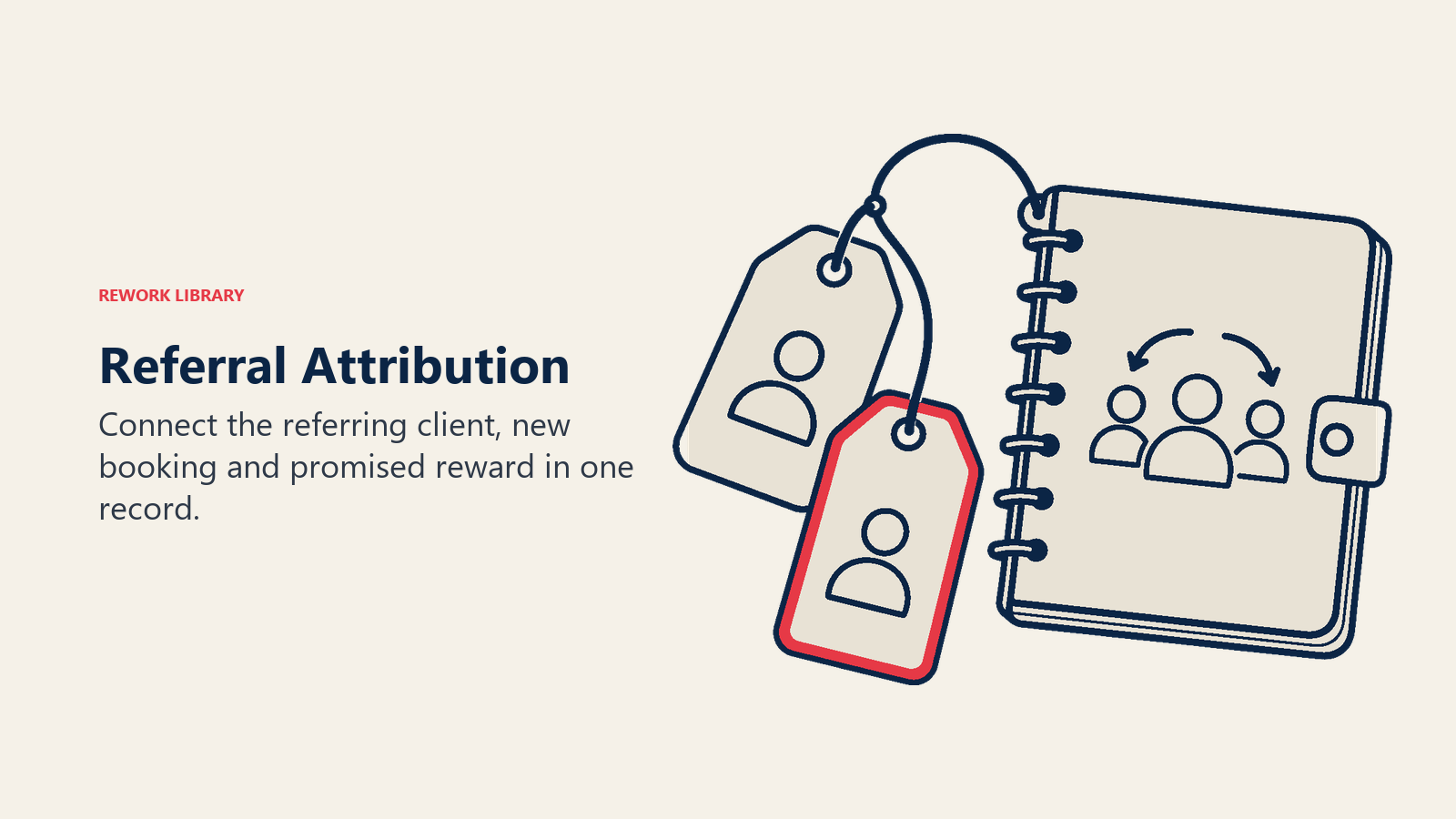
Manual tracking via referral cards
Physical referral cards with the referring client's name or a unique code work in smaller operations. The new client presents the card at booking or checkout. The limitation is that cards get lost, clients forget to bring them, and staff need to capture and process them consistently.
Digital tracking via unique codes or links
Clients receive a unique referral code (e.g. "SARAH2026") or a booking link that auto-attributes the referral in your booking system. This is far more reliable than physical cards and eliminates the "I forgot my card" problem.
Booking software with built-in referral tracking
Vagaro, Mindbody, and Fresha all have referral program features or integrate with referral tools. Boulevard offers strong attribution reporting. If you're on one of these platforms, use their native referral functionality before building a custom solution. It's simpler to manage and staff can see program status directly in the booking interface. A broader overview of the software landscape is available in the salon management software guide, which covers how these tools integrate across booking, CRM, and marketing functions.
Referral Incentive Comparison Table
| Structure | Referrer Incentive | New Client Incentive | Best For |
|---|---|---|---|
| Give/Get | Service credit (15–20% of avg ticket) | Welcome offer ($15–25 off) | Mid-market salons |
| Referrer-Only | Service credit or product reward | None | Premium-positioned salons |
| New Client-Only | None | First-visit discount (10–15%) | High-demand, capacity-full situations |
| Tiered | Escalating credits/services (3–5 referral milestones) | Welcome offer | Loyal, enthusiastic client base |
| Hybrid/Cash | Cash reward ($10–25) | None | Clients who prefer cash flexibility |
Staff Involvement: The Referral Ask That Actually Works
Your team is the primary delivery mechanism for referral program awareness. The problem is that most staff feel uncomfortable asking for referrals because it feels like a sales pitch. The solution is scripting the conversation in a way that ties the referral ask to a genuine client compliment.
The right moment is immediately after a positive service experience, before the client leaves. Here's a sample script that works without feeling forced:
The Referral Ask Script
"I'm really glad you love how it turned out. That makes my day. We actually have a referral program right now where if you send a friend in, you both get [incentive]. A lot of our best clients have come in that way. I can text you the details so you have the link ready."
The key elements: it's tied to a genuine positive moment, it frames the program as mutual benefit, and it offers a concrete next step (sending the link) rather than leaving action on the client.
Train staff to make this ask not feel like a script by practicing it in pairs during team meetings. Role-play is underused in salon training, but it's what makes scripted conversations feel natural. Investing in structured training programs for beauty staff is what turns the referral script into a consistent team-wide habit rather than a solo-owner responsibility.
Digital Referral Tools
Beyond in-salon asks, you need your referral program visible in every post-appointment communication.
Post-appointment email sequence
Send a thank-you email within 24 hours of every appointment. Include a referral program mention with a direct link and the client's unique referral code. Keep it brief: two or three sentences after the service summary. Automated sequences in most booking platforms can handle this. The broader email strategy that makes these sequences effective is covered in email marketing for beauty centers.
Text-based referral sharing
Clients are far more likely to share via text than email. A short message with a unique booking link and their referral code is easy to forward to a friend. Include a brief "share with a friend" CTA in any post-appointment SMS you send.
In-salon visibility
Physical signage at the front desk, at styling stations, and in treatment rooms keeps the program front-of-mind during the visit itself. Change the design seasonally to avoid signage fatigue.
Social media
Post about the referral program monthly, not every week, but with enough regularity that new followers see it. Stories with countdown timers on limited-time referral bonuses drive short bursts of activity.
Measuring Referral ROI: The Numbers That Matter
A referral program that isn't measured isn't managed. Track these metrics monthly:
Referral conversion rate: Of all new clients, what percentage was referred by an existing client? A healthy target is 20–30% of new client acquisitions coming through referrals after the first six months of a structured program.
Cost per referred client: Total referral incentives paid out divided by the number of new referred clients acquired. Compare this to your cost per acquisition from paid ads (typically $30–$80 in beauty). Referrals should be materially cheaper, and research consistently confirms they are, since referral marketing carries virtually no incremental acquisition cost compared to paid channels.
LTV of referred vs. non-referred clients: Referred clients typically have 25–35% higher lifetime value. According to HBR research, referred customers not only buy more but also refer 30–57% more new customers than others. Track this over a 12-month cohort to confirm the premium is real in your business. Building this tracking habit connects directly to data-driven decisions for salon owners, which gives you the reporting framework to measure cohort performance systematically.
ROI Calculation Example
The U.S. hair salon industry generates over $60 billion in annual revenue, so even capturing a small percentage improvement in acquisition cost efficiency compounds significantly at scale. Say you spend $600/month on referral incentives (30 referrers at $20 each) and acquire 30 new clients. At an average first-year value of $480 per new client, those 30 clients are worth $14,400, a 24x return on your referral spend. Even with modest assumptions, the economics of a well-run referral program beat almost any other acquisition channel.
Launching and Sustaining Awareness
Programs fail when they launch with a burst and then go quiet. Schedule these touchpoints to keep referrals consistently visible:
- Launch announcement: email + in-salon + social
- Monthly reminder in post-appointment emails
- Quarterly staff refresher and incentive relaunch
- Seasonal campaign (e.g. "Refer a friend before the summer rush")
- Annual program review: update incentive amounts if they feel stale
Referral Program Launch Checklist
- Incentive structure defined (amount, conditions, expiry)
- Tracking mechanism live in booking software
- Unique referral codes or links set up for all clients
- Post-appointment email sequence updated with referral CTA
- In-salon signage designed and printed
- Staff trained on referral ask script
- Social media announcement scheduled
- Reporting dashboard configured for monthly review
- First 90-day review date booked
Learn More

Senior Operations & Growth Strategist
On this page
- What a Referral Program Actually Is
- Referral Incentive Structures: Which Model Fits Your Business
- Designing Incentives That Match Your Segment
- Tracking Referrals: Making It Work Operationally
- Staff Involvement: The Referral Ask That Actually Works
- Digital Referral Tools
- Measuring Referral ROI: The Numbers That Matter
- Launching and Sustaining Awareness
- Learn More